April 9 – Cherish an Antique Day

Once Upon a Memory by Nina Laden and Renata Liwska Picture Book Reivew

About the Holiday

When you look at an antique chair with its faded upholstery or a brooch handed down from your great-great-grandmother, do you ever think about the day when it was new? Imagine the excitement of sitting in the chair for the first time or opening the jewelry box on a shining pin. Today we remember our collective and individual treasured past, held in the objects of days gone by. Cherish an Antique Day is a perfect time to learn more about the stories of any antiques you may own.

Once Upon a Memory

Written by Nina Laden | Illustrated by Renata Liwska


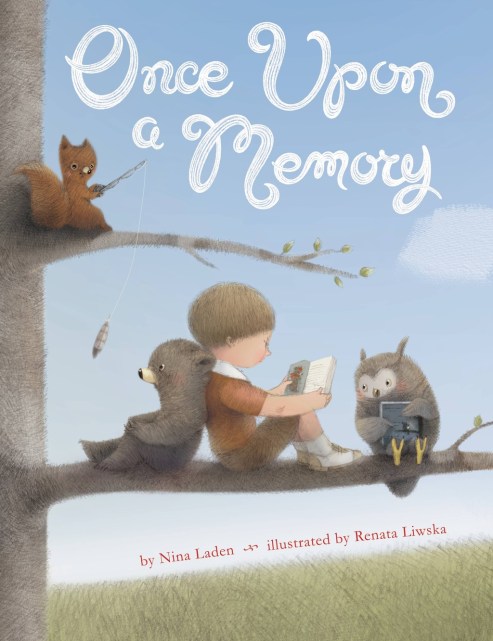
This stunning, quiet book is so evocative in its premise that certain lines can bring a lump to your throat even before you reach the endearing end. A little boy sits in his playroom surrounded by his stuffed toys and pet dog, enjoying a tea party. A feather blows through the window, eliciting the question, “Does a feather remember it once was…a bird?” and then more musings: “Does a book remember it once was…a word?”

The simple patterned phrasing and rhyming couplets lend the story a surprising suspense as the reader tries to guess what one-time material or emotion transformed into another before the clever answer is revealed: “Does a statue remember it once was…stone? Does an island remember it once was…unknown?”

In the last pages the queries become more personal—“Does love remember it once was…new? Does a family remember it once was…two?” Adult readers will recognize where the reflective path leads, giving this book a deeper level of meaning for both adults and children: “Does the world remember it once was…wild? Will you remember you once were…a child?”

The question is not an idle one. In these busy, stressful times it’s good to remember what it meant—and means—to be a child.

Nina Laden’s subtly anthropomorphic world invites readers into a new realm of imagination as well as reality. Readers and listeners receive a new perspective on life as Laden’s poetic voice opens up a wide world of possibilities.

Renata Liwska’s illustrations are simply adorable and represent each couplet with depth and imagination. The feather that blows in the little boy’s window comes not from some single, random bird, but from a happy barber shop where an owl is getting a haircut. “Book” is both the volume lovingly read by the boy and the word painted on a busy bookshop sign. Liwska’s sweet bears, squirrels, beavers, birds, raccoons, bats and more as well as the tiny boy are rendered in gauzy browns, grays, reds, and yellows that are as soft and comforting as a favorite memory.  Once Upon a Memory would be a perfect companion on a walk, a trip, or during times of waiting, where readers and listeners could make up their own “once was” pairs. Its cadence also makes it a nice, comforting bedtime book.

Ages 4 – 7

Little Brown and Company, 2013 | ISBN 978-0316208161

Cherish an Antique Day Activity
CPB - Antique Day

Share the Stories of Your Antiques


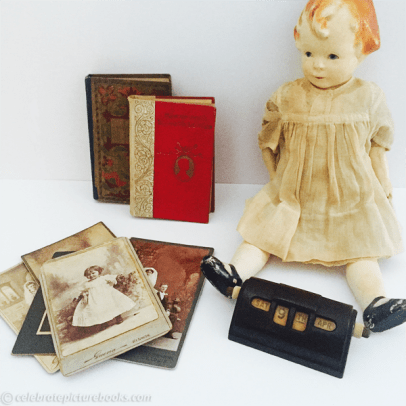
Whether you have old photographs of great-great-grandparents or special heirlooms, today’s holiday is a wonderful time to share them and the stories behind them with children. The feeling of being part of several generations or holding history in your hands is exciting and comforting and can lead to more understanding and closer relationships.

Adults can collect a few family heirlooms and/or photographs to share with children. Children can choose which of their toys, books, or other favorite objects they think will last to become a cherished antique in the future.

Take time to get together and discuss the objects you’ve collected with a cup of tea or hot chocolate and some special treats.

March 12 – National Plant a Flower Day

MIss Maple's Seeds by Eliza Wheeler Picture Book Review

About the Holiday

It’s March—that funny month when some people are basking in 80-degree sunshine and others are still shoveling snow. But no mater where we live, we’re thinking about the same thing—Spring! Spring brings new green leaves, gentle rains, and little shoots that will grow to be trees, vegetable and fruit plants, and flowers. Whether you live somewhere warm and can already plant outside or somewhere that’s still a little chilly and requires indoor propagation, planting flower seeds is a perfect way to beautify your home and your life.

Miss Maple’s Seeds 

By Eliza Wheeler


Late in the summer, Miss Maple hurries to prepare for some very special guests. She has searched all summer for unplanted “orphan” seeds, and baskets full of them are winging their way to her home on the backs of bluebirds. Once they arrive she “learns each seed by heart.” There are poppy, wild rice, maple, water lily, pine, impatiens, apple raspberry, sunflower, acorn, pea, fern seeds, and as many more as make up our world.

As she lovingly tends to each one, she says, “Take care, my little ones, for the world is big and you are small.” Miss Maple takes them on field trips and shows them the world they will inhabit—the muddy soil along riverbanks, grassy fields, and thick forests. She cautions them about “weedy characters” who can show up even in a “bustling garden.”

At night Miss Maple snuggles each seed into a comfy bed and reads to them by the light of fireflies. During the winter Miss Maple entertains other guests—woodland creatures who gather in her maple tree home and share food, stories, and songs. With the spring come rains and new lessons on burrowing into the ground.

May ushers in another summer, and Miss Maple knows it’s time for her little ones to “find roots of their own.” She sends them out into the world, knowing that she has prepared them well for what they will become. Her seeds say goodbye and sail off to begin their futures, and Miss Maple is left alone. But soon another summer day comes, and Miss Maple sets off to gather more orphan seeds, because “the world is big and they are small.”

Eliza Wheeler’s Miss Maple’s Seeds is a triumph—as comforting as a warm blanket and as empowering as a master key. Wheeler’s beautiful language floats quietly and unhurried like the flight of a leaf on a gentle breeze. The metaphor of seeds and children is so sweetly made, and Miss Marple’s wish for her little charges can bring a tear to the eye of any caretaker.

Wheeler’s luminous artwork is breathtaking in its fully realized details of the wide world Miss Maple’s seeds and all of us inhabit. Each season is gorgeously rendered in soft blues, roses, browns, and yellows, and she imbues the little seeds with personality without making them anthropomorphic. The reader may wish they could be friends with these future beauties and Miss Maple as well.

Miss Maple’s Seeds would be a wonderful gift for high school graduates, teachers, and anyone who loves taking care of children.

Ages 3 – 7, all ages

Nancy Paulsen Books, an imprint of Penguin Group | ISBN 978-0399257926

Plant a Flower Day Activity

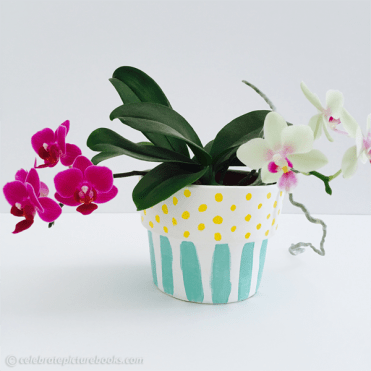
CPB - Flower Pot

Decorated Flower Pot


Spring is almost here, and that means flowers will soon be blooming. If you want to beautify your home plant your favorite flower seeds in a pot you’ve decorated yourself!

Supplies

  • Terra cotta pot in any size
  • Acrylic multi-surface paint in various colors
  • Flower seeds
  • Soil

Directions

  1. Paint your terra cotta pot—be creative!
  2. Let paint dry
  3. Fill pot with soil
  4. Plant flower seeds

February 17 – Random Acts of Kindness Day

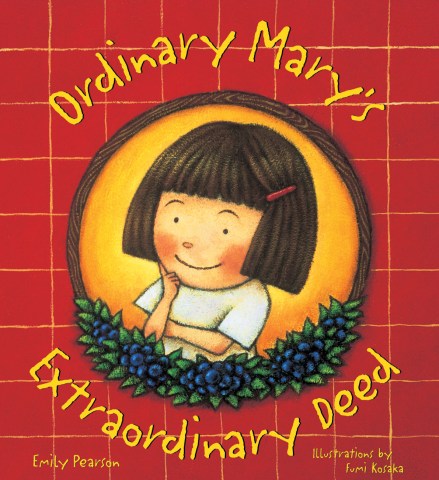
celebrate-picture-books-picture-book-review-ordinary-mary's-extraordinary-deed-covers

About the Holiday

Random Acts of Kindness Day originated in New Zealand, where the holiday is celebrated nation wide every September 1st. In the U.S. the popularity of this day continues to grow, as people discover the pleasure of doing nice things for friends and strangers alike. Connecting with others and paying forward kind deeds can be infectious, making the world a better place for all!

Ordinary Mary’s Extraordinary Deed

Written by Emily Pearson | Illustrated by Fumi Kosaka

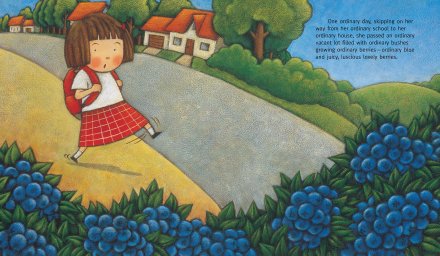
One day an ordinary girl named Mary begins her ordinary day. On her way home she spies ordinary blueberries in a field and picks them. She knows Mrs. Bishop would like them, so Mary leaves them in an ordinary bowl on her porch. Mrs. Bishop is so happy with the berries that she uses them to make blueberry muffins. But who gave her the blueberries? Mrs. Bishop can think of five people who might have, and she divides the muffins between them.

celebrate-picture-books-picture-book-review-Ordinary-Mary's-Extraordinary-Day-blueberries

Image copyright Fumi Kosaka, 2002, text copyright Emily Pearson, 2002. Courtesy of Gibbs Smith.

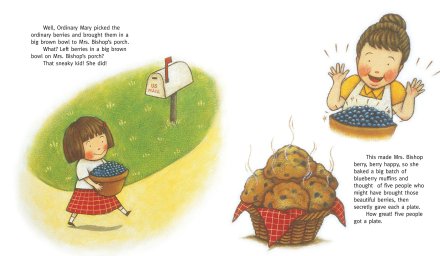
One of the five is Mrs. Bishop’s paperboy. He is so delighted with the muffins that he kindly hand delivers the newspapers to the next five people on his route. One of these is Mr. Stevens, who is so happy he spends the next 10 hours smiling on an airplane and helps five people lift heavy bags.

celebrate-picture-books-picture-book-review-Ordinary-Mary's-Extraordinary-Day-mrs-bishop

Image copyright Fumi Kosaka, 2002, text copyright Emily Pearson, 2002. Courtesy of Gibbs Smith.

One of these is Maria, who later does nice things for five other people. One of these cheers up the next five people she sees, who in turn brightens the day of five people. By now these random acts of kindness have spread through town and farther. People everywhere are watching out for others, being generous, smiling, becoming friends, and more! And in a surprising happenchance, ordinary Mary’s original act of kindness comes back to her!

celebrate-picture-books-picture-book-review-Ordinary-Mary's-Extraordinary-Day-joseph

Image copyright Fumi Kosaka, 2002, text copyright Emily Pearson, 2002. Courtesy of Gibbs Smith.

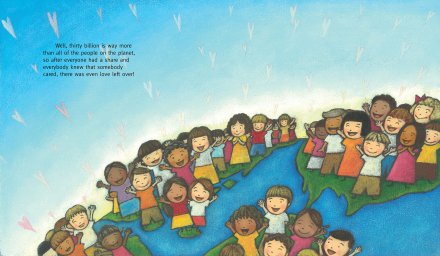
What Mary doesn’t know, though, is that her extraordinary deed actually changes the whole world for the better—because each person touched by kindness shares it with five others, who share it with five more until the one act of leaving blueberries on Mrs. Bishop’s porch multiplies to 6 billion other people!

celebrate-picture-books-picture-book-review-Ordinary-Mary's-Extraordinary-Day-world

Image copyright Fumi Kosaka, 2002, text copyright Emily Pearson, 2002. Courtesy of Gibbs Smith.

Emily Pearson’s story is a delightful tale of how one person can make a positive difference in the lives of others. The thread of simple deeds shared from one character to the next demonstrates to young and old alike how just a smile, a compliment, or an unexpected act can transform another person’s day and even the way they view themselves and the world. This is a perfect book for spurring random acts of kindness, and its straightforward treatment of the way random acts build on each other makes it a great reminder for all ages.

Fumi Kosaka has populated Mary’s world and beyond with people whose wide smiles and twinkling eyes make you want to share the excitement of giving right along with them. Her simple, colorful drawings focus on the people affected and highlight the simple acts that bring them so much pleasure.

Ages 4 and up

Gibbs Smith Publishers, Reprint edition, 2017 | ISBN 978-1423648871 Paperback

Random Acts of Kindness Day Activity

CPB - Random Acts of Kindness cards

Random Acts of Kindness Cards to Share

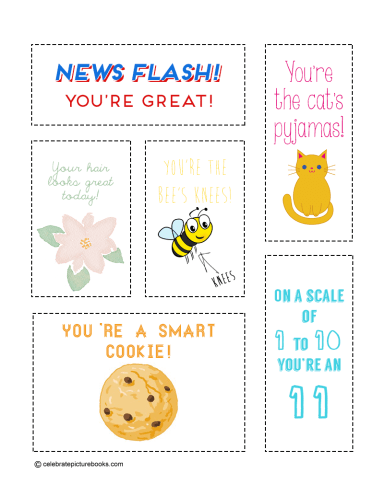
It’s fun to surprise someone with an unexpected gift or compliment! It makes the other person and you feel happier! Here are some printable Random Acts of Kindness Cards that you can give to anyone you meet today—or any day. If you’d like to write your own, here is a set of Blank Cards. You can give one to your teacher, librarian, favorite store clerk, your postal worker, your neighbors and friends, the person next to you on the bus or train. Or why not brighten someone’s day by leaving a note where they might find it—in a book at the library or bookstore, in a friend’s lunchbox, in your mailbox, on a store shelf, or anywhere you go!

Picture Book Review

February 12 – Abraham Lincoln’s Birthday

CPB - I am Abraham Lincoln

About the Holiday

Today we celebrate Abraham Lincoln’s birthday! Abe Lincoln was born in a one-room log cabin in Kentucky and later worked as a riverboat worker, a shopkeeper, and a postmaster in Illinois before becoming the 16th President of the United States. With compassion, bravery, and strength, Lincoln shepherded the country through the Civil War and signed the 13th Amendment to the Constitution outlawing slavery in the United States. Lincoln’s birthday is commemorated with wreath-laying ceremonies at his birthplace and at the Lincoln Memorial in Washington D.C.

I am Abraham Lincoln

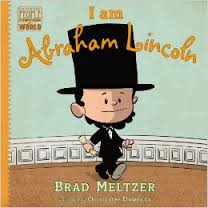
Written by Brad Meltzer / Illustrated by Christopher Eliopoulos


In his I am… series of biographies, Brad Meltzer writes about famous people as they grow from childhood into the influential adults they became. In I am Abraham Lincoln, Meltzer illuminates various experiences of Lincoln’s life that formed his beliefs of equality and inclusiveness. At a time when most children liked to hunt, fish, and tend the farm, young Abe spent his time reading, and he was one of the few people in town who could write. Even at the age of 10, his compassion showed when he stopped a group of his peers from treating a turtle roughly. Later, as a young man and newcomer to Illinois, he faced a group of bullies and dispersed them without throwing a punch.

It was when he witnessed the indignities of a slave boat, however, that his most deeply held beliefs took hold. As President, Lincoln acted on those beliefs, helping the country through the Civil War, gave speeches, and signing laws that ensured all people would be treated equally.

By relating stories from Abraham Lincoln’s childhood, Meltzer not only teaches children about his life, but demonstrates that his young readers can also make a difference by speaking up and helping others whenever they see injustice.

Christopher Eliopoulos’s cartoon-like illustrations are particularly effective in showing the earnestness of Abraham Lincoln’s personality from early childhood on. Speech bubbles display dialogue, modeling the simple words that can so often create great change. Part of the book’s charm is that even as a child Lincoln sports his iconic beard and top hat, making him instantly recognizable as the hero children are familiar with and emphasizing the “man in the child” theme.

Ages 4 – 8

Dial Books for Young Readers, Penguin Group, New York, 2014 | ISBN 978-0803740839

Abraham Lincoln’s Birthday Activities

CPB - Abe Lincoln's Top Hat chalkboard (2)

Abe Lincoln’s Top Hat Chalkboard

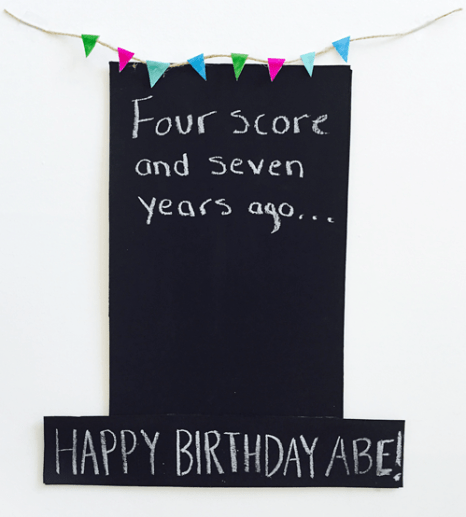
Abraham Lincoln was known for the black top hat he wore – and for his inspiring words In this activity you can learn how to make a top hat chalkboard to use for your own drawings or inspiring words!

Supplies

  • Cereal Box (I used a large sized cereal box), cardboard or poster board
  • Chalkboard Paint (black)
  • Paint brush
  • Hot Glue Gun or extra-strength glue
  • Removable mounting squares
  • Chalk

Directions

  1. If you are using cardboard or poster board: cut a rectangle at least 8 inches wide by 12 inches long for the hat and 12 inches long by 2 inches wide for the brim (but your top hat can be any size you’d like!)
  2. If you are using a Cereal Box: open the seams of the Cereal Box
  3. Cut the panels of the cereal box apart
  4. Take one face panel and one side panel
  5. With the chalkboard paint, paint both panels
  6. Let the panels dry
  7. Attach the side panel to the bottom of the face panel to create the shape of Lincoln’s top hat
  8. Hang Abe Lincoln’s Top Hat Chalkboard 

Donate to a Food Bank

Today can be a day to remember the hardships that many people still endure. Many still live with hunger every day. Today, gather a bag of non-perishable foods and donate them to your local food bank. This activity can also be done by a group—a classroom, scout troop, youth group, or group of friends. Even a little bit helps a lot!


February 1 – National Freedom Day

celebrate-picture-books-picture-book-review-henry's-freedom-box-cover

About the Holiday

National Freedom Day was created by a former slave named Major Richard Robert Wright Sr. and was established as a national holiday on June 30, 1948 by President Harry S Truman. The observance commemorates the day in 1865 when Abraham Lincoln signed a resolution that would become the thirteenth amendment to the U.S. Constitution. The amendment was ratified almost one year later by each state and outlawed slavery.

Today, people often celebrate National Freedom Day by laying a wreath at the Liberty Bell, which is located in Philadelphia, Pennsylvania.

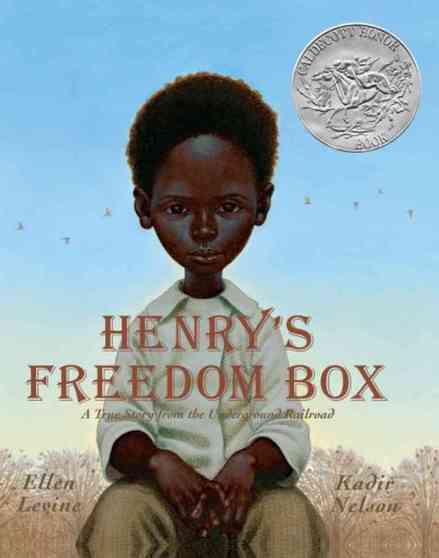
Henry’s Freedom Box: A True Story from the Underground Railroad

 Written by Ellen Levine | Illustrated by Kadir Nelson


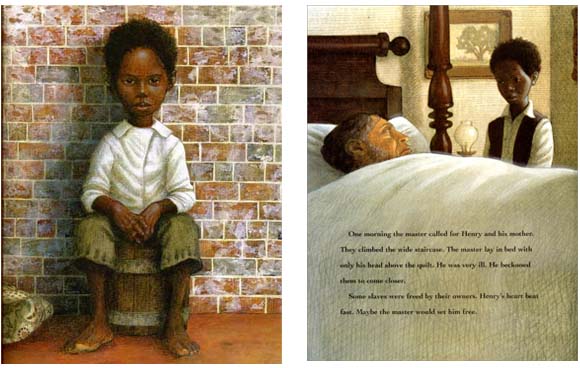
Henry Brown was born a slave. He didn’t know his birthday and he never knew security. “Like autumn leaves are torn from the trees,” his mother tells him, “slave children can be torn from their families.” When Henry’s master calls him to his sickbed, Henry hopes to be freed, but instead, his mother’s fear comes true. Henry is taken away and grows up far from his family, learning to be careful not to make mistakes that will bring severe punishment.

celebrate-picture-books-picture-book-review-henry's-freedom-box-henry

Image copyright Kadir Nelson, text copyright Ellen Levine. Courtesy of Scholastic Press

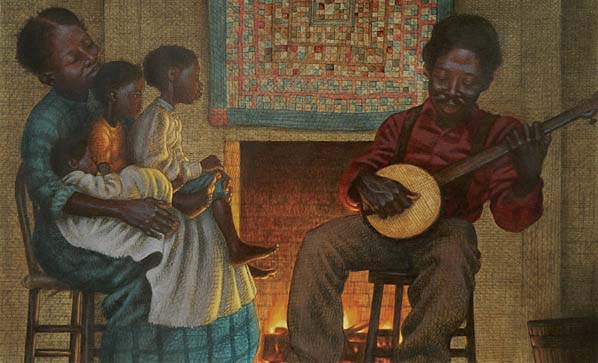
One day Henry, now a young man, falls in love with Nancy, a slave on another plantation. Henry and Nancy marry and are allowed to live together despite being owned by separate masters. Henry and Nancy have three children and are living happily.

But one day Nancy tells Henry that her master’s plantation is in financial trouble. She is afraid her master will sell their children to make money. The idea strikes fear into Henry’s heart. The next day Henry learns that indeed Nancy and his children have been sold. He knows he can show no emotion, but “his heart twisted in his chest.”

celebrate-picture-books-picture-book-review-henry's-freedom-box-henry-plays-music-for-his-family

Image copyright Kadir Nelson, courtesy of Scholastic Press

Henry runs to the town square and sees his children and Nancy being driven away. Henry is devastated. Time passes and Henry thinks about freedom. Lifting a crate used for shipping tobacco gives him an ingenious idea. He will mail himself to the North, where he can be free.

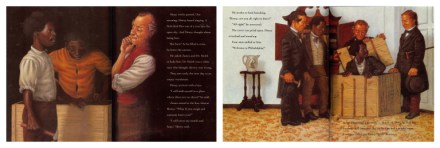
Henry’s friends agree to help him, and although they’re afraid he will be discovered, they seal him into a wooden box, address it to people in Philadelphia, and send him off. The crate is handled roughly throughout the journey north, and Henry must endure pain for many hours. Henry finally arrives safely in Philadelphia on March 30, 1849. Known from then on as Henry “Box” Brown, he became one of the most famous runaway slaves in America.

celebrate-picture-books-picture-book-review-henry's-freedom-box-henry-comes out of box

Image copyright Kadir Nelson, text copyright Ellen Levine. Courtesy of Scholastic Press

Based on an actual story of The Underground Railway, Henry’s Freedom Box is written and illustrated to stunning effect. Ellen Levine’s lyrical and metaphorical language combines with the excellent pacing of the pages to enhance the emotional impact of this powerful and original true story. Children will be inspired by this man who suffered devastating loss, but persevered and through cunning, bravery, and the help of friends, obtained freedom.

Kadir Nelson took inspiration for his illustrations from an antique lithograph of Henry Brown, created by Samuel Rowse in 1850. Through a combination of watercolor and oils crosshatched with pencil lines, Nelson’s richly hued paintings capture the poignancy of Henry’s struggles and ultimate freedom. His characters’ facial expressions are particularly moving.

Henry’s Freedom Box: A True Story from the Underground Railroad is a riveting story of slavery and one man’s fight for freedom that would make an excellent addition to children’s libraries.

To view a gallery of books and other illustration work by Kadir Nelson, visit his website!

Ages 4 – 8

Scholastic Press, 2007 | ISBN 978-043977733

National Freedom Day Activity

CPB - Freedom Stamp template (2)

Create Your Own Freedom Stamp


If you were going to create a postage stamp representing freedom, what would it look like? Think about what freedom means to you, then grab some colored pencils and design your own stamp!

Supplies

Directions

  1. Print the Freedom Stamp template
  2. Draw your own design about what freedom means to you
  3. Cut out the stamp and display it in your room or in a common area of your home

OR:

  1. Inside the stamp template write a letter to:
  • Someone in the Military: Thank them for their service to the United States to help keep our country free. You can learn how to send letters to members of the military here.
  • Your Teacher: Thank your teacher for all of her or his hard work. Only through education can we really be free.
  • Someone else who inspires you: Tell this person why they inspire you and thank them for their work.
  1. Give your Freedom Stamp letter to the person it is written to

Picture Book Review