May 26 – It’s Mystery Month

celebrate-picture-books-picture-book-review-it's-only-stanley

About the Holiday

There’s nothing like a mystery to rivet your attention. Odd sounds, sudden darkness, unusual circumstances, eerie apparitions, and other unexplained phenomena have beguiled people since the beginning of time. We can’t help investigating to find out who, what, why, or how? Today read  great mystery—or solve one!

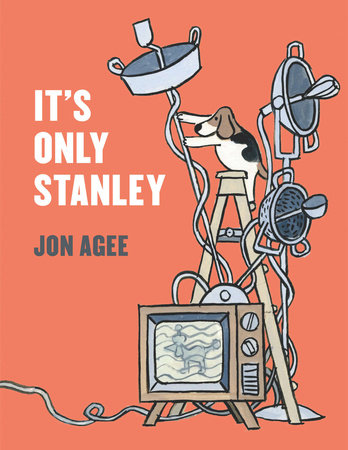
It’s Only Stanley

By Jon Agee


“The Wimbledons were sleeping / It was very, very late, / When Wilma heard a spooky sound, / Which made her sit up straight.” Walter goes out into the yard to investigate.  He finds their dog Stanley howling at the moon. A little later that night their daughter Wendy is wakened by a clanking sound below her floor. Walter goes down into the basement to investigate. There’s Stanley fixing the oil tank.

Next comes young Willie: “it was even later still, / When Willie smelled a funky smell / That made him kind of ill.” So Walter goes to the kitchen to investigate. He finds Stanley has constructed a homemade lab and is cooking up a bubbling catfish stew on the stove. At half past three Wanda hears a buzzing noise and Walter finds Stanley fixing the old TV.

Tiny Wylie comes in next, having heard a splashy sound, but Walter discovers it’s only Stanley clearing the bathtub drain. “Now Wilma wasn’t happy. / And the children threw a fit. / ‘We’ll never get to sleep tonight if Stanley doesn’t quit!’” So Walter says he’ll talk to Stanley but before he can leave the room a huge KAPOW! sends the family flying.

“‘I’ll go and look,’ said Walter, / ‘And I’ll be back very soon.’ / ‘It’s only Stanley.” Walter said. / ‘We’re going to the—’” Perhaps the biggest mystery isn’t how Stanley does all this…but why!

We know dogs are smart, but who can account for Stanley!? Jon Agee’s loveable, incredibly adept family pet is laugh-out-loud precocious as his nighttime exploits expand to out-of-this-world proportions. The clever word play, alliteration, and rhyming scheme of the text adds to the humor.

Kids will love Agee’s illustrations of the serious, self-assured Stanley as he goes about his tinkering all to the nonplused consternation of his family and the detriment of his nemesis—the household cat. As in many homes with pets, readers will rightly wonder—who’s in charge here? Kids will want to hear It’s Only Stanley over and over.

Ages 4 – 8

Dial Books for Young Readers, Penguin Group, 2015 | ISBN 978-0803739079

Mystery Day Activity
celebrate-picture-books-picture-book-review-what's-missing-game

What Went Missing In the Dark? Game


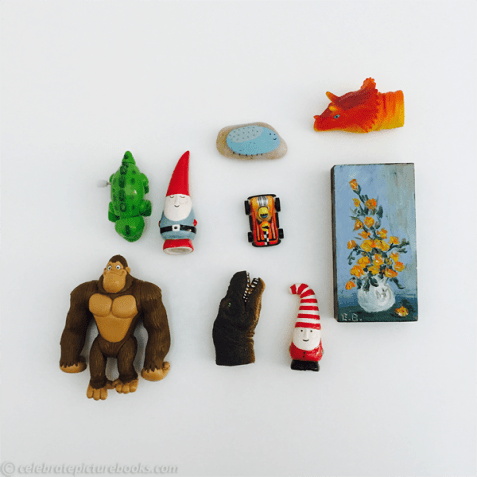
This fun and fabulous game combines memory building with just the right amount of suspense and spookiness. The game is best played at night or in a room that can become totally black when the lights are turned off. If you play in the daytime, just have the players leave the room while you take away objects.
celebrate-picture-books-picture-book-review-what's-missing-game

Rules

  1. Gather a number of small objects (the number will depend on the ages of the players. For younger players, gather 5 – 7 objects. For older players try 12 or more)
  2. Lay the objects on the ground or a blanket
  3. Tell the players to look at the objects for a certain amount of time. The time will depend on the ages of the players—a longer time for younger children, shorter for older kids (or to make the game more exciting)
  4. When the time is up, turn out the lights or send players out of the room.
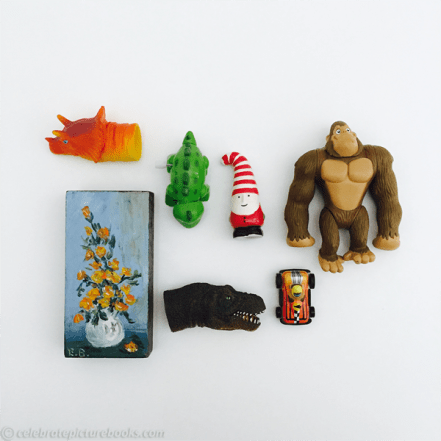
  5. Remove 1 – 3 objects. To make the game more difficult rearrange the remaining objects
  6. Turn the lights back on.
  7. Let children guess which objects have been removed.
  8. Repeat until all the objects are gone
  9. For an alternate game, instead of removing objects, add one or two

Picture Book Review

May 15 – International Day of Families

celebrate-picture-books-picture-book-review-families-families-families

About the Holiday

This United Nations sponsored observance was initiated in 1993 to reflect the importance of families worldwide. The day provides an opportunity to promote issues affecting families, including social, economic, educational and demographic topics. This year’s theme is Families, Healthy Lives and Sustainable Futures and focuses on ending poverty, promoting shared economic prosperity, social development, and health while protecting the environment. The holiday is marked with workshops, educational opportunities, publications, and special community events.

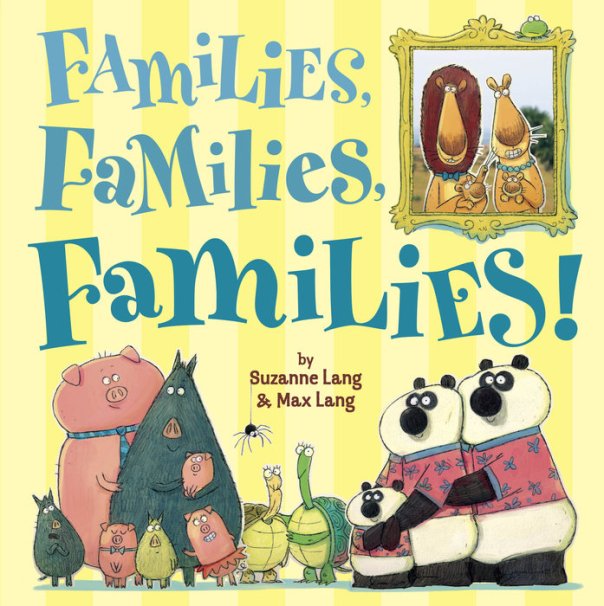
Families, Families, Families

Written by Suzanne Lang | Illustrated by Max Lang


Families—haven’t they always come in all shapes and sizes? With all different customs and traditions? Families, Families, Families delves into this most enduring—and endearing—structure of life in a way that makes sense to kids in a funny and honest way. “Some children have lots of siblings. Some children have none” the book starts. “Some children have two dads. Some have one mom. Some children live with their grandparents…and some live with an aunt.”

Lang does an excellent job of presenting all types of familial arrangements within the pages of the book. Nearly every child will happily find themselves here. Interspersed among the varieties of households, humorous comparisons and rhymes (“some children have many pets…and some just have a plant!”) elevate this book to a tribute to understanding, acceptance, and inclusion. After all…“if you love each other, then you are a family.”

Max Lang hit on an inspired way—during this era of selfies, snapchat, and the like—to illustrate the concepts of family. More than 17 animal families pose for portraits in which comic drawings of smiling moms, dads, kids, and relatives are superimposed onto photographed backgrounds. The portraits are framed with another touch of humor: A chicken family photo sits in a frame made of hay, an octopus and her four children smile from a frame made of seashells, and the Tigers are displayed in a frame of bones. The photos hang on wallpapered, barn, and underwater cave walls; sit on fireplace mantels; are pinned to bulletin boards; and fill scrapbook pages.

Families, Families, Families brilliantly demonstrates how every child takes pride in his or her family—just as the readers take pride in theirs.

Ages 3 – 7

Random House Books for Young Readers, 2015 | ISBN 978-0553499384

International Day of Families Activity

celebrate-picture-books-picture-book-review-recipe-box

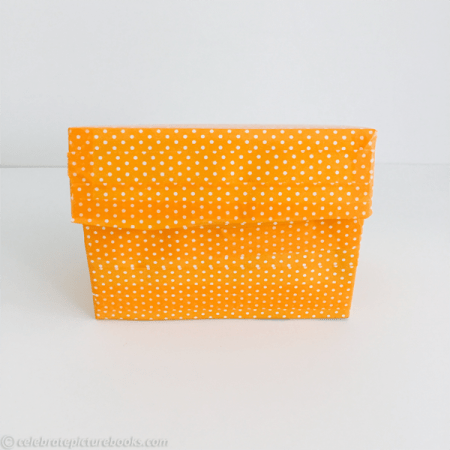
Make Your Own Recipe Box


One of the best ways to spend time together is to bake up a favorite recipe and enjoy the results! World Baking Day is celebrated this week, so for the next few days, I’ll be offering baking-related activities for you to have fun with! With a small box you can make your own recipe organizer to keep tasty recipes close at hand!

Supplies

  • A small box with a hinged lid or separate lid, at least 5 inches by 3 1/3 inches (fits a small index card). A Twinings Tea Box works well as does a small wooden box available from craft stores
  • Washi tape or paint
  • Paint brush

Directions

  1. Cover your box with washi tape or paint your box
  2. Decorate your box with your unique style

Picture Book Reviews

May 11 – National Night Shift Workers Day

celebrate-picture-books-picture-book-review-frankie-works-the-night-shift

About the Holiday

Today’s holiday honors all the people—medical personnel, firefighters, police officers, bakers, maintenance workers, and others who work the 3rd or night shift. These night owls work to keep us safe and protected, prepare treats for our morning repast, and maintain our living and work spaces for the next day. Take some time to thank a night shift worker and ask them about their perspective on the world.

Frankie Works the Night Shift

By Lisa Westberg Peters | Illustrated by Jennifer Taylor


In a quiet town after most people have gone to bed, Frankie the cat begins his work. He keeps busy emptying a wastebasket and cleaning two counters. From his doorway he calls other night workers to three meetings.

When the geraniums need watering, he sees that they are fed. It’s also his job to inspect the tool shelves, and tonight he discovers a stray intruder among the hammers. He chases it as it makes for the ladders—up and down, up and down—between the nail bins, ad up the stairs, causing a mess where there had just been order.

Frankie’s bosses wouldn’t approve, but he can’t worry about that now. He has his important job to attend to. But tonight is a wild night, and Frankie has awakened the management. “Be quiet, Frankie,” they shout. From their comfortable beds they ask, “What’s going on? Some of us have to work in the morning!”

And then the day workers see it—“Agh! A mouse!” They give him a task: “Go get it, Frankie!” and try to help by pointing out its whereabouts here and there. But Frankie is good at his job and pursues it through the cat door and into the backyard. It’s a night’s work well done! Frankie yawns and stretches. As he looks back at his domain, he’s glad he doesn’t work the day shift—there’s so much to clean up!

Frankie goes to bed in his red paint bucket in the hardware store window and dreams of relaxing at the beach on his well-deserved vacation.

Kids will love Lisa Westberg Peters’ frisky Frankie who is only doing his job but ends up creating chaos. Sometimes when you’re all in and concentrating on the work at hand, it’s like that, as kids and adults involved in play or projects well know. Peters’ clever story builds from Frankie’s playful antics in the hardware store to his necessary role of family protector and mouse dispatcher. The story contains an element of counting (Frankie empties one trash can, cleans two counters, calls three meetings…) which serves to enhance the humor.

Jennifer Taylor’s stunning mixed media illustrations make excellent use of digital photography. You almost want to reach out and pet Frankie or catch the objects flying in his wake. And when the little mouse peeks out from the broom or scampers across the floor, kids will say “aww!” or “eek!” depending on their courage. The first page of the streetscape at night is arresting for its uniquely designed old buildings. When I opened to this page, my graphics-loving daughter exclaimed, “Oh! What’s this book?!” and settled in to read it with me. Definitely a great beginning to an enjoyable read!

Ages 4 – 8

Greenwillow Books, Harper Collins Publishers, 2010 | ISBN 978-0060090951

Gardening for Wildlife Activity

celebrate-picture-books-picture-book-review-cattails

Creative Cattails


Cattails are so cool, just like their namesake felines. They’re sleek and sophisticated and inside holds mystery that bursts out when you least expect it! Here’s a simple craft for making cattails that will enhance any bouquet or décor.

Supplies

  • 6-inch by 5/8-inch craft stick
  • 3/16–inch by 12-inch dowel
  • Chunky brown yarn,  
  • Green origami paper, 8-inch square
  • Green craft paint
  • Paint brush
  • Glue gun

Directions

To make the cattail:

  1. Paint the dowel green, let dry
  2. Glue 1 inch of the dowel to one end of the craft stick with the glue gun
  3. Starting at the bottom of the craft stick, glue an end of the brown yarn to the end of the craft stick meets the dowel
  4. Wind the yarn upward around the dowel and craft stick to the top. You will leave the 1/2 –inch curved part of the craft stick open.  Then reverse.
  5. Wind the yarn downward, going past the end of the craft stick about ½ inch to make the end of the cattail
  6. Wind the yarn upward once more to the top
  7. When you reach the top, put glue on either side of the curved top of the craft stick and pull a little of existing yarn into the glued area, pinching it closed.
  8. Cut the end of the yarn from the skein and tuck the end into the glued top.

To add the leaf:

  1. Cut a thin triangle from one side of the origami paper, starting with a 1-inch base and angling to the top of the paper
  2. Glue the base to the dowel about 1 ½ inches from the bottom
  3. Wind the paper upward around the dowel, leaving 5 inches unwound
  4. Glue the paper to the dowel, letting the 5-inch section stick up

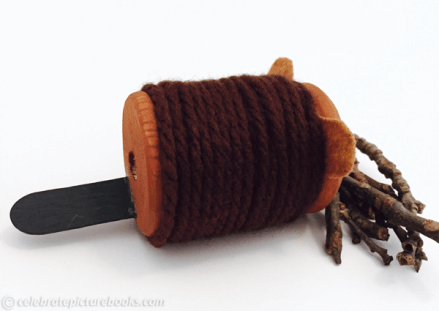
If you’d like to make another craft using chunky brown yarn, see my April 7 post on The Flying Beaver Brothers and the Crazy Critter Race by Maxwell Eaton III to create a cute spool beaver.

April 30 – Save the Frogs Day

celebrate-picture-books-picture-book-review-i-dont-want-to-be-a-frog

About the Holiday

Frogs and other amphibians are some of the most threatened species on our planet. Pollution, loss of habitat, climate change, and invasive species are just some of the causes of amphibian extinctions. Save the Frogs Day aims to educated the public and raise awareness of the declining frog and amphibian populations and to promote conservation of their environments to ensure their survival.

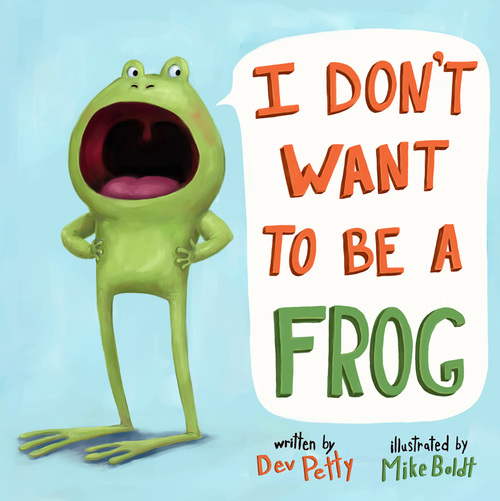
I Don’t Want to be a Frog

Written by Dev Petty | Illustrated by Mike Boldt


“I want to be a cat,” a little frog announces to his father. “You can’t be a cat,” his dad answers, which elicits the inevitable “Why not?” from his son. His dad isn’t quite ready for this conversation and gives him the standard “because you’re a frog” response.

Well, it turns out the little frog would rather be almost anything other than what he is. As he rattles off a list of alternatives that he considers much better, his dad warms to the game and counters each of his son’s suggestions with the realities of life (at least their life).

When little frog opines that he’d like to be a rabbit, his dad points out that he doesn’t have long ears. Being a pig seems like an attractive option, but little frog’s dad tells him he doesn’t have a curly tail or eat garbage. His son thinks garbage for dinner sounds okay, but his dad disagrees.

While both son and father believe being an owl would be “the greatest thing ever,” three things are standing in the way: Frogs don’t have wings, they don’t look wise, and they can’t spin their heads around.

So what’s so bad about being a frog? It’s “too wet,” “too slimy,” and there’s “too much bug eating,” little frog complains. Just then a wolf sneaks up on the father-son duo and wants to know why the little guy is so glum. Without turning around to see who he’s talking to, the frog reveals his plight.

Well, says the wolf, I’ll tell you a secret. With glee he explains that he revels in eating cats, rabbits, pigs, and owls. In fact, just talking about it makes him hungry. But “guess the one thing I never eat,” the wolf urges. “Badgers?” guesses the little frog. But no, the answer is “frogs.” And why? Because they are “too wet and slimy and full of bugs.”

Wiser for this fresh perspective, the young frog sends the wolf off with a hearty, “I guess you can’t fight nature. We are what we are. You are a fierce hunter.” 

As the wolf walks away all’s well that ends well—except not so much for the creature who next happens upon the scene!

Dev Petty’s sassy-in-a-good-way young frog’s identity crisis is pure fun! The notion of self-acceptance and that each person is built, has talents, and embodies skills just right for who they are is playfully presented by Petty’s sweet father-and-son team. The humorous, escalating dialogue will keep kids laughing, and the surprise ending is a perfect twist.

Mike Boldt’s olive green frogs are a delight as they trade off assurance and skepticism in their life-lesson conversation. The dad, initially mystified by his son’s pronouncements, discusses the issue with patience and genuine curiosity, his eyes registering cunning and understanding behind oversized glasses. His son, wide-eyed and vocal, displays the honesty of children with questions. Boldt’s illustrations of the rabbit, pig, and owl that so captivate the young frog juxtaposed with the father’s objections are comical joy, as are the frogs’ looong legs and expressive faces. And the final scenes with the enlightening wolf, whose head spans two pages, offer more laughs as the father and son resolve their differences.

Adult readers should be prepared—and will be happy—to read I Don’t Want to be a Frog again and again!

Ages 3 – 7

Doubleday Books for Young Readers, 2015 | ISBN 978-0385378666

Save the Frogs Day Activity

celebrate-picture-books-picture-book-review-frog-matching

Hop Along Matching Game


Hop along now and help these frogs! Each of these fantastic frogs has a twin, but they’ve gotten separated. Can you spot the identical pairs? Print out the Hop Along Matching Game and draw a line between the pairs.

picture book review

April 29 – It’s National Humor Month

celebrate-picture-books-picture-book-review-meet-the-dullards

About the Holiday

The whole month can’t go by without celebrating one of the most fantastic things about life—humor! Whether you’re laughing at a funny joke, your favorite comedian or comic strip, a silly mistake, or even yourself, a chuckle is good for you! Today, take time to relax and enjoy the absurd—and give a few hearty “Ha! Ha! Ha’s!” along the way.

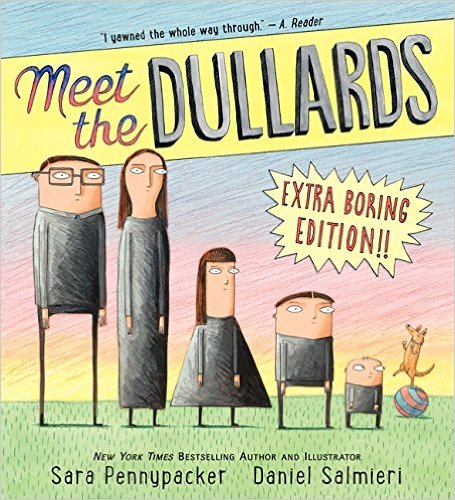
Meet the Dullards

Written by Sara Pennypacker | Illustrated by Daniel Salmieri


Gray—that’s what the Dullards are. Gray and happily extra boring. Their life is going on in its monotonous way until one day when Mr. and Mrs. Dullard happen upon a most disturbing sight. Their three children are reading—and not only that, they are reading books about befriending lions, juggling, and walking a tightrope. The elder Dullards do what any self-respecting dullard would do. They retrieve the books and hand their children blank pieces of paper to read instead.

The children are definitely becoming a problem. They want to go to school and have been playing outside. It’s not our fault bemoan the parents; it must be the town where last fall some leaves actually turned color and there’s that unruly snail in the driveway. In fact the whole atmosphere is like a circus! There’s only one thing to do. The Dullards pack up their house and Blanda, Borely, and Little Dud and move away.

Immediately upon moving into their new home, they are bombarded by the neighbor lady bringing exclamation marks and chunky applesauce cake into their perfectly dull new home. The kids are sent to watch the (unplugged) TV, but instead their eyes are drawn to the window. While unpacking Mr. and Mrs. Dullard discover a sight so shocking that Mrs. Dullard faints into the arms of her distressed husband. It’s yellow flowered wallpaper. (An exclamation mark would be appropriate here, but you know…)

On the way to the paint store the family stops to get ice-cream cones, and with 90,000 flavors to choose from they pick vanilla. Plain cone or sugar cone? No cone, of course. At the paint store Mr. Dullard suggests medium gray, but Mrs. Dullard deems it too risky. Its similarity to highways could make the kids think of travel. Beige? Mrs. Dullard counters. Too much like clay, says Mr. Dullard which can be used to create stuff. They come to a compromise and go home to—you’ve got it—watch the paint dry.

While their parents are mesmerized the kids sneak away and out the window that so enthralled them before. The sight of Blanda, Borely, and Little Dud juggling, teaching a dog tricks, and somersaulting on the clothesline, ushers in another move—back to where they came from just in time for the kids to join the circus.

With dry wit and laugh-out-loud dialogue Sara Pennypacker delivers a spot-on family story. While seen through the eyes of Mr. and Mrs. Dullard, this funny tale is all about the kids. What kids don’t think their parents are dull and conventional? And can parents really understand what’s going on in those little minds? Both children and adults will love the Dullards, and after reading you may be inspired to go out for vanilla chocolate ice-cream (ok, you can still hold the cone!)

Daniel Salmieri’s Dullards are comic genius! With their oval bodies and gray attire they blend with their oatmeal-hued walls to perfect effect. Identical square houses give way to identical triangular houses as the Dullards move to avoid catastrophic enthusiasm. The kids’ facial expressions as they adhere to boooring rules are priceless as are the parents’ reactions to the slightest excitement. Details such as a yellow snail in the driveway, the elder Dullards’ looks of horror when discovering the bright wallpaper, the signs on the ice-cream kiosk, and the name of the moving van make provide humorous jokes on each page.

Ages 4 – 8

Balzar + Bray, Harper Collins, 2015 | ISBN 978-0062198563

National Humor Month Activity

celebrate-picture-books-picture-book-review-paint-strip-craft

Paint Strip Inspiration


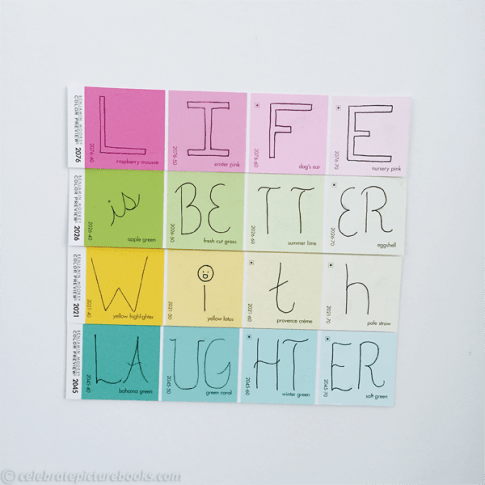
Do you like to laugh? Do you like to watch paint dry? It is kind of cool how it changes color a bit as it dries….Oh, sorry! Where was I? Oh yeah—this craft. Paint sample strips make brilliant backdrops to your thoughts about love, life, laughter—anything! You can mix and match your favorite colors and arrange them any way you like to decorate your wall. Frame them for a more put-together look!

Supplies

  • 4 -5 paint strips from a hardware store OR You could also make your own color stips with poster board and craft paint
  • Poster board
  • Craft paint
  • Paint brush
  • Markers or adhesive letters
  • Scissors
  • Mounting squares
  • Frame (optional)

Directions

  1. If you are making your own paint strip, cut poster board into strips 9 inches long by 2 inches wide, or to desired size
  2. Paint squares of color to fill the strip, leaving a 1/8-inch-wide stripe between colors
  3. Think of a phrase that expresses your thoughts on life and laughter OR use a favorite quote
  4. Print the words on the squares of color OR use adhesive letters. You can print one letter per square or multiple letters or even whole words. Mix styles of print to give it your own unique look.
  5. Mount or frame your paint strip phrase

April 25 – World Penguin Day

celebrate-picture-books-picture-book-review-little-penguin-gets-the-hiccups

About the Holiday

As Antarctica’s Adelie Penguins begin their northern migration today, we should remember that conservation of the environment is crucial to the survival of this and all 17 living species of penguins. Eleven species are listed as vulnerable or endangered. Why not learn a little more about the various kinds of penguins today? Or it would be a perfect day to visit a local aquarium and watch these waddling wonders dive and frolic in the water!

Little Penguin Gets the Hiccups

By Tadgh Bentley


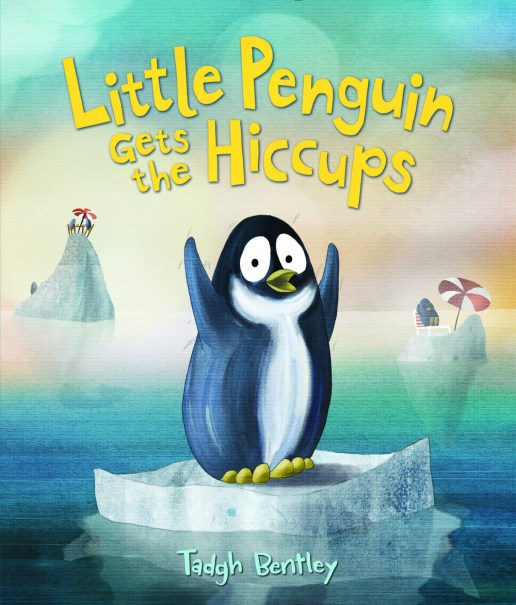
“Oh, hello. It’s so nice to HIC! meet you,” the little penguin greets readers from his ice floe on the first page. The penguin’s been expecting you and he’s so glad you’re here. You see, he has a HIC! problem and needs your help. Ever since last week when he ate a bowl of chili, he’s had the worst hiccups!

His friend Frederick—the one who told the penguin you were coming—suggested he stand on his head. Chester said to drink backward from a cup. And Albert thought a combination of the two would do the trick. But nothing works. Franklin came up with another idea, and that’s where you come in.

The penguin needs someone to scare him. Unfortunately the little guy doesn’t like being scared, so he’s ready for you to say “Boo!” on the count of three. Ready? “One – two – three.”

“boo”

“Hic!”

Well, that didn’t work. How about louder? “Boo!” Nope. Will nothing cure the hiccups? The disappointed penguin lies on the ice wondering if he’ll have the hiccups forever, but he’s willing to give it another go. This time shout, go crazy! Ready? “One – two – three.”

“ROAR!”

Was that you? No? Oh! It was Franklin! “What are you doing, Franklin?” the very scared penguin says, climbing out of the ocean. Now his feathers are all wet and his mom is NOT going to be happy because she just washed them and…wait a minute! His hiccups are gone, and he wants to celebrate! But, wait—with tacos? Hmmm…this could be a problem…

Tadgh Bentley’s adorable penguin with a problem of hicstorical proportions is sure to get kids giggling and shouting “Boo!” in this interactive picture book. The conversational tone and hiccup-interrupted story will have kids empathizing with and rooting for the little penguin in the throes of a very familiar condition. Bentley’s illustrations of the cute, plump penguin are full of angst, action, and humor. As little penguin greets readers, his friends play cards, fish, eat chili, and frolic on other ice floes. Kids will laugh out loud at the penguin’s attempts to banish the hiccups, and roar along with Franklin when he makes his dramatic appearance.

Ages 3 – 8

Balzar + Bray, Harper Collins, 2015 | ISBN 978-0062335364

World Penguin Day Activity

celebrate-picture-books-picture-book-review-penguin-puzzle

Puzzled Penguin Puzzler


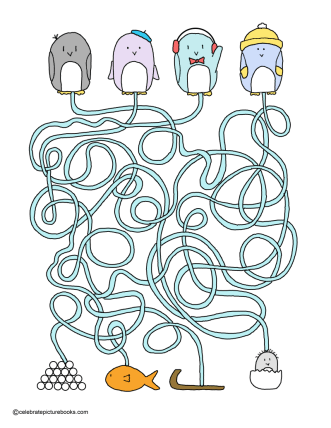
These four penguins have lost their stuff! Can you untangle the paths that will lead the right penguins to the snowballs, sled, fish, and baby? Print the Puzzled Penguin Puzzler here!

April 7 – International Beaver Day

The Flying Beaver Brothers and the Crazy Critter Race by Maxwell Eaton III

About the Holiday

Beavers are pretty amazing creatures. With their prominent teeth these largest members of the rodent family cut down large trees. They use the bark, buds, and small twigs for food then gnaw the trunk and branches into smaller parts and build dams that are just about as strong as anything people can construct. These dams can help prevent floods, clean the water supply, and restore wetlands. The largest beaver dam is in Wood Buffalo National Park in Alberta, Canada.

Beaver Day is celebrated to bring awareness to the declining beaver population and to promote their protection.

The Flying Beaver Brothers and the Crazy Critter Race

By Maxwell Eaton III


The flying Beaver brothers are back in a vine-popping, lasso-swirling adventure! Bub is reading Penguin Giant to Bob and Bob when Ace comes home with an intriguing ad for The Crazy Critter Race. The winner will receive—not pancakes as the penguins hope—but a free houseboat. The house Bob and Bob built for the Beaver brothers is a little less than desirable, so Ace and Bub swim over to Critter Houseboat Sales and Service to sign up.

There they meet the yeehawin’ cowboy hat-wearin’ crazy critter who has organized this unusual event. They also encounter the rope-snapping Raccoon sisters, and the competition is on! Crazy Critter explains the rules of the race: It seems the islands’ trees have been destroyed by ornery baboons, so the object of the race is to replant trees from a jar of seeds Crazy Critter gives them. The first team to reach the top of each mountain must plant one seed. The team who completes the race and rings the bell at the finish line will win a houseboat.

The racers take off, but the Beaver brothers and Raccoon sisters soon leave the rest of the competition in their wake. They both run to the top of the first mountain and plant their seeds. With a Rugga Rugga and a loud Brorg! two enormous vines break the earth and thunder toward the sky! In all the mayhem Ace and Bub’s jar of seeds opens and spills its contents on the beach.

In the blink of an eye, vines are shooting out of the ground and grabbing everything in sight. In fact, “Everything Vine” is the name of this Kudzu cousin because it covers everything. Ace and Bub go to work with their gnawing teeth, but even they are no match for the vine. Unaware of the disastrous consequences, the Beaver sisters use some pretty impressive moves to get ahead even as they continue planting seeds.

Now vines are erupting willy-nilly, threatening every land mass and even Beaver Island. Crazy Critter denies all knowledge of the fatal seeds, but has a solution of his own—if the islands are uninhabitable, he will sell houseboats to all the ex-habitants. Crazy Critter finally fesses up to his evil plan, but what can anyone do now? The vines are taking over!

The Beaver brothers look at the Raccoon sisters and the Raccoon sisters look at the Beaver brothers. They know that by working together they can save the islands. The Raccoon sisters use their awesome roping skills to gather the vines while the Beaver brothers chomp them in half, destroying them. Beaver Island is saved!

But who wins the houseboat? Let’s just say Crazy Critter isn’t so crazy after all.

This graphic novel-style book—the 6th in the series—will appeal to reluctant readers as  well as kids who enjoy a wild, humorous adventure. The quick pace of the story, teamed with action-packed drawings, will keep fans of the series cheering for their familiar friends in this race that just doesn’t seem right. Kids will laugh out loud at the funny asides and sound effects. A light-hearted lesson on competition and cooperation ties the story together in a satisfying finish.

Ages 6 – 9

Knopf Books for Young Readers, 2015 | ISBN 978-0385754699

International Beaver Day Activity

CPB - Beaver craft picture (2)

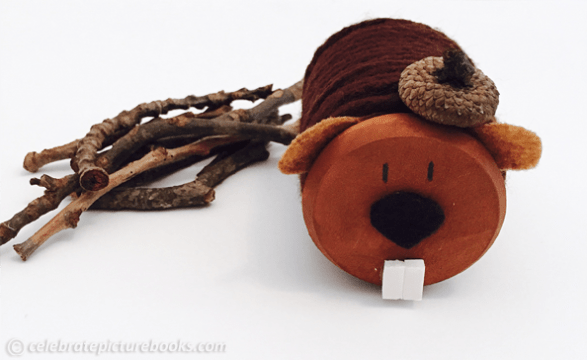
Make a Spool Beaver


Do you have a gnawing need to have a beaver of your own? Make one with this Spool Beaver craft!

Supplies

  • Printable Ears and Nose Template
  • 2-inch wooden spool, available at craft stores
  • 1 6-inch long x ¾ inch wide craft stick
  • Small piece of foam board
  • Brown “chunky” yarn
  • Brown felt, small piece for ears and tail
  • Black felt, small piece for nose
  • Acorn top for hat (optional)
  • Brown craft paint
  • Black craft paint
  • Black marker
  • Strong glue
  • Paint brush
  • Scissors

CPB - Beaver craft picture with tail

Directions

  1. Print the Ears and Nose template
  2. Paint the spool with the brown paint, let dry
  3. Cut the ears from the brown felt
  4. Cut the nose from the black felt
  5. Cut a piece from the end of the craft stick
  6. Paint the craft stick brown or black, let dry
  7. Cut two small pieces from the foam board, ½-inch long x 3/8 inch wide
  8. When the spool is dry, glue the ears to the spool, leaving the ears sticking up over the rim of the spool
  9. Glue one end of the yarn to the spool
  10. Holding the spool horizontally, wind the rest of the yarn around the spool back and forth from front to back. Glue the end to the body of yarn. This will be the bottom of the beaver.
  11. Glue the nose over the hole in the spool
  12. Glue the teeth below the nose
  13. Glue the flat edge of the craft stick to the back of the spool to make the tail