February 6 – Children’s Mental Health Week

About the Holiday


February 3rd-9th marks the United Kingdom’s 11th National Children’s Mental Health week, sponsored by the children’s mental health charity Place2Be. While the US has its own Children’s Mental Health Awareness week in May, it’s always good to share resources and support around mental health for children. This February’s theme is Know Yourself Grow Yourself, with an emphasis on building resilience and coping skills through self-understanding. To honor Children’s Mental Health week, adults and kids alike can engage in mood journaling, verbal processing of emotions, and reading books that explore just what to do to get through hard times.

Review by Dorothy Levine

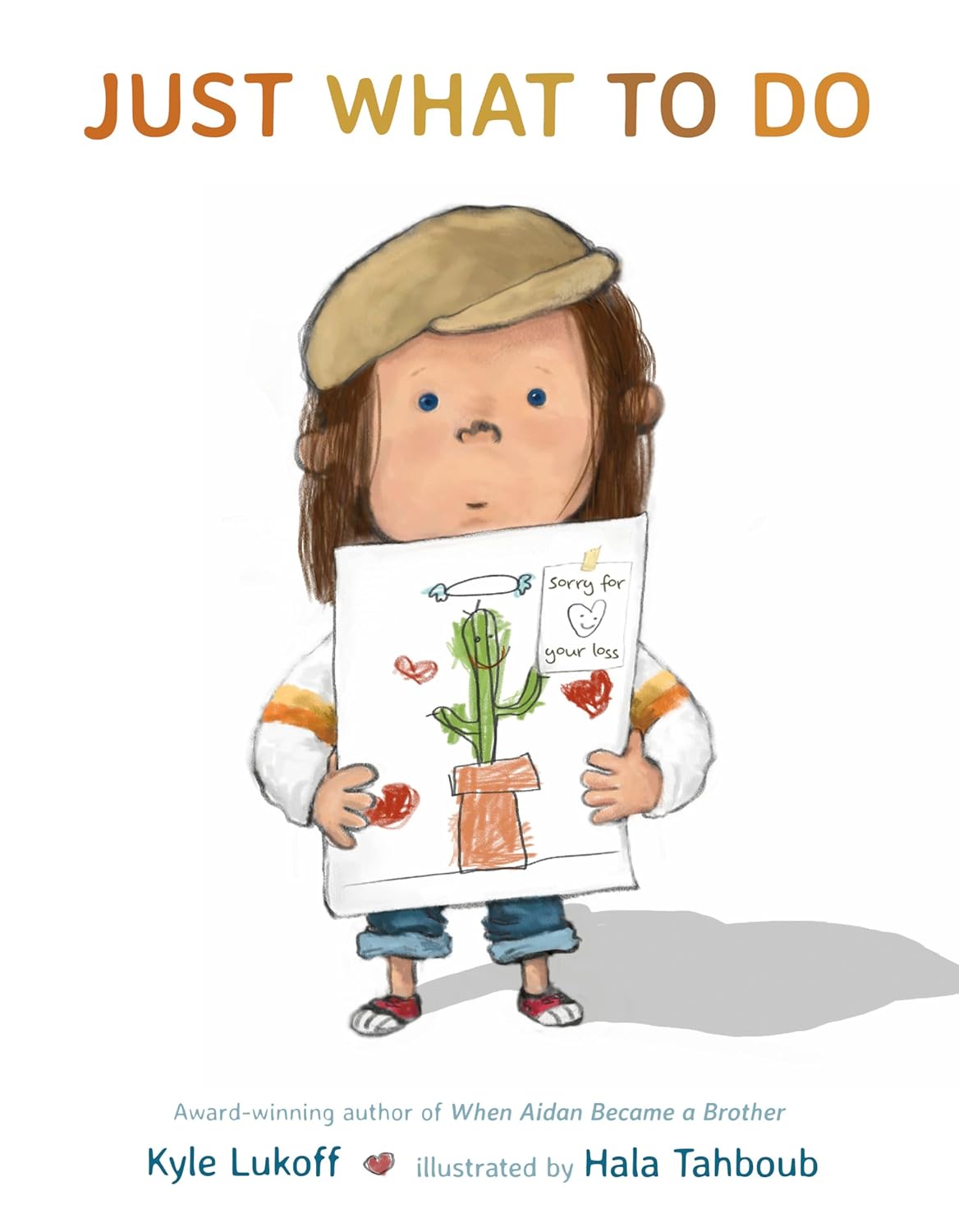
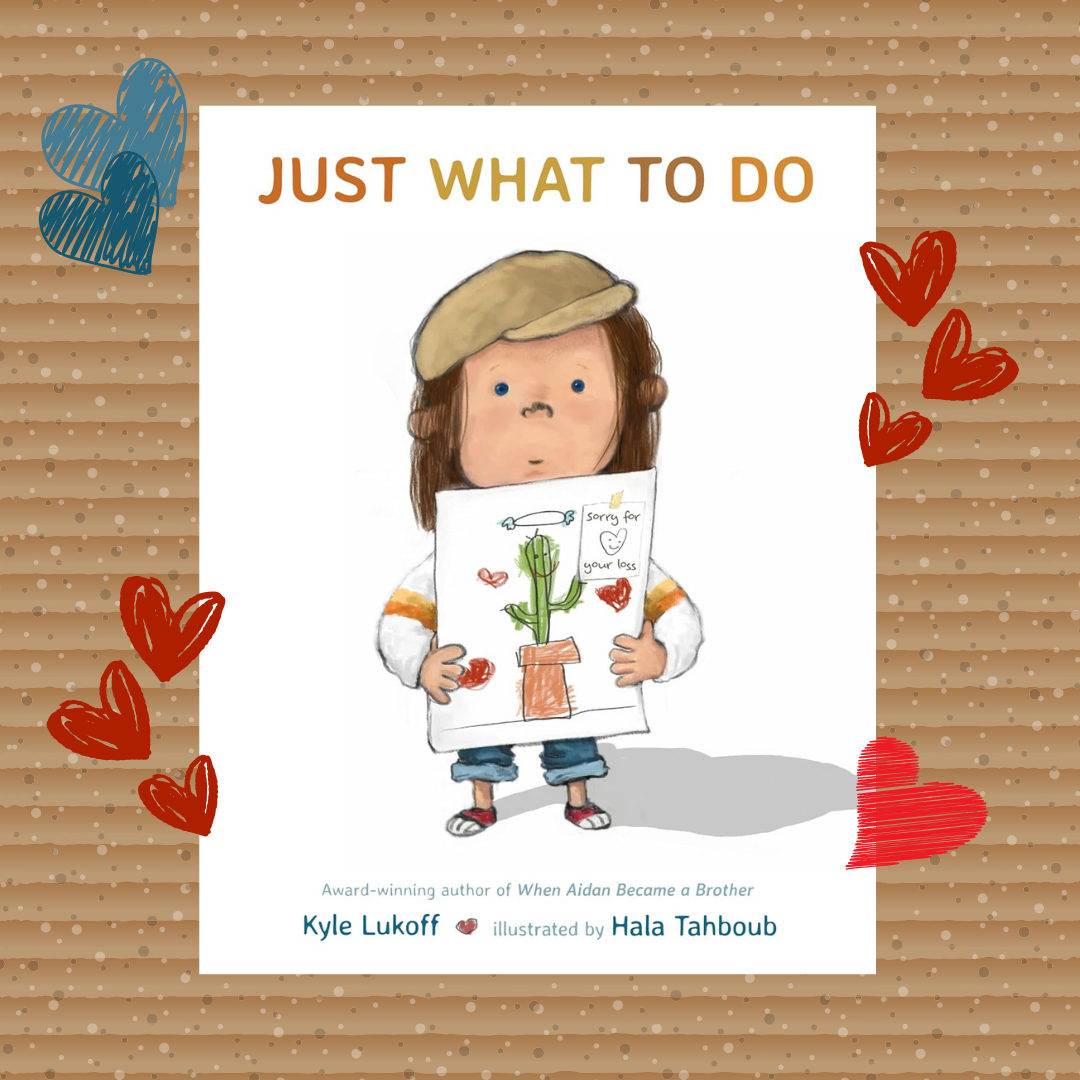
Just What to Do

By Kyle Lukoff | Illustrated by Hala Tahboub


When a loved one is experiencing a loss, it can be hard to know how best to help. Just What to Do is a gentle story that walks readers through exactly that—just what to do. The key? Figuring out how each person best likes to be comforted.

The book begins with a narrator confidently clutching a handmade condolence card with a smiling cactus angel featured on the front. “When my brother’s cactus died,” they say, “I knew just what to do.” As the narrator discovers, however, a card is not how the brother would like to receive support. “Could you tell me a joke instead? I really want to laugh.” he says.
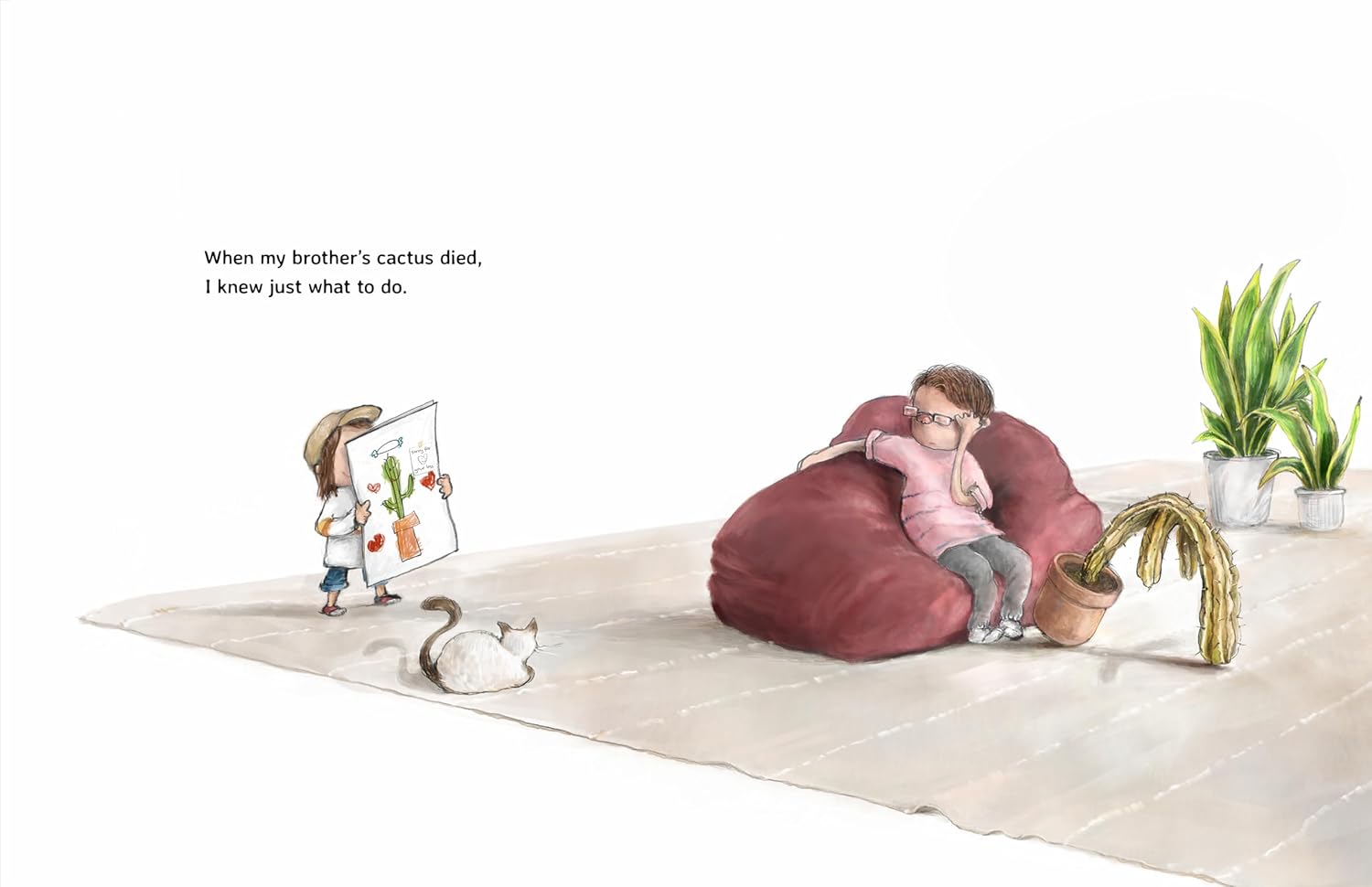
Image copyright Hala Tahboub, 2024, text copyright Kyle Lukoff, 2024. Courtesy of Dial Books.

So, naturally, when the protagonist’s cousin’s goldfish dies, they know exactly what to do; at the library they nab a book of jokes in preparation for a visit. But instead, the cousin asks for a hug.

The pattern continues with the narrator learning a new method of supporting a loved one with each instance of grief. And learning that the same technique does not feel good to the next person in need of their comfort.

Image copyright Hala Tahboub, 2024, text copyright Kyle Lukoff, 2024. Courtesy of Dial Books.

When the narrator’s best friend’s grandmother dies, they are unsure what to do. Would she want a card, a snack, a hug? How could they know? Finally, they decide the best way to find out is simply to ask: “Can you tell me what to do? I don’t know how to help.” While the friend is at first unsure how to answer this question, the narrator and friend find ways to seek out comfort and connection by spending time together. The story ends with a wordless spread of them swinging, talking, picking flowers and a spread with the word “together” in which they share a flower crown.
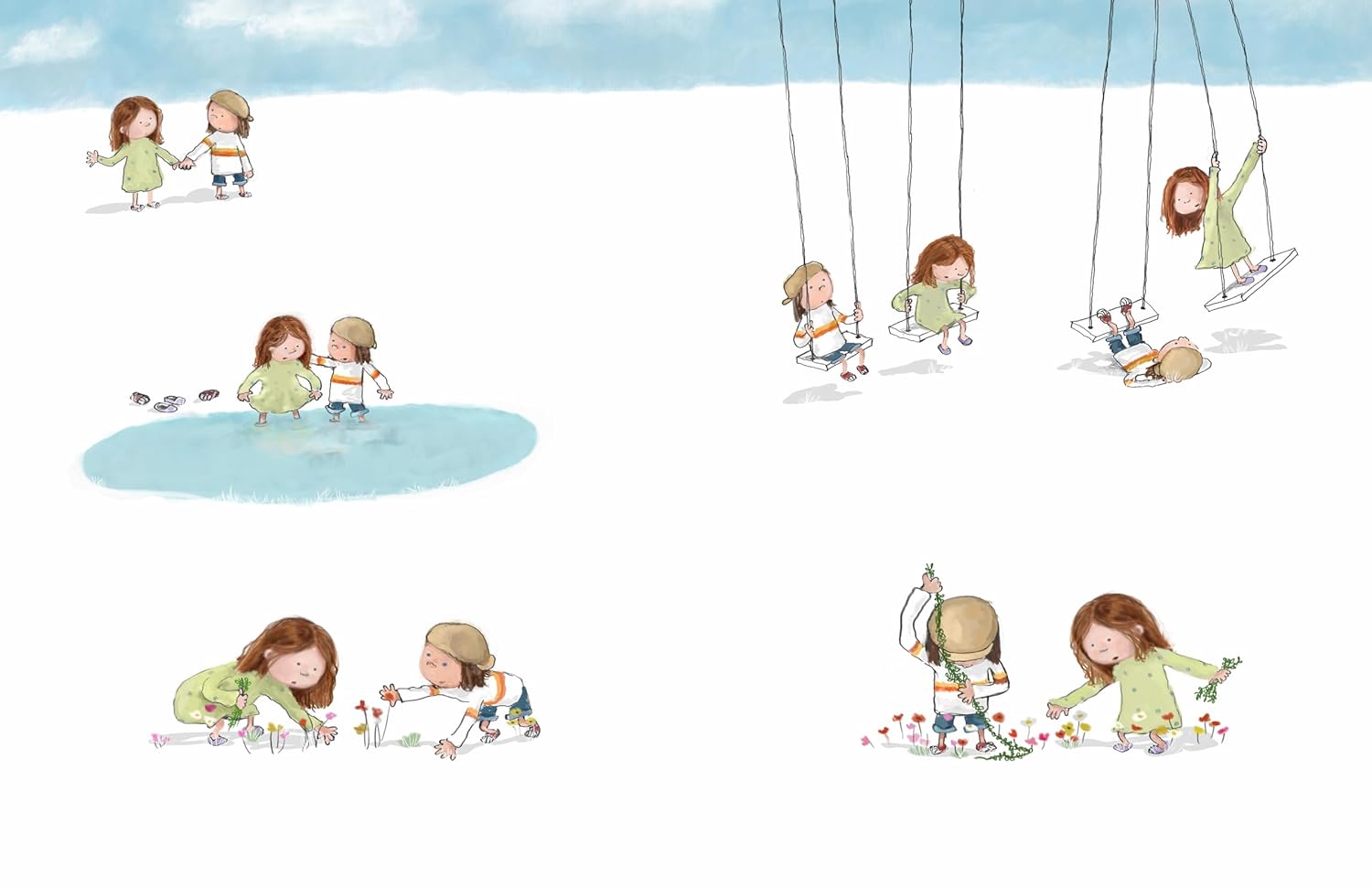
Image copyright Hala Tahboub, 2024, text copyright Kyle Lukoff, 2024. Courtesy of Dial Books.

Just What to Do tackles a tough but topical topic for children, what to do with grief and how to support others through it, something that even adults struggle with. Oftentimes, people make the mistake of thinking there is a cookie cutter “one size fits all” fix for working through grief, but, as Lukoff poignantly shows, this simply is not the case. Readers will learn and grow with the protagonist as they explore new ways of helping and providing care for a diverse cast of family and friends.

Hala Tahboub creates simple sketches featuring an androgynous-appearing elementary-school-aged narrator. Wordless spreads of characters connecting are interspersed in the story and are contrasted with more bare pages focused solely on the narrator when they reach emotionally salient moments. There is a clarity in the images and an intricacy in the facial expressions that allows the audience to focus on the main character’s internal struggles. The words of the story are expanded on in the images, with different characters expressing their grief in unique ways (a babysitter commemorating her dog with dog toys, the cousin holding her goldfish’s tank under a large shady tree with a bouquet of flowers, etc.)

Just What to Do is an essential addition to library and home collections, as well as counseling centers. The book lovingly guides readers through a difficult subject with an appropriate amount of levity and learning to make for a perfect read aloud.

Ages 3 – 7

Dial Books for Young Readers, 2024 | ISBN 978-0593462942

About the Author

Kyle Lukoff is the author of many books for young readers. His debut middle-grade novel, Too Bright To See, received a Newbery honor, the Stonewall award, and was a National Book Award finalist. His picture book When Aidan Became A Brother also won the Stonewall. He has forthcoming books about mermaids, babies, apologies, and lots of other topics. While becoming a writer he worked as a bookseller for ten years, and then nine more years as a school librarian. Visit him at kylelukoff.com.

About the Illustrator

Hala Tahboub is a children’s book writer and illustrator. She started her creative journey as an architect and interior designer. She won the SCBWI Canada East chapter’s Storyteller Award for Illustration in 2019, and she was the SCBWI’s December Featured Illustrator in 2020. Hala believes in kindness, coffee, chocolate, and in the immense power of stories. She lives in Montreal. Visit her at halatahboub.com.

National Children’s Mental Health Week Activities
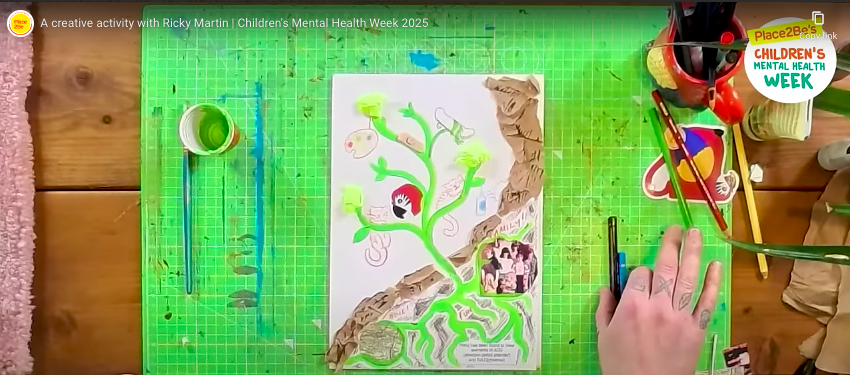
Place2be Activity with Ricky Martin


Art Room Activity

Watch the Art Room’s video on this self-awareness art activity and create your own identity plant.
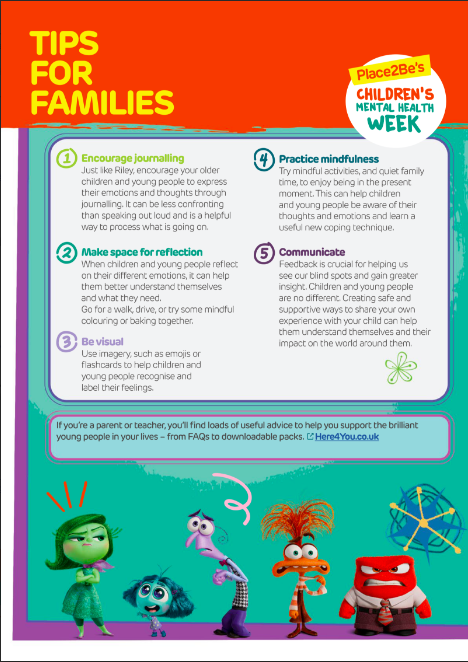
Exploring Emotions Tip Sheet for Families

Download this Exploring Emotions Tip Sheet for families on how to encourage children to explore and express their emotions.
You can purchase Just What to Do at these booksellers

Amazon | Barnes & Noble | Bookshop (to support your local independent bookstore)

Picture Book Review

November 19 – Children’s Grief Awareness Day

celebrate-picture-books-picture-book-review-the-boy-and-the-gorilla-cover

About the Holiday

Created in 2008 by the Highmark Caring Place, A Center for Grieving Children, Adolescents and Their Families in Pennsylvania, Children’s Grief Awareness Day is now recognized by organizations around the world. The day seeks to raise awareness of the painful impact that the death of a loved one has on a child and the fact that receiving support can make all the difference in their life as they grieve. It also provides an opportunity to make sure that these children receive the support they need.

The statistics are sobering. Before graduating from high school, one child out of every 20 children will experience the death of a parent. That number does not include those who experience the death of a sibling, a grandparent, an aunt, uncle or cousin, or a friend.

To learn more information on the needs of grieving children and find available resources, visit the Children’s Grief Awareness Day website.

Thanks to Candlewick Press for sending me a copy of The Boy and the Gorilla for review consideration. All opinions about the book are my own. I’m happy to be teaming with Candlewick in a giveaway of the book. See details below.

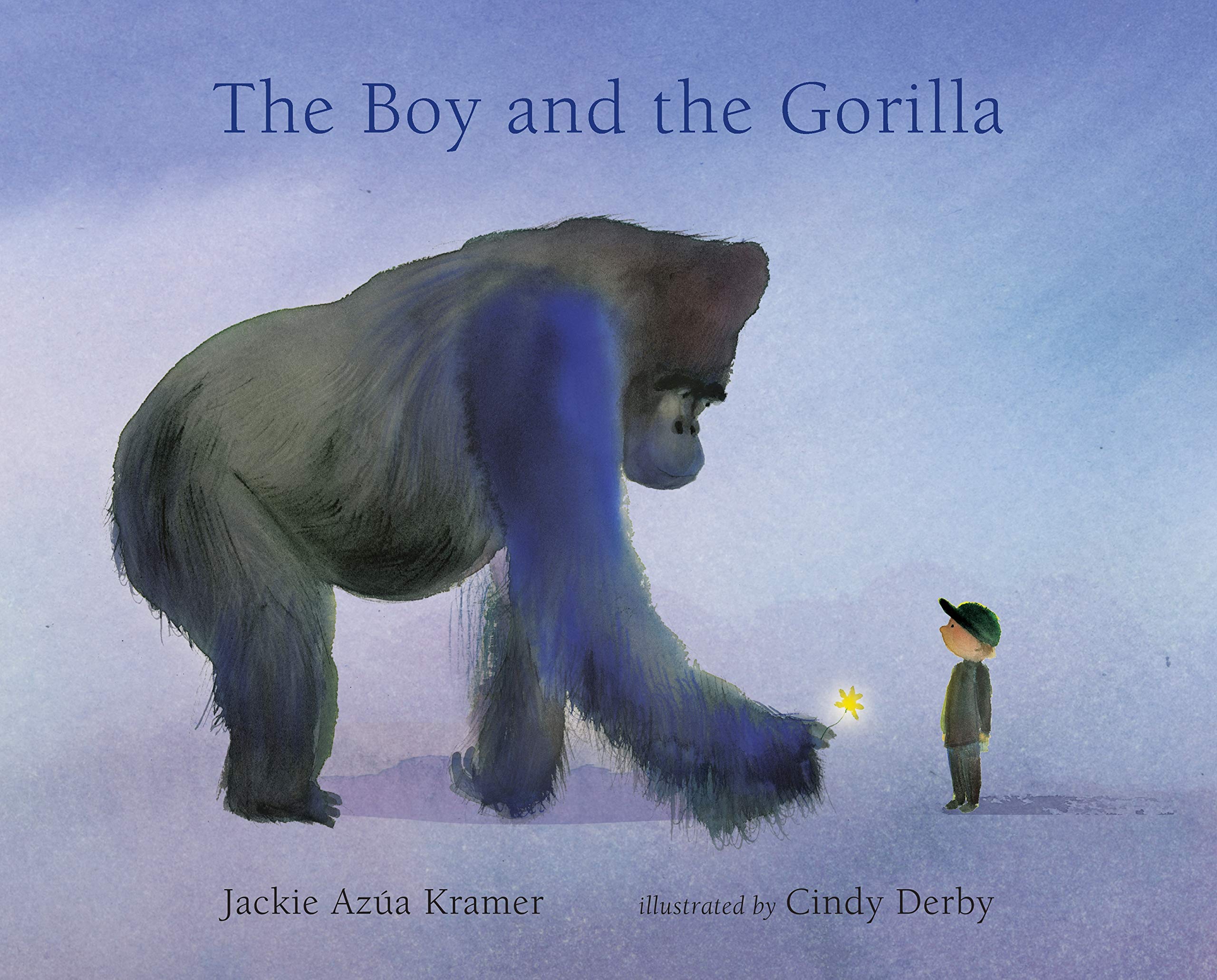
The Boy and the Gorilla

Written by Jackie Azúa Kramer | Illustrated by Cindy Derby


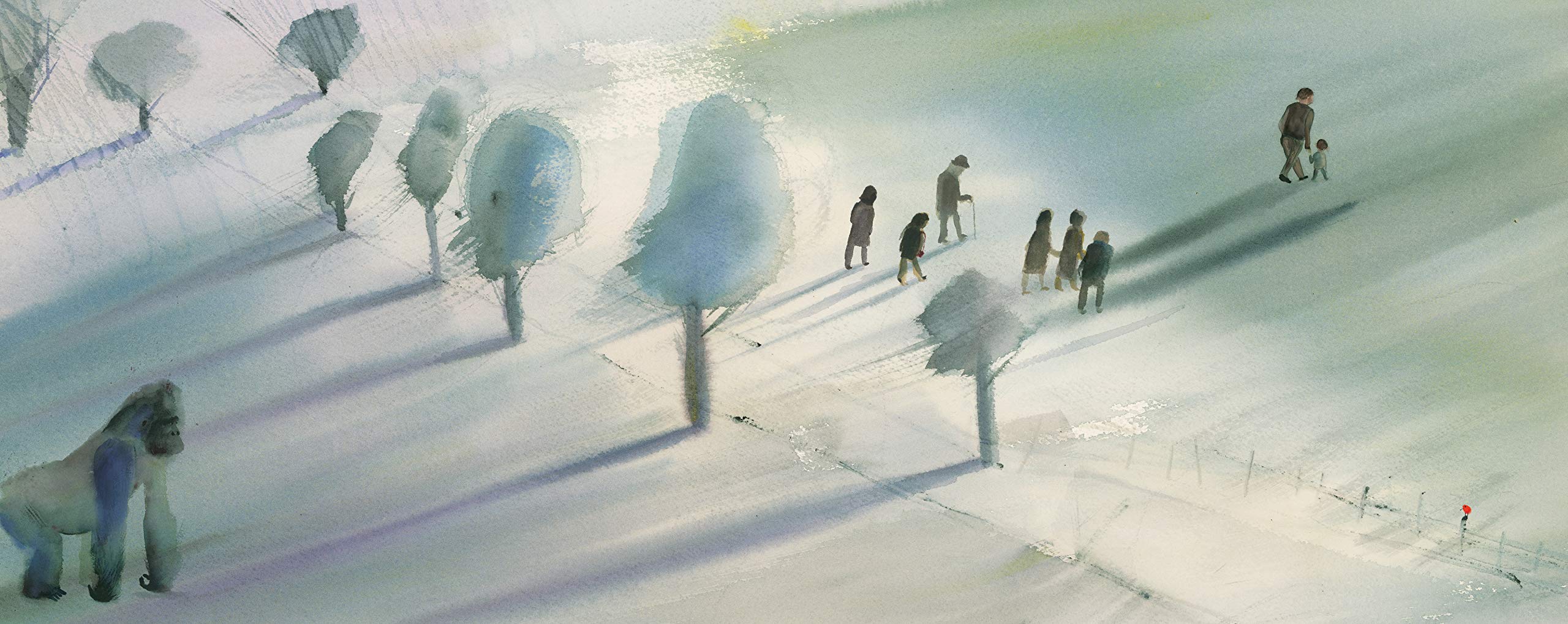
The sun casts long shadows as a little boy, his father, and a few mourners walk away from the cemetery. In the background a gorilla, strong and watchful, knows he’s needed. At home, the boy and his father sit on the sofa, aware of the family and friends gathered, but separated by grief. The gorilla waits silently nearby, filling some of the empty space. Escaping into the backyard, the boy kneels in his mother’s garden to pick a tomato. Now that he is alone, the boy acknowledges the gorilla, who asks if he can help. “Okay,” the boy says.

celebrate-picture-books-picture-book-review-the-boy-and-the-gorilla-cemetery

Image copyright Cindy Derby, 2020, text copyright Jackie Azúa Kramer, 2020. Courtesy of Candlewick Press.

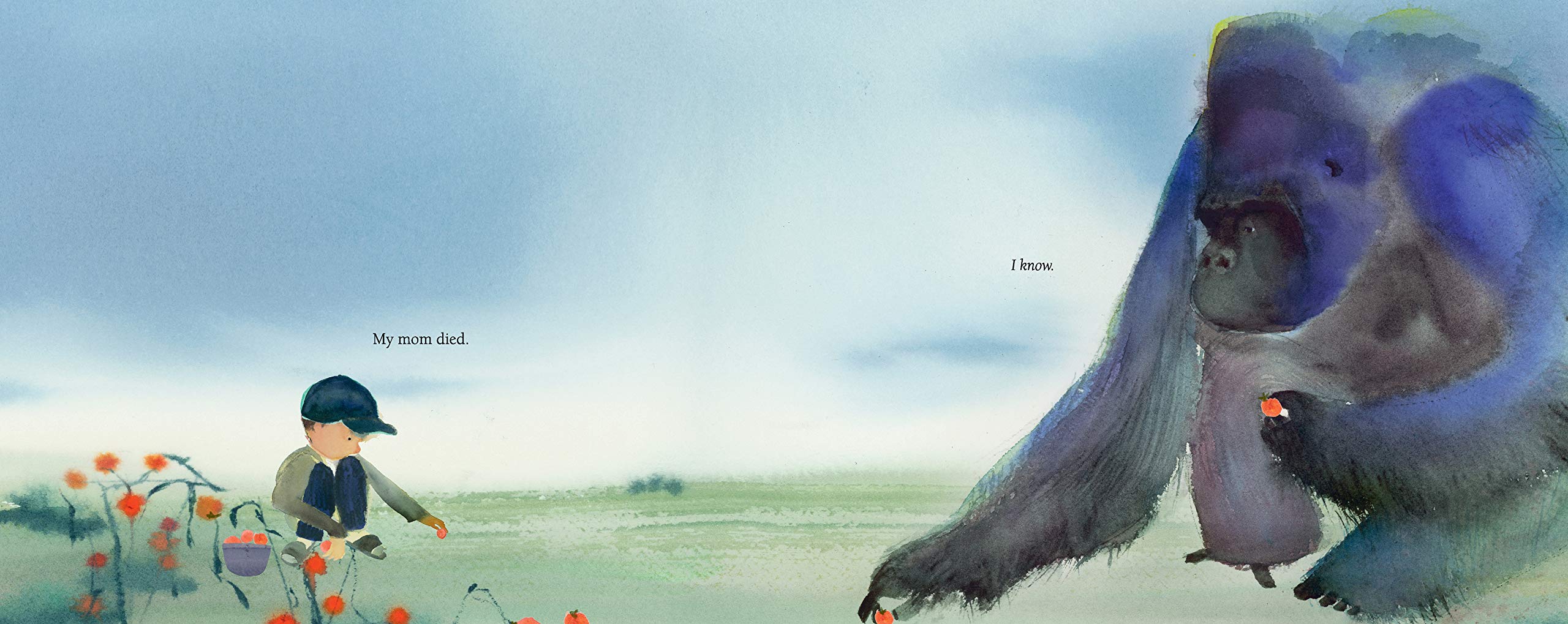
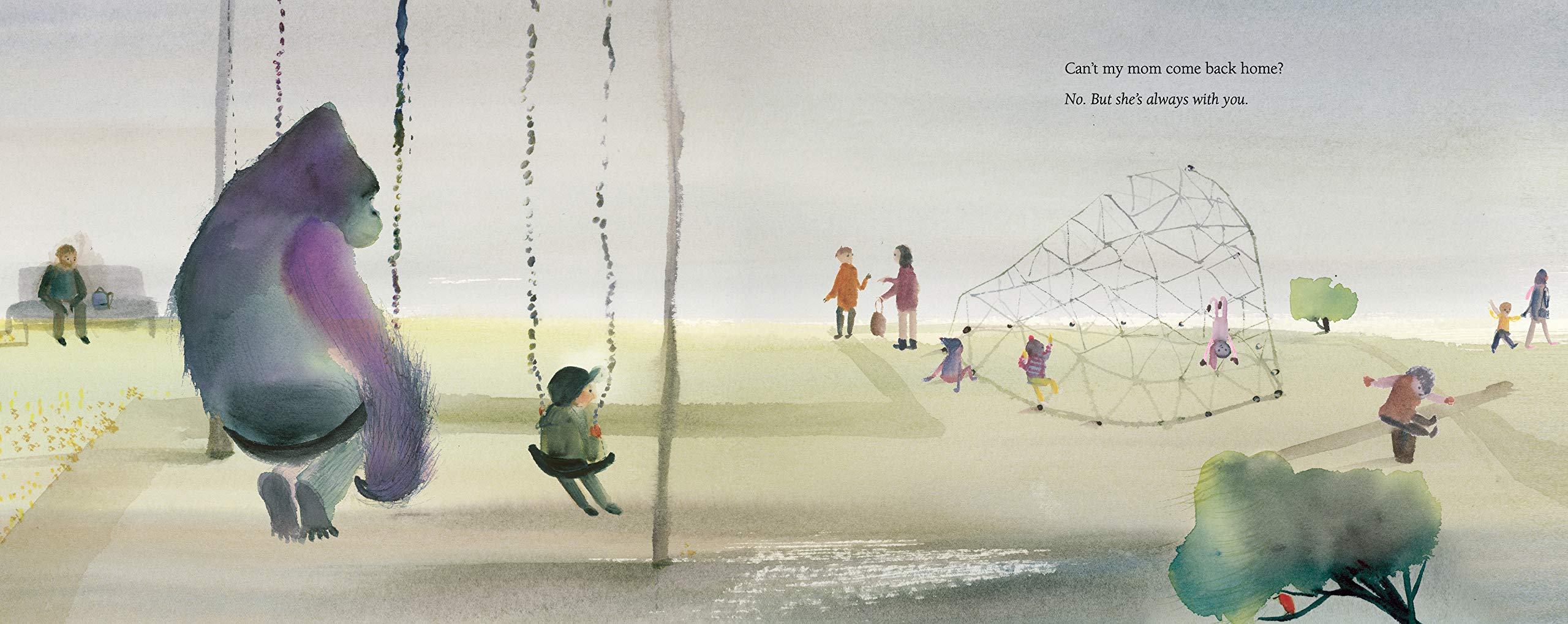
Here, to this friend of his heart, the boy can express his deep sadness as well as the questions he has about death. “My mom died,” he says. Gently holding one and picking up another tomato, the gorilla answers, “I know.” As some of the routines of life return, the boy and his dad are separated by their individual thoughts and the tasks that need to be done. But the boy works through his questions about whether all people die, where his mom went, and if she can “come back home” with the gorilla. To each question, the gorilla offers honest answers as well as comfort. His mom won’t come home, the gorilla explains, “But she’s always with you.”

When the boy misses the things he and his mom did together, the gorilla quietly suggests that his dad might do them too. The gorilla reassures the boy when he needs to be alone or look for his mother in out of the way places. Finally, the boy asks the question that tugs at his mind: “Why did she have to die?” The gorilla acknowledges his pain, saying “It hurts not to be able to be with someone we love.” When the boy wonders when he’ll feel better, the wise gorilla says, “When you know she’s still with you.”

celebrate-picture-books-picture-book-review-the-boy-and-the-gorilla-strawberries

Image copyright Cindy Derby, 2020, text copyright Jackie Azúa Kramer, 2020. Courtesy of Candlewick Press.

The boy is ready to see his mom in their shared activities, like baseball, baking, and gardening. Each of these are gifts from his mother that will stay with him forever, the gorilla reminds him. That day, the boy goes to find his father and tell him the feeling he’s been carrying: “I miss Mom.” His dad takes him in his arms and they share their grief. The gorilla embraces them with love and understanding. The boy and his dad sit together looking at photographs and talking about Mom. The gorilla watches them from across the room. Later, they plant new flowers together, and then as the sun sets and the gorilla ambles away across empty fields, the boy and his dad walk back to the house, hand in hand.

celebrate-picture-books-picture-book-review-the-boy-and-the-gorilla-swings

Image copyright Cindy Derby, 2020, text copyright Jackie Azúa Kramer, 2020. Courtesy of Candlewick Press.

In her emotionally resonant story, Jackie Azúa Kramer gives adults a poignant way to talk with children—and readers of any age—about the feelings of sadness, confusion, and loss that fill their hearts and days after someone they love passes away. Beginning with general questions that children have about death, Azúa Kramer offers honest answers or acknowledgements that “no one knows” the answers.

She then leads readers to ways they can accept a loved-one’s death and find comfort in memories, discover the constancy of their love in shared activities, and reach out to others. Told entirely in dialogue between the boy and the gorilla and, later, between the boy and his father, the story feels as personal as an embrace, allowing a grieving child to identify with it without any distancing. Beautifully paced, the story ends with a sense of acceptance, hope, and renewal.

Cindy Derby’s watercolor and mixed media illustrations will stir readers’ hearts with her touching depictions of the little boy and his father, both struggling in the wake of the loss of their mother and wife. The gorilla, painted in shades of purple and gray, is a hulking, yet soft, presence, a representation of the magnitude of the boy’s sadness but his capacity to understand too. Derby incorporates fragility and strength into her images that reinforce the boy and father’s changing awareness: On the day of his mother’s funeral, the boy goes into the garden to pick tomatoes. The gentle care the gorilla takes in helping hold these tender fruit reflects his mindfulness of the boy’s vulnerability. At the park, the chains on the swing set, where the boy and gorilla come to terms with the fact that his mother will not come back, as well as the climber appear precariously brittle, yet they are both capable of holding great weight. And a single branch, no thicker than a twig, supports them as they talk about why the boy’s mother died.

Derby also evocatively portrays how the boy and his father are each processing their feelings independently as two-page spreads allow for the boy to appear on one page while his father is on the other. They gradually grow closer—appearing on the same page, but in different places or rooms. When the little boy courageously approaches his dad, their reunion is moving, and to see them sitting next to each other after the page turn is uplifting and affirming. Derby’s use of color, especially touches of red, adds metaphorical depth to the story, and children will want to watch for the little red bird that seems to watch over this family from page to page, until the boy and his father reconnect and move forward.

For any child who has suffered a loss or knows a friend who has, or for families looking for a way to discuss death and the process of grieving, The Boy and the Gorilla is a must. The book also belongs in every school and public library collection.

Ages 4 – 8

Candlewick Press, 2020 | ISBN 978-0763698324

Discover more about Jackie Azúa Kramer and her books on her website.

To learn more about Cindy Derby, her books, and her art, visit her website.

The Boy and the Gorilla Giveaway


I’m thrilled to be teaming up with Candlewick Press in a giveaway of

  • One (1) copy of The Boy and the Gorilla, written by Jackie Azúa Kramer| illustrated by Cindy Derby

To enter:

This giveaway is open from November 19 to November 25 and ends at 8:00 p.m. EST.

A winner will be chosen on November 26. 

Giveaway open to U.S. addresses only. | Prizing provided by Candlewick Press

celebrate-picture-books-picture-book-review-the-boy-and-the-gorilla-cover

You can find The Boy and the Gorilla at these booksellers

Amazon | Barnes & Noble | Books-a-Million

To support your local independent bookstore, order from

Bookshop | IndieBound

Picture Book Review