March 16 – Freedom of Information Day

Gordon Parks: How the Photographer Captured Black and White America Picture Book Review

About the Holiday

Freedom of Information Day is observed today to honor James Madison, who was born March 16, 1751 in Port Conway, Virginia. Madison is widely regarded as the Father of the Constitution and was the 4th President of the United States. He was a leading proponent of openness in government. The Freedom of Information Act, which took effect on July 4 1967, was enacted to promote transparency in government, but the idea of openness and inclusion can pertain to all aspects of society and relationships.

Today we remember all those who work to provide free and honest information and portrayals of government as well as other conditions and situations around the world.

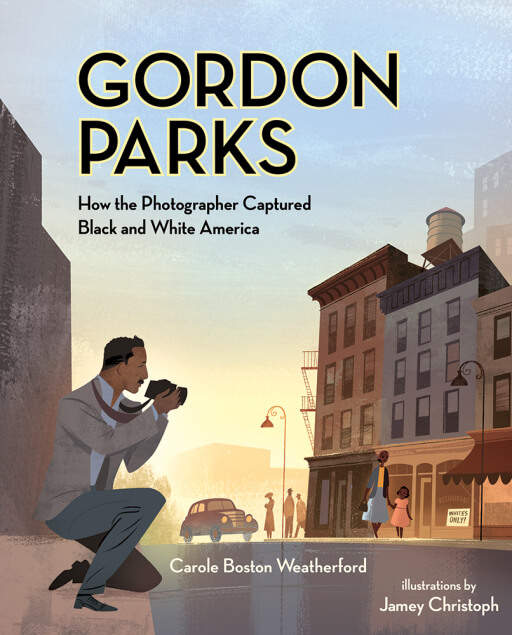
Gordon Parks: How the Photographer Captured Black and White America

Written by Carole Boston Weatherford | Illustrated by Jamey Christoph


When the 15th child of the Parks family is born, he has neither a heartbeat nor a name. But the doctor is able to revive the nearly dead infant in an ice bath, and the appreciative mother gives her child his name—Gordon. Gordon Parks’ dramatic entry into the world may have given him the unique perspective he used in becoming a renowned photographer and the first black movie director in Hollywood.

celebrate-picture-books-picture-book-review-gordon-parks-how-the-photographer-captured-black-and-white-america-gordon-works

Image copyright Jamey Christoph, 2015, text copyright Carole Boston Weatherford, 2015. Courtesy of Albert Whitman & Company.

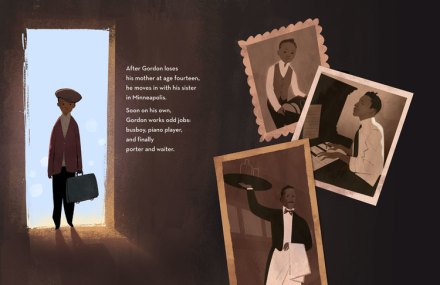
Gordon rides a horse across the wide open fields of Kansas to school, but once there his prospects narrow with a white teacher who tells her all-black class that their education will go to waste as they are destined to work as waiters and porters. When he is 14 Gordon’s mother dies, and Gordon moves to Minneapolis. He soon must make his own way, and he finds jobs as a busboy, a piano player, and the predicted waiter and porter.

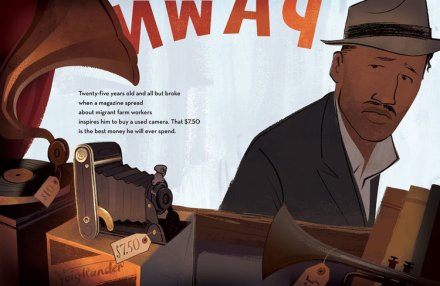
At the age of 25 Gordon reads about the plight of migrant workers and, inspired, buys a camera. Gordon has discovered his natural talent—a unique eye on the world. After only a month he exhibits his photographs in a camera store and is soon engaged in fashion and portrait photography. His work takes him to Chicago, where he documents the struggling families living on the South Side and wins a job with the government in Washington DC. Encouraged by his boss to find a subject for his work, Gordon focuses his lens on the black families living in the back alleys and in the shadows of the Capitol’s great monuments.

celebrate-picture-books-picture-book-review-gordon-parks-how-the-photographer-captured-black-and-white-america-gordon-sees-a-camera

Image copyright Jamey Christoph, 2015, text copyright Carole Boston Weatherford 2015. Courtesy of Albert Whitman & Company.

Through his photographs Gordon vows to expose the racism blacks face in housing, shops, restaurants, and other institutions. Looking for a personal subject, Gordon talks to Ella Watson, a cleaning lady in his office building. Ella supports five children on only $1,000 a year and knows hardship. Gordon accompanies her and her grandchildren, taking pictures wherever they go and of whatever they are doing. They become the inspiration for his greatest work.

Over his lifetime Gordon Parks will break barriers in the publishing and entertainment industries, becoming the first black photographer for Vogue and Life magazines and the first black director in Hollywood. He writes novels and poetry and composes music. But the work that becomes his most famous is a photograph of Ella Watson standing in front of the American flag, with her broom in hand. Called “American Gothic,” this picture fulfills Park’s determination to expose segregation and the hopes of all people struggling under its inequality.

celebrate-picture-books-picture-book-review-gordon-parks-how-the-photographer-captured-black-and-white-america-gordon-in-washington

Image copyright Jamey Christoph, 2015, text copyright Carole Boston Weatherford, 2015. Courtesy of Albert Whitman & Company.

Carole Boston Weatherford’s portrayal of Gordon Parks’ life is as starkly revealing as her subject’s photographs. With her writer’s skills, however, she deftly contrasts the facts of his life and turns his story into a universal metaphor for freedom and the struggle to attain it: “When young Gordon crosses the prairie on horseback, nothing seems beyond reach. But his white teacher tells her all-black class, you’ll all wind up porters and waiters. What did she know?” Weatherford’s pacing also adds to the story’s power. Although Parks attained wide acclaim, this biography ends with one of his earlier photographs—a picture of Ella Watson, a cleaning lady, who inspired Parks and came to symbolize the hopes of her generation and beyond. This is not only Parks’ story, but the story of millions of others.

Jamey Christoph continues and strengthens the metaphorical force of this biography in his illustrations. Readers first see Gordon Parks as a much-loved, smiling infant. He goes to school and grows up, his expression changing, slightly but importantly. He acquires his camera, and the pages are filled with drawn representations of his black-and-white photographs. Alternating dark and light pages further emphasize Parks’ world. The darkroom contrasts with Parks’ new bright office and prospects; the shadowed back alleys of Washington DC contrast with the city’s gleaming white marble monuments. Later photographs are also depicted, and “American Gothic” is represented on two pages. Christoph provides readers with much to see and ponder.

Ages 5 – 8

Albert Whitman & Company, 2015 | ISBN 978-0807530177

Ages 5 – 8

Albert Whitman & Company, 2015 | ISBN 978-0807530177

Freedom of Information Day Activity

CPB - New Professionals Picture

News Professionals Clothespin Figures

Make one of these clothespin figures that honors the men and women who work to keep the world informed.

Supplies

Directions

  1. Draw a face and hair on the clothespin
  2. Cut out the clothes you want your journalist or photographer to wear
  3. Wrap the clothes around the clothespin. The slit in the clothespin should be on the side.
  4. Tape the clothes together
  5. Cut out the camera
  6. Tape one end of a short length of thread to the right top corner of the camera and the other end of the thread to the left corner. Now you can hang the camera around the figure’s neck.

Idea for displaying the figures

  • Attach a wire or string to the wall and pin the figure to it
  • Pin it to your bulletin board or on the rim of a desk organizer


February 14 – Frederick Douglass Day

CPB - Words Set Me Free

About the Holiday

Although the exact date is not known, history records Frederick Douglass’ birthday as around Valentine’s Day in 1818, so February 14 was chosen to honor this most unique and influential man. Born into slavery, Frederick Bailey (he later changed his last name to Douglass) learned how to read and write when still a child. As a young man he used his intellect and courage to secure his freedom. He became a compelling speaker, writer, leader of the abolition movement, and statesman. His writings, especially his autobiography Narrative of the Life of Frederick Douglass, an American Slave, are among the most powerful accounts of the slave experience and are still widely read today.

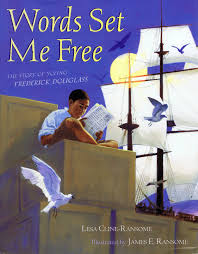
Words Set Me Free

Written by Lesa Cline-Ransome | Illustrated by James E. Ransome


Born into slavery and separated from his mother in infancy, Frederick Bailey is raised by his Grandmama while his mother works on a separate plantation. When she is able Harriet Bailey walks the 12 miles between plantations to spend a few short hours with her son, watching him sleep, before making the long journey back. While Frederick is still a very young child, his mother falls ill and dies. Douglass recalls never seeing his mother’s face in daylight.

At the age of six, Frederick is moved from his Grandmama’s cabin to the plantation house. At eight, he is sent to the master’s brother in Baltimore, Maryland. Here, the master’s wife, Sophia Auld, treats Frederick more like a paid servant then as a slave. When Frederick says he wants to learn how to read and write, she immediately begins teaching him the alphabet. Frederick is always mindful, however, that he may be punished for these lessons, and he has only memorized the letters and a few words before his master puts an end to his education. Angrily, the master explains to his wife, “If you teach him how to read…it would forever unfit him to be a slave.”

These words are perhaps Frederick’s greatest lesson. He never forgets them, and they fuel his resolve to pursue an education. He makes clever use of the few resources he has and slowly learns to read and write. From the newspapers he discovers that the North offers freedom, and Frederick decides to escape. It’s many long years, however, before he can fulfill his dreams. At last, he sees an opportunity to leave the South behind, and using his talent for writing makes his escape a reality.

Lesa Cline-Ransome has written a compelling biography of Frederick Douglass for children in Words Set Me Free. In straightforward language and through first-person point of view, Cline-Ransome reveals the brutal truth of Douglass’s life as a slave and his fight against injustice. As the title suggests, the book focuses on Frederick’s desire to become educated and the obstacles he overcame to succeed. This universally important message continues the work Douglass engaged in long ago.

James Ransome’s stirring paintings highlight pivotal scenes of Frederick’s story. Readers witness the tender moments with his mother, the cruel contrast of slavery and his blossoming intellect, and Frederick’s growing resolve to educate himself and escape.

Ages 5 and up                                                                                                            

Simon & Schuster, New York, 2012 | ISBN 978-1416959038

Frederick Douglass Day Activity

CPB - Words Set Me Free word search

Words Set Me Free word search


Words were so important to Frederick Douglass that he risked everything to learn how to read and write. In this printable Words Set Me Free Word Search Puzzle you will find words about the man we honor today. Solution

February 1 – National Freedom Day

celebrate-picture-books-picture-book-review-henry's-freedom-box-cover

About the Holiday

National Freedom Day was created by a former slave named Major Richard Robert Wright Sr. and was established as a national holiday on June 30, 1948 by President Harry S Truman. The observance commemorates the day in 1865 when Abraham Lincoln signed a resolution that would become the thirteenth amendment to the U.S. Constitution. The amendment was ratified almost one year later by each state and outlawed slavery.

Today, people often celebrate National Freedom Day by laying a wreath at the Liberty Bell, which is located in Philadelphia, Pennsylvania.

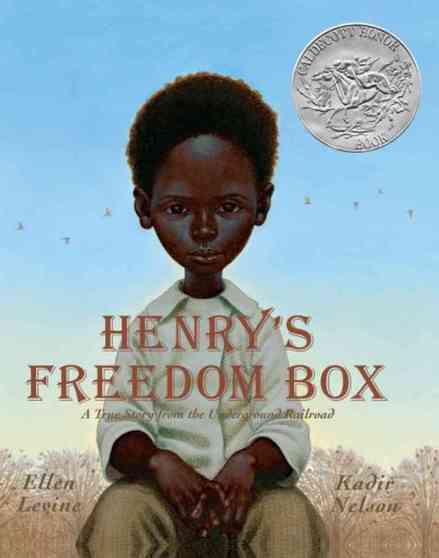
Henry’s Freedom Box: A True Story from the Underground Railroad

 Written by Ellen Levine | Illustrated by Kadir Nelson


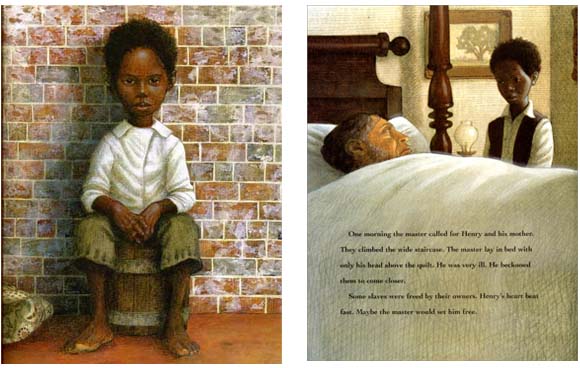
Henry Brown was born a slave. He didn’t know his birthday and he never knew security. “Like autumn leaves are torn from the trees,” his mother tells him, “slave children can be torn from their families.” When Henry’s master calls him to his sickbed, Henry hopes to be freed, but instead, his mother’s fear comes true. Henry is taken away and grows up far from his family, learning to be careful not to make mistakes that will bring severe punishment.

celebrate-picture-books-picture-book-review-henry's-freedom-box-henry

Image copyright Kadir Nelson, text copyright Ellen Levine. Courtesy of Scholastic Press

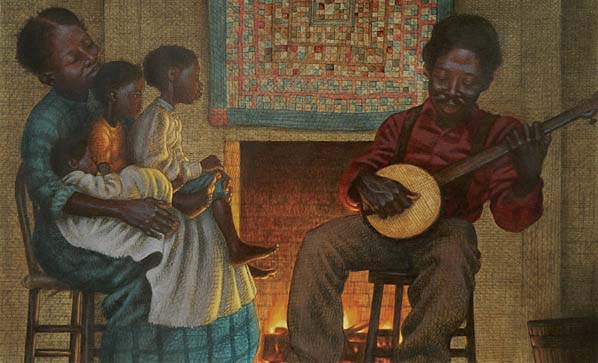
One day Henry, now a young man, falls in love with Nancy, a slave on another plantation. Henry and Nancy marry and are allowed to live together despite being owned by separate masters. Henry and Nancy have three children and are living happily.

But one day Nancy tells Henry that her master’s plantation is in financial trouble. She is afraid her master will sell their children to make money. The idea strikes fear into Henry’s heart. The next day Henry learns that indeed Nancy and his children have been sold. He knows he can show no emotion, but “his heart twisted in his chest.”

celebrate-picture-books-picture-book-review-henry's-freedom-box-henry-plays-music-for-his-family

Image copyright Kadir Nelson, courtesy of Scholastic Press

Henry runs to the town square and sees his children and Nancy being driven away. Henry is devastated. Time passes and Henry thinks about freedom. Lifting a crate used for shipping tobacco gives him an ingenious idea. He will mail himself to the North, where he can be free.

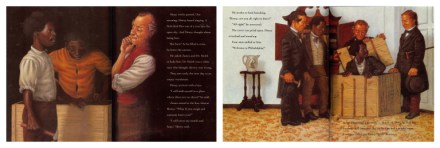
Henry’s friends agree to help him, and although they’re afraid he will be discovered, they seal him into a wooden box, address it to people in Philadelphia, and send him off. The crate is handled roughly throughout the journey north, and Henry must endure pain for many hours. Henry finally arrives safely in Philadelphia on March 30, 1849. Known from then on as Henry “Box” Brown, he became one of the most famous runaway slaves in America.

celebrate-picture-books-picture-book-review-henry's-freedom-box-henry-comes out of box

Image copyright Kadir Nelson, text copyright Ellen Levine. Courtesy of Scholastic Press

Based on an actual story of The Underground Railway, Henry’s Freedom Box is written and illustrated to stunning effect. Ellen Levine’s lyrical and metaphorical language combines with the excellent pacing of the pages to enhance the emotional impact of this powerful and original true story. Children will be inspired by this man who suffered devastating loss, but persevered and through cunning, bravery, and the help of friends, obtained freedom.

Kadir Nelson took inspiration for his illustrations from an antique lithograph of Henry Brown, created by Samuel Rowse in 1850. Through a combination of watercolor and oils crosshatched with pencil lines, Nelson’s richly hued paintings capture the poignancy of Henry’s struggles and ultimate freedom. His characters’ facial expressions are particularly moving.

Henry’s Freedom Box: A True Story from the Underground Railroad is a riveting story of slavery and one man’s fight for freedom that would make an excellent addition to children’s libraries.

To view a gallery of books and other illustration work by Kadir Nelson, visit his website!

Ages 4 – 8

Scholastic Press, 2007 | ISBN 978-043977733

National Freedom Day Activity

CPB - Freedom Stamp template (2)

Create Your Own Freedom Stamp


If you were going to create a postage stamp representing freedom, what would it look like? Think about what freedom means to you, then grab some colored pencils and design your own stamp!

Supplies

Directions

  1. Print the Freedom Stamp template
  2. Draw your own design about what freedom means to you
  3. Cut out the stamp and display it in your room or in a common area of your home

OR:

  1. Inside the stamp template write a letter to:
  • Someone in the Military: Thank them for their service to the United States to help keep our country free. You can learn how to send letters to members of the military here.
  • Your Teacher: Thank your teacher for all of her or his hard work. Only through education can we really be free.
  • Someone else who inspires you: Tell this person why they inspire you and thank them for their work.
  1. Give your Freedom Stamp letter to the person it is written to

Picture Book Review