September 4 – National Wildlife Day

About the Holiday

National Wildlife Day was established in 2005 by author and pet lifestyle expert Colleen Paige to promote awareness of endangered species as well as preservation and conservation efforts around the world. Globally, there is increased pressure on many animals due to pollution, habitat destruction, and other environmental issues. This day (as well as February 22, in honor of renowned conservationist Steve Irwin) encourages people to learn more about the species in their area, work toward creating hospitable habitats in their own yard or community, and implement environment-friendly choices in their homes. One of the animals featured in today’s book is the pangolin, a species whose members range in endangered status from vulnerable to critically endangered.

Thank you to Scholastic for sending me a copy of this book for review!

Who Would Win? Porcupine vs. Pangolin

Written by Jerry Pallotta | Illustrated by Rob Bolster


Welcome to Jerry Pallotta’s and Rob Bolster’s nocturnal showdown in the latest addition to the Who Would Win? series! On the left hand page: a porcupine; on the right: a pangolin. To help readers decide which animal would emerge victorious in a fight, Pallotta provides side-by-side dossiers that reveal pertinent facts about porcupines’ and pangolins’ bodies, skills, and defenses. 

Examining these profiles, kids learn that a porcupine is “a mammal with sharp, pointed quills . . . that looks like a spiky fur ball.” They also get to know the pangolin, a mammal that resembles a reptile due to its scales that make it look like a “walking pine cone.” Pallotta—his text supported with photographs and Bolster’s realistic illustrations—presents clear and snappy descriptions of the competitor’s quills vs. scales, fur vs. hair, faces and feet, weapons and defenses, and the scientific group each animal belongs to.

Illustration © 2025 by Rob Bolster. Text © 2025 by Jerry Pallotta. Courtesy of Scholastic.

 The pages are also sprinkled with kid-pleasing visual elements that call out a wide range of facts, from “ouch facts” about quills to “hair facts” about naked mole rats and elephants to “name facts” that reveal alternate monikers for each contestant. There’s humor here too, and even a poem about a pangolin! Pallotta is also tuned into children’s boundless curiosity, revealing the various types of porcupines and pangolins; a lineup of animals with spikes as well as those that can roll into a ball like the pangolin; and a fascinating look at how other animals would fare against these two warriors.

As the sun sets, however, it’s time for the main attraction as the porcupine, searching for dinner, comes upon the pangolin slurping ants from a log. It’s time to RUMBLE! Who will win?
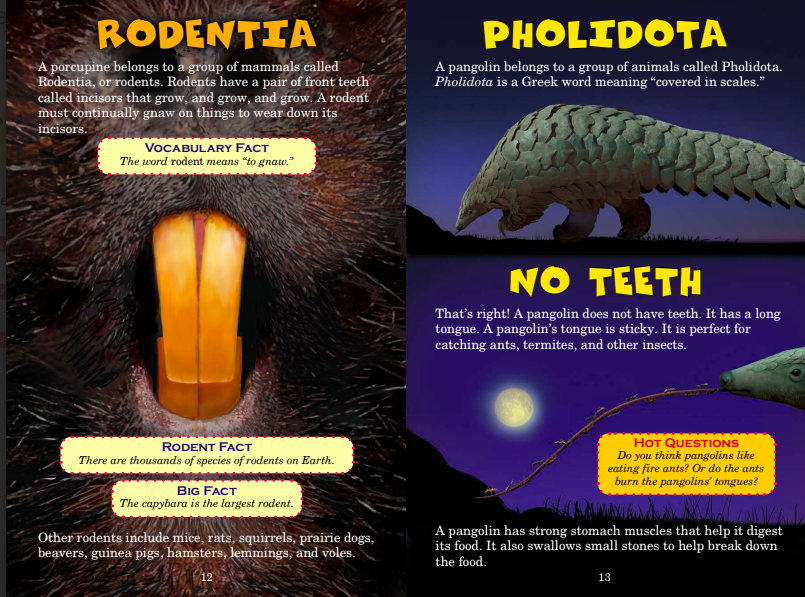
Illustration © 2025 by Rob Bolster. Text © 2025 by Jerry Pallotta. Courtesy of Scholastic.

If you’re a parent, librarian, teacher, or caregiver with a child or children who are familiar with the Who Will Win? series, then you know what a phenomenon these books are. Who Will Win? Porcupine vs. Pangolin is a worthy entrant into the field, providing educational and entertaining depth to the scientific study of these two unusual mammals. Children come away from reading (and excitedly rereading) this book not only with knowledge about porcupines and pangolins, but with bits about 21 other animals as well, making it an energizing spark for expanded learning. 

Information-packed and high-interest, Who Will Win? Porcupine vs. Pangolin will appeal to emergent and independent readers and makes a perfect read aloud for adults to share with their animal-loving kids. This book, as well as the rest of the series, is a must for any library collection and highly recommended for home bookshelves.

Ages 6 – 8

Scholastic, 2025 | ISBN 978-1339000961

About the Author

Jerry Pallotta is an award-winning author of children’s books, including What I Saw in the Teachers’ Lounge, Dinosaur Christmas, Who Will Guide My Sleigh Tonight?, Apple Fractions, and The Hershey’s Milk Chocolate Multiplication BookHis combination of interesting facts, detailed research, humor, and realistic illustrations has mesmerized countless children across the United States. You can visit him at jerrypallotta.com.

About the Illustrator

Rob Bolster is both a fine artist and a professional illustrator. His work has appeared in newspaper and magazine advertisements, and he has illustrated many books for young readers, including the bestselling Who Would Win? series. Rob lives and works near Boston, Massachusetts.

National Wildlife Day Activity
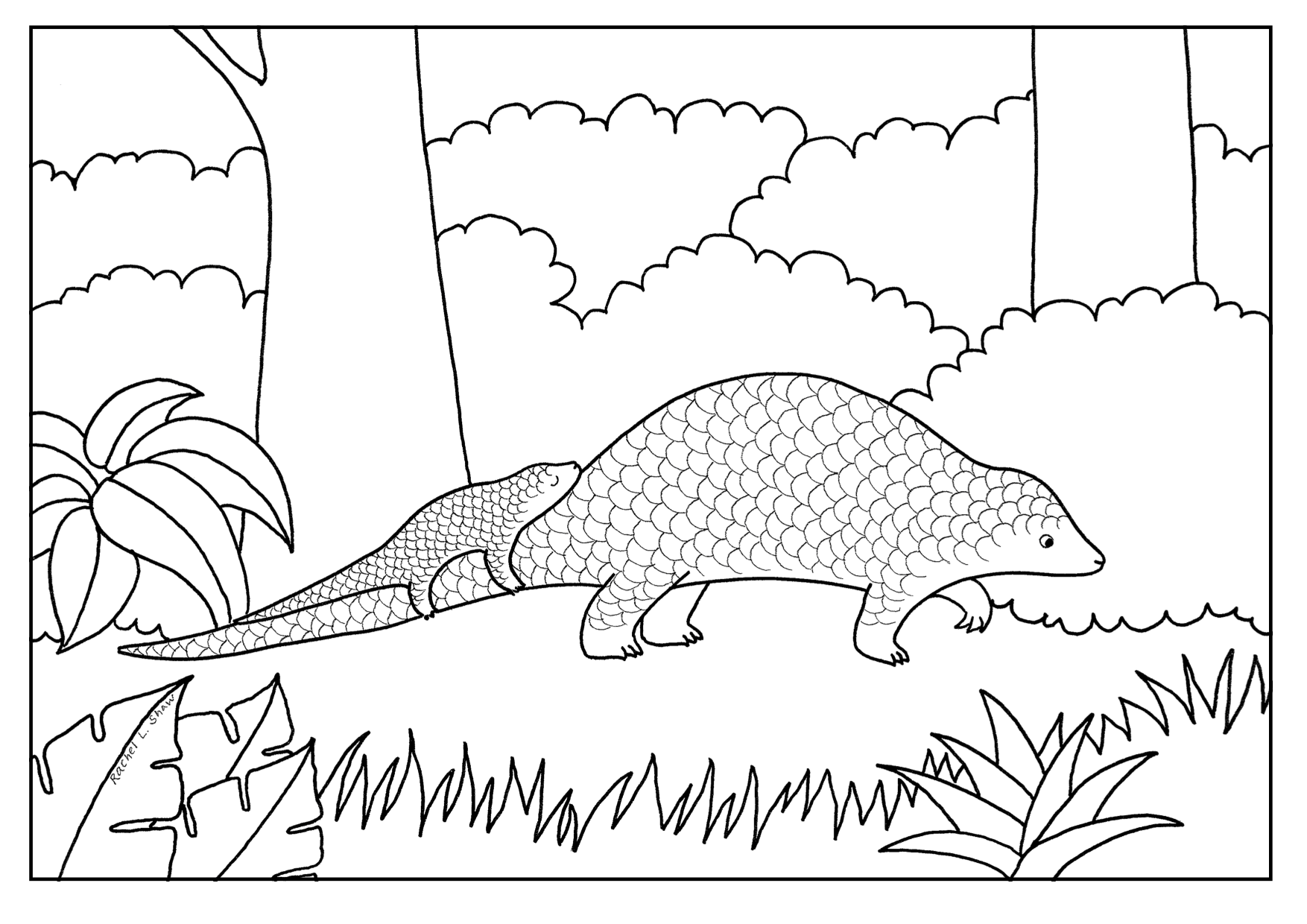
Pangolin and Porcupine Coloring Pages


Celebrate the diversity of wildlife with these coloring pages of a pangolin and her pup and a porcupine!

Pangolin and Pup (by Rachel L Shaw) | Porcupine (courtesy of Karen Watson of The Graphics Fairy)
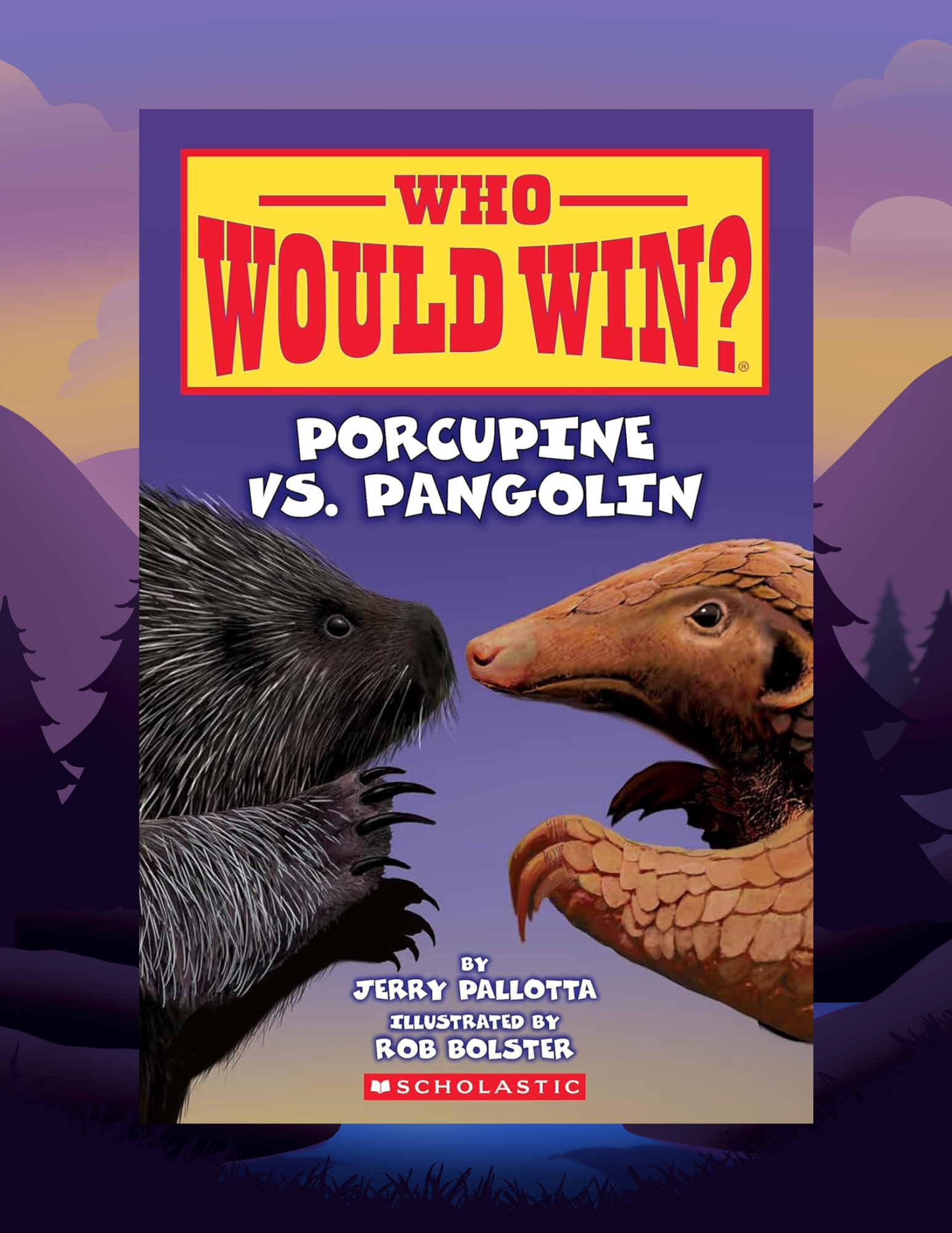
You can purchase Who Would Win? Porcupine vs. Pangolin from these booksellers

Amazon | Barnes & Noble | Bookshop (discounted books and support for your local independent bookstore)

Picture Book Review

July 15 – Wild about Wildlife Month

About the Holiday

Wild about Wildlife Month celebrates the wonderful diversity of our planet’s wildlife while reinforcing the importance of all animals to our ecosystem and even to our survival! The holiday also focuses on conservation, recycling, and education about how humans’ actions affect crucial habitats and the health of flora and fauna populations. While July is designated as Wild about Wildlife Month, the holiday’s significance is something to be mindful of all year around. To participate, explore the wildlife in your area while learning about the creatures on the other side of the world and everywhere in between. Today’s book will get you and your youngest nature-lovers started!

Thanks go to Phaidon Press for sending me a copy of The Secret Powers of Animals for review!

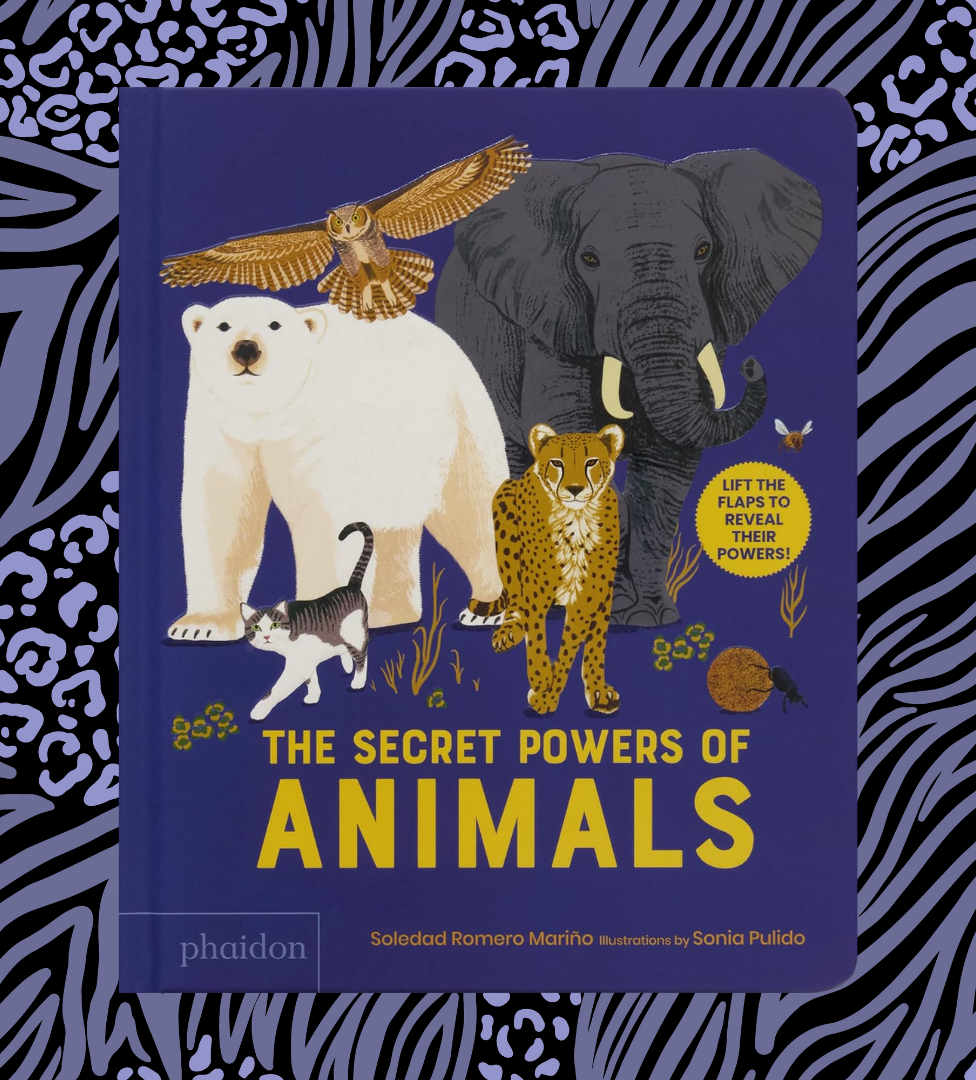
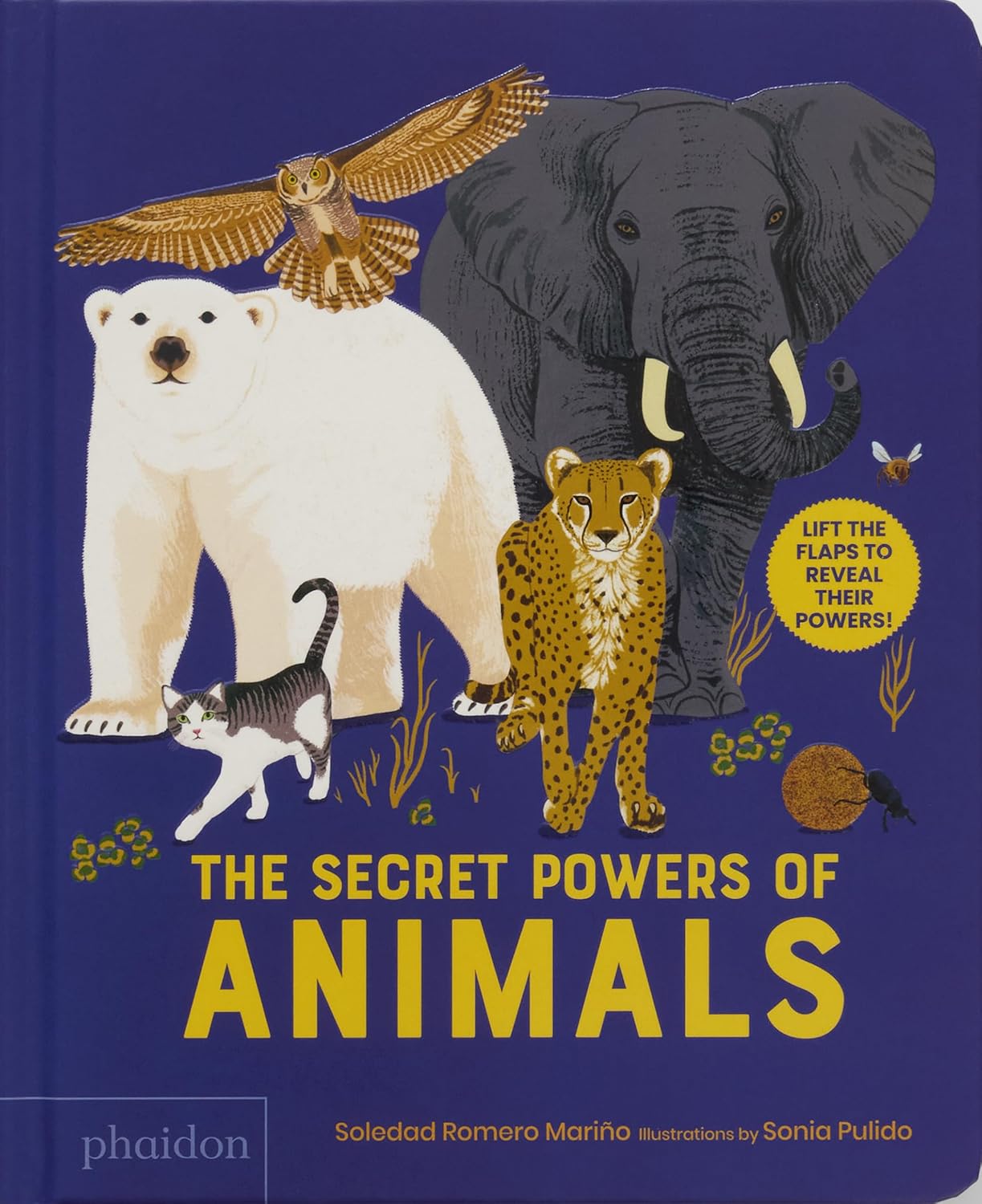
The Secret Powers of Animals

Written by Soledad Romero Mariño | Illustrated by Sonia Pulido


It’s no secret that kids of all ages are fascinated by animals. Little ones stand on tiptoe gazing up up up in awe at elephants and giraffes, fold themselves into pint-sized scientists to inspect bugs on the sidewalk, and are endlessly entertained by family pets. And when they learn interesting facts about their favorites, they love sharing their knowledge.

Illustration © 2025 by Sonia Pulido, text © 2025 by Solodad Romero Mariño. Courtesy of Phaidon Press.

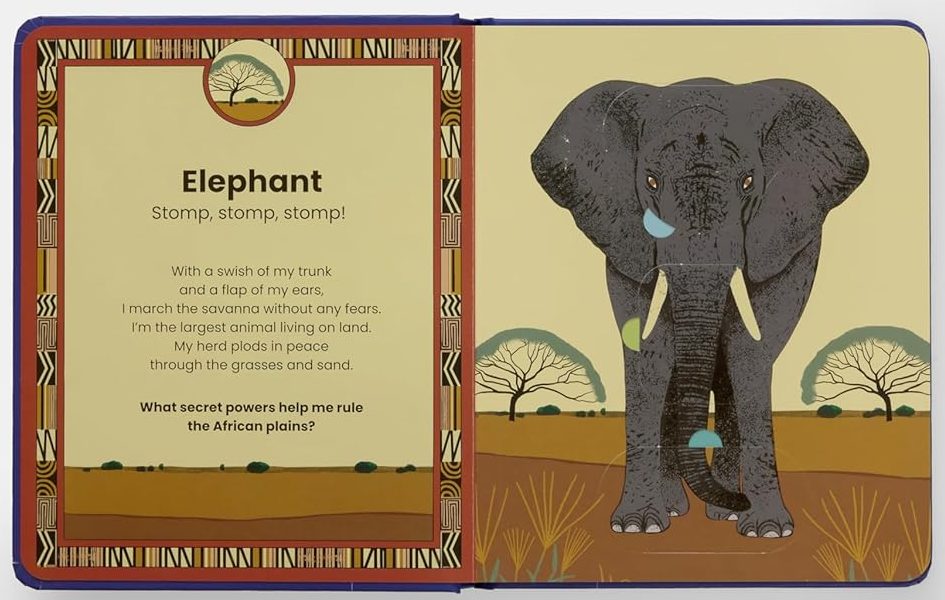
How do you replicate the excitement of witnessing an animal in person at home or in the classroom? With The Secret Powers of Animals, a lift-the-flap board book that combines jaunty introductory rhyming verses, three amazing secret powers, and the fun of interactive learning for 10 distinct creatures of the land, sea, and air.

Illustration © 2025 by Sonia Pulido, text © 2025 by Solodad Romero Mariño. Courtesy of Phaidon Press.

Among this menagerie, kids meet a brainy octopus, who tells them “I’m a master of disguise— / I’m cunning and I’m wise. / Through swirling seas I glide / with my many ways to hide.” Indeed, the octopus’s superpowers back this up! Just one of the three amazing talents this eight-armed beauty reveals to readers is the ability to change “my shape or skin tone to look like something else.” 

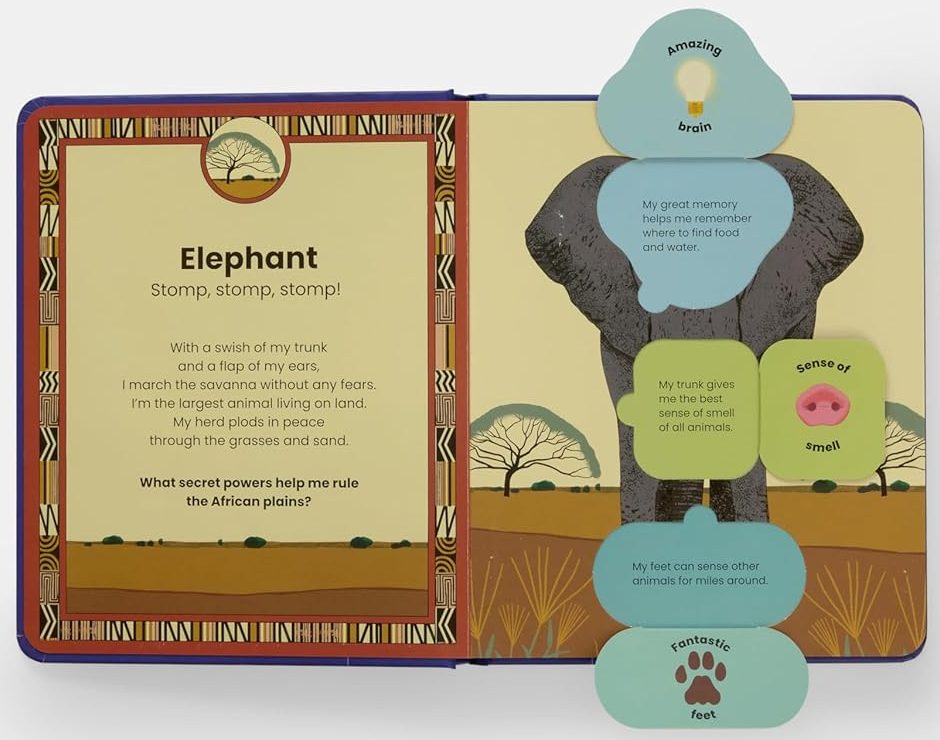
Little learners will love trying to guess each creature’s super powers as they discover which animal has the best sense of smell, who has a tusk that works like a thermometer, who can chomp harder than a shark, who can detach its tail to throw predators off its track, and so many more ingenious animal traits! 

Illustration © 2025 by Sonia Pulido, text © 2025 by Solodad Romero Mariño. Courtesy of Phaidon Press.

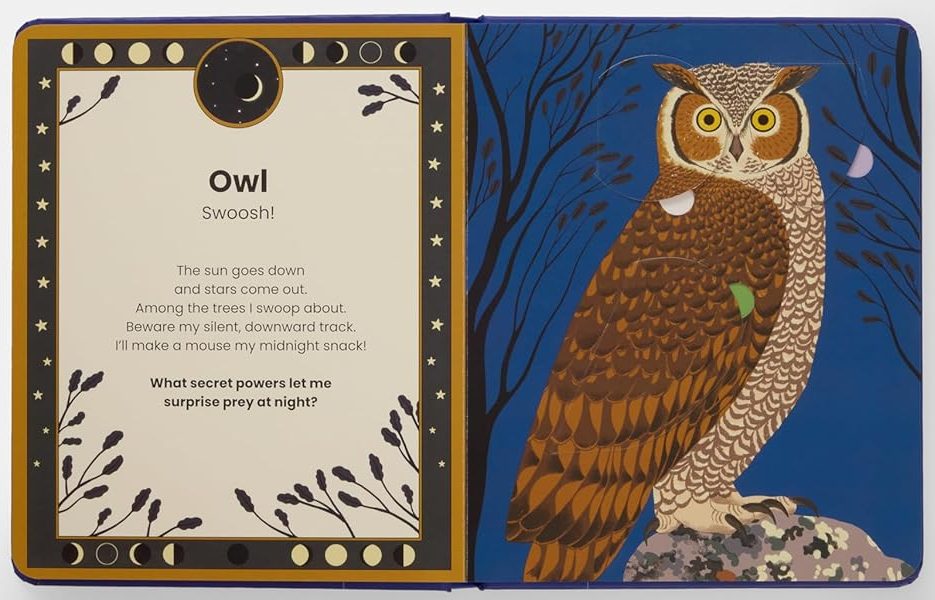
Soledad Romero Mariño brings each animal to life with witty and spirited vocabulary that not only describes the creature’s physical attributes but evokes a sense of their personality and place in the natural kingdom. The elephant “swishes” its tale and “flaps” its ears, the owl “swoops about,” the lizard “scuttles” and “darts,” and the cheetah “inches” and “creeps” before “. . . [giving] chase / in a big, bursting leap.” Romero Mariño explains each secret power in simple language that even the youngest reader will understand and remember. Her flowing verses are a joy to read aloud and are perfect sparks for pretend play at home, in preschool and kindergarten classrooms, and for library story times. 

Sonia Pulido’s realistic, museum-quality illustrations transport children to the savanna to meet an elephant face to face; under the sea, where a strikingly beautiful octopus levitates amid colorful coral and a family of narwals floats in the deep-blue water; to desert sands and rocky paths; and to sun-drenched grasslands among other locales. On the facing page, Romero Mariño’s text is bordered by lovely and thoughtful details that reflect the animal’s natural habitat. Both kids and adults enjoy lingering over each spread to talk about the animals. On each tab, Pulido includes an icon that depicts the secret power—for instance, the image of an eye with the words “Amazing eyes” for super vision—which becomes familiar to readers as it is repeated throughout the book. 

The Secret Powers of Animals, a stunning, sturdy board book that adults will be excited to share with young children, is a must for all nature-loving families, early educators, and library collections. The book also makes a terrific gift for any young animal lover.

Ages 2 – 5

Phaidon Press, 2025 | ISBN 978-1838669522

About the Author

Author Soledad Romero Mariño is an experienced children’s non-fiction author who specializes in ‘best of’ round-up style books. Her works include Superpowered Animals: Meet The World’s Strongest, Smartest, and Swiftest Creatures (also published by Phaidon), Awesome Accidents: 19 Discoveries that Changed the World and Famous Robberies: The World’s Most Spectacular Heists.

About the Illustrator

Sonia Pulido’s illustrations have appeared in publications globally, including The New Yorker and The New York Times. In 2020 Pulido won the Spanish National Illustration Award and she is the illustrator of Phaidon’s bestselling What a Shell Can Tell. Visit her at soniapulido.com.

You’ll find my review of the stunning Super Powered Plants for older readers here.

Wild about Wildlife Month Activity

celebrate-picture-books-picture-book-review-hand-print-elephants-craft

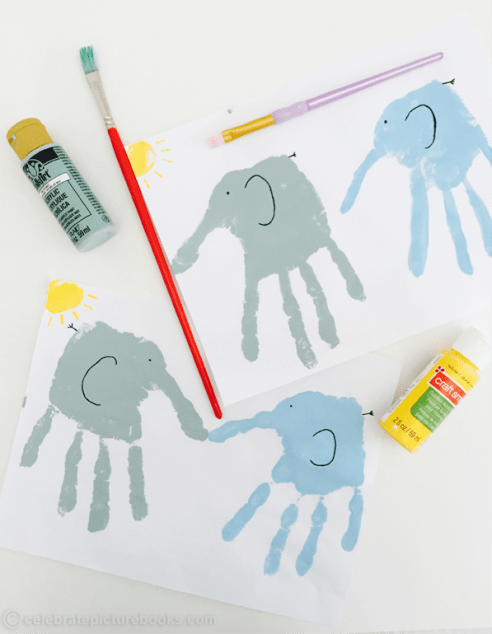
Handprint Elephants


This easy craft is fun for siblings to do together and can make a nice decoration for a child’s room or a gift for mom, dad, or other family members.

Supplies

  • Craft paint in two colors of the children’s choice
  • Yellow craft paint
  • Black fin-tip marker
  • Crayons, markers, or colored pencils to make a background
  • Paper
  • Paint brush

Directions

  1. Paint one child’s hand and press it on the paper. The thumb is the truck and the fingers the legs.
  2. Paint the second child’s hand and press it on the paper near the other “elephant.” A couple of examples are: the elephants standing trunk to trunk or trunk to tail 
  3. After the paint has dried, draw on ears and an eye
  4. Add a sun with the yellow paint
  5. Add grass, trees, or other background features

You can purchase The Secret Powers of Animals from these booksellers

Amazon | Barnes & Noble | Bookshop

Picture Book Review

April 10 – National Wildlife Week

About the Holiday

National Wildlife Week, dating back to 1938, is the National Wildlife Federation’s longest-running education program. The celebration was designed to connect budding conservationists of all ages to the awesome wonders of wildlife. Each year, we pick a theme and provide fun educational materials and activities for educators and caregivers to use with kids. This year’s theme is Keep an Eye on the Wild. Conservationists and animal lovers are keeping a lookout for wildlife in the most unexpected places as we learn how we can keep their habitats safe and live in harmony with our incredible wild neighbors. Whether you keep your eyes out for the wildlife living near you with a “critter cam” or by walking around and paying attention to your backyard, neighborhood, and wider area, being aware of the creatures around you can help them survive for generations to come. To learn more about National Wildlife Week and find fun activities aimed at connecting kids with wildlife, visit the National Wildlife Week Kids Page!

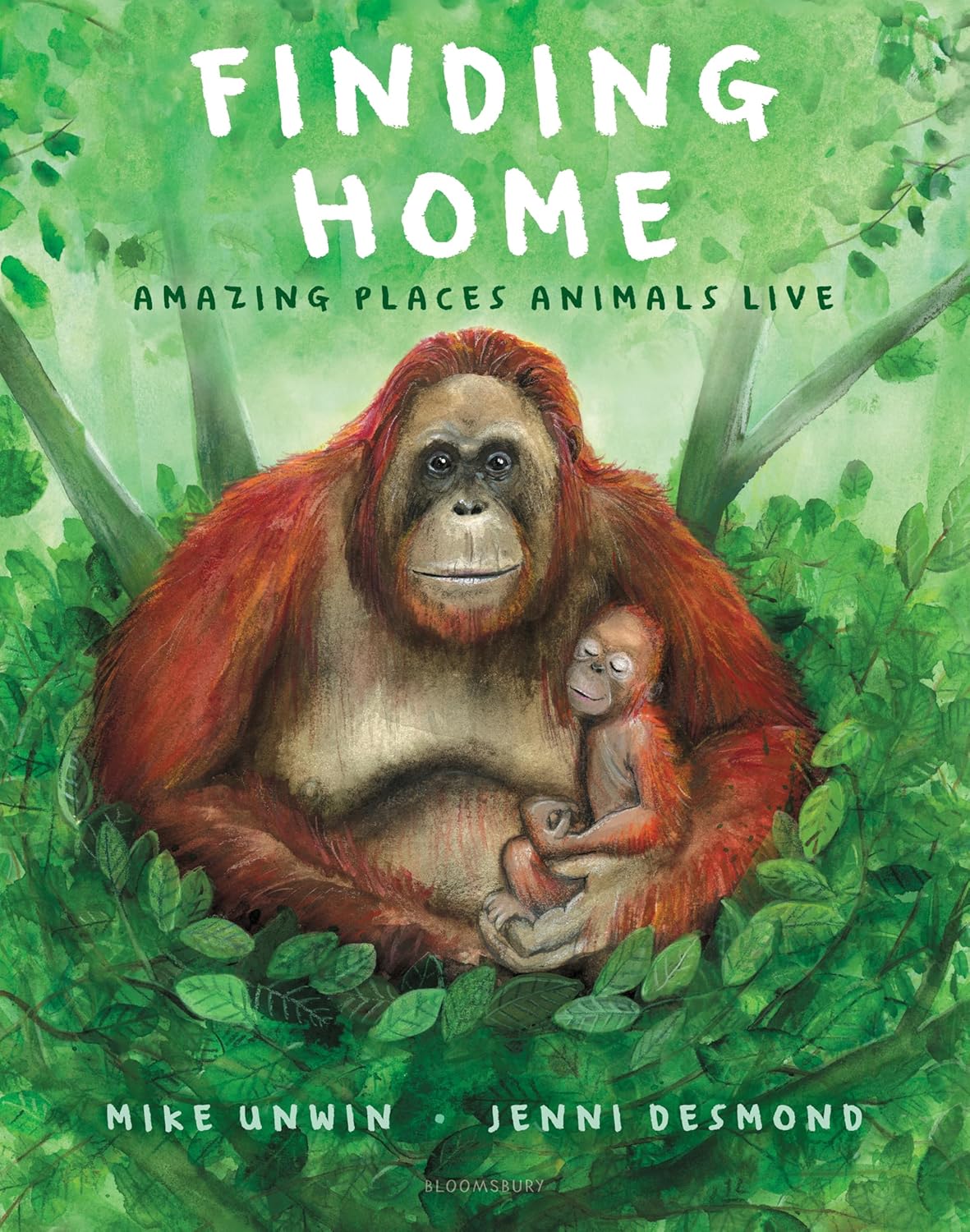
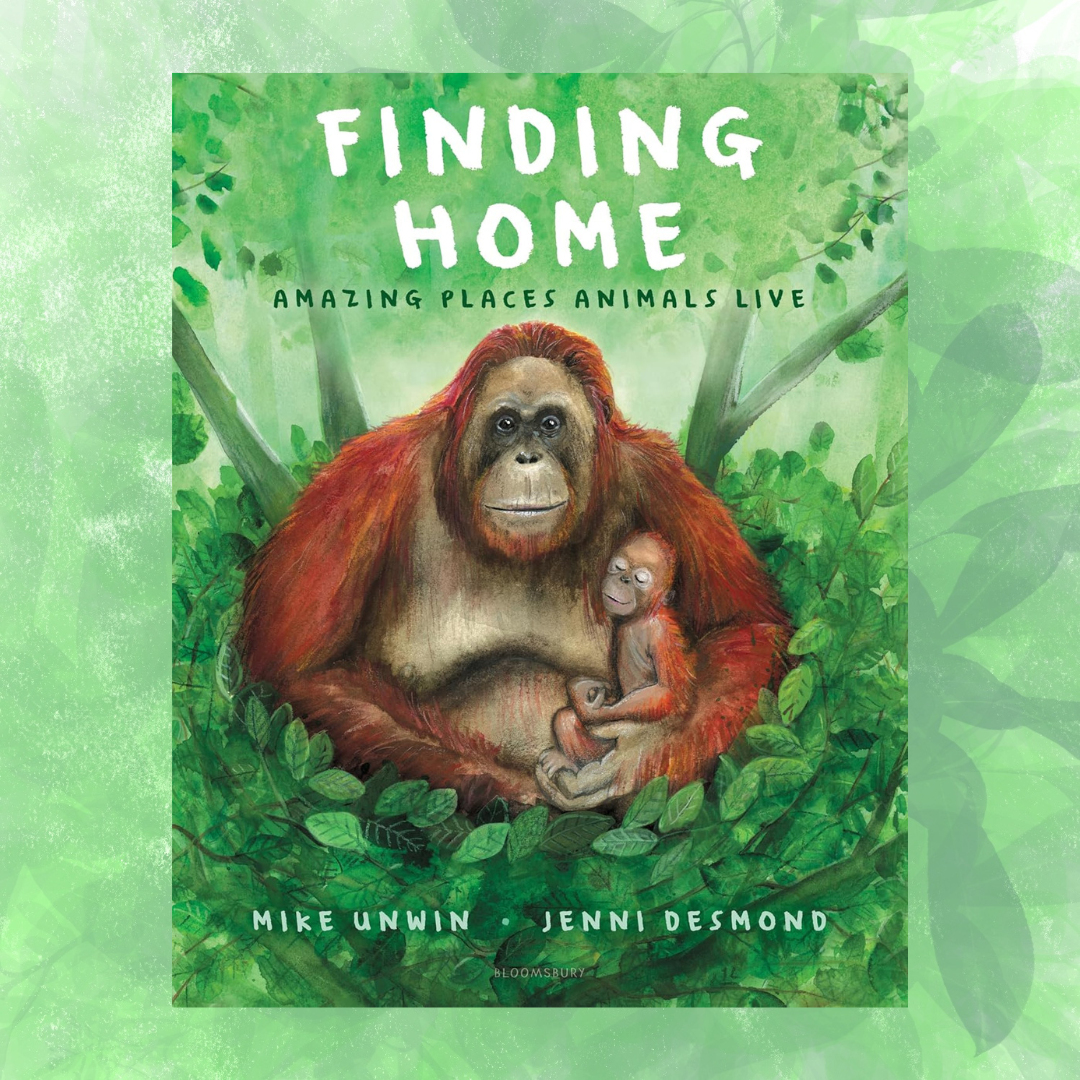
Finding Home: Amazing Places Animals Live

Written by Mike Unwin | Illustrated by Jenni Desmond


Finding Home begins: “Our planet is home to a mind-boggling number of different animals: at least 6,500 species of mammal, 10,000 species of reptile, 11,000 species of bird, and literally millions of insects. Every single one has its own home.” Just think of it! As your eye sweeps across any vista; as you walk across your yard, local playground, or favorite park, beach, or mountain trail, an untold number of creatures’ homes are within sight or underfoot. We know their names: Den. Nest. Burrow. Taxi (wait, what?). You’ll see, because in their astounding and gorgeous book, Mike Unwin and Jenni Desmond reveal that there is no such thing as a generic animal home.

Illustration © 2025 by Jenni Desmond, text © 2025 by Mike Unwin. Courtesy of Bloomsbury Children’s Books.

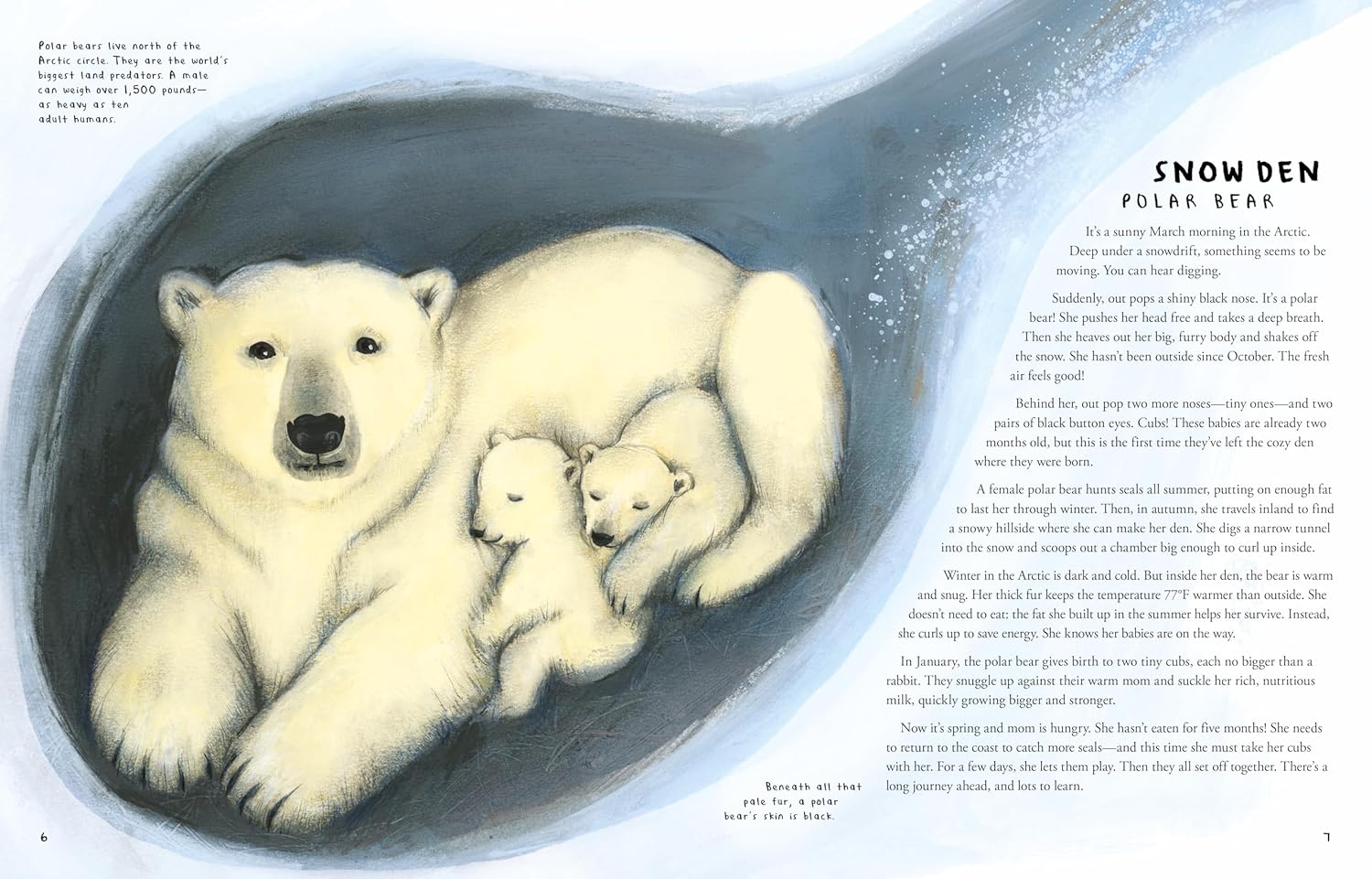
Take “den,” for instance—a polar bear’s snow den. Unwin and Desmond take you right inside this winter home, where a mother polar bear and her two cubs (born here in the cold of January) welcome you. As you squeeze inside, don’t worry about being cold. The polar bear’s “thick fur keeps the temperature 77°F warmer than outside.” 

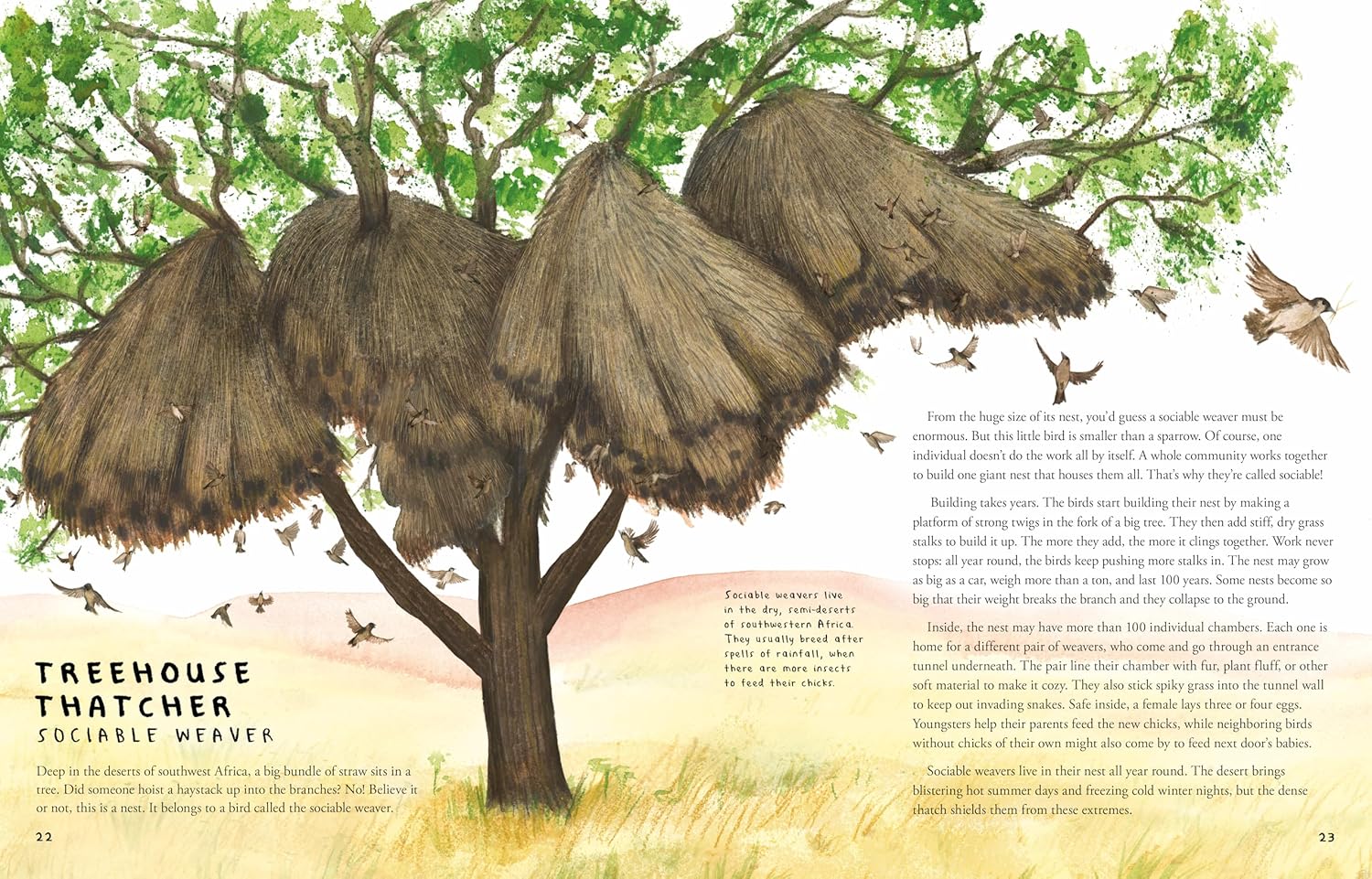
Next up is “nest.” These are bowls made from twigs, straw, and fluff and, sometimes, found objects like bits of paper or cloth, right? Well, yes—for some birds. But you won’t believe your eyes when you see what appears to be several haystacks lodged within a tree’s branches. This nest, constructed by a whole community of birds smaller than sparrows, can “grow as big as a car, weigh more than a ton, and last 100 years.” Like humans’ apartment buildings, the bird pairs that inhabit this nest look out for each other and help their neighbors. Kids will also be amazed by another type of bird that literally sews leaves together with “plant fiber and spider silk” to create their soft, deep nests.

Illustration © 2025 by Jenni Desmond, text © 2025 by Mike Unwin. Courtesy of Bloomsbury Children’s Books.

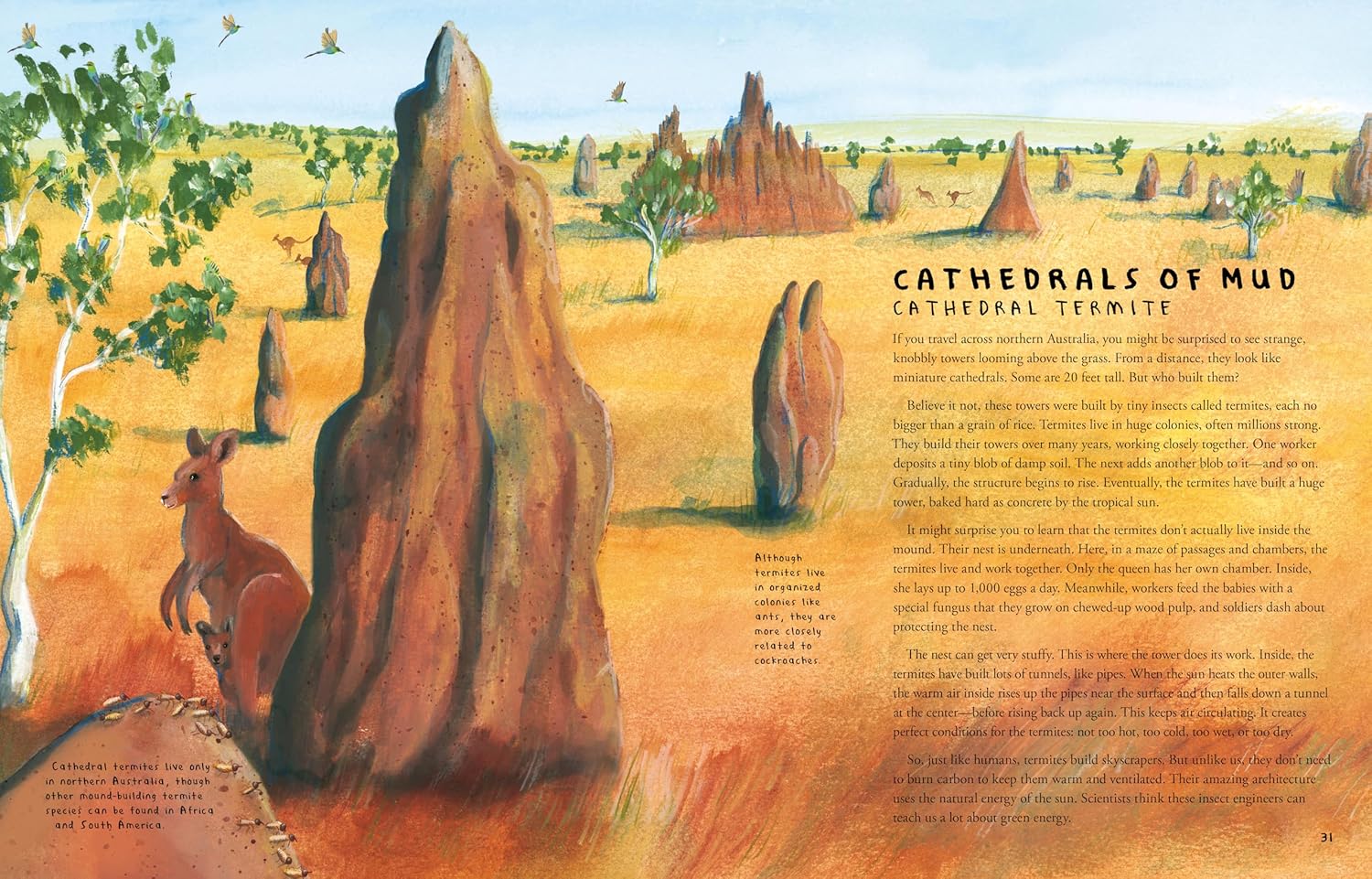
And how about “burrows?” Yep, Unwin and Desmond showcase a couple of pretty spectacular burrows too. Take the aardvark’s home. You won’t see an aardvark during the day. While the sun is up, they stay below ground, sleeping and tending to their young. It’s only after sunset that these unusual, ant-eating animals (including two-week-old babies) make an appearance topside. This is when they do what they do best: sniff out anthills and termite mounds, dig them up, and have dinner. It takes a hearty meal to satisfy an aardvark: “One aardvark can eat an amazing 50,000 ants and termites in a single night!”

Now, about that “taxi.” Children will be wowed by two, very different types of animals who prefer moving from one area to another by hitching a ride on another creature, from whom they can get food and other necessities of life while helping their hosts as well. Of course, the variety of animal homes don’t stop at these four. Every page transports readers to a different part of the globe to witness creatures of the air, sea, and land living in the home of their choice.

Unwin ends this fascinating travelogue with a map showing different ways some of the animals in the book tend to the environment, protecting it and keeping it growing for themselves and humans. He also includes a caution, reminding readers that “all these habitats . . . fit together like jigsaw pieces to make up planet Earth. And just like a jigsaw needs all its pieces, a healthy planet needs all its animals and their habitats.” Sadly, humans have not been good stewards of Earth’s bounty. “Today, scientists and conservationists are working hard to put things right.” But everyone is needed to make sure our environment is cared for the way we care for our own families. “Only then will planet Earth truly be home, sweet home.”

Illustration © 2025 by Jenni Desmond, text © 2025 by Mike Unwin. Courtesy of Bloomsbury Children’s Books.

Mike Unwin draws readers in with engaging storytelling that allows kids to easily understand how each animal goes about building their home and why it’s perfect for their lifestyle. Children also learn just as much about the animals as the homes they build, giving them deep and well-rounded knowledge of some of the most unusual birds, fish, mammals, and insects on our planet and how many of them benefit humankind. Unwin’s phrasing, vocabulary and conversational lilt make Finding Home a highly satisfying nonfiction read aloud for younger kids. Independent readers will eagerly dip into the book again and again to meet these intriguing creatures.

With the impact of a museum exhibit, Jenni Desmond’s rich, full-bleed illustrations will take your breath away with their stunning realism and personality. Some animals peek out at the reader, while others busily go about their work oblivious to outside interest. From grassy hillsides to treetop canopies to sunny Africa and the snowy Himalayas, Desmond takes readers on an around the world tour like no other.

Gorgeous, educational, and nature nonfiction at its best, Finding Home: Amazing Places Animals Live is a must for all classroom, school, and public libraries as well as for nature- and animal-loving kids and families.

Ages 5 – 8+

Bloomsbury Children’s Books, 2025 | ISBN 978-1547615100

About the Author

Mike Unwin has written more than 30 books for both adults and children, including the Encyclopedia of Birds and Migration. He is also a regular contributor to publications such as BBC Wildlife and RSPB Nature’s Home. In 2013 Mike was voted UK Travel Writer of the Year by the British Guild of Travel Writers. Follow Mike on Instagram @mikeunwin.wildtravel.

About the Illustrator

Jenni Desmond is the illustrator of more than 20 books, including MigrationThe Wolves of Yellowstone, and The Blue Whale. Her books have been translated into over a dozen languages. In 2016 she was made a Maurice Sendak Fellow and her book The Polar Bear became a New York Times Best Illustrated Children’s Book of the Year. When Jenni is not in her studio, you’ll find her cooking, cycling and looking for adventure. Visit her at jennidesmond.com and follow her on Instagram @jennidesmond.

National Wildlife Week Activity

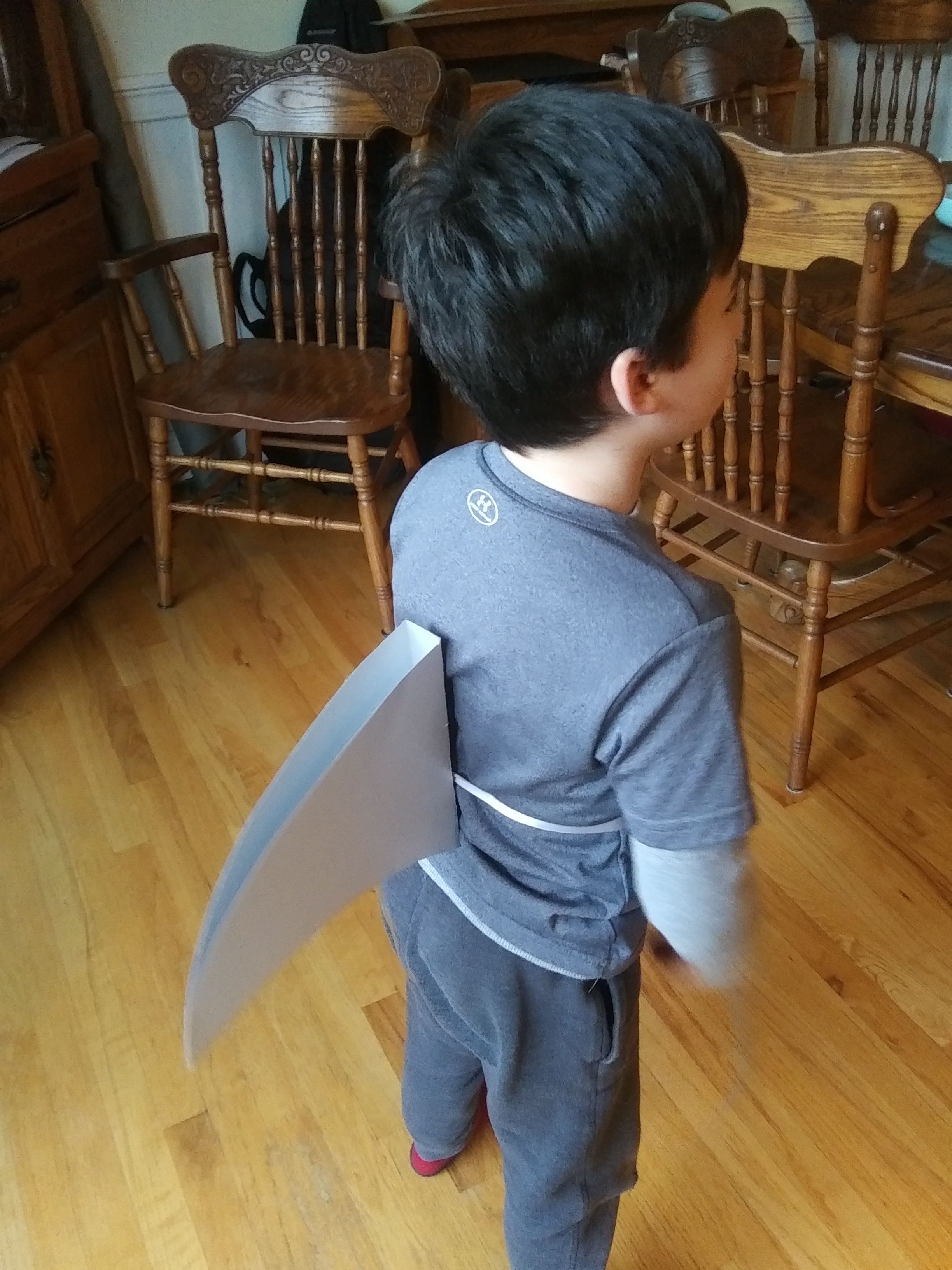
celebrate-picture-books-picture-book-review-shark-fin-craft

Fintastic Shark Fun


Sharks are awesome creatures and even feature as a home to another animal in today’s book! Follow the directions below and to make your own shark fin. 

Supplies

  • 2 pieces of 8.5 x 11 gray cardstock paper
  • Ribbon
  • Tape
  • Scissors
  • Pencil

fin outline white

celebrate-picture-books-picture-book-review-shark-fin

Directions

  1. Tape the top of the two pieces of paper together
  2. Fold them back together
  3. Measure an inch up from the bottom of the papers (the un-taped side) and trace a straight line across both papers
  4. Trace a shark fin outline onto your paper. The shark outline should stop an inch above the bottom
  5. Cut out the fin on both pieces of paper. If you should cut through the tape, re-tape the tops together
  6. Fold along the lines of both papers so the folds face towards each other.
  7. Tape the folds so the fin becomes a triangle
  8. Cut two slits parallel to the folded lines
  9. Thread ribbon through slits

You can purchase Finding Home: Amazing Places Animals Live from these booksellers

Amazon | Barnes & Noble | Bookshop (discounted books and support for your local independent bookstore)

Picture Book Review
March 3 – World Wildlife Day

About the Holiday

In December of 2013 the United Nations General Assembly proclaimed March 3rd as World Wildlife Day to promote awareness of our environment and the dangers to it. Every year a different theme is chosen to spotlight an area of the world, a particular species, or a group of activists. This year’s theme is “Wildlife Conservation Finance: Investing in People and Planet” and focuses on innovative ideas for financing can contribute to halting biodiversity loss, raising the interest of private sector stakeholders to invest in wildlife conservation, and creating a sustainable future. The day also celebrates successful conservation and sustainability initiatives. To learn more about the day, special events, and how you and your kids can get involved today and throughout the year, visit the World Wildlife Day website.

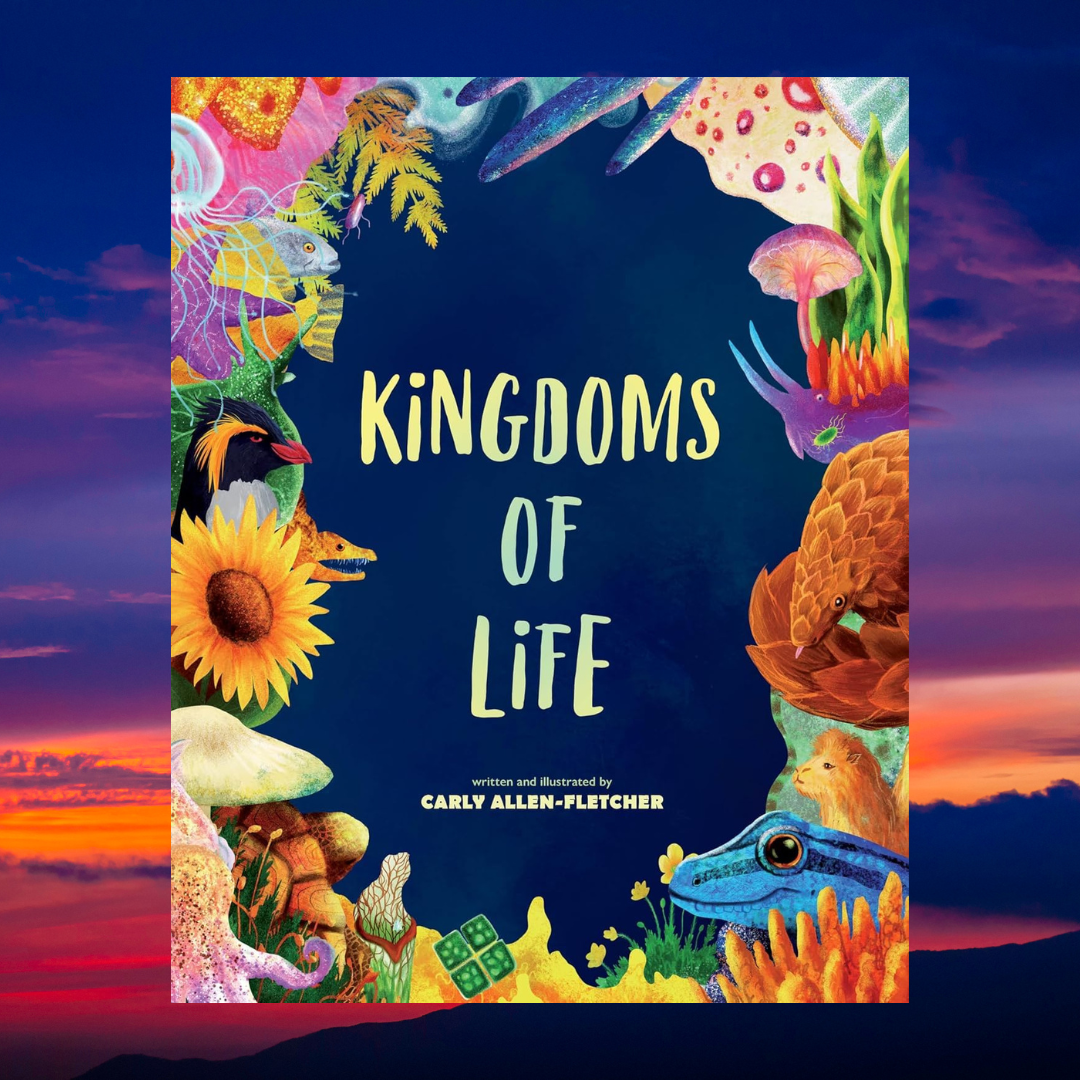
Thanks to Eerdman’s Books for Young Readers for gifting us a copy of Kingdoms of Life for review.

Reviewed by Dorothy Levine

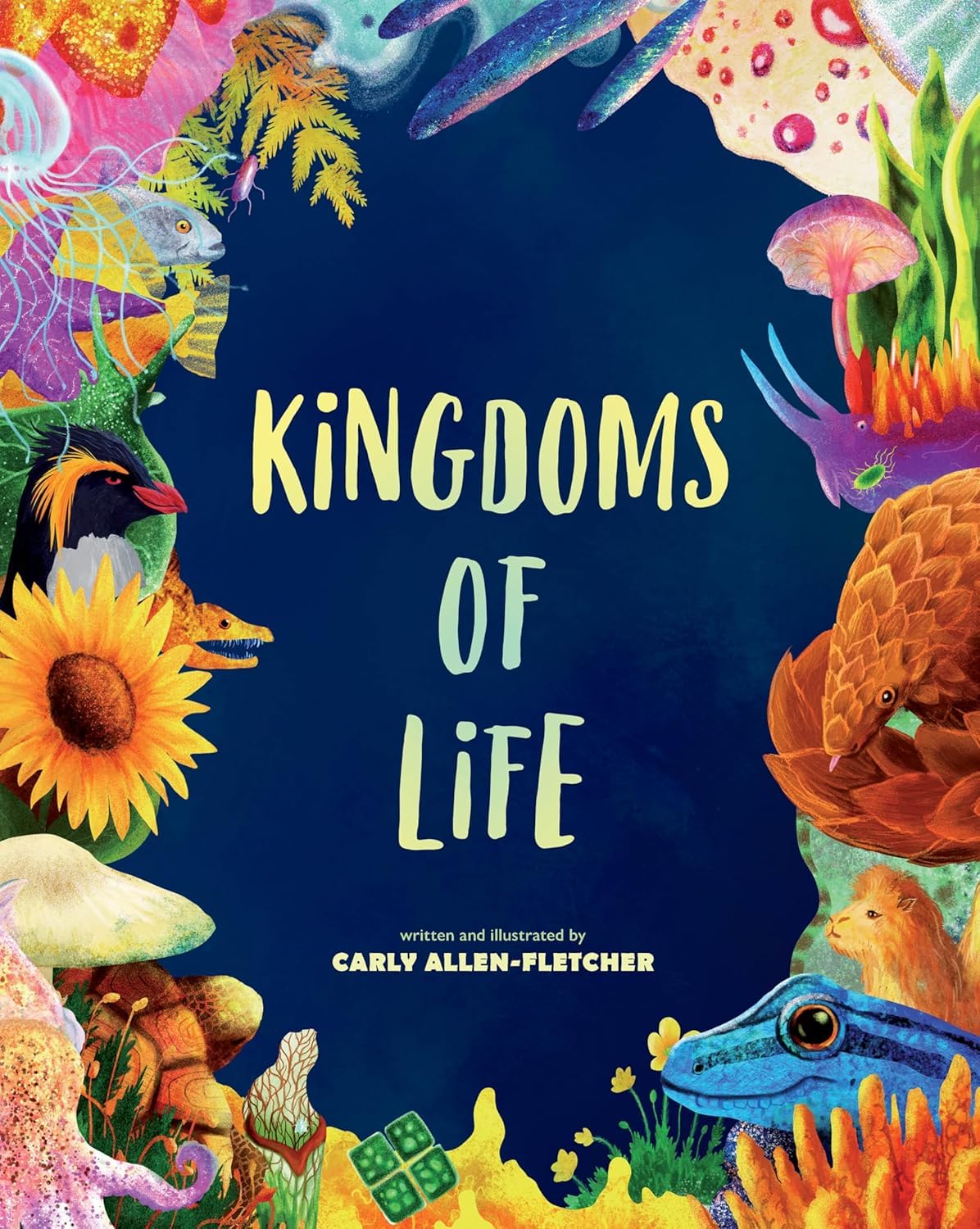
Kingdoms of Life

By Carly Allen-Fletcher


“Life is all around us…In the sky, the sea, and the soil, life exists in millions of different incredible ways.” 

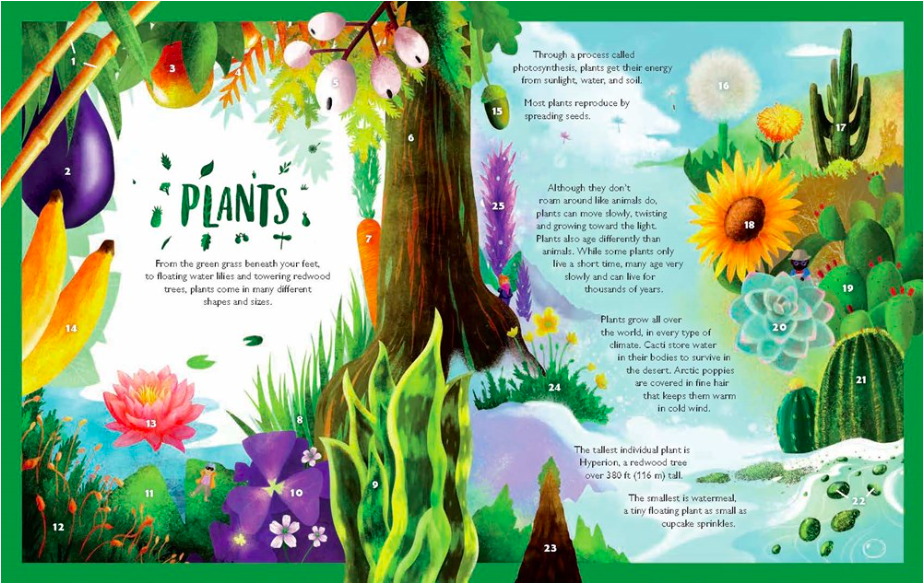
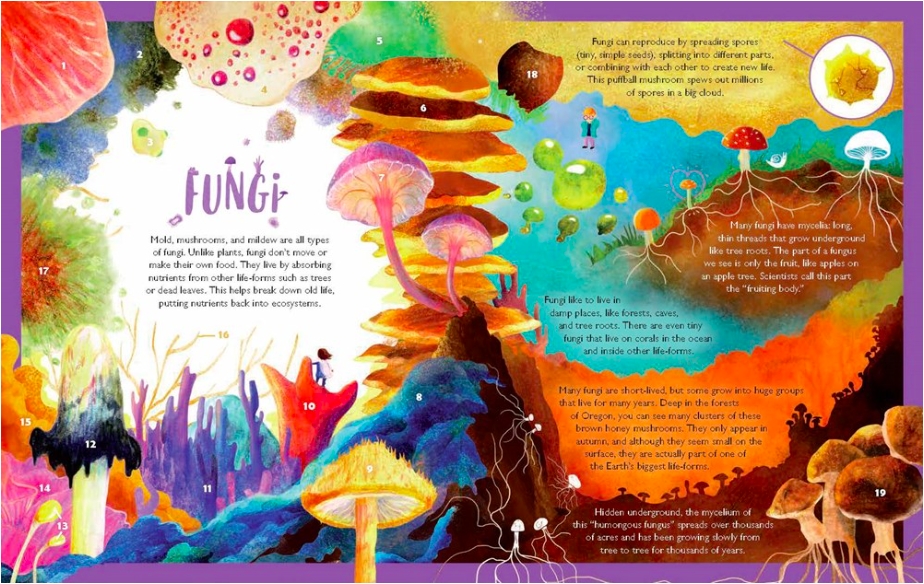
Jump into Carly Allen-Fletcher’s vibrant fact-filled guidebook for kids for a deep-dive exploration of the kingdoms of life. Each Kingdom rules over its own color-coded section, jam-packed with information on how the classified organisms feed, grow, and reproduce. Information also includes the ways in which the organisms across Kingdoms are related or work together with other lifeforms. The pages are royally packed with vibrant illustrations that appear to burst out from the very edges of the book. 

Allen-Fletcher begins with an explanation of how all life is formed—from tiny building blocks called cells. These cells can join to create complex multicellular life forms or just exist on their own as unicellular forms of life. She then zooms out to examine the six biggest categories of life. Allen-Fletcher makes sure to note that these categories are not fixed; they change as scientists learn more and arrange beings in different ways. 

Illustration and text © 2025 Carly Allen-Fletcher. Courtesy of Eerdmans Books for Young Readers.

The first category investigated in depth is the most complex of the life-form groups—animals. The animal pages are filled with a diverse range of species, each numerated to a corresponding key at the back. Allen-Fletcher shows the wide range of animals by comparing the smallest species (fairy wasps) to the largest (blue whales), while also explaining how even within one species (dogs) there can be glorious variety. Examples of animals that don’t quite fit in the animal category, such as a sea slug that can make energy from the sun, as well as animals that can survive extreme conditions or are thought to be practically immortal, are also discussed.

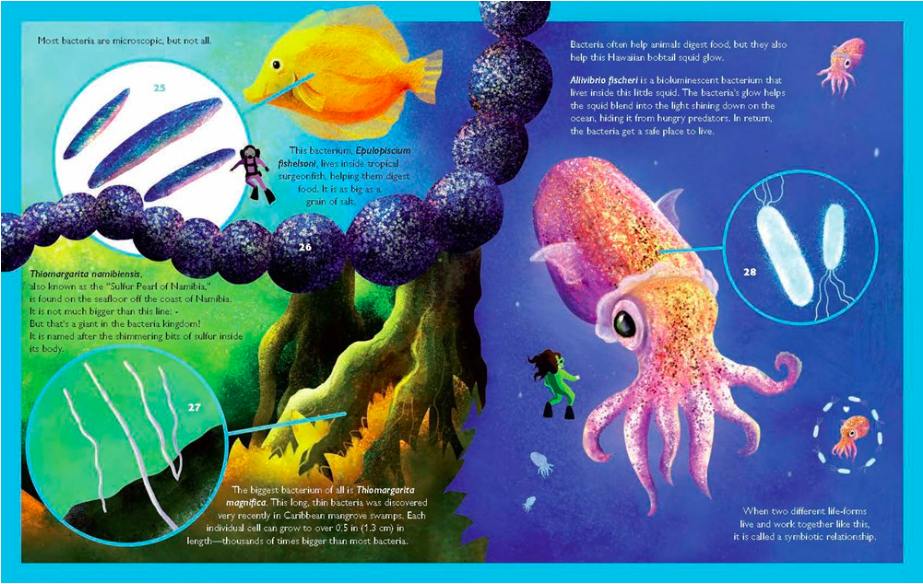
In addition to the animals, plants, fungi, protists, bacteria, and archaea are each given equal attention in their respective kingdom sections. From protists like giant kelp and slime mold to bacteria in our gut and bioluminescent bacteria found in squid, each kingdom is filled with fascinating examples of life and interesting facts on specific organisms. 

Illustration and text © 2025 Carly Allen-Fletcher. Courtesy of Eerdmans Books for Young Readers.

Kingdoms, Allen-Fletcher explains, can also be broken down further, into smaller and smaller groups such as family, genus, and species. A few taxonomists (scientists who study and sort lifeforms into categories) from around the world and throughout many different centuries are highlighted for their contributions to the field.

The book ends with a last dose of wonder: “We know more about the moon than we do about the deepest parts of our oceans. / Every year, we learn more about our home and the incredible life-forms we share it with. / What will we discover next?” The inclusion of “we” in this ending invites readers to feel welcome in this process of study and discovery. Taxonomy need not be only for adult scientists, but anyone who shares a passion for nature and careful observation. 

Back matter features each of the categories taxonomists use to sort life into groups as well as all the names of the featured life-forms throughout the book. The science is detailed while also distributed into easy-to-read bite-sized chunks.

Illustration and text © 2025 Carly Allen-Fletcher. Courtesy of Eerdmans Books for Young Readers.

Carly Allen-Fletcher illuminates a topic that is usually reserved for upper-level biology courses making it accessible and intriguing for young learners. The facts from her book will inspire a passion for all species—large or small, animal or bacteria—and help children to understand where in this big wide world we as humans stand and the symbiotic relationships that exist between creatures. Mini scientists dot the lusciously illustrated pages, comically examining life-forms in all the kingdoms up close.

Kingdoms of Life would make a valuable addition to home, school and library collections.

Ages 6 – 10

Eerdmans Books for Young Readers, 2025 | ISBN 978-0802855916

About the Author/Illustrator

Carly Allen-Fletcher is a British illustrator and author whose books include Goodnight Forest (Muddy Boots), Beastly Biomes (Creston), and Animal Antipodes (Creston). Inspired by nature and science, she creates her art by combining hand-drawn elements, painted textures, and graphic shapes. Carly loves reading about the latest biological discoveries, and if she hadn’t become a professional illustrator, she would have become a scientist instead. Follow Carly on Instagram or visit her website at carlydraws.com.

World Wildlife Day Activity

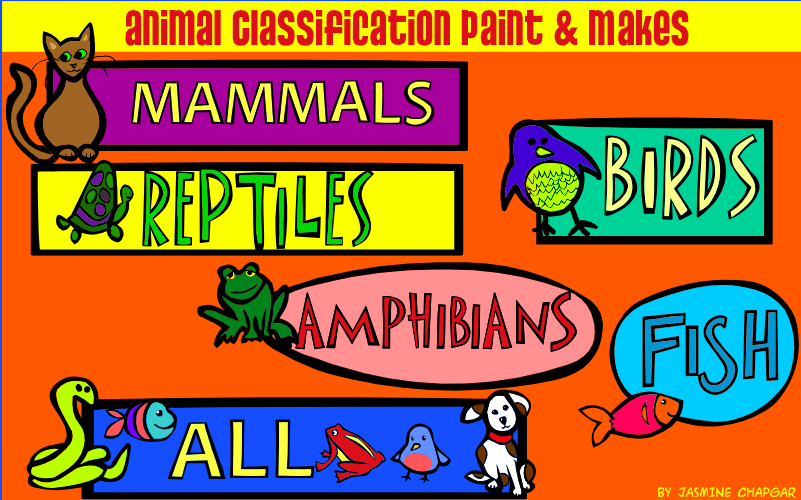
It Takes All Kinds game illustration courtesy of Science Trek.


Kingdoms of Life Fun

Watch a Kingdoms of Life Classification Video with Science Trek

  • As Allen-Fletcher notes in Kingdoms of Life, scientists are constantly evolving the categories for living organisms as they learn more. Do you notice any differences between the book and video kingdom categories? Since this video was published, scientists have started using the kingdom names bacteria and archaea instead of the previously used term, monera!

You can also explore their Online Games on kingdoms of life and animal classification, and practice sorting with Generation Genius’s Candy Classification Activity

You can purchase Kingdoms of Life at these booksellers

Amazon | Barnes & Noble | Bookshop (to support your local independent bookstore)

Picture Book Revie