March 29 – Smoke and Mirrors Day

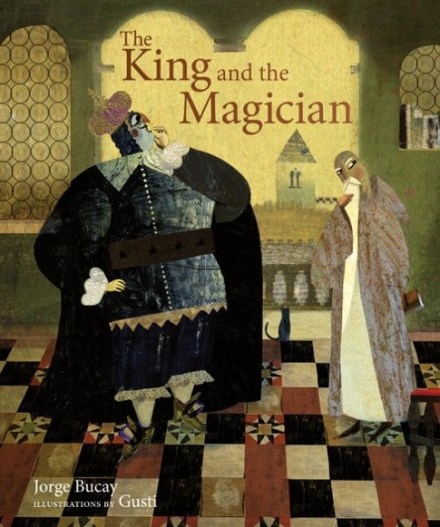
The King and the Magician by Jorge Bucay and Gusti Picture Book Review

About the Holiday

Abracadabra! With a puff of smoke and a few mirrors, I have made this blog post appear out of thin air! Okay, so maybe that’s not quite true, but today is the perfect day to try a little magic. On Smoke and Mirrors Day we celebrate the practitioners of this most mysterious art, who often extend and retract mirrors within a cloud of smoke to accomplish their deceptions. The term is also used generally whenever someone is trying to pull the wool over another person’s eyes. Whether you like sleight of hand, disappearing acts, or the magic of a soothing cup of tea, have fun, make a little mischief, and enjoy the day!

The King and the Magician

Written by Jorge Bucay | Illustrated by Gusti


In a faraway land there once lived a King who was very powerful. Not only does he love power, he commands that everyone in his kingdom obey and admire him. Trembling, his subjects reassure him every day that he is the most powerful man in the kingdom.

One day, however, the King hears a rumor that down in the village lives a Magician who can predict the future. The King fears that this man will become more powerful than he, and he sends his spies to learn more. The spies return and reveal that not only can the Magician tell the future, he is loved and admired by everyone.

The King becomes terribly jealous and plots to do away with his most hated enemy. He devises a plot to trick the Magician. He will host a party, and at the end will ask the Magician if he can truly predict the future. If the Magician says “No,” he will be exposed as a fraud, and the king will kill him. If the Magician answers “Yes,” the King will ask him to predict the date of the Magician’s death and will then kill him. The King is pleased with his scheme because either way, he will be rid of his rival.

On the night of the party, the King summons the Magician and asks him the fatal question. The Magician is more than just a seer or a sorcerer—he is wise. He looks at the King and states, “the Magician of this kingdom will die the exact same day as his King.

Now the King is in a terrible quandary. He does not want to risk the possibility that this old man’s prediction is true. He must now protect the Magician in order to save his own life. He quickly concocts a ruse and asks the Magician to stay the night in the castle, saying he wants to consult with him about some royal matters. In fact, he just wants to keep an eye on him.

The Magician agrees. The next morning the King goes to the Magician and asks his advice on some kingly decisions. The Magician offers good suggestions, and the king accepts them. As the months go by, the King continues to rely on the Magician for guidance, and slowly the King learns to be fair and wise. He becomes the respected and admired ruler he always wanted to be.

The King realizes that not only is the Magician a trusted advisor, he is a loyal and beloved friend. One day, wracked with guilt over his one-time plot to kill the Magician, the King reveals the story. The Magician listens to the King’s secret, and shares one of his own.

He relates that when the king questioned him on the night of the party, he saw the king reach for the hilt of his sword and realized his intentions. He then divulges that he made up the prediction of their shared death date to teach the King a lesson—one the King has learned. He says, “It is our lives that have become entwined, not our deaths.”

For many more years the King and the Magician live as friends and confidants. The kingdom grows stronger and the King kinder and more loved by his people. One day the Magician dies. The King is sad, and realizes he is no longer afraid of his own death. The King has learned the Magician’s lesson well, and even though his advisor is gone, he continues to make wise and beneficial decisions.

Ten years later the King writes a letter to his son and heir. In his letter, the King cautions his son that during his life he may come across someone or something that “will arouse fear and jealousy in your soul” and will want to destroy them or it to alleviate his fear. Instead, says his father, “open  your heart or your home” because “what you thought was your most feared enemy, is really your most powerful friend.”

Jorge Bucay has written a classic tale of wisdom verses power wrapped around a clever psychological trick that initiates the kind of thought which leads to true enlightenment. The straightforward storytelling and the pacing of the plot build suspense, while lyrical descriptions create a beautiful flow that depicts both the quandary of the King and the kindness of the Magician.

Gusti’s lavish illustrations, reminiscent of hieroglyphics and Medieval tapestries, are rendered in dark, rich brown, rust, black, olive and blue hues that gorgeously portray the splendor of the King and his castle, but also signal the somber weight in his soul. The regal tone even extends to the gilded text. The King is drawn as an imposing rounded figure, towering over everyone else in his kingdom, but his feet and hands are tiny, lending him a bit of a comical yet vulnerable air. The King’s eyes narrow with cunning as he plots his evil deed but widen in doubt and despair as the Magician works his special brand of magic.

Ages 4 – 8

Abbeville Kids, 2014 | ISBN 978-0789212047

Smoke and Mirrors Day Activity
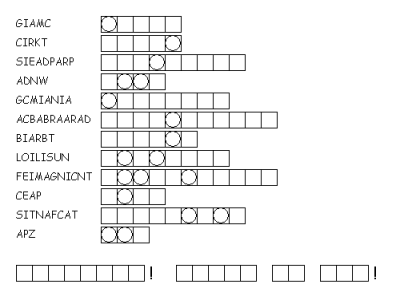
CPB - Magic Word Scramble II


Say the Magic Word! Word Scramble


Magic is all about mystery—and so is this scrambled word puzzle! Print the Say the Magic Word! word scramble. Then unscramble each magic-related word and, using the letters in the circles, discover the mystery phrase. Here’s the Solution!

March 19 – National Poultry Day

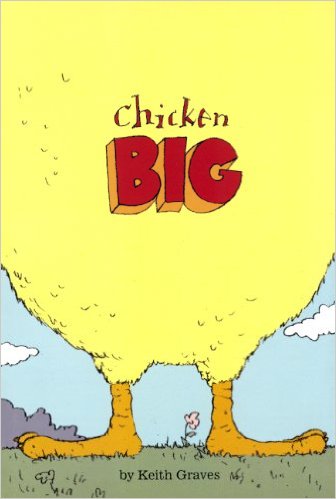
Chicken Big by Keith Graves Picture Book Review

About the Holiday

Perhaps someone’s too chicken to publish much information about this holiday, but even without the details, it’s certainly an eggsellent day to remember our feathered friends of the barnyard variety, who also happen to feature prominently in picture books of all kinds.

Chicken Big

By Keith Graves


Something big is hatching at the teeny little farm. Not only big, but humongous! Chicks aren’t supposed to be that big, so what is it? The small chicken agrees that whatever it is, it’s big; the smaller chicken goes so far as to call it enormous; and the smallest chicken declares it’s an elephant, and warns that indoor elephants are dangerous! The chickens all concur on one thing, though—this creature is too big to stay in the itty-bitty coop. The newly hatched chick, listening to all this squabbling, doesn’t feel like an elephant and wishes he were a chicken.

The next day an acorn conks the smallest chicken on the head, causing the familiar “the sky is falling” panic to hit the teeny farm. While the chickens are running around like chickens with…well, you know, the big chick discovers that acorns are tasty. Seeing the chick eating acorns convinces the smallest chicken that their coopmate is indeed a…squirrel!

When the rains come, the big chick protects the others under his wing, so the smallest chicken decides this barnyard biggie is an….umbrella! It doesn’t take long for the smallest chicken to realize she is wrong, and that the yellow fellow with the chilly wind blocking skills is a…sweater!

When the chickens return to the coop for naptime and discover their eggs have been stolen, they boo hoo hoo into their feathers while the humongous chick scouts out the fox, who is carrying the precious cargo into his den. With a hop and a jump the big chick spans the mile and peeps into the fox’s home just as he is about to fry up some lunch. Frightened by the “hippopotamus,” the fox scampers away.

Big chick brings back the eggs and is proclaimed a hero. Finally the chick’s intelligence, kindness, and bravery convince the chickens that he is one of them (well, most of them believe so anyway), and they welcome him into the coop. There’s just one problem…. But the smallest chicken is the first to say they’ll make room.

Keith Graves has hatched up a crazy tale of mistaken identity that will keep kids giggling and groaning with delight as the possible aliases grow more and more ridiculous. The feather-brained chickens are drawn with comic masterstrokes as they frantically try to determine who or what has invaded their farmyard. The big chick is indeed big—dominating the page and towering over his coopmates. Incorporating comic-style conventions on some pages, such as speech bubbles and small panels, as well as mixed typefaces adds to the humor.

Ages 4 – 8

Chronicle Books, 2014 | ISBN 978-1452131467

National Poultry Day Activity

CPB - Chick single

Hatch a Chick of Your Own


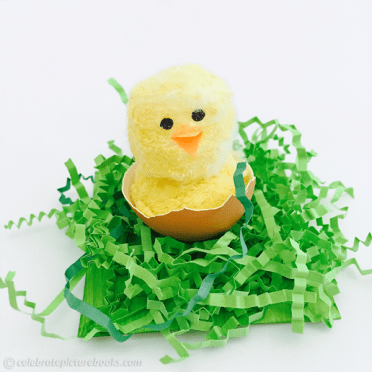
Chicks are so cute and fluffy—you just wish you could have one of your very own! Now you can! Hatch your own chick with this craft.

Supplies

  • Cotton balls
  • Yellow chalk
  • Orange paper
  • Black paper
  • Egg shell
  • Paper grass
  • Cardboard or poster board
  • Cheese grater
  • Bowl
  • Green paint
  • Glue
  • Scissors

CPB - Chick triple

Directions

To make the shell

  1. Crack an egg and save the two halves
  2. Soak the eggshells in soapy water or wash gently with soap
  3. Dry eggshell

To make the chick

  1. Grate the chalk with the cheese grater into the bowl
  2. Roll the cotton balls in the chalk dust until they are covered
  3. Choose one cotton ball to be the head
  4. Make the beak from the orange paper by folding the paper and cutting a small triangle. The triangle’s base should be along the fold.
  5. Cut two small eyes from the black paper
  6. Glue the beak and eyes to the head cotton ball
  7. Glue the head cotton ball to the body cotton ball
  8. Set the chick into one of the eggshell halves (you can glue it in if you wish)

To make the stand

  1. Cut a 3-inch by 3-inch square from the cardboard or poster board
  2. If you wish, paint the square green
  3. Glue green paper grass to the square
  4. Glue the eggshell halve to the stand.

March 17 – Absolutely Incredible Kid Day

The Incredible Book Eating Boy by Oliver Jeffers Picture Book Review

About the Holiday

Every kid is incredible! This special day, established by Camp Fire USA in 1997, gives adults an opportunity to tell the kids in their life how much they mean to them. Whether you write your special young person a letter or just sit down and have a heart-to-heart talk, your words of encouragement and appreciation will make a difference.

The Incredible Book Eating Boy

By Oliver Jeffers


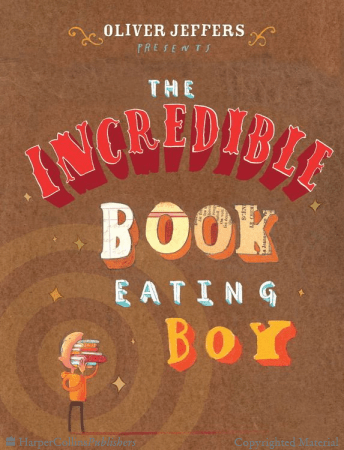
Henry is a little boy who loves books. He loves them for dinner, he loves them with French fries…Wait! What? Yup! Henry loves to eat books! This quirk all began by mistake when Henry isn’t paying attention. But his love of words grows until he’s eating a sentence then a page and finally a whole book!

Henry doesn’t have a favorite kind of book either. He’ll eat anything—even math books and dictionaries. And he’s eating them as if they’re going out of style! Henry discovers something amazing about his diet—with every book he devours, he gets smarter. He digests every bit of information, which comes in handy when helping his dad with the crossword puzzle or his teacher in school.

If a few books can make him smart, thinks Henry, then a lot of books can make him smarter—possibly the smartest person in the world! And so he tests his hypothesis. He eats every book he sees. But things begin to go wrong. He has nightmares; his stomach hurts; and in a frightening twist everything he knows gets jumbled up. Suddenly, Henry doesn’t feel so smart anymore.

After getting some advice, Henry gives up books cold turkey. He feels lost and out-of-sorts. Then he spies a half-eaten book on the floor of his room and picks it up. Instead of eating it, though, he opens it and begins to read. And that book tastes was sooo good! Henry discovers that he loves to read, and figures if he reads enough he may still become the smartest person on earth. Besides…broccoli is actually pretty tasty.

In this picture book about the love of reading, Oliver Jeffers has created a feast for the eyes as well as an extended pun. The story of Henry devouring book after book in the quest for brilliance is played out in typewriter text on a backdrop of various colors of notebook paper, book pages, graph paper, book bindings, maps, ledger pages, and more. Henry is as adorable as all of Jeffers’ kids, and the story is funny and as satisfying as your favorite meal. The page (and cover) cut at the end of the book leaves the reader happy that maybe, just maybe Henry didn’t give up his favorite snack entirely.

Philomel Books, Penguin Young Readers, 2006 | ISBN 978-0399247491

Absolutely Incredible Kid Day Activity

CPB - Bookend 1

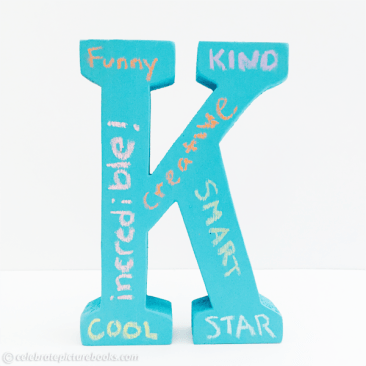
 Absolutely Incredible You Bookend


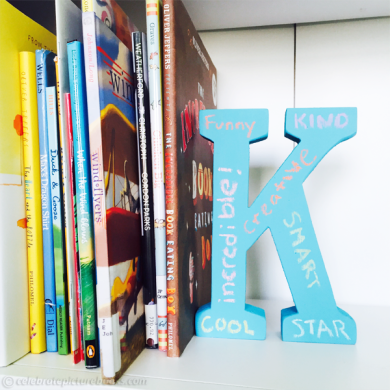
Do you devour so many books that they’re falling off your shelves? Keep them neat with a bookend that’s as incredible as you are!

Supplies

  • Wooden initial of your first and/or last name, available at craft stores
  • Chalkboard paint in your favorite color
  • Paint brush
  • Chalk

CPB - Bookend 2

Directions

  1. Paint the wooden letter with the chalkboard paint
  2. Let dry
  3. With the chalk, write words that describe what makes you absolutely incredible!

March 13 – National Earmuff Day

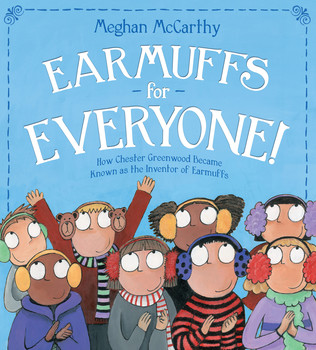
Earmuffs for Everyone! by Meghan McCarthy Picture Book Review

About the Holiday

On March 13, 1877 Chester Greenwood—a 19-year-old inventor—received a patent for “improvements in ear-mufflers” and forever sealed his place in history—as well as making winter more comfortable for millions of freezing ears! Today we honor Chester and his invention that brought attention to Farmington, Maine and jobs for many people in the area. So if you live in an area where the cold winds are still blowing, wear your earmuffs in pride!

Earmuffs for Everyone! How Chester Greenwood Became Known as the Inventor of Earmuffs

By Meghan McCarthy


In the mid-1800s inventors were trying to solve the problem of winter’s chill effects on tender ears. William Ware designed an “ear, cheek, and chin muff” that one wore somewhat like a false beard. Ear protecting hats, ear “slippers,” high collars, and other designs followed. But it wasn’t until Chester Greenwood and his sensitive protruding ears came along that earmuffs became practical. While the exact steps Chester took in creating his earmuffs aren’t known, he eventually perfected his invention and received a government patent on March 13, 1877—when he was only 19 years old!

Chester was no one-invention wonder, though. Always on the lookout for clever ways to make money, he went on to improve other products. He applied his foresight to the tea kettle, rounding the edges of the bottom to reduce wear; constructed an interchangeable-tooth rake; and built a collapsible, if cumbersome, tent.

His inventions brought him a comfortable life—a beautiful house for his family in Maine, the first steam car in his town, and a bicycle shop on the bottom floor of his workshop—that he shared with others. His wife, also a progressive thinker, worked for women’s suffrage, and inspired her husband to hire women in his workshops.

After Chester passed away, some people, most notably Mickey Maguire, thought he deserved more acclaim—even a day dedicated as Chester Greenwood Day. Maguire was so excited about this that he became a kind of inventor himself—an inventor of tall tales. Over time he told some whoppers and they were printed, making it hard to separate fact from myth. But even without the made-up stories, it’s easy to say that Chester Greenwood had a very remarkable life

Earmuffs for Everyone goes beyond the story of Chester Greenwood to include other inventors, a discussion of the patent system (using products well-known to today’s kids), and how an inventor’s legacy grows. Meghan McCarthy writes with verve and humor, making the story of Greenwood’s invention as well as others’ creations inviting, accessible, and fun. Her illustrations of the first attempts at earmuffs and other1800s products are sure to delight kids and make them curious about the time period.

In her author’s note at the back of the book, McCarthy expands on the story of Chester Greenwood and the process of applying for and earning a patent.

Ages 4 – 8

Simon & Schuster/Paula Wiseman Books, 2015 | ISBN 978-1481406376 

National Earmuff Day Activity

CPB - Earmuff Maze.png

Here’s to Warm Ears! Maze


One muff on each side of the head—Genius! But it took inventors a lot of trial and error to make the perfect warming headgear. Use your own creative thinking on this Here’s to Warm Ears!earmuff-shaped maze. Solution included.

March 11 – Johnny Appleseed Day

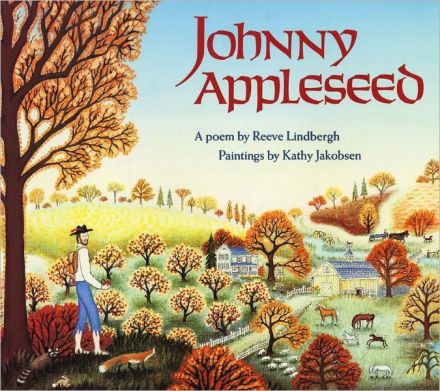
celebrate-picture-books-picture-book-review-johnny-appleseed-cover

About the Holiday

If you love apples, apple pie, applesauce, and all things apple, you probably have John Chapman to thank. John Chapman was a remarkable man who lived his values of kindness and generosity as he journeyed across the newly opened American frontier in the early 1800s. He is most commonly known as Johnny Appleseed for the apple seeds he planted and nurseries he founded across the country. Apples were a welcome crop—easily grown and stored for consumption throughout the year. He was well loved by the people he met on his travels, respected by the Native Americans, and gentle with all animals. Today we remember his contributions to the growth of America and his inclusive beliefs.

Johnny Appleseed

Written by Reeve Lindbergh | Illustrated by Kathy Jakobsen


As the poem opens, John Chapman approaches the simple Goodwin cabin in the woods. “Young Hannah Goodwin saw him first, / A stranger lean and lorn, / His face was thin, his feet were bare, / His clothing old and worn.”

Hannah first meets Johnny Appleseed when she is a little girl and he accepts the family’s invitation to dinner. He is an engaging source of entertainment, news, and stories about the American frontier, but he cannot stay long as he must continue his mission to plant apple trees across the country. Although John Chapman’s work takes him far away, Young Hannah heard the tales of him / All through her growing years / As he brought apples, sharp and sweet, / To other pioneers.

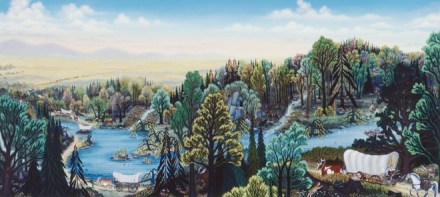
celebrate-picture-books-picture-book-review-johnny-appleseed-kathy-jakobsen-across-the-wild-frontier

Image copyright Kathy Jakobsen, courtesy of kathyjakobsen.com

The stories are exciting and comforting. Johnny Appleseed walks through any weather, is trusted by Native Americans, and lives peacefully with all animals, all the while scattering seeds along his path.

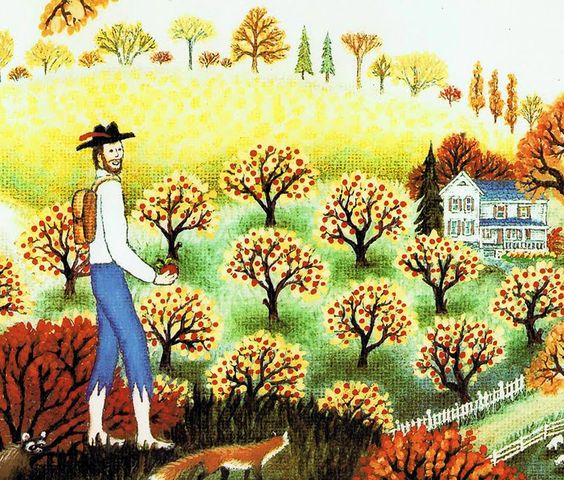
As an old man John Chapman returns to the Goodwin house, now nestled among a mature apple orchard. “Old Hannah Goodwin saw him last / when many years had gone. / He came in by the orchard gate / A quiet hour past dawn.”

Again, he regales Hannah with stories of his adventures and how the trees he had planted helped families thrive and make America strong. “There was spicy apple cider now / Out on the western plain. / There was applesauce in Iowa / and apple pie in Maine.

Although Hannah never sees John Chapman again, she passes down his legacy to her children, just as we still do today.

celebrate-picture-books-picture-book-review-johnny-appleseed-kathy-jakobsen-in-an-apple-orchard

Image copyright Kathy Jakobsen, courtesy of kathyjakobsen.com

The format of Reeve Lindbergh’s rhythmic and rhyming poem is a fitting tribute to the life of Johnny Appleseed. The lyrical lines flow as smoothly as the reader might imagine John Chapman tread across the Midwest plains and rugged West. With evocative language and a straightforward delivery, Lindbergh echoes the philosophy of simplicity and steadfastness that guided John Chapman’s life.

Kathy Jakobsen, one of America’s premiere folk artists, has embraced the story of Johnny Appleseed in stunning paintings of an America at her beginning. Depictions of rolling hills dotted with farms and trees, stone mills, horse-drawn carts loaded with apples, families at home and on the move in Conestoga wagons, as well as lush scenes of John Chapman interacting with nature and Native Americans portray the grandeur of America and the singularity of Johnny Appleseed. A quilt of small paneled scenes surround the text on each left-hand page, while the right page is fully dedicated to Jakobsen’s work.

Ages 5 – 8

Little Brown Books for Young Readers, 1998 | ISBN 978-0316526340

Johnny Appleseed Day Activity

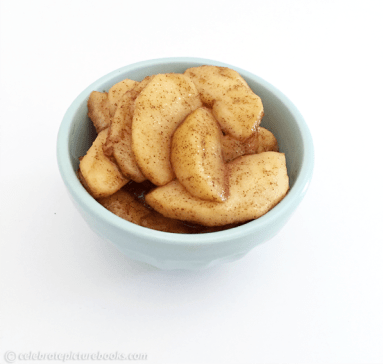
CPB - Cinnamon Apples (2)

Cinnamon Apples Recipe


Cinnamon apples are a delicious side dish to any meal! This tasty recipe is fun for kids and adults to make together.

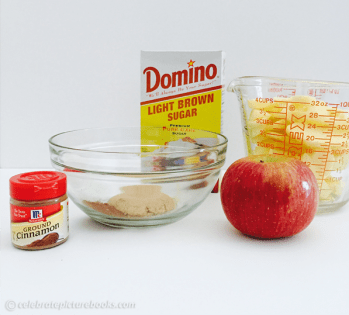
Ingredients

  • 4 cups of apples, Macintosh or Granny Smith apples are good choices
  • 2 tablespoons brown sugar
  • 1 teaspoon cinnamon
  • 1/4 teaspoon lemon juice

CPB - Cinnamon Apples ingredients (2)

Directions

  1. Mix brown sugar and cinnamon
  2. Peel and core 2 large apples
  3. Thinly slice apples
  4. Combine apples and cinnamon sugar/brown sugar mixture
  5. Stir until well combined
  6. Drizzle with lemon juice and stir again
  7. Cook apples on the stove at medium heat for 8 to 10 minutes or until desired texture


March 9 – Learn What Your Name Means Day

The Name Jar by Yangsook Choi Picture Book Review

About the Holiday


American onomotology enthusiast Jeffery Hill established Clelbrate Your Name Week in 1997. Each day of the first ful week of March is dedicated to self discovery and the fun of learning more about names and your name in particular. Today’s holiday encourages people to learn not only what your name means, but also to reach out to parents or other and discover why you were given the name you have. 

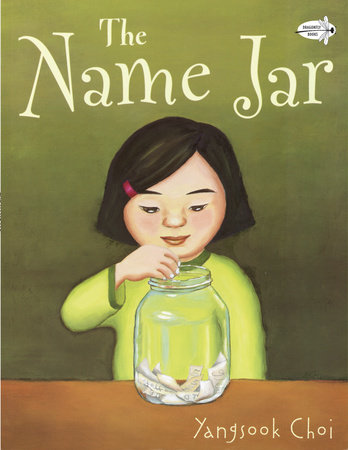
The Name Jar

By Yangsook Choi


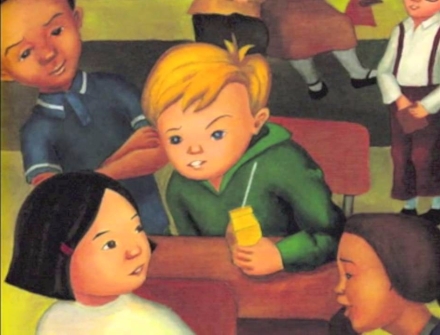
Unhei has recently moved to the United States from Korea. Although Unhei is excited about the first day of school, on the bus ride she misses her former home and looks at the wooden name stamp her grandmother gave her. A boy sitting behind Unhei notices the unfamiliar object and asks about it. Then other kids notice Unhei. They ask what her name is, and when she answers, they mispronounce it, laughing and making jokes.

celebrate-picture-books-picture-book-review-the-name-jar-on-the-bus

Image copyright Yangsook Choi, courtesy of Random House

Unhei is embarrassed and glad that those kids head to a different classroom than hers. As Unhei enters her own room, her classmates smile and greet her—it is obvious that their teacher has prepared them for a new student, and they are excited.

Of course, they first question her about her name, and remembering the experience on the bus, Unhei is reluctant to answer. She quickly says that she hasn’t picked a name yet, but will tell them next week. At home, Unhei tells her mother that she wants an American name, a name that is easy to pronounce.

Her mother is dismayed; Unhei’s name was chosen by a master so that it would describe her uniqueness. But Unhei doesn’t want to be different, she just wants to fit in. Later while she and her mother are at a Korean grocery store, she introduces herself to the owner, who exclaims that her name is beautiful and means “grace” in English. 

celebrate-picture-books-picture-book-review-the-name-jar-mom

Image copyright Yangsook Choi, courtesy of Random House

At home Unhei tries out American names in front of the mirror—Amanda, Laura, Susie—but they don’t feel or sound right. The next day at school Unhei finds a jar on her desk with pieces of paper in it. On each piece of paper is a name—suggestions from each of her classmates. Her new friends have chosen these names thoughtfully. Daisy is the nickname of one girl’s baby sister; Tamela is a smart and brave heroine from a story; and Wensdy is the day Unhei joined their class.

At the end of the school day, a classmate named Joey comes to her. He knows she actually does have a name, and Unhei, while not wanting to say it out loud, shows him the characters on her wooden stamp. Joey thinks it is beautiful and asks to keep the paper. Day by day the glass jar fills up with names. Unhei will have to choose soon.

One Saturday Unhei returns to the Korean grocery store. When Mr. Kim calls her by name, the one other customer turns around. It’s Joey! Carefully and slowly he says Unheis name until he gets it right. On Monday when Unhei enters the classroom, she discovers that the jar is missing. It’s all right, though, Unhei has chosen her name.

celebrate-picture-books-picture-book-review-the-name-jar-friend

Image copyright Yangsook Choi, courtesy of Random House

She walks to the chalkboard and writes her real name in English and Korean. She tells the class that her name means “grace.” Other kids reveal the meaning of their names, and they all practice saying Unhei’s name. That evening Joey comes to visit. He explains that he took the jar because he wanted Unhei to keep her original name. He suggests putting Korean nicknames into the jar for their classmates to pick—just as he already has. Mr. Kim helped him choose the prefect nickname: Chinku, which means “friend.”

Ages 3 – 8

Random House, Dragonfly Books,  New York, 2003 | ISBN  978-0440417996

Discover more about Yangsook Choi, her books, and her art on her website!

Yangsook Choi’s The Name Jar is as timely now as when it was first written. Through compelling and detailed storytelling, Choi explores the themes of identity, empathy, family, friendship, and more  with sometimes heartbreaking honesty. Unhei’s varied experiences at school, at home, and at the market provide an opportunity for adults and children to discuss and embrace the diversity of our multicultural world. Choi’s warm-toned illustrations reveal the conflicts that Unhei encounters and her growing confidence as she makes friends with Mr. Kim and Joey who accepts her as she is. 

Learn What Your Name Means Day Activity

CPB - Name Jars standing

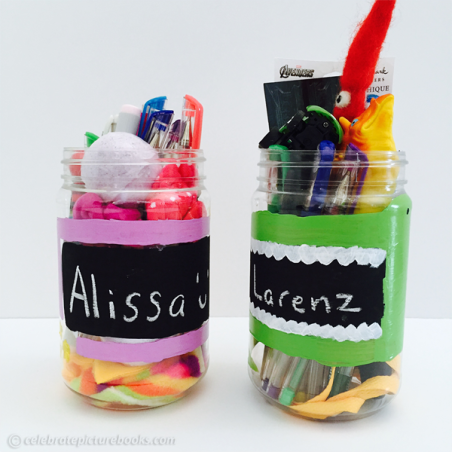
Love Your Name Organizer Jar


Everyone needs a place to store their special stuff! Here’s a way to recycle a plastic jar and make a cool organizer jar with your or your friend’s name on it.

Supplies

  • A large plastic jar, such as a peanut butter jar or mayonnaise jar with the label removed
  • Acrylic multi-surface paint or markers
  • Chalkboard paint
  • Paint brush
  • Chalk

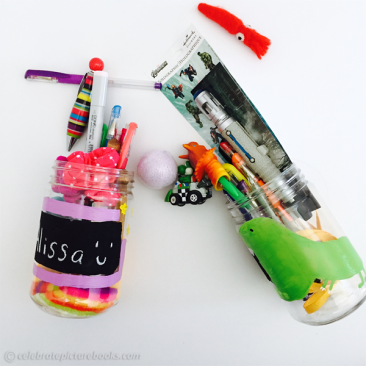
CPB - Name Jars on sides

Directions

  1. Paint a rectangle on the front of the jar with chalkboard paint
  2. Decorate the rest of the jar with paint, markers, or paper


March 7 – National Cereal Day

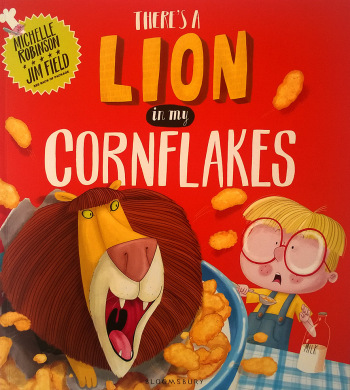
There's a Lion in My Cornflakes by Michelle Robinson and Jim Field picture book review

About the Holiday

Did you know that breakfast in a bowl actually began with an experiment that went wrong? Or just maybe it was right! John Harvey Kellogg and his brother Will Keith Kellogg were experimenting with boiled wheat in 1877 when they left some out overnight. In the morning the wheat was stale. The brothers decided to roll it out instead of throwing it away, and they found that each wheat berry created a flake. Boiled corn worked the same way, and from this process the Kellogg brothers invented Corn Flakes, the first dry cereal!

Today’s holiday celebrates all the varieties of your favorite cereal—whether it’s made of corn, wheat, bran, rice, or a mixture of flakes, fruit, and nuts. So pour yourself a big bowlful and enjoy!

There’s a Lion in My Cornflakes

Written by Michelle Robinson | Illustrated by Jim Field


Who could resist clipping cereal box coupons to receive a free lion? Nobody, that’s who! I mean, it would be so cool, right? A lion to take on walks, ride to school, and open tin cans—awesome! So a boy and his brother, Dan, take a year’s worth of their allowance, make “a million” trips to the grocery store, and start cutting.

But all those boxes of cereal squeeze out the other food on the pantry shelves, so Mom says the boys have to eat cornflakes for breakfast, lunch, and dinner until it’s gone—and, oh yeah, they don’t get an allowance until then either. It’s all worth it, though, because they’re going to get a real live lion.

There’s just one hitch—every other kid in town has the same idea, and while the brothers wait for their lion to arrive, everyone else is out playing with their new pet. Finally, the delivery truck pulls up in front of the house, and out walks…a grizzly bear?! That’s not right, and it’s even delivered to the wrong house. Well, the bear’s not too crazy about the situation either, and shows it. The kids and the bear have to clean up the neighbor’s yard and apologize.

A letter of complaint to the cereal company brings resolution in the form of…a crocodile?! The crocodile spends all its time in the bathroom, and the grizzly bear is still causing havoc. Dad calls the cereal company and to make up their mistake they send…a gorilla?! The gorilla stomps on Dad’s car and rips the door off. Well Dad’s had enough!  The whole crew piles into the car so Dad can “give those cereal people a piece of my mind.”

The cereal people sure are sorry for the mix-up. They make amends by letting the family keep the grizzly bear, the crocodile, and the gorilla, AND the company gives them…a lifetime’s supply of cornflakes! But really, what good are all those boxes? The boys can’t walk them or ride them or even open cans with them.

You know what, though? Mom’s discovered the crocodile has some pretty sharp, can-opening chompers. The grizzly bear can walk forever and even wear a fanny pack. And the gorilla makes a very cool chauffeur. Why bother having a lion when everyone else has one?

Besides, what are the cereal people offering now—a free tiger?! Hmmm….

Michelle Robinson has taken the lure of free stuff to its ridiculous best. There’s a Lion in My Cornflakes serves up the benefits of individuality and drawbacks of consumerism in a silly, over-the-top scenario that will have kids laughing at every page and escalation of the brother’s problem.

Jim Field’s bold, vibrant illustrations are the perfect accompaniment to this boisterous tale. As the boxes of cornflakes and clipped coupons pile higher and higher and the free animals cause more mayhem, the boys’ expressions go from excited to nonplussed to shocked and finally  to acceptance as day after day brings new and unexpected results of their actions. Kids will love the funny details on every page that highlight the story.

Ages 3 – 7

Bloomsbury Children’s, 2015 | ISBN 978-0802738363

National Cereal Day Activity

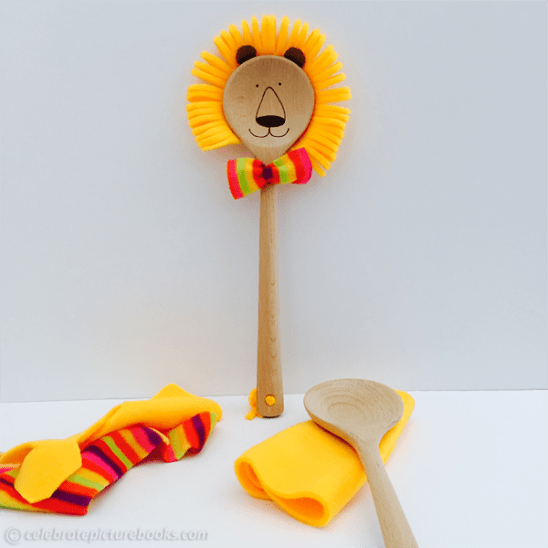
CPB - Spoon Lion

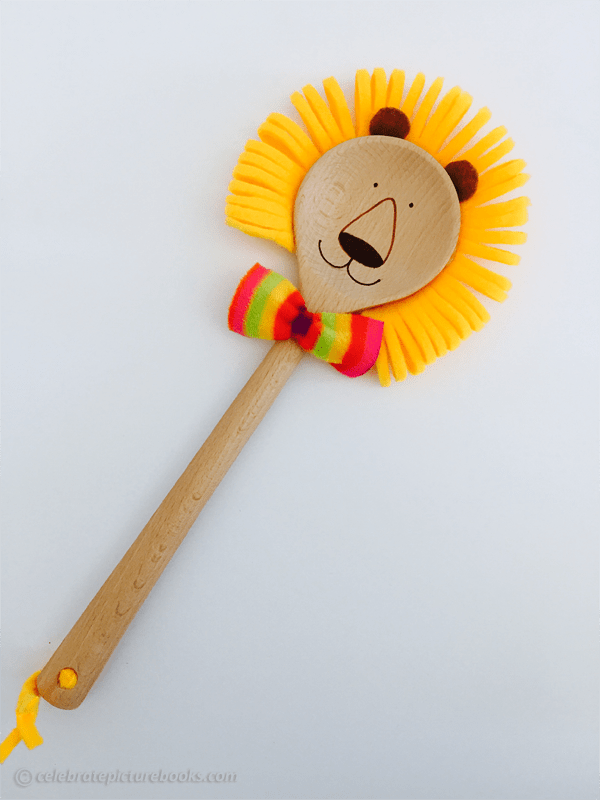
Spoon Lion Puppet


Spoons are just the thing for eating cereal! But with this craft you can make a ROARingly cute lion puppet!

Supplies

  • Wooden mixing spoon
  • Yellow Fleece
  • Brown felt
  • Colorful Fleece or felt
  • Fabric glue
  • Light brown marker
  • Dark brown marker
  • Hot glue gun or super glue
  • Scissors

CPB - Spoon Lion with stuff

Directions

To make the lion’s face

  1. Draw a nose, mouth, and eyes on the front/bowl of the spoon

To make the mane

  1. Measure the rim of the spoon from one side of the handle to the other
  2. Cut a strip of yellow fleece as long as rim measurement and 4 inches wide
  3. Fold the piece of fleece in half long-ways
  4. Glue the open edges of the fleece together
  5. Along the folded side cut a fringe, leaving the loops intact

To make the ears

  1. Cut round ears from the brown felt

To make the bow

  1. Cut a 3-inch x 1 ½-inch piece of colorful fleece or felt
  2. Cut a long thin strip of fleece or felt
  3. Pinch the bow in the middle and tie with the longer piece of cloth. Trim as necessary

To make the tail

  1. Cut three thin 4-inch-long strips of yellow fleece
  2. With fabric glue, glue the tops of the strips together
  3. Braid the strips
  4. At the bottom, glue the strips together, leaving the ends free

To assemble the lion

  1. Glue the ears to the back of the spoon
  2. Glue the mane to the back of the spoon
  3. Glue the bow to the handle
  4. Fold the top of the tail and push it into the hole in the handle of the spoon