May 6 – It’s National Bike Month

celebrate-picture-books-picture-book-review-fast-enough-cover

About the Holiday

Established in 1956 and sponsored by the League of American Bicyclists, National Bike Month celebrates all the fun and benefits of cycling. Communities around the country usually celebrate with special events, tours, and safety lessons. This year the League of American Bicyclists is encouraging riders to ride solo or with family and share their experiences online with #BikesUnite. For a list of ideas on ideas for making this year’s Bike Month fun, meaningful, and special, visit the League of American Bicyclists website.

I received a copy of Fast Enough: Bessie Stringfield’s First Ride from Oni Press for review consideration. All opinions are my own.

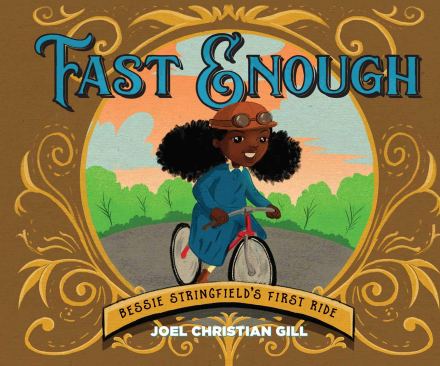
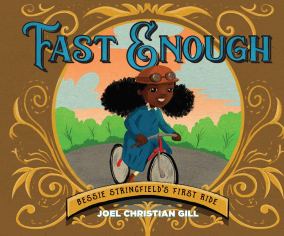
Fast Enough: Bessie Stringfield’s First Ride

By Joel Christian Gill


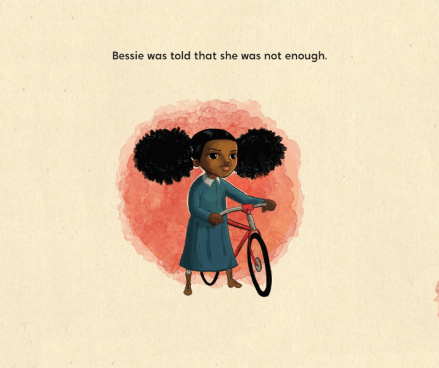
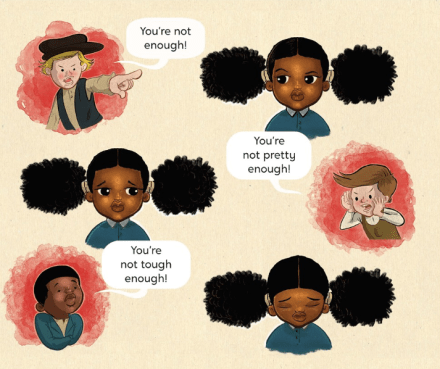
Maybe you’ve been criticized for your hair or your body shape; told that “you are not enough.” Bessie heard that over and over. When the boys gathered after school to race on their bikes, they rode past Bessie, laughing that she wasn’t fast enough. But Bessie wanted to join them. The boys just laughed harder and said, “Silly little Bessie! Girls can’t ride bikes!”
celebrate-picture-books-picture-book-review-fast-enough-Bessie

Copyright Joel Christian Gill, 2019, courtesy of Oni Press.

Bessie asked her mama if girls could ride bikes, and she suggested Bessie “ask the Man Upstairs.” That night Bessie said her usual prayers and then asked “if girls are supposed to ride bikes.” That night in her dreams she rode up and down hills, through cities, by the ocean, and even on top of the waves. She rode through cities and up into space.

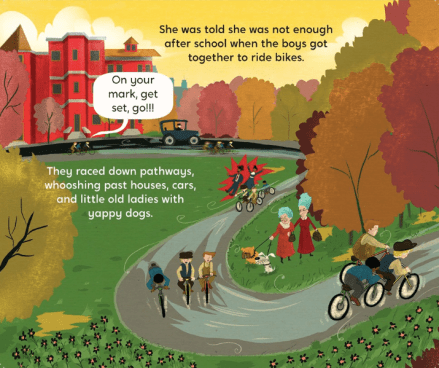
In the morning, Bessie knew just what she was going to do that day. When the boys got together, she was there, hanging behind. As the leader of the group started the countdown to race, Bessie waited. And when he shouted “Go!” “Bessie zoomed past the boys. She sailed over the concrete like it was the ocean in her dream. She was fast enough.” She zipped past the ladies walking their dogs as if they were skyscrapers in the city and tore up the track with the speed of a comet.
celebrate-picture-books-picture-book-review-fast-enough-boys

Copyright Joel Christian Gill, 2019, courtesy of Oni Press.

When the boys saw that, they called for her to wait up, and when they reached her there were high-fives all around. From then on Bessie could be found speeding around town on her bike until the day she heard “ROOOAAAR VAAROOM!,” saw…a motorcycle, and “realized she could be even faster.”

Extensive back matter continues Bessie’s story as a pioneer for women in motorcycling in the early and mid-twentieth century. Also a nurse, Bessie traveled all over the United States, following the Negro Motorist Green Book to find safe accommodations, as well as the world. She was “the only woman on a team of civilian motorcycle couriers for the U.S. military” and became “the first woman to ride a motorcycle across America.” Children will be fascinated by her adventurous life and captivated by the various versions of her life and legend. 
celebrate-picture-books-picture-book-review-fast-enough-boys-racing

Copyright Joel Christian Gill, 2019, courtesy of Oni Press.

Joel Christian Gill introduces children to Bessie, a determined, brave, and pioneering woman at a formative time in her life. Told that girls don’t ride bikes and that she wasn’t good enough or fast enough anyway, Bessie Stringfield wrestled with self-doubt, but she took control of what she wanted and ultimately proved to herself and others that she was more than capable. Gill’s first pages set the stage for readers to contemplate ways in which they may doubt themselves, before encouraging them to find inspiration and confidence in Bessie’s story.

Gill’s vivid illustrations clearly show Bessie’s sadness as she internalizes the boy’s taunts, her tenacity, and finally her jubilation is besting them and achieving her goal. Images of Bessie’s dream and its resulting reality creatively play on the dual meaning of the word dream while a change in Bessie’s room décor while she sleeps is a clever touch.

A singular story about a trailblazing black woman, Fast Enough: Bessie Stringfield’s First Ride encourages children to embrace their own identity instead of letting others define them. The book would be a welcome addition to home, school, and public library collections.

Ages 5 – 9

Oni Press, 2019 | ISBN 978-1549303142

To learn more about Joel Christian Gill, his books, and his cartoons, visit his website.

National Bike Month Activity
celebrate-picture-books-picture-book-review-bicycle-maze 2

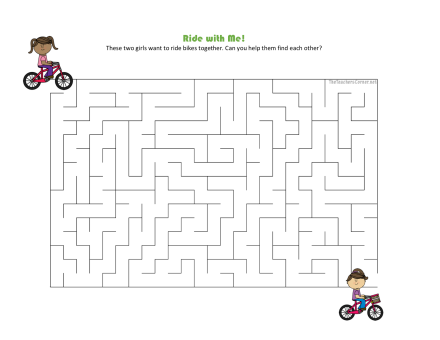
Ride with Me! Maze


These two girls want to ride bikes together. Can you help them find each other in this printable maze?

Ride with Me! Puzzle | Ride with Me! Puzzle Solution
celebrate-picture-books-picture-book-review-fast-enough-cover

You can find Fast Enough: Bessie Stringfield’s First Ride at these booksellers

Amazon | Barnes & Noble | Books-a-Million | IndieBound

Picture Book Review

June 29 – International Mud Day

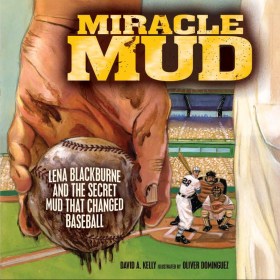
celebrate-picture-books-picture-book-review-miracle-mud-cover

About the Holiday

Today’s holiday was established in 2009 when the students of Bold Park Community School in Wembley, Western Australia teamed with the boys of the Nepalese Panchkhal Orphanage to “celebrate the visceral and primal connection we all share with Earth and the outdoors.” Since that day, schools, families, and early childhood education centers have worked to remind us that we all need to take time to play in the mud sometimes and reconnect with what makes us human. In 2015, the day was expanded to include the entire month of June to allow us to decompress from the high-tech, high-pressure world we live in and to connect with others.

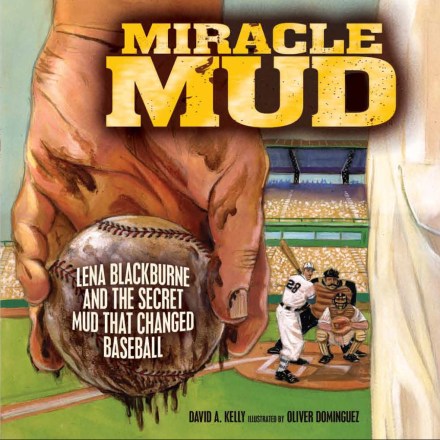
Miracle Mud: Lena Blackburne and the Secret Mud that Changed Baseball

Written by David A. Kelly | Illustrated by Oliver Dominguez


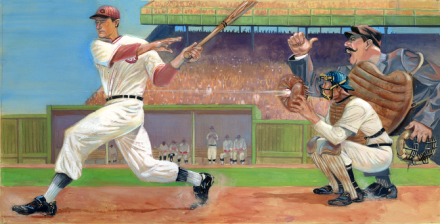
“Lena Blackburne wanted to be a famous baseball player.” Unfortunately, he wasn’t one of the greats. In fact starting in 1910, Lena moved around from team to team, playing a variety of positions. He made appearances at every base and played shortstop; he even had a go as pitcher. But he wasn’t a star at any of these positions. He was never going to make it to the Hall of Fame.

celebrate-picture-books-picture-book-review-miracle-mud-striking-out

Image copyright Oliver Dominguez, 2017, courtesy of oliver-dominguez.com

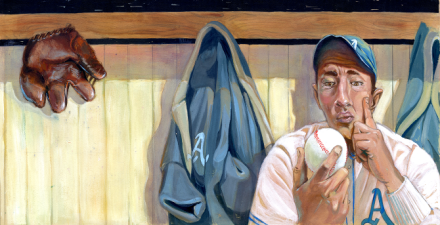
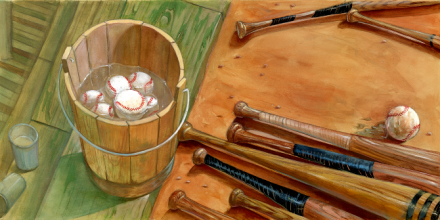
After he retired from playing, Lena became a coach. One day the umpire came to him with a complaint about the soggy baseballs. They were too hard to throw and too hard to see. Besides that, when they were hit, they didn’t soar very far. The problem was that new baseballs had a slick sheen to them, “so players soaked them in dirty water. It got rid of the shine. But it also made the balls soggy and soft.”

celebrate-picture-books-picture-book-review-miracle-mud-soggy-baseballs

Image copyright Oliver Dominguez, 2017, courtesy of oliver-dominguez.com

Players tried other methods to get rid of the shine, but they had drawbacks too. Shoe polish just turned the balls black, and “spit and tobacco juice…made the balls stink.” Lena Blackburne sat down and considered the problem. The answer came to him in a most unusual place—an old fishing hole where Lena liked to go when he was off the road and home.

celebrate-picture-books-picture-book-review-miracle-mud-spitting

Image copyright Oliver Dominguez, 2017, courtesy of oliver-dominguez.com

While fishing one day, he happened to step into some dark brown mud. It sucked at his boot, and as Lena pulled his foot out he had an idea. The mud was “smooth and creamy like chocolate pudding. But it felt gritty.” At the ballpark, Lena rubbed the mud on the balls. When the mud dried, it was easy to wipe off. The mud left the balls with a good finish—not soggy, black, or smelly. At the next game, “the pitcher threw muddy fastballs, curveballs, changeups, and sinkers. The batters hit muddy singles, doubles, triples, and home runs.”

celebrate-picture-books-picture-book-review-miracle-mud-thinking

Image copyright Oliver Dominguez, 2017, courtesy of oliver-dominguez.com

Lena returned to the fishing hole and dug up more mud. He put it into containers and began selling it. Teams all over the league bought Lena Blackburne’s Baseball Rubbing Mud. Lena’s famous mud is still used today and is officially the “only thing that’s allowed on major-league balls.” Lena Blackburne always dreamed of being in the Baseball Hall of Fame. While he didn’t make it there as a player, he is remembered for his contributions to the game he loved in a special exhibit for Lena Blackburne’s Baseball Rubbing Mud.

celebrate-picture-books-picture-book-review-miracle-mud-winning

Image copyright Oliver Dominguez, 2017, courtesy of oliver-dominguez.com

An Author’s Note including more about Lena Blackburne, his baseball statistics, and his special mud follow the text.

Kids who love baseball will be intrigued by David A. Kelly’s unique take on the game. By exploring a small detail that had large effects on the quality of play, Kelly, a masterful writer of sports books and mysteries for kids, including the much-loved Ballpark Mysteries and MVP series, presents a picture book mystery with a surprise ending for younger readers. Kelly’s inclusion of Blackburne’s disappointments shows children that each person’s unique contributions are often found in expected ways.

celebrate-picture-books-picture-book-review-miracle-mud-baseballs

Image copyright Oliver Dominguez, coiurtesy of oliver-dominguez.com

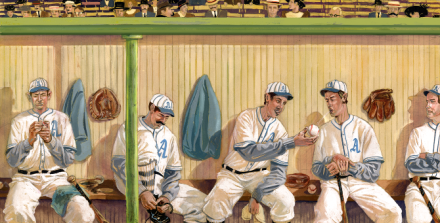
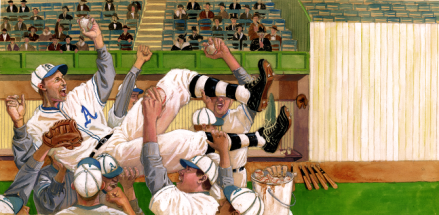
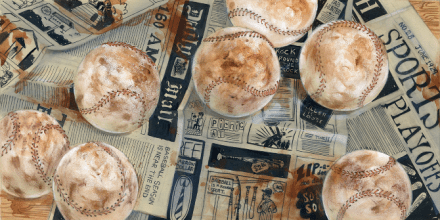
Kids get a front row seat at the baseball stadium in Oliver Dominguez’s stunning illustrations. As Lena swings and misses, readers can almost hear the smack of the ball in the catcher’s glove and the ump yelling, “Steee-rrriike!”  When Lena Blackburne becomes a coach and ponders the problem of the soggy baseballs, kids will enjoy seeing baseballs bobbing in a wooden bucket of water, laugh to see a player spitting on a new baseball, and wonder what idea has Lena so wide-eyed at the fishing hole. Baseball lovers will want to linger over the up-close views of players preparing for a game and celebrating their win.

For baseball and other sports fans, young inventors, creative thinkers, and anyone who loves history, Miracle Mud: Lena Blackburne and the Secret Mud that Changed Baseball is a fascinating read and would be welcome in home, classroom, and library collections. 

Ages 6 – 10

Millbrook Press, 2013 | ISBN 978-0761380924

Find out more about David A. Kelly, his ballpark mysteries, and his other books on his website!

View a gallery of artwork and videos by Oliver Dominguez on his website!

International Mud Day Activity

celebrate-picture-books-picture-book-review-kinetic-sand-craft

Make Your Own Sensory Sand


While this sensory sand may not be exactly mud, it’s sure as much fun to play with!

Supplies

  • 1 cup sand
  • ½ tablespoon cornstarch
  • 1 teaspoon dish soap
  • Water as needed – about ¾ cup
  • Bin or bowl for mixing dry ingredients
  • Bowl for mixing dish soap and water

Directions

  1. In the bin combine the sand and cornstarch and mix well
  2. In the bowl combine the dish soap and water until the water is bubbly
  3. Slowly add the water mixture to the dry ingredients, mixing and adding water little-by-little until the desired consistency is reached. The grain of the sand will determine how much water is needed.
  4. The sand can be formed with cookie cutters, molds, hands, etc. and is strong enough to stack.

celebrate-picture-books-picture-book-review-miracle-mud-cover

You can find Miracle Mud: Lena Blackburne and the Secret Mud that Changed Baseball at these booksellers

Amazon | Barnes & Noble | Books-a-Million | IndieBound

Picture Book Review
Picture Book Review

June 5 – Global Running Day

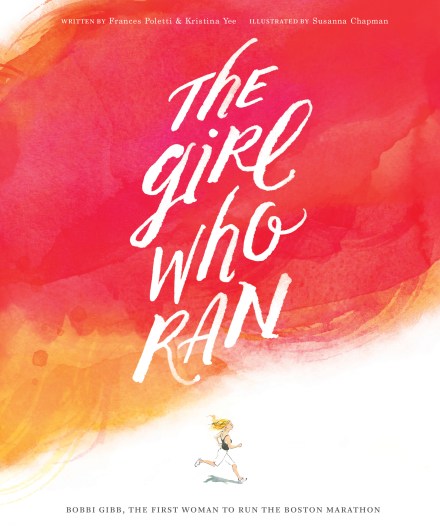
celebrate-picture-books-picture-book-review-the-girl-who-ran-cover

About the Holiday

Global Running Day is all about living a healthy lifestyle! There are so many reasons to take up running, from keeping in shape to clearing one’s mind to competing against other runners. The evolution of National Running Day, which was established in 2009, Global Running Day allows serious runners to recommit to their sport and encourages those on the fence to jump down and join in. This year people from 156 countries have pledged to run short distances and longer routes in their quest for personal health. An accompanying Million Kid Run gets young people thinking about their own health while having fun. Participating is as easy as running in your neighborhood, gathering with friends to run, or even playing tag with your kids. To learn more about the day visit the Global Running Day website!  

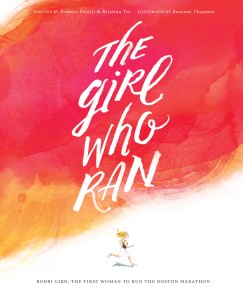
The Girl Who Ran: Bobbi Gibb, the First Woman to Run the Boston Marathon

Written by Frances Poletti and Kristina Yee | Illustrated by Susanna Chapman


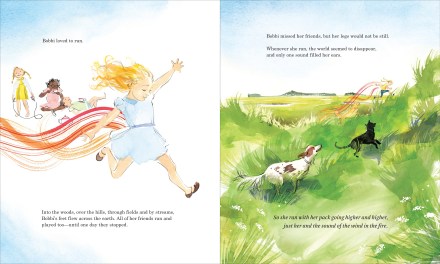
“Bobbi loved to run. Into the woods, over the hills, through fields and by streams, Bobbi’s feet flew across the earth.” When Bobbi was little, she and her friends ran and played together. But as they grew older, her friends found other pursuits while Bobbi still loved to run. She took to the fields with her dogs, “going higher and higher, / just her and the sound of the wind in the fire.”

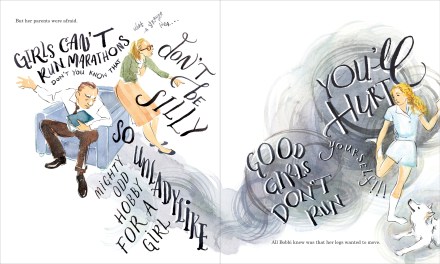
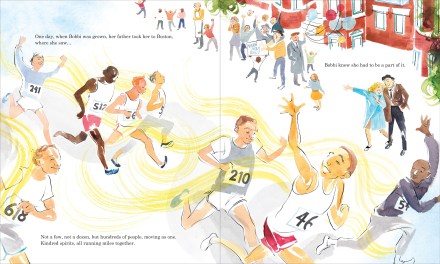
When Bobbi was grown, her father took her to watch the Boston Marathon. She loved the camaraderie of “hundreds of people moving as one. Kindred spirits, all running miles together.” Immediately, she wanted to participate too. When Bobbi told her parents that she wanted to run in the marathon, however, they thought her idea was strange. They told her she would hurt herself and that it was unladylike.

celebrate-picture-books-picture-book-review-the-girl-who-ran-young-bobbi

Image copyright Susanna Chapman, 2017, text copyright, Frances Poletti and Kristina Yee, 2017. Courtesy of Compendium.

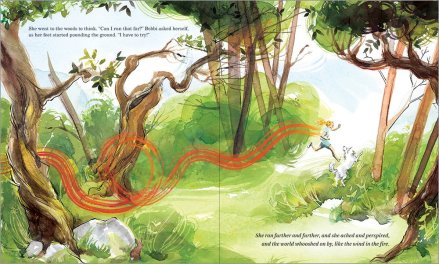
But Bobbie wanted to run. She didn’t know if she could run that far but was determined to try. She trained in the woods, running “further and further, and she ached and perspired, / and the world whooshed on by, like the wind in the fire.” Because she knew her parents disapproved, Bobbi set out on her own across country to train. Every day she ran in a new place—“lush forests in Ohio and Indiana, vast plains in Nebraska and Kansas, majestic mountains in Wyoming and Montana.” She even ran with wild horses out west and up steep Rocky Mountain trails. At night she camped, “tired and happy.”

All of her training seemed for nothing, however, when Bobbi received a letter rejecting her application for the Boston Marathon. The letter said that women were incapable of running marathons, that it was against the rules for a woman to run, and that the rules had been written to protect women from injury. Bobbi was not deterred, however. She went back home and told her parents what she wanted to do. Her father thought she was crazy to attempt it.

celebrate-picture-books-picture-book-review-the-girl-who-ran-woods

Image copyright Susanna Chapman, 2017, text copyright, Frances Poletti and Kristina Yee, 2017. Courtesy of Compendium.

Bobbi knew that the only way she could run would be “to blend in with the men.” Dressed in men’s shorts and a baggy hooded sweatshirt to hide her hair and wearing men’s running shoes (running shoes were not made for women), Bobbi was ready to go. Her father refused to drive her to the race, though. He stormed out of the house, and drove away. Bobbi thought her dream was dashed until her mom came to her room, car keys in hand, and said, “‘Let’s go.”

Hiding in the bushes at the starting line, she sprang out and joined the pack of runners with the bang of the starting pistol. “So she ran with the pack, going higher and higher, / the world whooshing by, like the wind in the fire.” As she ran, she realized that the men around her had seen through her disguise. Bobbi was worried, but the men were supportive. “‘Hey! Are you running the whole way?’ one asked.” She told him she hoped to, but in that sweatshirt, she was getting hotter and hotter. She was afraid that if she took it off, she’d be thrown out of the race.

celebrate-picture-books-picture-book-review-the-girl-who-ran-parents-afraid

Image copyright Susanna Chapman, 2017, text copyright, Frances Poletti and Kristina Yee, 2017. Courtesy of Compendium.

The men around her said they wouldn’t let that happen, so Bobbi took off the sweatshirt. “Word spread quickly throughout the course. A girl was running! They couldn’t believe it!” All along the route, the crowd cheered and encouraged her. Hearing the roar motivated Bobbi to ignore the hard ground and her stiff shoes and face the last steep hill. “Closing her eyes, she imagined she was back in Montana running up the mountains, the soft earth under her feet.”

Her feet were blistered and she was parched with thirst, but she crossed the finish line—ahead of nearly half of the men. Photographers, reporters, and radio presenters swarmed around her to hear her history-making story. From that day on “hearts and minds were forever changed.”

celebrate-picture-books-picture-book-review-the-girl-who-ran-young-Boston-marathon-all-men

Image copyright Susanna Chapman, 2017, text copyright, Frances Poletti and Kristina Yee, 2017. Courtesy of Compendium.

The story of Bobbi Gibb is one that every girl and boy should know, and Frances Poletti and Kristina Yee’s excellent biography will have readers awe-struck by how she changed the way the world viewed women and their capabilities. A pioneer for women’s rights in every way—from her traveling the country alone to rejecting the prevailing ideas to competing on her own terms—Bobbi Gibb is an inspiration for achievers everywhere. Poletti and Yee’s conversational storytelling is both lyrical and honest, not stinting on the obstacles Bobbi had to overcome, including race officials, her own parents, and even the fact that running shoes weren’t made for women.

As the marathon approaches, readers will be enthralled by the building suspense. They’ll feel Bobbi’s determination, her disappointment, and her fear that she will be discovered and thrown out of the race, and will cheer along with the crowd at her victory.

celebrate-picture-books-picture-book-review-the-girl-who-ran-crowds

Image copyright Susanna Chapman, 2017, text copyright, Frances Poletti and Kristina Yee, 2017. Courtesy of Compendium.

Susanna Chapman’s gorgeous illustrations are infused with Bobbi’s boundless energy and spirit as she soars over grassy dunes with her dogs at her heels, zips through shady woods, and runs alongside wild horses in the shadow of the Rockies all the while trailing a red swish, representative of the fire within her. The turmoil surrounding Bobbi’s desire to run the Boston Marathon is depicted in words of rebuke, recrimination, and rejection printed in large, emphatic typefaces that swirl around her like a tornado.

The inclusion of the image of Bobbi’s mother with the car keys in hand on the morning of the race is a welcome reminder of the many unknown women of earlier generations who  contributed to the fight for women’s equality. A beautiful double gate-fold illustration of Bobbi crossing the finish line to cheering crowds and the waiting media puts the focus fully on Bobbi and the fire that spurred her on.

An Afterword tells more about Bobbi Gibb, and a timeline of seminal events in the Boston Marathon from 1896 to today, is a fascinating must-read.

The Girl Who Ran is an inspirational biography and revealing history from the not-so-distant past that offers encouragement and triumph. It would be a wonderful addition to home, school, and public libraries.

Ages 8 – 12

Compendium, 2017 | ISBN 978-1943200474

Discover more about Kristina Yee, her books, and her films on her website

Learn more about Susanna Chapman, her books, and her art on her website

Global Running Day Activity

celebrate-picture-books-picture-book-review-pioneering-women-in-sports-puzzle

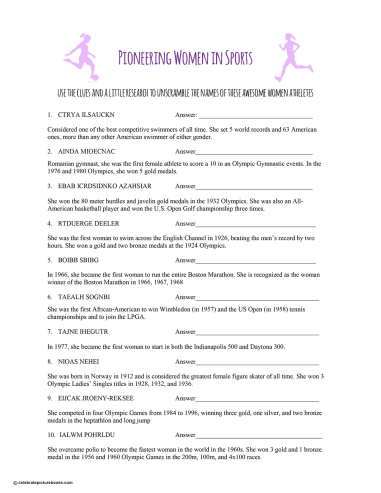
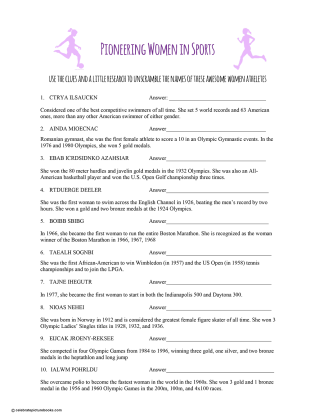
Pioneering Women in Sports Word Scramble Puzzle


In every sport there have been women who have overcome barriers, incredible odds, set records, and inspired others. Using the clues and a little research, can you unscramble the names of these twelve awesome athletes?

Pioneering Women in Sports Word ScramblePioneering Women in Sports Word Scramble Solution

celebrate-picture-books-picture-book-review-the-girl-who-ran-cover

You can find The Girl Who Ran at these booksellers

Amazon | Barnes & Noble | Books-a-Million | IndieBound

Picture Book Review
March 28 – Baseball Opening Day

celebrate-picture-books-picture-book-review-yogi-cover

About the Holiday

Today is what baseball fans wait for all fall and winter—Opening Day! This year is particularly exciting as it marks the 150th anniversary of America’s Pastime, commemorating the foundation of the Cincinnati Reds in 1869. So, get ready to cheer on your favorite team—and don’t forget the peanuts and cracker jacks, as the old song says!

Calkins Creek sent me a copy of Yogi for review consideration. All opinions are my own. I’m thrilled to be partnering with Calkins Creek in a giveaway of the book. See details below.

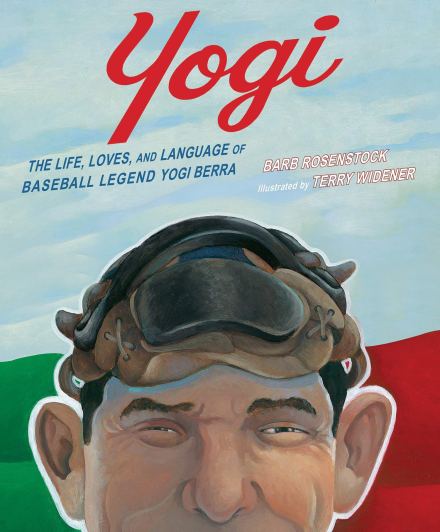
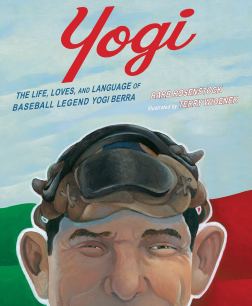
Yogi: The Life, Loves, and Language of Baseball Legend Yogi Berra

Written by Bard Rosenstock | Illustrated by Terry Widener


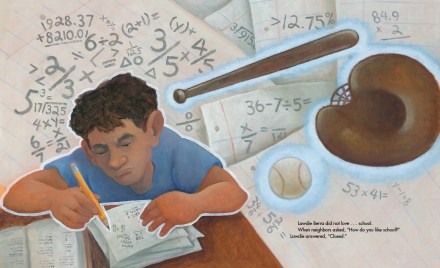
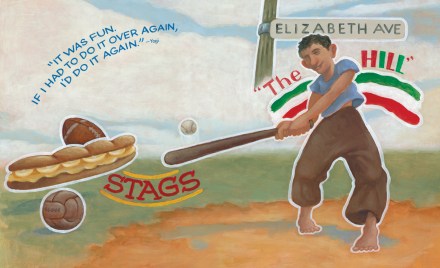
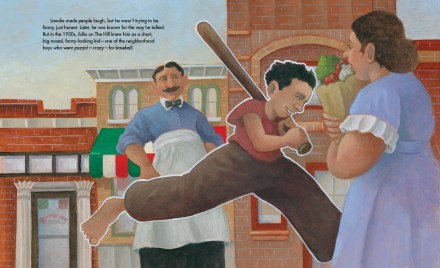
Even as a kid, Lawdie Berra had a way with words…and sports. While he loved his family, his Italian neighborhood in St. Louis, Missouri, and his friends, he was not fond of school. “When neighbors asked, ‘How do you like school?’ Lawdie answered, ‘Closed.’” Like other boys in “The Hill,” Lawdie had baseball fever. Using borrowed equipment, makeshift bats, and shin guards made from magazines, they played in “an abandoned clay-mine dump.” Their team name was the Stags, and they were one of the best teams in the local leagues.

celebrate-picture-books-picture-book-review-yogi-school

Image copyright Terry Widener, 2019, text copyright Barb Rosenstock, 2019. Courtesy of Calkins Creek.

When the Stags went asking for sponsorship for uniforms, storeowners told them “baseball was a ‘bum’s game’” and sent them on their way. Lawdie’s brothers were even asked to try out by major league teams, but their father insisted they get real jobs. When it was Lawdie’s turn to ask, they helped convince their father to let him have a chance. He finally said yes.

Lawdie joined an American Legion travel team with his friend Joey Garagiola. He had a lot to learn, and when he wasn’t playing he sat on the sidelines with his arms and legs crossed. A snake-charming yogi in a movie inspired his teammates to nickname Lawdie “Yogi,” and the name stuck. Even though his form was awkward, he was fast and helped his American Legion team to the national playoffs two years in a row. Then the St. Louis Cardinals came calling. They signed Joey, but not Yogi.

celebrate-picture-books-picture-book-review-yogi-stags

Image copyright Terry Widener, 2019, text copyright Barb Rosenstock, 2019. Courtesy of Calkins Creek.

In 1942, Yogi was given a shot on a New York Yankees’ minor league team. He played for one year before enlisting in the Navy to fight in World War II. When the war ended, Yogi went back to the minor leagues. His play captured attention, and on September 22, 1946, he joined the lineup in his first major league game. He hit two homers and continued hitting. But the newspapers and his New York Yankees teammates blasted him for his looks.

When the pitchers complained about his catching and signaling, he practiced until “home plate became like Yogi’s living room—he talked to everyone there and no one came in unless he let them.” At the plate, he psyched batters out with his chatter and disarmed players and fans with his baseball smarts and goofy grin. He went on to play for nineteen seasons and helped the Yankees win ten world series. When he retired from playing, he continued with baseball for twenty-nine more years as a coach and then a manager. “Yogi knew how to help young players. Believe in yourself. Ignore the chatter. Work hard. And never forget, ‘It ain’t over till it’s over.’” People loved Yogi and his unique way with words—a love that continues today.

celebrate-picture-books-picture-book-review-yogi-young-lawdy

Image copyright Terry Widener, 2019, text copyright Barb Rosenstock, 2019. Courtesy of Calkins Creek.

Back matter includes an Author’s Note about Yogi Berra’s life on and off the diamond, photographs, statistics of Yogi’s career, a note about Yogi-isms, quotes about Yogi Berra, an extensive bibliography and other resources, and a bit about the Yogi Berra Museum and Learning Center.

Barb Rosenstock’s thorough biography of Yogi Berra is a soaring tribute to this icon of baseball. His dedication and perseverance in the face of setbacks and derision is inspirational, and his good-natured, generous character makes him a role model for all. Rosenstock’s detailed storytelling is fast-paced and suspenseful and punctuated with repeated phrasing that will rivet readers to what comes next. Sprinkled throughout the pages are some of Yogi’s famous quotes that endeared him to the world.

Terry Widener knows how to take readers out to the ballgame. His bold, realistic paintings of Yogi scrapping together baseball equipment as a child, working up through the minor league ranks, and finding his groove as a hitter and catcher are loaded with action and up-close perspectives. You can almost hear the characters speak, smell the leather of the catcher’s mitt, and feel the camaraderie of the crowd. And if you instinctively reach for that baseball coming your way, no one can blame you. Throughout the pages, Yogi is outlined in white, emphasizing his standout qualities on the field and off. So, get ready to settle in for the game and one of its most beloved players—no tickets required.

Sure to encourage young readers to reach their full potential no matter their talent, Yogi: The Life, Loves, and Language of Baseball Legend Yogi Berra is a must for home, school, and public libraries.

Ages 7 – 10

Calkins Creek, 2019 | ISBN 978-1629798240

Discover more about Barb Rosenstock and her books on her website.

To learn more about Terry Widener, his books, and his art, visit his website.

Enjoy this Yogi book trailer—it’s a home run!

Yogi Giveaway

I’m excited to partner with Calkins Creek in a Twitter giveaway of:

  • One (1) copy of Yogi: The Life, Loves, and Language of Baseball Legend Yogi Berra written by Barb Rosenstock | illustrated by Terry Widener

To enter Follow me @CelebratePicBks on Twitter and Retweet a giveaway tweet.

This giveaway is open from March 28 through April 3 and ends at 8:00 p.m. EST.

A winner will be chosen on April 4.

Prizing provided by Calkins Creek

Giveaway open to U.S. addresses only. | No Giveaway Accounts 

Baseball Opening Day Activity

celebrate-picture-books-picture-book-review-baseball-word-search-puzzle

Take Me Out to the Ball Game! Word Search


Step up to the plate and find the 23 baseball-related words in this printable puzzle.

Take Me Out to the Ball Game! Puzzle | Take Me Out to the Ball Game! Solution

Check out these other amazing blogs along the tour!

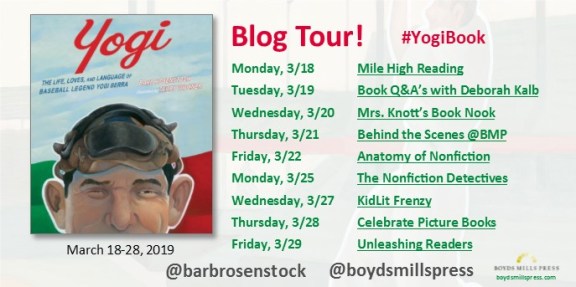
YOGI blog tour graphic

celebrate-picture-books-picture-book-review-yogi-cover

You can find Yogi: The Life, Loves, and Language of Baseball Legend Yogi Berra at these booksellers

Amazon | Barnes & Noble | Books-a-Million | IndieBound

Picture Book Review


June 6 – Global Running Day

celebrate-picture-books-picture-book-review-the-wildest-race-ever

About the Holiday

Do you love to run, or do you find yourself thinking, “I really should take up running.” Then today is for you! Established to allow serious runners to recommit to their sport and to encourage those on the fence to jump down and join in, Global Running Day provides the inspiration to embrace this healthy lifestyle. Celebrated in 139 countries and with 184,583 people pledged to run (as of this writing), Global Running Day inspires people of all ages to take to the road, track, or trails and enjoy the exhilaration of running. To learn more about the day visit the Global Running Day website!  

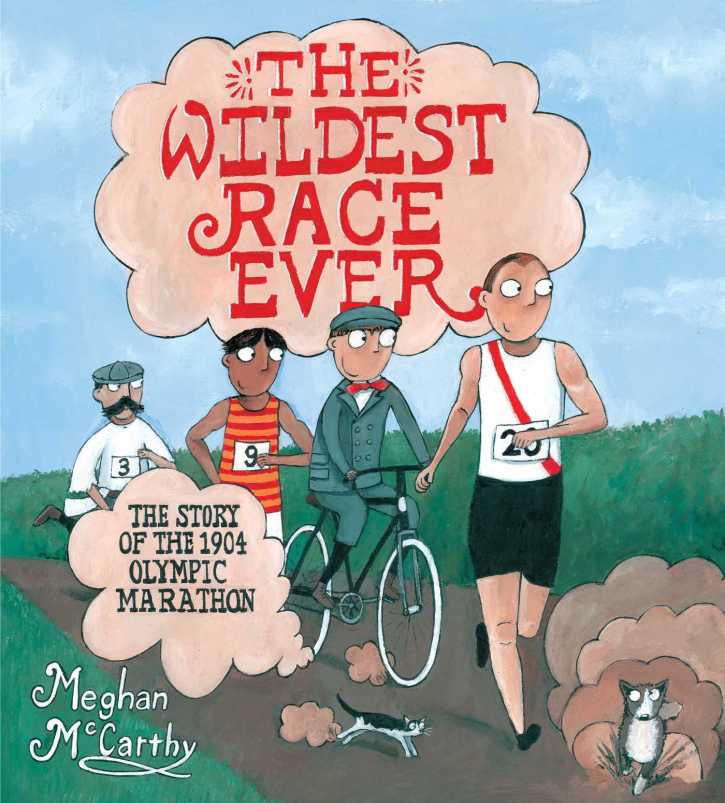
The Wildest Race Ever: The Story of the 1904 Olympic Marathon

By Meghan McCarthy


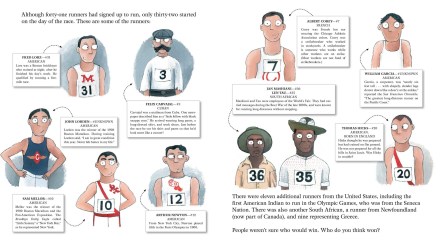
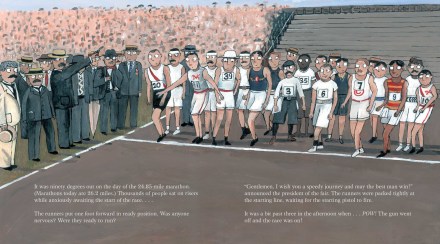
On August 30, 1904 at the World’s Fair in St. Louis, Missouri, the first United States Olympic Marathon took place even though torrential rainstorms had washed away the original route. On the morning of the race thirty-two racers faced an unfamiliar, more difficult route. Some of these racers were:

Fred Lorz, a Boston bricklayer; John Lorden, the winner of the 1903 Boston Marathon; Sam Mellor from New York and the winner of two major marathons; Felix Carvajal, a mailman from Cuba; Arthur Newton; Albert Corey;  Len Tau, a long-distance running messenger from South Africa; William Garcia, the “greatest long-distance runner on the Pacific Coast”; and Thomas Hicks, who had only trained on flat terrain and was not ready for hilly St. Louis. There were also racers from countries all over the world.

celebrate-picture-books-picture-book-review-the-wildest-race-ever-racers

Copyright Meghan McCarthy, 2016, courtesy of simonandschuster.com.

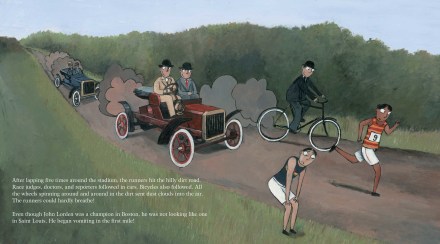
The racers waited in 90-degree heat at the starting line for the signal. When the pistol shot rang out, they took off. The early leader was Fred Lorz. As the racers took to the hills outside the stadium so did cars full of reporters, judges, and doctors. Some spectators rode along side them on bicycles. All these vehicles stirred up so much dust that the runners choked on it.

celebrate-picture-books-picture-book-review-the-wildest-race-ever-starting-line

Copyright Meghan McCarthy, 2016, courtesy of simonandschuster.com.

At mile two, Sam Mellor and Fred Lorz were in the lead with Thomas Hicks only a little behind, but at mile 9 Lorz suffered terrible cramps and was driven away in a car. Now Albert Corey and William Garcia were neck and neck, and Hicks was catching up!

Felix Carvajal was also in the mix. He ran and ran—but he also stopped and stopped. He loved talking to the spectators that cheered him on. It gave him an opportunity to practice his English! Arthur Newton, Sam Mellor, and Thomas Hicks exchanged the lead several times. Everyone wondered which of them would come out on top. 

celebrate-picture-books-picture-book-review-the-wildest-race-ever-fred-lorz

Copyright Meghan McCarthy, 2016, courtesy of simonandschuster.com.

Meanwhile Len Tau was being chased by an angry dog that forced him a mile off course. Felix Carvajal also got distracted—not by a dog, but by an apple orchard! After running so far and talking to so many people, he settled down under a tree to satisfy his hunger. Soon, Mellor began suffering cramps and was suddenly out of the race.

Hicks, suffering unbearable thirst in the staggering heat, began begging his trainers for water. They refused, instead giving him a concoction of strychnine and egg whites. Meanwhile who should appear out of the dust but Fred Lorz! He ran through the tape at the finish line and was declared the winner! But was he really? When the officials discovered that Lorz had cheated, cheers turned to boos, and Lorz was banned from racing for life.

celebrate-picture-books-picture-book-review-the-wildest-race-ever-following-racers

Copyright Meghan McCarthy, 2016, courtesy of simonandschuster.com.

Hicks, sluggish and confused, somehow kept running, buoyed by the cheering crowds. He pushed himself to run harder and harder until he broke through the tape. He collapsed on the ground just as he was declared the winner. He was rushed to the hospital, but was well enough to accept his award an hour later.

What happened to the other runners? All except one crossed the finish line. These racers may have been very different, but each one accomplished an astounding feat: They competed side by side in the “killer marathon” of 1904 while upholding the Olympic spirit.

celebrate-picture-books-picture-book-review-the-wildest-race-ever-feeling-sick

Copyright Meghan McCarthy, 2016, courtesy of simonandschuster.com.

With wit and suspense,Meghan McCarthy brings the story of the 1904 marathon to life for kids used to paved, well-marked routes, energizing sports drinks, supportive running shoes, and comfortable running clothes. Perhaps the only similarities to today’s races and yesteryear’s are the start and finish line and the cheering crowds! McCarthy’s inclusion of the humorous and the near-disastrous will keep readers’ hearts racing until the very end, when the topsy-turvy finish is revealed!

McCarthy illustrates The Wildest Race Ever with verve and comic flourishes that well-represent this extraordinary Olympics event. Kids will giggle and gasp when they learn what happens to the racers – and even a couple of spectators – during the race.

The Wildest Race Ever is a must-read for sports and history enthusiasts as well as for any child who loves a good story.  

Ages 4 – 9

Simon & Schuster, 2016 | ISBN 978-1481406390

Global Running Day Activity

celebrate-picture-books-picture-book-review-shoe-lace-craft

Sassy Shoe Laces


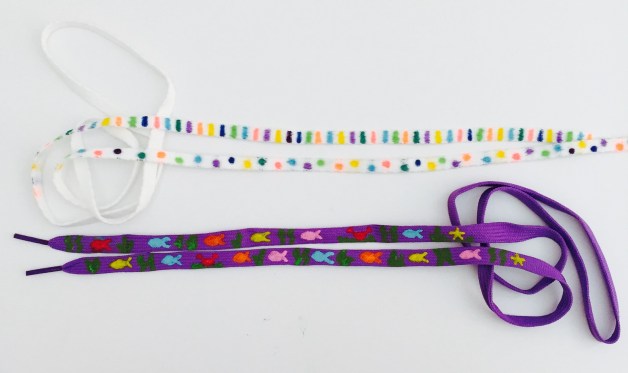
Did you know that having cool shoelaces makes you run faster? Well…that might not be exactly true, but you will definitely look good no matter what you’re doing if you make some unique laces for your shoes.

Supplies

  • Shoelaces in any color
  • Fabric paint or markers

Directions

  1. With the fabric paint or markers make dots, stripes, or any designs you like. You can even paint fish or flowers!
  2. Enjoy them on your run!

February 7 – Girls and Women in Sports Day

celebrate-picture-books-picture-book-review-the-girl-who-ran-cover

About the Holiday

Celebrating its 32nd anniversary, National Girls and Women in Sports Day honors all of the girls and women involved in sports at all levels and highlights their extraordinary achievements. It also raises awareness of the positive influence sports can have on those who participate. This year’s theme is “Play Fair, Play IX,” providing a reminder of Title IX, which “ensures that all students receive educational opportunities free from discrimination based on sex.” While programs have expanded for female athletes since the inception of Title IX, many schools still do not provide equal opportunities for girls to participate in the sport of their choice. To learn more about National Girls and Women in Sports Day, find resources, and perhaps get involved yourself, visit ngwsd.org.

The Girl Who Ran: Bobbi Gibb, the First Woman to Run the Boston Marathon

Written by Frances Poletti and Kristina Yee | Illustrated by Susanna Chapman


“Bobbi loved to run. Into the woods, over the hills, through fields and by streams, Bobbi’s feet flew across the earth.” When Bobbi was little, she and her friends ran and played together. But as they grew older, her friends found other pursuits while Bobbi still loved to run. She took to the fields with her dogs, “going higher and higher, / just her and the sound of the wind in the fire.”

When Bobbi was grown, her father took her to watch the Boston Marathon. She loved the camaraderie of “hundreds of people moving as one. Kindred spirits, all running miles together.” Immediately, she wanted to participate too. When Bobbi told her parents that she wanted to run in the marathon, however, they thought her idea was strange. They told her she would hurt herself and that it was unladylike.

celebrate-picture-books-picture-book-review-the-girl-who-ran-young-bobbi

Image copyright Susanna Chapman, 2017, text copyright, Frances Poletti and Kristina Yee, 2017. Courtesy of Compendium.

But Bobbie wanted to run. She didn’t know if she could run that far but was determined to try. She trained in the woods, running “further and further, and she ached and perspired, / and the world whooshed on by, like the wind in the fire.” Because she knew her parents disapproved, Bobbi set out on her own across country to train. Every day she ran in a new place—“lush forests in Ohio and Indiana, vast plains in Nebraska and Kansas, majestic mountains in Wyoming and Montana.” She even ran with wild horses out west and up steep Rocky Mountain trails. At night she camped, “tired and happy.”

All of her training seemed for nothing, however, when Bobbi received a letter rejecting her application for the Boston Marathon. The letter said that women were incapable of running marathons, that it was against the rules for a woman to run, and that the rules had been written to protect women from injury. Bobbi was not deterred, however. She went back home and told her parents what she wanted to do. Her father thought she was crazy to attempt it.

celebrate-picture-books-picture-book-review-the-girl-who-ran-woods

Image copyright Susanna Chapman, 2017, text copyright, Frances Poletti and Kristina Yee, 2017. Courtesy of Compendium.

Bobbi knew that the only way she could run would be “to blend in with the men.” Dressed in men’s shorts and a baggy hooded sweatshirt to hide her hair and wearing men’s running shoes (running shoes were not made for women), Bobbi was ready to go. Her father refused to drive her to the race, though. He stormed out of the house, and drove away. Bobbi thought her dream was dashed until her mom came to her room, car keys in hand, and said, “‘Let’s go.”

Hiding in the bushes at the starting line, she sprang out and joined the pack of runners with the bang of the starting pistol. “So she ran with the pack, going higher and higher, / the world whooshing by, like the wind in the fire.” As she ran, she realized that the men around her had seen through her disguise. Bobbi was worried, but the men were supportive. “‘Hey! Are you running the whole way?’ one asked.” She told him she hoped to, but in that sweatshirt, she was getting hotter and hotter. She was afraid that if she took it off, she’d be thrown out of the race.

celebrate-picture-books-picture-book-review-the-girl-who-ran-parents-afraid

Image copyright Susanna Chapman, 2017, text copyright, Frances Poletti and Kristina Yee, 2017. Courtesy of Compendium.

The men around her said they wouldn’t let that happen, so Bobbi took off the sweatshirt. “Word spread quickly throughout the course. A girl was running! They couldn’t believe it!” All along the route, the crowd cheered and encouraged her. Hearing the roar motivated Bobbi to ignore the hard ground and her stiff shoes and face the last steep hill. “Closing her eyes, she imagined she was back in Montana running up the mountains, the soft earth under her feet.”

Her feet were blistered and she was parched with thirst, but she crossed the finish line—ahead of nearly half of the men. Photographers, reporters, and radio presenters swarmed around her to hear her history-making story. From that day on “hearts and minds were forever changed.”

celebrate-picture-books-picture-book-review-the-girl-who-ran-young-Boston-marathon-all-men

Image copyright Susanna Chapman, 2017, text copyright, Frances Poletti and Kristina Yee, 2017. Courtesy of Compendium.

The story of Bobbi Gibbs is one that every girl and boy should know, and Frances Poletti and Kristina Yee’s excellent biography will have readers awe-struck by how she changed the way the world viewed women and their capabilities. A pioneer for women’s rights in every way—from her traveling the country alone to rejecting the prevailing ideas to competing on her own terms—Bobbi Gibbs is an inspiration for achievers everywhere. Poletti and Yee’s conversational storytelling is both lyrical and honest, not stinting on the obstacles Bobbi had to overcome, including race officials, her own parents, and even the fact that running shoes weren’t made for women.

As the marathon approaches, readers will be enthralled by the building suspense. They’ll feel Bobbi’s determination, her disappointment, and her fear that she will be discovered and thrown out of the race, and will cheer along with the crowd at her victory.

celebrate-picture-books-picture-book-review-the-girl-who-ran-crowds

Image copyright Susanna Chapman, 2017, text copyright, Frances Poletti and Kristina Yee, 2017. Courtesy of Compendium.

Susanna Chapman’s gorgeous illustrations are infused with Bobbi’s boundless energy and spirit as she soars over grassy dunes with her dogs at her heels, zips through shady woods, and runs alongside wild horses in the shadow of the Rockies all the while trailing a red swish, representative of the fire within her. The turmoil surrounding Bobbi’s desire to run the Boston Marathon is depicted in words of rebuke, recrimination, and rejection printed in large, emphatic typefaces that swirl around her like a tornado.

The inclusion of the image of Bobbi’s mother with the car keys in hand on the morning of the race is a welcome reminder of the many unknown women of earlier generations who  contributed to the fight for women’s equality. A beautiful double gate-fold illustration of Bobbi crossing the finish line to cheering crowds and the waiting media puts the focus fully on Bobbi and the fire that spurred her on.

An Afterword tells more about Bobbi Gibb, and a timeline of seminal events in the Boston Marathon from 1896 to today, is a fascinating must-read.

The Girl Who Ran is an inspirational biography and revealing history from the not-so-distant past that offers encouragement and triumph. It would be a wonderful addition to home, school, and public libraries.

I received a copy of The Girl Who Ran from Compendium to check out. All opinions are my own.

Ages 8 – 12

Compendium, 2017 | ISBN 978-1943200474

Discover more about Kristina Yee, her books, and her films on her website

Learn more about Susanna Chapman, her books, and her art on her website

Girls and Women in Sports Day Activity

celebrate-picture-books-picture-book-review-pioneering-women-in-sports-puzzle

Pioneering Women in Sports Word Scramble Puzzle


In every sport there have been women who have overcome barriers, incredible odds, set records, and inspired others. Using the clues and a little research, can you unscramble the names of these twelve awesome athletes?

Pioneering Women in Sports Word ScramblePioneering Women in Sports Word Scramble Solution

Picture Book Review

June 29 – International Mud Day

celebrate-picture-books-picture-book-review-miracle-mud-cover

About the Holiday

Today’s holiday was established in 2009 when the students of Bold Park Community School in Wembley, Western Australia teamed with the boys of the Nepalese Panchkhal Orphanage to “celebrate the visceral and primal connection we all share with Earth and the outdoors.” Since that day, schools, families, and early childhood education centers have worked to remind us that we all need to take time to play in the mud sometimes and reconnect with what makes us human. In 2015, the day was expanded to include the entire month of June to allow us to decompress from the high-tech, high-pressure world we live in and to connect with others.

Miracle Mud: Lena Blackburne and the Secret Mud that Changed Baseball

Written by David A. Kelly | Illustrated by Oliver Dominguez


“Lena Blackburne wanted to be a famous baseball player.” Unfortunately, he wasn’t one of the greats. In fact starting in 1910, Lena moved around from team to team, playing a variety of positions. He made appearances at every base and played shortstop; he even had a go as pitcher. But he wasn’t a star at any of these positions. He was never going to make it to the Hall of Fame.

celebrate-picture-books-picture-book-review-miracle-mud-striking-out

Image copyright Oliver Dominguez, coiurtesy of oliver-dominguez.com

After he retired from playing, Lena became a coach. One day the umpire came to him with a complaint about the soggy baseballs. They were too hard to throw and too hard to see. Besides that, when they were hit, they didn’t soar very far. The problem was that new baseballs had a slick sheen to them, “so players soaked them in dirty water. It got rid of the shine. But it also made the balls soggy and soft.”

celebrate-picture-books-picture-book-review-miracle-mud-soggy-baseballs

Image copyright Oliver Dominguez, coiurtesy of oliver-dominguez.com

Players tried other methods to get rid of the shine, but they had drawbacks too. Shoe polish just turned the balls black, and “spit and tobacco juice…made the balls stink.” Lena Blackburne sat down and considered the problem. The answer came to him in a most unusual place—an old fishing hole where Lena liked to go when he was off the road and home.

celebrate-picture-books-picture-book-review-miracle-mud-spitting

Image copyright Oliver Dominguez, coiurtesy of oliver-dominguez.com

While fishing one day, he happened to step into some dark brown mud. It sucked at his boot, and as Lena pulled his foot out he had an idea. The mud was “smooth and creamy like chocolate pudding. But it felt gritty.” At the ballpark, Lena rubbed the mud on the balls. When the mud dried, it was easy to wipe off. The mud left the balls with a good finish—not soggy, black, or smelly. At the next game, “the pitcher threw muddy fastballs, curveballs, changeups, and sinkers. The batters hit muddy singles, doubles, triples, and home runs.”

celebrate-picture-books-picture-book-review-miracle-mud-thinking

Image copyright Oliver Dominguez, coiurtesy of oliver-dominguez.com

Lena returned to the fishing hole and dug up more mud. He put it into containers and began selling it. Teams all over the league bought Lena Blackburne’s Baseball Rubbing Mud. Lena’s famous mud is still used today and is officially the “only thing that’s allowed on major-league balls.” Lena Blackburne always dreamed of being in the Baseball Hall of Fame. While he didn’t make it there as a player, he is remembered for his contributions to the game he loved in a special exhibit for Lena Blackburne’s Baseball Rubbing Mud.

celebrate-picture-books-picture-book-review-miracle-mud-winning

Image copyright Oliver Dominguez, coiurtesy of oliver-dominguez.com

An Author’s Note including more about Lena Blackburne, his baseball statistics, and his special mud follow the text.

Kids who love baseball will be intrigued by David A. Kelly’s unique take on the game. By exploring a small detail that had large effects on the quality of play, Kelly presents a picture book mystery with a surprise ending for younger readers. Kelly’s inclusion of Blackburne’s disappointments shows children that each person’s unique contributions are often found in expected ways.

celebrate-picture-books-picture-book-review-miracle-mud-baseballs

Image copyright Oliver Dominguez, coiurtesy of oliver-dominguez.com

Kids get a front row seat at the baseball stadium in Oliver Dominguez’s stunning illustrations. As Lena swings and misses, readers can almost hear the smack of the ball in the catcher’s glove and the ump yelling, “Steee-rrriike!”  When Lena Blackburne becomes a coach and ponders the problem of the soggy baseballs, kids will enjoy seeing baseballs bobbing in a wooden bucket of water, laugh to see a player spitting on a new baseball, and wonder what idea has Lena so wide-eyed at the fishing hole. Baseball lovers will want to linger over the up-close views of players preparing for a game and celebrating their win.

Ages 6 – 10

Millbrook Press, 2013 | ISBN 978-0761380924

Find out more about David A. Kelly, his ballpark mysteries, and his other books on his website!

View a gallery of artwork and videos by Oliver Dominguez on his website!
International Mud Day Activity

celebrate-picture-books-picture-book-review-kinetic-sand-craft

Make Your Own Sensory Sand


While this sensory sand may not be exactly mud, it’s sure as much fun to play with!

Supplies

  • 1 cup sand
  • ½ tablespoon cornstarch
  • 1 teaspoon dish soap
  • Water as needed – about ¾ cup
  • Bin or bowl for mixing dry ingredients
  • Bowl for mixing dish soap and water

Directions

  1. In the bin combine the sand and cornstarch and mix well
  2. In the bowl combine the dish soap and water until the water is bubbly
  3. Slowly add the water mixture to the dry ingredients, mixing and adding water little-by-little until the desired consistency is reached. The grain of the sand will determine how much water is needed.
  4. The sand can be formed with cookie cutters, molds, hands, etc. and is strong enough to stack.

Picture Book Review