
About the Holiday
Women have been inventing, discovering, questioning, challenging, and changing the world just as long as men have—but often without recognition, the ability to take jobs in their fields of expertise, or equal (or even any) pay. Established by the United States Congress in 1987, National Women’s History Month serves to educate people on the amazing women who have blazed trails in the past and those who are continuing that tradition today.
This year’s theme is Leading the Change: Women Shaping a Sustainable Future and encompasses a wide understanding of sustainability, including climate change, economic and financial sustainability, community resilience, healthcare disparities, leadership succession, intergenerational equity, and threats to democratic participation. In all these areas, women are at the forefront of sustainable transformation that will carry us into a supportive future for all. To learn more visit the National Women’s History Alliance website.
Thanks to Beach Lane Books and Barbara Fisch at Blue Slip Media for sending me this book!
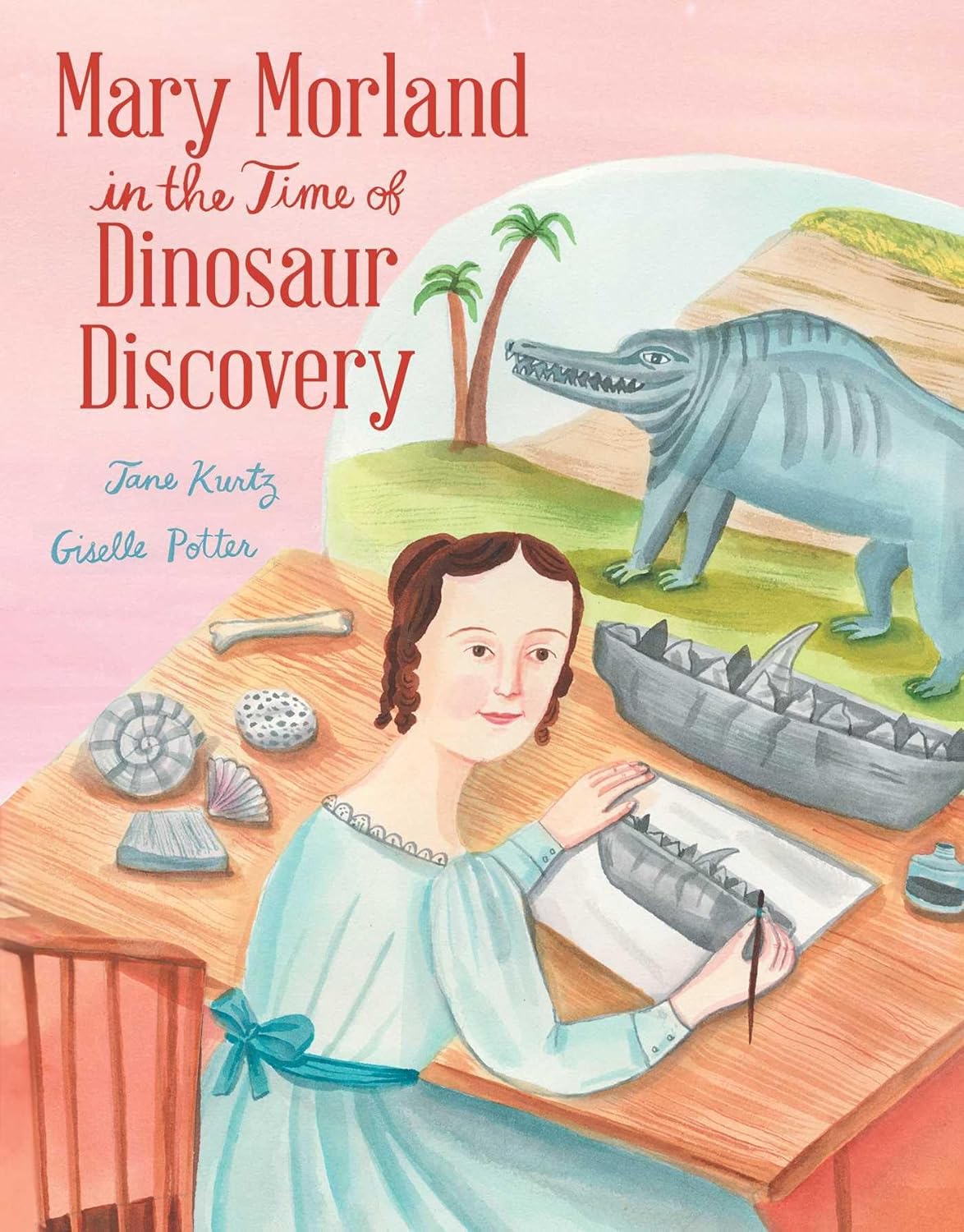
Mary Morland in the Time of Dinosaur Discovery
Written by Jane Kurtz | Illustrated by Giselle Potter
In the early 1800s, when Mary Morland was a child, girls were seen as “dainty, delicate decorations” who embroidered, arranged flowers, and played with dolls. Mary Morland had other ideas. From the first page, Jane Kurtz allies readers with the spirited Mary through cleverly posed questions that contrast the stifling conventions of her time with the freedoms of today: “Did [Mary] perch on her chair like a prim little miss?” Kurtz posits. “Well what would you do if the whole world was waiting outside? Mary tromped around, exploring. Wouldn’t you?”
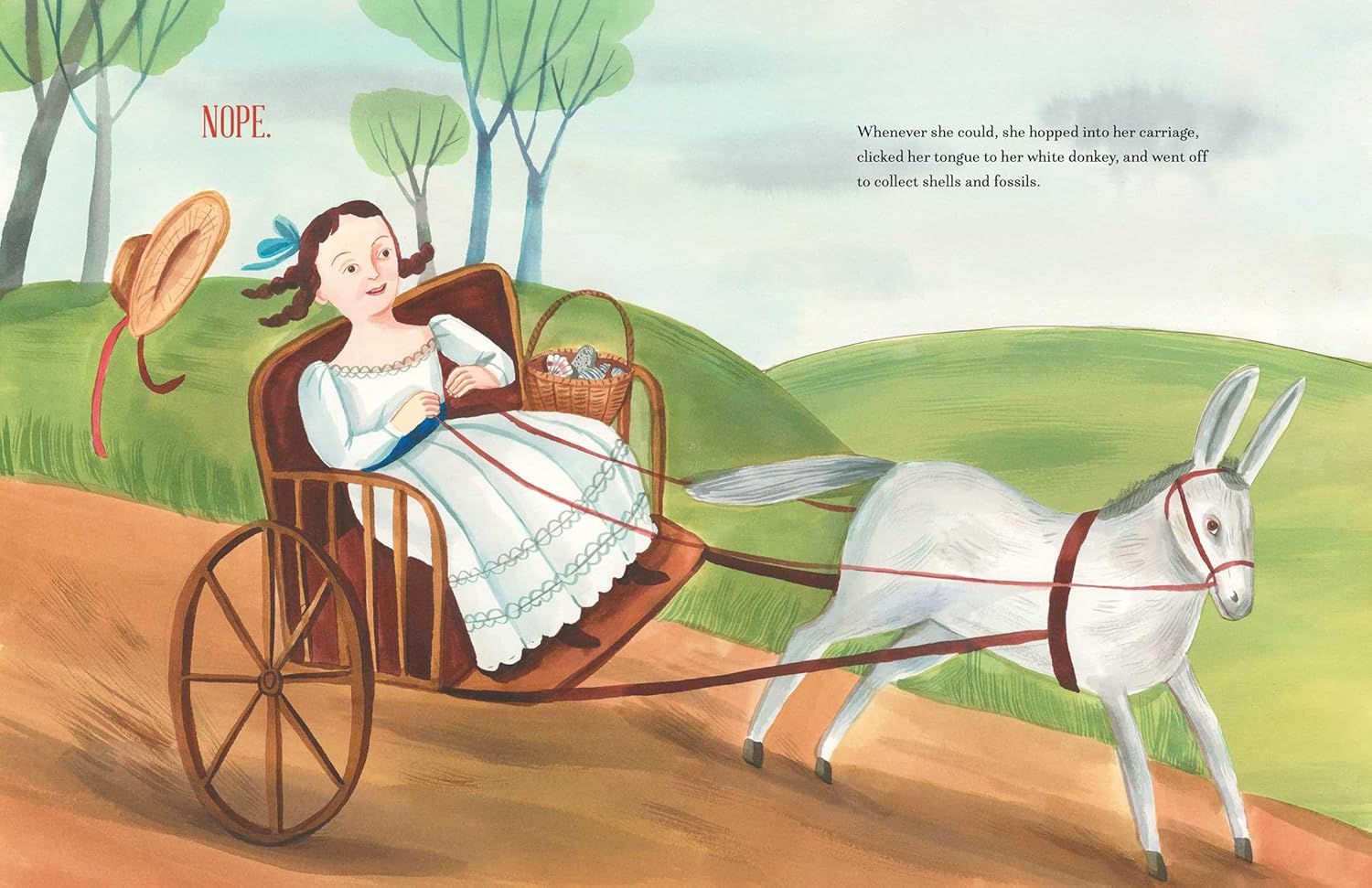
Illustration © 2026 by Giselle Potter. Text © 2026 by Jane Kurtz. Courtesy of Beach Lane Books.
“Of course!” kids will say, and off they go, following Mary as, following the death of her mother, her father sends her to live with family friends who encourage her curiosity and teach her to study nature and fossils. From there readers view her drawings of “everything that fascinated her,” and discover that instead of calling herself a “cork-brain” and spending mannerly afternoons sipping tea in a fancy hat, Mary tooled around in her donkey-pulled carriage to “collect shells and fossils.”
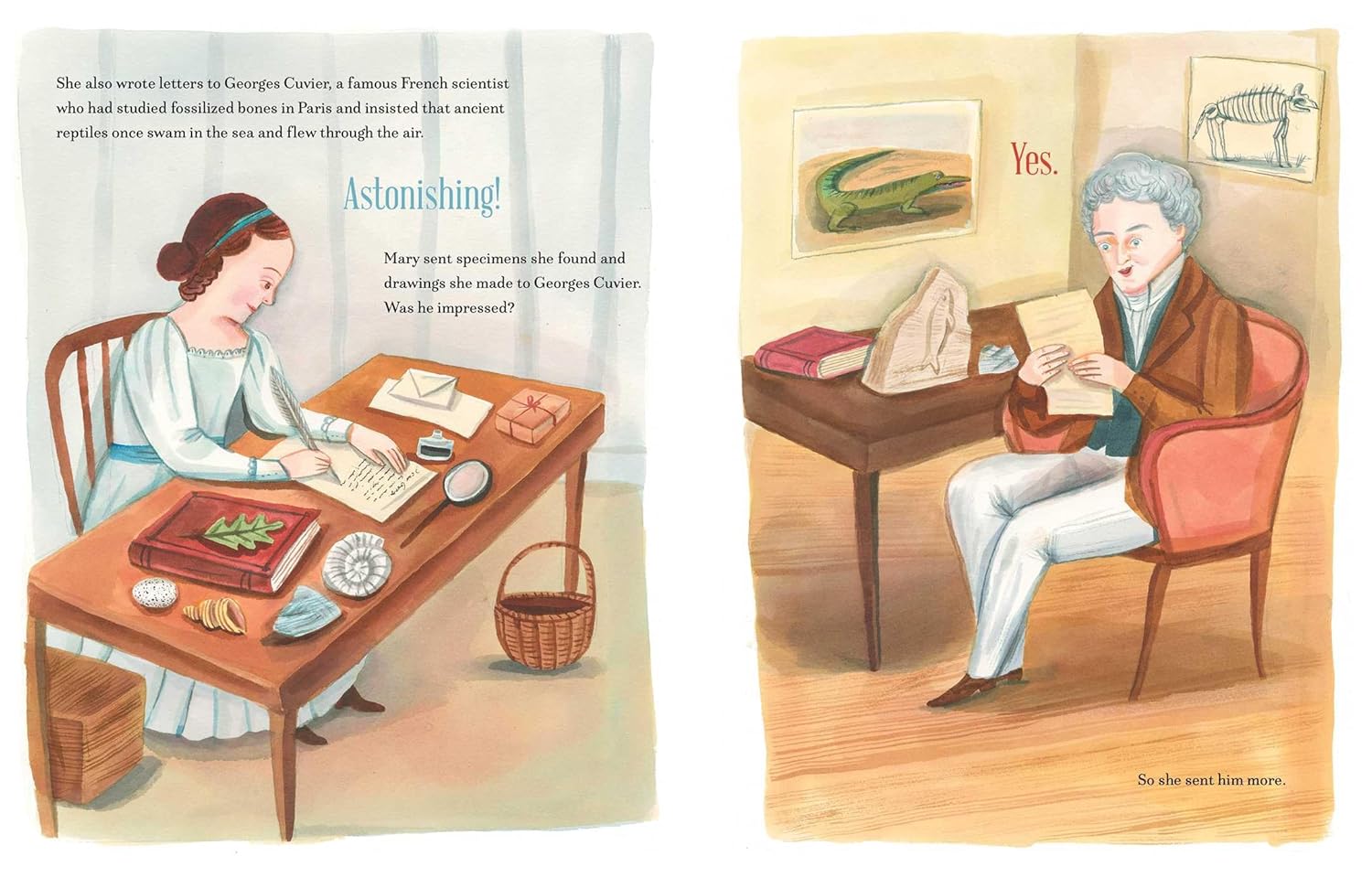
Illustration © 2026 by Giselle Potter. Text © 2026 by Jane Kurtz. Courtesy of Beach Lane Books.
Did teenage Mary keep her discoveries to herself? No! She corresponded with Georges Cuvier, a famous French scientist, impressing him with the drawings and specimens she sent. And instead of trying to find a husband, Mary spent her time with old fossils, labeling and mending them. Then one day, she did meet the man she would marry: William Buckland, England’s best fossilist. In fact, it was he who had theorized that a collection of bones had come from a “giant land reptile,” named it Megalosaurus (before the word dinosaur was even created), and asked Mary to draw them for an important meeting of England’s geologists.
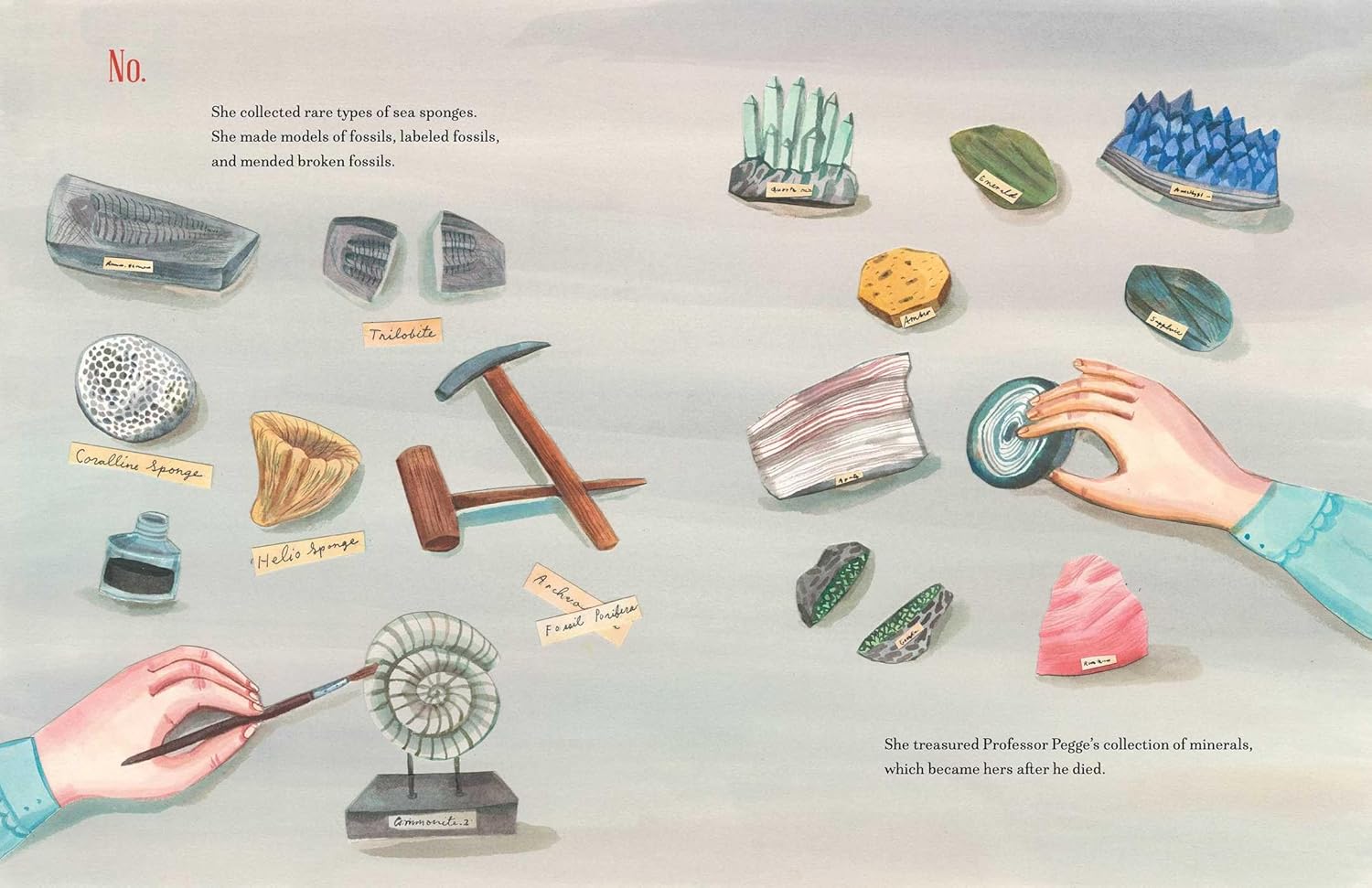
Illustration © 2026 by Giselle Potter. Text © 2026 by Jane Kurtz. Courtesy of Beach Lane Books.
After Mary and William were married, did she give up drawing and studying to keep a tidy house? Not at all! She kept exploring, writing, and drawing. She helped William turn his work into books—with her illustrations—and served as a curator for his collections of fossils. And, oh yes! She raised and taught their nine children and welcomed a menagerie of creatures—including a pony her the kids rode around the dining room—into their home! You might wonder: after all this, “did William say, ‘I am so fortunate that my wife is not a cork-brain?'” or acknowledge her contributions on his papers? Well, this was a time when women could not vote, own property, or go to college. So, what do you think? But that didn’t stop Mary from learning and using her gifts wherever she could throughout her life.
Back matter includes an Author’s Note highlighting other women intrinsic to the discovery and understanding of dinosaurs as well as how scientists came to accept that dinosaurs once existed, further resources for young readers, and a selection of resources.
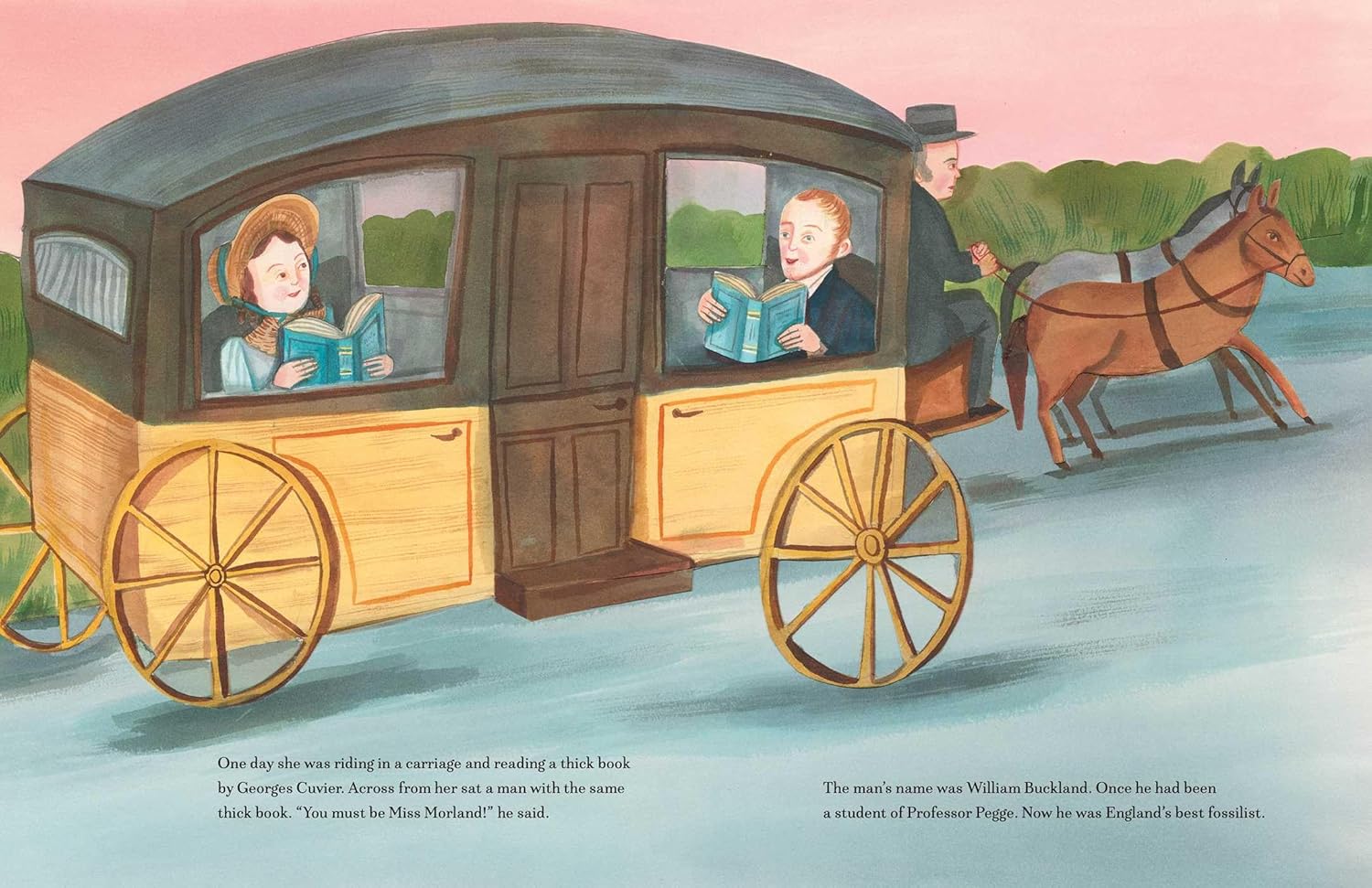
Illustration © 2026 by Giselle Potter. Text © 2026 by Jane Kurtz. Courtesy of Beach Lane Books.
Jane Kurtz combines pluck, humor, and illuminating cultural mores of the past to weave an absorbing biography of Mary Morland, a brilliant paleontologist, writer, and illustrator with whom children will immediately connect. Mary’s personality and intelligence shine from each page, drawing children not only into her life, but into this incredible time of scientific discovery. Readers will be inspired by Mary’s example of self-confidence to set their own path, buck the norm, and prevail over obstacles on their way to success.
Giselle Potter’s illustrations are always a delight, and here she perfectly captures Mary Morland’s singular affinity for exploration, scientific thought, and illustration. In her folk art, watercolor paintings, Potter recreates the fashions, transportation, and traditions of the 1800s as well as Morland’s and her husband’s work. Readers will envy Mary’s children when they get a glimpse of the rambunctious Buckland home. In several instances, Mary’s and William’s facial expressions eloquently (and comically) reveal their innermost thoughts.
Biographical storytelling at its best, Mary Morland in the Time of Dinosaur Discovery will captivate children with its verve and beauty. The book is a must for classroom, school, and public libraries and will become a favorite on home bookshelves as well.
Ages 4 – 8
Beach Lane Books, 2026 | ISBN 978-1665955546
Jane Kurtz was born in Portland, Oregon, but spent most of her childhood in Ethiopia. Jane speaks about being an author at schools and conferences and helped start Ethiopia Reads (EthiopiaReads.org), a nonprofit that has opened the first libraries for children in Ethiopia. She is the author of many books for children, including The Bone Wars, illustrated by Alexander Vidal; What Do They Do with All that Poo?, illustrated by Allison Black; Do Kangaroos Wear Seat Belts?, illustrated by Jane Manning; Anna Was Here; Clara the Triumphant Rhinoceros, illustrated by Claire Messer; and the American Girl book Lanie. You can visit her to learn more at janekurtz.com.
Giselle Potter has illustrated many books, including Once Upon a Fairy Tale House by Mary Lyn Ray, Try It! by Mara Rockliff, All by Himself? by Elana K. Arnold, and Kate and the Beanstalk by Mary Pope Osborne, as well as her own Tell Me What to Dream About, This Is My Dollhouse, and The Year I Didn’t Go to School, about traveling through Italy with her parents’ puppet troupe when she was eight. She lives in Rosendale, New York, with her husband and two daughters. Visit her at gisellepotter.com.
National Women’s History Month Activity
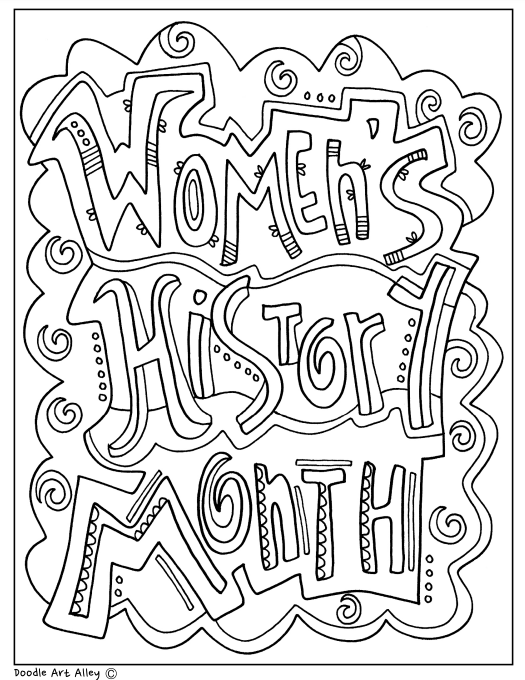
Women’s History Month Coloring Page
Celebrate Women’s History Month with this coloring page! In the letters write the names of women from history and today that you admire!
Women’s History Month Coloring Page
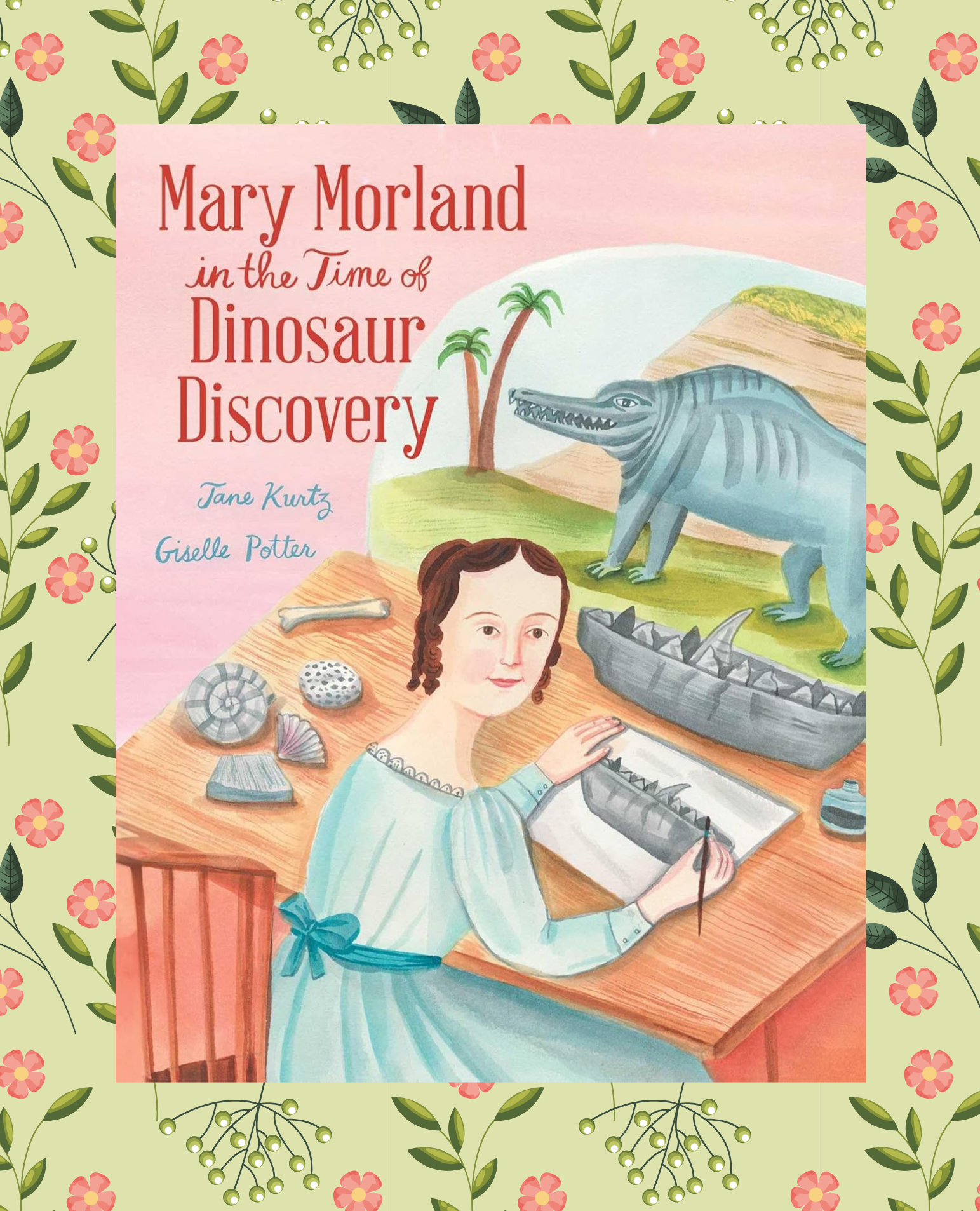
You can purchase Mary Morland in the Time of Dinosaur Discovery from these booksellers
Amazon | Barnes & Noble | Bookshop
Picture Book Review




 celebratepicturebooks.com