August 27 – International Bat Night

celebrate-picture-books-picture-book-review-bats-in-the-band-cover

About the Holiday

From the time that darkness falls on August 27 until the sun rises on August 28, people in more than 30 countries organize walks, talks, and all kinds of educational and fun activities related to bats and their conservation. Why not find an event in your neck of the woods—or cave—and celebrate this most unusual and beneficial animal!

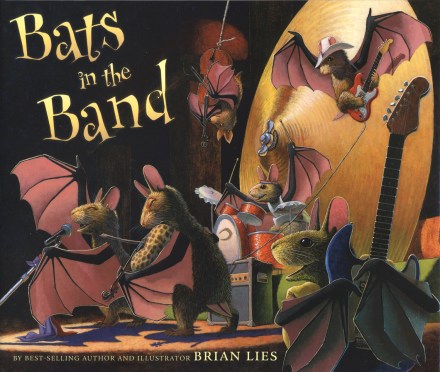
Bats in the Band

By Brian Lies


Huddled together a colony of bats sleeps through the winter, but as the icy weather warms they stretch their wings and take flight to find food. As they swoop through the air chasing the echoes they hear, these animals that live by echolocation sense “that something’s not right. / And then when a bugle blast shatters the night, / that one lonely note tells us just what is wrong: / We’re hungry for sound—we’ve been silent too long.”

The bats swarm to a summertime theater now quiet and dark except for a small glow that invites  them inside. They enter the building—passing hawkers of T-shirts, posters, and hats—and set up the stage and the lights. Some bats have brought their own instruments while others improvise with the leftovers of last season’s concertgoers. “Behind the stage curtain, they’re getting in tune, / making up things out of straws, out of spoons.”

celebrate-picture-books-picture-book-review-bats-in-the-band-one-bat-band

Image copyright Brian Lies, courtesy of Houghton Mifflin Harcourt (hmhco.com)

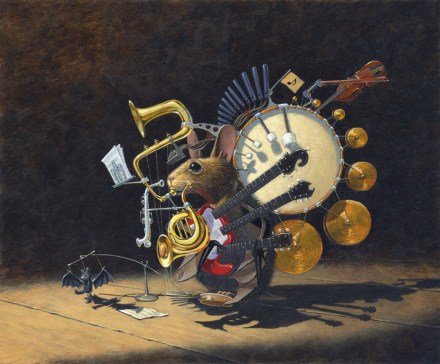
Finally, the conductor lifts his baton, and the concert begins. “We sing together as one voice. / It seems the very walls rejoice! / All together, rafters ringing… / it’s as though our souls are singing.”  Then the strings “change the mood to sweet and mellow” before a one-bat band takes over. “Next up, there’s a country song—/ some lonesome bat done someone wrong. / He’s  gone and broken someone’s heart. / Now everything has come apart.”

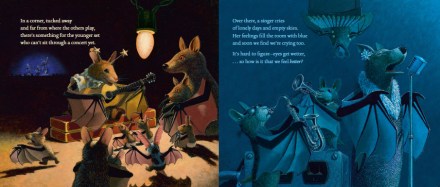
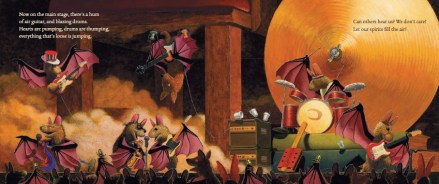
There’s even an entertainer for children far off in a corner where the pups can run and play. Now on stage a blues singer “cries of lonely days and empty skies” that make the bats cry. “It’s hard to figure—eyes get wetter, / …so how is it that we feel better?” There’s not much time for reflection though as a hard-rock band begins “blazing,” “pumping,” and “jumping.”

celebrate-picture-books-picture-book-review-bats-in-the-band-blues-singer

Image copyright Brian Lies, courtesy of Houghton Mifflin Harcourt (hmhco.com)

While everyone is dancing to the beat, the sun begins to rise signaling that it’s time for the bats to go. But in one last blast, all the musicians jam together. “The music soars. Finale’s here, the ending of the song. / It builds and builds—now here it comes! / It’s going…/ going…/ GONG!” With that last bang of the cymbal the bats, “worn out, wrung out, half asleep,” fly from the theater and out into the dawning day. In the air they discover the music in everything from “the roar of a car, or the bark of a pup—/ the sound of the rest of the world waking up.” As they fall into slumber up in their cozy rafters, the bats continue to sway unconsciously. “It’s not our intention, but you understand. / We’re dreaming of being the bats in the band.”

Brian Lies “Bat” books are well-known and well-loved. Bats in the Band continues the excellent storytelling and poetry of his other titles, this time to a rock-n’-roll beat. The idea of bats needing to hear sound after a long winter’s silence is brilliant, and these bats play almost as many different styles of music as there are species of bat. The rhyme scheme is true and musical, carrying the story well through its words and rhythm.

celebrate-picture-books-picture-book-review-bats-in-the-band-rock-n-roll-bats

Image copyright Brian Lies, courtesy of Houghton Mifflin Harcourt (hmhco.com)

Lies’ illustrations remain as clever as ever. The two-page spread of the bats choosing and tuning up their instruments is a joy. Bats make a xylophone from keys hanging on a peg board and two nails for mallets. Instead of a harp, a bat plucks the tines of a plastic comb, and a bendy straw serves as a fine wind instrument. The string section plays while hanging upside down (of course!). The pups’ entertainer will bring a smile to readers’ faces, and the blues singer performs under cool blue lights.

Kids and adults will love lingering over the detailed pages, where allusions to actual concert atmospheres abound. Look for the bats holding aloft lightning bugs in a tribute to a long-held tradition.

Bats in the Band is a rockin’ addition to Brian Lies collection and will be welcome on any child’s shelf—whether they are completing the set or just starting it!

Ages 4 – 8

Houghton Mifflin Harcourt, 2014 | ISBN 978-0544105690

Visit Brian Lies‘ website to learn more about him, view his many books, and see a gallery of his artwork.

International Bat Night Activity

celebrate-picture-books=picture-book-review-spiral-bat-words-word-search

Spiraling Bats Word Search


Find the bat related words in this printable Spiraling Bats Word Search that dips and soars like the flight of a bat! Here’s the Solution.

Picture Book Review

August 26 – Women’s Equality Day

celebrate-picture-books-picture-book-review-for-the-right-to-learn-malala-yousafzai's-story-cover

About the Holiday

Today’s holiday commemorates the day in 1920 when the 19th Amendment to the United States Constitution was ratified, giving  women the right to vote. Over the years women all over the world have fought and are still striving to gain equal footing with men in areas such as employment, salary, and education and to be free from fears of violence and discrimination. Empowering women across the globe and ensuring their voices are heard is an issue for all people to be involved in.

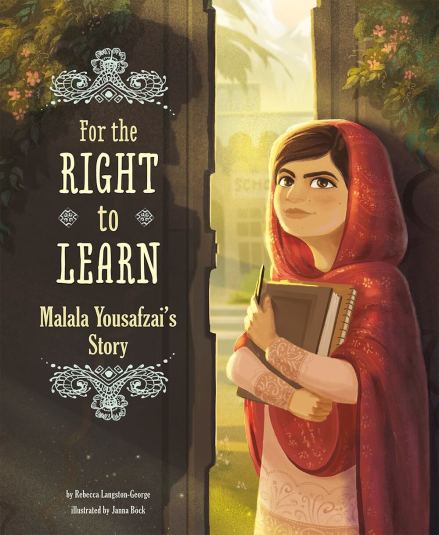
For the Right to Learn: Malala Yousafzai’s Story

Written by Rebecca Langston-George | Illustrated by Janna Bock


Malala Yousafzai lived in the Swat Valley of Pakistan, where her father, Ziauddin, ran a school in the town of Mingora. Malala loved school and even when she was tiny visited classes with her father often. Not all Pakistani children could go to school—some families couldn’t afford it and some believed girls should stay home to clean, cook, and keep house. But Malala’s father believed his daughter had the same right to an education as his sons. Malala thrived at school. She learned multiple languages and won many academic awards.

“But Taliban leaders who controlled the area were against letting girls go to school. They declared that females should be separated from males. They wanted to outlaw education for girls.” The Taliban leaders even tried to intimidate Malala’s father. “One ordered Ziauddin to close his school because girls and boys used the same entrance.” Ziauddin refused.

celebrate-picture-books-picture-book-review-for-the-right-to-learn-malala-yousafzai's-story-writing

Image copyright Janna Bock, courtesy of Capstone Press

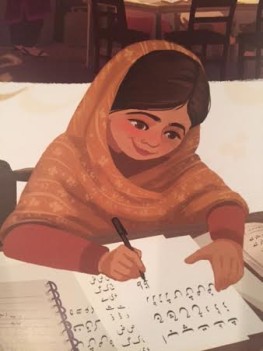
While her father was worried, Malala’s determination grew stronger. She studied harder at school, and during the school holidays while most Pakistani women covered their hands with henna flowers and vines, Malala painted science formulas on hers. The Taliban continued to exert a tight grip on the Swat Valley, and instituted new rules: men could not shave, women had to cover their faces, movies were banned. And the radio “crackled with the sound of the Taliban preaching: No education for girls! Girls who attend school bring shame to their families!”

The Taliban frightened many, and empty seats in school classrooms began to be more frequent. Ziauddan and Malala appeared on TV to express the importance of education. In response the Taliban threatened Ziauddan and his school. Despite the threats Malala and her father continued to speak and write, “demanding equal education for girls.” The Taliban began patrolling the streets, perpetrating violence and destruction on anyone who didn’t obey their rules.

In December 2008, the Taliban announced that all girls’ schools would close by January 15. “Even before the deadline, bombs started to rain down on nearby schools as warnings.” The British Broadcasting Corporation wanted to reveal to the world what was happening. They wanted a girl to write a blog about her experience and “how it felt to be denied an education. Malala volunteered.

celebrate-picture-books-picture-book-review-for-the-right-to-learn-malala-yousafzai's-story-sneaking-to-school

Image copyright Janna Bock, courtesy of Capstone Press

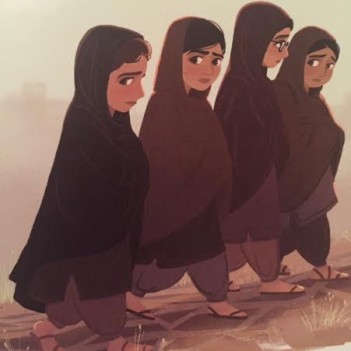
She took the pen name Gul Makai and related her blog by phone to a reporter who typed and published her words for two months. The first post appeared on January 3, 2009. On January 14 Malala wrote: “‘They can stop us from going to school, but they can’t stop us learning!’” Because activists were growing angry, the Taliban let girls ages 10 and younger go to school. Malala and her friends were 11. They began dressing to look younger and hid school books in their clothes. If they had been caught lying about their ages, they and their teachers could have been beaten or executed.

In May 2009 the Pakistani army began battling the Taliban and ordered everyone to evacuate. Malala and her family had to pack their belongings and leave. Malala wanted to take her books along, but there wasn’t room. She could only hope that they—and her home—would survive the fighting. Three months later, the people of Mingora were allowed to come home, but the town was not the same as they had left it. Shops and buildings were destroyed, burned frames of cars were strewn across the roads. The school’s walls were riddle with bullet holes. But the Taliban was gone. Ziauddin reopened his school for boys and girls.

While Malala returned to school, her life was not the same. Because of her blog, speeches, and interviews, she was internationally famous. Everyone wanted to hear what she had to say—everyone but the Taliban. “Talban leaders began to threaten her on the Internet. Saying she was working for the West, they announced Malala was on their hit list. The police warned the Yousafzai family to leave, but Malala refused to hide. She refused to be silenced.”

Because of the danger, Malala’s mother wanted her to ride the bus to school instead of walk. On October 9, 2012 as Malala and her classmates rode the bus home after school, the bus was stopped and a man boarded, demanding to know which girl was Malala. While no one spoke, the girls couldn’t stop their eyes from flashing quickly toward Malala. That was all the man needed. He “pointed a gun at Malala. Three shots shattered the silence.”

The bus driver rushed Malala and two of her friends to the hospital. Word spread quickly about the shooting through the town and around the world. Malala lay unconscious for days as the Taliban threatened her again should she live. As determinedly as Malala fought for equal education, she fought for survival. Finally, she was flown to a hospital in England for more surgery and to keep her safe. Gifts and wished poured in from all over the world. Malala stayed in the hospital for three months and underwent many procedures to correct the damage done by the Taliban’s bullets.

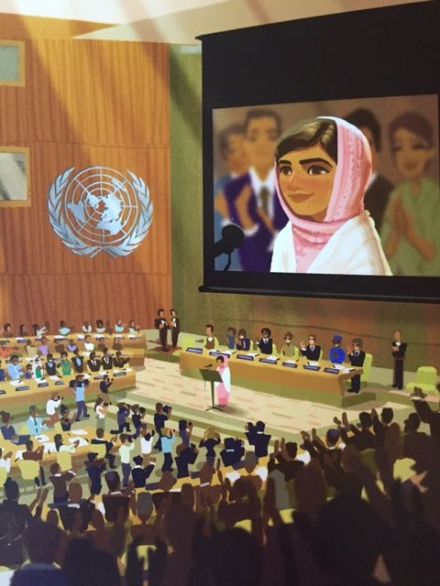
When she had recovered, Malala returned to her family and to her place on the world stage where she continues to speak out for the rights of all. On July 12, 2013 in a speech at the United Nations, Malala “declared, ‘One child, one teacher, one book, and one pen can change the world.’” On December 10, 2014 Malala became the youngest recipient of the Nobel Peace Prize for her “strength, power, and courage” to “lift her voice for children everywhere.”

celebrate-picture-books-picture-book-review-for-the-right-to-learn-malala-yousafzai's-story-speaking-to-the-UN

Image copyright Janna Bock, courtesy of Capstone Press

Malala. Those three syllables have become synonymous with bravery, freedom, and education. Rebecca Langston-George tells Malala’s remarkable story with the same unstinting vision that fuels Malala’s mission. Told sensitively, but candidly, this compelling biography reveals the harrowing evolution of the Taliban’s reach that, far from intimidating young Malala, only served to make her more determined. Langston-George’s excellent command over her well-chosen details and gripping pacing enhances the power of this important true story. Readers should come away inspired—not only by Malala’s life, but the fact that they too can make a difference.

Janna Bock depicts the changing landscape of Malala’s hometown both physically and philosophically with illustrations that help readers clearly envision and understand Malala’s life and environment. The faces of the townspeople and the Yousefzai family register distress and fear, but also determination, courage, and optimism as schools close, Mingora comes under fire, and the citizens become refugees. Malala’s shooting, and recovery are portrayed with thoughtful consideration of the readers, and the ending takes children inside the United Nations to witness Malala’s ultimate triumph.

An Author’s Note detailing more about Malala’s story then and now as well as a glossary and index follow the text.

For the Right to Learn: Malala Yousafzai’s Story is an important biography of current events and people shaping the world and our children’s future and is a must read for all.

Ages 8 – 12

Capstone Press, 2016 | ISBN 978-1623704261

Discover more fascinating books by Rebecca Langston-George on her website!

View a gallery of art by Janna Bock on Tumblr!

Women’s Equality Day Activity

celebrate-picture-books-picture-book-review-star-border-writing-template

Be a Star! Letter to Your Teacher


The school year is about to begin! Do you feel excited? Nervous? Ready to learn? Your teachers are looking forward to meeting you! With the printable Be a Star! Letter to Your Teacher Template, tell your teacher something funny about yourself, something serious, and something you’d like to learn about this year. Add a thank you for all their work and dedication and give it to your teacher on the first day of school! If you’ve already started school, give it to your teacher this week!

Picture Book Review

August 25 – Kiss and Make Up Day

celebrate-picture-books-picture-book-review-best-frints-in-the-whole-universe-cover

About the Holiday

Even the best friends and closest relatives get into spats once in a while. The important thing is trying to see the issue from the other person’s point of view and finding a way to patch things up. Today’s holiday is all about saying “I’m sorry” or explaining the situation that started the argument in the first place. On the other side, it’s all about listening and accepting the apology.

Best Frints in the Whole Universe

By Antoinette Portis


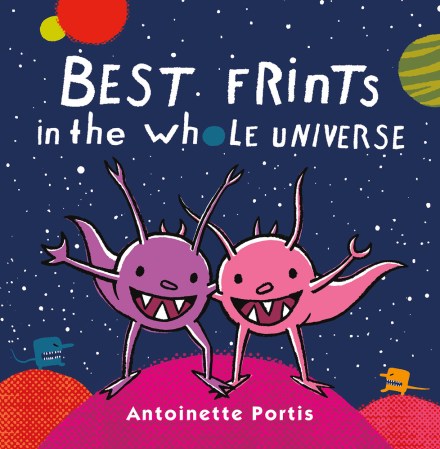
Yelfrid and Omek live on the planet Boborp. They have been best frints since they were little blobbies. Staying frints on Boborp can be hard because “teef are long and tempers are short.” Which makes Boborp a little different than Earth, right? Hmmm… But just like here on Earth having frints is a good thing. And as “Yelfred and Omek know, best frints are the best frints of all.”

celebrate-picture-books-picture-book-review-best-frints-in-the-whole-universe-peedle-pit

Image copyright Antoinette Portis, courtesy of us.macmillan.com

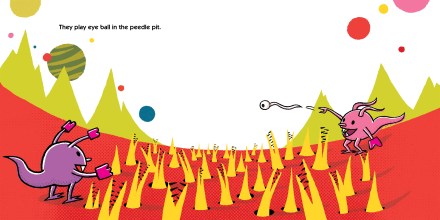
Yelfred and Omek do everything together, like eating streeeetchy noodles for yunch and playing eye ball in the peedle pit. The peedle pit is full of dangerous spikes and sometimes the eye ball gets stuck in the middle of the pit. “‘Bad frow! You go get it!’” Yelfred says. To which Olmek answers “‘Bad kratch! You go get it!’” This can go on for hours—even until nighttime when Boborp’s two moons rise in the sky.

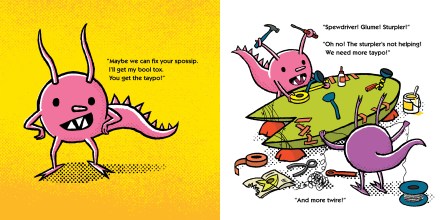
Of course there are blurfdays on Boborp and frints share their blurfday presents. Like if one frint got a spossip they’d let their best frint fly it, right? Hmmm…. But the spossip owner might say “‘No! You’ll schmackle it to bits’” while the other counters, “‘I’m the best driver on Boborp! Let me have a turp!’” But sometimes frints can’t take “No” for an answer, and they borrow the spossip anyway, and sure enough the spossip might get schmackled.

celebrate-picture-books-picture-book-review-best-frints-in-the-whole-universe-bitten-tail

Image copyright Antoinette Portis, courtesy of us.macmillan.com

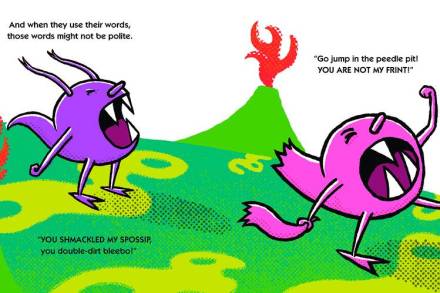
That’s when the teef can come out easier than the words, and things get a bit messy. One frint might even lose their tail, and the words, when they do come out, may not be so polite: “‘YOU SMACKLED BY SPOSSIP, you double-dirt bleebo!’” Frintship can be pretty hard under those circumstances. But real frints find a way to make up. Tails can grow back (even better than before), and spossips can be fixed with a spewdriver, glume, a sturpler, twire, and lots of taypo.

And on planet Boburp, frintships can grow back too—just like on plant Earth!

celebrate-picture-books-picture-book-review-best-frints-in-the-whole-universe-fixing-sossip

Image copyright Antoinette Portis, courtesy of us.macmillan.com

What kid won’t love hearing and saying the words “blobbies,” “yunch,” “peedle pit,” “spossip,” and all the others?! Antoinette Portis’s tribute to the diversities and commonalities of friendship will have kids rolling with laughter. Portis’s made-up vocabulary promotes literacy while introducing the concept of foreign language learning. Portraying arguments and positive resolutions shows kids that while differences occur even between the best friends, mutual cooperation and loyalty wins out.

The boldly colored alien landscape of BoBurp with its oddly familiar toys, celebrations, games, food, and other objects will captures kids’ imaginations, and all the spikey mountains, plants, noodles, and peedle pits give physical form to the theme that sometimes friendship is fraught with danger, but relationships can be smoothed out.

Ages 3 – 7

Roaring Brook Press, 2016 | ISBN 978-1626721364

Follow the little bunny on Antoinette Portis‘s website to discover more of her books!

Kiss and Make Up Day Activity

celebrate-picture-books-picture-book-review-cute-kids-drawing-template

Otherworldly Friends Template


Imagine you and your friends lived on another planet. What would you look like there? What would you be called? Use this printable Otherworldly Friends Template to create this otherworldly world!

Picture Book Review
August 24 – It’s Get Ready for Kindergarten Month

celebrate-picture-books-picture-book-review-secret-agent-man-goes-shopping-for-shoes-cover

About the Holiday

One of the rights of passage for children going to school for the first time (or starting the next grade) is shopping for new clothes and supplies. These include pencils, paper, folders, three-ring binders, lunchboxes, and the backpacks to store it all in as well as a few new shirts, a couple pairs of pants, and maybe a jacket to take kids into the cooler weather. And of course a trip to the shoe store is paramount for those fast-growing feet! If only shopping could be as exciting as it is for the little boy in today’s book. With a little imagination it can be!

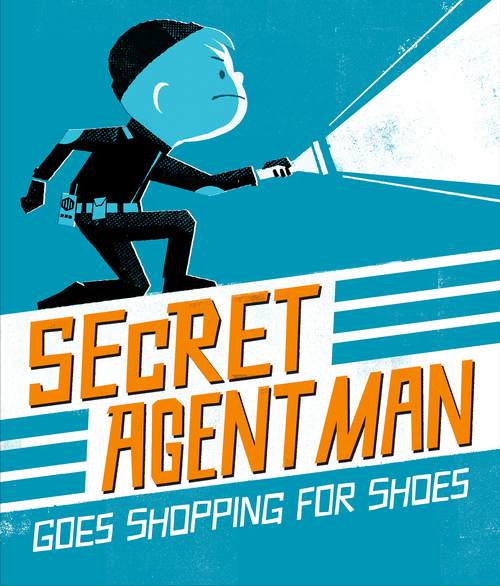
Secret Agent Man Goes Shopping for Shoes

Written by Tim Wynne-Jones | Illustrated by Brian Won


S.A.M. has an important missions to complete. He is “digging for the Lost City of Raisins…tracking down the treacherous green spitting bug…balancing on high places…and stealing home”—all while K is hanging out the laundry. K looks at S.A.M sitting on the ground with his box of raisins and says, “‘You need new shoes.’” And it’s true. S.A.M.’s red shoes are tattered and scuffed, and his toes are even poking out of the sole.

celebrate-picture-books-picture-book-review-secret-agent-man-goes-shopping-for-shoes-shoe-store-man

Image copyright Brian Won, courtesy of brianwon.com

On the way downtown, S.A.M tells K that he can’t decide between rocket shoes and vanishing shoes as he reads a document titled Plans for World Domination. At the store they are met by a clerk carrying a tall stack of boxes. He assures the pair that he’ll help them in a minute, but with his eagle eyes S.A.M. thinks the “Shoe Store Man looks shifty and orders his agents to “‘frisk him.’” The Shoe Store Man turns out to be okay, and S.A.M. tries on lots of shoes. He finally settles on a pair with tiger stripes, and K gets the same for herself.

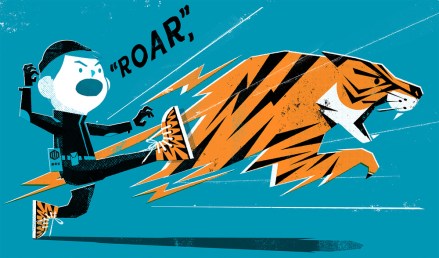
Time for lunch? “‘ROAR,’” answers S.A.M. All the shoe buying and secret agent prowling has made S.A.M. hungry. “He orders the double buffalo burger with a side of snakes and an electron float. “‘We are matching tigers,’” he says to K. K pokes her fork into a snake fry. “‘ROAR,’” she says.

celebrate-picture-books-picture-book-review-secret-agent-man-goes-shopping-for-shoes-taking-a-nap

Image copyright Brian Won, courtesy of brianwon.com

The bus ride home is fraught with danger as S.A.M. foils an attempt by a spy in a stroller to steal the Plans for World Domination. “‘Phew! That was close,’” K says. The stairs to the front door seem unusually steep and tiring, and S.A.M is feeling “whoozy.” There’s only one explanation, he decides: his electron float must have been spiked. S.A.M drifts off into a short nap where he dreams of “beautiful poisonous butterflies and dangerous inflatable frogs.”

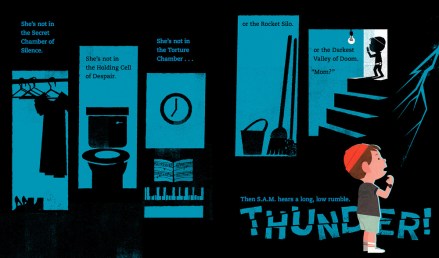
Later he has a secret meeting with Agent Coyote, Agent Ted, and Agent Pig. Their mission is to decode the Plans for World Domination by three o’clock. S.A.M. then goes looking for K. He can’t find her anywhere—not in the Chamber of Silence (the closet), not in the Holding Cell of Dispair (the bathroom), not in the Torture Chamber (the piano room), and not in the Rocket Silo (the utility closet). She’s not even in the Darkest Valley of Doom (the basement). Just then S.A.M. hears thunder.

celebrate-picture-books-picture-book-review-secret-agent-man-goes-shopping-for-shoes-in-the-basement

Image copyright Brian Won, courtesy of brianwon.com

S.A.M. grabs his new orange and black striped shoes, ties up the laces and races to the rescue with the speed of a tiger. K is outside “bringing in the clouds.” Some are being torn away by the wind, and S.A.M. makes a flying leap to save them. As the storm rages outside, S.A.M. and K relax inside with “steaming mugs of lava topped with dollops of candied gardenia and pearls” while discussing S.A.M.’s latest mission. It’s lucky, he says that his “Team of Expert Spies warned him about the storm.”

K recognizes the group “‘T.O.E.S.,’” she says. S.A.M. concurs. “‘We’re ready for anything.’” And indeed they are—in fact S.A.M. has even learned to ties his own tiger shoes. “‘ROAR!’”

celebrate-picture-books-picture-book-review-secret-agent-man-goes-shopping-for-shoes-tiger-sneakers

Image copyright Brian Won, courtesy of brianwon.com

Tim Wynne-Jones channels every kid’s dream of being a spy in this funny send up of an ordinary day of shopping and doing laundry. Using clever acronyms and a full dose of imagination, Wynne-Jones turns raisins into gemstones, French fries into snakes, fluffy laundry into clouds, and a boy into a secret agent man with tiger shoes and abilities. K is a supportive sidekick, encouraging S.A.M’s ingenuity and quick thinking and playing along with his day-brightening shenanigans. S.A.M.’s names for the various rooms in the house will make kids laugh, and they will also love his sweet little boy alter-ego.

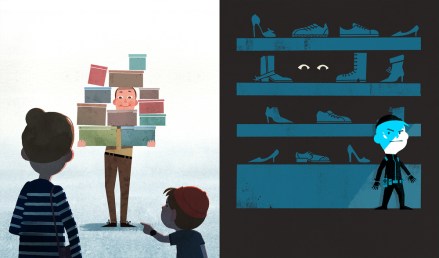
Brian Won deftly and humorously shifts between S.A.M.’s secret missions and his reality, depicting S.A.M.’s imaginary world in blue, black, and white and his real world in vivid color. Crafty juxtapositions include an image of the Shoe Store Man, his arms loaded with boxes and his face peeping between them on the left-hand page while on the right-hand page, S.A.M. in his spy gear shuffles along a wall of shoe-display shelves where two illuminated eyes search the darkness. Another occurs when S.A.M and K are having lunch. The top two-thirds of the two-page spread is cloaked in darkness, snakey French fries, an exploding drink, and cool costumes while the lower third shows their regular clothes and new matching tiger sneakers. The tiger unleashed by the new shoes is a vibrant flash in this book that moves as smoothly between life and fancy as a wild cat on the chase.

Ages 4 – 8

Candlewick Press, 2016 | ISBN 978-0763671198

Check out Tim Wynne-Jones’ website for a vast array of books and other fun stuff!

A gallery of work by Brian Won is awaiting you on his website!

Get Ready for Kindergarten Month Activity

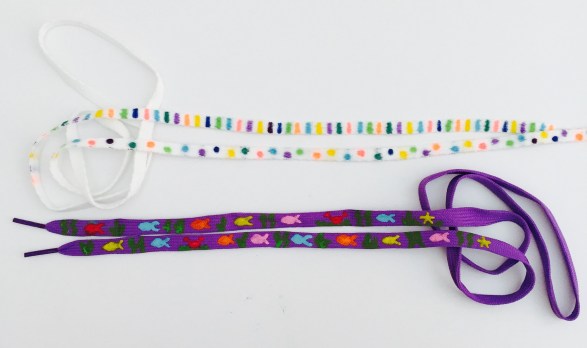
celebrate-picture-books-picture-book-review-shoe-lace-craft

Coolee-o-lee Shoe Laces


It’s fun and easy to design your own shoe laces for your favorite sneakers or boots or even for tying up hair styles, decorating your room, or you name it!

Supplies

  • White or colorful shoe laces, wide
  • Fabric paint or markers

Directions

  1. Draw or paint special designs or figures on the shoe laces
  2. Let dry
  3. Wear with pride!

Picture Book Review
August 23 – Ride the Wind Day

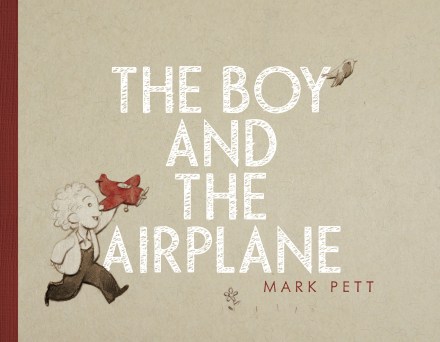
celebrate-picture-books-picture-book-review-the-boy-and-the-airplane-cover

About the Holiday

Today is set aside to honor the first manned air flight to win a Kremer Prize, a series of monetary awards established by Henry Kremer to commemorate pioneers in human-powered flight and administrated by the Royal Aeronautical Society. The first Kremer Prize was won on this date in 1977 by Dr. Paul MacCready when his Gossamer Condor, piloted by Brian Allen flew a figure eight around two markers one half mile apart. Three Kremer Prize milestones still remain to be accomplished. Today people are encouraged to spend time outdoors catching the wind with a kite, pinwheel, sailboat, or maybe with a toy airplane like the little boy in today’s book!

The Boy and the Airplane

By Mark Pett


A little boy receives a present and watches the giver as he leaves. When the boy opens the box, he is thrilled to find a red airplane inside. He runs outside to play with it, zooming it up and down. Laying it on the ground, he then becomes an airplane, zooming around with his arms out as wings.

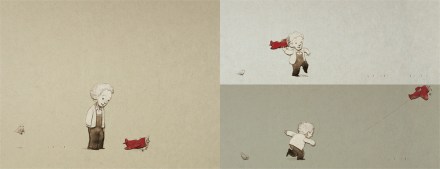
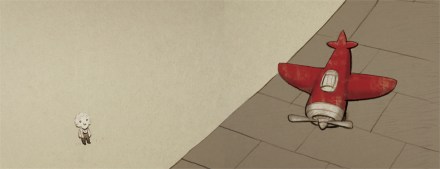
The boy looks at his plane and wonders. He picks it up and gives it a good, hard throw. It soars upward…upward, its propeller spinning as it speeds away. The boy chases after it then stops. His plane has come to a landing…on the roof. He ponders what to do for a moment, then gets a ladder. He leans the ladder against the house and climbs to the top rung, but he’s not nearly close enough. With child-like persistence, he tries different tactics—lassoing it, hitting it off with a baseball, jumping on a pogo stick, spraying it off with a hose—nothing dislodges his new toy.

celebrate-picture-books-picture-book-review-the-boy-and-the-airplane-throwing-plane

Image copyright Mark Pett, courtesy of simonandschuster.com

He sits down under a tree to think. As he reflects a whirlybird seed spirals down in front of him. He gazes at it, then goes to the garage for a shovel. He digs a hole, tosses the whirlybird in, pats down the dirt and waits. Snow falls on a tiny sapling as the boy in his coat, cap, and scarf keep it company. A future springtime sees both the boy and the tree older, with a little more height and hair and a little more height and leaves, respectively.

The tree grows tall and sturdy, complete with a bird’s nest and little peepers as the boy becomes an adult, complete with suit and tie and wiser peepers. By the time the boy reaches middle age, the tree’s trunk is thick and powerful, and as the boy matures to old age, the tree is strong enough to hold him. The elderly man climbs his tree’s branches and reaches over the eaves. His red plane is waiting for him, a little dusty now and tied down with cobwebs, but just as it was on that afternoon so long ago.

celebrate-picture-books-picture-book-review-the-boy-and-the-airplane-plane-on-roof

Image copyright Mark Pett, courtesy simonandschuster.com

With the exuberance of his youth, the man pulls back to give the plane a good, hard throw, but he stops. He considers his recovered toy and keeps it close instead, devising another plan for the airplane. He knows someone else who will like that plane as much as he did. he puts it in a box, wraps it and gives it to his granddaughter.

Mark Pett’s lovely, wordless picture book is a tribute to childhood, imagination, patience, and generational longevity. The subtle, vintage-style drawings in hues of brown on sage green backgrounds, punctuated only with the deep maroon red of the airplane, convey the feeling of permanence and the enduring presence of nature and familial love. The figure disappearing off the left-hand side of the first page after presenting the gift of the airplane to the little boy mirrors the clothes of the elderly man the boy has become as he gives the airplane to his granddaughter, passing down tradition and heritage.

Kids will also enjoy spotting the little bird that follows the boy on every page and hatches its own family in the branches of the mature tree. A close reading reveals deeper meanings and metaphors, comparisons and humor, making The Boy and the Airplane a perfect book for quiet story times or bedtime.

Ages 4 – 8

Simon & Schuster Books for Young Readers, 2013 | ISBN 978-1442451230

Discover more books by Mark Pett and what’s coming next on his website!

Ride the Wind Day Activity

celebrate-picture-books-picture-book-review-tiny-airplane-coloring-page

Tiny Toy Airplane Coloring Page


Is this airplane in the sky or at the airport? Or maybe it’s sitting in a field or at an airshow. It could be an attraction at a fair, or maybe it’s waiting to take you for a ride! Draw in whatever background you imagine and then color it! Get your Tiny Toy Airplane Coloring Page here!

Picture Book Review
August 22 – National Tooth Fairy Day

celebrate-picture-books-picture-book-review-tooth-by-tooth-cover

About the Holiday

Today’s holiday celebrates the mythical (shhhh!) fun of the Tooth Fairy. When a child loses a tooth, they put it under their pillow and that night the Tooth Fairy comes, takes the tooth, and leaves money. What the sprite does with the teeth is a mystery and many theories abound. The mystery of how the whole thing got started is explained here! I had never heard this story, so was excited to find it in my research!

In 1927 Esther Watkins Arnold wrote an eight-page play called The Tooth Fairy. In the same year none other than Sir Arthur Conan Doyle claimed that fairies and gnomes were real and by proof published pictures of two girls surrounded by “verified” fairies. In 1928 schools began performing Esther Arnold’s play, and kids took it to heart, leaving their teeth under their pillows. The rest of the story is, as Sherlock Holmes would say, “Elementary!”

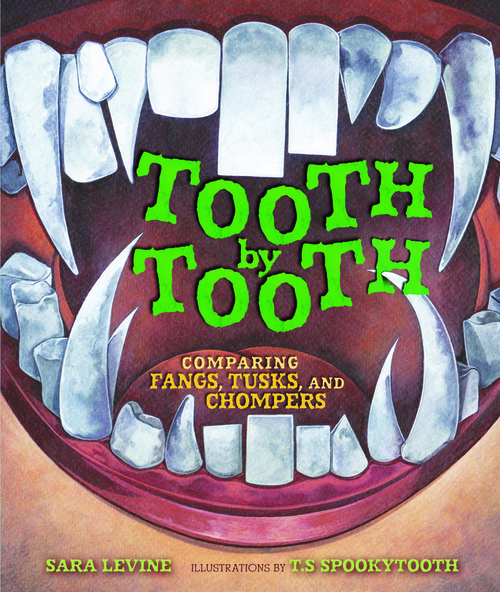
Tooth By Tooth: Comparing Fangs, Tusks, and Chompers

Written by Sara Levine | Illustrated by T. S. Spookytooth


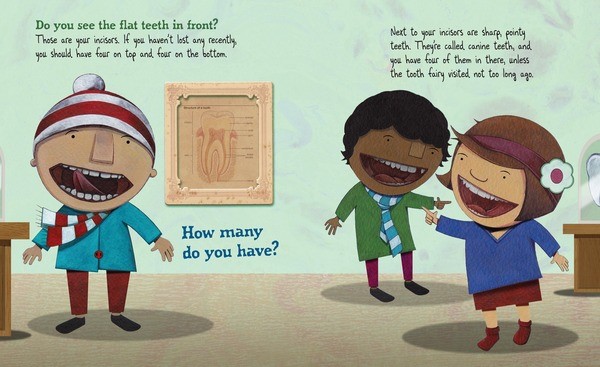
“Open wide!” a little girl with a good set of teeth herself encourages on the first page of this fun nonfiction book. “Look at all the chompers in there.” Mirror in hand she proceeds to reveal that human teeth are unusual because we are mammals, and mammal teeth come in different shapes and sizes. In fact there are three distinct types. A little boy takes over to describe them. Incisors are the four flat teeth in a person’s mouth—two on the top and two on the bottom right in front.

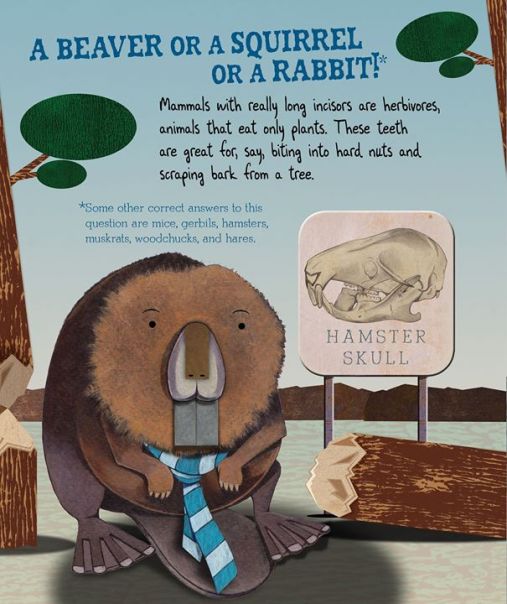
The four pointy teeth next to the incisors are canines, and the rest of the teeth are molars. Other mammals also have these teeth, and you can tell what an animal eats by which type is largest. For example, say your incisors were bigger than all your other teeth and they were so big they stuck out of your mouth even when it was closed, then you would be a beaver…or a squirrel…or a rabbit. These animals are herbivores and their oversized incisors help them break into nuts and scrape bark from trees.

celebrate-picture-books-picture-book-review-tooth-by-tooth-human-teeth

Image copyright T. S. Spookytooth, courtesy of Lerner Books

From here on Tooth by Tooth offers up amusing illustrations and “what kind of animal would you be if…” questions to spark kids’ powers of recognition. How about if your canines were so long they poked out of your mouth? Well, then you could be a “seal or a cat or a dog or a bear!” All these animals eat meat and need the sharp teeth to do it.

What if you had really tall molars? Then you’d be a “horse or a cow or a giraffe!” These guys use their molars to grind up grass. And if all your teeth were the same height? Come on…you know! You’d be you! Because humans eat plants and meat, we “need teeth that do many different jobs.”

But there are a lot more wacky teeth out there waiting for us to brush up on. So let’s get started. What if “two of your top incisors were so long that they grew out of your mouth and pointed to the sky? What if they were so long you could use them to carry your school bag?” You’ve probably guessed this one—you’d be an elephant. While an elephant’s tusks aren’t used for eating, they are used to procure the bark, roots, and other plant material that make up the elephant’s diet.

celebrate-picture-books-picture-book-review-tooth-by-tooth-beaver

Image copyright T. S. Spookytooth, courtesy of Lerner Books

What if you could almost trip over your canine teeth? Yep, you’d be a walrus, and you would use those sharp bad boys to poke holes in the ice to grab your favorite oysters and clams. But after eating they’re not done using their teeth. “After diving down for a meal, walruses can use their tusks to pull themselves back up onto the ice for a nap. Imagine if “your top and bottom canine teeth curled up out of your mouth so you had two pairs of tusks?” Or if your one upper canine grew through your upper lip and kept on growing?  Or if you had no teeth at all? Yikes! The remarkable answers are just a read away!

Fish, amphibians, and reptiles also have teeth of a sort, but because they are all the same shape and size, they don’t get special names—that doesn’t mean you can ignore them, though, because sharks are among this group, and you know what they can do!

More information about mammals, mammal teeth, a glossary, and a list of online and print references follow the text.

There’s nothing like the Wow! factor to capture kids’ attention, and Sara Levine uses it to humorous and fascinating effect in Tooth by Tooth: Comparing Fangs, Tusks, and Chompers. After giving a solid description of each kind of tooth and what it is used for in language that kids use and will relate to, Levine begins her guessing game that leads to even more discovery. We’ve all seen elephants and walruses with their mighty tusks, but how many know what they are really used for? And what about warthogs and narwhals? It’s all here in this creative nonfiction title.

T. S. Spookytooth took a big bite out of the “how to make kids laugh” manual in illustrating each question and type of tooth. Pictures of girls and boys with enormous teeth jutting this way and that will make readers glad to be human. And while the animals that belong to each molar, incisor, or canine sport the scarf, bow, or head band of its human counterpart, they are clearly and scientifically drawn to provide full understanding. Animal skulls also demonstrate the placement of teeth. The cover, with its close enough to eat you view of a very scary mouth is a show stopper and will attract kids as soon as they see it.

Ages 5 – 9

Millbrook Press, Lerner Books, 2016 | ISBN 978-1467752152

Check out Sara Levine’s website for more books, stuff for kids, teachers’ resources, and more!

View a gallery of T. S. Spookytooth’s art and read his biography (?!) on his website!

National Tooth Fairy Day Activity

celebrate-picture-books-picture-book-review-kid-shaped-maze

Smile! Kids are A-maze-ing! Maze


Smile with those pearly whites as you find your way through this printable Kids are A-maze-ing maze! Here’s the Solution!

August 21 – Poet’s Day

celebrate-picture-books-picture-book-review-a-great-big-cuddle-poems-for-the-Very-Young-cover

About the Holiday

Today celebrates the poet—that special person who looks at the world and transforms it into lines of rhyme, rhythm, metaphor, and meaning that make readers experience life and sometimes even the most common occurrence in a whole new way. Some poetry is poignant, some evocative, and some silly, but it all provides different perspectives and enriches our lives—even the youngest among us!

A Great Big Cuddle: Poems for the Very Young

Written by Michael Rosen | Illustrated by Chris Riddell


Before children learn to speak and in order for them to become literate and proficient readers, they discover the sounds of language. The poems in A Great Big Cuddle: Poems for the Very Young are all about those snappy, rhyming, musical syllables that make up speech and text. The collection’s 35 poems replicate the progression of language learning from the first offering—Tippy-Tappy, with its staccato repetition of “ippy, appy, eppy, oppy, uppy sounds—to Gruff and Dave and The Slow Train that provide longer, more detailed storytelling.

celebrate-picture-books-picture-book-review-a-great-big-cuddle-poems-for-the-Very-Young-button-bop

Image copyright Chris Riddell, courtesy of Candlewick Press

The subjects are familiar to even tiny children whose worlds include the buttons, parties, pets, music, and other topics treated with innovation in this collection. The juxtaposition of words, concepts, questions, and nonsense, will keep kids laughing even as they are (probably) unconsciously soaking in the rich learning.

I Went is an example in which multiple concepts combine to create a funny travelogue with double meaning twists:

“I went to Lapland / I saw a reindeer on the loose. / I went to Canada / I saw a chocolate mousse.  I went to the river / I saw a big green frog. / I went to New York / I saw a hot dog.”

Bendy Man describes a rather unique fellow with special talents that kids would love to get to know. It starts like this:

“Bendy Man, Bendy Man / He’s a long leggy man. / Bendy Man, Bendy Man / In a baked-bean can. Bendy Man, Bendy Man / Wraps round trees / Bendy Man, Bendy Man / Can’t find his knees.”

Along the way there are also poems to validate kids’ emotions, which come in shades of happiness, bounciness, anger, satisfaction, and frustration among others, as well as to comfort them when they get hurt or scared as in the poem Mo: “Mo’s in a muddle / She slipped in a puddle / Mommy gives Mo / A great big cuddle.”

celebrate-picture-books-picture-book-review-a-great-big-cuddle-poems-for-the-Very-Young-reading-lesson

Image copyright Chris Riddell, courtesy of Candlewick Press

Let Me Do It is an exuberant tribute to a child’s eagerness to help: “Let me do it, let me do it / Let me blow up the balloon / Let me do it, let me do it / Let me go to the moon.                 Let me cook the beans / Let me lick the jar / Let me kick the ball / Let me drive the car.” But as often happens with inexperience, the tasks become a bit confused later in the poem: “Let me drive the beans / Let me kick the jar / Let me lick the ball / Let me cook the car.”

Michael Rosen’s love of language and quirky, kid-like personality are on full display in A Great Big Cuddle, much to the benefit of his young fans. Rosen is able to tap into and capture those fleeting ideas and “wouldn’t it be cool if…” moments that fuel kids’ imaginations and actions. Life is much too long and much too short not to spend some of it in absurd hilarity, and Rosen provides a book full of that respite here.

Chris Riddell infuses each of the poems with the personalities of enthusiastic children, adorable monsters, familiar animals, and high-spirited action. The large, full-bleed pages allow for full-size fun and a variety of typography. The bold colors will attract even the smallest reader and keep them riveted to the sounds and sights of this excellent poetry collection for young children.

celebrate-picture-books-picture-book-review-a-great-big-cuddle-poems-for-the-Very-Young-i-am-hungry

Image copyright Chris Riddell, courtesy of Candlewick Press

Older kids will also find much to enjoy in the humorous spirals taken by the lines in A Great Big Cuddle. Some poems, such as  I Am Hungry, in which a bear in a bib states everything he will eat, would make a great teaching tool about what can and cannot logically be consumed.

Because A Great Big Cuddle: Poems for the Very Young is perfect for dipping into again and again, you’ll be happy to have it close it hand on your shelves.

Ages Birth – 6

Candlewick, 2015 | ISBN 978-0763681166

Visit Michael Rosen’s website to see his amazing range of books, poems, events, TV and radio programs and more!

Follow the Cycling Fish through a tour of Chris Riddell’s artwork!

Poet’s Day Activity

celebrate-picture-books-picture-book-review-bear-in-clothes-dot-to-dot

A Pair of Bears (Pear of Bears? Pair of Bairs?) Coloring Pages and Poem Prompts


The two bears in these coloring pages are having different days—one is grumpy while the other is happy. Color the printable A Pair of Bears Coloring Pages and then write one or two poems about them!

Bear 1

Bear 2

Picture Book Review