June 19 – World Sauntering Day

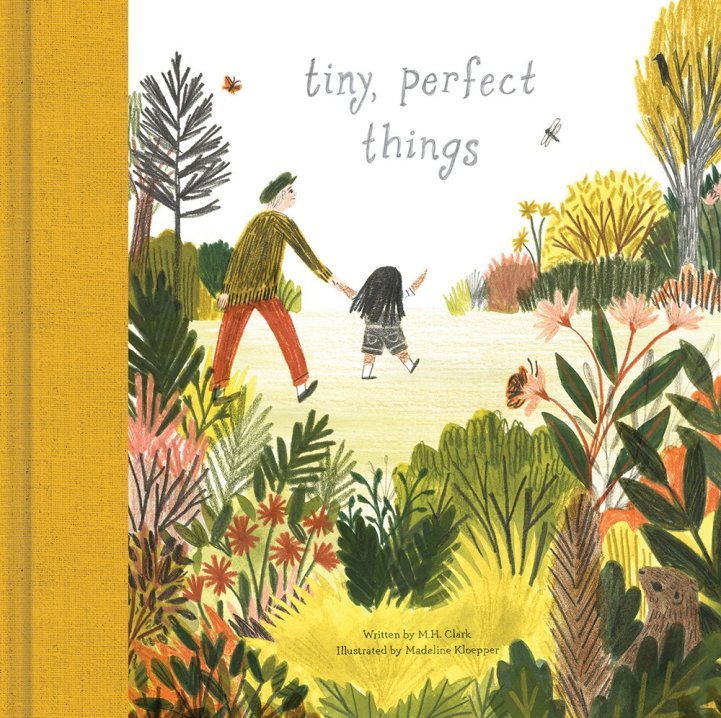
celebrate-picture-books-picture-book-review-tiny-perfect-things-cover

About the Holiday

In 1979 as the jogging craze was sweeping the world, W.T. “Bill” Rabe decided people needed to be reminded to slow down and really notice the things around them. At the time Rabe worked at the the Grand Hotel on Mackinac Island, Michigan, which boasts the world’s longest porch at 660 feet (200 m). Since that time people are encouraged to celebrate Sauntering Day by taking a long walk and enjoying the relaxation of a slower pace.

Tiny, Perfect Things

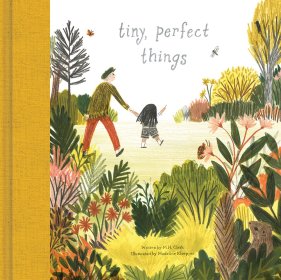
Written by M.H. Clark | Illustrated by Madeline Kloepper


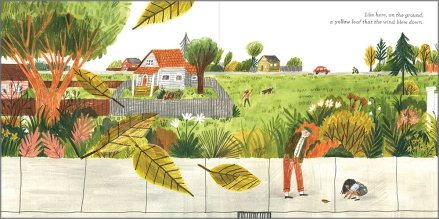
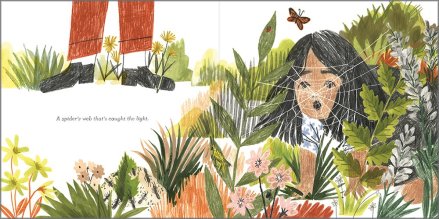
A little girl and her grandfather head outside for a walk. “Today, we keep our eyes open for tiny, perfect things,” the girl says. The first thing they find is a yellow leaf that has fluttered down from a nearby tree. While the girl is examining the leaf, she notices an intricate “spider’s web that’s caught the light.” Then Grandpa lifts her up to see “a snail that had climbed the fence last night.” 

celebrate-picture-books-picture-book-review-tiny-perfect-things-leaf

Image copyright Madeline Kloepper, 2018, text copyright M.H. Clark. Courtesy of Compendium.

Crows overhead watch the pair and guard the treasures they’ve hidden in their nest. One drops a red bottle cap for Grandpa to find. The little girl and her grandfather also see a red flower pushing up through a crack in the sidewalk and a man wearing a hat with a long, red feather. Farther on, the girl realizes their “shadows are holding hands,” waking when they walk and standing when they stand.

celebrate-picture-books-picture-book-review-tiny-perfect-things-spider-web

Image copyright Madeline Kloepper, 2018, text copyright M.H. Clark. Courtesy of Compendium.

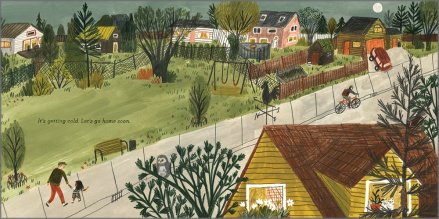
They wave to a neighbor and her cat and admire a shiny apple “way up high. / Red against the blue, blue sky.” As twilight falls and bunnies, birds, and other creatures settle in, a pale moon rises. The cold night air prompts the little girl and her grandfather to start back home. Around the corner, they see their house. A welcoming light is on, and a pretty white cat waits for them at the door.

The girl runs to her mother and exclaims, “We found so many things today! / A leaf, a snail, a cat, some crows. / The world is full of wonders, / no matter where we go.” She sits on the rug and draws all the tiny, perfect things they saw, ready to go out again tomorrow.

celebrate-picture-books-picture-book-review-tiny-perfect-things-night

Image copyright Madeline Kloepper, 2018, text copyright M.H. Clark. Courtesy of Compendium.

M.H. Clark’s gorgeously written, lyrical story shines a light on seemingly simple aspects of nature and neighborhoods. As seen through a child’s eyes, leaves, snails, the surprise meeting of familiar people and pets, and even a change in light and temperature are gems to be remembered, recorded, and sought out again and again. The gentle pace and affection between the little girl and her grandfather makes each page a joy to read, and the love and warmth of the girl’s mixed race, multigenerational family will swell the reader’s heart. Clark’s final line invites children to find “perfect things” wherever they go. It’s a call both kids and adults will want to answer.

celebrate-picture-books-picture-book-review-tiny-perfect-things-double-gate-fold

Image copyright Madeline Kloepper, 2018, text copyright M.H. Clark. Courtesy of Compendium.

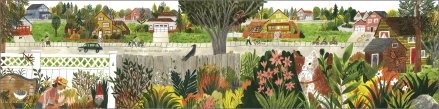
Madeline Kloepper’s lush illustrations combine sophistication with the sensibility of a child’s drawing to beautifully reflect the child’s-eye view of Clark’s story. With deep earth tones, Kloepper depicts a neighborhood teeming with life while also showing that the little girl and her grandfather are one with the natural world. Through various perspectives, Kloepper points out that astonishing things can be found at ground level, up high, and in surprising nooks and crannies if one just takes time to look. Each page depicts the object described in the text and then offers many more “tiny, perfect things” for alert readers to discover. A final double gate fold will have kids and adults sitting on the floor or spreading out at the table together to search for all of the wondrous things hidden in plain sight.

A book that opens readers eyes while warming their heart, Tiny, Perfect Things would be a much-loved addition to any child’s home bookshelf and is a must for classroom, school, and public libraries.

Ages 4 – 8

Compendium, 2018 | ISBN 978-1946873064

To learn more about Madeline Kloepper, her art, and her books, visit her website.

World Sauntering Day Activity

celebrate-picture-books-picture-book-review-nature-journal-cover

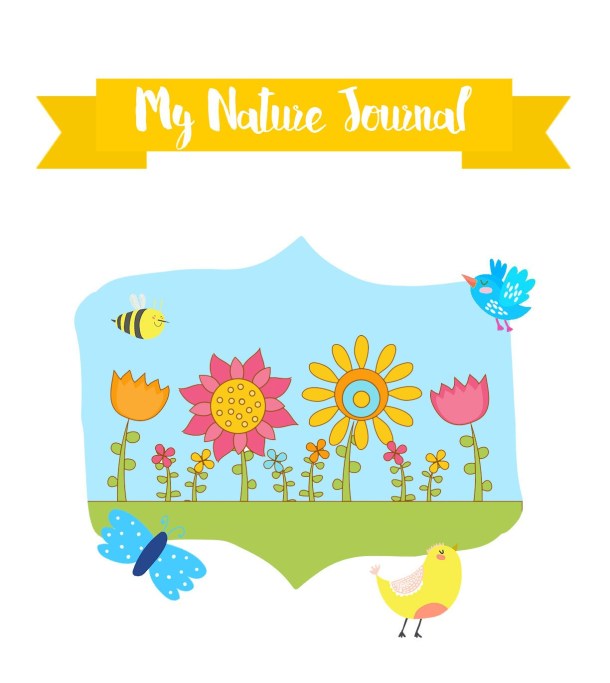
My Nature Journal 


You can remember the things you see on a walk in this Nature Journal. Just print the cover, add pages, and staple it together. Then draw the flowers, trees, birds, snails, and things you see. You can tape leaves and other small objects inside too!

My Nature Journal Cover 

celebrate-picture-books-picture-book-review-tiny-perfect-things-cover

You can find Tiny, Perfect Things at these booksellers

Amazon | Barnes & Noble | Books-a-Million | IndieBound

Picture Book Review

June 15 – National Nature Photography Day

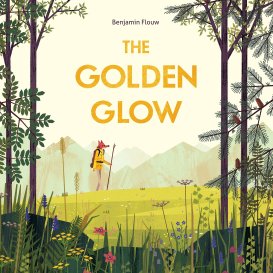
celebrate-picture-books-picture-book-review-the-golden-glow-cover

About the Holiday

Today’s holiday was established in 2006 by the North American Nature Photography Association (NANPA) to promote the enjoyment of taking photographs of nature while out hiking, traveling, or just in your own backyard. Nature photography is a fantastic hobby and a creative way to get you out interacting with the environment. In addition, nature photography allows you to bring home the beauty of fragile ecosystems without hurting the native flora and fauna. Today, grab your camera or phone (or your notebook and pencils) and head out to capture some of the glorious colors and wildlife around you.

Tundra Books sent me a copy of The Golden Glow to check out. All opinions are my own. I’m happy to be partnering with Tundra Books in a giveaway of The Golden Glow. See Details below.

The Golden Glow

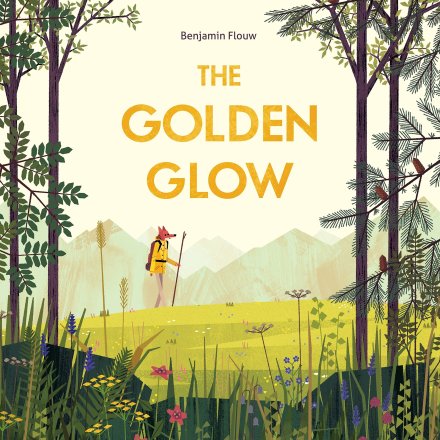
By Benjamin Flouw


Fox was a collector. As he sat in his armchair, his leafy acquisitions shaded him as if he were in the jungle. Reading through a botany book “looking the next new plant to add to his collection,” he came to a page that had no picture to go with the intriguing description. The plant’s name, he read, is “the golden glow” and it is part of “the Wellhidden family.” The book continues to say that the plant only grows high in the mountains and is so rare no one has ever seen it.

celebrate-picture-books-picture-book-review-the-golden-glow-reading

Copyright Benjamin Flouw, 2018, courtesy of Tundra Books.

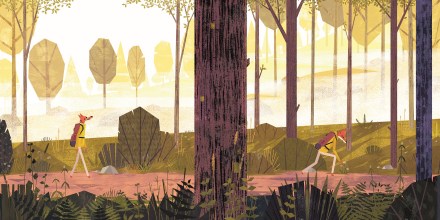
Fox determined that he would find this “fabulously fascinating flower.” He packed his things and in the morning set out to the mountains in the distance. As he walked, he admired the familiar plants along the way. Fox also knew “the name of each tree he walks under.” At the stream, he met Bear and asked him about the golden glow, but Bear knew nothing and suggested Fox talk to Marmot.

celebrate-picture-books-picture-book-review-the-golden-glow-wildflowers-on-path

Copyright Benjamin Flouw, 2018, courtesy of Tundra Books.

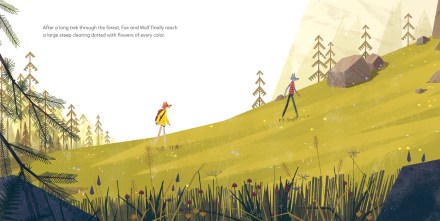
Like the golden glow, Marmot also liked to hide. Fox looked in every nook and cranny, but didn’t find her. While Fox was snacking on a grape pate sandwich, his cousin Wolf happened by. He’d never seen the golden glow either, but he could help Fox find Marmot. They crossed a field of wildflowers, and when he and Wolf stopped, Wolf whistled and Marmot answered.

Marmot turned out to be very helpful, telling Fox that the flower could be found at the very top of the mountain. Fox climbed and climbed as the air turned foggy. “Suddenly, a strange shape looms into view….” As Fox got closer, he recognized Mountain Goat. Mountain Goat told Fox that nothing grows at the top of the mountain, but he lent him a walking stick when he saw Fox’s determination.

celebrate-picture-books-picture-book-review-the-golden-glow-crossing-meadow

Copyright Benjamin Flouw, 2018, courtesy of Tundra Books.

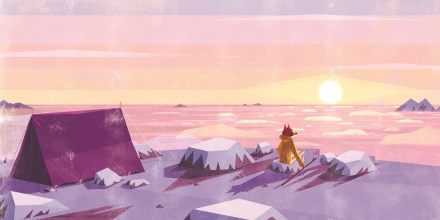
Fox climbed all the way up 9,800 feet to the snow zone. When the sun peeked out of the clouds, Fox looked around, but he found nothing growing there. The sun was due to set soon, so Fox pitched his tent and watched as the sun dipped lower and lower in the sky. He was just putting down the walking stick when he felt “something brush against his paw…”

celebrate-picture-books-picture-book-review-the-golden-glow-on-mountaintop

Copyright Benjamin Flouw, 2018, courtesy of Tundra Books.

Fox brushed away the snow to find “a fabulously fascinating flower.” Fox knew it must be the golden glow. Fox was just about to pick it, when he changed his mind. “This golden glow is more beautiful here on the mountaintop than it ever would be in a vase in his living room.” Instead, Fox reached into his backpack for his notebook and pencil.

Fox studied “the plant from every angle” and then began to draw. When Fox returned home, he “put all of his drawings into his botany book” so that he can look at the golden glow often and remember “just how fabulously fascinating his golden glow is, high up on the mountaintop.”

celebrate-picture-books-picture-book-review-the-golden-glow-coming-home

Copyright Benjamin Flouw, 2018, courtesy of Tundra Books.

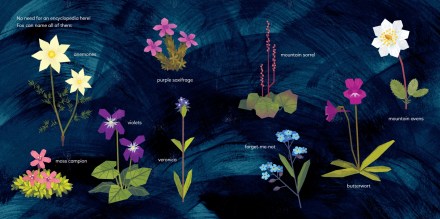
Just as the simplest flower or leaf, Benjamin Flouw’s story holds delicate charms and hidden complexities that make The Golden Glow a book to be savored through multiple readings. While the book begins as a mysterious adventure story, as Fox journeys to the mountaintop, The Golden Glow offers beautifully detailed images of camping supplies, trees, wildlife habitats, wildflowers, and mountain zones; the quiet, unhurried pace of the text echoes the restorative power of nature; and Fox’s decision to leave the golden glow instead of picking it reminds readers that nature’s bounty belongs to everyone.

celebrate-picture-books-picture-book-review-the-golden-glow-wildflowers

Copyright Benjamin Flouw, 2018, courtesy of Tundra Books.

After the adventure is over, however, a deeper meaning is revealed in the final line of the book. A simple exchange of modifier from “the golden glow” to “his golden glow” presents a profound opportunity to consider and discuss the nature of individuality, uniqueness, and how people let their “glow” shine. 

Flouw’s distinctive angular illustrations are strikingly evocative of nature while giving the book a fresh look and a feeling of tranquility. The shiny gold foil leaf on the golden glow will elicit “oohs” and “ahhs,” and the penciled image of the golden glow that Fox draws will inspire young botanists to start their own nature notebook.

A gorgeous book that seamlessly combines nonfiction with a fictional story that has depth, The Golden Glow is an inspiring choice for home bookshelves and would be a fit for many classroom lessons as well as general story time.

Ages 4 – 8

Tundra Books, 2018 | ISBN 978-0735264120

To learn more about Benjamin Flouw and view a portfolio of his work, visit his website.

The Golden Glow Giveaway

I’m thrilled to be partnering with Tundra Books to be giving away:

  • One (1) copy of The Golden Glow by Benjamin Flouw

To be entered to win, just Follow me on Twitter @CelebratePicBks and Retweet a giveaway tweet during this week, June 15 – 21. Already a follower? Thanks! Just retweet for a chance to win.

Winners will be chosen on June 22.

Giveaways open to US addresses only | Prizing provided by Tundra Books

National Nature Photography Day Activity

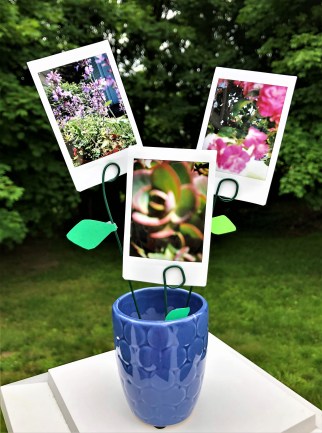
celebrate-picture-books-picture-book-review-pic-a-pot-of-flowers-craft

Pot a Pic of Flowers Craft


A collection of flower photographs can be just as beautiful as a pot of real posies. With this simple craft you can keep memories of flowers and plants you’ve seen while decorating your room or give a unique gift that shows off your photography skills and your love of nature!

Supplies

  • Small flower pot
  • Green floral wire
  • Green construction or heavy-stock paper
  • Pliers
  • Clay, playdough, or oasis
  • Scissors

Directions

To Make the Stem

  • Hold one tip of the wire tightly with the pliers
  • Wind the wire around the nose of the pliers two or three times. Squeeze the loops together, if necessary.
  • Cut the wire to the desired length. An assortment of lengths makes the display more interesting and allows all pictures to show
  • Cut small leaves from the green paper and tape to the stems
  1. Take pictures of flowers you like with your phone or other camera. Alternately, you can find pictures of flowers online.
  2. Print pictures on photo paper or regular paper
  3. Place clay, playdough, or oasis in the flower pot
  4. Stick the stems into the clay
  5. Carefully slide the pictures into the loops on the stems
  6. Display or give your flower pot!

celebrate-picture-books-picture-book-review-the-golden-glow-cover

You can find The Golden Glow at these booksellers

Amazon | Barnes & Noble | Books-a-Million | IndieBound 

Picture Book Review

June 13 – It’s National Great Outdoors Month

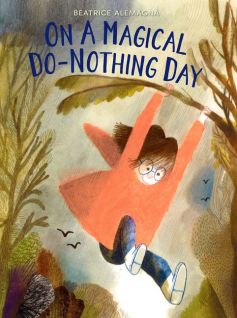
celebrate-picture-books-picture-book-review-on-a-magical-do-nothing-day-cover

About the Holiday

With all the fun games to play and not-so-fun-but-necessary chores to do inside, sometimes a day, a week, or even the whole summer can go by without you ever really getting outside to enjoy the sunshine, fresh air, and outdoor activities that can be so invigorating. Take the opportunity National Great Outdoors offers to discover somewhere new or see a familiar place in a whole new way.

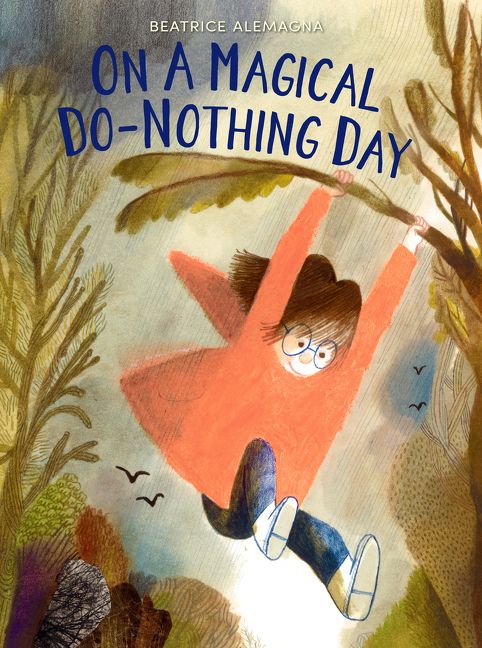
On a Magical Do-Nothing Day

By Beatrice Alemagna


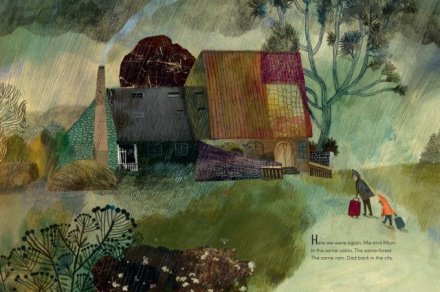
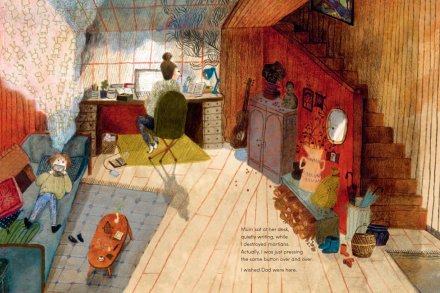
A little girl and her mom are “back again” at the cottage—even trudging up the walk in “the same rain”—while Dad is working back at home in the city. While Mom works at her computer, the girl destroys Martians, but she says, “Actually, I was just pressing the same button over and over.” She wishes that her dad were there.

celebrate-picture-books-picture-book-review-on-a-magical-do-nothing-day-cabin

Copyright Beatrice Alemanga, 2017, courtesy of HarperCollins.

Mom turns away from her writing and watches her daughter playing her video game. “Is this going to be another day of doing nothing?” she growls. Mom takes the device and hides it—“as usual”—and the little girl finds it—“as usual.” But this time she takes it outside. As the rain pelts down from gloomy skies it looked as if everything in the “garden was hiding from the sun.”

celebrate-picture-books-picture-book-review-on-a-magical-do-nothing-day-playing-video-games

Copyright Beatrice Alemanga, 2017, courtesy of HarperCollins.

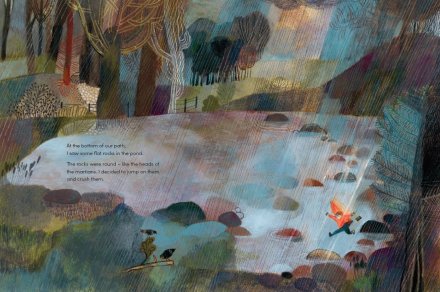
In the pond at the bottom of the hill she finds a line of flat stones. She hops from one to another, crushing them like the Martians in her game. While jumping, though, her game falls out of her pocket and into the pond. The water is so icy cold that she can’t grab it before it sinks out of sight. Oh no! she thinks, “Without my game, I have nothing to do.” The rain strikes her “like rocks,” and she feels “like a small tree trapped outside in a hurricane.”

celebrate-picture-books-picture-book-review-on-a-magical-do-nothing-day--jumping-on-rocks

Copyright Beatrice Alemanga, 2017, courtesy of HarperCollins.

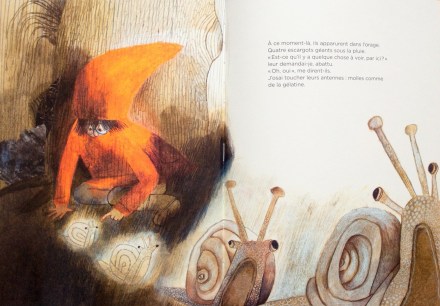
Just then she spies four giant snails slithering by. She asks them if there is anything to do around there, and they tell her yes. She gently feels one of the snail’s antennae. It is “as soft as jello” and makes her smile. She follows the snails and discovers a field filled with mushrooms. Their damp musky smell reminds her of her grandparents’ basement—her “cave of treasures.” She walks on and finds a spot in the earth where she digs her hand into the ground. She feels “thousands of seeds and pellets and kernals, grains and roots and berries touch “her fingers and hand.” When she looks up the sun is shining “through a giant strainer” and blinds her.

celebrate-picture-books-picture-book-review-on-a-magical-do-nothing-day-snails

Copyright Beatrice Alemanga, 2017, courtesy of beatricealemanga.com.

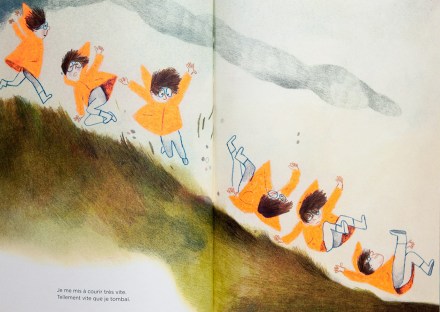
Her heart starts beating fast with energy. She takes off running and runs so quickly that she tumbles down the hill. She lands on her back with a flop, and when she opens her eyes, the world is topsy-turvy new. Energized, she climbs a tree and gazes out at the horizon, breaths deeply in the fresh air, drinks raindrops as they fall from a leaf, and notices bugs she’s never seen before. She talks to a bird, splashes in a puddle, and watches the world through stones as clear as glass.

celebrate-picture-books-picture-book-review-on-a-magical-do-nothing-day-tumbling

Copyright Beatrice Alemanga, 2017, courtesy of beatricealemanga.com.

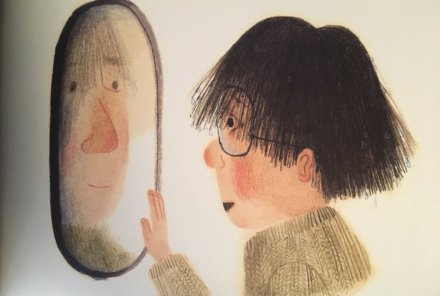
She hurries home and takes off her raincoat. When she glances in the mirror, for a moment she thinks she “sees her dad smiling at [her].” Her mom is still writing, but now she looks different to the little girl—“like one of the creatures outside.” Her mom notices how soaked she is and takes her to the kitchen to dry her off in a big, soft towel. The little girl feels like giving her mom a big hug. For a moment she wants to tell her about all the things she saw and did, but she doesn’t.

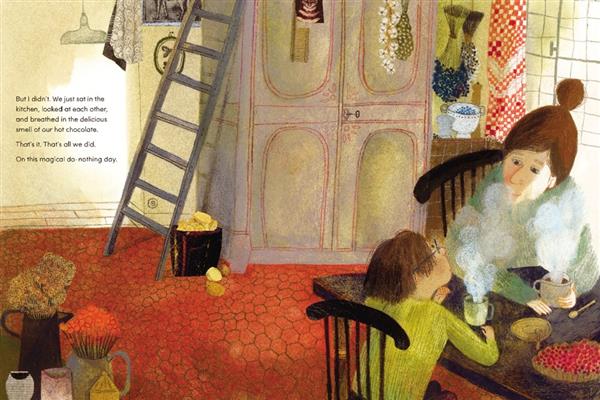
Instead, they enjoy their hot chocolate quietly together. “That’s it,” she says. “That’s all we did. On this magical do-nothing day.”

celebrate-picture-books-picture-book-review-on-a-magical-do-nothing-day-hot-chocolate

Copyright Beatrice Alemanga, 2017, courtesy of HarperCollins.

While the protagonist of A Magical Do-Nothing Day may never have looked at the world outside closely, Beatrice Alemagna certainly has. Alemagna’s exquisite illustrations portray the beauty of our environment—both indoors and out—and our connections to it with novel descriptions and stunning color and perspectives. As the girl ventures outside, video game clutched tightly, her face registers sadness and wariness. The Martians from the game crawl over and surround her, even when the game is off, seeming to fill any space that might be open to exploration, and, indeed, her first forays into the wild are taken game-style, hopping from platform to platform, rock to rock.

celebrate-picture-books-picture-book-review-on-a-magical-do-nothing-day-mirror

Copyright Beatrice Alemanga, 2017, courtesy of HarperCollins.

When the gaming device sinks into frigid water (as cold and impersonal as the gaming experience itself?), the child quickly comes out of her shell with the help of snails that lead her to greater discovery. The story gives readers much to ponder in the relationships between the child and parents and the child’s newfound appreciation for the natural world.

On a Magical Do-Nothing Day is a fantastic book to add to home and classroom libraries to spur children’s exploration—both in the natural world and within. While I used the feminine pronoun in my review, the story is told from the first person point of view and the child is drawn with gender neutral clothing and hairstyle, making this a book with universal appeal.

Ages 4 – 8

HarperCollins, 2017 | ISBN 978-0062657602

Discover more about Beatrice Alemanga, her books, and her art on her website.

National Great Outdoors Month Activity

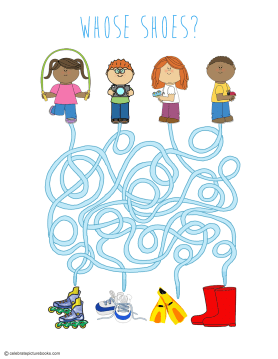
celebrate-picture-books-picture-book-review-whose-shoes-maze

Whose Shoes? Maze


There are all sorts of ways to enjoy the great outdoors, from skating to scuba diving to hiking! These kids all want to do their favorite activity. Can you help match them to the shoes they’ll need in this printable Whose Shoes? Maze?

celebrate-picture-books-picture-book-review-on-a-magical-do-nothing-day-cover

You can find On a Magical Do-Nothing Day at these booksellers

Amazon | Barnes & Noble | Books-a-Million | HarperCollins | IndieBound 

Picture Book Review

May 7 – It’s National Wildflower Week

celebrate-picture-books-picture-book-review-bee-a-peek-through-picture-book-cover

About the Holiday

Sponsored by the Lady Bird Johnson Wildflower Center in Austin, Texas, an “internationally recognized botanic garden dedicated to inspiring the conservation of native plants in natural and designed landscapes,” today’s holiday celebrates the wildflowers that beautify the country from coast to coast. Lady Bird Johnson once said wildflowers “give us a sense of where we are in this great land of ours” as every area hosts its own particular flowers. Wildflower fields are important to the survival of the bee population, and, as pollinators, bees keep the wildflowers blooming and growing.

Bee: A Peek-Through Picture Book

By Britta Teckentrup


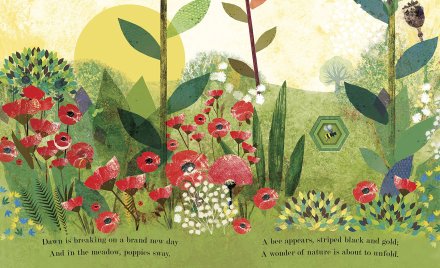
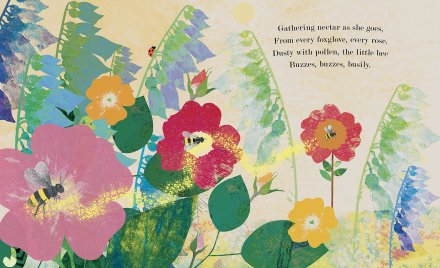
As the sun comes up over the meadow of poppies, a bee gets ready for her day. She flits through the forest, blending her quiet buzz with the songs of the birds in the trees. “As she travels here and there, / A gentle humming fills the air.” With no map to guide her, the bee knows exactly what route to take to visit each colorful flower. “Gathering nectar as she goes, / From every foxglove, every rose, / Dusty with pollen, the little bee / Buzzes, buzzes, busily.”

celebrate-picture-books-picture-book-review-bee-a-peek-through-picture-book-dawn

Copyright Britta Teckentrup, 2017, courtesy of Random House Books for Young Readers

The flowers attract the little bee with their sweet perfume, and with the sun as her compass, she finds them all. As she flies from flower to flower, tree to tree, she picks up and leaves bits of pollen that will create more blossoms.  But when she looks out over the field, the bee sees more flowers than she could ever hope to visit. The bee hurries back to her hive to tell the others about the smorgasbord waiting for them.

celebrate-picture-books-picture-book-review-bee-a-peek-through-picture-book-stream

Copyright Britta Teckentrup, 2017, courtesy of Random House Books for Young Readers

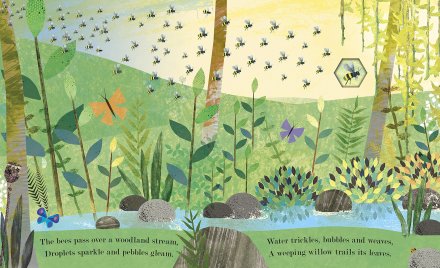
In droves they leave the hive, gliding over a pond, navigating an orchard, and continuing on. “The bees pass over a woodland stream. / Droplets sparkle and pebbles gleam. / Water trickles, bubbles, and weaves. / A weeping willow trails its leaves.” As the bees stop here and there along the way, they give life to new flowers and plants, expanding the wildflower meadow that is home to so many creatures.

celebrate-picture-books-picture-book-review-bee-a-peek-through-picture-book-nectar

Copyright Britta Teckentrup, 2017, courtesy of Random House Books for Young Readers

Readers can see that Britta Teckentrup’s beautiful tribute to bees is something special before they even open the book. On the cover, a sunset-hued flower stretches into the blue sky. Through its die-cut center, children can see the complexity of the flower and, in its very middle, a honey bee harvesting nectar. Teckentrup’s lyrical story of a bee’s day is complemented by gorgeous illustrations of the vibrant wildflowers that call to the little bee. Each page is rendered in a breathtaking palette that surrounds young readers with the mysteries of the natural world—and in the center is the bee, going about her job as squirrels scamper, deer silently look on, and butterflies flutter nearby.

Children will adore following the bee—and later, more and more bees—through open windows to the final two-page spread of a meadow in full bloom. All along the journey, the bee has made friends with woodland, pond, and orchard creatures, and young readers will delight in finding each of them hidden in this glorious field.

Ages 3 – 7

Doubleday Books for Young Readers, 2017 | ISBN 978-1524715267

Discover more about Britta Techentrup, her books, and artwork on her website!

National Wildflower Week Activity

CPB---Busy-Buzzy-Bee-Maze

Busy Buzzy Bee Maze


Can you help the little bee find her way through this printable Busy Buzzy Bee Maze? Here’s the Solution!

Picture Book Review

April 27 – It’s National Park Week and Interview with Jennifer Thermes

celebrate-picture-books-picture-book-review-grandma-gatewood-hikes-the-appalachian-trail-cover

About the Holiday

Don’t you feel it? That little nudge to leave home and enjoy the outdoors again? Spring is the perfect time to discover or rediscover the beauty all around by visiting a national park. Whether you like hiking, camping, fishing, swimming, or just the quiet pleasure of a picnic, there’s a national park near you to enjoy. This year’s theme for National Park Week, which runs from April 21 through April 29, is “Park Stars” and encompasses everything from the starry skies to those rock-star rangers and volunteers who maintain the system of parks across the country. This year, why not join them in protecting our national parks and the wildlife that call them home.

I’m thrilled to partner with Abrams Books for a giveaway of one copy of Grandma Gatewood Hikes the Appalachian Trail. See more details below.

Grandma Gatewood Hikes the Appalachian Trail

By Jennifer Thermes


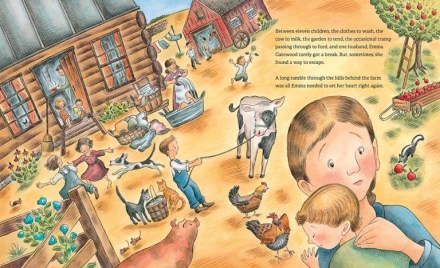
With eleven children, a farm to tend, and chores to do, Emma Gatewood’s days were plenty busy. When she needed a bit of escape, “a long ramble through the hills behind the farm was all Emma needed to set her heart right again.” So when her children had all left home and sparked by a magazine article about the Appalachian Trail, Emma put on her walking shoes and took to “‘the longest footpath in the world.’” The article had said that no woman had ever hiked the Trail from beginning to end, and Emma determined to change that.
celebrate-picture-books-picture-book-review-grandma-gatewood-hikes-the-appalachian-trail-kids

Copyright Jennifer Thermes, 2018, courtesy of Abrams Books for Young Readers.

On May 3, 1955, at the age of sixty seven, Emma left her home in Ohio and traveled to Mt. Oglethorpe in Georgia to begin her hike along the 2,190-mile-long Appalachian Trail. With just a light homemade sack and canvas shoes, Emma made her way up the trail, eating berries and drinking from streams as she went. When the trail took her through small towns and mountain farms, she got a real “supper and a cozy place to sleep.”

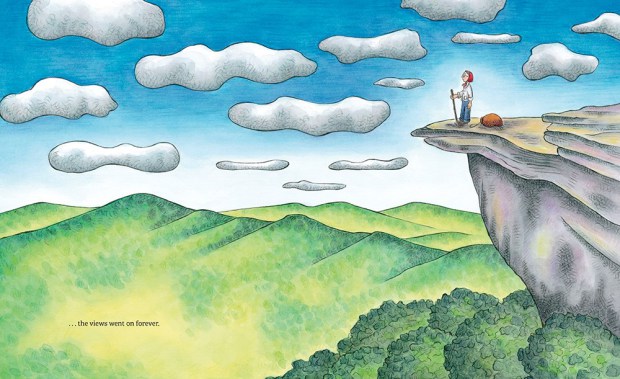
Word traveled about the older woman hiking the trail, and “Emma soon became known as ‘Grandma Gatewood.’” In June Emma crossed into Virginia and at the beginning of July took a quick jog through Maryland. The magazine article had said that hiking the trail was easy, but Emma had a different perspective. She once said the trail always seemed to “‘lead you right up over the biggest rock to the top of the biggest mountain they can find.’”
celebrate-picture-books-picture-book-review-grandma-gatewood-hikes-the-appalachian-trail-vista

Copyright Jennifer Thermes, 2018, courtesy of Abrams Books for Young Readers.

Grandma Gatewood walked in all weather and saw sights that were sometimes dull, but more often stunning. During July she crossed Pennsylvania, traced an edge of New Jersey, and hopped a corner of New York State. Pennsylvania’s sharp rocks “tore the soles of Emma’s shoes, so she held them together with tape.” By this time the newspapers had heard about Emma too, and “reporters met her at almost every stop.” Pretty soon, the whole country was talking about her! When people asked her why she was doing it, she answered, “‘Just for the heck of it.’”
celebrate-picture-books-picture-book-review-grandma-gatewood-hikes-the-appalachian-trail-new-hampshire-map

Copyright Jennifer Thermes, 2018, courtesy of Abrams Books for Young Readers.

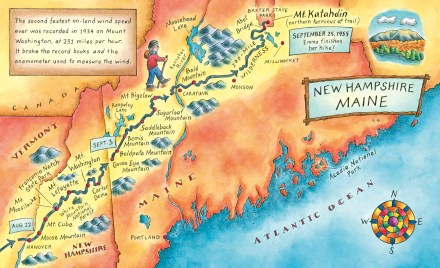
It was late summer and Emma was over halfway finished, but a bigger challenge was headed her way. A hurricane was swirling toward the East Coast. In early August, Emma hiked through Connecticut, Massachusetts, and Vermont. When the hurricane hit, she was soaked by rain, threatened by falling trees, and blown by the wind. She found shelter in a hut where a group of teenage boys were also waiting out the storm. They carried her across a swollen stream, and Emma continued her journey.

She met up with boy scouts and even went to tea with someone who had pinned an invitation to a tree along the trail. On September 3, she crossed from New Hampshire into Maine. Cold weather was coming, but the last mountain was in her sights. She bundled into every bit of clothes she had, and with torn shoes, cracked glasses, and aching muscles, Emma scrambled up the mountain all the way to the top. She had accomplished what she set out to do—and two years later, she did it again!

A timeline and an extensive author’s note about Emma Gatewood and the Trail follow the text.
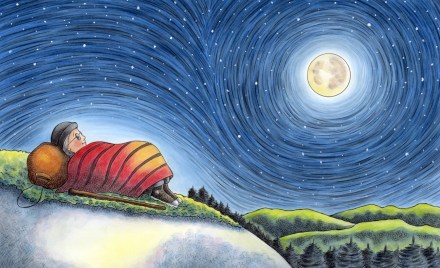
celebrate-picture-books-picture-book-review-grandma-gatewood-hikes-the-appalachian-trail-night-scene

Copyright Jennifer Thermes, 2018, courtesy of Abrams Books for Young Readers.

Inspiring from beginning to end, Jennifer Thermes’ story highlights a woman who lived life on her terms and accomplished a personal goal while, literally, blazing a trail for women and the elderly. The jaunty lilt of Thermes’ storytelling mirrors Emma’s brisk pace while giving readers an excellent sense of her personality and the twists, turns, and obstacles of the Appalachian Trail. Facts about landmarks along the trail are sprinkled throughout.

The story of Grandma Gatewood and the Appalachian Trail is a perfect match for Thermes’ superb artwork and map-making skills. Colorful and detailed two-page maps, set every three pages, keep readers apprised of the dates that Emma passed through each state on her trek north. In between, kids get to see Emma scaring off a bear, making friends with townspeople along the way, trudging up mountains, cooling her feet in rushing streams, climbing over rocks, and weathering the storm. Themes also includes some of the gorgeous vistas that have made the Appalachian Trail a must for hikers of all ages and experience.

Grandma Gatewood Hikes the Appalachian Trail  would make an inspiring addition to home libraries for children who love nature, history, and the outdoors. The book would also enhance many classroom discussions and lesson plans from language arts to social studies to science.

Ages 5 – 9

Abrams Books for Young Readers, 2018 | ISBN 978-1419728396

Discover more about Jennifer Thermes, her books, and her art on her website

Meet Jennifer Thermes

celebrate-picture-books-picture-book-review-jennifer-thermes

I’m excited to talk with Jennifer Thermes today about mapmaking, her love of history, and how her own house inspired a book.

What drew you to Emma Gatewood as a subject for your latest biography? Have you ever hiked any part of the Appalachian Trail?

I was inspired by Emma’s independence and determination to do something just because she wanted to, without even thinking she might be too old. A few people had solo hiked the entire trail before her, but she did it at a time when it had fallen into disrepair, and when women’s lives were much more constricted. I was also fascinated by the idea of the Appalachian Trail– a footpath that follows so many miles of changing landscape–and wanted to weave a map of it throughout a story.

In your writing and illustrating, you seem to have an affinity for history. Do historical subjects inspire you? What is your favorite time period?

They do! A love of history has led to the non-fiction books I write and illustrate today. Really, there’s something fascinating about all eras, so I can’t say I have just one favorite. I’m very happy to see how many stories about lesser-known people and periods of history are being published today.

You started out as a map designer for magazines and newspapers. How did you get started creating maps? What kind of research goes into that work? Can you talk a little about the aesthetics of a good map?

I was a design major in art school but always wanted to draw. Maps were a good combination of design and drawing. Research involves gathering information about geography, land shapes, picture reference, and figuring out what to include or not. (To be clear, I’m not a cartographer, much as I admire the work they do!) For me, a good map tells a tale of its own, while also inspiring a reader to want to learn more about the story. Clarity is important, but that doesn’t necessarily mean simple. Poring over details can be the best part of looking at a map.

celebrate-picture-books-picture-book-review-grandma-gatewood-hikes-the-appalachian-trail-map-sketch

Copyright Jennifer Thermes, 2018, courtesy of Abrams Books for Young Readers.

How did you transition from designing for magazines and newspapers into writing and illustrating for children?

My map work caught the eye of a children’s book editor who asked if I had any story ideas. (I did!) For a long time I thought of myself as more of an illustrator than a writer, but I’ve always been a big reader, so the writing part felt like a natural progression of storytelling.

I was intrigued to learn you own an 18th century farmhouse in Connecticut. I have an 1898 Connecticut farmhouse with many cool, tucked away features. What is one of your favorite things about your house? Was your first book When I Was Built inspired by your own home?

It was! Our kids were quite young when we bought our home, and we spent a lot of time fixing it up. As we uncovered clues about the house, they had questions about what life might have been like for the people who lived here over the years, which in turn inspired the book. Again, the theme circles back to a love of history.

What’s the best part of being a children’s author and illustrator?

I’m happiest when drawing, or puzzling over a new idea. The feeling of possibility is creatively fulfilling.
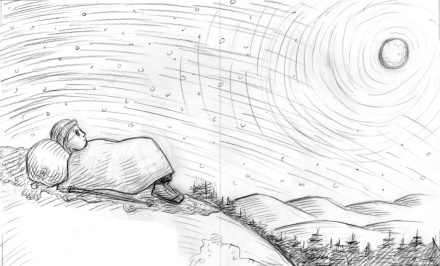
celebrate-picture-books-picture-book-review-grandma-gatewood-hikes-the-appalachian-trail-night-scene-sketch

Copyright Jennifer Thermes, 2018, courtesy of Abrams Books for Young Readers.

Do you have any anecdotes from an event with kids that you’d like to share?

“Are you as old as your house?” Kid’s questions are the best kind of unfiltered honesty.

What’s up next for you?

Not sure how much I can share yet, but I’ve recently finished black & white illustrations for a middle grade novel written by a super talented writer, coming out in early 2019. I’m very excited for that book. And currently, I’m immersed in writing and illustrating a picture book about the story of the island of Manhattan. (“Obsessed” is more like it—my history-geek self is on cloud nine!)

What’s your favorite holiday?

Darwin Day 

Thank you so much for inviting me to be a guest on your blog!

Thank you, Jennifer! I know we’ll all be on the lookout for that middle-grade novel, and I can’t wait to see your next picture book! I wish you all the best with Grandma Gatewood Hikes the Appalachian Trail!
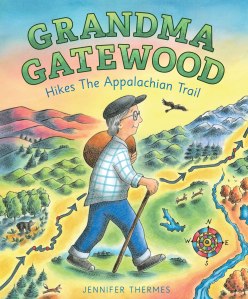
celebrate-picture-books-picture-book-review-grandma-gatewood-hikes-the-appalachian-trail-cover

You can find Grandma Gatewood Hikes the Appalachian Trail at these booksellers:

Abrams BYR | Amazon | Barnes & Noble | Books-a-Million | IndieBound

You can connect with Jennifer Thermes on:

Facebook | InstagramTwitter | Pinterest

Grandma Gateway Hikes the Appalachian Trail Giveaway


I’m excited to partner with Abrams Books for Young Readers in this giveaway of

  • one copy of Grandma Gatewood Hikes the Appalachian Trail by Jennifer Thermes

To be entered to win, just Follow me on Twitter @CelebratePicBks and Retweet a giveaway tweet during this week, April 27 – May 4. Already a follower? Thanks! Just  Retweet for a chance to win.

A winner will be chosen on May 5.

Giveaways open to US addresses only. | Prizing provided by Abrams Books for Young Readers

National Park Week Activity
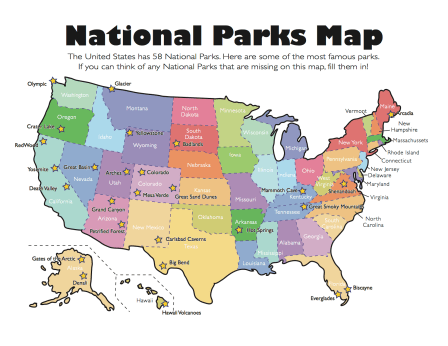
celebrate-picture-books-picture-book-review-National-Parks-Map

National Park Coloring Pages and Map


The National Parks are home to some of the most beautiful scenery in the country. Enjoy these coloring pages while you learn a little bit about four of them. Then check the map and see if there’s a National Park near you!

Acadia National Park | Everglades National Park | Mesa Verde National Park | Rocky Mountains National Park | National Parks Map

Picture Book Review

April 22 – Earth Day

celebrate-picture-books-picture-book-review-kate-who-tamed-the-wind-cover

About the Holiday

Earth Day, the largest global civic-focused day of action, is celebrated in 192 countries and aims to raise awareness of issues concerning the sustainability and protection of our earth. This year’s theme is End Plastic Pollution with the goal of eliminating single-use plastics while promoting global regulation for the disposal of plastics. Plastics are a danger on land, in our oceans, and in our food. 2018 begins a multi-year effort to bring about alternatives to fossil fuel-based materials, one hundred percent recycling of plastics, “corporate and government accountability,” and our own attitudes concerning plastics. Around the world people also celebrate Earth Day by picking up trash along roadways and waterways, recycling, making family and business plans for using less water and electricity, and by planting trees bushes, and flowers that benefit both humans and animals.  For more information on how to get involved, visit the Earth Day Network.

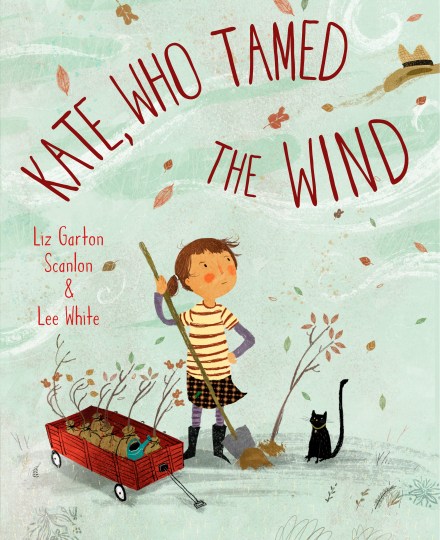
Kate, Who Tamed the Wind

Written by Liz Garton Scanlon | Illustrated by Lee White


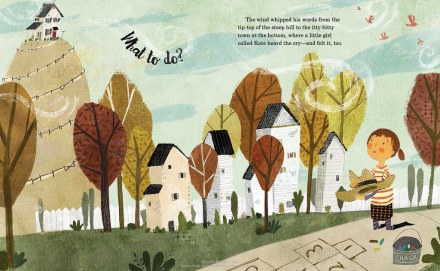
There once was a man who lived in a house on top of very tall, dusty hill. Being so high up, the man’s house captured breezes that set his curtains fluttering and his wind chimes tinkling. Sometimes the wind blew, rattling the shutters, sending the laundry flying from the line, and tearing boards from the house. Inside, the wind whipped, the “table tipped, and the tea spilled.” The man’s hat flew off and out the window, joining the birds who were leaving too.

celebrate-picture-books-picture-book-review-kate-who-tamed-the-wind-spilled-tea

Image copyright Lee White, 2018. text copyright Liz Garton Scanlon, 2018. Courtesy of Schwartz & Wade.

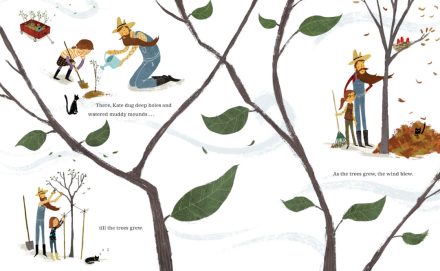
The man cried, “What to do?” Down on the sidewalk below, a little girl named Kate caught the man’s hat and the man’s cry too. Kate wanted to help. She “couldn’t stop the wind,” but she knew of something that could slow it down. When she returned the man’s hat, she also brought a wagon full of saplings. Kate and the man planted the trees, and they tended them as they grew—even while the wind blew.

celebrate-picture-books-picture-book-review-kate-who-tamed-the-wind-kate-catches-hat

Image copyright Lee White, 2018. text copyright Liz Garton Scanlon, 2018. Courtesy of Schwartz & Wade.

“The trees grew, the wind blew, and the time flew. The time flew as the trees grew…and grew…and Kate did too.” As the trees got bigger, taller, and stronger, the “leaves fluttered,” but the shutters quieted and the board stayed still. Inside, the tea brewed, the dust settled down, and the man’s hat stayed put. Even the birds came back. With the house ringed in trees, Kate and the man enjoyed a picnic in the yard, cooled just enough by the gentle breeze.

celebrate-picture-books-picture-book-review-kate-who-tamed-the-wind-planting-trees

Image copyright Lee White, 2018. text copyright Liz Garton Scanlon, 2018. Courtesy of Schwartz & Wade.

Readers will love getting carried away by Liz Garton Scanlon’s breezy lines that through alliteration and rhyme replicate a windy day as things bang, flap, whip, and go flying. As the trees that Kate and the man plant grow and begin to shelter the house from the wind, the rhythm of Scanlon’s text becomes more staccato and rooted. Little Kate is a terrific role model for young readers for her environmental know-how and her stick-to-itiveness as the trees grow from saplings to maturity. The long friendship between the man and Kate is also endearing.

Lee White’s softly hued pages swirl with swipes and swishes that whip curtains, steal laundry, and upend the table and tea. The man’s bewilderment serves as a foil to Kate’s determination and problem-solving, and the difference she makes in the man’s quality of life is evident as the trees grow, their friendship develops, and the wind is finally tamed. Kids will identify with this kind and intelligent child who grows up to be a caring adult.

Beautifully conceived and with lovely details, Kate, Who Tamed the Wind is an environmentally conscious story that will inspire young readers at home and in the classroom.

Ages 4 – 8

Schwartz & Wade, 2018 | ISBN 978-1101934791

Discover more about Liz Garton Scanlon and her books on her website

To learn more about Lee White, her books, and his art, visit his website.

Earth Day Activity

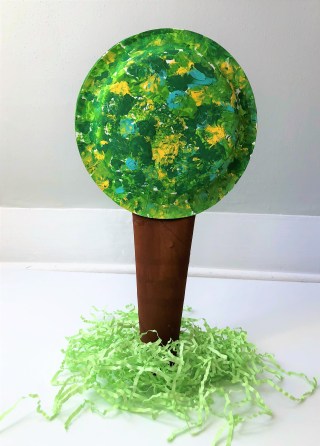
celebrate-picture-books-picture-book-review-paper-plate-tree-craft-2

Paper Plate Tree


On Earth Day children love planting trees in their yard or as part of a community project. With this easy craft, they can also plant a tree on their wall or bulletin board.

Supplies

  • Two paper plates 
  • Paper towel tube
  • Brown craft paint
  • Green craft paint (using a variety of green paints adds interest)
  • Paintbrush, cork, or cut carrot can be used to apply paint
  • Glue or hot glue gun or stapler

Directions

  1. Paint the paper towel tube brown, let dry
  2. Paint the bottoms of the two paper plates with the green (or other color) paints, let dry
  3. Flatten about 4 inches of the paper towel tube 
  4. Glue or tape the flat part of the paper towel tube to the unpainted side of one paper plate
  5. Glue the edges of the two paper plates together, let dry.
  6. Straighten the tree so that it can stand up, or hang your tree on a wall, bulletin board, in a window

Picture Book Review


April 3 – National Find a Rainbow Day

celebrate-picture-books-picture-book-review-ava-and-the-rainbow-who-stayed-cover

About the Holiday

April brings plenty of showers and downright downpours that give rainbow lovers lots of opportunities to see this colorful phenomenon. Legend has it that at the end of every rainbow waits a pot of gold—but if you aim to find it, watch out! It’s guarded by a tricky Leprechaun. Rainbows result when light from the sun reflects and refracts through water droplets in the sky, creating a spectrum of colors. Whether people ooh and ahh over the luck, the science, or the beauty of rainbows, there’s no denying that they always attract attention and create smiles.

I’m happy to be partnering with HarperCollins in a giveaway of a copy of Ava and the Rainbow (Who Stayed)! You’ll find the details below.

Ava and the Rainbow (Who Stayed)

By Ged Adamson


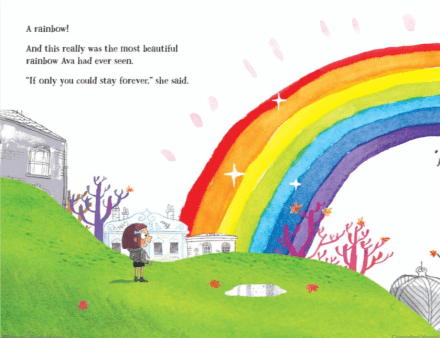
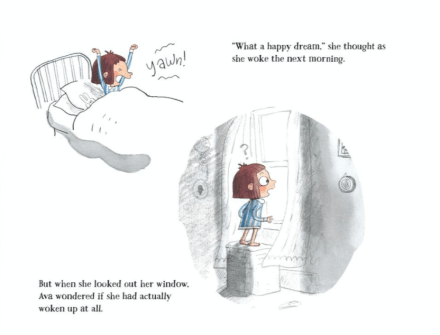
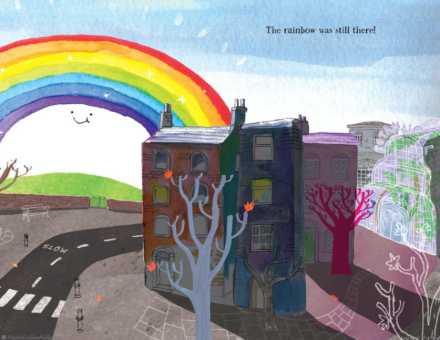
After the rain was over and the sun began to peek out from behind the clouds, Ava was excited because she knew she’d get to see a rainbow. When she reached the perfect rainbow-viewing spot, she was amazed. Up in the sky was “the most beautiful rainbow Ava had ever seen.” She wished it could stay forever. That wish even carried over into her dreams that night, and when she woke up Ava thought she might actually still be asleep. Why? Because when she looked out the window, “the rainbow was still there!”
celebrate-picture-books-picture-book-review-ava-and-the-rainbow-who-stayed-beautiful-rainbow

Copyright Ged Adamson, 2018, courtesy of HarperCollins.

It was even still glowing over the town that night. It didn’t take long for people to start coming from all over to see the famous “rainbow who had decided to stay.” The townspeople loved all the attention—and the customers. Shopkeepers held rainbow-inspired sales, rainbow souvenirs like T-shirts, snow globes, and toys flew off the shelves, rainbow science became one of the most popular lectures by university professors, and a rainbow even became the new town mascot. For weeks there were special events and festivities all centered around the rainbow.

celebrate-picture-books-picture-book-review-ava-and-the-rainbow-who-stayed-ava-wakes-up

Copyright Ged Adamson, 2018, courtesy of HarperCollins.

Ava loved to talk to the rainbow. “She introduced him to her friends…sang to him…and showed him all her favorite books and toys.” The rainbow even stayed throughout the winter, shivering in the cold. When spring rolled around, people seemed to have forgotten all about the rainbow. They didn’t look at him like they used to. In fact, they didn’t look at him at all.

As Ava walked around town, she saw rainbow souvenirs in the trash and graffiti covering signs advertising the rainbow. When she saw the rainbow, Ava was shocked to see him plastered with ads and sporting antennae of all kinds. The rainbow was sad. “‘How could they do this to something so special?’ Ava said in despair.” She cheered up when she saw a crowd of people with cameras rushing toward her and the rainbow, but they were only interested in a little bird in a nearby tree.

celebrate-picture-books-picture-book-review-ava-and-the-rainbow-who-stayed-rainbow-stayed

Copyright Ged Adamson, 2018, courtesy of HarperCollins.

It seemed that the bird was a Russian water sparrow and would only be there for a few hours before continuing its flight. “We’re so lucky!’” someone said. “‘Such a rare and precious sight!’” The rainbow overheard this exclamation and thought about it. The next morning when Ava went to visit the rainbow again, he was gone. Ava hoped that someday he’d return, and every time it rained she looked for him. One day he did come back, and was “a rare and precious sight indeed.”

celebrate-picture-books-picture-book-review-ava-and-the-rainbow-who-stayed-sweet-rainbow

Copyright Ged Adamson, 2018, courtesy of HarperCollins.

Like a rainbow itself, Ged Adamson’s story is multi-layered and reveals a spectrum of ideas about the often-fleeting moments in life—from wishes and dreams to the unusual or funny even to fads and fame. Learning how to truly appreciate these ephemeral experiences as they happen, to let go of what can’t or shouldn’t be controlled, and to stay true to your own nature goes a long way towards living a happy life. Children will be captivated by Adamson’s charming tale and his lush, whimsical art, which is always expressive of a child’s joy and empathy and which sweetly depicts the better understanding they gain as they grow through life’s experiences.

An enchanting story in itself and a wonderful way to engage children in discussions of true value and happiness, Ava and the Rainbow (Who Stayed) would make a terrific addition to home and classroom bookshelves.

Ages 4 – 8

HarperCollins, 2018 | ISBN 978-0062670809

Discover more about Ged Adamson, his books, and his art on his website.

National Find a Rainbow Day Activity

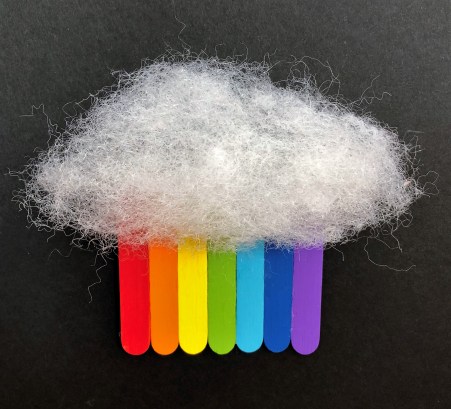
celebrate-picture-books-picture-book-review-rainbow-magnet-craft

Mini Rainbow Magnet


If you’re stuck on rainbows, you can make this mini rainbow to stick on your fridge or locker!

Supplies

  • 7 mini popsicle sticks
  • Paint in red, orange, yellow, green, blue, Indigo, violet (ROYGBIV)
  • Adhesive magnet
  • A little bit of polyfill
  • Paint brush
  • Glue or hot glue gun

Directions

  1. Paint one popsicle stick in each color, let dry
  2. Glue the popsicle sticks together side by side in the ROYGBIV order, let dry
  3. Roll a bit of polyfill into a cloud shape and glue to the top of the row of popsicle sticks
  4. Attach the magnet to the back of the rainbow


Picture Book Review