May 9 – It’s Get Caught Reading Month

celebrate-picture-books-picture-book-review-the-whisper

About the Holiday

Supported by the Association of American Publishers (AAP), Get Caught Reading Month promotes literacy and reminds people of all ages how much fun reading is. Begun in 1999 by former Congresswoman Pat Schroeder, President and CEO of AAP, the initiative brings together publishing industry executives, authors, illustrators, teachers, librarians, politicians, celebrities, and readers to spread the word about the joys of books. To join the celebration, take a picture of yourself or a friend reading, hold a book drive, challenge yourself to a reading goal, and/or read to someone else.

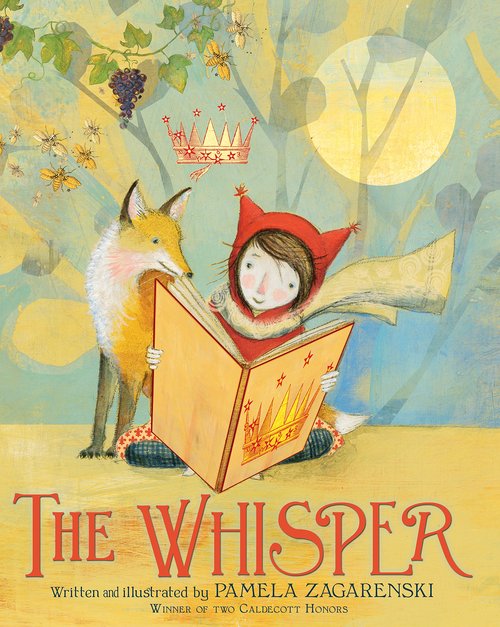
The Whisper

By Pamela Zagarenski


A little girl loves stories and the magical realms they can take her to. One day while waiting for school to be dismissed, she spies a book on a shelf. Her teacher allows her to take it home with her, and the little girl happily runs off with it when the clock strikes 3:00. On the way home, she doesn’t notice that all the letters are escaping from the book or that a wily fox is catching them in a net.

At home she secludes herself in her room, excited to read the mysterious book. She turns the pages, awed by the beautiful pictures. But by the time she has finished, she has tears in her eyes. “Where were the words? Where were the stories?” The girl flips through the book again, but this time she hears a small whisper: “Dear little girl, don’t be disappointed. You can imagine the words. You can imagine the stories.”

The whisper seems so knowing that the girl does at it suggests. She turns to the first page where a blue bear followed by a beekeeper walks under a honeycomb sun toward a brown bear. The girl stares at the picture and thinks of a title: Blue Bear’s Visit. Her story begins: “Blue Bear arrived on the first day of spring. He promised…”

Warming to the idea of creating stories, the girl examines the second picture. She notices the same white rabbit that was in the first picture. In the foreground a “magnificent ox” is listening to a man whispering into its large, soft ear. The Secret, the little girl titles this story, which starts: “Mr. Ox, you must please promise not to tell anyone, but we need your help. Last week…”

With the third picture the words tumble out more easily, forming sentences that give life to the massive white elephant, regal lion, and that rabbit again who are traveling the sea in a long, open boat. The Quest, she calls it. In Tigers Prayer, preparations are being made: tea is brewing, a clown with a pointed hat plays his accordion, a windhorse jumps through hoops, and the rabbit rides a golden ring as a lion hears what Tiger has to say. A Birthday Party comes next, and it seems Pan has planned a very secret party. An owl perches in the crook of a tree asking for the password with a “Hoo, Who?” which is answered quickly because the vanilla cake with raspberry filling and vanilla cream frosting holding 6 candles must be delivered.

The Magical Cloak sees the little girl’s imagination truly take flight as she decides the man in the “elaborate coat” is a wizard or magician whose bubbles come to life once released from the blower. Enormous whales now fill the harbor. They are beautiful, but something must be done….Next, hurry to meet the owl! He is picking up passengers at midnight. But what does the golden key in his beak open? Only the story The Golden Key locked in the little girl’s mind will tell.

Hours go by as the little girl creates tales for each picture in the book. As the night grows late, she sleeps, carried into slumber on dreams woven from the pictures and stories she imagined. When she wakes up, the girl wishes to spend more time with her new friends, but it’s time for school so she gathers up the book and hurries away.

On the path to school she meets a fox who is carrying a bag. “Excuse me, little girl,” says the fox. “I believe I have the words to your book.” The fox then explains how he caught the words as they spilled from the pages the day before. The fox gives her his parcel, but asks for a favor. The girl is happy to oblige and lets the fox stand on her shoulders to reach a bunch of grapes dangling from a nearby vine.

The girl rushes into school and apologizes for being late. She relates the story of the fox and the words and the magical night she has spent making up tales for the pictures in the book. “I have so many stories to tell you,” says the girl to her teacher. “‘I can’t want to hear,’” the teacher replies with a smile.”

Opening a book by Pamela Zagarenski is to fall into an alternate realm of such beauty and imagination that you forget the real world exists.  Her paintings are composed of rich, regal hues swirling with images and designs that overlap and float to create the kind of experience only the deepest, most complex dreams allow. The characters and details follow page to page uniting the pictures and, subtly, the stories the little girl discovers in them: The teapot, once introduced, waits under a tree on the next page and rides the waves of the whale-filled sea in the next. The bees and the rabbit are constant companions on each spread, and the animals will fill the reader with awe.

The little girl’s imagined stories are tantalizing with just the right mix of the mysterious and the tangible to entice readers to add more. The frame of the Aesop Fable The Fox and the Grapes is inspired and could lead to a conversation about how “life is what you make it.”

The Whisper is a book readers will want to linger over and dip into again and again, and would be especially fun on those days when there’s “nothing” to do. It makes a beautiful gift for any occasion.

Ages 4 – 9 (this book would also appeal to adults)

Houghton Mifflin Harcourt, 2015 | ISBN 978-0544416864

Gardening for Wildlife Month Activity

In addition to Get Caught Reading Month, May is Gardening for Wildlife Month. It’s the perfect time to celebrate the joys and colors of spring and enjoy the many plants, flowers, and wildlife nature provides. Whether your garden is small or large, just being planted or already blooming, you can be mindful to make yours wildlife friendly to help and protect the environment.

This week’s crafts and activities will revolve around gardens and plants of all types. I hope you enjoy them!

celebrate-picture-books-picture-book-review-vase

Painted Bottle Vase

Do you often pick up a smoothie or other drink at the grocery store and then just throw away the glass or plastic bottle? Those containers, with their elegant shapes, make beautiful vases with just a little paint!

Supplies

  • Plastic or glass bottle
  • Multi-surface craft paint in your favorite color
  • Paint brush
  • Wax paper

celebrate-picture-books-picture-book-review-vase-top

Directions

  1. Wash and thoroughly dry your bottle.
  2. Pour 3 to 5 tablespoons of craft paint into the bottle
  3. Invert the bottle on the wax paper
  4. Let the paint drip down the sides of the bottle, this may take several hours to overnight
  5. When the paint reaches half-way down the sides of the bottle, you can “help it along” with the paintbrush, filling in any empty spaces
  6. Let the bottle sit, inverted, until the paint dries. This can take one to several days, depending on the atmosphere.
  7. When the paint is dry, use the vase for artificial flowers.

Join me tomorrow to see how to make flowers to go in your vase!

Picture Book Review

April 30 – Save the Frogs Day

celebrate-picture-books-picture-book-review-i-dont-want-to-be-a-frog

About the Holiday

Frogs and other amphibians are some of the most threatened species on our planet. Pollution, loss of habitat, climate change, and invasive species are just some of the causes of amphibian extinctions. Save the Frogs Day aims to educated the public and raise awareness of the declining frog and amphibian populations and to promote conservation of their environments to ensure their survival.

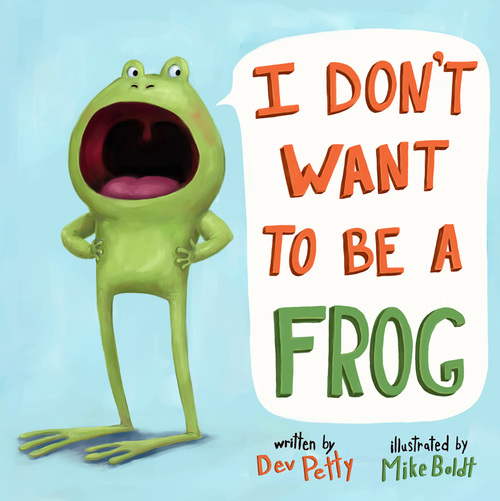
I Don’t Want to be a Frog

Written by Dev Petty | Illustrated by Mike Boldt


“I want to be a cat,” a little frog announces to his father. “You can’t be a cat,” his dad answers, which elicits the inevitable “Why not?” from his son. His dad isn’t quite ready for this conversation and gives him the standard “because you’re a frog” response.

Well, it turns out the little frog would rather be almost anything other than what he is. As he rattles off a list of alternatives that he considers much better, his dad warms to the game and counters each of his son’s suggestions with the realities of life (at least their life).

When little frog opines that he’d like to be a rabbit, his dad points out that he doesn’t have long ears. Being a pig seems like an attractive option, but little frog’s dad tells him he doesn’t have a curly tail or eat garbage. His son thinks garbage for dinner sounds okay, but his dad disagrees.

While both son and father believe being an owl would be “the greatest thing ever,” three things are standing in the way: Frogs don’t have wings, they don’t look wise, and they can’t spin their heads around.

So what’s so bad about being a frog? It’s “too wet,” “too slimy,” and there’s “too much bug eating,” little frog complains. Just then a wolf sneaks up on the father-son duo and wants to know why the little guy is so glum. Without turning around to see who he’s talking to, the frog reveals his plight.

Well, says the wolf, I’ll tell you a secret. With glee he explains that he revels in eating cats, rabbits, pigs, and owls. In fact, just talking about it makes him hungry. But “guess the one thing I never eat,” the wolf urges. “Badgers?” guesses the little frog. But no, the answer is “frogs.” And why? Because they are “too wet and slimy and full of bugs.”

Wiser for this fresh perspective, the young frog sends the wolf off with a hearty, “I guess you can’t fight nature. We are what we are. You are a fierce hunter.” 

As the wolf walks away all’s well that ends well—except not so much for the creature who next happens upon the scene!

Dev Petty’s sassy-in-a-good-way young frog’s identity crisis is pure fun! The notion of self-acceptance and that each person is built, has talents, and embodies skills just right for who they are is playfully presented by Petty’s sweet father-and-son team. The humorous, escalating dialogue will keep kids laughing, and the surprise ending is a perfect twist.

Mike Boldt’s olive green frogs are a delight as they trade off assurance and skepticism in their life-lesson conversation. The dad, initially mystified by his son’s pronouncements, discusses the issue with patience and genuine curiosity, his eyes registering cunning and understanding behind oversized glasses. His son, wide-eyed and vocal, displays the honesty of children with questions. Boldt’s illustrations of the rabbit, pig, and owl that so captivate the young frog juxtaposed with the father’s objections are comical joy, as are the frogs’ looong legs and expressive faces. And the final scenes with the enlightening wolf, whose head spans two pages, offer more laughs as the father and son resolve their differences.

Adult readers should be prepared—and will be happy—to read I Don’t Want to be a Frog again and again!

Ages 3 – 7

Doubleday Books for Young Readers, 2015 | ISBN 978-0385378666

Save the Frogs Day Activity

celebrate-picture-books-picture-book-review-frog-matching

Hop Along Matching Game


Hop along now and help these frogs! Each of these fantastic frogs has a twin, but they’ve gotten separated. Can you spot the identical pairs? Print out the Hop Along Matching Game and draw a line between the pairs.

picture book review

April 28 – Workers’ Memorial Day

celebrate-picture-books-picture-book-review-brave-girl

About the Holiday

Some jobs are so dangerous that workers get hurt or even die doing them. Around the world organizations have been established to help industries provide safer working environments for their employees by establishing standard rules and regulations for buildings, machinery, working hours, and more. Unions and other groups have also been founded that represent workers to ensure their rights are upheld and their needs are met. Today we honor the sacrifices of workers in dangerous professions and raise awareness for safe working conditions.

Brave Girl: Clara and the Shirtwaist Maker’s Strike of 1909

Written by Michelle Markel | Illustrated by Melissa Sweet


Among the immigrants sailing to New York, stands five-foot-tall Clara Lemlich. She may not know it now, but she’s going to change her new city. While her father can’t find work, Clara gets a job in the garment industry, which hires school-age girls to make women’s clothing. Instead of going to school, Clara spends her days hunched over her sewing machine in a dark, smelly factory with many other girls, making clothes as fast as she can.

The rules of the factory are severe. For minor mistakes workers can be fined or worse—fired, leaving their families without an income. The doors are locked so the girls can’t leave without being inspected to ensure they haven’t stolen anything. And the workers must toil long into the night. Despite it all Clara is determined to get an education even though it means walking to the library after work and missing sleep to read her lessons. 

At the factory the girls become friends and reveal stories and secrets. The working conditions make Clara angry. She hears that the men at the factory want to form a union. If all the workers team up, they can hold a strike and force the management to treat them better, the men say. But they don’t think the girls are tough enough.

Clara knows what the girls are capable of. Every day she talks to her friends and the other women, urging them to fight for their rights—and they do! But it’s not as easy as the men predicted. The bosses don’t want to give in. In fact Clara’s life is in danger! She is beaten and arrested. Despite the intimidation she continues to picket. These small strikes make little difference, however—the bosses just hire new girls and the work continues.

Clara and other union leaders think only a huge strike by all workers in every garment factory in New York will cause the bosses to listen and make changes. At a union meeting workers pack the seats to listen to leaders from across the country. Not one of them recommends such a large strike. Clara can keep silent no more. She moves to the front of the hall and calls out. People lift her to the stage. Shouting “Unity is strength” she rallies the crowd and begins the largest strike of women workers ever in United States history.

The next morning thousands of women take to the sidewalks, leaving their sewing machines empty and silent. New York is stunned! Newspapers call the strike a “revolt,” and the girls an “army.” But this is really an army of children—the girls range in age from only 12 to 25 years old. Clara knows how to lead and motivate the girls. She gives rousing pep talks, sings, and stands up to thugs sent to harass them.

All winter the girls join the men strikers. They are starving and cold and become the inspiration for newspaper articles and fundraising. Many wealthy women donate to their cause and join them on the picket lines. Finally the bosses relent. They agree to the formation of unions in their factories, raise salaries, and shorten the work week. Factory workers in Philadelphia and Chicago take heart from Clara’s work and improve conditions in their cities.

Even though Clara is young and small, she proves that anyone can right wrongs and make a difference.

The final pages include more information about the garment industry in the early 1900s as well as a bibliography.

Michelle Markel’s Brave Girl is a spirited biography of Clara Lemlich, clearly outlining the life and working conditions of immigrants in the early 1900s—especially industries’ use of children to fill low-paying, oppressive jobs. This true-life story of a girl who wouldn’t give up or give in is told with pride and balance, touching on the dangers Clara faced in a sensitive manner appropriate for children. Overall, the idea that one person can make a difference no matter how big or how old shines through, making this not only a tale of the past, but an inspiration for today’s children and the future.

Melissa Sweet cleverly combines watercolor and gouache paintings with colorful fabric, ribbon, sewing pattern paper, and ledger pages to create illustrations fitting to the story. The pictures appear sewn onto the pages with straight, zigzag, and embroidery stitches, and the vibrant colors depict the fiery nature of Clara and all the workers who strove for better lives.

Ages 4 – 9 (and up as Brave Girl makes a wonderful teaching text)

Balzar + Bray, Harper Collins, 2013 | ISBN 978-0061804427

Workers’ Memorial Day Activity

celebrate-picture-books-picture-book-review-dream-job-application

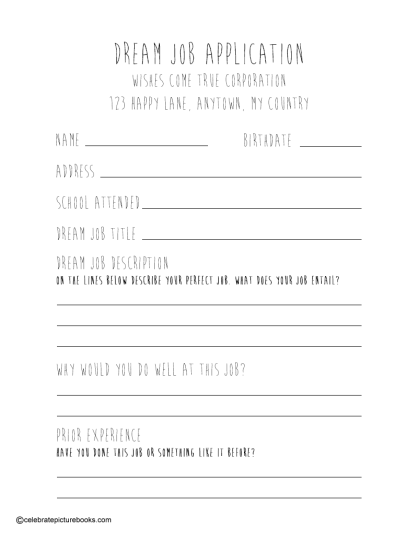
Dream Job Application


Work isn’t working when you love your job—it’s fun! What is your perfect job? Is it working with animals? Playing a sport? Being an artist, scientist, entrepreneur? Fill out this application and get started on following your dreams! Print the Dream Job Application below!

Dream Job Application 

April 21 – Poem in Your Pocket Day

Wet Cement: A Mix of Concrete Poems by Bob Raczka picture book review

About the Holiday

Poem in Your Pocket Day has become one of the favorite events of National Poetry Month. Requiring nothing but a pocket and a treasured poem, the day is a perfect way for poets, non-poets, and poetry lovers of all types to interact with this beloved art form. Originally enacted in 2002 by the Office of the Mayor in conjunction with the New York City Departments of Cultural Affairs and Education, the holiday was embraced as a national observance by the Academy of American Poets in 2008.

Here are some suggestions from the Academy of American Poets on how to spend the day. So clean the lint, coupons, old receipts, tissues, and loose change out of your pockets and replace them with a poem! Those crumpled bits may even inspire your own poem—try it!

  • Post pocket-sized verses in public places
  • Create and distribute bookmarks with your favorite lines of poetry
  • Start a “poems for pockets” giveaway at school or work
  • Add a poem to your email footer
  • Post lines from your favorite poem on your Twitter, Tumblr, Instagram, Facebook, or Snapchat
  • Send a poem to a friend

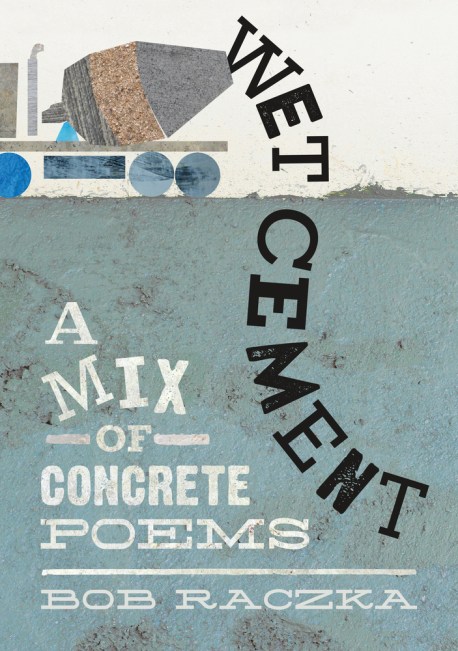
Wet Cement: A Mix of Concrete Poems

By Bob Raczka


When you envision a poem in your head, what do you see? A block of lines? A square or a rectangle? Well, sweep that image from your mind because in Bob Raczka’s Wet Cement: A Mix of Concrete Poems, verses become actions, objects, puzzles, and natural phenomena. Not only are the poems shaped to illustrate their theme, the titles use clever imagery as well.

As you encounter the poem hanger you’ll see that “han” has broken away and is dangling from the hook of g in “ger.” The words of the poem itself are shaped like a hanger and contain a giggle-invoking twist: “I hang out in blue jeans and comfy old shirts. I hang out in blouses and long frilly skirts. I hang out in sport coats and sweaters and shawls. I even hang out with no clothes on at all!”

You might want to get your baseball mitt out before you read homer, in which the first line zooms straight as a pitch and the second—written backwards and at an upward angle—soars like a homerun hit: “The pitcher hurls his hummer toward the slugger squeezing lumber CRA / CK! The slugger slams the hummer toward the bleachers for a homer.”

But don’t put that mitt away just yet! You may need to catch the o, which has escaped from the title p p-up. And if you’ve ever played t-ball, baseball, softball, or even wiffleball, you’ll cringe in recognition of this short but pointed poem.

The sky darkened by night in Dipper and by clouds in Lightning holds two poems expressing very different thoughts. In the title Dipper, the second p has floated to the top of the page where it hangs like a miniature reflection of the dipper-shaped poem, which reads: “Way down there on earth you hold firefly jars, filled up to their lids with light. Up here in the sky, I’m a vessel of stars, my brim overflowing with night.” In the title LIGHTNING, the L strikes the I to create the familiar jagged crack echoed in the shape of the verse: “from a bad mood sky, / tears, / then a jag- / ged slash- / ing flash of anger, / ear- / splitting, / obnoxious, / a cloud tantrum”

Any writer will love poeTRY which is such a clever take on the word as well as the revision and editing process:

“poetry is about taking away the words you don’t need

poetry is taking away words you don’t need

poetry is words you need

poetry is words

try”

Put simply, Bob Raczka’s concrete poems will make you smile. Even more than that, you’ll find yourself wanting to carry this book around, saying “Look at this!” to everyone you meet. Raczka calls these poems “word paintings”—because a poet “uses words like colors to paint pictures inside your head.” If creativity is the talent to present the world in new and surprising ways, making connections that enhance life, then Wet Cement is artistry at its best!

Ages 5 – 9 and up (adults will enjoy these poems as much as kids)

Roaring Brook Press, 2016 | ISBN 978-1626722361

Poem in Your Pocket Day Activity

CPB - Pocket Poem Craft

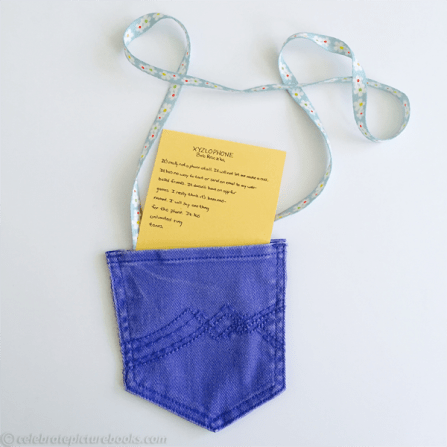
Pocket Poem Carrier


Sometimes you just need a little more inspiration in your day. Here’s a cute way to carry your favorite poem—today and every day!

Supplies

  • An old pair of pants or shorts with back pockets
  • A decorative shoelace
  • Thread or fabric glue
  • Needle
  • Paper
  • Your favorite poem or a poem you write yourself
  • Pen

Directions

  1. Cut one back pocket off an old pair of pants or shorts
  2. Use the shoelace at its full length or cut to desired length
  3. Inside each edge of the pocket sew or glue the ends of the shoelace to make a strap
  4. Print your favorite poem on the paper
  5. Insert the poem into the pocket poem carrier
  6. Take your poem with you and share it with your friends!

April 18 – It’s National Inventor’s Month

The Most Magnificent Thing by Ashley Spires picture book review

About the Holiday

Perhaps April was chosen as Inventor’s Month because the blossoms of early spring echo the flourish of ideas that come from fertile minds. This month honors all the men and women throughout history who dared to think differently and changed the world. Today, that proud tradition continues in the excitement of school labs and classrooms, through online courses and computer technology, and in private homes where people of all ages are pondering and creating the next big thing. If you have a knack for innovation or invention, take time to sit down and work on your ideas today.

The Most Magnificent Thing

By Ashley Spires


A little pony-tailed girl and her puppy do everything together. They race, eat, explore, and relax. When she makes things, her best friend unmakes them. One day the girl has a brilliant idea—she is going to make “the most MAGNIFICENT thing!” In her mind it’s going to be “easy-peasy.” She knows exactly how it will look and how it will work.

With her faithful assistant following at her heels, the girl gathers materials and goes to work on the sidewalk outside her home. The girl “tinkers and hammers and measures” while her assistant “pounces and growls and chews.” When the little invention is finished, they stand back to examine it. Hmmm…it doesn’t look quite right. It doesn’t feel quite right either. In fact it is all wrong! The girl tries again.

She “smooths and wrenches and fiddles” while her assistant “circles and tugs and wags.” It still turns out wrong. Determined to make her vision reality, she gives it another go…and another…and another. She makes her invention different shapes, gives it various textures, measures out assorted sizes. One attempt even smells like stinky cheese! But none of these creations are MAGNIFICENT.

People stop by and offer encouraging—even admiring—remarks, but the little girl just gets mad. Can’t they see how wrong her invention is? In her anger the little girl works at a fevered pitch, shoving parts together, her brain fogged by “all the not-right things.” In her haste she hurts her finger. This is the last straw. She explodes and declares that she QUITS!

The ever-watchful assistant suggests a bit of fresh air. The girl takes her puppy for a walk and at first her feelings of defeat stay with her. Little by little, though, she pays attention to the world around her and her mind clears. Coming home, she encounters all the wrong things she has made lined up on the sidewalk. Her disappointment threatens to return, but then she notices something surprising—there are parts of each iteration that she likes!

After studying each earlier attempt, she knows just what to do! Slowly and carefully she once more begins to tinker. At the end of the day she and her assistant stand back to look. The machine may lean a bit, and be a little heavy, and it may need a coat of paint…but as the girl and her puppy climb aboard, they both agree that “it really is THE MOST MAGNIFICENT THING!”

You are never too young or too old for Ashley Spires’ inspiring and inspired story. The journey from idea to realization—so often fraught with disaster (or apparent disaster)—is depicted here honestly and with humor as the on-going process it is. Step-by-step the little girl thinks, gathers materials, tinkers, discovers, tinkers some more, and triumphs. It is this last step that is so “magnificently” presented—it’s only by not giving up that success can be achieved.

Spires’ tale is a delight of language—the girl “smooths, wrenches, fiddles, twists, tweaks, and fastens, pummels, jams, and smashes.” Likewise, her illustrations wonderfully depict the changing emotions of this thoughtful, steely-eyed, shocked, and ultimately thrilled young inventor. Her faithful puppy is a charming companion and foil, and kids will love examining the early inventions that lead up to the final product.

The Most Magnificent Thing is a fabulous book to keep on any child’s or adult’s bookshelf for those times when inspiration hits but achievement seems elusive.

Ages 3 – 7 and up (creative types of all ages will enjoy this book)

Kids Can Press, 2014 | ISBN 978-155453704

National Inventor’s Month Activity

CPB - Inventor's Tool Kit II (2)

Inventor’s Tool Kit


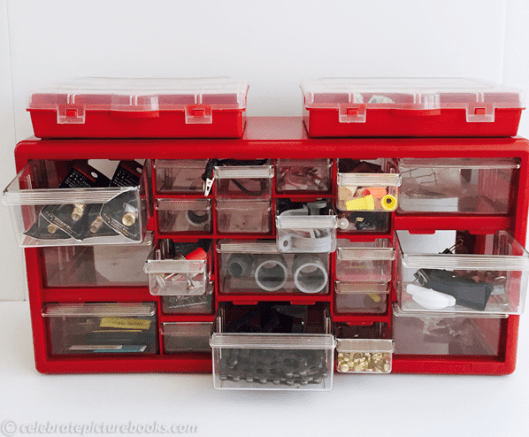
Every idea begins as a jumble of seemingly unrelated parts. Gathering whatever types of material inspires you and keeping it in a box ready to go when inspiration hits is a great way to support innovation and spark experimentation.

Supplies

  • Small parts organizer with drawers or compartments, available at hardware stores and craft stores
  • A variety of parts or craft materials that can be combined, built with, or built on
  • Some hardware ideas—pulleys, wheels, small to medium pieces of wood, wire, nuts, bolts, screws, hooks, knobs, hinges, recyclable materials
  • Some craft ideas—clay, beads, wooden pieces, sticks, paints, pipe cleaners, string, spools, buttons, glitter, scraps of material, recyclable materials

Directions

  1. Fill the organizer with the materials of your choice
  2. Let your imagination go to work! Build something cool, crazy, silly, useful—Amazing!

April 16 – Record Store Day

The Bear and the Piano by David Litchfield picture book review

About the Holiday

Vinyl has made a resurgence—and why not?! Records have so much to offer music lovers, from the awesome album art to extras like posters, lyrics, photos and more. Those special packages are all about the relationship between the artists and their fans. All over the world Record Store Day celebrates this art form and the shops—both large and small—where you can find albums by your favorite musicians. Entering a record store is an adventure in itself. Flipping through the bins you might discover a new artist, an old album you don’t have, or an intriguing concept you just have to experience for yourself. Today, visit a record store near you and see how what once seemed old is new again!

The Bear and the Piano

By David Litchfield


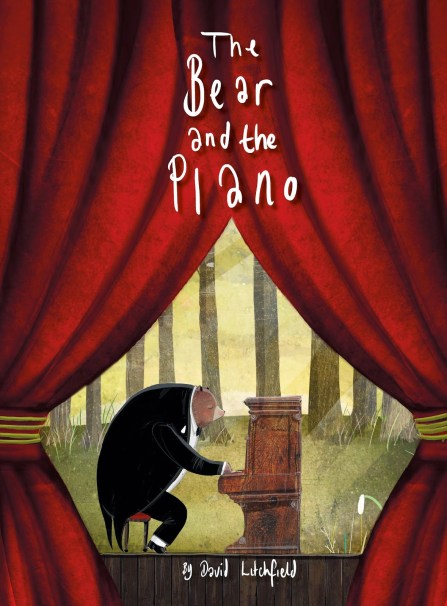
One day a bear cub happens upon a piano in a clearing in the middle of the forest. Wondering what it could be, he approaches and lays his paw on the keys. The strange thing goes PLONK!—such an awful sound. The bear cub leaves, but is drawn back again and again for days, months, and years. Over time the bear grows up and learns to play the piano. The music is beautiful and transports him to strange and wonderful places.

Other bears soon gather in the clearing to hear the “magical melodies” the bear plays. The bear is happy entertaining his friends. One night a girl and her father hiking in the forest come to the clearing. They listen and then tell the bear what his strange instrument is. They invite him to move to the city with them, where he will be able to play grand pianos for hundreds of people. The music he will play and hear “will make your fur stand on end,” they tell him.

The bear is conflicted. One on paw he knows that leaving the forest will make the other bears sad; on the other he longs to explore the world, to play the piano better, and master more intricate music. He decides to go with the girl and her father.

In the city the bear is a sensation! He quickly becomes a celebrity with his name on marquees and playing to sold-out crowds. The bear records albums that go platinum, he appears on the covers of magazines, and wins awards. His experience is everything he could ever wish for. But deep in his heart there is another longing. He misses the forest and his friends there.

He decides to leave the city and rows a boat across the expanse of water to his old home. Excitedly he runs to the clearing, but when he arrives everything has changed. His piano is gone and there are no friends to greet him. The bear worries that everyone is angry at him for leaving, or worse—that they have forgotten him.

Suddenly an old friend peeks around the trunk of a tree. The bear hails him with a hearty “Hello!”, but the other bear remains silent then turns and runs into the trees. The bear follows plunging deeper and deeper into the forest. Suddenly he stops. In front of him is a sight that makes his fur stand on end.

There, protected in the shade of a tree and surrounded by the albums, magazines, t-shirts, and other mementos of the bear’s success sits the old piano. The bear’s friends have not forgotten him and they are not angry. They are proud and welcoming. The bear tells them all about his adventures, and then he sits down to play again—for the most important audience of all.

David Litchfield’s very original and moving story is such a wonderfully conceived microcosm of the changes life brings. Stumbling upon a talent, cause, or inspiration; opening up to other influences; and acting on hard decisions are all part of growing up. These concepts are honestly and sensitively presented, and the reassuring ending brings comfort as well as a tear to the eye.

Litchfield’s touching illustrations—rendered in gorgeous hues of browns, greens, yellows, and blues—brim with yearning and mystery. The piano sits in a misty glow, silent and draped with vines, when the cub discovers it. While the bear grows and learns to play, the air clears and the colors become brighter. As the bear moves to the city, the pages glint and swirl with his enormous achievements. But as the bear sits on a rooftop one night looking out toward his old home, the lights around him are the elements of normal life—lamps, stars, the moon glimmering on the water. His nostalgia to be home will resonate with both kids and adults. The Bear and the Piano makes a wonderful gift for any age—especially as a graduation or new-job gift—and is a must-have for anyone’s personal library.

Clarion Books, Houghton Mifflin Harcourt, 2016 | ISBN 978-0544674547

Record Store Day Activity

CPB - Record Bulletin Board

Make a Record Chalkboard Bulletin Board


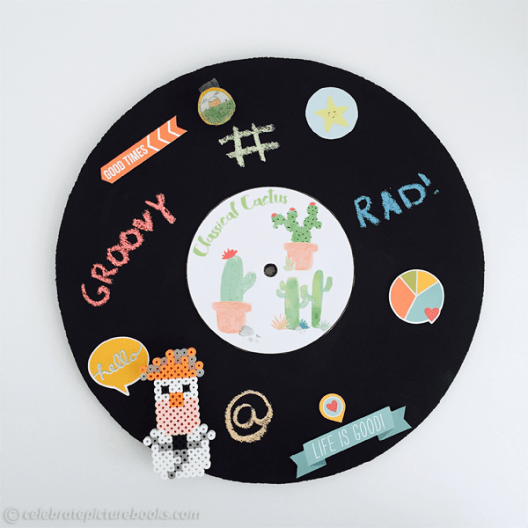
Would you love to make a record some day? Why wait? In this fun craft you can create your own record bulletin board—and even create your own label art! While this record may not spin on turntables around the world, it will drop in a more important place—your very own room!

Supplies

  • Printable Record Label for you to design
  • Foam board, or a corkboard at least 12-inches x 12-inches square
  • Adhesive cork
  • A 12-inch round plate, record, or other round object to trace OR a compass
  • Chalkboard paint, black
  • X-acto knife
  • Paint brush or foam paint brush
  • Mounting squares

Directions

  1. Cut a section from the adhesive cork a little larger than 12 inches by 12 inches
  2. Affix the cork to the foam board
  3. Trace the 12-inch round object onto the cork/foam board OR use the compass to make a 12-inch circle
  4. With the x-acto knife, carefully cut out the circle (adult help needed for children)
  5. Cut out a ¼ -inch circle in the center of the record bulletin board
  6. Paint the cork, sides and inside the spindle hole with the black chalkboard paint. Let dry
  7. Print the label template and design your own record label
  8. When the paint is dry, glue your label to the center of the bulletin board
  9. Hang your bulletin board with the mounting squares
  10. Decorate!

April 14 – Look up at the Sky Day

celebrate-picture-books-picture-book-review-the-knowing-book-cover

About the Holiday

Some holidays require rushing around, shopping, and lots of preparation. Today’s celebration is just the opposite! Today is dedicated to slowing down, looking up, and appreciating the beauty above you. Whether the day is sunny, cloudy, rainy, or downright stormy, the sky is always intriguing. Today take some time to scan the skies; make shapes of the clouds, appreciate how tall some trees really are, watch birds flit overhead, or just take in the depth of color. Be inspired – and Relax!

The Knowing Book

Written by Rebecca Kai Dotlich | Illustrated by Matthew Cordell


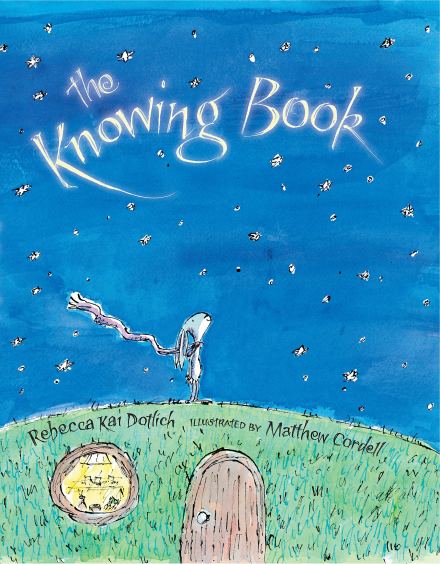
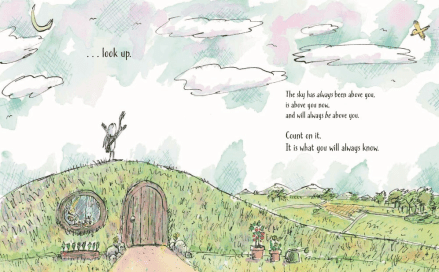
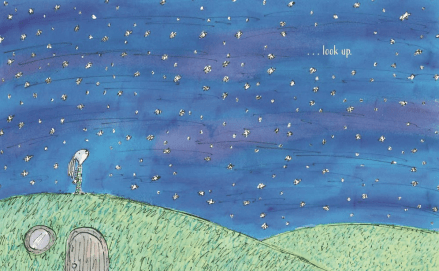
A little bunny opens the door to a wide world. But before starting on life’s adventure, the bunny receives some gentile advice and reassurance: As you start on your journey, it’s good to begin with something you know. If you wonder what that is, look up at the sky. You know it has always been above you and will remain that way forever. Taking your first steps, carry that assurance with you as you choose which door, path, or trail you will take. You may get lost, but embrace the hum or cry that comes from inside because they will help.

celebrate-picture-books-picture-book-review-the-knowing-book-look-up

Image copyright Matthew Cordell, 2016, text copyright Rebecca Kai Dotlich. Courtesy of Boyds Mills Press.

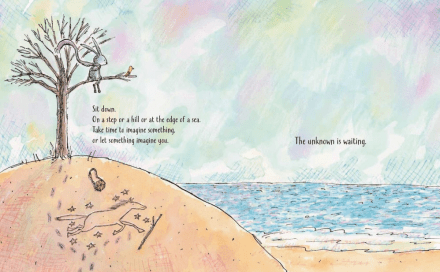
You can be sure that magic is all around you. But you must look because sometimes it’s found in the most unexpected places. Take quiet time to imagine what’s out there and for others to get to know you then step into the unknown. Carry a map, curiosity, and adventure and trust yourself. You will know when to run toward something and when to run away.

celebrate-picture-books-picture-book-review-the-knowing-book-beach

Image copyright Matthew Cordell, 2016, text copyright Rebecca Kai Dotlich. Courtesy of Boyds Mills Press.

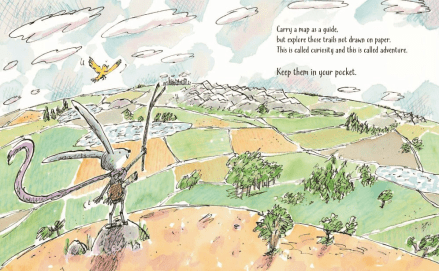
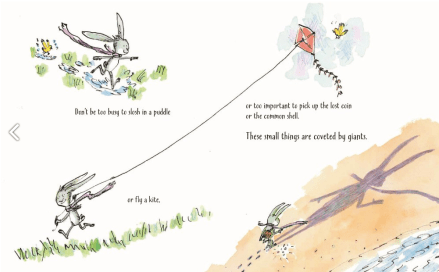
Pretending leads to knowledge, so play at who you are and who you aren’t; what you want and what you don’t want, and let your imagination fly. Don’t lose sight of the small things, the fun things, the childhood things because these are invaluable. Always listen to yourself, for you know the song in your heart.

celebrate-picture-books-picture-book-review-the-knowing-book-fields

Image copyright Matthew Cordell, 2016, text copyright Rebecca Kai Dotlich. Courtesy of Boyds Mills Press.

As the sky darkens, look again. “It holds a wing, a hoot, a chill. Allow the breeze of each to slip through the cracks of your window and into your sleep.” And when you look up into the night sky never forget that the stars have always been above you and always will be, and that “all the paths you take will join to lead you home.”

celebrate-picture-books-picture-book-review-the-knowing-book-kite

Image copyright Matthew Cordell, 2016, text copyright Rebecca Kai Dotlich. Courtesy of Boyds Mills Press.

Rebecca Kai Dotlich’s The Knowing Book is a lyrical tribute to the inner voice that guides each person on their life’s journey. The assurance that every action, song, imagining, and path combine to create the person you are meant to be resonates, whether the reader is a child just starting off to kindergarten, a young person graduating from college, or an adult navigating life’s changes. The value of play, reflection, and experimentation as well as the importance of understanding who you are and who you are not is beautifully expressed in this charming and wise picture book.

celebrate-picture-books-picture-book-review-the-knowing-book-stars

Image copyright Matthew Cordell, 2016, text copyright Rebecca Kai Dotlich. Courtesy of Boyds Mills Press.

Venturing out into the world Matthew Cordell’s sweet rabbit embraces the sky with the kind of beaming smile seen on excited children. The rabbit picks up a friend and together they explore the world. Cordell’s softly illuminated images in blues, yellows, pinks, and greens are appropriately uncluttered, leaving the particular experiences open to each individual reader. The buuny and bird travel to the vast seaside, over undeveloped fields, and through dreamy landscapes of imagination. They look up into the endless blue sky of day and the deep mystery of night. It’s only when the rabbit returns home that details are sketched in.

The Knowing Book is a beautiful reminder of the whims of life and a gentile reassurance of one’s ability to flourish. As it invites multiple readings for so many occasions, The Knowing Book would make a wonderful addition to anyone’s bookshelf.

Ages 5 and up

Boyds Mills Press, 2016 | ISBN 978-1590789261

Look Up In the Sky Day Activity

CPB - Cloud craft

Fluffy Clouds Craft


It’s fun looking up at the clouds and imagining what shapes you see. Bring those fluffy, white clouds into your room with this craft!

Supplies

  • White girls’ dress bobby socks in various sizes
  • Fiber fill, 20-ounce bag
  • Fishing line, different lengths
  • Needle
  • Clear adhesive mountable hooks or clips

Directions

  1. Stuff the socks with fiber fill, pushing it far into the sock and adding more here and there to make various lumps and give it a rounded, cloud-like shape
  2. When the sock is full, tuck the end of the sock in to close it
  3. Cut lengths of fishing line. The lengths will depend on how and where you will hang the clouds
  4. With the needle or by hand, feed one end of the fishing line into the top of the sock and out to attach the line for hanging.
  5. Knot the fishing line
  6. Attach the mountable hooks or clips to the ceiling
  7. Hang your clouds!