May 25 – National Tap Dance Day

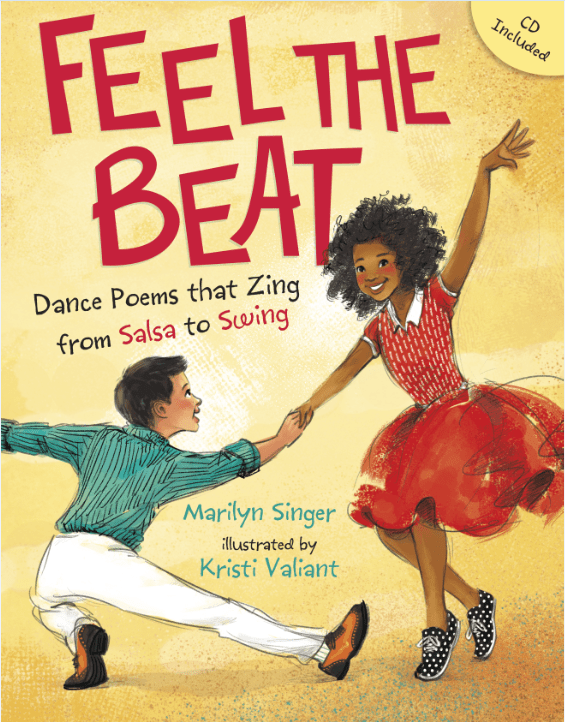
celebrate-picture-books-picture-book-review-feel-the-beat-cover

About the Holiday

Starting out as an assignment on Congressional legislation for George Washington University graduate student Linda Christensen, Tap Dance Day has become an international celebration of this quick-stepping, staccato-rhythmed art form that is a favorite in movies, on the stage, and in dance schools. Established in 1989, Tap Dance Day brings together professionals and amateurs in shows, workshops, and tap jams around the world. Why not take in—or even perform in—a tap dance show to celebrate?

Feel the Beat: Dance Poems that Zing from Salsa to Swing

Written by Marilyn Singer | Illustrated by Kristi Valiant


The rhythms of dance and the cadence of poetry create a natural pairing as these seventeen poems that celebrate the moves, music, and thrill of dances from around the world demonstrate with toe-tapping joy.

In Cha-Cha a boy attending his Uncle Nate’s birthday party learns the cha-cha from his grandma. At first he says “I don’t / know these moves. / My fee / feel like hooves.” But then “something clicks! / Okay, it’s old school. / I say, / cha-cha’s cool!”
celebrate-picture-books-picture-book-review-feel-the-beat-hip-hop

Image copyright Kristi Valiant, courtesy of kristivaliant.com

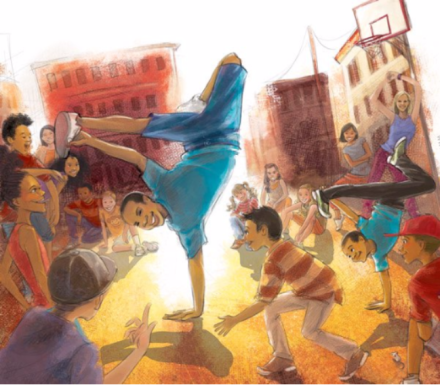
While the kids at school brag about their parents’ jobs, one boy has them beat in Hip-Hop: “No fumbling, no bumbling, / my pops is tops at tumbling. / He’s elastic, so fantastic. / Papa’s so gymnastic!” But while Dad “will swipe and windmill” and “slide on his knees, / do lots of flares and coin-drops” and “boomerang and freeze,” the boy adds “…wait / until you see my mom!”

Is it meringue or Merengue? Maybe a bit of both…because doing it right means “Moving sideways, / turning wrists, / while we do / our pretzel twists. / We sway our hips, we shift our legs, like we’re whipping / lots of eggs.”
celebrate-picture-books-picture-book-review-feel-the-beat-swing-dance

Image copyright Kristi Valiant, test courtesy of Marilyn Singer. Courtesy of kristivaliant.com

It’s fun to let go when learning the Salsa. All you need is to “Feel the beat / in your feet, / in your heart. / Then you start.” So “Don’t be shy. / Come on try. / In this class, / show some sass.” If only shopping could be so entertaining…. But, wait! Maybe Conga is the solution. “We’re at the MALL. / I’m very BORED. / I hate the STORES, / I hate the HORDE…. / ‘Just one more SHOP’ / turns into FOUR. / I’m gonna SCREAM, / I’m gonna ROAR.” Then music starts and a line grows long—“Uh uh uh, KICK! / You cannot WHINE / when you are ON / a conga LINE! / Uh uh uh, KICK! / A flash mob BALL! / Keep shopping, MOM! / I love the MALL!”
celebrate-picture-books-picture-book-review-feel-the-beat-hora

Image copyright Kristi Valiant, courtesy of kristivaliant.com

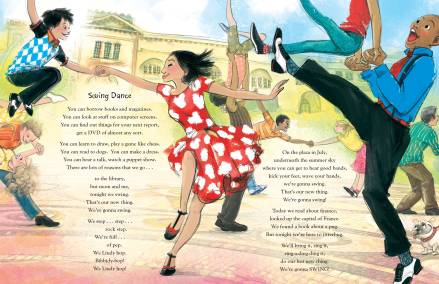
The library may be a quiet, staid place most of the time, but Swing Dance takes over one special library. “On the plaza in July, / underneath the summer sky / where you can get to hear good bands, / kick your feet, wave your hands, / we’re gonna swing. / That’s our new thing / We’re gonna swing!” A boy and his mom have joined lots of other dancers having fun on the square— “We step…step… / rock step. / we’re full… / of pep. / We Lindy hop. / Bibbidy-bop! / We Lindy hop!”

And for those kids who look at the Square Dance unit in PE with trepidation, this girl feels the same: “Got a partner, lost my shoe. / Allemande left? I haven’t a clue….Did that caller give a cue? / Don’t promenade me. Shoo, boy, shoo!…Bow to Francisco, bow to Sue. / One more swing. It’s over! Whew! / I tried real hard, but alas, it’s true. / I’m flunking out of square dance!”

celebrate-picture-books-picture-book-review-feel-the-beat-wedding

Image copyright Kristi Valiant, courtesy of kristivaliant.com

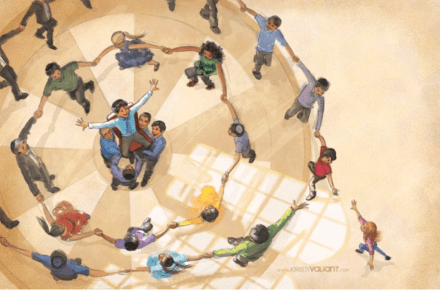
Other poems introduce the Foxtrot, Hora, Samba, Two-Step, Argentine Tango, Waltz, Bhangra, and Polka. Notes about each dance, giving a description, a bit of history, and basic rhythms and steps, follow the text. A CD of dance music is also included.

Marilyn Singer begins her exuberant celebration of dances from around the world with a pair of the reverso poems for which she is well known: All Over the World, Dancing is Joy and Joy is Dancing All Over the World. With this start, Singer invites readers to put on their dancing shoes and enter ballrooms, classrooms, and outdoor spaces filled with music. From birthdays to bar mitzvahs to weddings to spontaneous parties, Singer imbues each experience with the beats, steps, and sometimes missteps of dance with expressive vocabulary and humorous asides. Reading the poems aloud offers its own special treat as the meter of each poem reflects the rhythm of the dance described.

Kristi Valiant’s vibrant two-page spreads put kids in the center of the action where individuals, couples, and groups enjoy groovin’ to the music in their own style. Dancers swirl, stomp, hop, twirl, sway, dip, and kick up their heels on sunny days and under glowing nighttime light. So join in—no experience or partner necessary!

For kids who love music and dance and for those who love poetry of all kinds, Feel the Beat; Dance Poems that Zing from Salsa to Swing is a fun addition to home libraries—and may spark an interest in learning how to perform these dances.

Ages 5 – 9

Dial Books, 2017 | ISBN 978-0803740211

Discover more about Marilyn Singer and her books on her website!

View a portfolio of artwork by Kristi Valiant on her website!

Tap Dance Day Activity
celebrate-picture-books-picture-book-review-dance-word-search

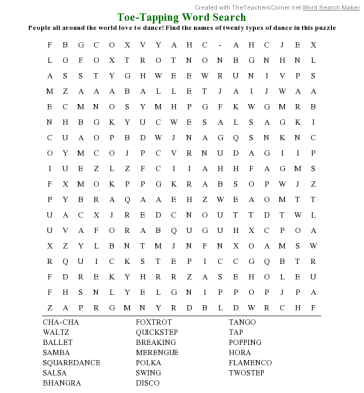
Toe-Tapping Word Search Puzzle


People all around the world love to dance! Can you find the names of twenty types of dances in this printable Toe-Tapping Word Search Puzzle? Here’s the Solution!

Picture Book Review


June 21 – World Music Day

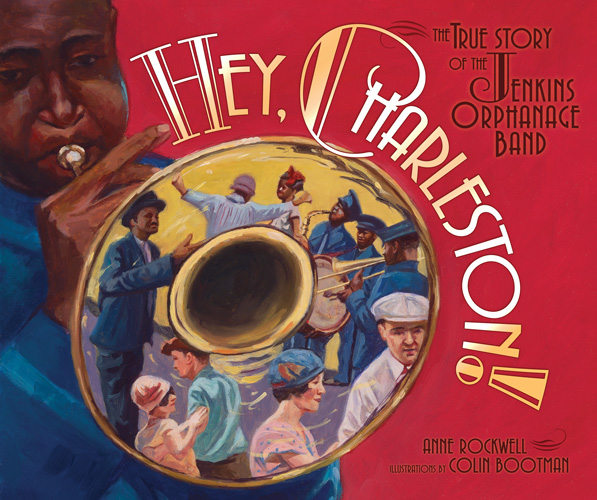
celebrate-picture-books-picture-book-review-hey-charleston

About the Holiday

Celebrated every year on the summer solstice, World Music Day, also known as the Fête de la Musique, brings together professional and amateur musicians to ply their trade and entertain audiences for a day full of sound. The day was first conceived in 1982 by French Minister of Culture Jack Lang, who elicited the help of Maurice Fleuret, the Director of Music and Dance. When Fleuret discovered that half of the nation’s children played a musical instrument, he devised a way to bring people out into the streets for a music festival. Since then, the event has become an international phenomenon, celebrated in more than 700 cities in 120 countries worldwide. To participate consider organizing or attending a  free concert or enjoying music in your favorite way.

Hey, Charleston! The True Story of the Jenkins Orphanage Band

Written by Anne Rockwell | Illustrated by Colin Bootman


“Have you ever known someone who was always trying to turn bad into good, always seeing hope where others saw despair?” This question, which begins the biography of Reverend Daniel Joseph Jenkins and the orphans he loved is as relevant today as it was in the early 1900s, when this story takes place. Reverend Jenkins was the pastor of a small church in Charleston, South Carolina. One night while collecting scrap wood at a railroad yard, he discovered a group of boys huddled and sobbing inside a freight car. Reverend Jenkins took them to his church, fed them, and gave them a warm place to sleep. He knew what it was like to be an orphan because he had been one too.

Soon more orphans showed up at the church door, and Reverend Jenkins accepted them all. Room grew tight so he convinced the city officials to give him an abandoned warehouse for his orphanage. There was just one drawback: the warehouse was next to a prison, where less-than-desirable sounds emanated from the walls. Reverend Jenkins figured out a way to drown out the noise, however. He gathered the orphans and led them in song outside the orphanage door. The kids were good singers, and that gave the reverend an idea.

He had grown up during the Civil War and remembered the marching bands that led the soldiers into battle. He remembered the instruments these musicians carried and asked for any that were now unused to be donated to the children. Instruments poured in! They were polished and tuned and the children learned to play under the direction of the best teachers in Charleston. With the money Reverend Jenkins thought they could make entertaining people, he planned to buy a farm for the orphans.

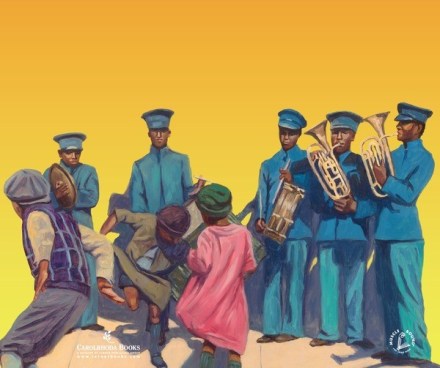
Soon the Jenkins Orphanage Band was playing on street corners and in other venues. Many of the kids were descended from the Geechee or Gullah people who lived on islands off the coast of South Carolina, and they played the old band music with their own special rhythm, called “rag.” “A couple of Geechee boys would lead the band by doing a dance—twisting and twirling and tapping their toes, knocking their knees, and flapping their arms.” People loved the music, but most South Carolinians were poor and couldn’t donate much to the orphans. Reverend Jenkins decided to take his band to New York City. The band took the city by storm! People loved when the kids played their raggedy music and soon were imitating the Geechee boys’ dance. “Hey, Charleston,” they’d shout, “Give us some rag!” They called the dance “the Charleston,” and soon everyone was doing it.

celebrate-picture-books-picture-book-review-hey-charleston-interior-art

The orphans made so much money they were able to buy a new house, and the music instruction became so renowned that families began paying to have their children taught along with the orphans. The band continued to travel around the United States, and they were even invited to perform in the inaugural parade for President Theodore Roosevelt. Finally, they were able to buy the farm Reverend Jenkins had dreamed of.

In 1914 the Jenkins Orphanage Band was even invited to play for Britain’s King George V at the Anglo-American Exposition in London. While they were there, however, Britain entered World War I. The British government ensured that the band had safe passage back home, but many other Americans were stranded in England. Reverend Jenkins offered to lend these citizens the money needed for them to return home as well.

The ship sailed silently through the dangerous Atlantic Ocean until it reached an American port. Once safe the passengers shouted, “‘Hey, Charleston! Give us some rag!’” Happy to be home, the band tuned up their instruments and played loudly and enthusiastically for the shipboard audience. As the passengers disembarked in New York Harbor, crowds greeted them with a hearty welcome. Back home “as they lay down to sleep that night, those band players knew they had done what Reverend Jenkins always taught them. They had turned bad into good.”

Anne Rockwell succinctly and clearly relays the story of the Jenkins Orphanage Band while also retaining all the heart and soul of this fascinating group of children and their dedicated caregiver. The true-life tale is mesmerizing, not only for the historical details of the growth of ragtime music and the Charleston dance but for the accomplishments of the orphans once given love, acceptance, and education. Rockwell’s conversational tone contributes to the story’s smooth, flowing pace, which will keep listeners or readers rapt from beginning to end.

Colin Bootman’s bold two-page spreads illuminate the sights and sounds of the early 1900s for readers. Emphasizing the personal connections between Reverend Jenkins and the orphans as well as the band and their audiences, Bootman’s vibrant paintings are full of people watching, dancing, marching, and celebrating these boys’ awesome gifts.

Ages 6 – 10

Carolrhoda Books, 2013 | ISBN 978-0761355656

World Music Day Activity

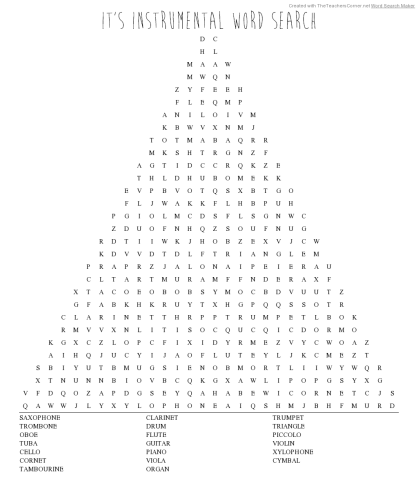
celebrate-picture-books-picture-book-review-musical-instruments-word-search


It’s Instrumental Word Search


Triangles may not get a lot of play in an orchestra, but there’s plenty of play in this printable It’s Instrumental Word Search that contains the names of 20 instruments!