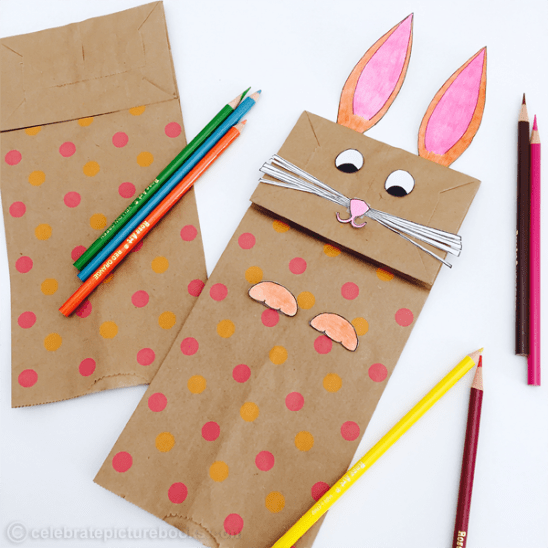
April 16 – Record Store Day

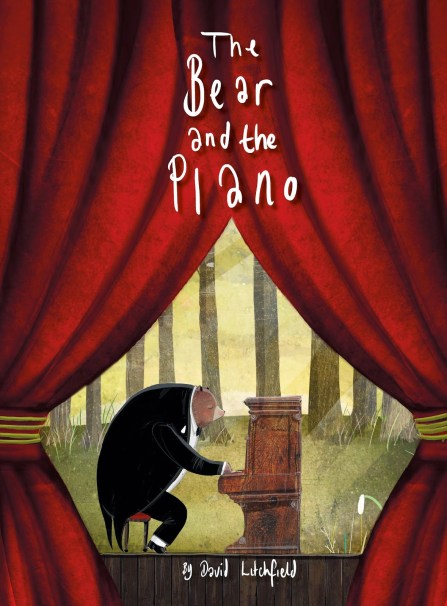
The Bear and the Piano by David Litchfield picture book review

About the Holiday

Vinyl has made a resurgence—and why not?! Records have so much to offer music lovers, from the awesome album art to extras like posters, lyrics, photos and more. Those special packages are all about the relationship between the artists and their fans. All over the world Record Store Day celebrates this art form and the shops—both large and small—where you can find albums by your favorite musicians. Entering a record store is an adventure in itself. Flipping through the bins you might discover a new artist, an old album you don’t have, or an intriguing concept you just have to experience for yourself. Today, visit a record store near you and see how what once seemed old is new again!

The Bear and the Piano

By David Litchfield


One day a bear cub happens upon a piano in a clearing in the middle of the forest. Wondering what it could be, he approaches and lays his paw on the keys. The strange thing goes PLONK!—such an awful sound. The bear cub leaves, but is drawn back again and again for days, months, and years. Over time the bear grows up and learns to play the piano. The music is beautiful and transports him to strange and wonderful places.

Other bears soon gather in the clearing to hear the “magical melodies” the bear plays. The bear is happy entertaining his friends. One night a girl and her father hiking in the forest come to the clearing. They listen and then tell the bear what his strange instrument is. They invite him to move to the city with them, where he will be able to play grand pianos for hundreds of people. The music he will play and hear “will make your fur stand on end,” they tell him.

The bear is conflicted. One on paw he knows that leaving the forest will make the other bears sad; on the other he longs to explore the world, to play the piano better, and master more intricate music. He decides to go with the girl and her father.

In the city the bear is a sensation! He quickly becomes a celebrity with his name on marquees and playing to sold-out crowds. The bear records albums that go platinum, he appears on the covers of magazines, and wins awards. His experience is everything he could ever wish for. But deep in his heart there is another longing. He misses the forest and his friends there.

He decides to leave the city and rows a boat across the expanse of water to his old home. Excitedly he runs to the clearing, but when he arrives everything has changed. His piano is gone and there are no friends to greet him. The bear worries that everyone is angry at him for leaving, or worse—that they have forgotten him.

Suddenly an old friend peeks around the trunk of a tree. The bear hails him with a hearty “Hello!”, but the other bear remains silent then turns and runs into the trees. The bear follows plunging deeper and deeper into the forest. Suddenly he stops. In front of him is a sight that makes his fur stand on end.

There, protected in the shade of a tree and surrounded by the albums, magazines, t-shirts, and other mementos of the bear’s success sits the old piano. The bear’s friends have not forgotten him and they are not angry. They are proud and welcoming. The bear tells them all about his adventures, and then he sits down to play again—for the most important audience of all.

David Litchfield’s very original and moving story is such a wonderfully conceived microcosm of the changes life brings. Stumbling upon a talent, cause, or inspiration; opening up to other influences; and acting on hard decisions are all part of growing up. These concepts are honestly and sensitively presented, and the reassuring ending brings comfort as well as a tear to the eye.

Litchfield’s touching illustrations—rendered in gorgeous hues of browns, greens, yellows, and blues—brim with yearning and mystery. The piano sits in a misty glow, silent and draped with vines, when the cub discovers it. While the bear grows and learns to play, the air clears and the colors become brighter. As the bear moves to the city, the pages glint and swirl with his enormous achievements. But as the bear sits on a rooftop one night looking out toward his old home, the lights around him are the elements of normal life—lamps, stars, the moon glimmering on the water. His nostalgia to be home will resonate with both kids and adults. The Bear and the Piano makes a wonderful gift for any age—especially as a graduation or new-job gift—and is a must-have for anyone’s personal library.

Clarion Books, Houghton Mifflin Harcourt, 2016 | ISBN 978-0544674547

Record Store Day Activity
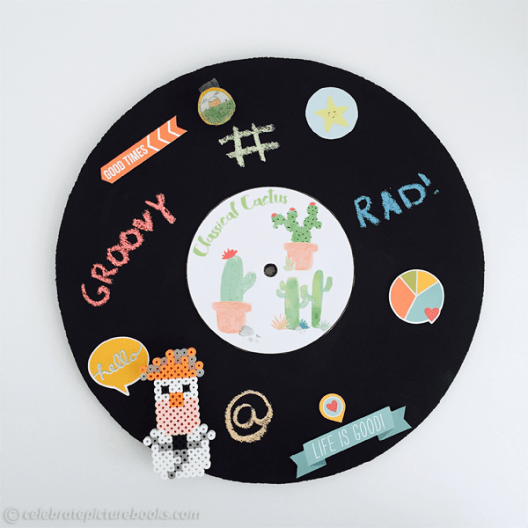
CPB - Record Bulletin Board

Make a Record Chalkboard Bulletin Board


Would you love to make a record some day? Why wait? In this fun craft you can create your own record bulletin board—and even create your own label art! While this record may not spin on turntables around the world, it will drop in a more important place—your very own room!

Supplies

  • Printable Record Label for you to design
  • Foam board, or a corkboard at least 12-inches x 12-inches square
  • Adhesive cork
  • A 12-inch round plate, record, or other round object to trace OR a compass
  • Chalkboard paint, black
  • X-acto knife
  • Paint brush or foam paint brush
  • Mounting squares

Directions

  1. Cut a section from the adhesive cork a little larger than 12 inches by 12 inches
  2. Affix the cork to the foam board
  3. Trace the 12-inch round object onto the cork/foam board OR use the compass to make a 12-inch circle
  4. With the x-acto knife, carefully cut out the circle (adult help needed for children)
  5. Cut out a ¼ -inch circle in the center of the record bulletin board
  6. Paint the cork, sides and inside the spindle hole with the black chalkboard paint. Let dry
  7. Print the label template and design your own record label
  8. When the paint is dry, glue your label to the center of the bulletin board
  9. Hang your bulletin board with the mounting squares
  10. Decorate!

March 7 – National Cereal Day

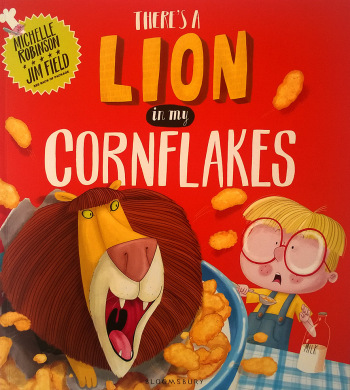
There's a Lion in My Cornflakes by Michelle Robinson and Jim Field picture book review

About the Holiday

Did you know that breakfast in a bowl actually began with an experiment that went wrong? Or just maybe it was right! John Harvey Kellogg and his brother Will Keith Kellogg were experimenting with boiled wheat in 1877 when they left some out overnight. In the morning the wheat was stale. The brothers decided to roll it out instead of throwing it away, and they found that each wheat berry created a flake. Boiled corn worked the same way, and from this process the Kellogg brothers invented Corn Flakes, the first dry cereal!

Today’s holiday celebrates all the varieties of your favorite cereal—whether it’s made of corn, wheat, bran, rice, or a mixture of flakes, fruit, and nuts. So pour yourself a big bowlful and enjoy!

There’s a Lion in My Cornflakes

Written by Michelle Robinson | Illustrated by Jim Field


Who could resist clipping cereal box coupons to receive a free lion? Nobody, that’s who! I mean, it would be so cool, right? A lion to take on walks, ride to school, and open tin cans—awesome! So a boy and his brother, Dan, take a year’s worth of their allowance, make “a million” trips to the grocery store, and start cutting.

But all those boxes of cereal squeeze out the other food on the pantry shelves, so Mom says the boys have to eat cornflakes for breakfast, lunch, and dinner until it’s gone—and, oh yeah, they don’t get an allowance until then either. It’s all worth it, though, because they’re going to get a real live lion.

There’s just one hitch—every other kid in town has the same idea, and while the brothers wait for their lion to arrive, everyone else is out playing with their new pet. Finally, the delivery truck pulls up in front of the house, and out walks…a grizzly bear?! That’s not right, and it’s even delivered to the wrong house. Well, the bear’s not too crazy about the situation either, and shows it. The kids and the bear have to clean up the neighbor’s yard and apologize.

A letter of complaint to the cereal company brings resolution in the form of…a crocodile?! The crocodile spends all its time in the bathroom, and the grizzly bear is still causing havoc. Dad calls the cereal company and to make up their mistake they send…a gorilla?! The gorilla stomps on Dad’s car and rips the door off. Well Dad’s had enough!  The whole crew piles into the car so Dad can “give those cereal people a piece of my mind.”

The cereal people sure are sorry for the mix-up. They make amends by letting the family keep the grizzly bear, the crocodile, and the gorilla, AND the company gives them…a lifetime’s supply of cornflakes! But really, what good are all those boxes? The boys can’t walk them or ride them or even open cans with them.

You know what, though? Mom’s discovered the crocodile has some pretty sharp, can-opening chompers. The grizzly bear can walk forever and even wear a fanny pack. And the gorilla makes a very cool chauffeur. Why bother having a lion when everyone else has one?

Besides, what are the cereal people offering now—a free tiger?! Hmmm….

Michelle Robinson has taken the lure of free stuff to its ridiculous best. There’s a Lion in My Cornflakes serves up the benefits of individuality and drawbacks of consumerism in a silly, over-the-top scenario that will have kids laughing at every page and escalation of the brother’s problem.

Jim Field’s bold, vibrant illustrations are the perfect accompaniment to this boisterous tale. As the boxes of cornflakes and clipped coupons pile higher and higher and the free animals cause more mayhem, the boys’ expressions go from excited to nonplussed to shocked and finally  to acceptance as day after day brings new and unexpected results of their actions. Kids will love the funny details on every page that highlight the story.

Ages 3 – 7

Bloomsbury Children’s, 2015 | ISBN 978-0802738363

National Cereal Day Activity

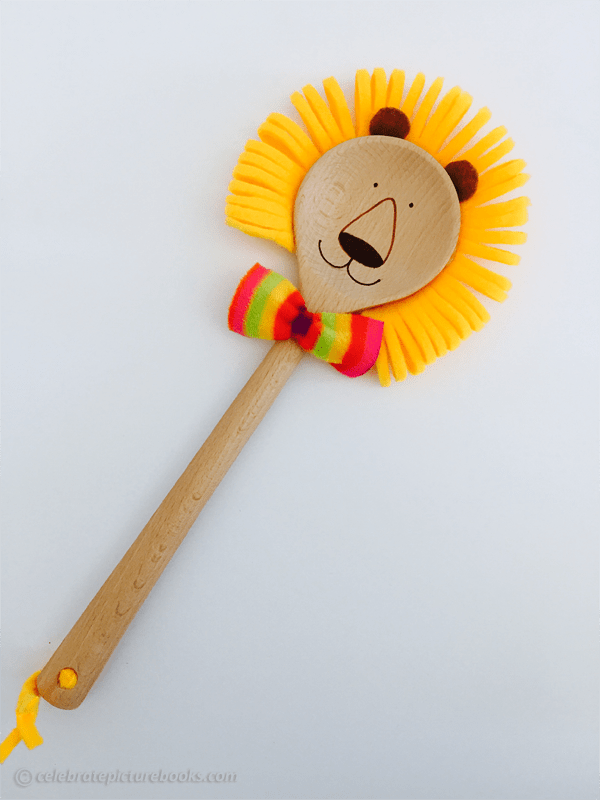
CPB - Spoon Lion

Spoon Lion Puppet


Spoons are just the thing for eating cereal! But with this craft you can make a ROARingly cute lion puppet!

Supplies

  • Wooden mixing spoon
  • Yellow Fleece
  • Brown felt
  • Colorful Fleece or felt
  • Fabric glue
  • Light brown marker
  • Dark brown marker
  • Hot glue gun or super glue
  • Scissors

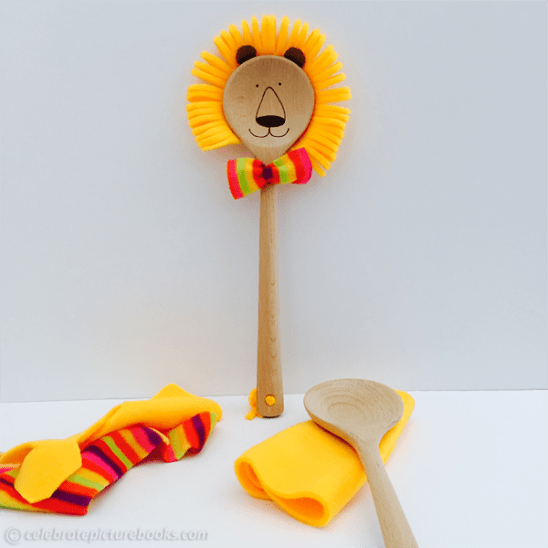
CPB - Spoon Lion with stuff

Directions

To make the lion’s face

  1. Draw a nose, mouth, and eyes on the front/bowl of the spoon

To make the mane

  1. Measure the rim of the spoon from one side of the handle to the other
  2. Cut a strip of yellow fleece as long as rim measurement and 4 inches wide
  3. Fold the piece of fleece in half long-ways
  4. Glue the open edges of the fleece together
  5. Along the folded side cut a fringe, leaving the loops intact

To make the ears

  1. Cut round ears from the brown felt

To make the bow

  1. Cut a 3-inch x 1 ½-inch piece of colorful fleece or felt
  2. Cut a long thin strip of fleece or felt
  3. Pinch the bow in the middle and tie with the longer piece of cloth. Trim as necessary

To make the tail

  1. Cut three thin 4-inch-long strips of yellow fleece
  2. With fabric glue, glue the tops of the strips together
  3. Braid the strips
  4. At the bottom, glue the strips together, leaving the ends free

To assemble the lion

  1. Glue the ears to the back of the spoon
  2. Glue the mane to the back of the spoon
  3. Glue the bow to the handle
  4. Fold the top of the tail and push it into the hole in the handle of the spoon

March 3 -World Wildlife Day

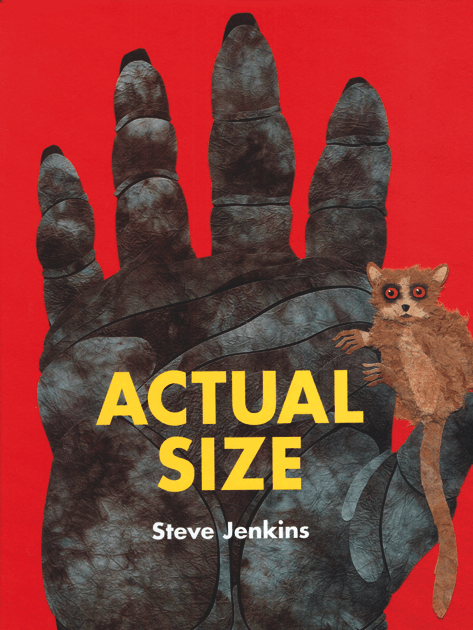
Actual Size by Steve Jenkins Picture Book Review

About the Holiday  

Sponsored by the United Nations, World Wildlife Day celebrates the many varieties of wild animals and plants that make up our earth. It is also a day to raise awareness of the ways in which conservation of natural resources and sustainable development benefits people and all the world’s species. The theme this year is “The future of wildlife is in our hands.” African and Asian elephants are the main focus of the 2016 global campaigns.

Secretary-General Ban Ki-moon says: “On this World Wildlife Day, I call on all citizens, businesses and governments to play their part in protecting the world’s wild animals and plants.  The actions taken by each of us will determine the fate of the world’s wildlife.  The future of wildlife is in our hands!”

For more information on World Wildlife Day 2016 and to see what events are taking place in cities around the world visit wildlifeday.org

Actual Size

By Steve Jenkins


We know wildlife is all around us, but apart from our pets and the occasional mosquito we swat or bumble bee we avoid, we tend to see it from a distance. We watch birds flutter at feeders through a window, we see exotic animals at the zoo, aquarium, or wildlife parks, and point out cows and horses while driving. If asked how big the chickadee or elephant is, we’d say small and huge! But how small? How huge?

What makes Steve Jenkins’ book Actual Size so fascinating is that he shows readers on the page exactly how big or how tiny with scale drawings of each creature. The Atlas Moth on page 1 is so large part of one wing dips into page 2, where you hardly notice the dwarf goby—at a minuscule 1/3 inch long—in the bottom corner. As you turn the page you almost catch your breath to find the enormous 12-inch-wide eye of a giant squid staring back at you.

An ostrich with its egg and the whip-like tongue of the giant anteater are also here. And if you’re at all squeamish about spiders, you might want to avoid pages 12 and 13! The snout of the saltwater crocodile and the Goliath frog are both so long that they require a fold-out page! Kids will love putting their tiny hand against the gorilla’s and their foot on the African elephant’s.

Actual Size features 18 of the world’s well-known and unusual creatures, each described in more detail, including weight, habitat, diet, behavior, defenses, and more, at the end of the book.

Steve Jenkins’ striking collages, created from cut and torn paper, beckon readers to look closer at these awesome creatures.

Ages 4 – 9

Houghton Mifflin Books, 2004 | ISBN 978-0547512914

World Wildlife Day Activity

CPB - Wildlife Day Elephant Print (2)

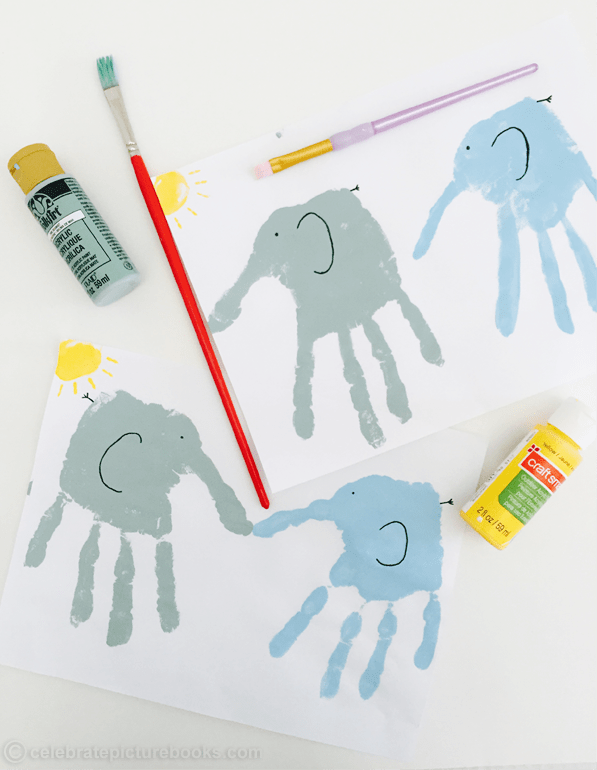
Hands Down Best Elephant Print


A way to make the cutest elephant print ever is right in your hands! With a little paint and paper, you can create a wildlife print that’s as unique as you are. This is a fun activity to do with a child and parent or two siblings. Working with different size hands can make your print more interesting.

Supplies

  • Paper, any color
  • Paint, any color you would like your elephants to be
  • Paint brush
  • Black marker

Directions

In this print your palm creates the body of the elephant, your four fingers create the legs, and your thumb becomes the trunk.

1. Make the right-facing elephant:

  • Paint your left hand. Make sure to fill in all the creases on your palm and fingers.
  • Press your hand onto the left side of the piece of paper

 2. Make the left-facing elephant:

  • Paint your right hand. Make sure to fill in all the creases on your palm and fingers.
  • Place your hand on the right side of the paper so that your thumb touches the end of the thumb on the left hand print. Press your hand onto the right side of the piece of paper

3. You can fill in any thin or open spaces with the paintbrush if you like

4. Let the handprints dry

5. Turn the page so that the four fingers that create the legs of the elephant are facing down.

6. Draw a dot for an eye at the base of the thumb, an ear in the palm, and a tail at the back of the hand.

7.  To make the sun, dip your thumb in yellow paint and press it into the corner of the paper. Make little rays with the edge of the paintbrush.

8. Hang your print with or without a frame.

March 2 – Dr. Seuss’s Birthday | Read Across America Day

The Sneetches and Other Stories Picture Book Review

About the Holiday

Read Across America was designed by the National Education Association as a day to raise awareness of the importance of reading and to motivate people to read more. What better day could they have chosen to celebrate the joys books can bring than March 2—Theodor Seuss Geisel’s birthday! With 46 children’s books to his name, Dr. Seuss is one of the world’s most beloved authors, and one whose imagination has entertained generations of readers.

For more information on the Read Across America program visit www.nea.org/grants/read-across-background.html

The Sneetches and Other Stories

By Dr. Seuss


If you love reading chances are Dr. Seuss has something to do with it! He wrote so many stories that there are fantastic and fantastical creations to fit everyone’s fancy! Today I’m reviewing my favorite collection of Dr. Seuss tales—I hope you’ll like it too!

The four stories in this collection touch on such topics as individualism, prejudice, stubbornness, fear, and just the ridiculous. Perhaps the best-known tale is The Sneetches, in which a community of Sneetches, some of whom sport stars on their bellies and some who do not, fall prey to a slick salesman and his star-on and star-off machines. The Sneetches run themselves ragged trying to be popular and keep up with the fad of the moment. In the end, Sylvester McMonkey McBean has made monkeys of them all and drives away with a smile and all their cash. He thinks they’ll never learn, but he’s wrong—the Sneetches are actually richer for McBean’s visit and become a closer-knit community.

In The Zax, a North-going Zax and a South-going Zax are strolling along on their individual tracks when they meet face to face in the middle of nowhere. Neither one will move the slightest inch to the left or the right to let the other pass. They stand “toe-to-toe” in unbreakable stalemate, even if it means the whole world must halt along with them. “Of course the world didn’t stand still,” Dr. Seuss tells us. The middle of nowhere became somewhere. Buildings went up, people moved in, and a highway was built right over the Zax, who are probably standing there still.

Ah, the poor mother in Too Many Daves! If only she’d had a little more imagination and forethought in the name department she may have saved herself a lot of trouble. One after one, however, she named her sons Dave—all 23 of them! Too late she thinks of all the other names she could have used, and here is presented a list of names that far outshines any baby naming book on the market. Be ready for giggles when you get to “Stinky.”

My very favorite story is What Was I Scared Of?. It has just the right combination of spookiness and humor to satisfy any budding mystery buff. One night while picking berries the hero of the story spies a “pair of pale green pants with nobody inside them.” The pants begin to show up in the oddest of places, no matter how hard the storyteller tries to escape them. The pants are rowing on the river, riding a bicycle, and walking the same path. When the pants and the narrator peek around the same bush, however, they’re both in for a surprise. “Why, the pants were just as scared as I,” the narrator reveals. Instead of gloating or running away, our intrepid hero learns that feelings are often shared and he becomes a friend to the pants that once so frightened him.

Of course these stories are all told with Dr. Seuss’s inimitable word choice, rhymes, names, and rhythm accompanied by his whimsical characters and landscapes.

Ages 4 – 9

Random House, New York, 1961 | ISBN 978-0394800899

Dr. Seuss’s Birthday/Read Across America Day Activity

CPB - Reading Bug Book Plate (2)

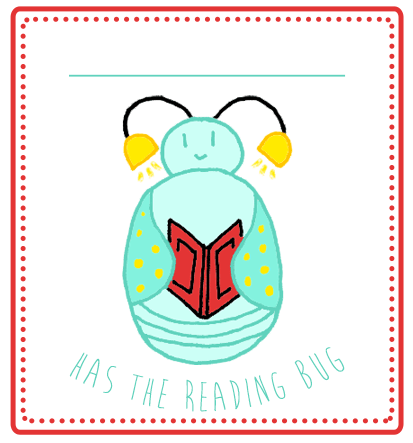
I Have the Reading Bug Bookplate


There’s no better feeling than leafing through the pages of your own book! Now, to keep precious books from getting lost, you can dress them up with this printable I Have the Reading Bug Bookplate!

Supplies

Directions

  1. Print the I Have the Reading Bug Bookplate
  2. Cut out the bookplate
  3. Write your name on the line at the top
  4. Using glue dots or removable mounting squares attach the bookplate to the inside front or back cover

March 1 – National Pig Day

The Three Ninja Pigs Picture Book Review

About the Holiday

Pigs inspire us! Whether we see them on a farm, have them as pets, or enjoy them as part of our entertainment—who can forget Wilbur or Babe or even the little piggie who went wee, wee, wee, all the way home, after all?—pigs are part of our lives almost from the time we are born. How did they reach this lofty state? By being smart! Pigs are one of the most intellectual animals, capable of high-level learning. In 1972 sisters Ellen Stanley and Mary Lynne Rave decided pigs needed more acclaim, and so National Pig Day was established. On this day pigs are celebrated with special events, parades, and parties at zoos, farms, and schools.

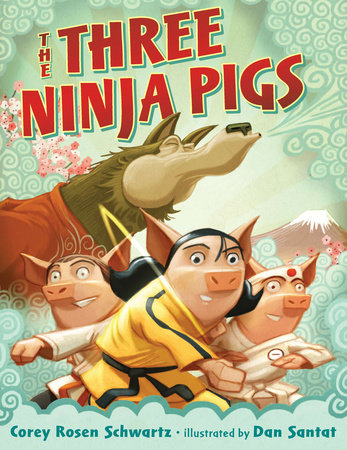
The Three Ninja Pigs

Written by Corey Rosen Schwartz | Illustrated by Dan Santat


The Big Bad Wolf has never encountered Three Little Pigs like these! When the sibling trio (two brothers and a sister) in this fractured fairy tale have had enough of the wolf’s bullying they take matters into their own trotters. Enrolling at the new Ninja school, Pig One begins to learn aikido, but with a “straw-house” attitude, he drops out before he acquires any useful skills. Pig Two has little more “stick”-to-itiveness with his Jujitsu training and quickly says “Sayonara” to his teacher. Thankfully, Pig Three has the steadfastness of a brick. She earns her black belt in Karate and is ready to rumble.

When the wolf comes huffing and puffing to the doors of Pig One and Pig Two, things go…well…you know…. The wolf chases the two brothers to their sister’s house, where this “certified weapon” stands prepared. She demonstrates her kicks and flips, which don’t scare the wolf. When he witnesses her mighty ability to split bricks with one chop, however, the wolf scrams.

How do these intrepid pigs top that? The brothers learn their lesson and—finally—their ninja moves. After graduation this fearless family makes sure that wolf will never return by opening a dojo of their own!

Corey Rosen Schwartz has created a rowdy, rambunctious triple-pig threat in this uproarious rendering of the three little pigs tale. With perfect rhythmic limericks that are a joy to read aloud, Schwartz cleverly uses puns, funny dialogue, and one feisty piglet to chop the wolf down to size. Dan Santat’s illustrations are full of angst, action, and attitude. Legs kick, hands chop, boards and bamboo fly as the three pigs and their nemesis wolf nearly leap from the page in their battle.

Ages 4 – 8

G. P. Putnam’s Sons Books for Young Readers, 2012 | ISBN978-0399255144

National Pig Day Activity

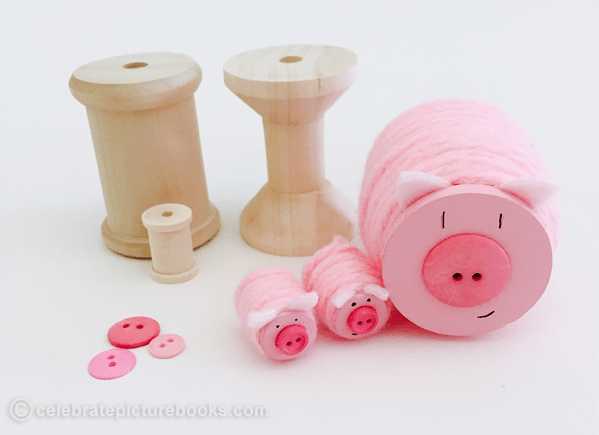
CPB - Pig Day pigs

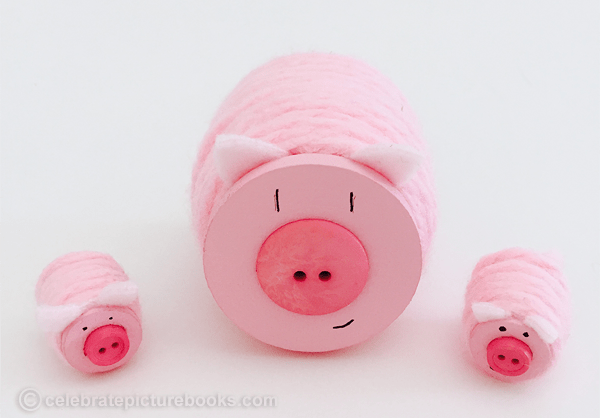
Roly-Poly Pig and Piglets


Who doesn’t love hamming it up with a piglet? But let’s face it, having your own real pig just isn’t practical for everyone. Here’s a little piggie that you can make to keep you company on your desk or near your bed or anywhere it’s fun to play!

Supplies

  • Printable Pigs Ears Pattern
  • 2 ½-inch wooden spoon, available from craft stores
  • 1-inch wooden spool, available from craft stores
  • Pink yarn, I used a wide-strand yarn
  • Pink fleece or felt
  • Pink craft paint
  • Pink 5/8-inch or 1-inch flat button with two holes
  • Pink 3/8-inch flat button with two holes
  • Paint brush
  • Scissors
  • Glue
  • Black marker

CPB - Pig Day with spools (2)

Directions

  1. Print the Pigs Ears pattern
  2. Trace the ears onto the fleece or felt and cut them out.
  3. Paint the spool with the pink paint
  4. Let spool dry
  5. When the spool is dry, glue the ears to the spool, letting the ears stick up over the rim of the spool.
  6. Wrap yarn in straight layers around spool until the body of the pig is a little bigger than the end of the spool, which will be the face
  7. Cut yarn off skein and glue the end to the body
  8. To make the nose, glue the button over the hole in the middle of the spool
  9. Mark the eyes and mouth with a marker
  10. To make the tail for the large pig, cut a 4-inch long piece of yarn. Tie a triple knot in the yarn (or a knot big enough to fill the hole in the spool). Then tie a single knot below the first knot. Insert the large knot into the spool’s hole at the back of the pig. Trim the yarn in front of the second knot as needed.
  11. To make the tail for the piglets, tie a single knot in the yarn and another single know below the first. Insert one of the single knots into the hole. Trim yarn as needed.

February 26 – National Tell a Fairy Tale Day

CPB - There's a Wolf at the Door

About the Holiday

Today we celebrate the long tradition of oral and written stories that have captivated both children and adults since earliest times. While many of the fairy tales we love began as lessons in good manners or avoiding danger, they have remained popular and a part of our culture that we pass down to children through the generations. These tales stand up to traditional treatments as well as variations that turn the familiar plots on their heads.

There’s a Wolf at the Door: Five Classic Tales

Retold by Zoë B. Alley | Illustrated by R.W. Alley


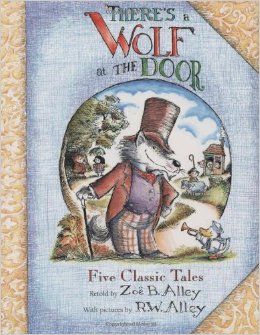
There are big books of fairy tales and then there’s There’s a Wolf at the Door! In this oversized graphic-novel style picture book, that big, bad wolf who is so familiar in children’s stories follows his nose and his hungry stomach through 5 classic tales.

In “The Three Little Pigs,” the wolf starts out with much confidence and bluster. He huffs and he puffs, but in the end he’s outsmarted by the third little pig. In quite a fright he follows the sign to “Greener Pastures” where he finds Barry, a shepherd boy with an unfortunate aversion to boredom. The wolf suddenly finds himself accused of eating sheep, but quickly realizes he can turn the boy’s foolish cries to his advantage. He doesn’t count on the crafty sheep, however, who thwart the wolf’s plans while their shepherd runs around in circles, screaming.

The wolf finds his escape on a path through the woods marked “To Granny’s House.” On the path he meets up with Rhonda, a fashionista who loves red clothing and appreciates her strange companion’s sense of style. While they walk toward Granny’s house together, discussing coats, hats, and flowers for Rhonda’s hair, the wolf gives Rhonda the slip and runs a frightened Granny out the back door. Rhonda scares him off with a well-aimed red shoe and a grab at Granny’s stolen nightgown. Not wanting to appear so naked, the wolf pulls the white wooly rug around his shoulders and hightails it to a peaceful meadow.

Here a family out for a picnic discovers him napping. The little girl mistakes him for a poodle, but her mother believes he is a sheep. When he tries to menace them with a display of fierceness, the unimpressed family simply calls him rude and wanders off to find another picnic spot. Who does he spy a short distance away, but Barry the shepherd and his sheep. Disguised under his rug, the wolf creeps up on the flock, who are not fooled. This time as Barry runs away, the sheep use his crook to toss the wolf around.

As the wolf catches his breath by the river, he receives a package from Rhonda, who has learned to be kind and considerate from her experience with the wolf. Inside, he discovers a new outfit, and he is once again restored to his dapper self. Hearing that the nearby house is full of unattended goslings, the wolf devises a plan to capture them and take them home for dinner. While these goslings may be rambunctious and disobedient to their brother Alphonse, when threatened they work together to foil their pesky visitor.

In the end the wolf decides that perhaps he’s better off as a vegetarian and readers leave him contemplating a shortcut through the woods to Farmer McGregor’s Garden.

Using clever inside jokes, humorous asides, sassy heroines and heroes, and a woebegone wolf out of his depth, the husband and wife team of Zoë B. Alley and R.W. Alley have transformed these well-known classics into unique, rib-tickling stories for a new generation. The comic strip style drawings fit the droll tone of the tales perfectly and are full of details kids will love to point out. While older children will enjoy reading this book on their own,There’s a Wolf at the Door also makes for an exciting read-aloud storytime.

Ages 4 – 8

Roaring Brook Press, 2008 | ISBN 978-1596432758

National Tell a Fairy Tale Day Activity

CPB - Fairy Tale box

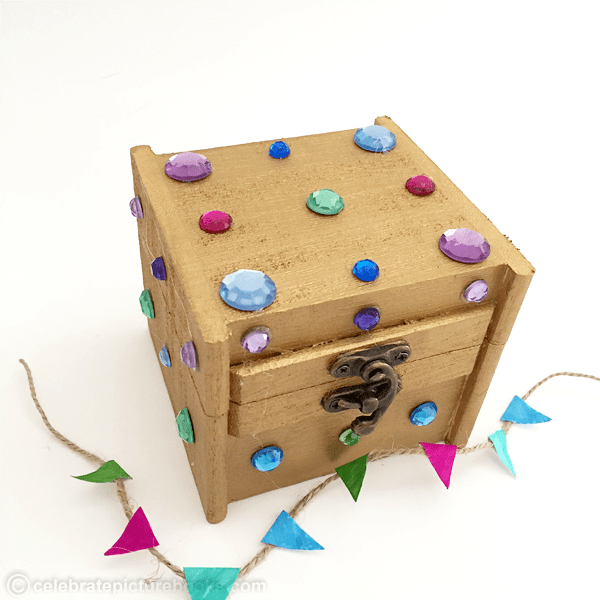
Treasure Box of Imagination

Whether it’s gold, silver, jewels, pirate loot, or just bits of nature or knick-knacks, our favorite things are our treasures and fuel our imaginations. For Fairy Tale Day make your own Treasure Box

Supplies

  • 1 small wooden box, available at craft stores
  • Gold acrylic craft paint
  • Craft gems
  • Paint brush
  • Hot glue gun or strong glue

Directions

  1. Paint your wooden box with the gold paint
  2. Let the box dry
  3. Decorate your Treasure Box of Imagination with gems

February 21 – International Mother Language Day

CPB - The Little Rabbit Who Liked to Say Moo

About the Holiday

Established in 1999 by UNESCO, Mother Language Day celebrates cultural diversity and promotes the protection of endangered languages. Events include multicultural festivals where all voices are heard and social cohesion, cultural awareness, and tolerance are honored.

The Little Rabbit Who Liked to Say Moo

By Jonathan Allen


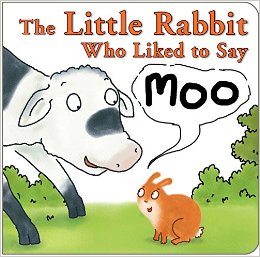
Little Rabbit sits in the farmer’s field listening to the animals talk and learning their languages. “Moo,” Little Rabbit repeats, “Moo.” A calf responds and questions Little Rabbit. It turns out that Little Rabbit knows and likes many languages. Calf joins Rabbit in the fun. “Baa,” they say together, which summons Lamb. The three friends decide to try “Oink.” With each new noise, the group expands and enthusiastically continues their linguistic experiment. Finally, after a rousing chorus of “Quack,” Duckling asks if quack is their favorite animal sound. Each animal then reveals with pride that, while they like other noises, they prefer their own. But what about Little Rabbit, who doesn’t “have a big noise?” Will Rabbit’s answer begin the game again?

The wide-eyed, smiling animals in this adorable picture book by author-illustrator Jonathan Allen perfectly captures the joyous camaraderie of good friends discovering the world together. The book is a wonderful introduction for young children to the ideas of inclusiveness and self-esteem. Kids will love the repetition as each new animal joins the group, and will have as much fun saying each sound as Little Rabbit and the other farmyard friends.

Ages 2 – 6

Boxer Books Limited, 2008  ISBN 978-1910126257

International Mother Language Day Activity

CPB - Rabbit Puppet made

Make a Rabbit Puppet

Supplies

  • Rabbit Puppet Template
  • A paper lunch bag
  • Markers, crayons, or colored pencils
  • Cotton Ball
  • Scissors
  • Glue or tape

Directions

  1. Print the Rabbit Puppet template.
  2. Color the parts of the rabbit and cut them out.
  3. Place the flat paper bag on a table with the bottom flap facing you. Glue or tape the eyes, and the nose and whiskers to the bottom flap. Attach the ears, placing the tabs behind the top of the bottom flap. Attach the paws to the body below the bottom flap. Attach the cotton ball tail to the opposite side of the bag.  
  4. When it’s dry, use your puppet to read The Little Rabbit Who Liked to Say Moo again and play along. Let your Little Rabbit try saying “Hi” in the languages below.

Learn to Say “Hello” in Other Languages

  • Spanish: Hola (oh-la)
  • French: Bonjour (bon zhur)
  • German: Hallo (hă-lo)
  • Chinese: Nin Hao (nee hah)
  • Filipino: Kamusta (ka-muh-stah)
  • Italian: Ciao (chi-ow)
  • Japanese: Kon’nichiwa (ko-nee-chee-wah)
  • Turkish: Merhaba (mĕr-hah-bah)