June 3 – Repeat Day

celebrate-picture-books-picture-book-review-follow-follow

About the Holiday

Remember how your brother or sister or friend used to repeat everything you said? Everything you said? Well, that has been made into a holiday! Today gives you the perfect excuse to do your favorite things twice! Go ahead, have two lattes, watch your favorite show twice, listen to an album over again! Whatever you do, just remember to double up on it!

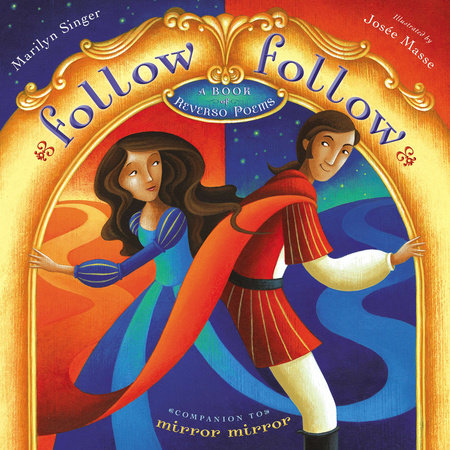
Follow Follow: A Book of Reverso Poems

Written by Marilyn Singer | Illustrated by Josée Masse


When you ask someone, “Can you repeat that?” they often use the exact same words so you understand what they want to tell you. But what if the exact same words could have completely different meanings? That’s the brilliant concept behind Follow Follow. In this ingenious book, 17 classic fairy tales are told in verse (and reverse) from two opposing points of view that will forever change the way you think about exchanges of ideas and dialogue.

In Your Wish Is My Command, Aladdin and the Jinni trade wishes and their view of what freedom means. Six lines from this clever poem read from Aladdin’s perspective: “I no longer wish to be a slave / to lords, magicians, merchants, other urchins. / Jinni of the Lamp, / I am just a poor / young knave. / Give me all I crave.”

And then from the Jinni’s perspective: “Give me all I crave, / young knave. / I am just a poor / Jinni of the Lamp. / To lords, magicians, merchants, other urchins, / I no longer wish to be a slave.”

The Emperor’s New Clothes loses none of its impact in Birthday Suit, a humorous abbreviated telling from the King’s ego-centric thoughts and the little boy’s stunning revelation.

Just as the original tale of The Golden Goose presents a princess who can’t help but laugh at the ridiculous parade going by her window, Silly Goose reveals both sides of the princess’s personality.

Ready, Steady, Go! gets into the heads of both the too-clever-for-his-own-good rabbit and his persevering competitor of The Tortoise and the Hare. The lounging hare thinks: “That ridiculous loser! / I am not / a slowpoke. / Though I may be / the smallest bit distracted, / I can’t be / beat. / I’ve got rabbit feet to / take me to the finish line.” While the tortoise urges himself: “Take me to the finish line! / I’ve got rabbit feet to / beat. / I can’t be / the smallest bit distracted. / Though I may be / a slowpoke, / I am not / that ridiculous loser.”

Will the Real Princess Please Stand Up? peeks into two bedrooms where would-be brides to the prince slumber. One exclaims, “This bed rocks! / I feel like I’m sleeping on feathery flocks,…” but the other complains, “feathery flocks? / I feel like I’m sleeping on / rocks.” Who will win the heart of the prince?

The Little Mermaid, Puss in Boots, The Pied Piper of Hameln, Thumbelina, The Three Little Pigs, The Nightingale, and The Twelve Dancing Princesses are also touched with Marilyn Singer’s magic wand of poetry. Under her spell the perfect choice and placement of words combined with a simple change of punctuation can send the verse swirling in the opposite direction with surprising results. As readers encounter each fairy tale, they’ll wonder, “How does she do it?” But there’s no time to ponder—another terrific tale follow follows!

Like being on the cusp of competing realities, Josée Masse’s vibrant illustrations deftly represent the viewpoints of the mirrored verses. On either side of a subtly split page, the opposing characters tell their side of the story amid contrasting color schemes and flowing lines that bridge the divide. In Your Wish Is My Command, Aladdin dreams in his rooftop window of riches and freedom while the Jinni floats away from his lamp over golden rooftops. On with the Dance makes clever use of the half-page design as the king ponders the condition of his daughters’ shoes while they are pictured dancing in a regal hall that doubles as the king’s crown.

Follow Follow would be a welcome addition to any fairy tale or poetry lover’s bookshelf. And since Marilyn Singer and Josée Masse really know what Repeat Day is all about, you’ll want to check out their other books: Mirror Mirror: A Book of Reverso Poems and their newest, Echo Echo: Reverso Poems about Greek Myths.

English and language arts teachers will also find these volumes to be a wonderful way to teach point of view.

Ages 5 – 11 and up (anyone who loves fairy tales will want to read this book)

Dial Books, Penguin Group, 2013 | ISBN 978-0803737693                                                         

Repeat Day Activity
celebrate-picture-books-picture-book-bookmark-craft

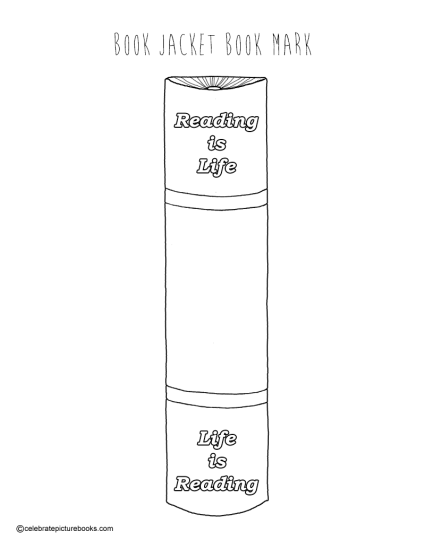
Book Jacket Bookmark


When a book is long, you can’t always finish it in one sitting. If you forget where you left off, you can often find yourself reading the same section twice. That’s okay—especially on Repeat Day!—but this bookmark will help you remember your place and get you reading again in style!

Supplies

  • Printable Book Jacket bookmark 
  • Colored pencils or markers
  • Poster board
  • Scissors
  • Glue

Directions

  1. Color your bookmark in your own unique style
  2. Cut the bookmark out
  3. Glue it to poster board if you’d like to make it more durable

June 1 – Global Running Day

celebrate-picture-books-picture-book-review-the-wildest-race-ever

About the Holiday

On your mark, get set, run! More than 2 million people in 160 countries have pledged to run on today’s holiday. Global Running Day is the evolution of National Running Day in the United States, which was started in 2009 by leading running organizations and races throughout the nation. It has been held annually on the first Wednesday of June ever since. This year will mark the first-ever Million Kid Run that aims to have a million kids around the world pledge to run with the hope that they will discover the joys of running and will be inspired to continue the sport through life. Participating is as easy as running in your neighborhood, gathering with friends to run, or even playing tag with your kids.

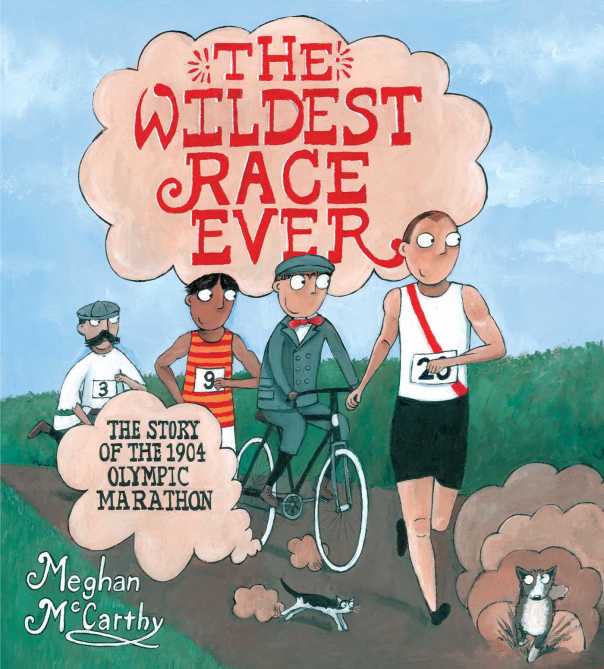
The Wildest Race Ever: The Story of the 1904 Olympic Marathon

By Meghan McCarthy


On August 30, 1904 the first United States Olympic Marathon took place at the World’s Fair in St. Louis, Missouri. Torrential rainstorms in the days before the race had washed away the original route, so a new, more difficult route was mapped out. Some of the 32 racers were:

Fred Lorz, a Boston bricklayer; John Lorden, the winner of the 1903 Boston Marathon; Sam Mellor from New York and the winner of two major marathons; Felix Carvajal, a mailman from Cuba; Arthur Newton; Albert Corey;  Len Tau, a long-distance running messenger from South Africa; William Garcia, the “greatest long-distance runner on the Pacific Coast”; and Thomas Hicks, who had only trained on flat terrain and was not ready for hilly St. Louis. There were also racers from countries all over the world.

At the starting line the racers waited in 90-degree heat for the signal. When the pistol shot rang out, they took off. The early leader was Fred Lorz. As the racers took to the hills outside the stadium so did cars full of reporters, judges, and doctors. Some spectators rode along side them on bicycles. All these vehicles stirred up so much dust that the runners choked on it.

At mile two, Sam Mellor and Fred Lorz were in the lead with Thomas Hicks only a little behind, but at mile 9 Lorz suffered terrible cramps and was driven away in a car. Now Albert Corey and William Garcia were neck and neck, and Hicks was catching up!

And what about Felix Carvajal? He ran and ran—but he also stopped and stopped. He loved talking to the spectators that cheered him on. It gave him an opportunity to practice his English! Arthur Newton, Sam Mellor, and Thomas Hicks exchanged the lead several times. No one knew who would win!

Where was Len Tau? Unfortunately, an angry dog chased him until he was a mile off course. Felix Carvajal also got distracted—not by a dog, but by an apple orchard! He settled down under a tree to satisfy his hunger. Soon, Mellor began suffering cramps and was suddenly out of the race.

Hicks suffering unbearable thirst in the staggering heat, began begging his trainers for water. They refused, instead giving him a concoction of strychnine and egg white. Another name for strychnine is rat poison! What would happen to Hicks after he drank it?Meanwhile who should appear out of the dust? Fred Lorz! He ran through the tape at the finish line and was declared the winner! Cheers erupted from the crowd. But wait! Someone said that Lorz had cheated. The cheers turned to boos, and even though Lorz said it was all a joke, the race committee banned Lorz from racing for life.

Hicks, somehow, kept running, buoyed by the cheering crowds. His trainers gave him more of the “health” drink, which made Hicks sluggish and confused. Nevertheless, he struggled on. When he came to the top of the last hill, seeing and hearing the crowds energized him. He pushed himself to run harder and harder until he broke through the tape. He collapsed on the ground just as he was declared the winner. He was rushed to the hospital, but was well enough to accept his award an hour later.

What happened to the other runners? All, except William Garcia who was overtaken by the clouds of dust, crossed the finish line at various times and with unique comments on their performance. These racers may have been very different, but they all had one thing in common. Each one accomplished an astounding feat: They competed side by side in the “killer marathon” of 1904 while upholding the Olympic spirit.

Meghan McCarthy with wit and suspense brings the story of the 1904 marathon to life for kids used to paved, well-marked routes, energizing sports drinks, supportive running shoes, and comfortable running clothes. Perhaps the only similarities to today’s races and yesteryear’s are the start and finish line and the cheering crowds! McCarthy’s inclusion of the humorous and the near-disastrous will keep readers’ hearts racing until the very end, when the topsy-turvy finish is revealed!

McCarthy illustrates The Wildest Race Ever with verve and comic flourishes that well-represent this extraordinary Olympics event. Kids will giggle and gasp to see what happens to the racers – and even a couple of spectators – during the race.

The Wildest Race Ever is a must-read for sports and history enthusiasts alike! 

Ages 4 – 9

Simon & Schuster, 2016 | ISBN 978-1481406390

Global Running Day Activity

celebrate-picture-books-picture-book-review-shoe-lace-craft

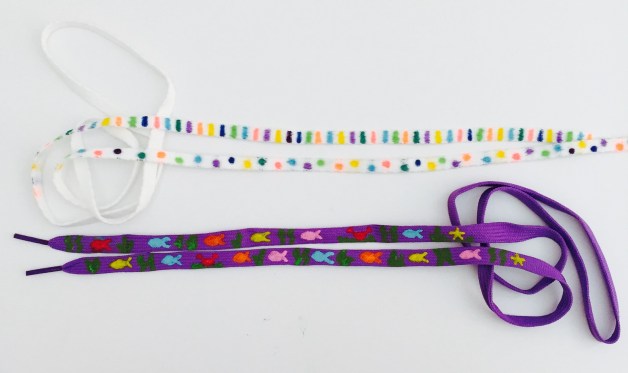
Sassy Shoe Laces


Did you know that having cool shoelaces makes you run faster? Well…that might not be exactly true, but you will definitely look good no matter what you’re doing if you make some unique laces for your shoes.

Supplies

  • Shoelaces in any color
  • Fabric paint or markers

Directions

  1. With the fabric paint or markers make dots, stripes, or any designs you like. You can even paint fish or flowers!
  2. Enjoy them on your run!

May 25 – National Photography Month

celebrate-picture-books-picture-book-review-pictures-from-our-vacation

About the Holiday

Established in 1987 by the United States Congress to commemorate the importance of photos to present and future generations, National Photography Month encourages photographers to really look at their subjects and become more intentional about making photos that will be meaningful in the future. Once you’ve taken your pictures, don’t just leave them on your phone, in the cloud, or on your hard drive. Print them and document the place, people, and time of each picture for future generations.

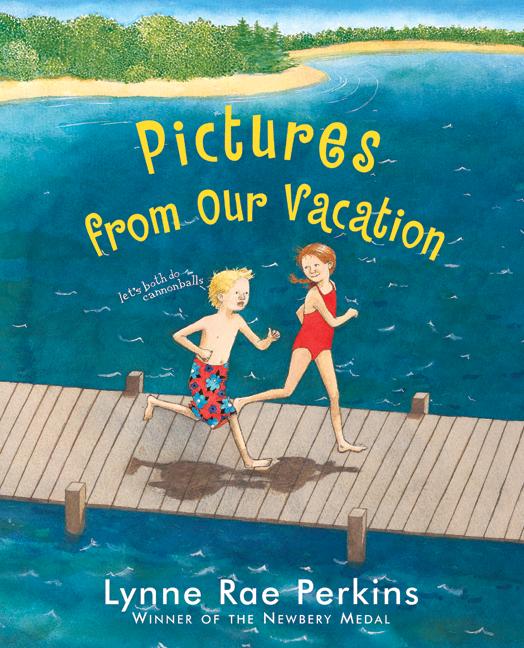
Pictures from Our Vacation

By Lynne Rae Perkins


Just before a family leaves on vacation, a girl and her brother each receive a Polaroid camera and a notebook from their mom so they can document their trip. The first picture the little girl takes is of her feet by mistake. During the two-day trip to the old farm where their dad grew up, the kids play with games from the activity bag and look out the window at the passing landscape. Her second photo taken through the car window reveals “there was not anything to look at out there,” although she does see an orange truck labeled “Yellow” and a motel with a red roof. 

She thinks that if she owned a motel it would be called the Blue Motel, and she begins to imagine in detail the accommodations she would offer. In the Jungle Cottage people would sleep in hammocks and shower under a waterfall. In the Sun Cottage, the bed would glow like the sun but turn off for sleeping. The floor of the Flower Garden Cottage would be real grass, and she thinks up many more.

Her reveries last until the family begins searching for a real motel. They stop at the Shangri-La, which advertises POOL, but as the girl’s photograph shows, “it didn’t have water in it.”

When the family reaches the farm, Dad sees happy memories everywhere. They find an old badminton set with warped racquets (shaped like potato chips, the girl says in her picture’s caption) and begin to play. But one minute into the game the rain comes down. It rains for days and the family spends the time playing cards, reading, and drawing.

After the rain stops, Dad takes the family to a hidden swimming spot. They forge their way through the now-overgrown secret path only to find a KEEP OUT sign and a guard dog.  They backtrack to the car and drive around and around, having trouble finding the lake. They stop at a park, where the girl takes a picture of hills that were built in ancient times to look like a snake from the air and one of a leftover Chinese food container where a squirrel was eating before it ran away.

At last they find the lake and run out to the end of the dock. But a boy warns them of an impending storm. Suddenly, the storm breaks and as the family shelters in the dock gazebo, the girl learns that tomorrow they are attending a memorial service. The next day the old farmhouse fills up with relatives who have traveled there for a memorial service for Great-aunt Charlotte.

At the service family members tell stories about Charlotte’s brave escapades and afterward the whole crew go back to the farmhouse to spend a several days. They eat dinner and tell more stories, and the cousins play. They roll down the hill, climb trees, and explore. That night as the kids sleep upstairs, murmurs of continued conversation float up through the grate. After a few days, the families disperse and only the girl and her brother and parents stay behind, but the memories and feeling of the full house remain.

Finally the girl’s family leaves too, and as they drive home she looks at the pictures she has taken. “‘These don’t remind me much of our vacation,’” she says. She snaps one last picture as they pass a row of huge electrical towers along the highway. When she looks at the photograph, however, the towers don’t look like the giant robots she imagined. She realizes that “it’s hard to take a picture of a story someone tells, or what it feels like when you’re rolling down a hill or falling asleep in a house full of cousins and uncles and aunts. There are a lot of things like that. But those kinds of pictures I can keep in my mind.”

Lynn Rae Perkins’ paean to formative old-fashioned vacations in which extended family members gathered to pass on history and traditions through stories told around the picnic table is a welcome reminder in this digital age that some “pictures” are better stored in one’s memory than on a device. Perkins’ choices of details seen on the two-day road trip, the incessant rain, and the changed landscape that lead to wrong directions are just the kinds of childhood events that often stick in a person’s memory for life. The story is charmingly told from a child’s point of view with realistic dialogue and a tone of heartfelt nostaligia.

Perkins’ realistic drawings of the family are homey and evocative. The kids lounge in the backseat of the car while the little girl conjures up the décor of her Blue Motel; the old house and fields of the family farm are rendered in warm golds and greens with humor and comfort; and you can almost hear the shouts and laughter of the family members gathered on the lawn at the reunion. This is a vacation kids will love to take.

Ages 4 – 8

Greenwillow Books, HarperCollins, 2007 | ISBN 978-0060850975

National Photography Month Activity

celebrate-picture-books-picture-book-review-frame

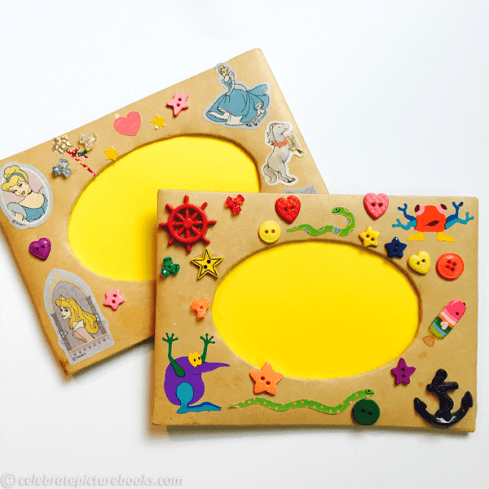
Fantastic Frame!


Your photographs show your unique personality, why shouldn’t the frame you put them in? Today, you can make a frame that perfectly suits your décor or snapshot!

Supplies

  • Cardboard or bare wood frame, available at craft stores
  • Stickers
  • Buttons
  • Jewels
  • Beads
  • Glue
  • Paint in your favorite color
  • Paint brush

Directions

  1. Paint the frame (optional), let dry
  2. Attach stickers, beads, buttons, or other objects
  3. Fill with your favorite picture

May 23 – World Turtle Day

celebrate-picture-books-picture-book-review-turtle-and-me

About the Holiday

American Tortoise Rescue founded World Turtle Day in 2000 to raise awareness and respect for turtles and tortoises and to promote conservation to help them survive. Celebrations take many forms, from fun activities where participants dress as turtles to educational programs that teach about this fascinating creature and how people can help turtles in danger.

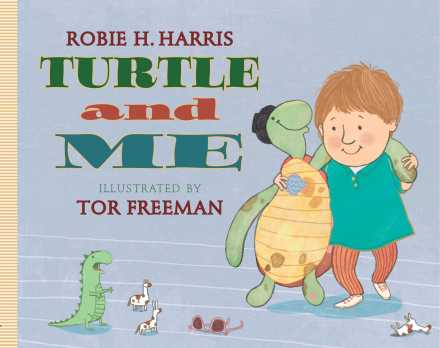
Turtle and Me

Written by Robie H. Harris | Illustrated by Tor Freeman


The little boy narrator of this story tells readers he met Turtle on the day he was born. Turtle was “way bigger” than he was. Now, the little boy is bigger than Turtle, but they are still best friends. When the boy was a baby he smiled and laughed every time he played with Turtle. As he grew he needed Turtle around to comfort him.

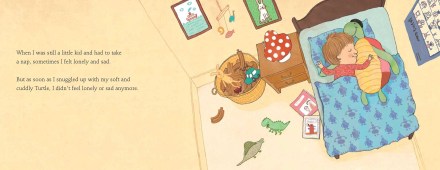
At naptime Turtle made him feel less sad and lonely and allowed him to sleep. Even now, when the boy is older, he still likes to play with Turtle even though his colors have faded, he’s ripped and raggedy, and some bad things have happened to him.

celebrate-picture-books-picture-book-review-turtle-and-me-sleeping

Image copyright Tor Freeman, 2015, text copyright Robie H. Harris, 2015. Courtesy of simonandschuster.com.

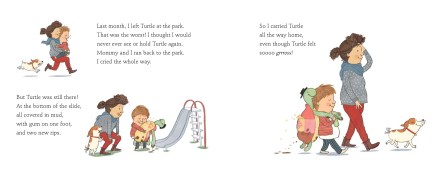
When bad things happened to Turtle the little boy felt terrible; sometimes he even cried and knew Turtle was sad too. But the boy always made sure that Turtle “gets sewn up, washed up, fixed up—and is okay again.” Once Turtle was left at the park. The little boy and his mom raced back and found Turtle covered in mud, sticky with gum, and with two new rips.  Even though Turtle felt gross the boy held him tight all the way home. At home Turtle received a very thorough wash and dry and an extra big hug. The little boy promised Turtle he would never let anything happen to him again.

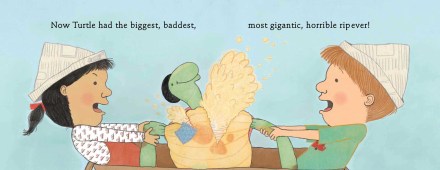
But then last Friday “the worst thing of all happened.” The boy and his friend were sailing around the world in a cardboard box. Turtle was the Captain. But the boy’s friend wanted to be Captain and steer the ship. She grabbed Turtle away, and the boy grabbed Turtle back. In the ensuing tug-of-war, Turtle suffered “the biggest, baddest, most gigantic, horrible rip ever!”

celebrate-picture-books-picture-book-review-turtle-and-me-playground

Image copyright Tor Freeman, 2015, text copyright Robie H. Harris, 2015. Courtesy of simonandschuster.com.

The boy shouted at his friend: “You ripped my Turtle!” Before leaving, the boy’s friend yelled back: “Having Turtle’s a BABY thing!” The little boy hugged Turtle tight and then looked at him. Turtle had lost almost all his stuffing. The boy quickly pushed the fluff back in and taped Turtle’s tummy back up.

But the boy had a change of heart. Suddenly Turtle looked ugly, and the little boy left him on the floor alone. At bedtime, when Daddy brought Turtle to his son, he said he didn’t want Turtle anymore, but sleep without Turtle was elusive. Finally, the boy shouted, “I can’t sleep!” and his dad asked, “Do you want Turtle?” “‘NO’”, the boy said. “‘Having Turtle’s a baby thing! And I’m BIG! And I’m getting bigger! So I don’t need Turtle ever again!’”

His dad thought about this and agreed. His son was getting bigger, but he’s not all big. Daddy picked up Turtle and played with him, making the little boy laugh. Then the boy copied his dad, making his dad laugh. The little boy realized that holding Turtle still felt good. He hugged him close and in no time was fast asleep.

celebrate-picture-books-picture-book-review-turtle-and-me-torn

Image copyright Tor Freeman, 2015, text copyright Robie H. Harris, 2015. Courtesy of simonandschuster.com.

Robie Harris’s sweet story of a little boy and his best friend Turtle reminds kids that no matter how big they get, it’s okay to find comfort in a favorite toy. The story has a deeper meaning for kids as well: things happen; sometimes bad things. But with love mistakes can be cleaned up, scrapes will heal, and scary situations will turn out all right. And when you need them, those who love you are there to help and help make you feel better.

The mishaps Turtle experiences are instantly recognizable and related in a gentile, honest way that will draw kids in. Near the end of the book, kids will root for the little boy and Turtle to patch things up and be best friends again.

Everyone wants a best friend as cool as Turtle! Tor Freeman’s vivid illustrations of the little boy and his plucky stuffed companion are adorable and full of emotion. The close family bonds are well depicted, and the images of the boy hugging Turtle will melt your heart. The looks of anguish on the little boy’s face as Turtle suffers stains and rips elicit sympathy and understanding and are followed up by comforting smiles when Turtle is fixed up.

Turtle and Me would be a terrific addition to home and classroom bookshelves for sweet story times and  when reassurance and a little extra love and comfort are needed.

Ages 3 – 8

little bee books, 2015 | ISBN 978-1499800463

World Turtle Day Activity

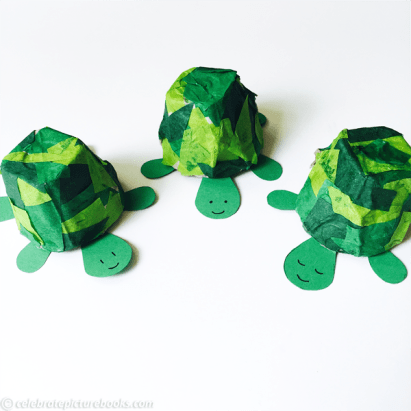
celebrate-picture-books-picture-book-turtle-shell-game

Follow the Turtles! Game


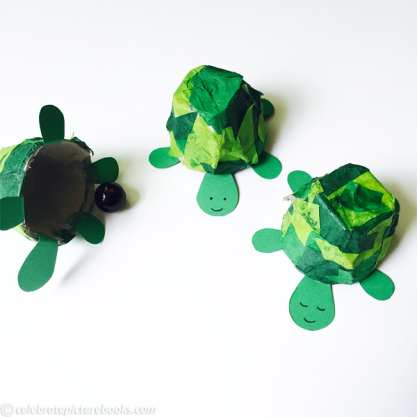
You can make this fun game from recycled materials and a little creativity! When you’re finished making the turtle shells, have fun guessing where the marble, bead or bean is hiding!

Supplies

  • Cardboard egg carton
  • Green tissue paper in different hues
  • Green construction or craft paper
  • A marble, bead, or bean
  • Glue
  • Scissors

celebrate-picture-books-picture-book-turtle-game

Directions

  1. Cut the egg carton apart into individual cups. You will need 3 cups for each game made.
  2. Cut the rims of the cups so they sit flat on a table.
  3. If the cups have open sides, fit two cups inside one another to fill the gaps
  4. Cut the tissue paper into small shapes
  5. Brush glue on a cup (I used a paper towel to apply glue)
  6. Cover the egg cup with pieces of tissue paper. Repeat with other cups.
  7. Let dry
  8. Cut a head and feet from the green craft paper
  9. Tape or glue the edges of head and feet to the inside of the cups
  10. Add a face to the head

To play the game:

  1. Line up the cups on a table
  2. Put a bead, bean, or marble under one of the cups
  3. Show the other player which cup the object is under
  4. Quickly move the cups around each other several times
  5. Ask the other player which cup they think the object is under
  6. Take turns playing

Extra Game: Make three more and play turtle tic-tac-toe! 

May 21 – It’s Get Caught Reading Month

celebrate-picture-books-picture-book-review-whoops

About the Holiday

Created by former Congresswoman Pat Schroeder, now president of the Association of American Publishers, Get Caught Reading Month promotes good reading habits and encourages people of all ages to take part in the fun of reading. Reading to young children is especially important as research indicates that early language experience stimulates a child’s brain to grow and gives kids a huge advantage when they start school. Whether you like fiction, non-fiction, poetry, graphic novels, or comics, there is an amazing book just waiting on a shelf for you!

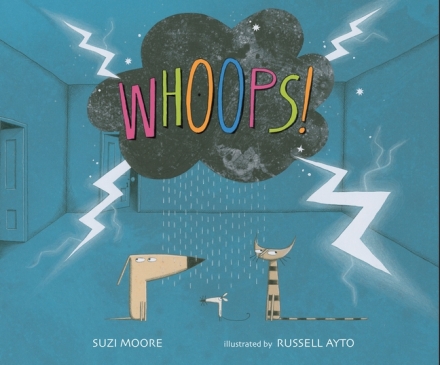
Whoops!

Written by Suzi Moore | Illustrated by Russell Ayto


This is the cat that can’t meow. And here’s the dog that can’t bowwow. And the little mouse when she tries to squeak? She opens her mouth but she just can’t squeak.

But the owl says to the three “‘Find the old lady in the tumbledown house. She’ll have a spell to make you all well.” So they go in search of the tumbledown house and find it in the middle of the woods. When they go inside, the little old lady doesn’t seem surprised to see them. In fact she’s heard of their problem and consults her spell book. She casts a spell “and the whole house shook, the wind blew in and the rain came down. Then the tumbledown house turned around and around.”

Now the cat says, “Cluck!” And the dog says, “Quack!” And the mouse says, “Cock-a-doodle-doo!” And the little old lady? She says, “Whoops!” Maybe the right spell is on page three. She casts a new spell and there’s a flash and a crash and the tumbledown house turns around and around. This time the cat says, “Baa!” and the dog says, “Neigh!” and the mouse says, “Moo!” And the little old lady? She says, “Whoops!”

The spell on page seven brings the three closer: the cat says, “Woof!” and the dog says, “Squeak!” and the mouse says, “Meow!” And the little old lady? She says, “Whoops!” That special spell to make them all well must be on page ten. The old lady waves her wand and the storm rages and the tumbledown house turns around and around. Finally, the cat says, “Meow!” and the dog says, “Woof!” and the mouse says, “Squeak!”” And the little old lady? She says, “CROAK!”

Whoops!

Suzi Moore’s laugh-out-loud, shout-out-loud tale of mistaken identity will have kids reading along during the first go-round. The catchy, repeated rhymes, cadence of the words and sentences, errant spells, and building storm create infectious silliness at its best. Kids will eagerly await what comes next for the dog and the cat and the mouse who have trouble speaking.

Russell Ayto accompanies this fun story with a crazy assortment of creatures drawn with maximum comic effect. The thin, angled shapes of the cat, dog, and mouse make for heroes kids will root for, and the little old lady with a cloud of blue hair sitting in the taaall-backed chair will make kids giggle. Who is she knitting three-legged stockings for? And what magic does her knitting-needle wand and maniacal grin possess in that narrow tumbledown house in the middle of the woods?

Ages 3 – 7

Templar Books, Candlewick Press, 2016 | ISBN 978-0763681807

Get Caught Reading Month Activity

celebrate-picture-books-picture-book-review-wand

Reading is Magic! Wand


When you read you are transported into another world—it’s like being under a magic spell! Make your own magic wand and conjure up spells to take you wherever you want to go!

Supplies

  • Wooden dowel
  • Wooden ball with a hole to match the size of the dowel
  • Paint in your favorite colors
  • Ribbon, jewels, or other material to decorate your wand
  • Glue gun or strong glue
  • Paintbrush

celebrate-picture-books-picture-book-review-wand

Directions

  1. Paint the dowel however you would like—one color, with dots or stripes, or multicolored
  2. Paint the wooden ball—you can even give it a mystical look with glow-in-the-dark paint or glitter
  3. Glue the wooden ball to the dowel with the hot glue gun or strong glue
  4. Decorate your wand with jewels, ribbon, or other material

May 15 – International Day of Families

celebrate-picture-books-picture-book-review-families-families-families

About the Holiday

This United Nations sponsored observance was initiated in 1993 to reflect the importance of families worldwide. The day provides an opportunity to promote issues affecting families, including social, economic, educational and demographic topics. This year’s theme is Families, Healthy Lives and Sustainable Futures and focuses on ending poverty, promoting shared economic prosperity, social development, and health while protecting the environment. The holiday is marked with workshops, educational opportunities, publications, and special community events.

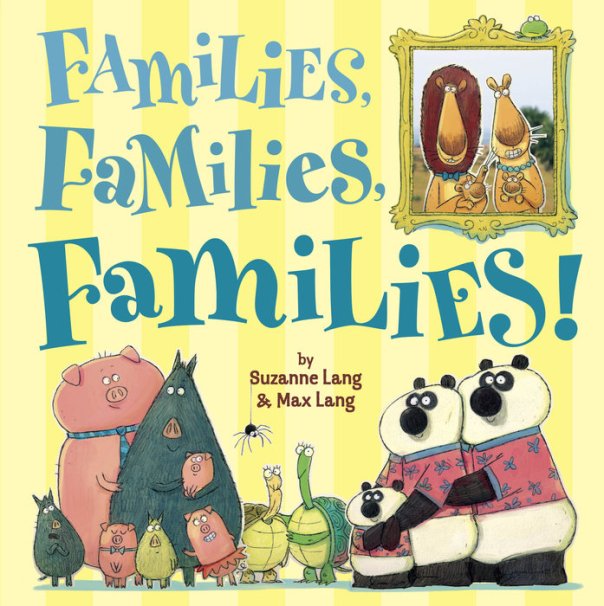
Families, Families, Families

Written by Suzanne Lang | Illustrated by Max Lang


Families—haven’t they always come in all shapes and sizes? With all different customs and traditions? Families, Families, Families delves into this most enduring—and endearing—structure of life in a way that makes sense to kids in a funny and honest way. “Some children have lots of siblings. Some children have none” the book starts. “Some children have two dads. Some have one mom. Some children live with their grandparents…and some live with an aunt.”

Lang does an excellent job of presenting all types of familial arrangements within the pages of the book. Nearly every child will happily find themselves here. Interspersed among the varieties of households, humorous comparisons and rhymes (“some children have many pets…and some just have a plant!”) elevate this book to a tribute to understanding, acceptance, and inclusion. After all…“if you love each other, then you are a family.”

Max Lang hit on an inspired way—during this era of selfies, snapchat, and the like—to illustrate the concepts of family. More than 17 animal families pose for portraits in which comic drawings of smiling moms, dads, kids, and relatives are superimposed onto photographed backgrounds. The portraits are framed with another touch of humor: A chicken family photo sits in a frame made of hay, an octopus and her four children smile from a frame made of seashells, and the Tigers are displayed in a frame of bones. The photos hang on wallpapered, barn, and underwater cave walls; sit on fireplace mantels; are pinned to bulletin boards; and fill scrapbook pages.

Families, Families, Families brilliantly demonstrates how every child takes pride in his or her family—just as the readers take pride in theirs.

Ages 3 – 7

Random House Books for Young Readers, 2015 | ISBN 978-0553499384

International Day of Families Activity

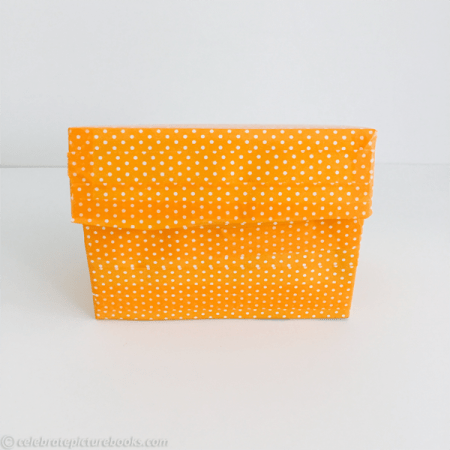
celebrate-picture-books-picture-book-review-recipe-box

Make Your Own Recipe Box


One of the best ways to spend time together is to bake up a favorite recipe and enjoy the results! World Baking Day is celebrated this week, so for the next few days, I’ll be offering baking-related activities for you to have fun with! With a small box you can make your own recipe organizer to keep tasty recipes close at hand!

Supplies

  • A small box with a hinged lid or separate lid, at least 5 inches by 3 1/3 inches (fits a small index card). A Twinings Tea Box works well as does a small wooden box available from craft stores
  • Washi tape or paint
  • Paint brush

Directions

  1. Cover your box with washi tape or paint your box
  2. Decorate your box with your unique style

Picture Book Reviews

May 10 – Mother Ocean Day

celebrate-picture-books-picture-book-review-at-the-sea-floor-cafe

About the Holiday

The brain child of the South Florida Kayak Fishing Club and enacted in 2013, Mother Ocean Day promotes awareness of the beauty and wonder of the world’s oceans. Teeming with rare and surprising creatures and plants, the ocean remains one of Earth’s most amazing mysteries. Today, take time to enjoy all the ocean has to offer—go to the beach and walk, snorkel, swim, or fish—or if you’re more of a landlubber read a book about our Mother Ocean.

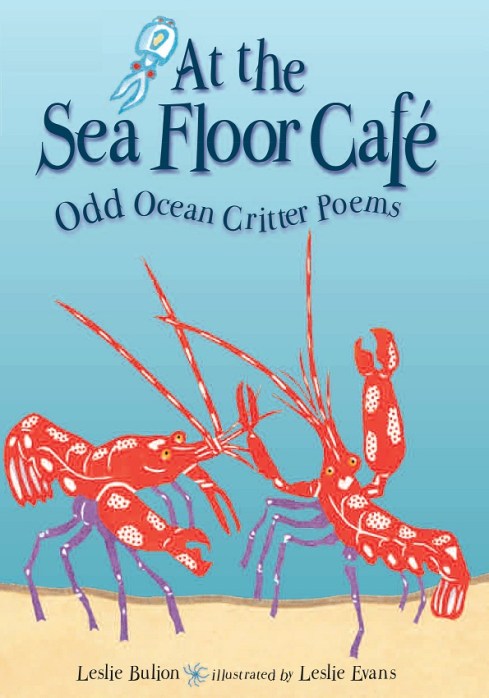
At the Sea Floor Café: Odd Ocean Critter Poems

Written by Leslie Bulion | Illustrated by Leslie Evans


With a jaunty exhortation to “Dive In!” Leslie Bulion invites readers to “…visit a habitat shallow and deep. / and boiling hot, where acids seep, / and frigid and pressured and mountainy-steep, / Come explore the sea! Seventeen species of “odd critters, enormous and tiny…hunters and foragers, hiders and peekers” are described in clever, informative verse.

The Coconut Octopus is a wily creature: “This octopus walks backwards on two arms, / And wraps the other six around its top. / It ambles free of predatory harms, / And thus avoids becoming shark-chewed slop.” The symbiotic relationship between the Leopard Sea Cucumber and the Emperor Shrimp is told in alternating lines of blue and red.

“I inch along.”

“We hitch a ride. / We tour the seafloor country side.”

“I’m ship,”

We’re crew. / We swab the decks / By eating scummy algae specks.”

I’m camouflaged / in leopard spots.

While not the swiftest / Of the yachts, / A top-notch spot to meet a mate.”

When threatened I eviscerate.

To spew my guts / Is quite a chore, / And it takes weeks / To grow some more. / But I keep predators away.

We live to crew / Another day.

The unexplained habit of the convict fish, which “eats” its young every night just to spit them out again, is described in “Fish Food,” and readers can dig their teeth into another meal-related relationship between the reef shark and the cleaner wrasse in “Healthy Eating.” In “Dental Health” readers learn that narwhal’s tusks are much more than defense mechanisms. Instead, each tooth “contains ten million nerves to sense / environmental evidence.” And what’s more—“…when we see them crossing spars / and jousting underneath the stars, / one’s tusk above and one’s beneath, / it’s not a fight; their brushing teeth.”

“Crabby Camouflage” has never been so elaborate or decorative as that concocted by the jeweled anemone crab, and “Dolphin Fashion” reveals an ingenious way to protect a tender snout: “A bottlenose counseled her daughter: / Put this sponge on your beak underwater. / You can scare out more fish, / Poke sharp stones as you wish, / And your skin’ll stay smooth like it oughter.”

Snapping shrimp, epaulette sharks, the violet snail, sea spiders, krill, the broody squid, sipohonophores, erenna, larvaceans, osedax, and the remotely operated vehicles that give us a view of the ocean floor are also celebrated in this fun poetry collection.

Each poem is followed by scientific information about the subject of the verse.

Leslie Bulion piques readers’ interest in these fascinating ocean creatures with her smart, witty rhymes that reveal little-known facts.

Leslie Evans, with her printmaker’s eye, illustrates the deep blue pages with stylized depictions of the fish and animals that populate the sea, allowing readers to visualize the quirks and adaptations written about.

Ages 6 and up

Peachtree Publishers, 2011 | ISBN 978-1561455652

Gardening for Wildlife Month Activity

celebrate-picture-books-picture-book-review-flower-vase

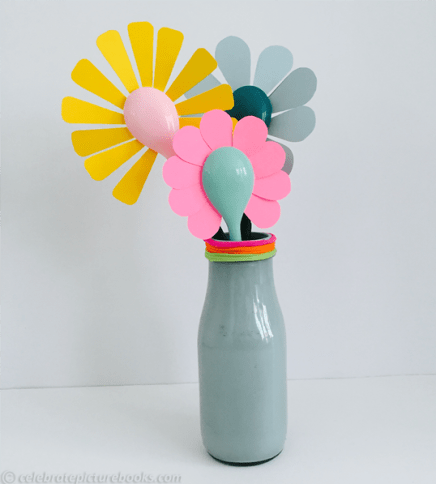
Spoon Flowers

The rounded scoop and long “stem” of plastic ice-cream spoons make a perfect base for pretty wildflowers. You can use the printable petal template or make petals of your own design to fill your vase with color

Supplies

  • Printable Petal Template
  • 3 – 4 plastic ice-cream spoons, these are available in different colors at party supply stores or you can paint them the color you’d like
  • Multi-purpose paint in colors of your choice, if you are painting the spoons
  • Heavy craft paper in your favorite flower colors
  • Green ribbon
  • Ribbon, hairbands, weaving loom bands, or colored wire
  • Glue gun or strong glue
  • Paintbrush 
  • Scissors
  • Beans, sand, pebbles, or glass or plastic beads to fill the vase

Directions

  1. Print or trace the petals onto colored paper. The number of petals you need for each flower will depend on the size of the spoon
  2. Cut out the petals
  3. With the glue gun or strong glue, attach the petals to the spoon, gluing the end of the petals around the inside edge of the spoon, Let dry
  4. Wrap the handle of the spoon with the green ribbon and glue in place
  5. Fill the vase ¾ full with beans, sand, pebbles, or beads
  6. Decorate the rim of the bottle with the ribbon, bands, or wire
  7. Push the flower stems into the vase and arrange