June 12 – National Rivers Month

celebrate-picture-books-picture-book-review-otters-love-to-play

About the Holiday

Rivers are beautiful, provide recreation, and are crucial to our water supply. Did you know that in the United States 65% of our drinking water comes from rivers and streams? This month environmentalists and others promote awareness of the importance of keeping the nation’s rivers pollution free to protect the fish and animals that call them home and increase enjoyment for all. To help the cause, join a volunteer river clean-up crew, help monitor water quality, or learn more about your local river system. Whether you like to fish, swim, boat, or just laze on the bank, June is the perfect month to get out on a river! You might even see some otters—the subject of today’s book!

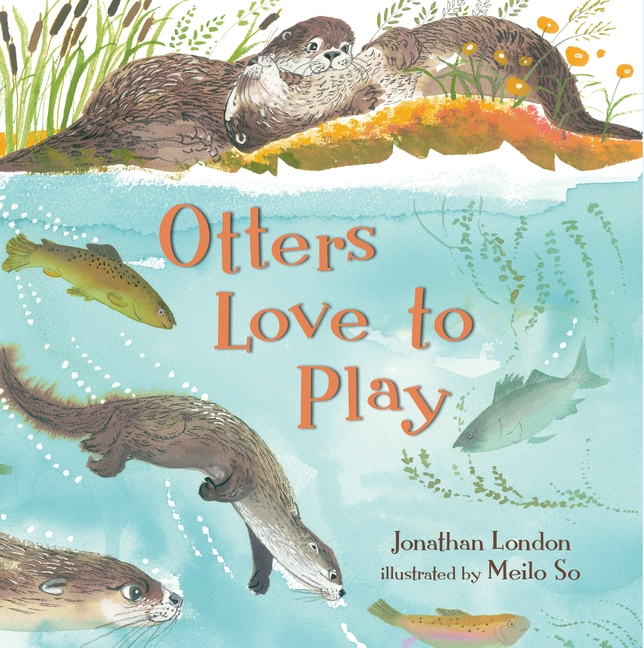
Otters Love to Play

Written by Jonathan London | Illustrated by Meilo So


It’s spring and two otters have moved into an abandoned beaver lodge to start a family. In a soft nest of moss, leaves, and grass the mother otter gives birth to three pups. The pups first open their eyes to the world when they are five weeks old. At two months old they’re ready to come out of the den to play. Playtime is fun, but for the baby otters it’s also work. Running, twisting, wrestling, and matches of tug-of-war teach valuable hunting skills and solidify family bonds.

As spring turns to summer, the pups’ thick waterproof coats grow in, and it’s time for swimming lessons to begin. There are no floaties here! The mother otter simply grabs her charges by the scruff of the neck and drops them into the river. Their mother shows them how to dive and glide and come to the surface as they follow her single file. “Within days, the otter pups gracefully spin and flip and swish like underwater acrobats.” Again and again “they scramble up a mud slide and SLIIIIIIIIIIIDE back down to the water—Ka-Spash!”
celebrate-picture-books-picture-book-review-otters-love-to-play-in-autumn

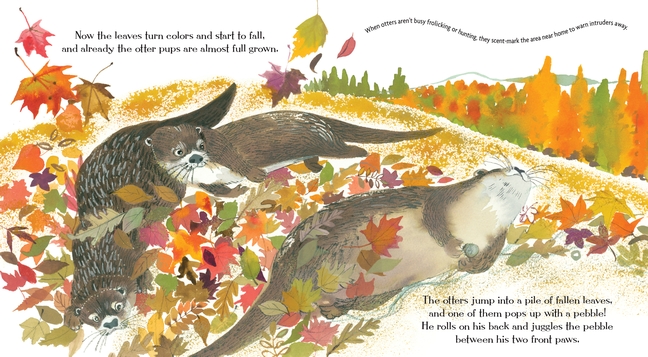
By the end of the summer the pups know how to catch small fish and how to nudge out frogs, crayfish, turtles, and snakes from their hiding places among the rocks. Autumn brings more opportunities for fun as the nearly full-grown pups tumble in the fallen leaves. Even winter’s blasts don’t deter the otters. With their thick fur they roll in the snow and catch fish in the icy river water.

But an ominous shadow appears on the fresh snow as the pups belly-slide down a snowbank. Something is waiting and watching…. So too is mother otter. Screaming and hunching she “slides across the snow and with a terrible GRRRROWL…scares the fox away!” Throughout the winter the otters snuggle in their den, and when the rainy spring makes muddy river banks, the otters come out and speed down the slippery slide “because otters love to play!”

You can’t help but love otters. Watching them dive, swim, and frolic just puts a smile on your face. And what’s more these sleek river creatures are fascinating animals! Jonathon London has written a story that captures the spirit and exuberance of one otter family while incorporating intriguing facts about their dens, birth statistics, purposeful play, hunting techniques, protective fur, predators, and defenses—did you know that otters can slide on snow at speeds up to 18 miles (29 kilometers) per hour?! London’s lyrical journey through the first year of an otter’s life makes captivating reading for young children just navigating the world themselves.

Meilo So’s enchanting otter family will delight readers. Images of the pups somersaulting, sliding, splashing, and swimming charmingly depict the sleek, supple movements of these frisky animals. Their smooth coats, rendered in soft browns with white and black accented texture, and their mischievous, ever-present smiles are realistically portrayed, inviting kids to reach out and pet them. So’s river scenes are beautiful—the pale blue water reflects deep gold and green trees, pink and yellow wildflowers and delicate green grasses flutter along the river bank, and the depths of the underwater world swirl with muted sage greens and blues as the otter pups frolic among gray- and olive-hued fish. Autumn comes with fiery orange and purple leaves, and winter falls shivery white as the russet fox is chased away.

Otters Love to Play would be a lovely gift for any child and a welcome addition to any classroom or school library.

Ages 4 – 8

Candlewick Press, 2016 | ISBN 978-0763669133

Visit Jonathan London’s website for more books by this prolific author.

View more books and art by Meilo So.

National Rivers Month Activity
celebrate-picture-books-picture-book-review-otter-coloring-page

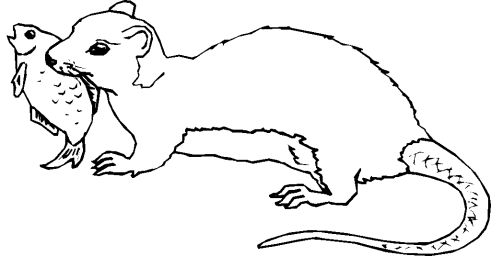
Otter Coloring Page


You “otter” love this coloring page, with its cute river creature who has just caught dinner! You can color it with pencils, crayons, or markers or consider making a collage with bits of paper, cloth, or leaves and sticks. Give the otter a den to snuggle in and a river for frolicking! Here’s your Otter Coloring Page!

June 11 – World Doll Day

celebrate-picture-books-picture-book-review-this-is-my-dollhouse

About the Holiday

World Doll Day came about through the efforts of Mildred Seeley, a doll collector and prolific author on doll-making and -collecting subjects and founder of Seeleys, the leading maker of porcelain dolls.Her collection of French dolls broke records when it sold in 2002. In 1986 she wrote an open letter to all media outlets and doll enthusiasts to join her in creating a special holiday about dolls on the second Saturday of June each year. Seeley envisioned World Doll Day as a time when dolls could be gifted to loved ones and strangers alike, promoting more universal understanding. She also hoped that museums, libraries, and stores would create interesting exhibits and that magazines and newspapers would run special editions. If you have a special doll collection, share it with others today, and if you know of a child or adult who would love a new or family heirloom doll, consider buying or giving them one!

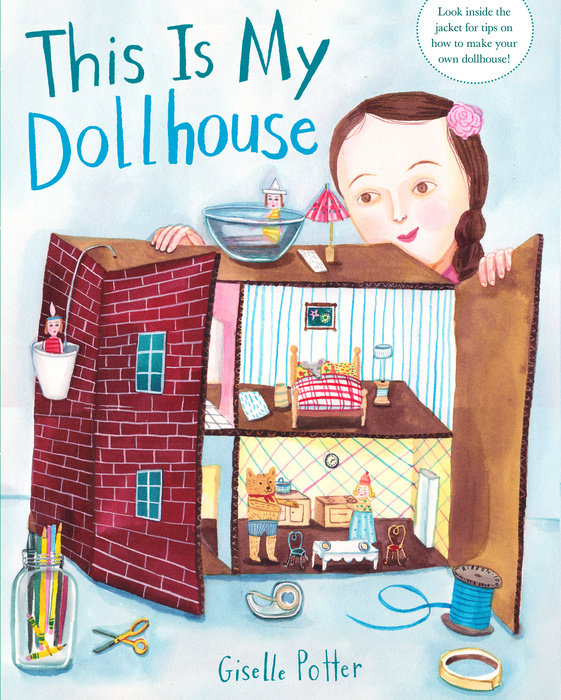
This Is My Dollhouse

By Giselle Potter


A little girl loves playing with her dollhouse every day. Her dollhouse began as a normal cardboard box, but the girl painted brick walls on the outside, divided the box into rooms, and drew wallpaper in each with her markers. Ingeniously, she filled the rooms with homemade furniture—a small box with a window cut out and a magazine picture placed inside became a TV; a wooden block decorated with burners and a door became an oven; a scrap of carpet became a rug, and the family eats pasta made from small bits of yarn served in a bottle cap.

Her diverse dollhouse family consists of Grandma Mousey, a toy mouse; Mommy, a doll with blond hair; Daddy, a stuffed teddy bear; and twins Lucy and Lola, two small dolls. Each morning Lucy and Lola dress in their fancy clothes made of ribbon. Mommy serves them fried eggs, which just moments ago were white circles of paper with colored yellow centers. After breakfast the twins ride the paper cup elevator to the cardboard box roof, where a bowl of water swimming pool awaits.

Later the pair relaxes in front of the TV while Daddy gives them tiny tissue-paper popcorn. When day fades into nighttime, the little girl tucks the whole family into the big bed and sings them a lullaby.

The girl has a friend named Sophie, who also has a dollhouse. Hers is store-bought and has perfect figures with painted on clothes, staring dot eyes, and plastic hair. All the furniture matches and the refrigerator comes stocked with plastic food. When the little girl visits Sophie they play with the dollhouse. The girl suggests various imaginative scenarios for the family—going on vacation, getting a new dog to walk, having the boy break his leg—but Sophie rejects her ideas. She doesn’t have an airplane for a vacation, the stuffed dog does not belong to the family, and the notion of a broken leg only elicits a look.

celebrate-picture-books-picture-book-review-this-is-my-dollhouse

The girls soon tire of their game and head outside. On the way home the little girl worries that if  Sophie came to play at her house she would hate the homemade dollhouse. Sophie does come over to play, however, and in preparation the girl hides her dollhouse under a pile of blankets. It doesn’t take Sophie long to uncover the dollhouse and want to play with it. The girl is so nervous about how Sophie will react to her “not perfect” toy that her knees begin to itch and a lump forms in her throat, but as they open the dollhouse, her fears are allayed.

The normal daily routine of the girl’s dollhouse family enchants Sophie, and she quickly takes up the whimsical scenarios she had rejected at her own house. All too soon Sophie’s mom arrives to pick her up. Given the promise that she can return tomorrow, Sophie heads home while the little girl makes plans for Lucy and Lola’s birthday party.

Doll and dollhouse lovers, crafters, artists, miniaturists and anyone with a fanciful bent will be charmed by Giselle Potter’s This Is My Dollhouse. The story of two friends from homes with different philosophies resonates beyond the subject of the two dollhouses. Being open to new experiences, allowing freedom of imagination, as well as having pride and confidence in one’s own talents and preferences are strong themes treated sensitively while set amid inspired creativity.

Potter’s folk-art-style illustrations are colorful and reinforce the homey appeal of handcrafted toys. Each page organically contains ideas for using recycled and common household items to make cute dollhouse furniture and objects. Inside the book jacket are more illustrated ideas for building a homemade dollhouse. Kids and adults will be inspired to save thread spools, corks, clothespins, ribbon, small bottles, and other items and will begin looking at common objects in a new light.

Ages 4 – 9

Schwartz & Wade Books, Random House, 2016 | ISBN 978-0553521535

World Doll Day Activity

celebrate-picture-books-picture-book-review-dollhouse-coloring-page


Dollhouse Coloring Page


Here’s a cute dollhouse that you can add to and color! So grab this printable Dollhouse Coloring Page and get creative!

Picture Book Review

June 9 – It’s National Fresh Fruit and Vegetables Month

celebrate-picture-books-picture-book-review-bananas-in-my-ears

About the Holiday

With all the scrumptious fresh fruit and vegetables available at your local farmers market or grocery store, how can you help but enjoy good nutrition? Those red, red strawberries and midnight blue blueberries make perfect smoothies, and the brilliant orange carrots and peppers look good enough to eat! Oh, wait! You can eat them! So grab your bag or basket and head to the store—or plant or pick your own!

Bananas in My Ears: A Collection of Nonsense Stories, Poems, Riddles, and Rhymes

Written by Michael Rosen | Illustrated by Quentin Blake


Things may go from the ridiculous to the sublime or from the sublime to the ridiculous, but the rhymes, stories, poems, and jokes in this collection are both ridiculous and sublime. Divided into four sections—The Breakfast Book, The Seaside Book, The Doctor Book, and The Bedtime Book—these bite-sized tales will nibble at your funny bone.

Each book includes six to seven short pieces that humorously reveal the inner workings of familial and community relationships. Recurring titles “What if…,” “Things We Say,” and “Nat and Anna” siblings stories tie the books together. The tone for Bananas in My Ears is set with aplomb in the very first offering, “Breakfast Time,” which reveals the chaos of early morning with its spilled milk, banging trash cans, pets on the table, school clothes ruined, and “I think I’m going crazy!” shenanigans. 

“What If…” (Breakfast Book) combines kids’ natural penchant for thyming with their unbounded imagination and a bit of stream-of-consciousness to boot. Just as a little boy is to bite into a piece of toast, he has this thought: “What if / a piece of toast turned into a piece of ghost / just as you were eating it / and you thought you were going to sink your / teeth into a lovely crunchy piece of hot toast / and butter and instead this cold wet feeling / jumps into your mouth / going, / ‘Whoooooooooooooooooooo!’ / right down into your stomach…”

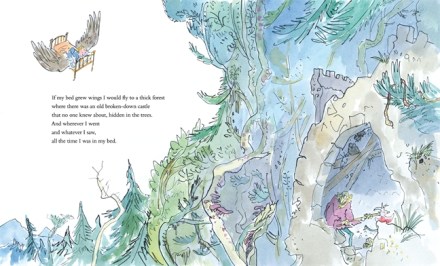
celebrate-picture-books-picture-book-review-bananas-in-my-ears-internal-art-cave

Adding speech bubbles and expressive art to commonly used phrases in “Things We Say” transforms throw-off lines like “My hair’s a mess,” “Look what I found,” “You can’t lie there all morning,” and “Now what seems to be the trouble?” into self-deprecating humor all can relate to.

Four stories of Nat and his older sister Anna zero in on particular moments that illuminate the sibling relationship, At once opposed and in sync, Nat and Anna negotiate moments in which Anna is put in charge of watching Nat at breakfast with topsy-turvy results; a fearful story Anna tells Nat about jellyfish that somehow backfires; a trip to the doctor that turns into a competition about future professions; and a “who’s-on-first” type banter that allows Anna to enjoy some alone time.

“Three Girls” is a clever take on outwitting-an-ogre tales. Three girls walking on the beach come across a cave. One girl goes in and “sees a pile of gold sitting on the rocks, so she thinks, ‘Yippee, gold, all for me!’ And she steps forward to pick it up and a great big voice booms out ‘I’m the ghost of Captain Cox. All that gold stays on the rocks.’” Afraid, she runs out of the cave. The second girl is braver. She enters the cave, sees the gold, hears the same booming voice and is also chased away. Undeterred, the third girl walks into the cave, sees the gold, and hears the booming voice of Captain Cox. Instead of running away, however, she says, “‘I don’t care. I’m the ghost of Davy Crocket, and all that gold goes in my pocket.’” With her treasure secured she hightails it out to join her friends.

Among other fun stories in this volume are: “These Two Children,” with a lively recitation of familiar bedtime routines; “Fooling Around,” that offers light rhymes on children’s names; and another “What If” (the Breakfast Book) that will have kids not only laughing, but cracking up at a sassy leg—“What if / hard-boiled eggs turned into hard-boiled legs / just when your dad was eating his egg / and he says, / ‘Hey, what’s this?’…”

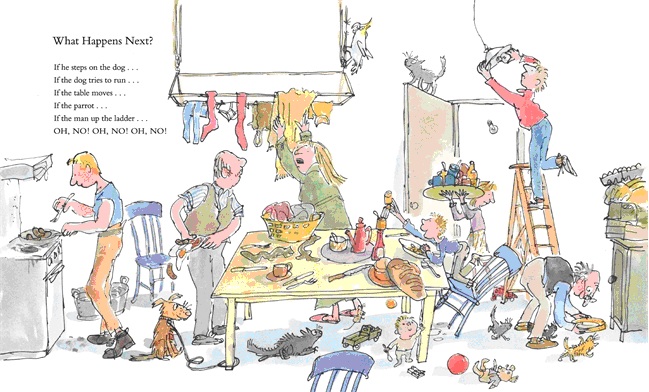
celebrate-picture-books-picture-book-review-bananas-in-my-ears-internal-art-what-happens-next

Michael Rosen understands, as kids do, that sometimes nonsense makes perfect sense and that even the commonplace is quite absurd when you think about it. This collection of witticisms is sure to resonate with children. Just hand a child this book and get ready for giggles—and, oh yes, adults will chuckle too.

In his colorful pen and ink drawings the inimitable Quentin Blake enlivens each piece with rakish kids, wide-eyed parents, sloppy messes, bouncing, jumping joy, and all the silliness that contributes to having a great day. “An accident waiting to happen” doesn’t begin to describe the bedlam ensuing in “What Happens Next?” as each character and object is set up to play their part in an oh-so-human game of dominoes. Kids will love seeing themselves and the world around them so candidly drawn, and adults will appreciate the whimsical sophistication of the same.

Ages 5 and up

Candlewick Press, 2012 | ISBN 978-0763662486

National Fresh Fruit and Vegetables Month Activity

celebrate-picture-books-picture-book-review-fruit-bowl-coloring-page

Fruit Snack Coloring Page


Grab a nutritious snack to munch on while you color this printable Fruit Snack Coloring Page that offers up all your favorites!

Picture Book Review

May 28 – It’s Get Caught Reading Month

celebrate-picture-books-picture-book-review-baby-wren-and-the-great-gift

About the Holiday

You can never read too many books! This idea is definitely supported by the Get Caught Reading campaign that makes people aware of all the benefits of sitting down with a fantastic book—whether it’s fiction, non-fiction, drama, or poetry. To celebrate this holiday, get involved with a literacy program, a book drive, or thank a teacher or librarian for always supplying you with great reads!

Baby Wren and the Great Gift

Written by Sally Lloyd-Jones | Illustrated by Jen Corace


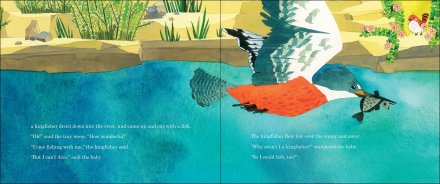
From a narrow crevice a little brown wren peeks out of her nest. Her vantage point gives her a view of all the wonderfulness around her. Monarchs flutter in the Milkweed, breezes whisper in the switch grass, and the glittering river flows along. Emboldened, the baby wren hops onto the canon ledge just as a kingfisher dives down to the river and captures a fish.

celebrate-picture-books-picture-book-review-baby-wren-and-the-great-gift-in-the-nest

Image copyright Jen Corace, text copyright Sally Lloyd Jones. Courtesy of Zonderkidz

“Oh! How wonderful!” the little wren exclaims. The kingfisher invites her to come along, but the wren tells the bigger bird that she can’t dive. As the kingfisher flies away, the wren wonders why she can’t fish too.

Next, two frisky ring-tailed cats cartwheel by. “Oh, how wonderful!” little wren says. The ring-tails want her to play with them, but the wren says that she doesn’t have a ring tail, so the cats cartwheel away leaving the baby wren wondering why she isn’t a ring-tail cat who can cartwheel.

celebrate-picture-books-picture-book-review-baby-wren-and-the-great-gift-kingfisher

Image copyright Jen Corace, text copyright Sally Lloyd Jones. Courtesy of Zonderkidz

Just then some sunfish splash in the water nearby. The little wren also declines their invitation to play, saying that she can’t swim. As the sunfish hurry down the river, the wren wonders why she isn’t a sunfish who can swim. Overhead two eagles glide on the winds of a gusty storm. “Oh, how wonderful,” the wren says. “Come and see the thunderclouds,” the eagles tell her. But the baby is afraid of the big storm, and the eagles soar higher and higher and away. Watching them, the wren regrets that she isn’t brave and wonders what she can do that is wonderful.

celebrate-picture-books-picture-book-review-baby-wren-and-the-great-gift-sunset

Image copyright Jen Corace, text copyright Sally Lloyd Jones. Courtesy of Zonderkidz

Suddenly, the sun paints the canyon pink. The baby wren looks and looks and looks. The beauty of the sky and the canyon “bumped into her heart, it dazzled in her eyes, it pushed on her throat until the tiny trembling bird with all her tiny might sang by herself a song.”  Her glorious carol echoes through the canyon, and the eagles soaring overhead call to her: “‘You are only little, but your song fills the whole canyon.’” And as the kingfisher, the ring-tailed cats, the sunfish, and the eagles listen, the little wren fills the air with singing.

Sally Lloyd-Jones’ inspirational story is perfect for this time of year when baby birds are just leaving the nest and children are moving on to new grades or new experiences. Jones’ lyrical and gentle tale offers comfort to those wondering just where they fit into the world. As baby wren discovered, everyone has innate talents that shine when the time is right.

Jen Corace’s vibrant illustrations of the baby wren’s canyon home employ bright yellows and vivid contrasting greens and blues to evoke the “wonderfulness” that so captivates the little wren. In each spread the baby bird is depicted as the tiny creature it is surrounded by vast mountains and other, larger animals, but as her song flows out of her in a soaring collage of all the colors and silhouettes of her new-found friends her stature grows. She is happy with her place in the world.

Ages 4 – 8

Zonderkidz, 2016 | ISBN 978-0310733898

Discover more about Sally Lloyd-Jones and her books on her website!

View a portfolio of illustration work by Jen Corace on her website!

View the Baby Wren and the Great Gift book trailer!


Get Caught Reading Month Activity

celebrate-picture-books-picture-book-bird-in-nest-coloring-page

Baby Bird Coloring Page


Baby birds love the cozy safety of their nests as much as you like snuggling under the blankets with a good book. Print the Baby Bird Coloring Page and have fun with it—instead of just coloring it, how about making a collage? You can attach different colors of torn paper to decorate the bird and use grasses or twigs for the nest! Use your unique creative talents to make a one-of-a-kind picture!

Picture Book Review