June 5 – World Environment Day

About the Holiday

Sponsored by the United Nations, World Environment Day encourages worldwide awareness and action for the protection of the environment. Each year a different country hosts the day’s events. This year the Republic of Korea has been chosen as the host country, with a focus on ending plastic pollution globally. Ridding the planet of plastic pollution is an important contribution to achieving the Sustainable Development Goals adopted by the United Nations, including those on climate action, sustainable production and consumption, protection of seas and oceans and repairing ecosystems and retaining biodiversity. Everyone is needed to make a difference. You can learn more about World Environment Day, the 400 million tons of plastic produced each year (200 tons of which is single-use) and the dangers of microplastics throughout the environment, as well as the UN Decade on Ecosystem Restoration and how you can join the #GenerationRestoration movement on the UN World Environment Day website.

Thank you to Phaidon Press for sharing this book with me for review!

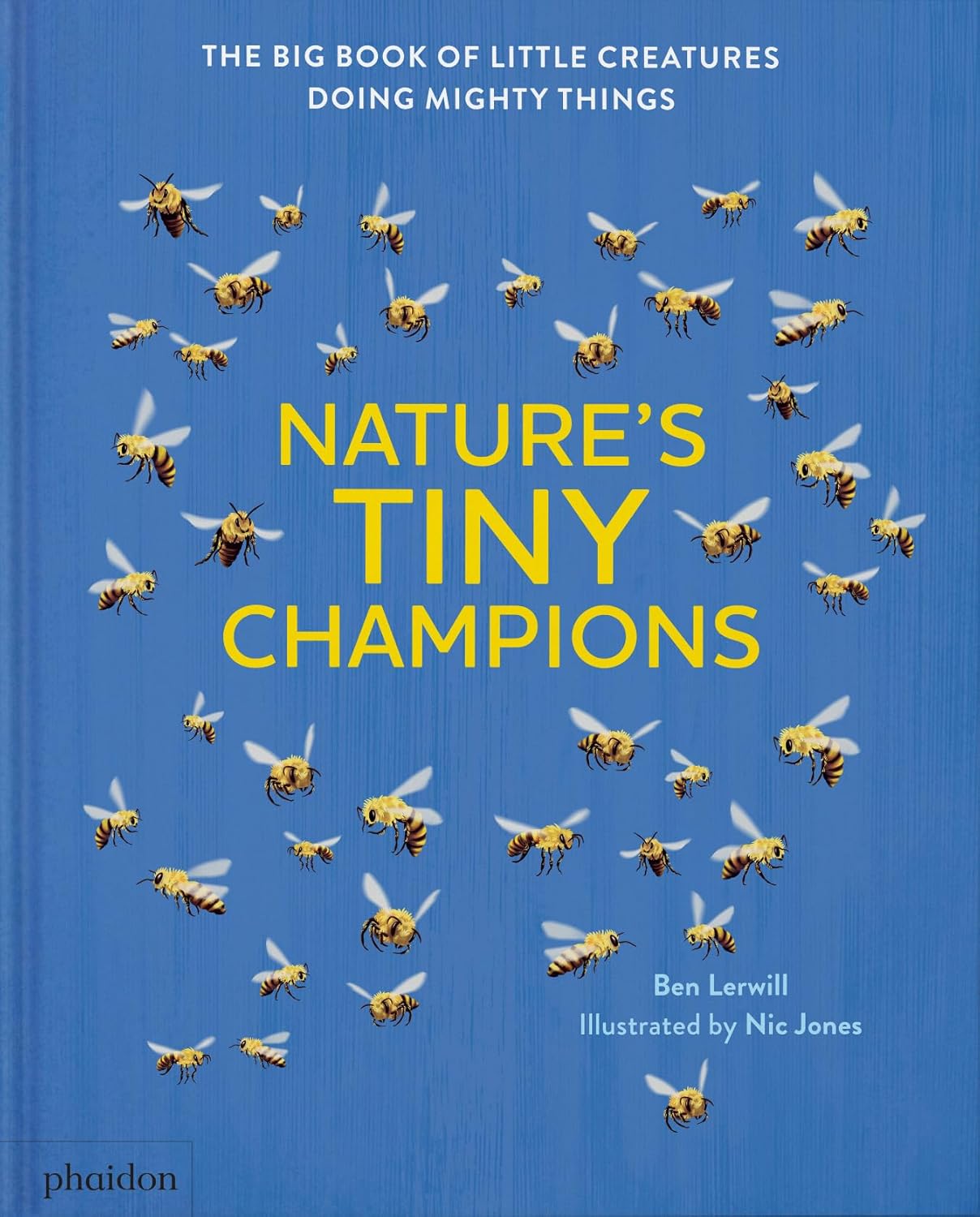
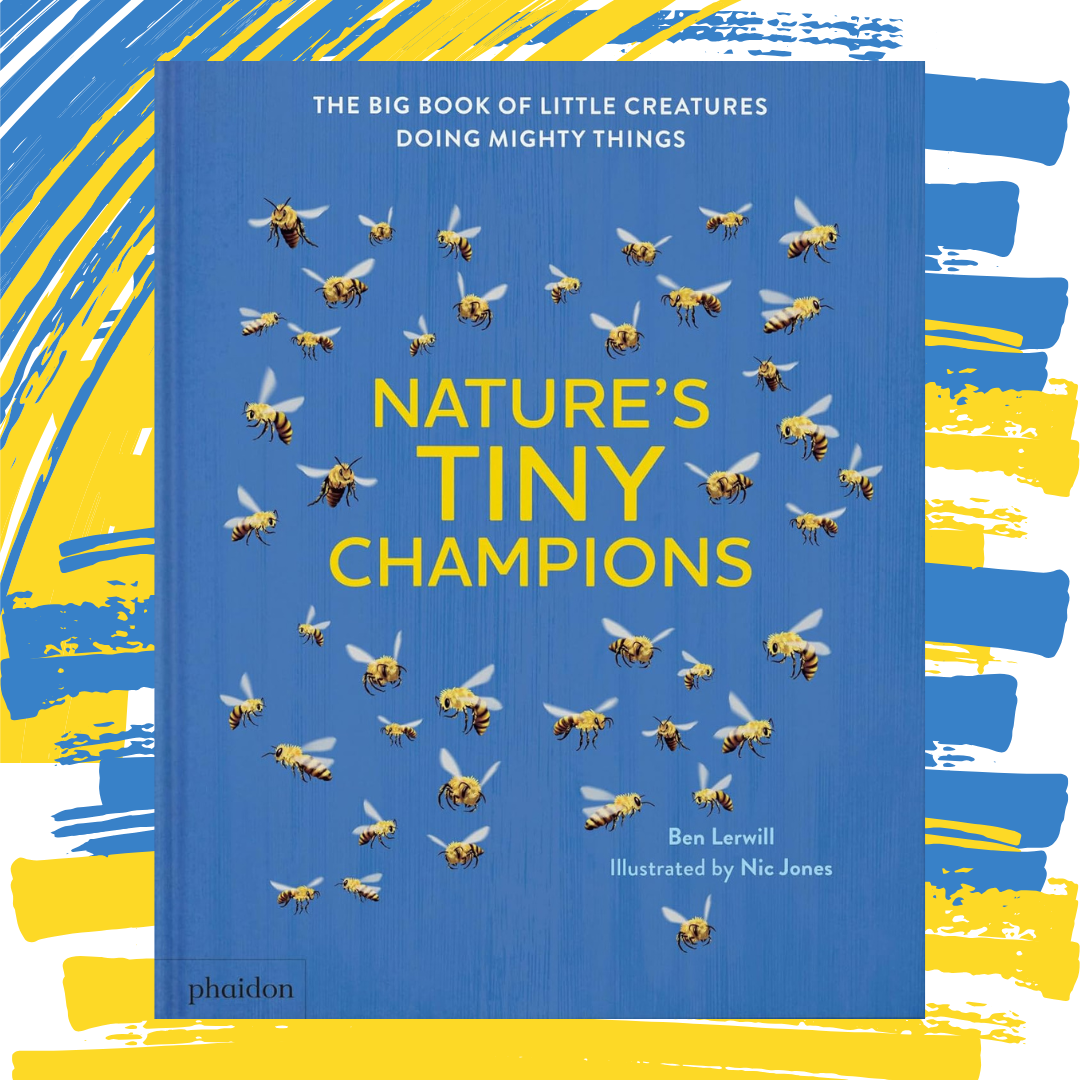
Nature’s Tiny Champions: The Big Book of Little Creatures Doing Mighty Things

Written by Ben Lerwill | Illustrated by Nic Jones


If you are awed by nature then you might know that “there are at least two million animal species on planet Earth.” But were you aware that some scientists believe the number might be more than eight million? So where are they? Well, all around—they’re just not easy to see. As Ben Lerwill reveals, “almost all of them are small enough to fit in the palm of your hand.” In fact, most could “sit on the tip of your little finger, and some are so impossibly minuscule that a whole herd of them could be hiding on the period at the end of this sentence.”

Illustration © 2025 by Nic Jones, text copyright © 2025 by Ben Lerwill.

So should we be thinking out of sight, out of mind? Absolutely not! And Nature’s Tiny Champions is here with detailed profiles of 20 phenomenal creatures to show you what an enormous impact itty-bitty animals make, plus back matter that presents short, illustrated entries on 21 more tiny champions of the air, land, and sea. Ready to dive in? Let’s go!

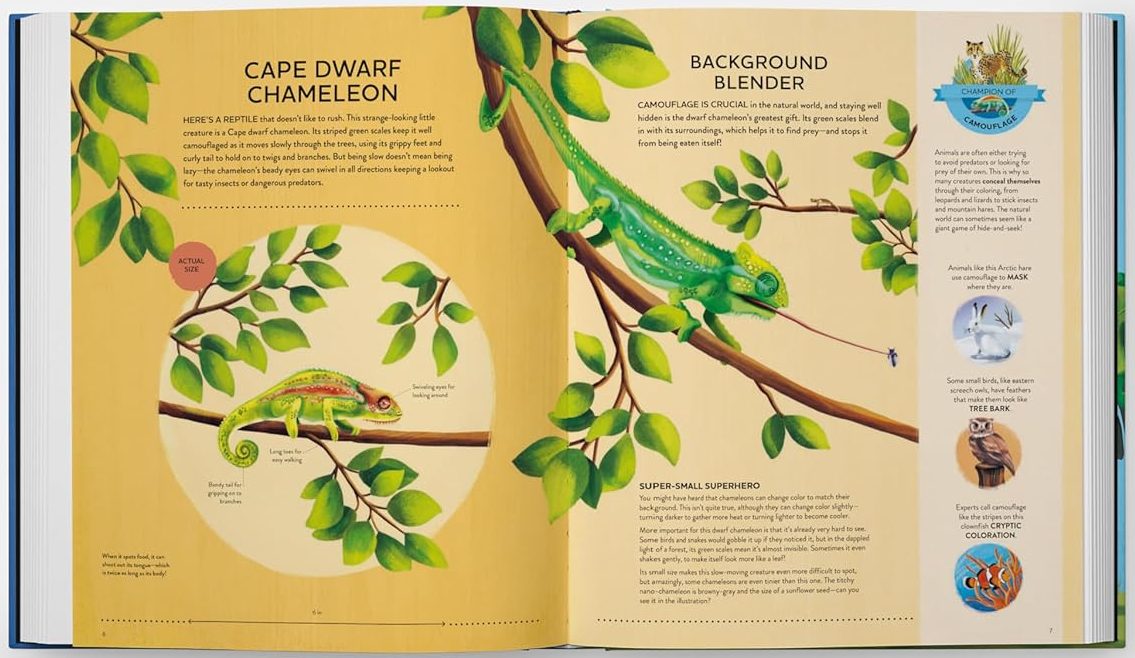
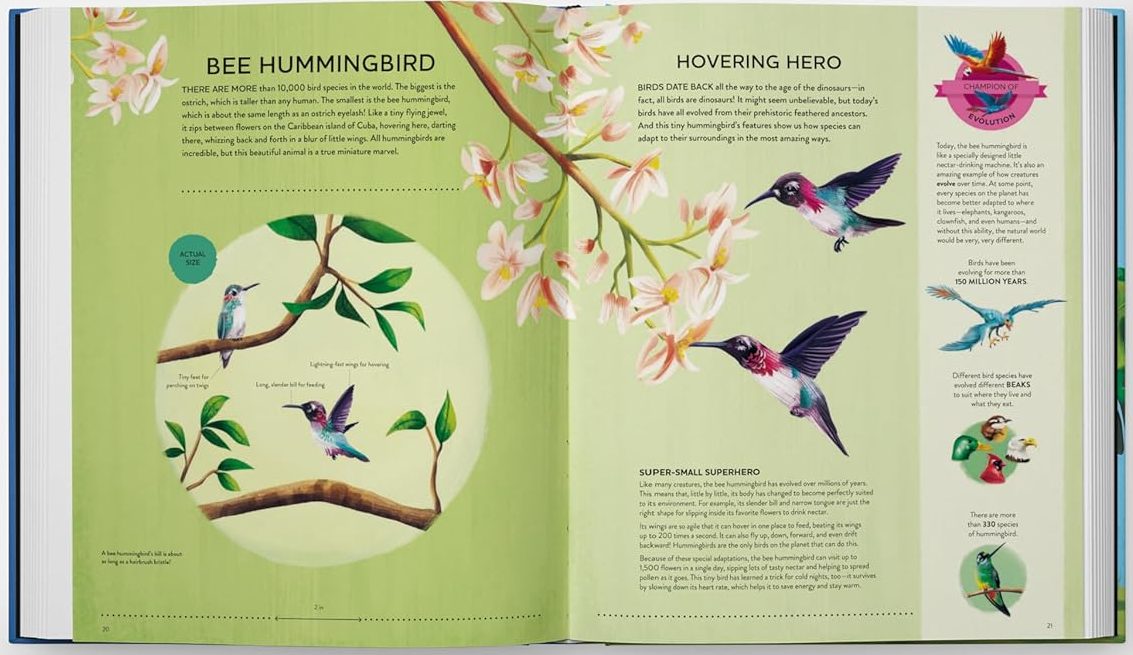
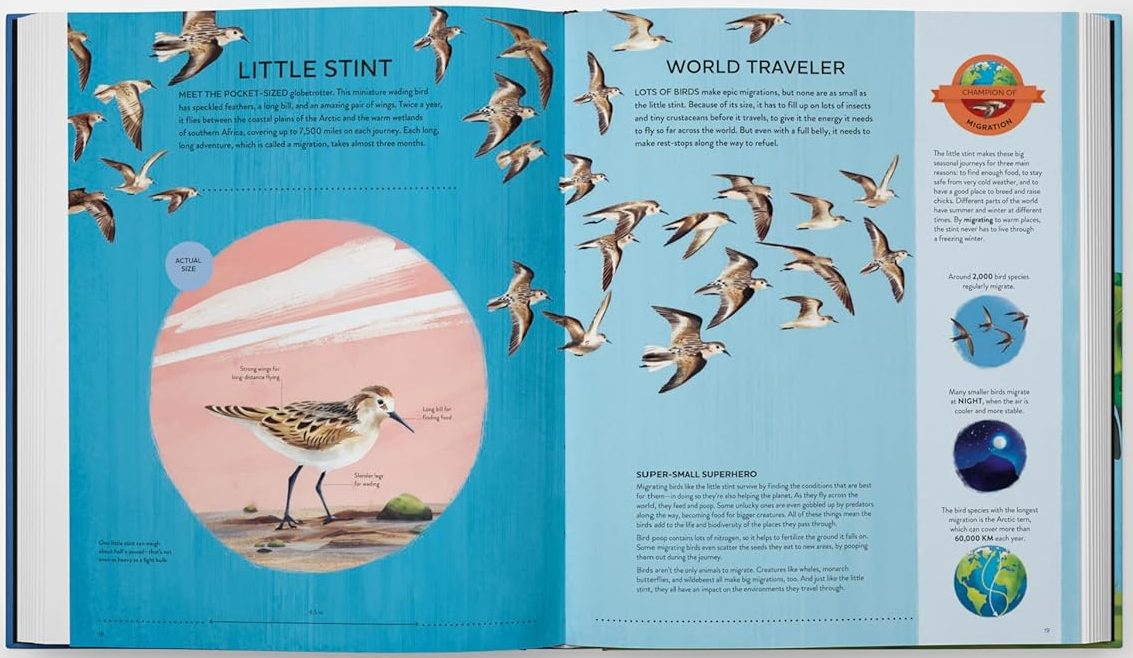
Each two-page spread in this cleverly designed oversized book introduces readers to an animal through Ben Lerwill’s easy-going, conversational description of the primary trait that makes it a champion, an often mind-boggling discussion of its crucial contribution to its ecosystem, and a sidebar containing even more memorable facts about natural phenomena such as camouflage, prey species, migration, metamorphosis, teamwork, survival, keystone species, indicator species, self-defense, and more.

Illustration © 2025 by Nic Jones, text copyright © 2025 by Ben Lerwill.

Each page spread stuns with Nic Jones’ vivid and gorgeously realistic illustrations that set each tiny creature in its natural habitat. Actual-size renderings of each animal is a highlight and are sure to spark plenty of “oh my gosh!” and “it’s so cute!” reactions. These images also allow kids to learn about how the animal is perfectly suited to its environment. Kids will enjoy comparing each animal to the size of their hand, finger, or even—in the case of the water bear—a grain of sugar. Where the animal is too small to see and be labeled clearly in its natural size, the image is expanded and labeled with the scale of magnification. 

Ready for a few examples of what readers will learn? Get this:

  • “The tiger piston shrimp is only the size of a french fry, but when it snaps its claw, the noise is louder than a gunshot!
  • “Leafcutter ants can carry 50 times their own weight. That’s like you carrying an RV—with your teeth!
  • A water bear “can go for 30 years without food or water,” it can survive temperatures as cold as -454ºF and as hot as 302ºF, and it has “even stayed alive after being blasted into outer space.”

Illustration © 2025 by Nic Jones, text copyright © 2025 by Ben Lerwill.

For budding zoologists, entomologists, and nature lovers at home and in the classroom, Nature’s Tiny Champions: The Big Book of Little Creatures Doing Mighty Things is a fascinating sure winner that will keep kids enthralled, watching out for the tiny creatures in their own area, and eager to learn more. The book’s impressive  would make a much-appreciated gift. It is highly recommended for home bookshelves and is a book librarians will be thrilled to display and recommend.  

Ages 6 – 9+

Phaidon Press, 2025 | ISBN 978-1838669973

About the Author

Ben Lerwill is a multi-award-winning children’s author and freelance writer who has written for over 50 publications, including National Geographic Traveller, The Sunday Times, and BBC Travel. Previous recognition for his books includes a Wainwright Prize for Children’s Nature Writing shortlist, a National Geographic Kids’ Magazine ‘Book of the Month’ and a Junior Library Guild Gold Standard Selection. Visit him at benlerwill.com.

About the Illustrator

Nic Jones has been a professional illustrator for nearly 5 years. Previous works include Earth Clock: The History of Our Planet in 24 Hours, and Above and Below: Dusk til Dawn.

World Environment Day Activity

Environment Word Search Puzzle


Find the words about our environment and protecting it’s resources in this puzzle! 

Environment Word Search Puzzle | Environment Word Search Puzzle Answer Key

You can purchase Nature’s Tiny Champions: The Big Book of Little Creatures Doing Mighty Things from these booksellers

Amazon | Barnes & Noble | Bookshop

Picture Book Review

April 10 – National Wildlife Week

About the Holiday

National Wildlife Week, dating back to 1938, is the National Wildlife Federation’s longest-running education program. The celebration was designed to connect budding conservationists of all ages to the awesome wonders of wildlife. Each year, we pick a theme and provide fun educational materials and activities for educators and caregivers to use with kids. This year’s theme is Keep an Eye on the Wild. Conservationists and animal lovers are keeping a lookout for wildlife in the most unexpected places as we learn how we can keep their habitats safe and live in harmony with our incredible wild neighbors. Whether you keep your eyes out for the wildlife living near you with a “critter cam” or by walking around and paying attention to your backyard, neighborhood, and wider area, being aware of the creatures around you can help them survive for generations to come. To learn more about National Wildlife Week and find fun activities aimed at connecting kids with wildlife, visit the National Wildlife Week Kids Page!

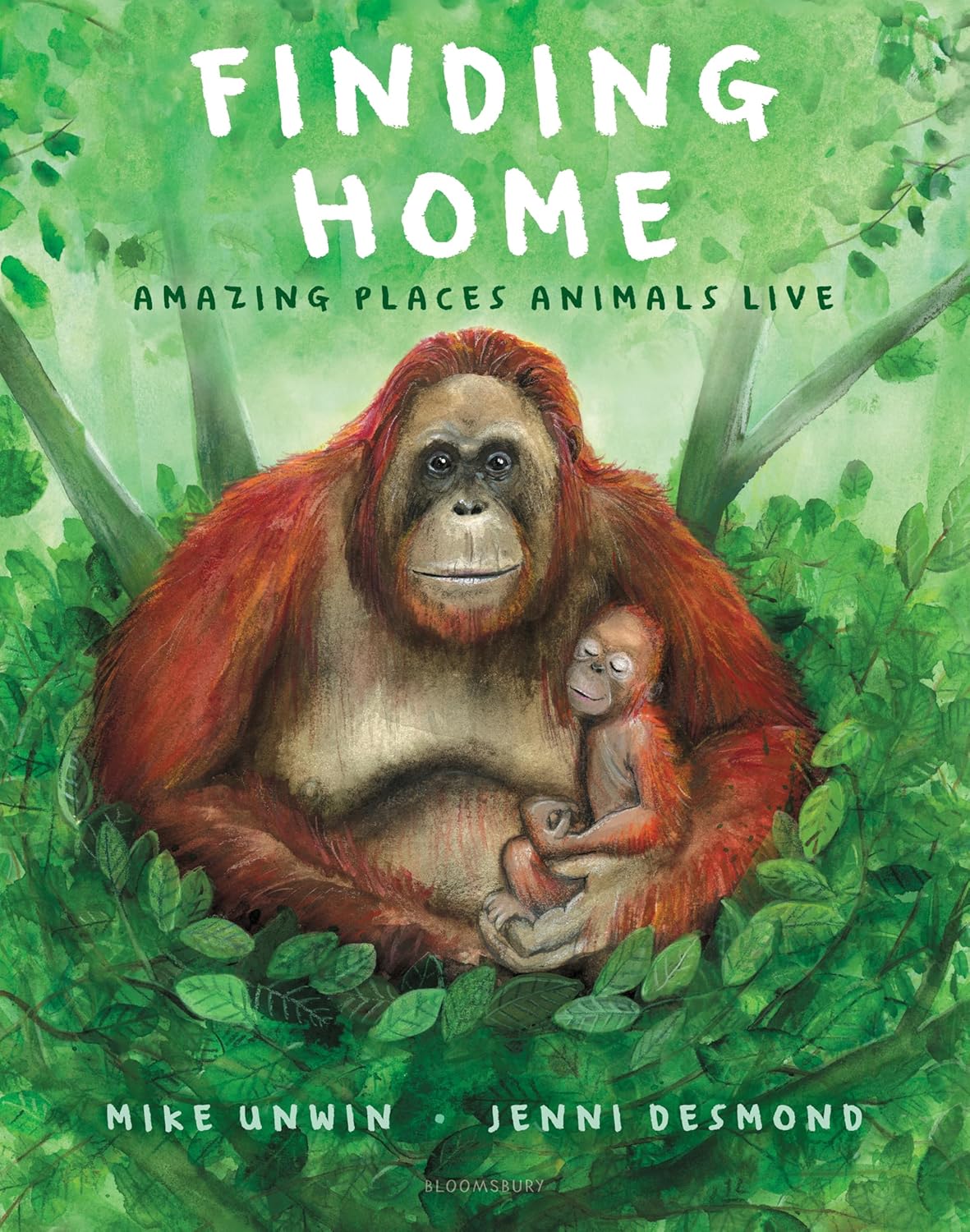
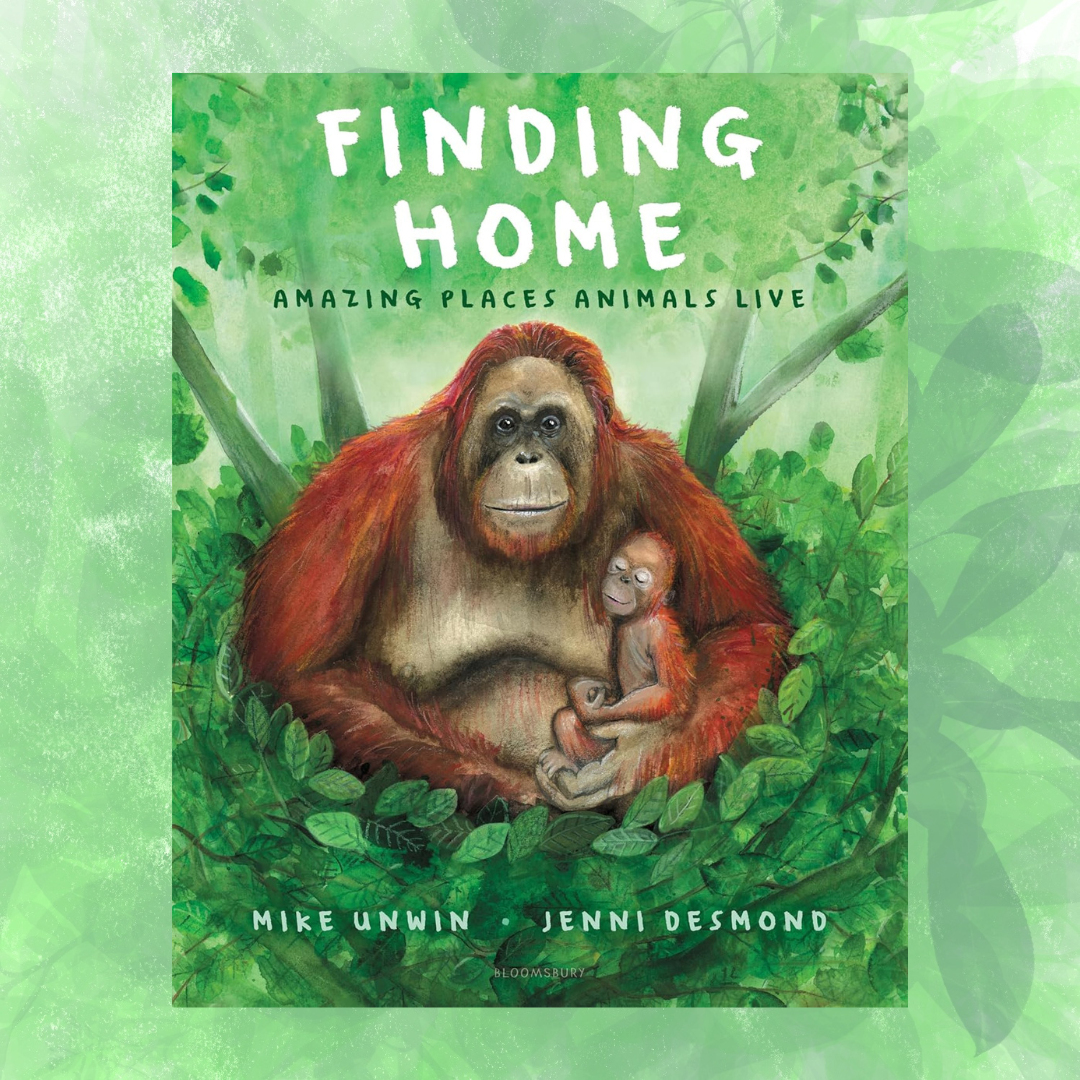
Finding Home: Amazing Places Animals Live

Written by Mike Unwin | Illustrated by Jenni Desmond


Finding Home begins: “Our planet is home to a mind-boggling number of different animals: at least 6,500 species of mammal, 10,000 species of reptile, 11,000 species of bird, and literally millions of insects. Every single one has its own home.” Just think of it! As your eye sweeps across any vista; as you walk across your yard, local playground, or favorite park, beach, or mountain trail, an untold number of creatures’ homes are within sight or underfoot. We know their names: Den. Nest. Burrow. Taxi (wait, what?). You’ll see, because in their astounding and gorgeous book, Mike Unwin and Jenni Desmond reveal that there is no such thing as a generic animal home.

Illustration © 2025 by Jenni Desmond, text © 2025 by Mike Unwin. Courtesy of Bloomsbury Children’s Books.

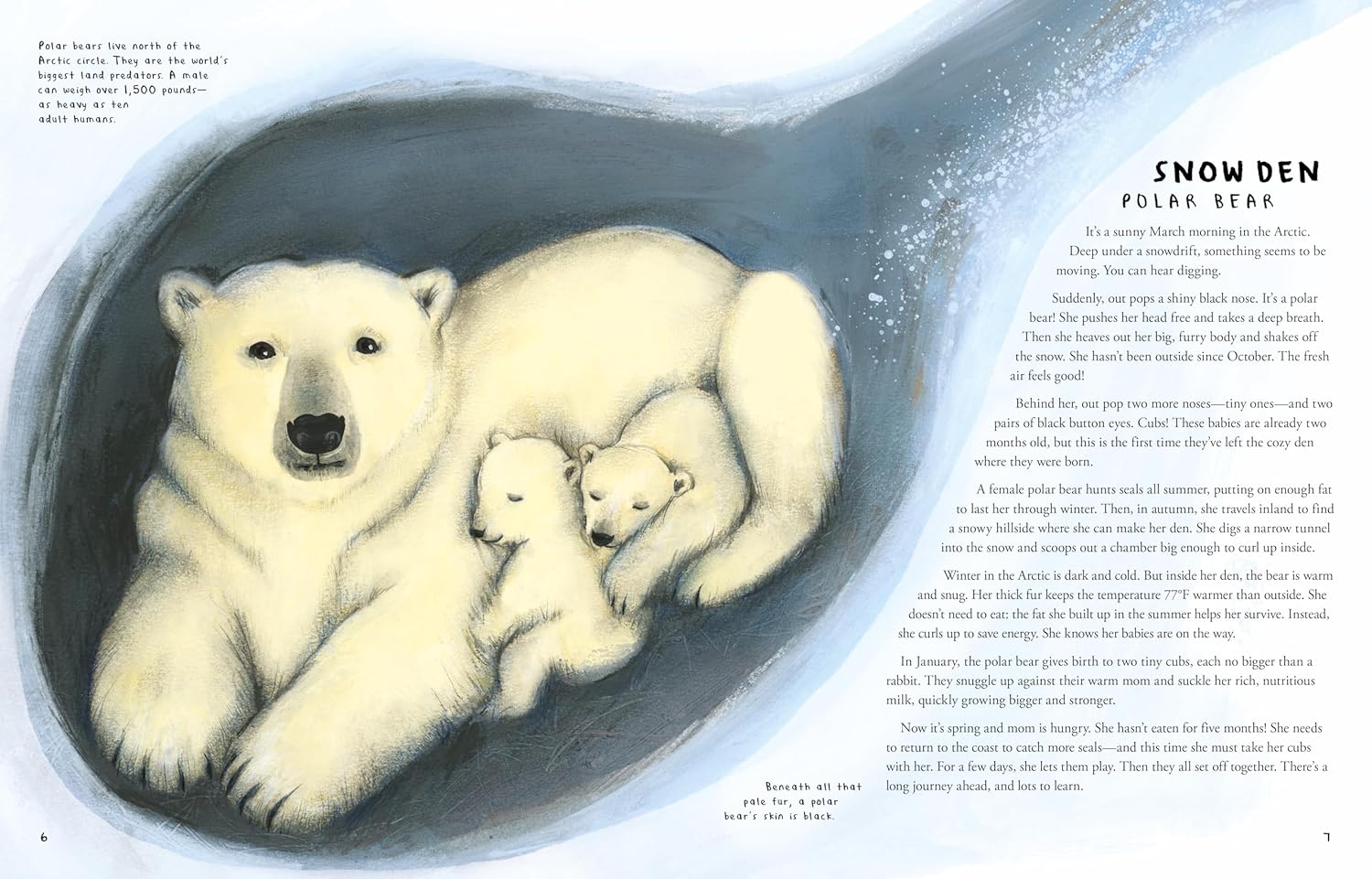
Take “den,” for instance—a polar bear’s snow den. Unwin and Desmond take you right inside this winter home, where a mother polar bear and her two cubs (born here in the cold of January) welcome you. As you squeeze inside, don’t worry about being cold. The polar bear’s “thick fur keeps the temperature 77°F warmer than outside.” 

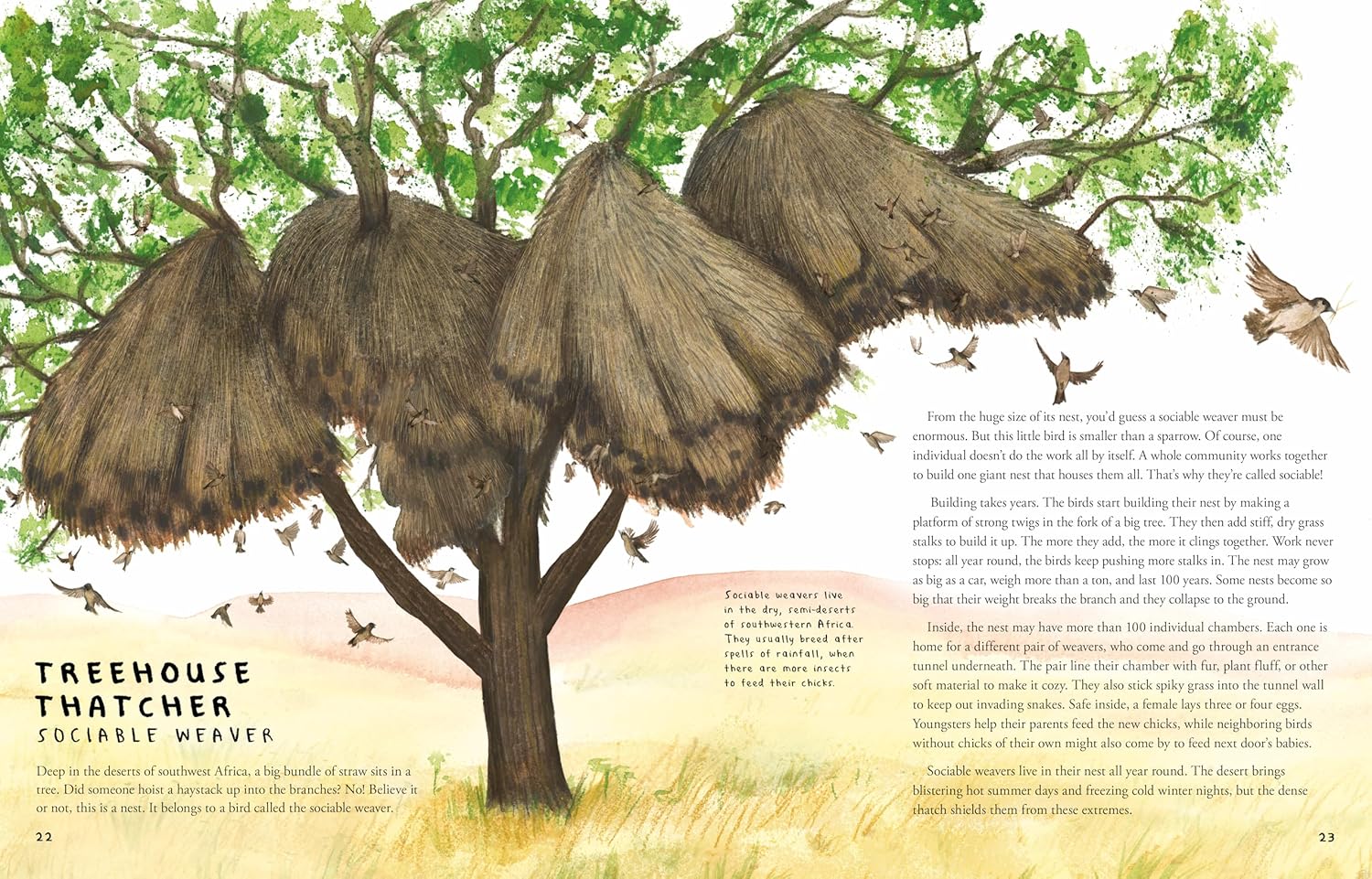
Next up is “nest.” These are bowls made from twigs, straw, and fluff and, sometimes, found objects like bits of paper or cloth, right? Well, yes—for some birds. But you won’t believe your eyes when you see what appears to be several haystacks lodged within a tree’s branches. This nest, constructed by a whole community of birds smaller than sparrows, can “grow as big as a car, weigh more than a ton, and last 100 years.” Like humans’ apartment buildings, the bird pairs that inhabit this nest look out for each other and help their neighbors. Kids will also be amazed by another type of bird that literally sews leaves together with “plant fiber and spider silk” to create their soft, deep nests.

Illustration © 2025 by Jenni Desmond, text © 2025 by Mike Unwin. Courtesy of Bloomsbury Children’s Books.

And how about “burrows?” Yep, Unwin and Desmond showcase a couple of pretty spectacular burrows too. Take the aardvark’s home. You won’t see an aardvark during the day. While the sun is up, they stay below ground, sleeping and tending to their young. It’s only after sunset that these unusual, ant-eating animals (including two-week-old babies) make an appearance topside. This is when they do what they do best: sniff out anthills and termite mounds, dig them up, and have dinner. It takes a hearty meal to satisfy an aardvark: “One aardvark can eat an amazing 50,000 ants and termites in a single night!”

Now, about that “taxi.” Children will be wowed by two, very different types of animals who prefer moving from one area to another by hitching a ride on another creature, from whom they can get food and other necessities of life while helping their hosts as well. Of course, the variety of animal homes don’t stop at these four. Every page transports readers to a different part of the globe to witness creatures of the air, sea, and land living in the home of their choice.

Unwin ends this fascinating travelogue with a map showing different ways some of the animals in the book tend to the environment, protecting it and keeping it growing for themselves and humans. He also includes a caution, reminding readers that “all these habitats . . . fit together like jigsaw pieces to make up planet Earth. And just like a jigsaw needs all its pieces, a healthy planet needs all its animals and their habitats.” Sadly, humans have not been good stewards of Earth’s bounty. “Today, scientists and conservationists are working hard to put things right.” But everyone is needed to make sure our environment is cared for the way we care for our own families. “Only then will planet Earth truly be home, sweet home.”

Illustration © 2025 by Jenni Desmond, text © 2025 by Mike Unwin. Courtesy of Bloomsbury Children’s Books.

Mike Unwin draws readers in with engaging storytelling that allows kids to easily understand how each animal goes about building their home and why it’s perfect for their lifestyle. Children also learn just as much about the animals as the homes they build, giving them deep and well-rounded knowledge of some of the most unusual birds, fish, mammals, and insects on our planet and how many of them benefit humankind. Unwin’s phrasing, vocabulary and conversational lilt make Finding Home a highly satisfying nonfiction read aloud for younger kids. Independent readers will eagerly dip into the book again and again to meet these intriguing creatures.

With the impact of a museum exhibit, Jenni Desmond’s rich, full-bleed illustrations will take your breath away with their stunning realism and personality. Some animals peek out at the reader, while others busily go about their work oblivious to outside interest. From grassy hillsides to treetop canopies to sunny Africa and the snowy Himalayas, Desmond takes readers on an around the world tour like no other.

Gorgeous, educational, and nature nonfiction at its best, Finding Home: Amazing Places Animals Live is a must for all classroom, school, and public libraries as well as for nature- and animal-loving kids and families.

Ages 5 – 8+

Bloomsbury Children’s Books, 2025 | ISBN 978-1547615100

About the Author

Mike Unwin has written more than 30 books for both adults and children, including the Encyclopedia of Birds and Migration. He is also a regular contributor to publications such as BBC Wildlife and RSPB Nature’s Home. In 2013 Mike was voted UK Travel Writer of the Year by the British Guild of Travel Writers. Follow Mike on Instagram @mikeunwin.wildtravel.

About the Illustrator

Jenni Desmond is the illustrator of more than 20 books, including MigrationThe Wolves of Yellowstone, and The Blue Whale. Her books have been translated into over a dozen languages. In 2016 she was made a Maurice Sendak Fellow and her book The Polar Bear became a New York Times Best Illustrated Children’s Book of the Year. When Jenni is not in her studio, you’ll find her cooking, cycling and looking for adventure. Visit her at jennidesmond.com and follow her on Instagram @jennidesmond.

National Wildlife Week Activity

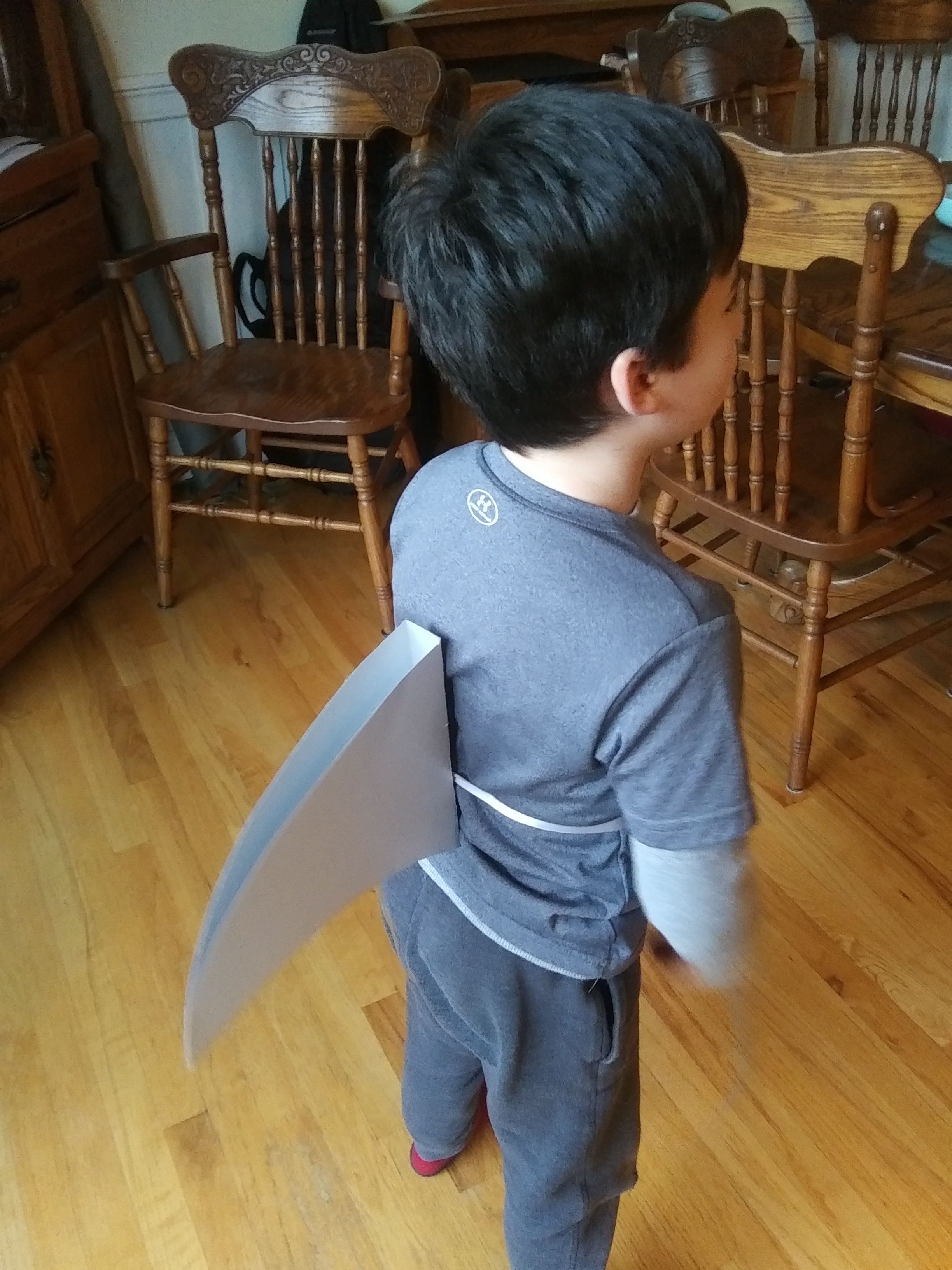
celebrate-picture-books-picture-book-review-shark-fin-craft

Fintastic Shark Fun


Sharks are awesome creatures and even feature as a home to another animal in today’s book! Follow the directions below and to make your own shark fin. 

Supplies

  • 2 pieces of 8.5 x 11 gray cardstock paper
  • Ribbon
  • Tape
  • Scissors
  • Pencil

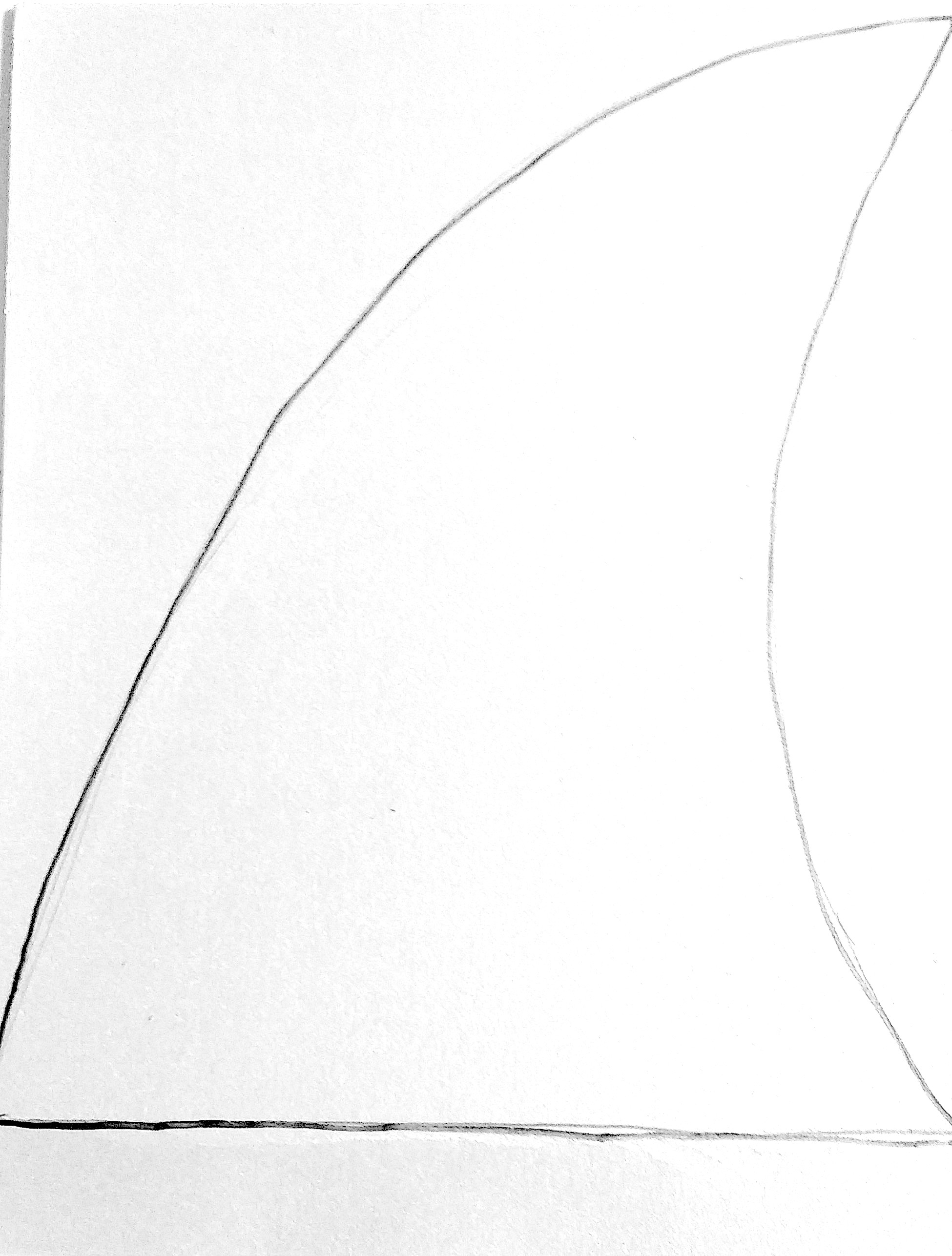
fin outline white

celebrate-picture-books-picture-book-review-shark-fin

Directions

  1. Tape the top of the two pieces of paper together
  2. Fold them back together
  3. Measure an inch up from the bottom of the papers (the un-taped side) and trace a straight line across both papers
  4. Trace a shark fin outline onto your paper. The shark outline should stop an inch above the bottom
  5. Cut out the fin on both pieces of paper. If you should cut through the tape, re-tape the tops together
  6. Fold along the lines of both papers so the folds face towards each other.
  7. Tape the folds so the fin becomes a triangle
  8. Cut two slits parallel to the folded lines
  9. Thread ribbon through slits

You can purchase Finding Home: Amazing Places Animals Live from these booksellers

Amazon | Barnes & Noble | Bookshop (discounted books and support for your local independent bookstore)

Picture Book Review

March 11 – It’s Gardening, Nature, and Ecology Books Month

About the Holiday

Established in the early 2000s by the Children’s Book Council, this month-long holiday encourages people to read books about gardening, nature, and ecology to foster a deeper connection with the environment and appreciation for our planet, encouraging more people to adopt sustainable practices in their daily lives.

I’d like to thank G.P. Putnam’s Sons Books for Young Readers for sharing a digital copy of Hello, I’m an Axolotl with me for review.

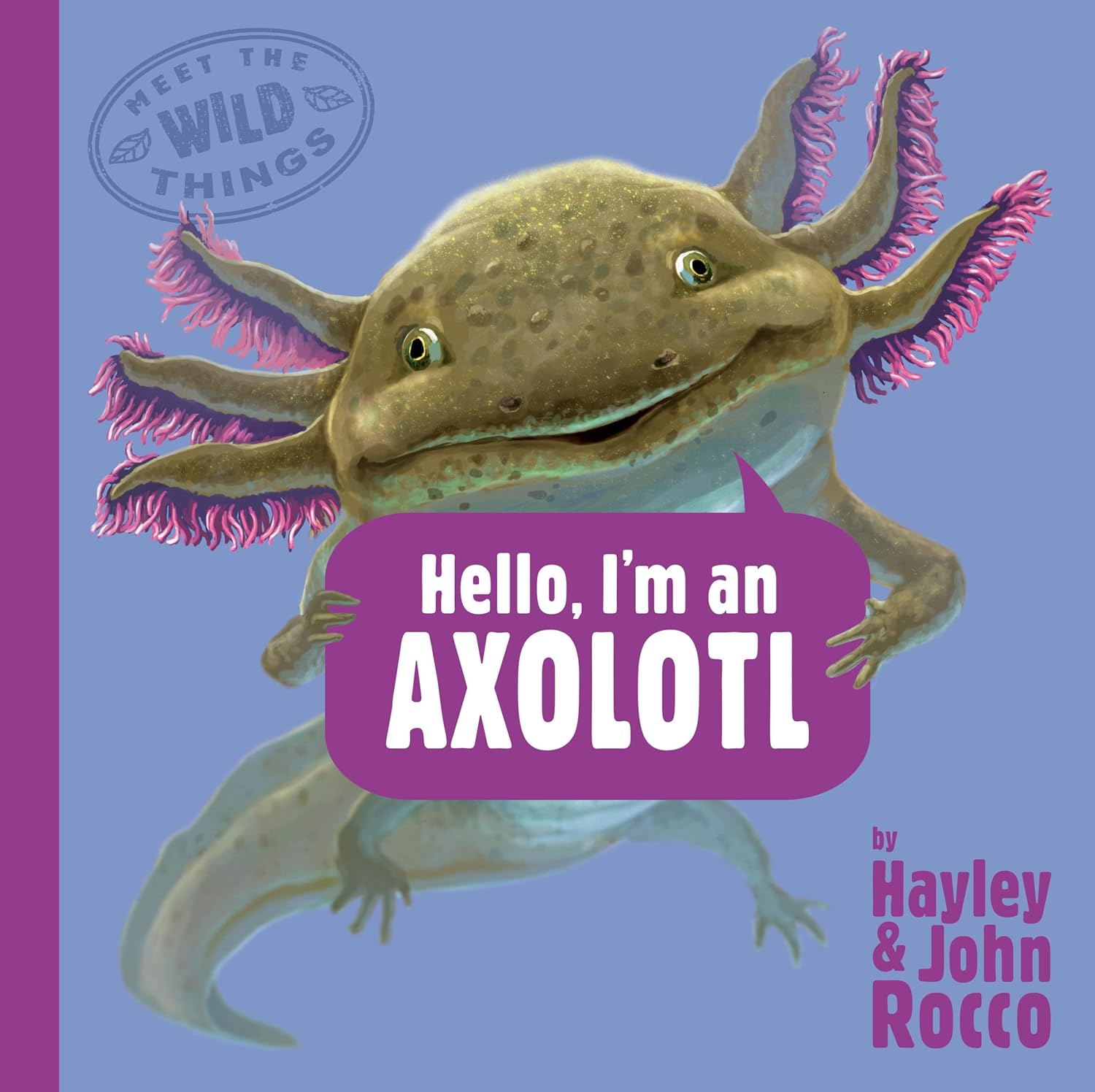
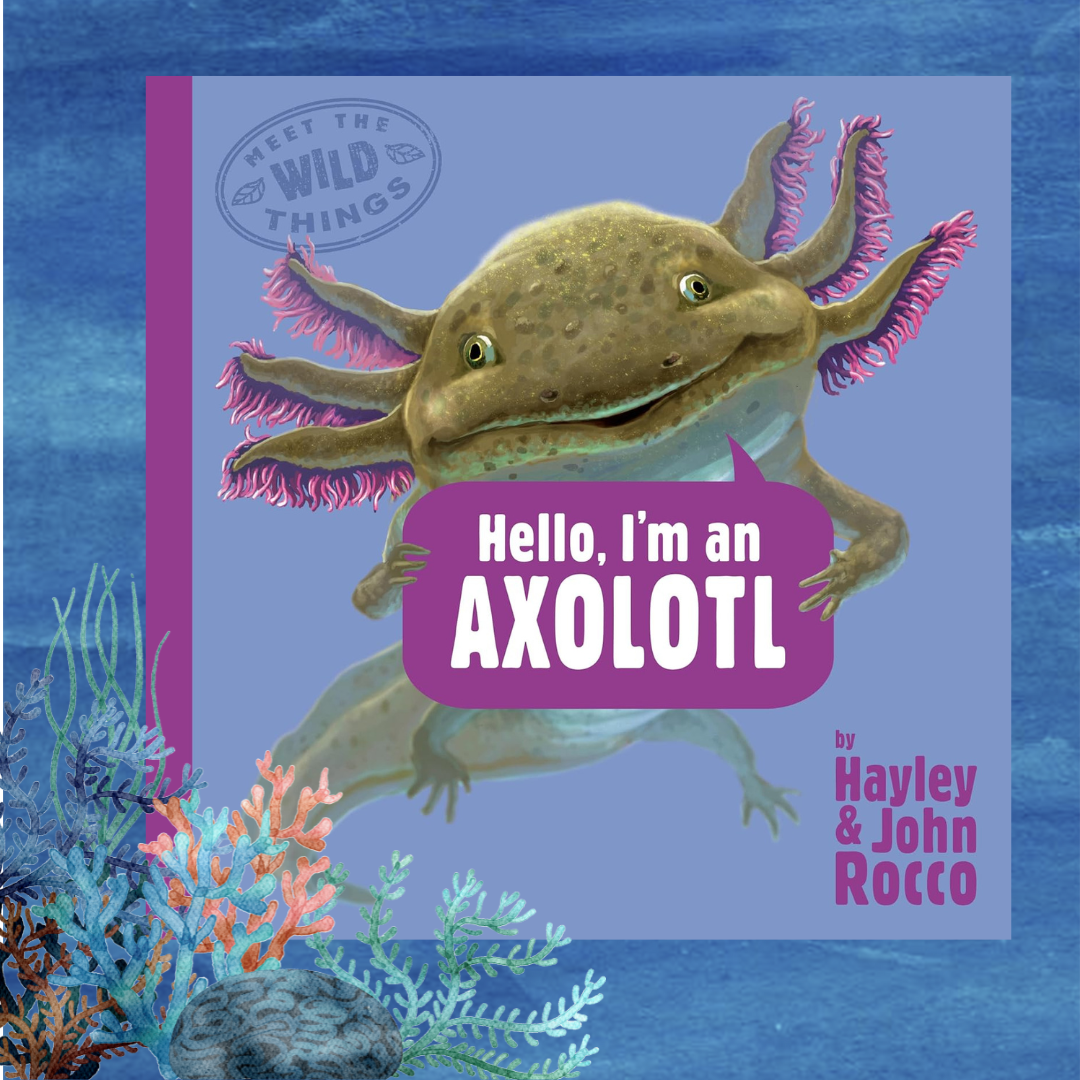
Hello, I’m an Axolotl

Written by Haley Rocco | Illustrated by John Rocco


Swimming into the popular Meet the Wild Things series that introduces kids to unusual and endangered animals is Hello, I’m an Axolotl and its spirited narrator who wastes no time in telling readers “I am A-M-A-Z-I-N-G!” And it’s not kidding!

First off, it’s named after a super hero-sounding Aztec god and then we learn that even though axolotl’s are related to salamanders, they’re a bit like an underwater Peter Pan because they “never really grow up,” which actually gives axolotls another superpower: the ability to breathe in two ways.

Illustration © 2025 by John Rocco, text © 2025 by Haley Rocco. Courtesy of G.P. Putnam’s Sons Books for Young Readers.

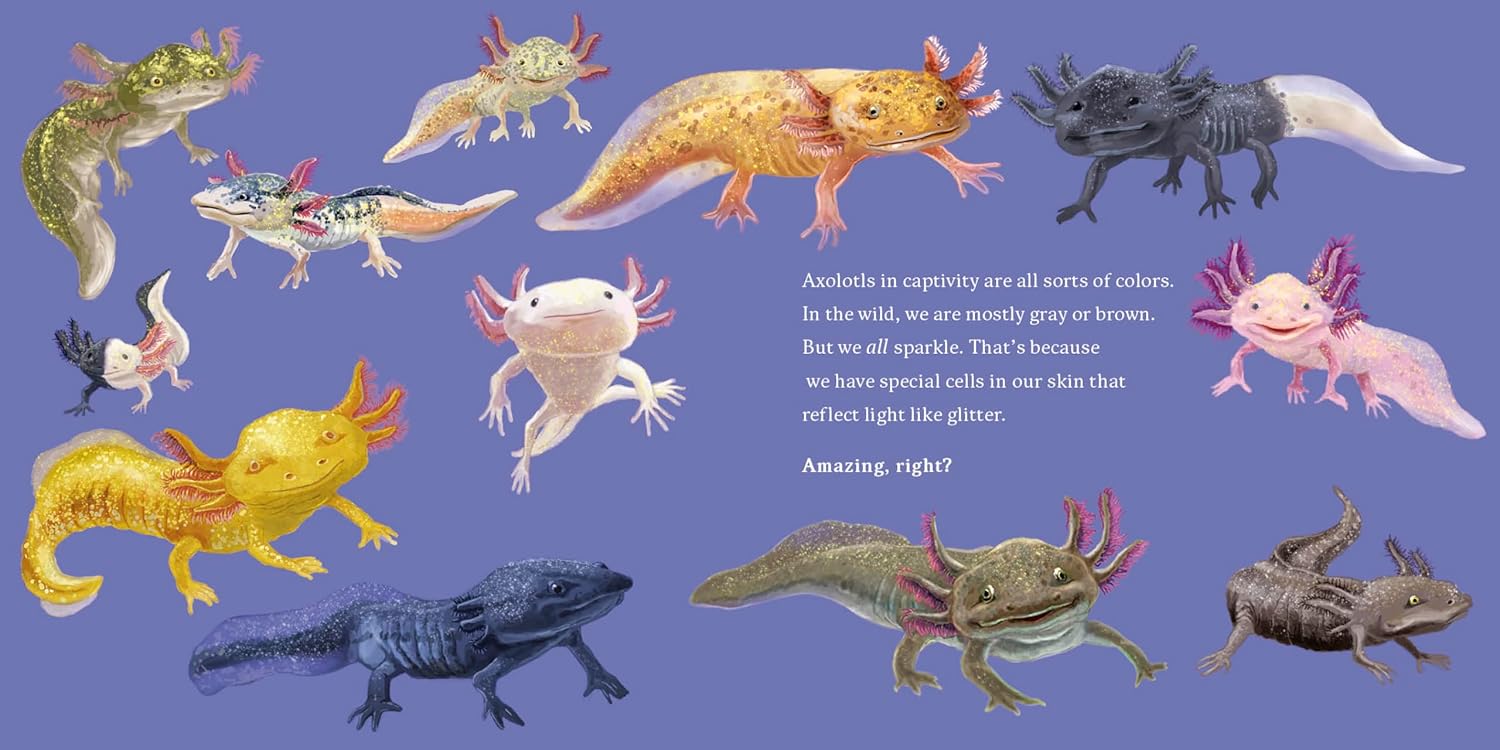
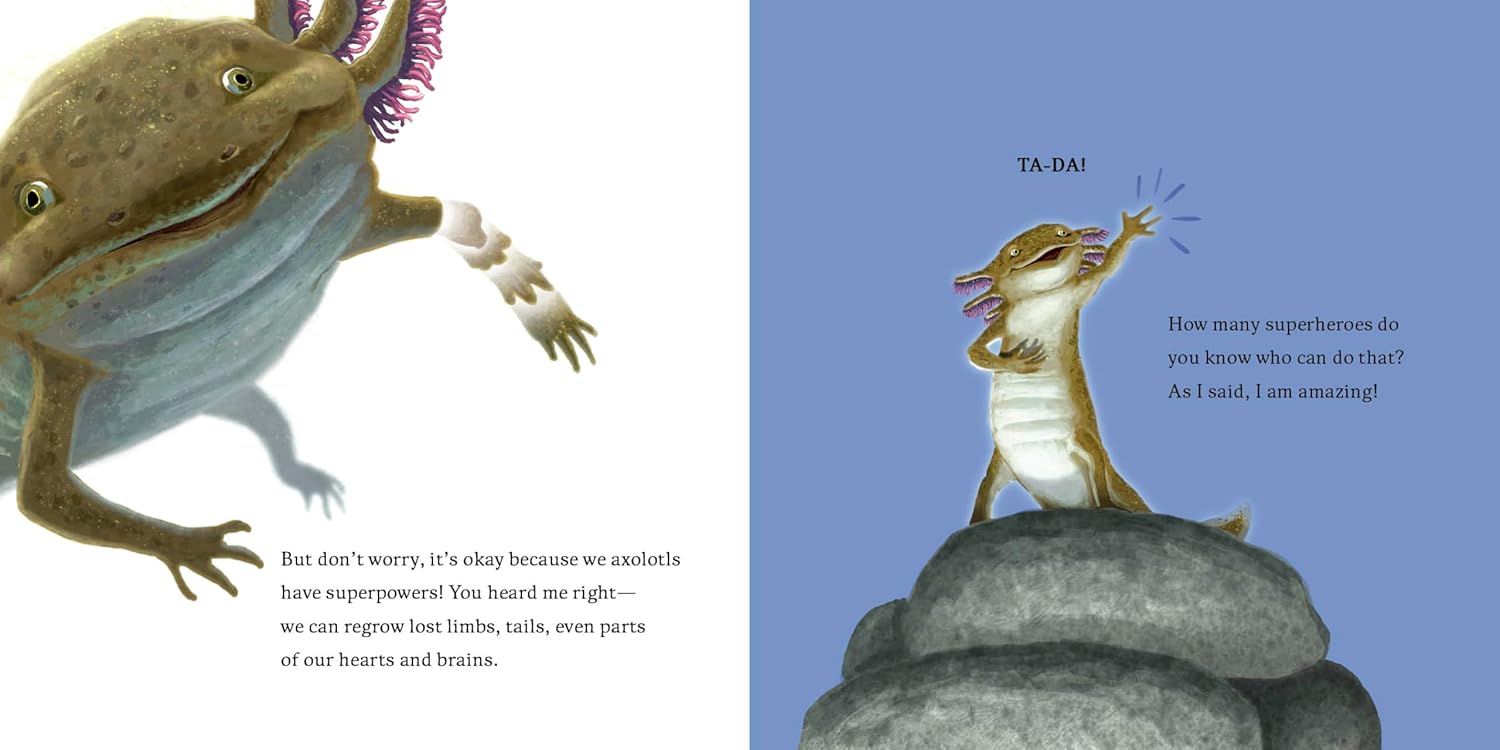
And if that doesn’t convince you that these little cuties are special, the fact that their skin sparkles like glitter certainly will! The book’s host then reveals how that’s possible. Pretty neat, huh? Still not convinced that the axolotl is one of the most fascinating animals on the planet? How about if you knew they can regrow “lost limbs, tails, even parts of [their] hearts and brains?!” This comes in handy, especially if one of their 1,000 siblings has mistaken them for a snack. Scientists are even studying how they do it with hopes of applying what they learn to humans one day.

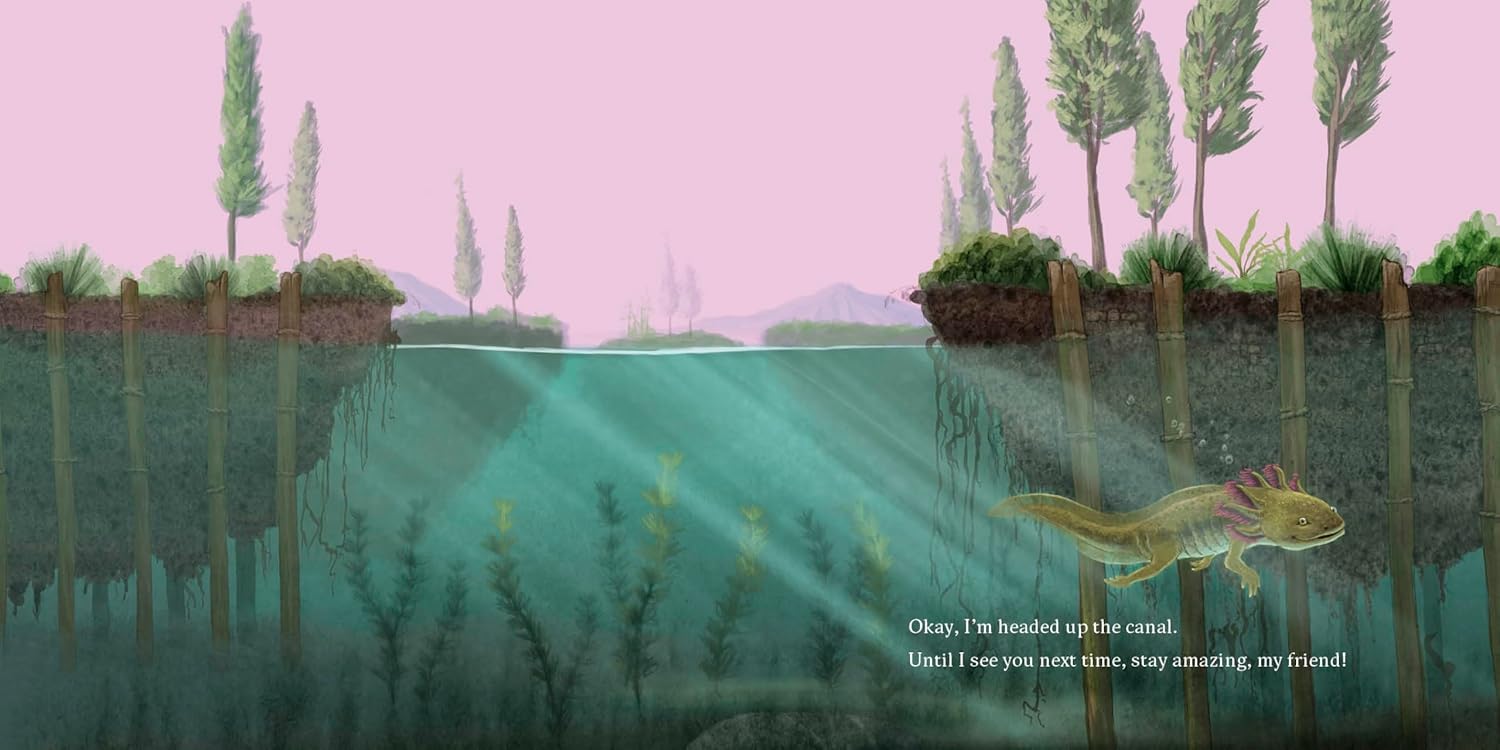
But everything isn’t rosy for axolotls. While “there about a million axolotls all over the world living in tanks and aquariums,” there are fewer than 500 living in the wild—and these are only found in one “lake and some canals outside Mexico City.” You’ll be able to see why when you compare an illustration of Lake Xochimilco from the 1500s to one from current times.

Illustration © 2025 by John Rocco, text © 2025 by Haley Rocco. Courtesy of G.P. Putnam’s Sons Books for Young Readers.

There is hope, however, as conservationists are reintroducing “an ancient Aztec farming method” that provides conditions axolotls need to survive. World-wide notoriety that shines a light on the plight of these A-M-A-Z-I-N-G creatures helps too.

Back matter expands on the facts presented in the text, including short paragraphs on the Aztec people, the origins of all axolotls in captivity today, the science behind their sparkly skin, why axolotls are endangered, and much more. 

Illustration © 2025 by John Rocco, text © 2025 by Haley Rocco. Courtesy of G.P. Putnam’s Sons Books for Young Readers.

Haley Rocco’s superpower is introducing incredible animals in a witty, personal voice that immediately endears them to kids. In Hello, I’m an Axalotl, her charming first-person narration rivets readers to the fascinating facts about axolotls, providing plenty of eye-opening and “awww”-inspiring moments as well as heartfelt concern about the future of these one-of-a-kind creatures and how they can help.

John Rocco’s stunning mixed media illustrations put kids eye-to-eye with the feisty and adorable axolotl narrator as it takes kids on a tour of its home, a lab where scientists are studying the regenerative abilities of axolotls, and to ancient and modern Lake Xochimilco. Readers of all ages will be intrigued by the image of the Aztec farming method making a comeback to protect axolotls. There’s even an “actual size” depiction of an axolotl that will captivate kids.

Unforgettable learning at its best, Hello, I’m an Axolotl is a must addition for school and public library collections and would make a perfect choice for families with children who love animals and care about the environment.

Ages 3 – 7

G.P. Putnam’s Sons Books for Young Readers, 2025 | ISBN 978-0593618219

Discover all the books in the “Meet the Wild Things” series!

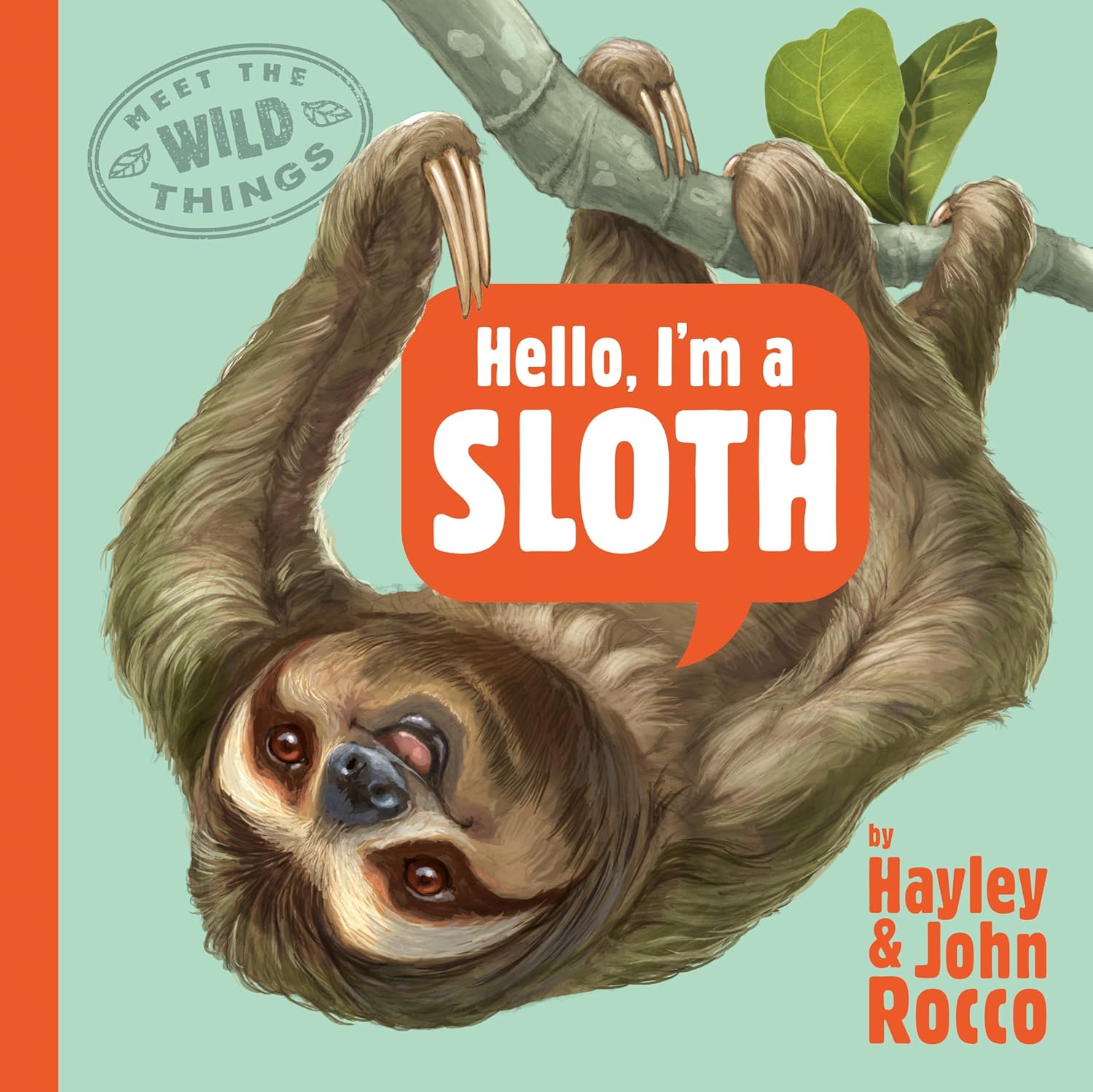
Hello, I’m a Sloth

Say hello to a sloth! Did you know sloths only poop once a week and can fall up to 100 feet without getting hurt? They also have hundreds of bugs living on them, including a species of moth that only lives on sloths! And they move so slowly that algae grows on their fur, which can actually help sloths camouflage!

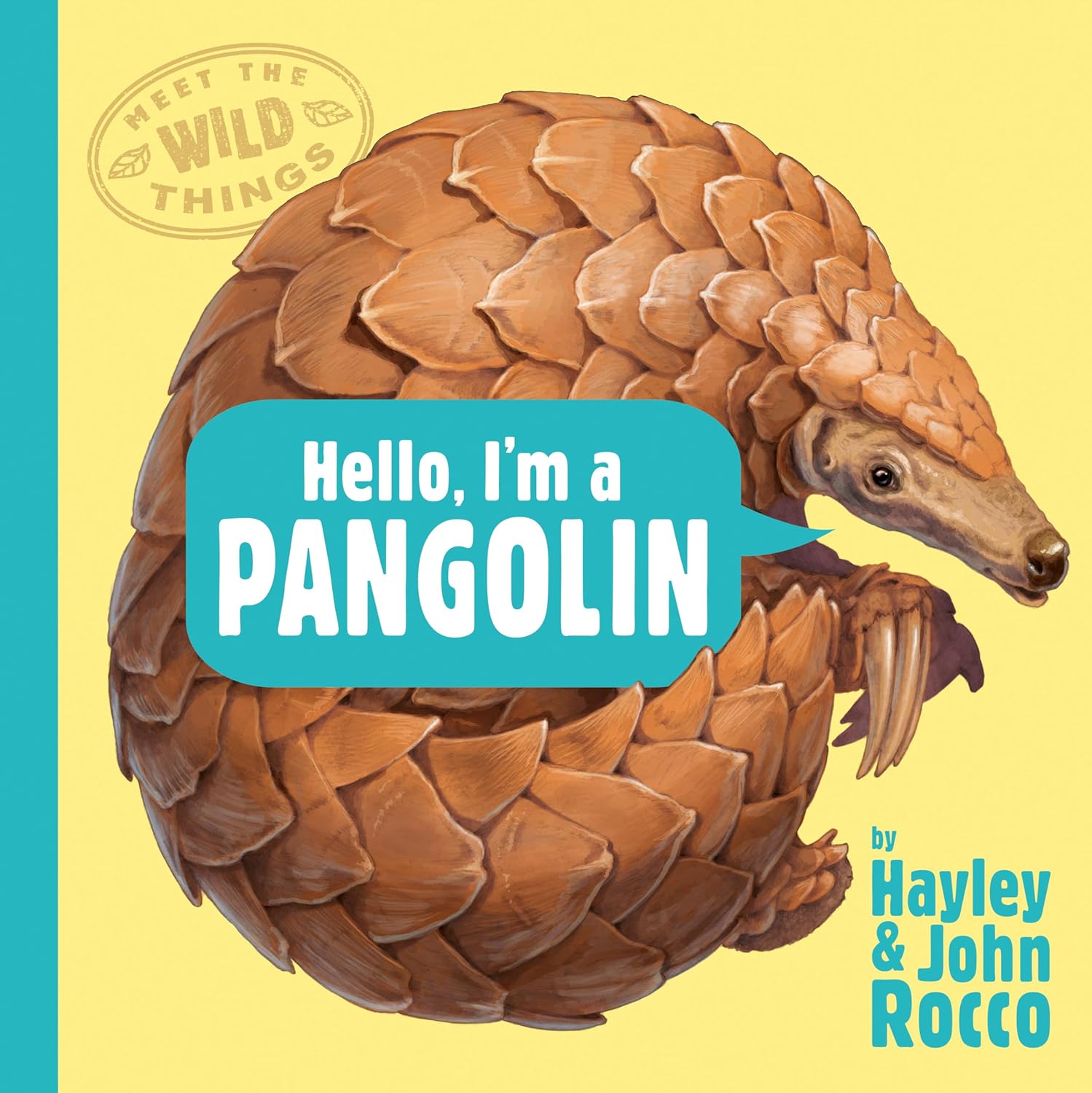
Hello, I’m a Pangolin

Say hello to a pangolin! Did you know pangolins are the only mammals with scales? And did you know pangolins have a super-sticky tongue as long as their entire body (the better to eat 20,000 bugs a day with!)?


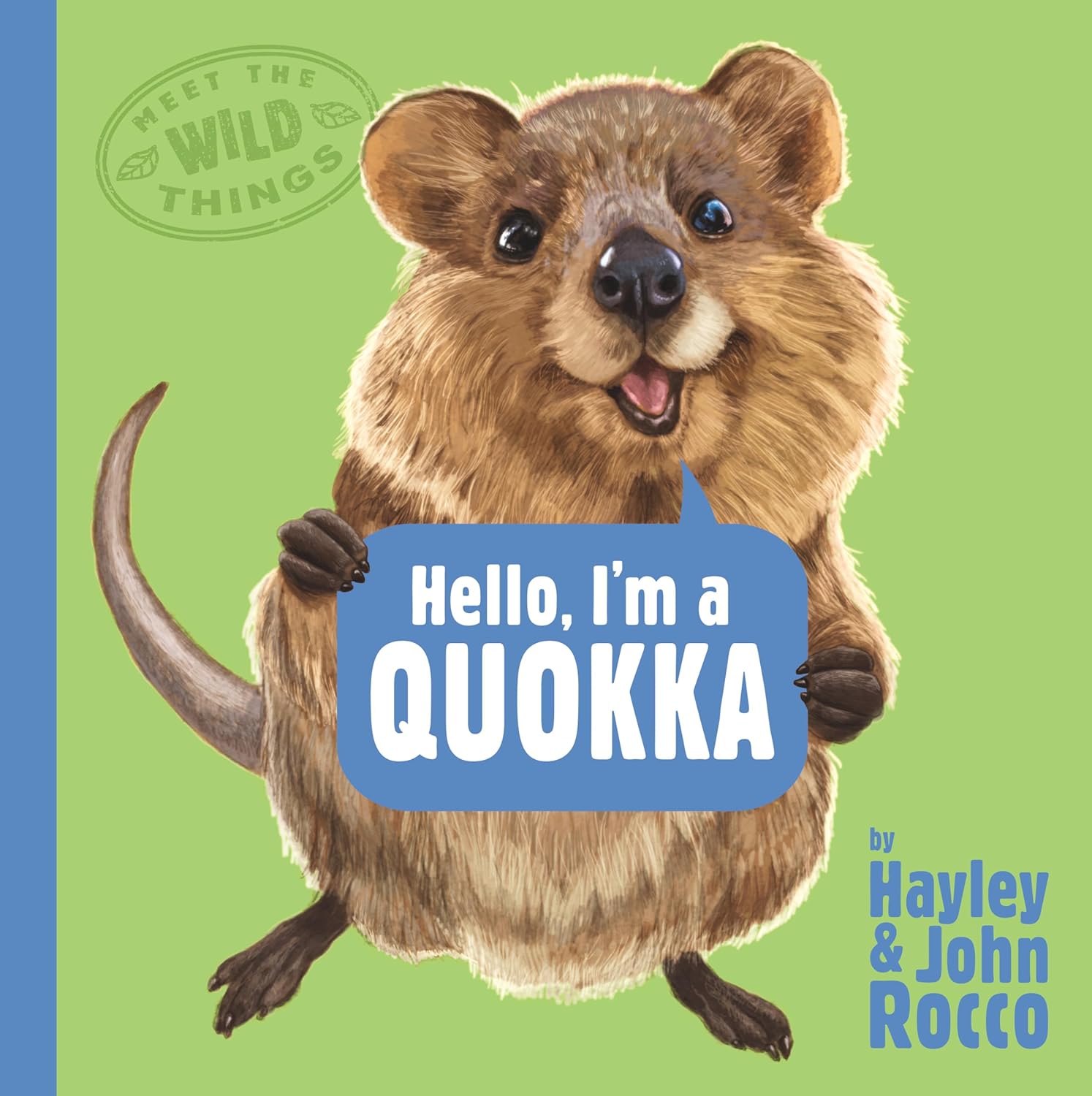
Hello, I’m a Quokka

Say hello to a quokka. Most of them live on a tiny island off of Western Australia. Like their relatives kangaroos and wallabies, they hop to get around and carry their babies in pouches. People say they are the happiest animal in the world. That’s because they’re very friendly, and their faces look like they are built for smiling—perfect for taking selfies with!

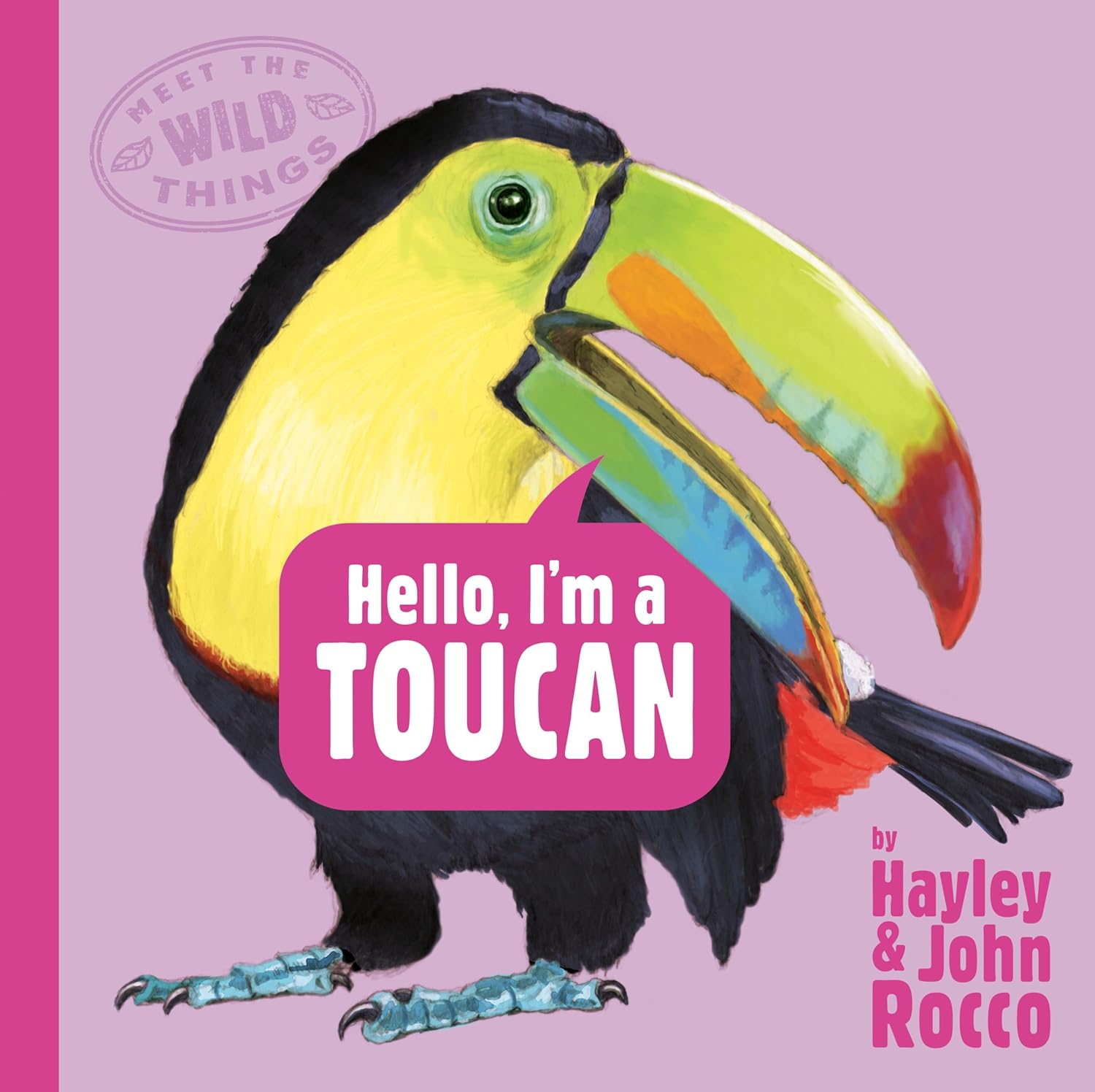
Hello, I’m a Toucan — Coming June 24!

Did you know a toucan’s bill is four times the size of its head? But you might be surprised by how lightweight and strong it is. And did you know that toucans use their bills to keep cool when it’s hot outside, by increasing blood flow from the rest of their body to maintain the perfect temperature? You can’t get much cooler than that.

About the Author

Hayley Rocco is the author of Wild Places: The Life of Naturalist David Attenborough, How to Send a Hug, and the Meet the Wild Things series, all in collaboration with her husband, John Rocco. Before dedicating herself to writing for children full-time, Hayley worked as a publicist at several major publishers. Visit Hayley at hayleyrocco.com and follow her on Instagram @hayleyroccobooks.

About the Illustrator

John Rocco is the #1 New York Times bestselling author and illustrator of many acclaimed books for children, including Blackout, the recipient of a Caldecott Honor, and How We Got to the Moon, which received a Sibert Honor and was longlisted for the National Book Award. John and Hayley live in Rhode Island in an old house tucked in the woods near the sea. Visit John at roccoart.com and follow him on Instagram @roccoart.

Hayley and John are also ambassadors for the nonprofit Wild Tomorrow and cofounders of Children’s Book Creators for Conservation.

You can purchase Hello, I’m an Axolotl at these booksellers

Amazon | Barnes & Noble | Bookshop (to support your local independent bookstore)

Picture Book Review
March 7 – National Cereal Day

About the Holiday

Did you know that breakfast in a bowl actually began with an experiment that went wrong? Or just maybe it was right! John Harvey Kellogg and his brother Will Keith Kellogg were experimenting with boiled wheat in 1877 when they left some out overnight. In the morning the wheat was stale. The brothers decided to roll it out instead of throwing it away, and they found that each wheat berry created a flake. Boiled corn worked the same way, and from this process the Kellogg brothers invented Corn Flakes, the first dry cereal!

Today’s holiday celebrates all the varieties of your favorite cereal—whether it’s made of corn, wheat, bran, rice, or a mixture of flakes, fruit, and nuts. So pour yourself a big bowlful and enjoy!

There’s a Lion in my Cornflakes

Written by Michelle Robinson | Illustrated by Jim Field

Who could resist clipping coupons to receive a free lion? Nobody, that’s who! I mean, it would be so cool, right? A lion to take on walks, ride to school, and open tin cans—awesome! So a little boy and his brother Dan take a year’s worth of their allowance, make “a million” trips to the grocery store, and start cutting.

But all those boxes of cereal squeeze out the other food on the pantry shelves, so Mom says the boys have to eat cornflakes for breakfast, lunch, and dinner until it’s gone—and, oh yeah, they don’t get an allowance until then either. It’s all worth it, though, because they’re going to get a real live lion.

Illustration © 2015 Jim Field, text © 2015 Michelle Robinson. Courtesy of Jim Field and Bloomsbury Children’s Books.

There’s just one hitch—every other kid in town has the same idea, and while the brothers wait for their lion to arrive, everyone else is out playing with their new pet. Finally, the delivery truck pulls up in front of the house, and out walks . . . a grizzly bear?! That’s not right, and it’s even delivered to the wrong house. Well, the bear’s not too crazy about the situation either. 

A letter of complaint to the cereal company brings resolution in the form of . . . a crocodile?! The crocodile spends all its time in the bathroom, and the grizzly bear is still causing havoc. Dad calls the cereal company and to make up for their mistake they send . . . a gorilla?! The gorilla stomps on Dad’s car and rips the door off. Still, the whole crew piles in so Dad can “give those cereal people a piece of my mind.”

Illustration © 2015 Jim Field, text © 2015 Michelle Robinson. Courtesy of Jim Field and Bloomsbury Children’s Books.

The cereal people sure are sorry for the mix-up. They make amends by letting the family keep the grizzly bear, the crocodile, and the gorilla, AND the company gives them…a lifetime’s supply of cornflakes! But really, what good are cornflakes? The boys can’t walk them or ride them or even open cans with them.

You know what, though? Mom’s discovered the crocodile has some pretty sharp, can-opening chompers. The grizzly bear can walk forever and even wear a fanny pack. And the gorilla makes a very cool chauffeur. Why bother having a lion when everyone else has one?

But what are those cereal people offering now—a free tiger?! Hmmm . . . .

Illustration © 2015 Jim Field, text © 2015 Michelle Robinson. Courtesy of Jim Field and Bloomsbury Children’s Books.

Michelle Robinson has taken the lure of free stuff to its ridiculous best. With comical flair she aptly portrays the consternation on all sides, from the earnest kids to the flummoxed parents, that grounds this story in the recognizable while also providing hilarious suspense. The silly, over-the-top scenario of There’s a Lion in My Cornflakes serves up the benefits of individuality and drawbacks of consumerism that will have kids laughing at every page and escalation of the brothers’ problem.

Jim Field’s bold, vibrant illustrations are the perfect accompaniment to this boisterous tale. The boxes of cornflakes and clipped coupons are piled high, the boys are excited, nonplussed, shocked, and finally accepting as day after day brings new and unexpected results of their actions, and the parents are perfectly perplexed. Kids will love the funny details on every page that highlight the story.

Ages 3 – 7

Bloomsbury Children’s, 2015 | ISBN 978-0802738363

About the Author

Michelle Robinson’s many picture books include bestsellers, The World Made a Rainbow and the Goodnight Tractor series. Her books are popular in homes and classrooms all over the world, and include Ten Fat Sausages, winner of the Laugh Out Loud Book Awards, and There’s a Lion in my Cornflakes, winner of the Sainsbury’s Children’s Book Award.

Her YouTube channel, MICHELLE ROBINSON – CHILDREN’S AUTHOR, is full of ideas to encourage young children to read, write and have fun. You can also download free teacher’s notes and activity sheets at: www.michellerobinson.co.uk.

About the Illustrator

Jim Field is an illustrator, character designer and animation director. He has won multiple awards for the children’s books he has illustrated; including the Lollies, The Roald Dahl Funny Prize, The Evening Standards Oscars Prize and The Sainsbury’s Award. He was the 4th bestselling children’s book illustrator of 2021. Jim now lives in Paris with his wife, daughter and a small grumpy cat. Visit him at jimfield.me.

There’s a Book Trailer in this Review!

National Cereal Day Activity

celebrate-picture-books-picture-book-review-wooden-spoon-lion-craft

Spoon Lion Puppet

Spoons are just the thing for eating cereal! But with this craft you can make a ROARingly cute lion puppet!

Supplies

  • Wooden mixing spoon
  • Yellow Fleece
  • Brown felt
  • Colorful Fleece or felt
  • Fabric glue
  • Light brown marker
  • Dark brown marker
  • Hot glue gun or super glue

CPB - Spoon Lion with stuff

Directions

To make the lion’s face

  1. Draw a nose, mouth, and eyes on the front/bowl of the spoon

To make the mane

  1. Measure the rim of the spoon from one side of the handle to the other
  2. Cut a strip of yellow fleece as long as rim measurement and 4 inches wide
  3. Fold the piece of fleece in half long-ways
  4. Glue the open edges of the fleece together
  5. Along the folded side cut a fringe, leaving the loops intact

To make the ears

  1. Cut round ears from the brown felt.

Assembling the lion

  1. Glue the ears to the back of the spoon
  2. Glue the mane to the back of the spoon

To make the bow

  1. Cut a 3-inch x 1 ½-inch piece of colorful fleece or felt
  2. Cut a long thin strip of fleece or felt
  3. Pinch the bow in the middle and tie with the longer piece of cloth. Trim as necessary
  4. Glue the bow to the handle

To make the tail

  1. Cut three thin 4-inch-long strips of yellow fleece
  2. With fabric glue, glue the tops of the strips together
  3. Braid the strips
  4. At the bottom, glue the strips together, leaving the ends free
  5. Fold the top of the tail and push it into the hole in the handle of the spoon

You can purchase There’s a Lion in My Cornflakes at Amazon Picture Book ReviewPicture Book Review

March 3 – World Wildlife Day

About the Holiday

In December of 2013 the United Nations General Assembly proclaimed March 3rd as World Wildlife Day to promote awareness of our environment and the dangers to it. Every year a different theme is chosen to spotlight an area of the world, a particular species, or a group of activists. This year’s theme is “Wildlife Conservation Finance: Investing in People and Planet” and focuses on innovative ideas for financing can contribute to halting biodiversity loss, raising the interest of private sector stakeholders to invest in wildlife conservation, and creating a sustainable future. The day also celebrates successful conservation and sustainability initiatives. To learn more about the day, special events, and how you and your kids can get involved today and throughout the year, visit the World Wildlife Day website.

Thanks to Eerdman’s Books for Young Readers for gifting us a copy of Kingdoms of Life for review.

Reviewed by Dorothy Levine

Kingdoms of Life

By Carly Allen-Fletcher


“Life is all around us…In the sky, the sea, and the soil, life exists in millions of different incredible ways.” 

Jump into Carly Allen-Fletcher’s vibrant fact-filled guidebook for kids for a deep-dive exploration of the kingdoms of life. Each Kingdom rules over its own color-coded section, jam-packed with information on how the classified organisms feed, grow, and reproduce. Information also includes the ways in which the organisms across Kingdoms are related or work together with other lifeforms. The pages are royally packed with vibrant illustrations that appear to burst out from the very edges of the book. 

Allen-Fletcher begins with an explanation of how all life is formed—from tiny building blocks called cells. These cells can join to create complex multicellular life forms or just exist on their own as unicellular forms of life. She then zooms out to examine the six biggest categories of life. Allen-Fletcher makes sure to note that these categories are not fixed; they change as scientists learn more and arrange beings in different ways. 

Illustration and text © 2025 Carly Allen-Fletcher. Courtesy of Eerdmans Books for Young Readers.

The first category investigated in depth is the most complex of the life-form groups—animals. The animal pages are filled with a diverse range of species, each numerated to a corresponding key at the back. Allen-Fletcher shows the wide range of animals by comparing the smallest species (fairy wasps) to the largest (blue whales), while also explaining how even within one species (dogs) there can be glorious variety. Examples of animals that don’t quite fit in the animal category, such as a sea slug that can make energy from the sun, as well as animals that can survive extreme conditions or are thought to be practically immortal, are also discussed.

In addition to the animals, plants, fungi, protists, bacteria, and archaea are each given equal attention in their respective kingdom sections. From protists like giant kelp and slime mold to bacteria in our gut and bioluminescent bacteria found in squid, each kingdom is filled with fascinating examples of life and interesting facts on specific organisms. 

Illustration and text © 2025 Carly Allen-Fletcher. Courtesy of Eerdmans Books for Young Readers.

Kingdoms, Allen-Fletcher explains, can also be broken down further, into smaller and smaller groups such as family, genus, and species. A few taxonomists (scientists who study and sort lifeforms into categories) from around the world and throughout many different centuries are highlighted for their contributions to the field.

The book ends with a last dose of wonder: “We know more about the moon than we do about the deepest parts of our oceans. / Every year, we learn more about our home and the incredible life-forms we share it with. / What will we discover next?” The inclusion of “we” in this ending invites readers to feel welcome in this process of study and discovery. Taxonomy need not be only for adult scientists, but anyone who shares a passion for nature and careful observation. 

Back matter features each of the categories taxonomists use to sort life into groups as well as all the names of the featured life-forms throughout the book. The science is detailed while also distributed into easy-to-read bite-sized chunks.

Illustration and text © 2025 Carly Allen-Fletcher. Courtesy of Eerdmans Books for Young Readers.

Carly Allen-Fletcher illuminates a topic that is usually reserved for upper-level biology courses making it accessible and intriguing for young learners. The facts from her book will inspire a passion for all species—large or small, animal or bacteria—and help children to understand where in this big wide world we as humans stand and the symbiotic relationships that exist between creatures. Mini scientists dot the lusciously illustrated pages, comically examining life-forms in all the kingdoms up close.

Kingdoms of Life would make a valuable addition to home, school and library collections.

Ages 6 – 10

Eerdmans Books for Young Readers, 2025 | ISBN 978-0802855916

About the Author/Illustrator

Carly Allen-Fletcher is a British illustrator and author whose books include Goodnight Forest (Muddy Boots), Beastly Biomes (Creston), and Animal Antipodes (Creston). Inspired by nature and science, she creates her art by combining hand-drawn elements, painted textures, and graphic shapes. Carly loves reading about the latest biological discoveries, and if she hadn’t become a professional illustrator, she would have become a scientist instead. Follow Carly on Instagram or visit her website at carlydraws.com.

World Wildlife Day Activity

It Takes All Kinds game illustration courtesy of Science Trek.


Kingdoms of Life Fun


Watch a Kingdoms of Life Classification Video with Science Trek

  • As Allen-Fletcher notes in Kingdoms of Life, scientists are constantly evolving the categories for living organisms as they learn more. Do you notice any differences between the book and video kingdom categories? Since this video was published, scientists have started using the kingdom names bacteria and archaea instead of the previously used term, monera!

You can also explore their Online Games on kingdoms of life and animal classification, and practice sorting with Generation Genius’s Candy Classification Activity

You can purchase Kingdoms of Life at these booksellers

Amazon | Barnes & Noble | Bookshop (to support your local independent bookstore)

Picture Book Revie

February 20 – National Love Your Pet Day

About the Holiday

Whether you have a dog or cat, hamster or fish, parakeet, iguana, or alpaca, your pet is one of the most beloved parts of your family. Sharing your life with a furry friend and their funny antics, eager personalities, and unconditional love simply makes things better. Today’s holiday encourages people to spend more time with their pet or pets by taking a longer walk, extending playtime, and giving special treats that show your them how much they mean to you. If you don’t have a pet, but have been considering getting one, maybe today’s the day!

Thank you to Beach Lane Books and Barb Fisch at Blue Slip Media for sharing a copy of Alpacas Here, Alpacas There with me!

Alpacas Here, Alpacas There

Written by Carrie Tillotson | Illustrated by Elisa Chavarri


Alpaca lovers here, alpaca lovers there, alpaca lovers everywhere will be charmed by these oh-so-soft-coated animals brought to life through Carrie Tillotson’s lyrical verses that introduce fact-packed text and Elisa Chavarri’s vibrant illustrations. As readers visit alpaca farms in the animals’ native South America and comparatively recent homes in North America (Tillotson reveals that alpacas were domesticated 6,000 years ago by Indigenous peoples in South America and developed finer fleece under Incan advanced breeding programs but were first brought to North America only in the 1980s), they learn similarities and differences in the animals’ lifestyles—and even how they’re a bit like humans!

Illustration © 2025, Elisa Chavarri; text © 2025 Carrie Tillotson. Courtesy of Beach Lane Books.

Just like human moms sing to their babies, mother alpacas and their newborn crias hum to each other as a way to bond and also find each other in the midst of the herd. In describing how South American alpacas survive the snowy mountains by developing thick coats and North American alpacas find relief during hot summers by lounging in cool wading pools, Tillotson writes: “While winter brings its crystal shawl, / in summer’s blaze they laze and sprawl.”

And kids who are wary of haircuts may be envious of an alpaca’s grooming schedule: “Their fleece grows long. Then, once a year, / the farmers gather . . . time to shear!” While South American farmers follow traditional methods “to trim their alpacas’ fleece with hand shears or a knife, . . . in North America, farmers usually use electric shears.” And what happens to all that cut fleece? “Assorted colors flurry, whirl! / From fleece to yarn, they spin and twirl.” Alpacas fleece is so diverse that in South America “alpaca fleece is often categorized into twenty-two colors  . . . and sixteen colors in North America.”

Illustration © 2025, Elisa Chavarri; text © 2025 Carrie Tillotson. Courtesy of Beach Lane Books.

While people everywhere love the soft warmth of alpaca fleece clothing, they’re also smitten by the playful way alpaca’s “pronk and prance,” springing into the air with “all four feet off the ground at once with stiff, straight legs,” a “bounding dance” they often perform at sunset. Having learned so much about these captivating creatures, readers of all ages will agree “they warm the hearts and heads and hands of everyone across the lands.”

Extensive back matter includes an Author’s Note; an Artist’s Note; a look at the history of alpacas in South America and North America; Alpaca-raising Practices; a description of the four types of camelids found in South America; a Glossary; and a list of Selected Sources.

Illustration © 2025, Elisa Chavarri; text © 2025 Carrie Tillotson. Courtesy of Beach Lane Books.

Carrie Tillotson’s enthusiasm for her subject spills over into her delightful verses that will enchant young readers and her fascinating supporting text that will captivate nonfiction lovers. Tillotson introduces facts and new vocabulary with a natural flow that makes it easy for readers to grasp concepts and definitions, enhancing their appreciation for these gentle, endearing animals and the soft, warm, fleecy products they provide.

Elisa Chavarri’s vivid illustrations of alpaca farming in South and North America will bring plenty of “Awww!”s from young readers (and not a few adults, too!) as they meet baby alpacas snuggling with their moms, beating the heat in an inflatable wading pool, and most especially pronking close to home as the sun sets. It’s impossible to resist these alpaca’s tender eyes as they gaze directly at readers, inviting them to join in the fun. 

Alpacas Here, Alpaca’s There is a wonderful compendium of facts and lore about these treasured animals. The poetic story is perfect for bedtime or story time, while the in-depth facts make the book a valuable resource for social studies lessons or school reports. The book would make a charming addition to home collections and an exciting choice for school and public library collections.

Ages 4 – 8

Beach Lane Books, 2025 | ISBN 978-1665942027

About the Author

Carrie Tillotson is the author of children’s books including Alpacas Here, Alpacas There and Counting to Bananas. After getting a master’s degree in public health, Carrie worked as a biostatistician for more than ten years and now sculpts her interests in science into playful picture books. Carrie lives in Oregon with her husband and son, two dogs, and two chickens. Visit her at CarrieTillotson.com. You can also find Carrie on Instagram and Bluesky.

About the Illustrator

Elisa Chavarri is an illustrator and artist working from Alpena, Michigan where she lives with her husband, daughter, and pets. Elisa attended Savannah College of Art and Design where she earned a degree in Animation. She is a native of Lima, Peru. You can visit her at ElisaChavarri.com and on Instagram.

National Love Your Pet Day Activity

celebrate-picture-books-picture-book-review-paw-print-magnet-smaller

Paw Print Magnet


A print of your pet’s paw makes a cute magnet for your locker to give you a paw…er, hand… holding those important messages and pictures. Here’s how to do this easy craft with your dog or cat.

Supplies

  • 1/2 cup flour
  • 1/2 cup salt
  • 1/4 cup water
  • Cookie cutter (optional)
  • Bowl
  • Wax paper
  • Strong multi-surface glue or hot glue gun
  • Strong magnet, available at craft stores or ribbon
  • Paint (optional)

Directions

  1. Mix the flour and salt in the bowl
  2. Slowly add the water and mix the dough, kneading it until it is smooth and soft. Add more water if necessary.
  3. Roll out the dough until it is about 1/4 – 1/2 inch thick
  4. Place the dough on the wax paper
  5. Carefully press your pet’s paw into the dough. 
  6. Place the cookie cutter over the print and cut out. If not using a cookie cutter, cut a shape about 1/4-inch around the paw print.
  7. Bake the dough at 250 degrees for 1 to 2 hours depending on thickness of dough
  8. When it’s cool, you may like to paint your paw print
  9. Glue the magnet to the back or make a loop hanger with ribbon and glue to back

You can purchase Alpacas Here, Alpacas There at these booksellers

Amazon | Barnes & Noble | Bookshop (to support your local independent bookstore)

Picture Book Review
 

February 10 – National Poop Day

celebrate-picture-books-picture-book-review-poop-for-breakfast-cover

About the Holiday

Who knew poop could inspire such a thoughtful and health-conscious holiday? But it has! Initiated in 2016 by the Madison Children’s Museum in Wisconsin to celebrate and educate the public on digestion and excretion, the day has become a fun, educational way to encourage people to be more aware of their digestive health and hygiene as well as that of their pets. By normalizing conversations about poop, the holiday aims to improve overall health practices and increase understanding of how our bodies work. The topic is no less fascinating in the world of wildlife, as today’s book shows.

Thank you to Sara Levine and Millbrook Press for sharing a copy of Poop for Breakfast: Why Some Animals Eat It with me!

Poop for Breakfast: Why Some Animals Eat It 

Written by Sara Levine | Illustrated by Florence Weiser


So, you wake up starving for a delicious meal. You’ve been dreaming of pancakes, maybe, or a plate of eggs and bacon. But when you get to the table, there’s a bowl of poop waiting for you?! What’s going on?! While you might sulk (and probably hold your nose), there are plenty of creatures who’d be thinking “Bring it on!” Who are these critters? They’re animals that practice coprophagy, and they do it “for a number of surprisingly good reasons,” as Sara Levine reveals.

celebrate-picture-books-picture-book-review-poop-for-breakfast-coprophagy

Image copyright Florence Weiser, 2023, text copyright Sara Levine, 2023. Courtesy of Millbrook Press.

For some animals eating poop is just part of being a Number 1 (or maybe Number 2 is better in this case) parent. Butterflies, cats, and dogs as well as robins and other birds all have specific reasons for dining on doo-doo, from making eggs strong to protecting their babies from predators to keeping “a nest clean and tidy.” 

While these animals eat poop for external or aesthetic reasons, others engage in coprophagy to keep their digestive system working well. Still others, because of the length or shape of their digestive tract, require that food travels through their body twice to extract all of the nutrients. If you have a rabbit, hamster, guinea pig, or other small rodent as a pet, you know that their poop looks like little round balls or small pellets. As Levine tells readers, “this is the poop that has been through their digestive tract a second time. These animals’ first poop comes out soft, sticky, and full of nutrients. It’s called a cecotrope (SEE-ca-trope).” They then “gobble it up at night when it comes out. That’s why you don’t see it” in the cage.

celebrate-picture-books-picture-book-review-poop-for-breakfast-butterflies

Image copyright Florence Weiser, 2023, text copyright Sara Levine, 2023. Courtesy of Millbrook Press.

Since there are so many creatures who do eat poop, why don’t humans? Levine has included a whole list of reasons for why we don’t—and don’t need to. She also provides back matter that includes “The Scoop on Poop”—an explanation of what poop and pee are, how they’re created in the body, and how they’re eliminated. Kids will also have fun becoming “poop detectives” with the help of the illustrated poop identification guide for common pets and wildlife and also by playing a synonym game.

celebrate-picture-books-picture-book-review-poop-for-breakfast-robins

Image copyright Florence Weiser, 2023, text copyright Sara Levine, 2023. Courtesy of Millbrook Press.

Sara Levine is exceptional at presenting fascinating nature science topics in humorous and accessible ways for young audiences, and her latest book is no exception, Leaning into the “Ewww!” factor, Levine dishes up short, take-away reasons certain animals, birds, and insects practice coprophagy followed up with longer passages that explain the science and/or behavior behind them in easy-to-understand language sprinkled with humor that will keep readers riveted to this already high-interest subject.

Florence Weiser’s colorful illustrations perfectly bridge the humorous and the scientific nature of Levine’s text. Readers’ skeptical view of this “gross” habit is amusingly juxtaposed with creatures’ excited anticipation of a delicious meal through the characters’ facial expressions while the anatomical reasons for or against coprophagy are clearly depicted in images of human and various animals’ digestive systems.
Anatomy and nature science education at its best, Poop for Breakfast: Why Some Animals Eat It will keep kids enthralled as each page turn brings on a new round of giggles and avid learning. The book would enhance any home STEM collection and is a must for classroom, school, and public library bookshelves.
Ages 5 – 10

Millbrook Press, 2023 | ISBN 978-1728457963

About the Author

Sara Levine is an author, educator, and veterinarian. Her science books for children include the Animal by Animal series, Germs Up Close, and A Peek at Beaks: Tools Birds Use. Her books have received a number of awards including AAAS/Subaru SB&F Prize, Utah Beehive Book Award, Cook Prize finalist, Monarch Award master list, and Bank Street College Best Children’s Book of the Year. Visit her at saralevine.com and on Instagram at saralevinebooks.

About the Illustrator

Florence Weiser is a French illustrator currently based in beautiful, rainy Belgium. While growing up in Luxembourg, she always knew she wanted to draw and draw. She lives and works surrounded by nature, from which she gathers most of her inspiration. Visit her at florenceweiser.com and on Instagram at florence_weiser_illustration

You can find Poop for Breakfast: Why Some Animals Eat It at these booksellers

Amazon | Barnes & Noble | Bookshop (to support your local independent bookstore)

Picture Book Review