June 16 – Dump the Pump Day

celebrate-picture-books-picture-book-review-good-trick-walking-stick-cover

About the Holiday

There’s no better time than early summer to consider “dumping the pump” and traveling by foot, bicycle, scooter, skates, skateboard…there are so many options! Leaving the car at home saves on gas costs, is better for the environment, and leads to a great exercise workout. Today, grab your walking or tennis shoes and with a friend or alone, take an example from the subject of today’s book and enjoy the pleasure of traversing the outside world!

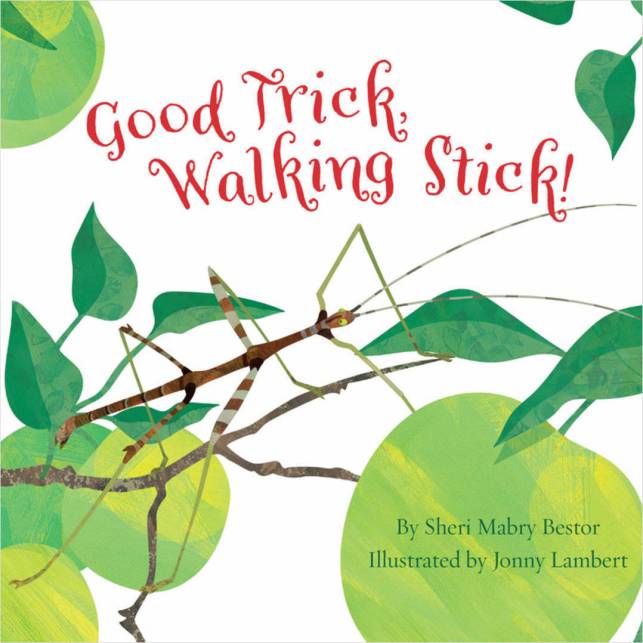
Good Trick, Walking Stick!

Written by Sheri Mabry Bestor | Illustrated by Jonny Lambert


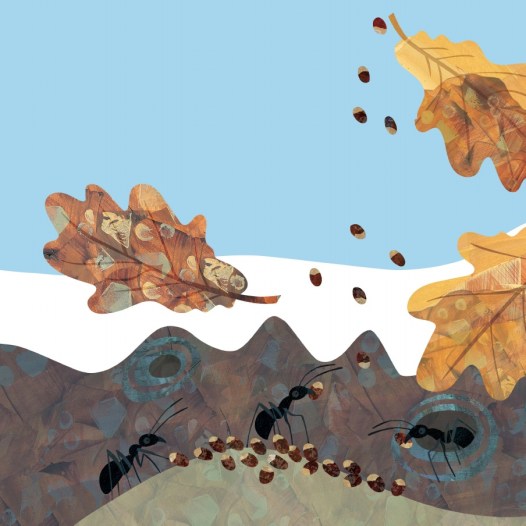
The walking stick is one insect that knows a thing or two about tricks. Even before it’s born wile plays a part in its survival. A mother walking stick drops her eggs where they will be buried by autumn leaves—and found by ants that think they are delicious seeds to eat. Why would a mother purposefully do this?! She knows that the ants will take the eggs to their colony, where they will eat only the tops leaving the baby walking sticks undisturbed. The ants will then drag the remains of the “seeds” to their garbage dump area, where they will spend a warm winter safe from predators until spring.
celebrate-picture-books-picture-book-review-good-trick-walking-stick-interior-art-eggs

In the spring a baby hatches. It look like a tiny twig—a twig that can walk! The baby searches for food and munch, munch, munches the leaves it finds. As it becomes bigger it molts, shedding its old skin and growing a new one. The walking stick looks just like the branches that it lives on. It is perfectly camouflaged! “Good trick, walking stick!”

But a bird with keen eyesight swoops down and in an instant grabs the walking stick in its beak. Quickly, the walking stick squirts out a bad-smelling juice. The bird spits it out, but has gained a snack while the walking stick has lost a leg! It’s okay, though; the walking stick will just grow a new one! “Good trick, walking stick!”

The walking stick finds a tree with others of her kind hidden in its branches. The leaves make delicious meals. During the day the walking stick can change color to blend in with the sunlit bark of the tree and stay cooler. At night the walking stick becomes darker to hide in the shadows and stay warm. “Good trick, walking stick!”

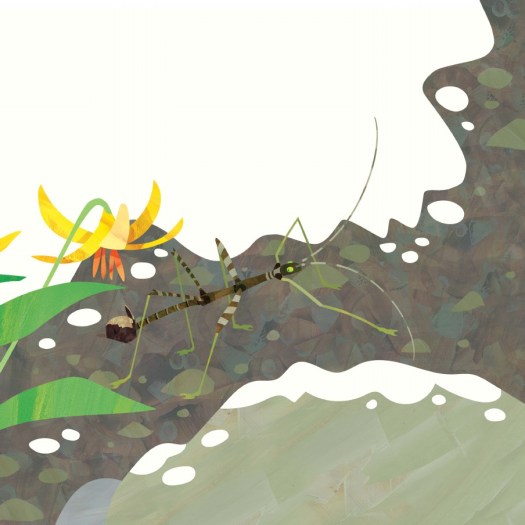
When a squirrel brushes past, looking for a meal, the walking stick “pulls in her legs and drops to the forest floor, just like a stick falling off a larger branch. The stick insect is safe.” All day the insect lies on the ground, not moving, pretending to be just another cutting. At nightfall the walking stick climbs back into the tree. The squirrels and birds are resting now, so the stick insects “Munch munch. Crunch. Munch.”
celebrate-picture-books-picture-book-review-good-trick-walking-stick-interior-art-camouflage

With the onset of fall stick insects begin looking for mates. The females “spritz their perfume into the cooling air.” Males find them. Even if a walking stick does not have a mate, she can still produce eggs which will all develop into females. The eggs settle into the fallen leaves, ready to begin their unique life. “Good trick, walking stick!”

Stick insects are some of the most unusual creatures in the world. Measuring from an inch or two to 21 inches (53 centimeters), they can be found in forests, parks, even your own backyard! Sheri Mabry Bestor’s story of a year in a walking stick’s life is filled with action, suspense, and the clever ploys stick insects use to survive. Bestor’s enthusiastic, conversational tone and evocative language will engage kids over a wide range of ages. Each page also contains fascinating scientific sidebars that expand on the events in the story.

Jonny Lambert’s collage-style illustrations are a perfect match for the text. The mottled hues and textures of nature are beautifully represented in the vibrantly colored two-page spreads. The scientific details of the stick insect’s life are clearly and organically depicted, making it easy for kids to understand and enjoy the concepts: on one page ants carry away eggs with missing tops while on the next baby walking sticks emerge from the same images. Illustrations of the stick insect’s camouflage are particularly effective, and the cyclical quality of the story and the insect’s life are well portrayed.

For teachers and for kids who love the natural world and are curious about its unique creatures, Good Trick, Walking Stick is a wonderful addition to their school or personal library.

Ages 5 – 9

Sleeping Bear Press, 2016 | ISBN 978-1585369430

Dump the Pump Day Activity
celebrate-picture-books-picture-book-review-walking-find-the-differences-puzzle

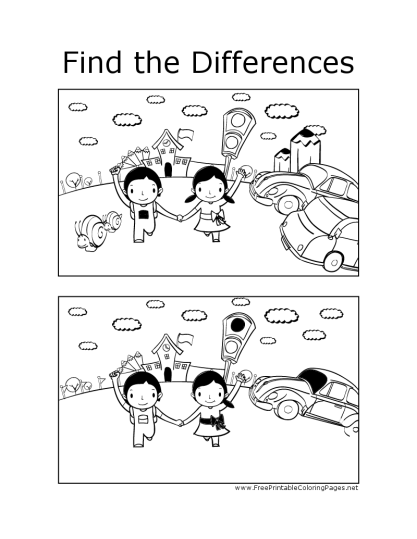
Take a Stroll Puzzle


You can see so many amazing things when you take a walk! But can you spot the 15 differences between the two pictures in this printable Take a Stroll puzzle?

June 15 – Smile Power Day

celebrate-picture-books-picture-book-review-happy-emma-dodd

About the Holiday

Where do you find enough smiles to fill twenty-four hours? Come on, you know! Friends, loved ones, books, movies, videos, jokes, and more funny stuff can instantly elicit that bright, shiny facial expression! Today is a day to share smiles with people you know and those you don’t. So get out there and be happy!

Happy

By Emma Dodd


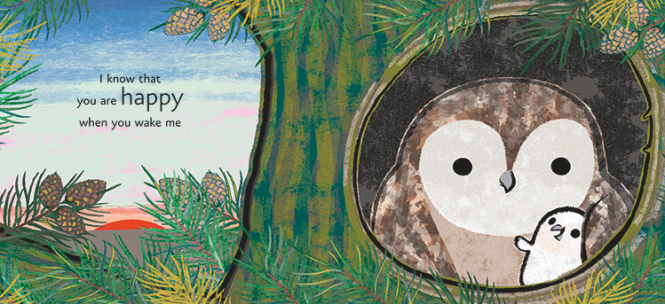
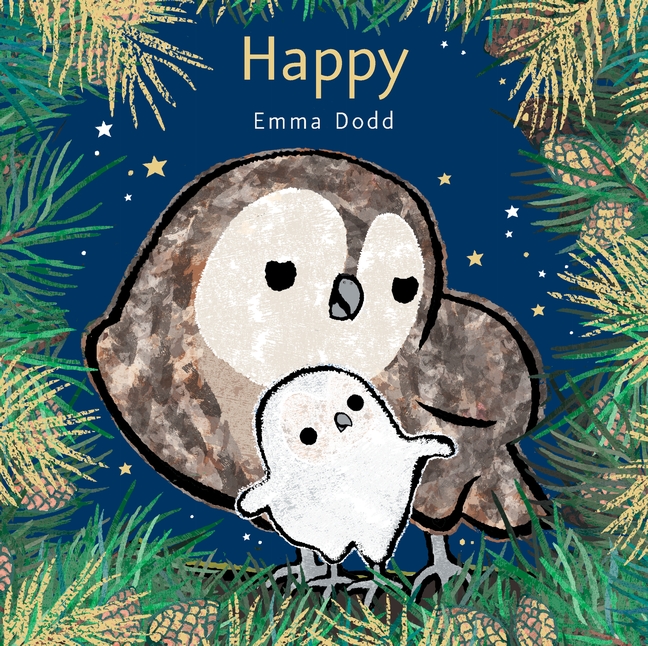
Nestled in a hole in a pine tree, an owl—who could be a mom, a dad, or any caregiver—cradles an adorable tiny owlet under its wing. “I know that / you are happy / when you wake me / with a song,” the owl says. As they venture out onto a limb, the owl adds, “I know that / you are happy / when you hop / and skip along.” With the repeated “I know that you are happy” the owl describes other ways the owlet shows her joy: giggling, rambling conversation, playing loudly, acting proud, and trying “something new…and / if you don’t succeed at first, I’ll help until you do,” the owl reassures the child.

celebrate-picture-books-picture-book-review-happy-emma-dodd

But every day cannot be happy, the owl concedes, and when “things are looking gray, / I’ll do my best to chase / the gloomy clouds away.” As the sun sets on the secluded home and the owl and owlet drift into sleep, the owl reveals: “I love it when you cuddle close / and whisper, ‘I love you.’ / And I am happiest / of all… / when you are happy too.”

Perfect for all parents and caregivers, Emma Dodd’s celebration of how a child’s joy resonates in others’ hearts makes shared reading time special. The lyrical rhythm of the repeated lines accompanied by the sentiments of encouragement and the transposition of point of view give this book impact and poignancy.

Dodd’s gorgeous illustrations of the endearing owl and owlet pair perfectly express the type of discovery that leads to joy on both a child’s and an adult’s part. With its little raised foot, extended tiny wings, and jubilant, smiling beak, the young owlet is both lovable and loved. Dodd’s beautiful muted, blue, green, brown and orange settings shimmer with gilded accents: delicate gold pine needles frame the owls’ home, the baby owl splashes in a glistening puddle under a gleaming moon, sparkling stars light the midnight blue sky, and rain showers fall in glinting streaks as the owls look on.

Simply put Happy will put a smile on your face and bring a tear to your eye. This lovely lullaby will quickly become a favorite for bedtime or cuddle time and is a must for young children’s bookshelves. Happy also makes a perfect gift for new parents or other caregivers. 

Take a peek:

Ages Birth – 5

Nosy Crow, Candlewick Press, 2015 | ISBN 978-0763680084

Smile Power Day Activity

celebrate-picture-books-picture-book-review-smile-cards

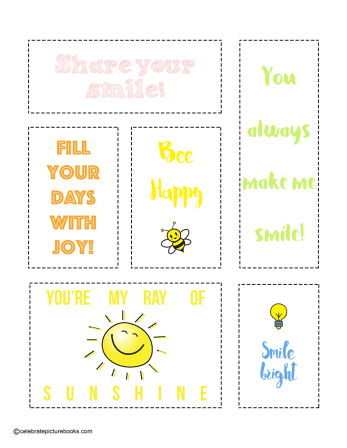
Make Someone Smile Cards


Sharing a smile can make someone’s day! With these printable Make Someone Smile Cards you can spread joy to people you know—and even to those you don’t! Give one to a family member, coworker, or friend. You can surprise your favorite barista, hair stylist, librarian, or shop owner by handing them a card or leaving it where they’ll find it. It’s even fun to tuck a card among the items on a shelf or in a book for someone to find later. Remember, the power of a smile is awesome!

June 14 – Flag Day

celebrate-picture-books-picture-book-review-why-are-there-stripes-on-the-american-flag

About the Holiday

Flag Day commemorates the day in 1777 when the “Stars and Stripes” designed by Besty Ross was adopted as the official flag of the United States by the Second Continental Congress. Through early efforts by BJ Cigrand, a school teacher in Fredonia, Wisconsin, in 1885 and George Balch, a kindergarten teacher in New York City in 1889, observances celebrating the flag’s birthday were initiated. Three decades of remembrances followed, and in 1916 President Woodrow Wilson officially established the holiday. It wasn’t until President Harry S Truman signed an Act of Congress on August 3, 1949 that June 14 was designated National Flag Day. Today, people are encouraged to display the American flag. Special events and ceremonies also take place on this day.

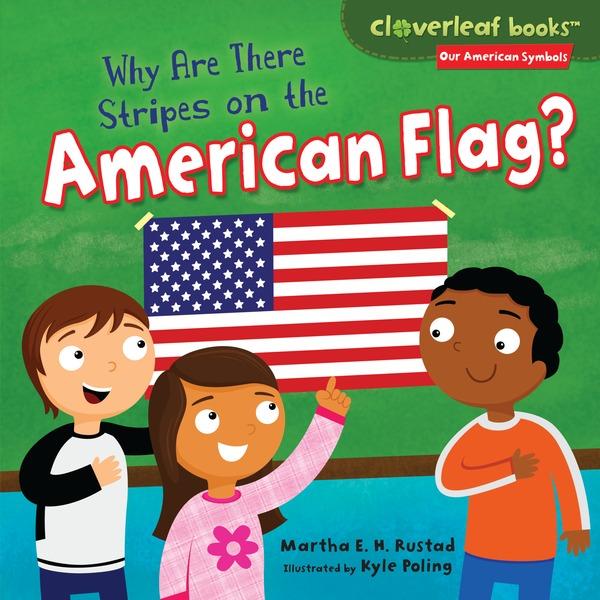
Why Are There Stripes on the American Flag?

Written by Martha E. H. Rustad | Illustrated by Kyle Poling


The school bell rings and the kids in Mr. Gomez’s class get ready to say the Pledge of Allegiance. Charles raises his hand with a question. Suddenly all the kids have questions about the flag and the words of the Pledge they say each morning. Mr. Gomez is enthusiastic about answering the kids, and the class starts a discussion that includes a bit about the Revolutionary War and how the original 13 colonies became the first states. The new government, Mr. Gomez says, wanted a symbol for the country.

In 1777, Mr. Gomez continues, the American leaders decided to use the colors red, white, and blue. The red stands for courage, the white for goodness, and the blue for fairness. The Flag Act of 1777 decreed that the flag have 13 stripes, alternating red and white, and 13 white stars on a blue field. Stars were chosen to represent the states because the founders believed America was “like a new group of stars shining in the night sky.” Mr. Gomez shows his class pictures of how the flag changed over the years as states were added to the union.

Next, the kids want to understand the wording of the Pledge of Allegiance better. Line by line, Mr. Gomez defines the more difficult words. Allegiance he explains means loyalty or friendship and that in the first line of the pledge we are promising to be loyal to and respect the flag. Respect is shown when we stand and place a hand over our heart while reciting the pledge, obey the rules of raising and lowering the flag, and other requirements. Mr. Gomez then explains what a Republic is and the idea that America is indivisible in that her people live and work as a team, staying together even when we disagree. The concepts of liberty and justice are also defined.

The class is excited with their new knowledge and before heading out for recess, they say the Pledge of Allegiance together.

A Make Your Own Flag activity follows the text along with a glossary of words used in the book and resources for further study.

Martha E. H. Rustad has written a primer about the American flag and the Pledge of Allegiance that will engage kids and teach them about these important patriotic concepts. Words such as symbol, justice, liberty, and more are described through the give and take between Mr. Gomez and his students, using familiar examples from the playground and classroom. Each page also includes facts about the US flag, the Flag Act, the design of early flags, flag etiquette, and more.

Kyle Poling’s friendly and colorful illustrations depict a diverse class where the concepts being discussed are clearly visible. Young readers will feel right at home in Poling’s classroom environment and be excited to learn about the origins of our most familiar symbol.

Ages 5 – 8

Millbrook Press, 2014 | ISBN 978-1467744652

Flag Day Activity

celebrate-picture-books-picture-book-review-flag-day-word-search

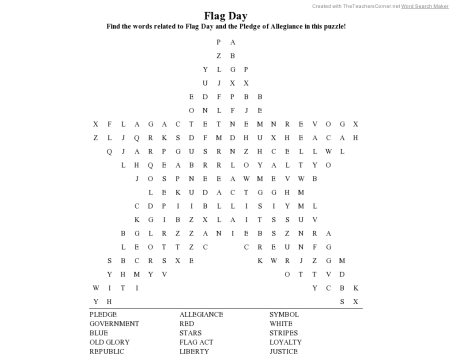
Star-Shaped Word Search


The stars on the American flag represent the country’s 50 states. In this printable Star-Shaped Word Search you’ll find words about the origins of the US flag and the Pledge of Allegiance. 

June 13 – Sewing Machine Day

celebrate-picture-books-picture-book-review-sewing-school-2

About the Holiday

Patented in 1790 by Thomas Saint, the sewing machine revolutionized the textile industry. No longer did clothes and other fabric items need to be made by hand. The sewing machine made this job faster and less tedious. Long a favorite hobby for clothes makers and crafters of all types and ages, sewing is creative and fun! If you like to sew celebrate today by making something new or sharing your talent with a beginner. If you’ve never sewn, consider trying it—needle crafts, either by hand or using a sewing machine can become a life-long enjoyable activity!

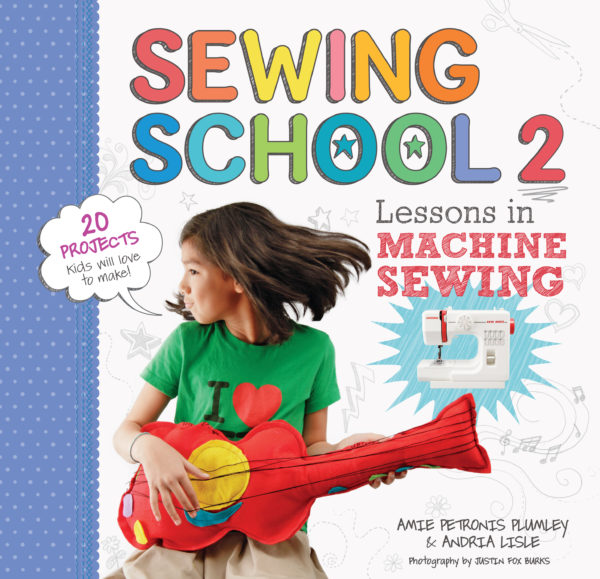
Sewing School 2: Lessons in Machine Sewing

By Amie Petronis Plumley & Andria Lisle | Photography by Justin Fox Burks


Sewing and crafting are popular hobbies shared between friends and family. Skills that were once passed down from generation to generation are being rediscovered by kids and adults alike through widely available craft and sewing chain stores and books like the Sewing School series. In this second edition, kids are taught everything they need to know to feel comfortable at a sewing machine and create awesome projects they can really use.

Divided into five sections, Sewing School 2 is easy to navigate and builds on skills presented in previous chapters. The first section “Getting Started” provides 13 lessons that cover choosing a sewing machine, the elements of a well-stocked sewing kit, learning about different fabrics, how to do basic stitches and techniques, and laying out and cutting patterns.

With clear photographs on every page, kids will easily be able to understand the concepts being described. “Anatomy of a Sewing Machine” points out each part of a machine, from the spool spindle to the take-up lever, presser foot, stitch selector, and more. The most common stitches are depicted here too—straight, reverse, stay, and reinforcement stitches share the page with short discussions of what a bodkin and pinking shears are for.

Budding sewers will learn about the right and wrong sides of fabrics, how to sew “right” sides together and turn the project inside out, and the way to stuff a pillow and finish the opening. One chapter is devoted to starting off right as well as tips on guiding the material through the machine.

After kids have been introduced to the basics, it’s time to try out those new skills! Four sections containing five projects each let kids make items for all the important aspects of their lives. “In My Room” shows them how to make a pillow with a space for secret messages, a welcome sign, a pocket organizer, a sleepy teddy bear, and a striped blanket. The “Let’s Go” section is perfect for kids on the run. Projects include a coin holder, a handy pouch for carrying extras, and a safe place for their electronic gadgets.

The projects in “Time to Play” prove that sewing results in plenty of fun! Things like stuffed guitars, microphones, backpacks, game boards, and decorative hangings are just a stitch away. Finally it’s time to take sewing outside with a section titled “The Great Outdoors.” Kids will wonder how they ever got along without their snack pouch, belt with pocket, water bottle carrier, scarf, and portable tree stump—huh? You’ll just have to get the book and see!

Each project comes with a one-to-three star difficulty rating, a list of all materials needed, a list of the skills used, how to personalize each project, and tips for adult helpers.

The final pages help kids out when things just don’t go as planned, how to do hand-sewn work, and tips for adults who are working with a group.

Amie Petronis Plumley and Andria Lisle have created a wonderful resource for anyone wanting to get in on the fun of sewing. The easy-to-understand directions and conversational tone of the book will put kids at ease, and Justin Fox Burks’ photographs of children using the concepts and happily displaying their work will make beginners excited to start sewing. Burks’ up-close photos of the parts of the sewing machine as well as each technique make Sewing School 2: Lessons in Machine Sewing a leader in its field.

Ages 7 and up

Storey Publishing, 2013 | ISBN 978-1612120492

Sewing School Takeaway Project

celebrate-picture-books-picture-book-review-sewing-school-t-shirt-project

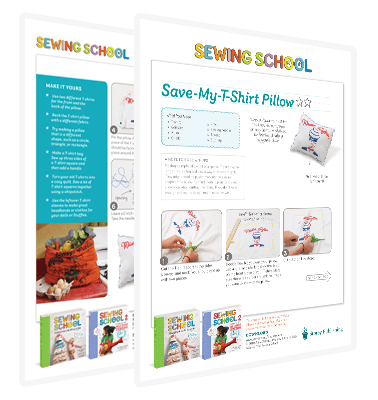
Save-My-T-Shirt Pillow


Sometimes it’s so hard to give away a favorite t-shirt! With this project from Sewing School you don’t have to! Use your hand-stitching skills to create a pillow that will make your room even more awesome! Click here for the Save-My-T-Shirt Pillow directions.

Sewing Machine Day Activity

celebrate-picture-books-picture-book-review-sewing-word-search

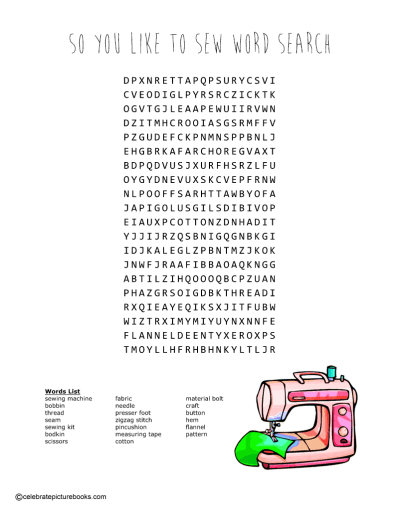
So You Like to Sew Word Search


Sewing has a vocabulary all its own! Find the words related to this fun hobby in this So You Like to Sew Word Search puzzle! And here’s the Solution!

June 12 – National Rivers Month

celebrate-picture-books-picture-book-review-otters-love-to-play

About the Holiday

Rivers are beautiful, provide recreation, and are crucial to our water supply. Did you know that in the United States 65% of our drinking water comes from rivers and streams? This month environmentalists and others promote awareness of the importance of keeping the nation’s rivers pollution free to protect the fish and animals that call them home and increase enjoyment for all. To help the cause, join a volunteer river clean-up crew, help monitor water quality, or learn more about your local river system. Whether you like to fish, swim, boat, or just laze on the bank, June is the perfect month to get out on a river! You might even see some otters—the subject of today’s book!

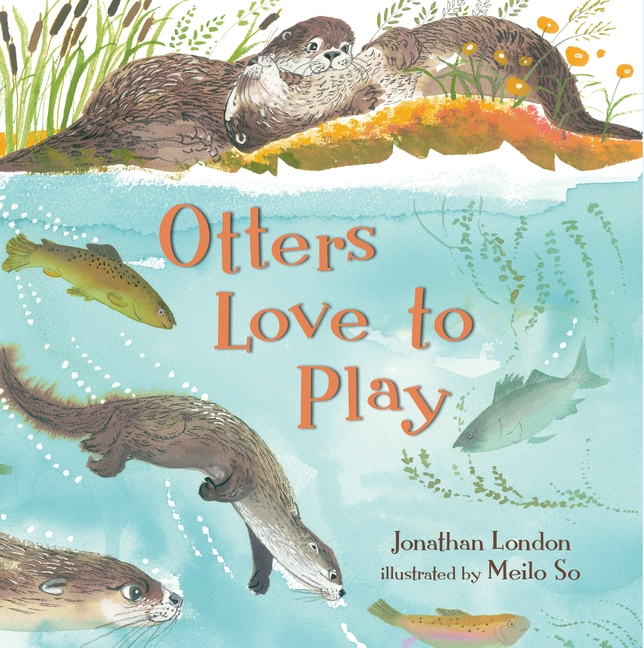
Otters Love to Play

Written by Jonathan London | Illustrated by Meilo So


It’s spring and two otters have moved into an abandoned beaver lodge to start a family. In a soft nest of moss, leaves, and grass the mother otter gives birth to three pups. The pups first open their eyes to the world when they are five weeks old. At two months old they’re ready to come out of the den to play. Playtime is fun, but for the baby otters it’s also work. Running, twisting, wrestling, and matches of tug-of-war teach valuable hunting skills and solidify family bonds.

As spring turns to summer, the pups’ thick waterproof coats grow in, and it’s time for swimming lessons to begin. There are no floaties here! The mother otter simply grabs her charges by the scruff of the neck and drops them into the river. Their mother shows them how to dive and glide and come to the surface as they follow her single file. “Within days, the otter pups gracefully spin and flip and swish like underwater acrobats.” Again and again “they scramble up a mud slide and SLIIIIIIIIIIIDE back down to the water—Ka-Spash!”

celebrate-picture-books-picture-book-review-otters-love-to-play-in-autumn

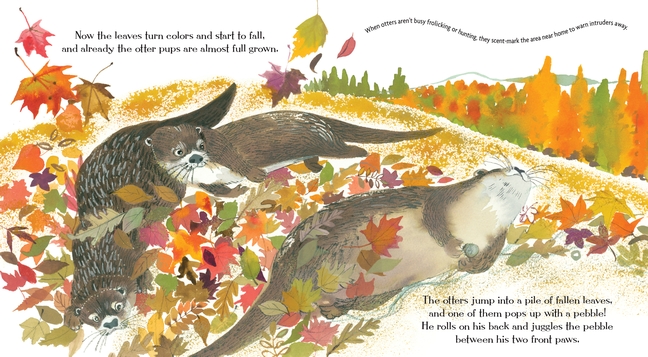
By the end of the summer the pups know how to catch small fish and how to nudge out frogs, crayfish, turtles, and snakes from their hiding places among the rocks. Autumn brings more opportunities for fun as the nearly full-grown pups tumble in the fallen leaves. Even winter’s blasts don’t deter the otters. With their thick fur they roll in the snow and catch fish in the icy river water.

But an ominous shadow appears on the fresh snow as the pups belly-slide down a snowbank. Something is waiting and watching…. So too is mother otter. Screaming and hunching she “slides across the snow and with a terrible GRRRROWL…scares the fox away!” Throughout the winter the otters snuggle in their den, and when the rainy spring makes muddy river banks, the otters come out and speed down the slippery slide “because otters love to play!”

You can’t help but love otters. Watching them dive, swim, and frolic just puts a smile on your face. And what’s more these sleek river creatures are fascinating animals! Jonathon London has written a story that captures the spirit and exuberance of one otter family while incorporating intriguing facts about their dens, birth statistics, purposeful play, hunting techniques, protective fur, predators, and defenses—did you know that otters can slide on snow at speeds up to 18 miles (29 kilometers) per hour?! London’s lyrical journey through the first year of an otter’s life makes captivating reading for young children just navigating the world themselves.

Meilo So’s enchanting otter family will delight readers. Images of the pups somersaulting, sliding, splashing, and swimming charmingly depict the sleek, supple movements of these frisky animals. Their smooth coats, rendered in soft browns with white and black accented texture, and their mischievous, ever-present smiles are realistically portrayed, inviting kids to reach out and pet them. So’s river scenes are beautiful—the pale blue water reflects deep gold and green trees, pink and yellow wildflowers and delicate green grasses flutter along the river bank, and the depths of the underwater world swirl with muted sage greens and blues as the otter pups frolic among gray- and olive-hued fish. Autumn comes with fiery orange and purple leaves, and winter falls shivery white as the russet fox is chased away.

Otters Love to Play would be a lovely gift for any child and a welcome addition to any classroom or school library.

Ages 4 – 8

Candlewick Press, 2016 | ISBN 978-0763669133

Visit Jonathan London’s website for more books by this prolific author.

View more books and art by Meilo So.

National Rivers Month Activity

celebrate-picture-books-picture-book-review-otter-coloring-page

Otter Coloring Page


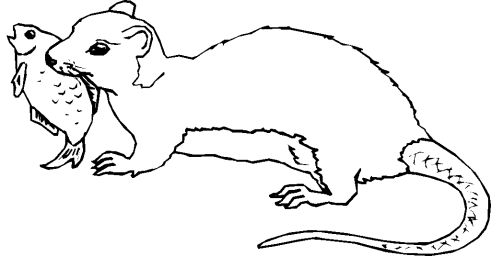
You “otter” love this coloring page, with its cute river creature who has just caught dinner! You can color it with pencils, crayons, or markers or consider making a collage with bits of paper, cloth, or leaves and sticks. Give the otter a den to snuggle in and a river for frolicking! Here’s your Otter Coloring Page!

June 11 – World Doll Day

celebrate-picture-books-picture-book-review-this-is-my-dollhouse

About the Holiday

World Doll Day came about through the efforts of Mildred Seeley, a doll collector and prolific author on doll-making and -collecting subjects and founder of Seeleys, the leading maker of porcelain dolls.Her collection of French dolls broke records when it sold in 2002. In 1986 she wrote an open letter to all media outlets and doll enthusiasts to join her in creating a special holiday about dolls on the second Saturday of June each year. Seeley envisioned World Doll Day as a time when dolls could be gifted to loved ones and strangers alike, promoting more universal understanding. She also hoped that museums, libraries, and stores would create interesting exhibits and that magazines and newspapers would run special editions. If you have a special doll collection, share it with others today, and if you know of a child or adult who would love a new or family heirloom doll, consider buying or giving them one!

This Is My Dollhouse

By Giselle Potter


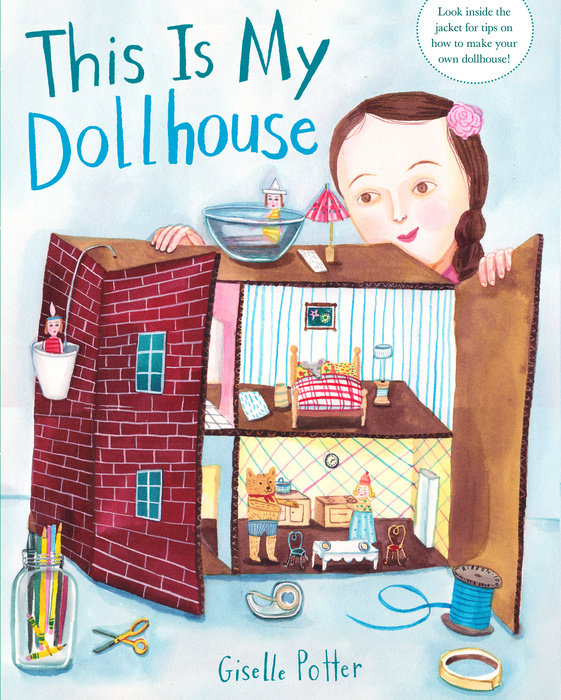
A little girl loves playing with her dollhouse every day. Her dollhouse began as a normal cardboard box, but the girl painted brick walls on the outside, divided the box into rooms, and drew wallpaper in each with her markers. Ingeniously, she filled the rooms with homemade furniture—a small box with a window cut out and a magazine picture placed inside became a TV; a wooden block decorated with burners and a door became an oven; a scrap of carpet became a rug, and the family eats pasta made from small bits of yarn served in a bottle cap.

Her diverse dollhouse family consists of Grandma Mousey, a toy mouse; Mommy, a doll with blond hair; Daddy, a stuffed teddy bear; and twins Lucy and Lola, two small dolls. Each morning Lucy and Lola dress in their fancy clothes made of ribbon. Mommy serves them fried eggs, which just moments ago were white circles of paper with colored yellow centers. After breakfast the twins ride the paper cup elevator to the cardboard box roof, where a bowl of water swimming pool awaits.

Later the pair relaxes in front of the TV while Daddy gives them tiny tissue-paper popcorn. When day fades into nighttime, the little girl tucks the whole family into the big bed and sings them a lullaby.

The girl has a friend named Sophie, who also has a dollhouse. Hers is store-bought and has perfect figures with painted on clothes, staring dot eyes, and plastic hair. All the furniture matches and the refrigerator comes stocked with plastic food. When the little girl visits Sophie they play with the dollhouse. The girl suggests various imaginative scenarios for the family—going on vacation, getting a new dog to walk, having the boy break his leg—but Sophie rejects her ideas. She doesn’t have an airplane for a vacation, the stuffed dog does not belong to the family, and the notion of a broken leg only elicits a look.

celebrate-picture-books-picture-book-review-this-is-my-dollhouse

The girls soon tire of their game and head outside. On the way home the little girl worries that if  Sophie came to play at her house she would hate the homemade dollhouse. Sophie does come over to play, however, and in preparation the girl hides her dollhouse under a pile of blankets. It doesn’t take Sophie long to uncover the dollhouse and want to play with it. The girl is so nervous about how Sophie will react to her “not perfect” toy that her knees begin to itch and a lump forms in her throat, but as they open the dollhouse, her fears are allayed.

The normal daily routine of the girl’s dollhouse family enchants Sophie, and she quickly takes up the whimsical scenarios she had rejected at her own house. All too soon Sophie’s mom arrives to pick her up. Given the promise that she can return tomorrow, Sophie heads home while the little girl makes plans for Lucy and Lola’s birthday party.

Doll and dollhouse lovers, crafters, artists, miniaturists and anyone with a fanciful bent will be charmed by Giselle Potter’s This Is My Dollhouse. The story of two friends from homes with different philosophies resonates beyond the subject of the two dollhouses. Being open to new experiences, allowing freedom of imagination, as well as having pride and confidence in one’s own talents and preferences are strong themes treated sensitively while set amid inspired creativity.

Potter’s folk-art-style illustrations are colorful and reinforce the homey appeal of handcrafted toys. Each page organically contains ideas for using recycled and common household items to make cute dollhouse furniture and objects. Inside the book jacket are more illustrated ideas for building a homemade dollhouse. Kids and adults will be inspired to save thread spools, corks, clothespins, ribbon, small bottles, and other items and will begin looking at common objects in a new light.

Ages 4 – 9

Schwartz & Wade Books, Random House, 2016 | ISBN 978-0553521535

World Doll Day Activity

celebrate-picture-books-picture-book-review-dollhouse-coloring-page


Dollhouse Coloring Page


Here’s a cute dollhouse that you can add to and color! So grab this printable Dollhouse Coloring Page and get creative!

Picture Book Review

June 10 – It’s Pet Appreciation Week

celebrate-picture-books-picture-book-review-excellent-ed

About the Holiday

Pets give us so much love and joy that we often want to do something special for our furry friends in return. The first full week of June gives us just that opportunity! Why not spend a little extra time walking or cuddling with your pet? Or maybe make them a favorite treat or get them a new toy. However you celebrate, you know your pet will appreciate it!

Excellent Ed

Written by Stacy McAnulty | Illustrated by Julia Sarcone-Roach


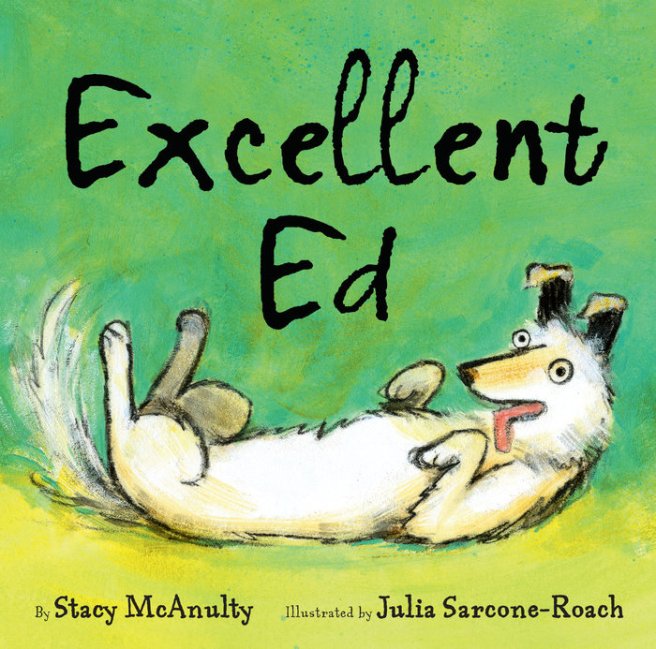
Ed, the Ellis family dog, is feeling a little left out. All five of the children are excellent at something, but not Ed. All the Ellis kids can eat at the table, ride in the car, sit on the couch, and use the indoor bathroom, but not Ed. Each kid has his or her own talent—playing soccer, calculating math, dancing, and baking cupcakes—and while Ed can carry a ball in his mouth, count to 4, spin after his tail, and eat cupcakes, it’s just not the same.

One day Ed wonders—if he was excellent at something could he have the same perks as the kids? He considers his talents and comes up with something. He knows he’s great at breaking stuff! Surely this will earn him a place at the dinner table. But even before he gets going, Elaine runs in with the news that she’s broken the record for most soccer goals in a season. Ed realizes that Elaine is better at breaking stuff than he is.

Again Ed thinks. Suddenly it dawns on him that he’s excellent at losing things—he even lost himself last week! This kind of ability was surely worth a ride in the van. But just as he’s about to jump in, the twins shout, “I’ve lost a tooth!” Foiled in this attempt, Ed goes back to the drawing board. Hmmm…it was just there…oh, yeah! Ed is fantastic at forgetting stuff! After proving to Dad that he doesn’t remember he ate a minute ago and ready to take his place on the couch, Ed is thwarted again by Edith, who forgot to be nervous during an audition and is now the lead ballerina.

Ed whimpers. Is there nothing he’s most excellent at? Maybe he doesn’t even belong in the Ellis family. Just then Ernie drops his sandwich and Ed gobbles it up, leaving no crumbs on the floor. “‘Wow, Ed! You are excellent at cleaning the floor,’” Earnie says. When Emily and Elmer come home, Ed runs to meet them and covers them in kisses. “‘Ed! You’re excellent at welcoming us home,’” the twins exclaim. Later, with the couch stuffed with Ellises, Ed lays across Edith’s and Elaine’s feet. “‘Ed is excellent at warming feet,’” Elaine and Edith agree.

Ed wags his tail—he is an excellent floor cleaner, welcomer, and feet warmer! Now he knows why he doesn’t sit at the table, stays home instead of riding in the van, and doesn’t join the family on the couch. He realizes that he is an important part of the Ellis family, and that he’s always loved and appreciated. Now, if only he could figure out that indoor bathroom thing….

There comes a time in everyone’s life when they doubt their place in the world. Stacy McAnulty explores that feeling through Ed, who worries, works the problem, and discovers that he is without a doubt excellent just the way he is. Giving the Ellis kids a variety of ages and talents makes this a great universal book for readers. McAnulty’s twist which turns “negative” gifts for breaking, losing, and forgetting things into triumphs for the Ellis kids is ingenious, adding humor, depth, and “ah-ha! moments” to the story. The mystery of Ed’s abilities is well-kept until the end, and the solution comes as a happy surprise.

Readers will wish they were part of the Ellis family, with their exuberant smiles, supportive cheers, snuggly, crowded couch, and, of course, adorable Ed. Julia Sarcone-Roach’s vivid illustrations are infectious as Ed perks up his ears, rolls his eyes skyward and with tongue out thinks about his situation. Scenes of his shenanigans will elicit giggles, and Ed’s sweet looks and wagging tale will win readers’ hearts.

Ages 4 – 8

Alfred A. Knopf Books for Young Readers, 2016 | ISBN 978-0553510232

Pet Appreciation Week Activity

celebrate-picture-books-picture-book-review-dog-maze

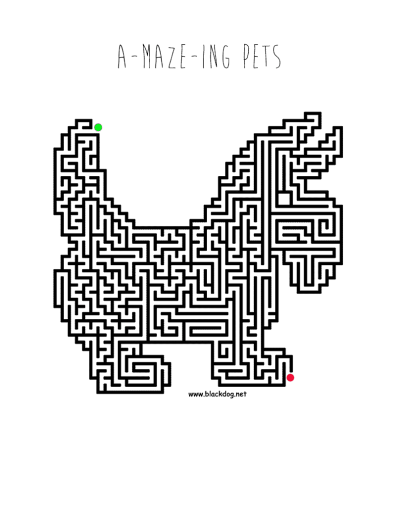
A-maze-ing Pets Maze


Dogs love to take circuitous routes as they pick up scents that are too enticing not to follow! Can you find your way through this printable A-maze-ing Pets Maze

Picture Book Review