August 7 – National Lighthouse Day

celebrate-picture-books-picture-book-review-miss-colfax's-light-cover

About the Holiday

Lighthouses have been in use since the earliest days of sea-going vessels. Built to warn sailors of dangerous and damaging rocks and reefs, these sentinels are a picturesque and fascinating part of history. From man—and woman—tended lights to today’s automated systems, lighthouses are a beacon of inspiration and imagination.

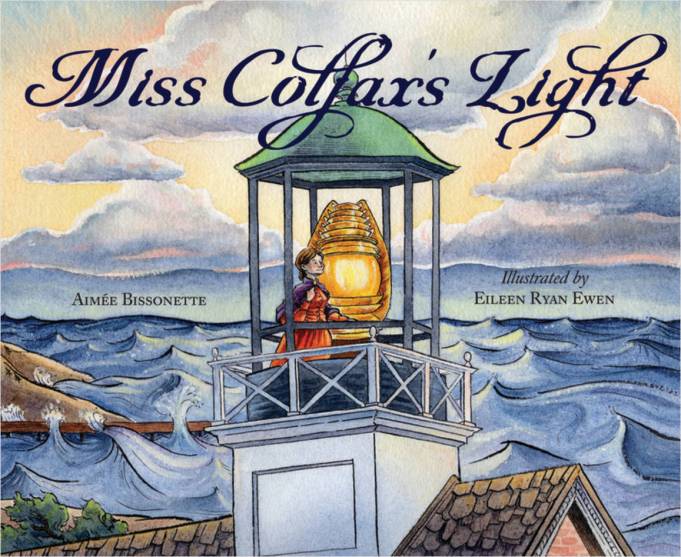
Miss Colfax’s Light

Written by Aimée Bissonette | Illustrated by Eileen Ryan Ewen


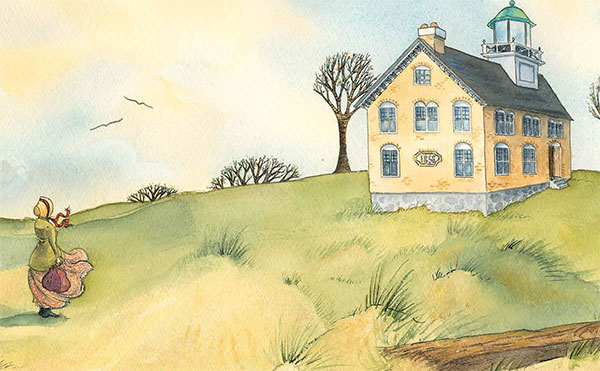
In 1861 when Harriet Colfax’s brother fell ill and decided to leave Indiana, Harriet had two options: she could leave with him—after all she had come to Indiana with him and worked with him at their newspaper—or she could stay on as the lighthouse keeper of the Michigan City Lighthouse, making $350 a year. Most women might have chosen to leave, but Harriet did not want to give up her independence or leave her best friend, Ann. She took the job as lighthouse keeper even though many in town thought she was too weak or too inexperienced to do the work.
celebrate-picture-books-picture-book-review-miss-colfax's-light-Michigan-city-lighthouse

Image copyright Eileen Ryan Ewen, courtesy of sleepingbearpress.com

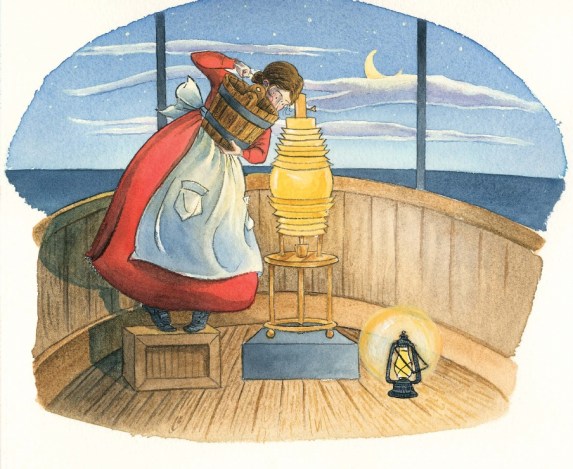
Harriet knew the ships on the sometimes wild waters of Lake Michigan—one of the northern United States’ Great Lakes—relied on the lighthouse to keep them from danger. Twice every night she had to carry “whale oil in a bucket up narrow stairs to the top of the lantern tower” to refill the light and then polish the Fresnel lens. During the day, she “cleaned and painted…varnished the woodwork and shined the brass…and wrote notes in her log.”

It didn’t matter if Harriet was tired or sick or if winter storms rocked the shore, Harriet’s work went on. In 1871 a beacon light was installed at the end of the Michigan City east pier. Now in addition to the main lighthouse, Harriet had to keep this signal lit too. To do so required a long walk down a wooden catwalk that jutted far out into the lake. At times the freezing water roiled and splashed over the catwalk, making the walk tricky and dangerous. By this time lard had replaced whale oil as fuel. While it was cheaper and easier to get, it also had to be heated to pour. Sometimes on frigid winter nights “the lard oil hardened in the cold and Harriet had to fight back through the wind to reheat the oil” on her stove.
celebrate-picture-books-picture-book-review-miss-colfax's-light-harriet-adding-oil

Image copyright Eileen Ryan Ewen, courtesy of sleepingbearpress.com

In 1874 the beacon light was moved to the west pier—farther away. Instead of being within walking distance, Harriet now had to “row a small boat across a creek, hike the far shore, and cross a longer catwalk to light the beacon light.” One night in 1886 storms raged as Harriet made her way down the west pier. “Driving sleet covered her coat with ice. Sand from the dunes along the lake pelted Harriet’s face, stinging her cheeks. Her boots slipped and slid on the catwalk.” Only moments after she finished filling the beacon light and stepped off the catwalk, “a deafening screech filled the air” as the beacon tower “ripped from its moorings and crashed into the lake.”

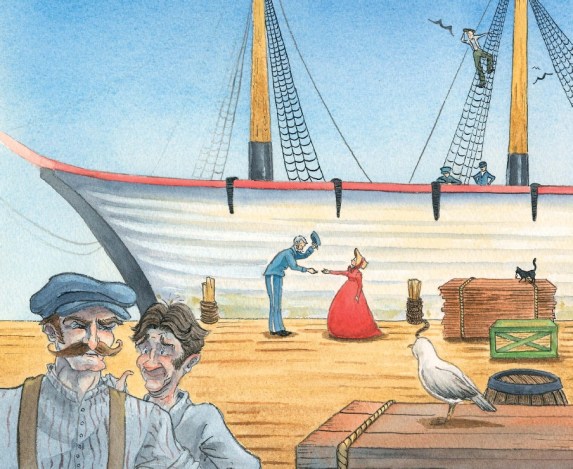
Harriet’s dedication to the Michigan City Lighthouse continued every day and every night for 43 years. People in town came to call the landmark “Miss Colfax’s Light,” and ship captains named it “Old Faithful.” Over the years her vantage point on the tip of the shore allowed Harriet to experience more than stormy seas. She also saw “brilliant sunsets, lunar eclipses, and silent, dancing northern lights. She saw tall-masted schooners with white sails give way to steamships of iron and steel.”
celebrate-picture-books-picture-book-review-miss-colfax's-light-meeting-a-ship-captain

Image copyright Eileen Ryan Ewen, courtesy of sleepingbearpress.com

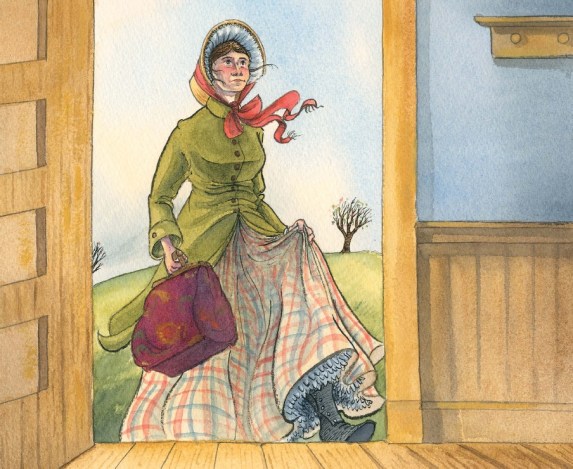
In 1904, when Harriet was 80 years old, the Michigan City Lighthouse underwent a renovation. It acquired a fog signal, and the oil-burning mechanism was replaced with a steam engine and boilers with huge coal-fired furnaces that required several keepers. Although Harriet was sad to leave her life as a lighthouse keeper behind, she understood. With the same bravery that had brought her to the lighthouse, she opened the door and stepped out to what came next.

The life of Harriet Colfax needs no embellishment to reveal the kind of determination and dedication it took to keep the Michigan City Lighthouse shining. Aimée Bissonette tells this brave woman’s story straightforwardly, focusing on particular moments when her duties were increased or her resolve challenged. Harriet’s personal motto that kept her going: “I can do this” is repeated throughout the book, echoing the revolving beacon that shines continuously on the shore of Lake Michigan. Actual entries from Harriet’s log punctuate the text, lending authenticity and Harriet’s voice to the story.Children will be fascinated by this snapshot of American (and world) history.
celebrate-picture-books-picture-book-review-miss-colfax's-light-harriet

Image copyright Eileen Ryan Ewen, courtesy of sleepingbearpress.com

Eileen Ryan Ewen’s action-filled paintings of Harriet and her work beautifully demonstrate to readers Harriet’s incredible will and perseverance under the most difficult circumstances. The narrow stairs of the lighthouse pose daunting in the middle of the night; the seas of Lake Michigan surge and lap at Harriet and the winds buffet her as she navigates the catwalk; and an exhausted Harriet stands at the stove melting lard to light the lens. Children interested in ships and the sea will find much here to excite their imaginations.

An author’s note about Harriet Colfax follows the text along with a glossary of terms used in the book.

Ages 6 – 9

Sleeping Bear Press, 2016 | ISBN 978-1585369553

Meet Aimée Bissonette and learn more about her books and work on her website!

To view Eileen Ryan Ewen‘s portfolio, sketchbook, and other books, visit her website!

National Lighthouse Day Activity

celebrate-picture-books-picture-book-review-lighthouse-coloring-sheet

Lighthouse Coloring Page


Lighthouses are a striking part of any seashore landscape. Here is a printable Lighthouse Coloring Page for you to decorate!

July 11 – World Population Day

celebrate-picture-books-picture-book-review-p-is-for-passport

About the Holiday

In 1989 the Governing Council of the United Nations Development Program established this date as a time to focus on urgent population and humanitarian issues. Each year revolves around a different theme. This year the theme is “Investing in teenage girls.” Education, health, and safety issues for girls around the world is an emerging issue that demands serious attention.

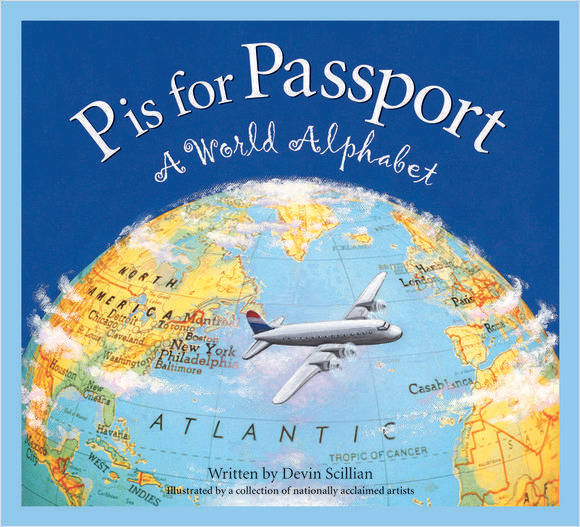
P is for Passport: A World Alphabet

Written by Devin Scillian | Illustrated by nationally acclaimed artists


One of the best ways to learn about the world’s diverse population is to travel—either in person or through a great book. P is for Passport is your own personal guide to the myriad people, landmarks, animals, natural resources, modes of transportation, and other things that make up our world. Each letter of the alphabet introduces readers to a concept that begins with that letter (A for animals, B for breads, etc.). A short definition of the place, event, object, or idea is given on one page, and the facing page contains a poem that cleverly and lyrically describes it with examples from around the globe.

celebrate-picture-books-picture-book-review-p-is-for-passport-currency

Image copyright K.L. Darnell, courtesy of Sleeping Bear Press

After getting the right Currency with the letter C and filling K’s Knapsack, armchair travelers will traverse the world’s varied terrain. E takes them to the “epic elevation” of “mighty Mount Everest”; for the letter I they will sail to the Emerald Isle of Ireland, the Isles of Greece, and the Isle of Skye as well as to chilly Greenland, warm Tahiti, and green Iceland; J will find them in the densest jungles; of course, “O is for Oceans that “roll and roar and sway”; and D is for deserts:

“We’re in Dakar and it’s dreadfully dry, whipped by the sand in the breeze. / Or it’s a day in Death Valley, dangerously hot at 120 degrees. / A dazzling sun dries out the Gobi, a harsh and punishing land. / The largest on earth is called the Sahara, nine million miles of sand….”

celebrate-picture-books-picture-book-review-p-is-for-passport-bread

Image copyright Gary Palmer, courtesy of Sleeping Bear Press

By now readers will be hungry, so B provides buttery buns, bagels, baguettes, biscuits, and more. Feel like something else? Then flip to G for Grain found in pasta, porridge, dumplings, ramen, couscous, wheat, and rice. While travelers eat they can peruse the languages at L:

“Polish is spoken in Poland. In Japan, it’s Japanese. / In Brazil they don’t speak Brazilian, but rather Portuguese. / L is the list of Languages, so many ways to speak. / Like English and Spanish, Italian and Hebrew, Arabic and Greek. / So pack a handy phrase book and learn a few things to say. / A friendly ‘Bonjour!’ or ‘Buenos dias!’ can go a very long way.”

Q is your Quest “…both large and small, from climbing Kilimanjaro to seeing Niagara Falls.” You’ll cross countries by R—Railway and “…rise right through the Rockies , or across the French Riviera, / or rumble across the Australian outback making your way to Canberra.” Along the way you’ll be entertained by M—Music from mandolins, marimbas, maracas, and many different musicians—and S for Sports, such as soccer, surfing, sailing, skiing, and so many more.

Lastly, T stands for Travel as “you see, each trip a traveler takes is a moment that you spend / getting to know a whole new world. And that world becomes your friend.” And from your travels you’ll remember P, the People:

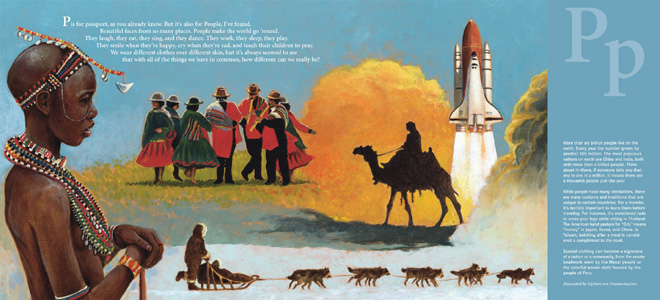
“They laugh, they eat, they sing, and they dance. They work, they sleep, they play. / They smile when they’re happy, cry when they’re sad, and teach their children to pray. / We wear different clothes over different skin, but it’s always seemed to me / that with all of the things we have in common, how different can we really be?”

celebrate-picture-books-picture-book-review-p-is-for-passport-people

Image copyright Gijsbert van Frankenhuyzen

As today’s date also hosts the holiday International Town Criers Day, honoring those early “news reporters,” it’s appropriate that Devin Scillian is our featured author. Besides authoring this and other books, he is a television journalist. His childhood spent living in cities across the globe and his work make him a perfect traveling companion for P is for Passport and its introduction to the marvels of the world around us. Delivering the sights, sounds, aromas, play, and people of foreign lands through fascinating rhymes and facts is a wonderful way to get kids excited about travel and geography.

Twenty-four artists from around the United States and Canada lend their unique talents to depicting each letter. Beautiful two-page spreads burst with color and bold, up-close views of representatives for each letter-inspired text. Brilliant red and blue parrots share space with violet orchids, blue poison dart frogs, a coiled green snake, and a stealthily creeping jaguar in Karen Latham and Rebecca Latham’s painting for the letter J. Susan Guy’s soft watercolor of a frozen landscape cut only by a sleek train and its glowing headlamp transports readers to cold northern regions for the letter N. Volcanoes steam and spout while hot, golden lava burns a path through forestland in Ross Young’s vivid painting for the letter V.

Each illustration is equally compelling. Children and adults will want to linger over each page and will find P is for Passport just the beginning of their world exploration. The book would be a welcome home library addition for geography enthusiasts of all ages.

Ages 7 – 12

Sleeping Bear Press

Hardcover, 2003 ISBN 9781585361571 | ebook, 2013 ISBN 9781627533577

World Population Day Activity

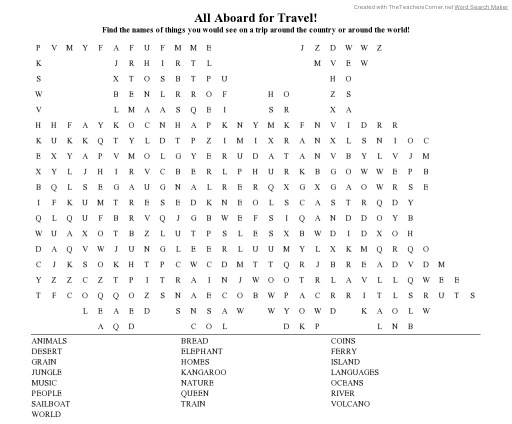
celebrate-picture-books-picture-book-review-train-shaped-word-search

All Aboard for Travel! Word Search


The best way to meet your fellow citizens of the world is to travel! Today’s word search is shaped like a train—one of the best ways to see the countryside. So hop on board and start exploring! Get your printable All Aboard for Travel! puzzle.

June 16 – Dump the Pump Day

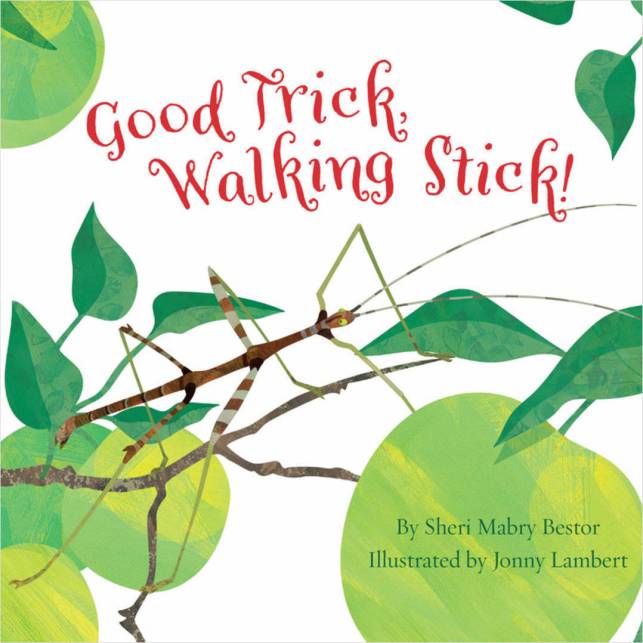
celebrate-picture-books-picture-book-review-good-trick-walking-stick-cover

About the Holiday

There’s no better time than early summer to consider “dumping the pump” and traveling by foot, bicycle, scooter, skates, skateboard…there are so many options! Leaving the car at home saves on gas costs, is better for the environment, and leads to a great exercise workout. Today, grab your walking or tennis shoes and with a friend or alone, take an example from the subject of today’s book and enjoy the pleasure of traversing the outside world!

Good Trick, Walking Stick!

Written by Sheri Mabry Bestor | Illustrated by Jonny Lambert


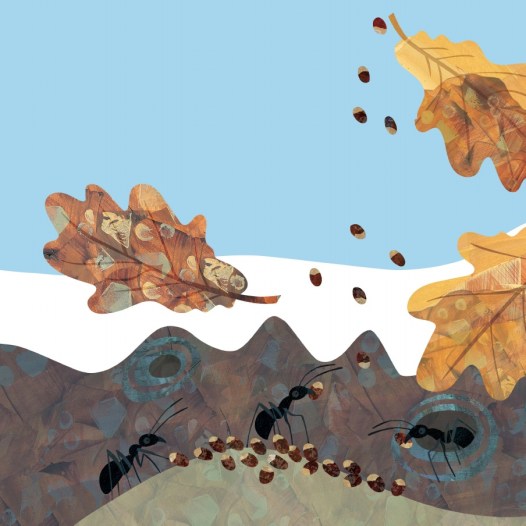
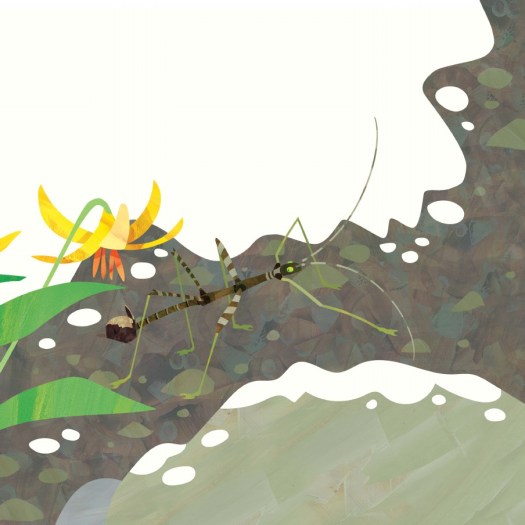
The walking stick is one insect that knows a thing or two about tricks. Even before it’s born wile plays a part in its survival. A mother walking stick drops her eggs where they will be buried by autumn leaves—and found by ants that think they are delicious seeds to eat. Why would a mother purposefully do this?! She knows that the ants will take the eggs to their colony, where they will eat only the tops leaving the baby walking sticks undisturbed. The ants will then drag the remains of the “seeds” to their garbage dump area, where they will spend a warm winter safe from predators until spring.

celebrate-picture-books-picture-book-review-good-trick-walking-stick-interior-art-eggs

In the spring a baby hatches. It look like a tiny twig—a twig that can walk! The baby searches for food and munch, munch, munches the leaves it finds. As it becomes bigger it molts, shedding its old skin and growing a new one. The walking stick looks just like the branches that it lives on. It is perfectly camouflaged! “Good trick, walking stick!”

But a bird with keen eyesight swoops down and in an instant grabs the walking stick in its beak. Quickly, the walking stick squirts out a bad-smelling juice. The bird spits it out, but has gained a snack while the walking stick has lost a leg! It’s okay, though; the walking stick will just grow a new one! “Good trick, walking stick!”

The walking stick finds a tree with others of her kind hidden in its branches. The leaves make delicious meals. During the day the walking stick can change color to blend in with the sunlit bark of the tree and stay cooler. At night the walking stick becomes darker to hide in the shadows and stay warm. “Good trick, walking stick!”

When a squirrel brushes past, looking for a meal, the walking stick “pulls in her legs and drops to the forest floor, just like a stick falling off a larger branch. The stick insect is safe.” All day the insect lies on the ground, not moving, pretending to be just another cutting. At nightfall the walking stick climbs back into the tree. The squirrels and birds are resting now, so the stick insects “Munch munch. Crunch. Munch.”

celebrate-picture-books-picture-book-review-good-trick-walking-stick-interior-art-camouflage

With the onset of fall stick insects begin looking for mates. The females “spritz their perfume into the cooling air.” Males find them. Even if a walking stick does not have a mate, she can still produce eggs which will all develop into females. The eggs settle into the fallen leaves, ready to begin their unique life. “Good trick, walking stick!”

Stick insects are some of the most unusual creatures in the world. Measuring from an inch or two to 21 inches (53 centimeters), they can be found in forests, parks, even your own backyard! Sheri Mabry Bestor’s story of a year in a walking stick’s life is filled with action, suspense, and the clever ploys stick insects use to survive. Bestor’s enthusiastic, conversational tone and evocative language will engage kids over a wide range of ages. Each page also contains fascinating scientific sidebars that expand on the events in the story.

Jonny Lambert’s collage-style illustrations are a perfect match for the text. The mottled hues and textures of nature are beautifully represented in the vibrantly colored two-page spreads. The scientific details of the stick insect’s life are clearly and organically depicted, making it easy for kids to understand and enjoy the concepts: on one page ants carry away eggs with missing tops while on the next baby walking sticks emerge from the same images. Illustrations of the stick insect’s camouflage are particularly effective, and the cyclical quality of the story and the insect’s life are well portrayed.

For teachers and for kids who love the natural world and are curious about its unique creatures, Good Trick, Walking Stick is a wonderful addition to their school or personal library.

Ages 5 – 9

Sleeping Bear Press, 2016 | ISBN 978-1585369430

Dump the Pump Day Activity

celebrate-picture-books-picture-book-review-walking-find-the-differences-puzzle

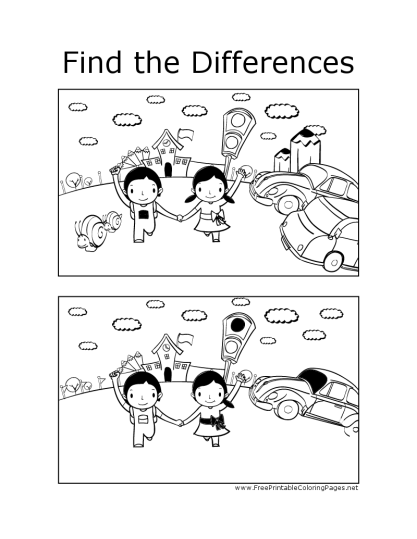
Take a Stroll Puzzle


You can see so many amazing things when you take a walk! But can you spot the 15 differences between the two pictures in this printable Take a Stroll puzzle?