August 29 – Get Ready for Kindergarten Month

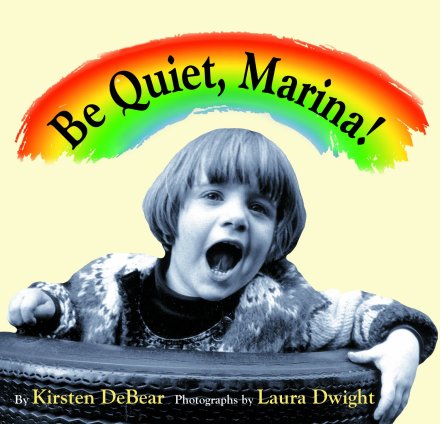
celebrate-picture-books-picture-book-review-be-quiet-marina-cover

About the Holiday

Children of kindergarten age are looking forward to starting school like “the big kids,” and teachers all over the country are preparing to welcome their new students on the first day. All the desks or tables have the same supplies laid out, the same chairs pushed in, and the same promise of learning. Are all the kids the same? Yes…and no. Yes: They are all about the same age, wonder what the future holds, and want to make friends. No: they all come with different personalities, different histories, and different talents and abilities. And it is these differences that give each child their unique perspective on the world and will determine their unique contribution to it. Today celebrate each child’s distinct skills and gifts.

Be Quiet, Marina!

Written by Kirsten DeBear | Illustrated by Laura Dwight


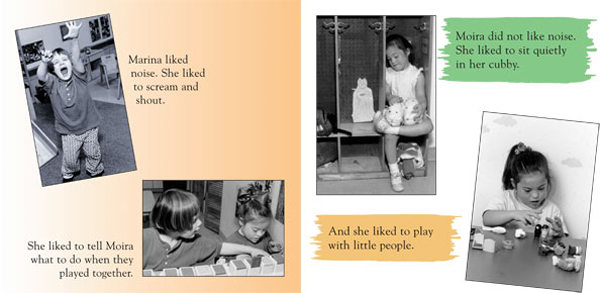
Marina and Moira are four years old and in the same class at school. Marina was born with cerebral palsy; Moira has Down’s Syndrome. They like many of the same things. Both girls like to dance, play ball, dress up, and play with dolls. But when it comes to noises or rushing around, Marina and Moira are different. Marina likes loud noises. She often screams and shouts, and when she and Moira play together, Marina likes to tell Moira what to do.
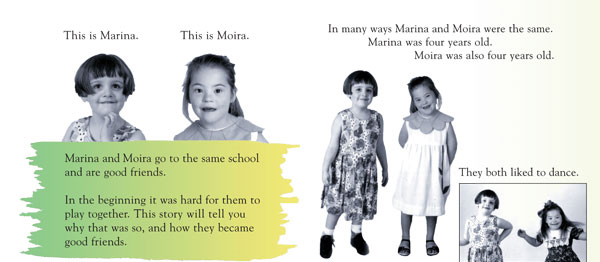
celebrate-picture-books-picture-book-review-be-quiet-marina-girl's-similarities

Photography by Laura Dwight, courtesy of starbrightbooks.org

Moira, on the other hand, likes to sit quietly, and she can often be found taking a break in her cubby. She also likes to play alone with the little people figures. While both girls like to take walks outside, Moira stays with the teachers and the other students while Marina runs ahead. One of Moira and Marina’s favorite activities is when the teachers swing the kids in a big blanket. Then each student has to wait their turn. Moira can wait patiently, but for Marina waiting is hard; she gets angry and screams or cries. When Moira hears Marina scream, she feels scared. She covers her ears and leaves the room.

While Moira and Marina like to build towers and castles with blocks together, they have different feelings about cleaning up afterward. Marina doesn’t want to help and shows it by yelling. Moira runs from the room with her hands over her ears. “One day on the playground Moira was on the see-saw. Marina wanted to get on too, but she couldn’t…So she started to scream. She screamed so loudly that Moira covered her ears and walked away. Now Marina could get on the see-saw, but it was no fun alone.”
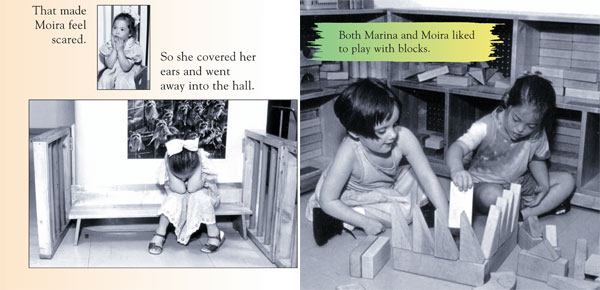
celebrate-picture-books-picture-book-review-be-quiet-marina-playing-with-blocks

Photography by Laura Dwight, courtesy of starbrightbooks.org

Another day Marina started to get upset while the girls were playing with the telephone. This time Moira didn’t run away. Instead she looked at Marina and said, “Please don’t scream!” Marina listened. She became quiet and the two continued to play together. Later in the week when Marina asked Moira to play, Moira told her she would, but only if Marina didn’t scream. Marina said, “Okay, I won’t.”

The two girls came to an understanding. Instead of being afraid of Marina, Moira now knows she is trying to be friends, and Marina realizes that if she wants Moira to play with her, she can’t scream. And they both know that if they need help they can ask their teachers. Now Marina and Moira are best friends, which means they can have fun playing dolls and building with blocks, dancing and dressing up and even going up and down on the see-saw. And when Marina screams, “‘It’s fun!’” Moira makes a little noise herself and shouts “Be Quiet, Marina!”
celebrate-picture-books-picture-book-review-be-quiet-marina-girl's-differences

Photography by Laura Dwight, courtesy of starbrightbooks.org

With simple, straightforward language, Kirsten DeBear reveals the story of how two little girls with what might be considered opposing personalities overcame their differences to become friends. While drawn to each other, these differently abled girls had trouble playing together. Through perseverance and communication, however, they came to understand each other. DeBear brings honesty and humor to this true story that applies to all children who need to accommodate other’s preferences while staying true to themselves when playing or working in a group. The happy resolution shows that there is room for all in our friendships and our hearts.

Laura Dwight’s black and white photos take a storyteller’s approach to chronicling the evolving friendship between Marina and Moira as they participated in schoolroom activities. The smiling girls are shown dancing, dressing in fancy hats, playing with dolls and a ball, building with blocks, and doing other fun things together. The photographs also depict moments of friction between the girls when Maura becomes upset and screams and Moira covers her ears and runs away. At the end of the book Dwight’s lens captures the experiences that led to better understanding between the two girls and their strengthening friendship.

Readers may recognize themselves as a “Maura” who likes loud noise and exploring on her own ahead of the group, or a “Moira” who prefers quiet and staying close to the group. Through the story of these two very smart little girls, all kids may learn to understand and appreciate themselves and alternate viewpoints.

Ages 4 – 7

Star Bright Books, 2014 | ISBN 978-1595726650

Visit Star Bright Books for a vast array of inclusive titles for children that embrace diverse ethnicities and abilities, promote literacy, and are widely available in 24 languages.

View a gallery of photography work by Laura Dwight on her website!

Get Ready for Kindergarten Month Activity
celebrate-picture-books-picture-book-review-threads-of-friendship-photo-holder

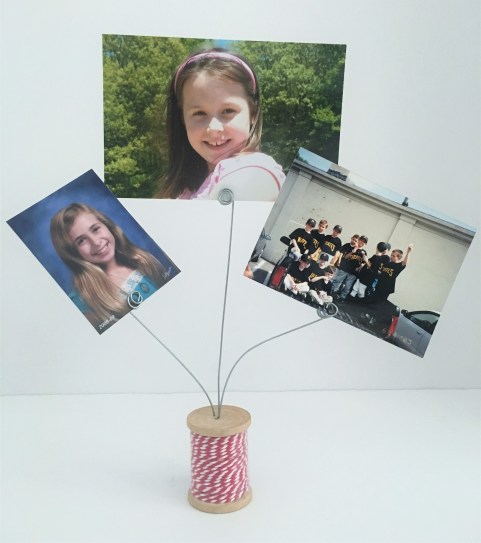
Threads of Friendship Photograph Holder


In the same way that thread holds clothes, blankets, and other material goods together, friendship holds people together. Make this easy Threads of Friendship Photograph Holder to keep pictures of your friends close by!

Supplies

  • Wooden Spool of twine, available at craft stores and some discount retailers
  • Thin-gauge wire, no heavier than 18 gauge
  • Small gauge nail
  • Hammer
  • Needle-nose pliers
  • Pencil
  • Photographs

Directions

To make the photograph holders:

  1. Holding one end of a wire with the needle-nose pliers, wrap it around the pencil four or five times
  2. Remove the wire from the pencil
  3. Squeeze the coils of wire together with the needle-nose pliers
  4. Cut the wires to different lengths so the pictures stand at various heights

To make the stand:

  1. Make two or three holes in the center of the wooden spool of twine with the nail and hammer, holes should be about ½-inch deep to steady wire.
  2. Place the coiled wires in the holes
  3. Put photos in the coils

Note:

Even young children can help hammer the nail, place the wire in the holes, and choose photographs. Adults should coil the wire, cut the wire, and help with hammering.

Picture Book Review

August 14 – It’s Family Fun Month

celebrate-picture-books-picture-book-review-rosie-the-raven-cover

About the Holiday

August is a perfect time to have fun with the family! The days are long and warm, and there are so many activities to discover. Get away from the heat at a pool, the beach, or on the cool shade of a forest path. Explore your adventurous side while camping or traveling to an unfamiliar town, or increase your knowledge by visiting a science, art, history, or other museum. Before school starts up for another year, get out there and have fun!

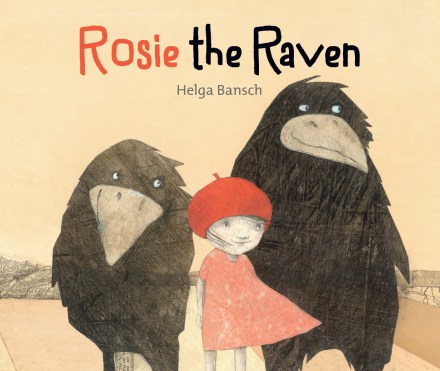
Rosie the Raven

By Helga Bansch | Translated by Shelley Tanaka


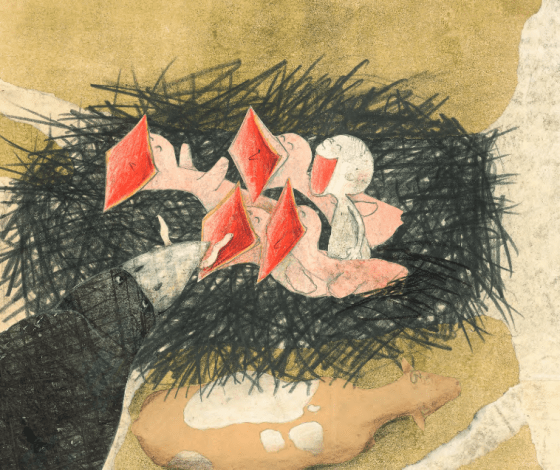
In a nest high in a tree, a little pink egg among the blue speckled ones hatches a little girl. As soon as all five babies are out of their shells, the hatchling says “Mama and Papa took us under their wings. It was nice and warm there.” The babies are hungry and the little girl, following the example of her brothers and sisters, opens her mouth wide to enjoy the “worms, flies, maggots, and snails.”

celebrate-picture-books-picture-book-review-rosie-the-raven-babies-eating

Image copyright Helga Bansch, courtesy of annickpress.com

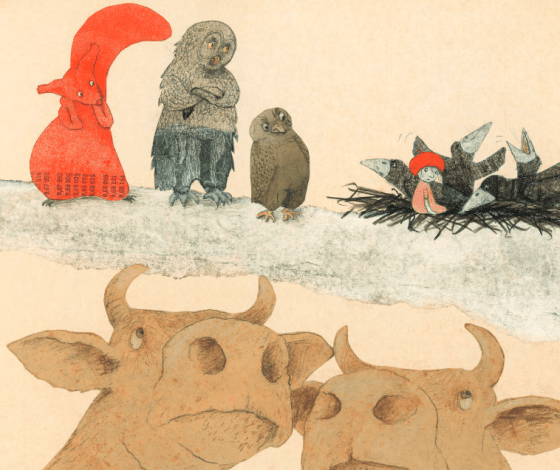
As they grow, the little ones “slept, had cawing contests and goofed around.” Because the little girl is always cold, her papa got her a red dress and hat. “‘Our little Rosie,’” Mama called me,” the girl says. Although Rosie and her nest mates are a happy family, Rosie says that “every day others would come and stare at us” as well as offer unsolicited advice: “‘It needs to exercise its wings” or, because they considered Rosie ugly without feathers, “Rub it with birch leaves. That will make its feathers grow.”

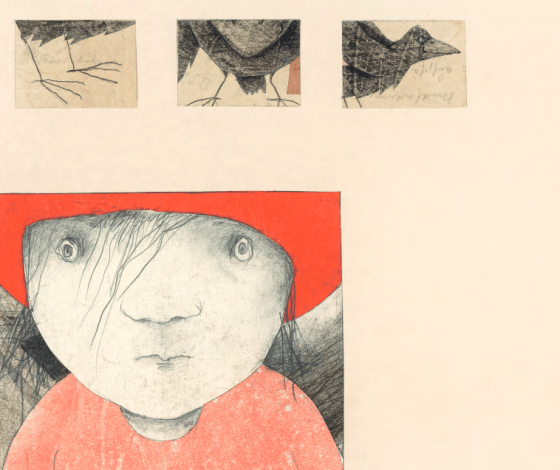
Under the critical gaze of these outsiders, Rosie looks at herself and notices for the first time that she is different than her Mama and Papa, her brothers and sisters. Her siblings are already learning how to fly, their caws are wild and resonant, and their feathers are fluffy and soft. In comparison, when Rosie flaps nothing happens, her voice sounds “pitiful,” and she has no fluff.

celebrate-picture-books-picture-book-review-rosie-the-raven-other-animals-judge

Image copyright Helga Bansch, courtesy of annickpress.com

Rosie “so wanted to be like them” that she beats her “wings over and over.” She caws until she is hoarse and rubs herself with birch leaves until her skin glows green. Soon she decides that “all this was just silly.” “‘I’m just different. And if the others talk about me, what do I care,’” she thinks. Besides, she learns that her “kind of wings are quite useful for other things.”

When Rosie’s siblings fly away from the nest after several weeks, the nest seems quiet. As the weeks progress and “the air began to smell like autumn, it was time to set out for the south.” Rosie’s parents practice flying with Rosie on their back until she can ride safely. Finally the day comes when they make the trip, and they find a new home in a tree that is perfect for Rosie to climb. Now it is her job to gather food for the family—which will soon include four new babies.

In her new home Rosie meets a frog who is going to teach her to swim. After their first meeting, the frog asks, “‘So, what are you really?’” “‘I am Rosie the Raven!’” Rosie squawks loudly. Then she goes home and climbs up to her nest in the tree, looking forward to tomorrow.

celebrate-picture-books-picture-book-review-rosie-the-raven-rosie-realizes

Image copyright Helga Bansch, courtesy of annickpress.com

Helga Bansch’s Rosie the Raven, bathed in tones of beige and black and punctuated with the red of Rosie’s cap and dress, is a quiet, but powerful book of what it means to be different and who defines that difference. The story of the Raven family is all the more eloquent and compelling for its being told through straight narration and not as a fairy tale or fable. The moment when Rosie looks at herself through others’ eyes, but quickly rejects the notion that her identity as a Raven is based on her having wings or feathers as well as her decision to stay with Mama and Papa affirms the idea that the true self is found within.

Bansch’s little Ravens are endearing as they frolic in the nest under the watchful and loving eyes of Mama and Papa. Rosie exudes a strong sense of confidence and happiness that readers will respond to. Bansch’s pages are a mix of panels, collages, and beautiful two-page spreads that give the book a distinctive look and feel. Fields and mountains are created from maps and bits of printed material in a variety of languages that emphasizes the book’s theme. Rosie the Raven could easily become a child’s favorite for bedtime or quiet story time and would be a wonderful addition to home as well as school libraries.

Ages 4 – 8

annick press, 2016 | ISBN 978-1554518340 (Austrian edition Die Rabenrosa: 978-3702658748)

To view more books and artwork by Helga Bansch, visit her website!

Check out more books for children and young adults at annick press!

Family Fun Day Activity

celebrate-picture-books-picture-book-review-bungalow-house-coloring-page

Home is Where Your Heart Is Coloring Pages

Apartments Coloring Page

Bungalow Coloring Page

July 25 – Culinarians Day

celebrate-picture-books-picture-book-review-the-ugly-dumpling-cover

About the Holiday

The world can’t celebrate Culinary Arts Month without having a special day to recognize and thank the many chefs, cooks, bakers, and other creators of delicious treats. Today is that day! With their special talents for taste, presentation, and innovation, culinarians make life better for everyone!

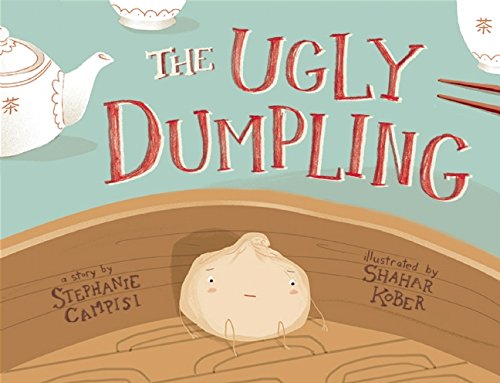
The Ugly Dumpling

Written by Stephani Campisi | Illustrated by Shahar Kober


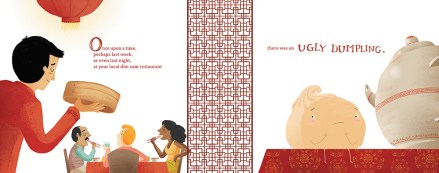
“Once upon a time, perhaps last week, or even last night, at your local dim sum restaurant…there was an ugly dumpling.” Sure, you might think all dumplings are ugly, but we’re talking about one particular ugly dumpling. It tried all sorts of tricks to make itself more attractive, but it still remained lonely and uneaten. It sat dejected until a cockroach traversing the kitchen caught sight of it and immediately fell in love.

celebrate-picture-books-picture-book-review-the-ugly-dumpling-interior-art-dim-sum-restaurant

Image copyright Shahar Kober

The cockroach “reached out an arm. (Or a leg.)” toward the dumpling and offered to show it the beauty of the world. Together they traveled to cities near and far, experiencing them through culinary lenses—stacked plate skyscrapers, piled dishes skylines, chopstick bridges that took them over flour mountains and folded napkin peaks. Then, in a certain restaurant, the dumpling saw something astonishing! Not only one, but two, three, four, and more dumplings just like itself!

Suddenly the ugly dumpling realized that it was not a dumpling at all, but a “steamed bun—a golden-hearted, smooth-skinned steamed bun, exactly like all the other steamed buns in the world.” The ugly dumpling puffed with meaning, importance, and…yeast! The restaurant patrons and staff and even the other steamed buns took notice. The cockroach by the ugly dumpling’s side cheered to see its friend receiving so much attention.

celebrate-picture-books-picture-book-review-the-ugly-dumpling-interior-art-restaurant

image copyright Shahar Kober

The wide eyes and astonished expressions were not for the dumpling, however. Instead, they registered horror at the insect in their midst. The ugly dumpling was familiar with that look and did “something quite beautiful. It reached out an arm. (Or a leg.) And it led the cockroach out into the world, The beautiful, beautiful world.” And in that moment the ugly dumpling realized that it “was not like all the other steamed buns after all” and that “perhaps that was a good thing.”

Stephani Campisi’s The Ugly Dumpling is a fresh and delectable dish-up of the classic Ugly Duckling story for a new audience. Stuffed with charm and off-beat humor, this tale of friendship and diversity embraces all who feel at odds with their environment—with or without the recognition of why. Its sweet and insightful ending emphasizes the idea that finding your niche does not always mean finding your true self and that having the courage to strike out on your own path leads to beautiful relationships and happiness.

celebrate-picture-books-picture-book-review-the-ugly-dumpling-interior-art-three-ugly-dumplings

Image copyright Shahar Kober

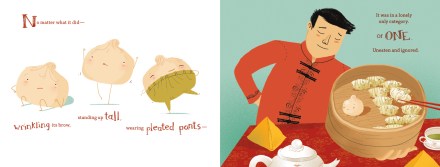
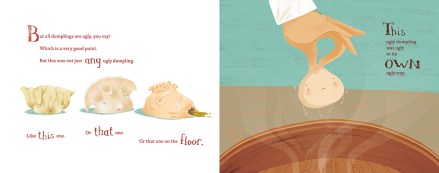
Shahar Kober’s dumpling is anything but “ugly.” His adorable puffed dough, lonely and ignored for not adhering to the mold, will melt readers’ hearts as he tries anything and everything—including green pleated pants—to fit in. Kobar’s stylish drawings are the perfect underscore to Stephani Campisi’s quick, dry wit—as in his rendition of three uglier-than-the-next dumplings—and if cockroaches were really as cute as Kober’s, we’d all set out a different kind of Roach Motel. A clever bit of typography transforms steam coming from a wok into the word HISS, and the restaurant scenes will make readers hungry for their favorite Asian eatery.

As readers turn to the last pages and watch the steamed bun and the cockroach leave the restaurant hand in hand (foot in foot?) under the shade of a paper umbrella, they will want to turn back to the beginning and start over again. The Ugly Dumpling is a must read and a must addition to children’s bookshelves.

Ages 2 – 9

Mighty Media, 2016 | ISBN 978-1938063671

Get to know more about Stephanie Campisi and her work on her website!

To view a gallery of art by Shahar Kober for books, magazines, animation, and more, visit his website!

Check out the Mighty Media Press website for more about The Ugly Dumpling and a-dough-able coloring pages!

Take a look at the trailer for The Ugly Dumpling!

Culinarians Day Activity

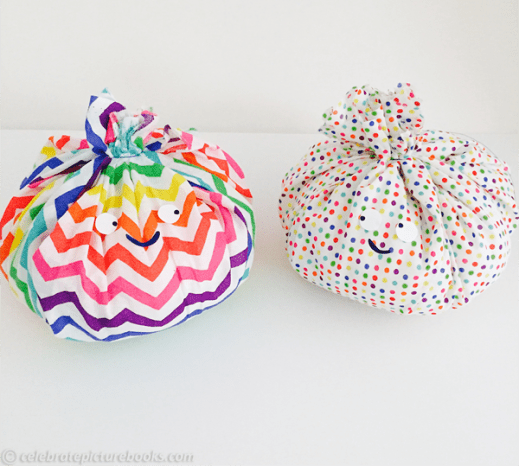
celebrate-picture-books-picture-book-review-dumpling plush craft

Embrace Your Inner Dumpling Plush


We are all beautiful “dumplings” in one way or another! With this easy craft you can create a huggable friend and show others what you’re made of!

Supplies

  • Square piece of cloth in any fabric and color. Size of plush depends on size of cloth (the plushes shown are made from 18”-square cotton fabric)
  • Poly fill (the plushes shown use about 1 1/8 ounces of fill)
  • White cloth for eyes and mouth
  • Twine or string
  • Fabric glue

Directions

  1. Cut the corners from the square cloth to make a circular piece of cloth
  2. Fill the middle with poly fill
  3. Pull the edges of the cloth up and around the fill
  4. Tie the top closed with the twine or string
  5. To make the face, cut small circles and a mouth from the white cloth
  6. Smooth out a section of the dumpling body
  7. Glue the face to the body with fabric glue