August 19 – World Photography Day

celebrate-picture-books-picture-book-review-breaking-news-bear-alert-cover

About the Holiday

Photography is all about providing information through images. A picture really can be worth a thousand words in capturing a moment of surprise, joy, danger, or even sadness. Well-placed photographers, videographers, and cinematographers have given voice to some of society’s pivotal moments, allowing the whole world to witness change, sometimes as it happens. Today we celebrate photographers who often put themselves in danger to get the story as well as those who bring us much-needed lighter moments.

Breaking News: Bear Alert

By David Biedrzycki


Jean Louis, a television host on Our Furry Planet looks out from the screen at a little boy and his teddy bear watching from their family room. He’s brought the video camera into a bear’s den “somewhere in North America.” With a pointy stick he motions towards a sleeping bear as he explains the facts about hibernation. “Look,” he says, poking his stick into the bear’s nose, “even when prodded they don’t wake up. But spring is a busy time for brown bears. Soon they will emerge from their den, hungry for food, hungry for adven—AAAAAAAAAAH!!!” The bear grabs the reporter’s stick as the screen goes dark.

The Skycam 3 News Helicopter takes over as two bears escape into the wider community. They catch a ride on the top of the Our Furry Planet truck carrying the reporter who scans the area and is relieved to find they have outrun the bears. Close observers will notice a pair of suspicious-looking characters first seen out the boy’s window now riding a motorcycle with a sidecar.

The bears are next spotted by the Main Street traffic camera. In an inset the Our Furry driver describes his encounter with the bears as the cameraman stands disheveled behind him: “Well, that big ol’ bear came at us with his claws out like this. I told him to scoot and chased both of them away!” But is this bragging warranted? The reality may be more that the driver and cameraman ran away screaming while the bears peacefully took in the sights.
celebrate-picture-books-picture-book-review-breaking-news-bear-alert-interior-art-mom

Image copyright David Biedrzycki, courtesy of charlesbridge.com

The bears are later found on security video at Teddy’s Diner, where the sign specifically states that “No Bare Feet” are allowed. The diner’s owner and head chef, Teddy Bahr, reveals that he’ll “cook for anyone as long as they’re not barefoot and that the bears were barefoot.” According to the scrolling alert, the bears “demanded to be fed” and indeed are shown gulping down a bowl of porridge at the counter. The golden-haired waitress, Mrs. Locks exclaims for the camera, “I almost had a heart attack…Those bears had no manners, and they paid me with acorns.”

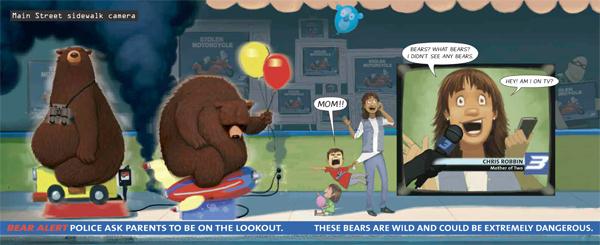
Hmmm…the diner’s TV is relating a story about cat burglars that seem awfully familiar. And is that them again entering an electronics store at Pooh Street and Main Street, where the bears have just turned the corner? A boy yells for his mom as the bears take over his kiddie ride, but she’s too busy on her phone and discovering she’s on TV to pay attention. The scrolling alert warns parents to be on the lookout as the bears “are wild and could be extremely dangerous.”

The bears continue their journey through town, dancing to street a performer while a “cat burglar” raids the band’s donation box, taking their pictures in a photo booth, and watching all the commotion as agents of Animal Control sprea through the streets. The Paddington Department Store spies the bears on the escalator, but does it also catch something—or someone—else at the jewelry department?
celebrate-picture-books-picture-book-review-breaking-news-bear-alert-interior-art-hero-bears

Image copyright David Biedrzycki, courtesy of charlesbridge.com

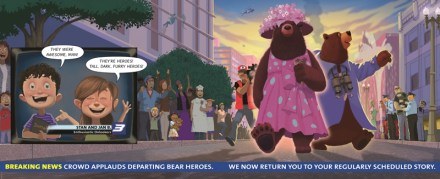
Suddenly, a police officer bursts out of the department store door to chase the robbers as the Breaking News report declares that there has been a burglary at the store. Skycam 3 spots the suspects fleeing on foot! And in a moment the perpetrators have been caught! Breaking News: “Bears nab burglars.” Once the scourge of the town, the bears are now heroes. The Breaking News reports “Crowd applauds departing bear heroes. We now return you to your regularly scheduled story.”

There’s so much going on in David Biedrzycki’s Breaking News: Bear Alert, that the minimal text doesn’t begin to hint at all the hidden surprises and silliness that kids will love on each page. Bear puns and other jokes abound on every page and in nearly every illustrated detail. Characters’ names, menu items, framed pictures, street names, and more offer up humorous allusions to other bear-related people, books, and entertainment for adults and kids.

Readers of all ages will want to linger over every vivid, full-bleed page to catch all the hilarious happenings and allusions, and especially to follow the subplot that is cleverly inserted along the way. The frame of an animal discovery television show is a sly wink at the genre and one that kids and adults will be familiar with and enjoy.

Bear in mind that kids may be clawing to read this book again and again, and not having Breaking News: Bear Alert on the shelf may pose a very hairy situation indeed!

Ages 4 – 10

Charlesbridge, 2014 | ISBN 978-1580896634

To learn more about David Biedrzycki and his books and to view a gallery of his artwork, visit his website!

Don’t hbernate! Watch this beary funny book trailer!

World Photography Day Activity
celebrate-picture-books-picture-book-review-bear-climbing-tree-coloring-page

Picture Perfect Bear Coloring Page


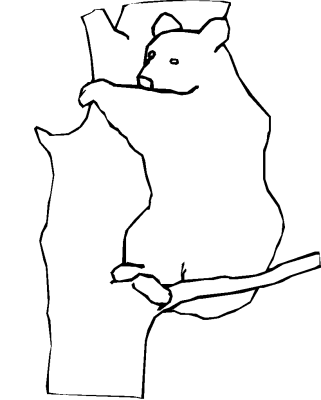
Imagine you’re taking a picture of this bear in a tree. What else do you see? Draw in the details and then color your printable Picture Perfect Bear Coloring Page.

August 18 – It’s Get Ready for Kindergarten Month

celebrate-picture-books-picture-book-review-sophie's-squash-go-to-school-cover

About the Holiday

Starting kindergarten is a huge step toward future learning and fun! This milestone can take a lot of preparation—from buying backpacks and school clothes to establishing different routines to becoming a new member of the school community. Most school years start during August and this month gives families an opportunity to talk about the changes, go shopping together, and look forward to the new experiences to come!

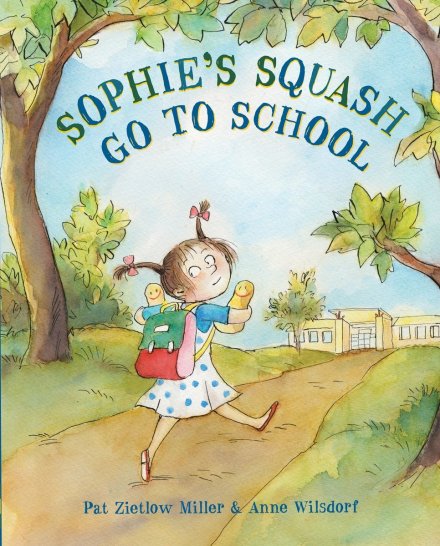
Sophie’s Squash Go to School

Written by Pat Zietlow Miller | Illustrated by Anne Wilsdorf


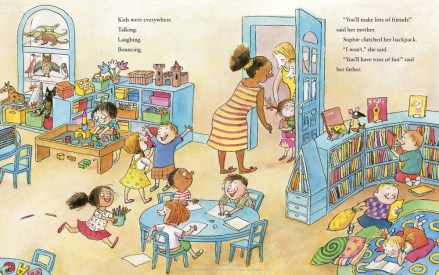
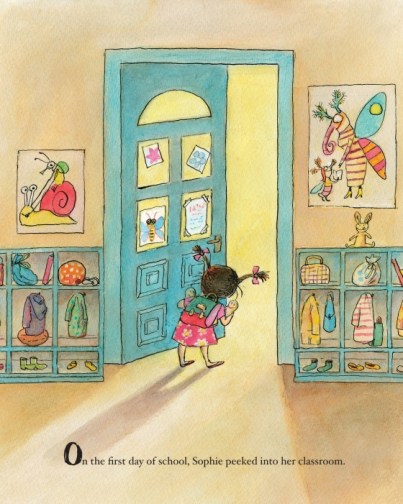
Backed up by her parents and clutching her best friends, two squash named Bonnie and Baxter, Sophie peeks into her classroom on the first day of school. She sees kids running everywhere, talking and laughing. Her parents assure Sophie that she’ll make a lot of friends and have tons of fun, but Sophie is adamant: “‘I won’t,’” she says. And Sophie’s right. “The chairs were uncomfortable. The milk tasted funny. And no one appreciated her two best friends, Bonnie and Baxter.”

celebrate-picture-books-picture-book-review-sophie's-squash-go-to-school-classroom

Image copyright Anne Wilsdorf, courtesy of Schwartz & Wade

The other kids surround her with questions about Bonnie and Baxter. “‘Are they toys? Do they bounce? Can we EAT them?’” Sophie has had enough. “‘No, no, no! I grew them in my garden. They’re my FRIENDS.’” And then there’s Steven Green. He sits near Sophie at circle time, plays near her on the playground, and stands over her breathing down her neck during art time. Ms. Park, the teacher, tells Sophie Steven is just being nice, but Sophie isn’t interested.

Steven does not give up so easily. He returns to show Sophie his best friend—Marvin, a stuffed frog that he got when the toy was just a tadpole. “‘Then you don’t need me,’” Sophie says and decides “that’s that.” But that isn’t that. The next day Steven is back, building a block tower near Sophie, reading her book over her shoulder, and even offering facts about fruit and vegetables during Sophie’s show and tell.

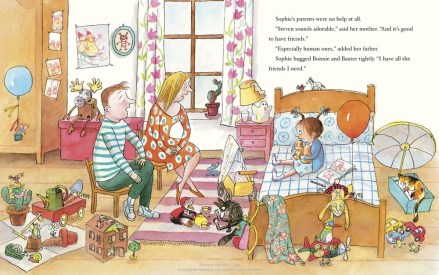
When her parents hear about Steven, they encourage Sophie to make a friend, but Sophie just clings tighter to Bonnie and Baxter. “Still, Sophie knew that Bonnie and Baxter wouldn’t last forever,” so when the other kids dance, spill their milk, or tell jokes, Sophie considers joining in. On the playground Sophie plays hopscotch while the other kids play tag, jump rope, and play other games together. When Steven asks if he can join Sophie, Bonnie, and Baxter, she refuses, leaving Steve and Marvin to sit alone.

celebrate-picture-books-picture-book-review-sophie's-squash-go-to-school-talk-with-mom-and-dad

Image copyright Anne Wilsdorf, courtesy of Schwartz & Wade

When the weekend comes Bonnie and Baxter look “too tired to hop. Or build towers. ‘It’s time,’” says Sophie’s mother. Sophie digs a hole to make “a garden bed and tucked her squash in for their winter nap. ‘Sleep tight,’” she says. “‘See you soon.’ But spring seemed very far away.” On Monday Ms. Park asks the class to tell her what makes a good friend. The kids answer that friends play with you, help you, and think you’re funny. Steven answers “‘They like what you like.’” Ms. Park sends the kids off to draw pictures of their friends.

When Steven wants to see Sophie’s drawing of Bonnie and Baxter, the two get into a scuffle over the paper and it tears in half. “‘You are NOT my friend,’” Sophie says as she walks away. On the way home from school, Sophie tells her mom what happened. “‘Sweet potato,’” her mom says. “‘That adorable boy didn’t mean to tear your picture.’” But Sophie’s not so sure.

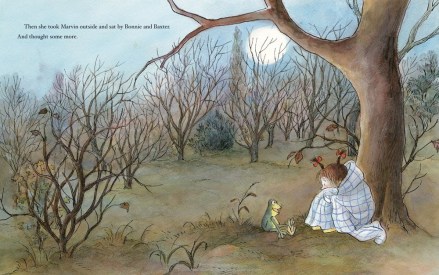
The next morning Sophie finds Marvin and a note in her cubby. She ignores it, and by lunchtime, Marvin is gone. Later that night, though, Sophie and her dad discover Marvin and the note inside her backpack. The note contains a drawing of Bonnie and Baxter as well as a packet of seeds.  “‘Do friends really like the same things you like?’” Sophie asks her dad. When he answers “Sometimes,” Sophie begins to think. She takes Marvin outside and sits near Bonnie and Baxter to think some more.

celebrate-picture-books-picture-book-review-sophie's-squash-go-to-school-nighttime-thinking

Image copyright Anne Wilsdorf, courtesy of Schwartz & Wade

The next day Sophie runs up to Steven to tell him the great idea that Marvin had. They then tell Ms. Park. The next day, Ms. Park hands each child “a cup, some dirt and one small seed.” “‘Can we EAT them?’” a classmate asks. “‘No!’” says Sophie, and Steven adds, “‘You never eat a friend.’” The kids plant the seeds and put the pots on the windowsill. Soon tiny shoots appear in the cups and Sophie and Steven invite the kids to do a new-plant dance.

“‘See?’” Sophie tells Steven. “‘Sometimes growing a friend just takes time.’”

Pat Zietlow Miller’s sequel to her award-winning Sophie’s Squash is a heartfelt story for kids for whom the definition of friendship runs deep. Sophie’s hesitancy to join in the freewheeling play of other kids echoes the feelings of many children entering new classrooms, joining unfamiliar groups, or meeting any new challenge. The excellent pacing of the story as well as Sophie’s honest emotions allow for development of the theme that sometimes friendship takes time. Steven’s persistence sets a positive example for not passing judgement too quickly. Sophie’s transition from squash friends to human is treated sensitively and with cleverness. In the end Sophie learns how to make a friend while still staying true to herself.

celebrate-picture-books-picture-book-review-sophie's-squash-go-to-school-peeking-in-classroom-door

Image copyright Anne Wilsdorf, courtesy of Schwartz & Wade

Anne Wilsdorf’s cartoon-inspired illustrations perfectly depict the world that Sophie reluctantly inhabits. Her classroom is boldly colorful, full of books, toys, separate spaces, and of course all sorts of kids. Sophie’s reactions to the comments and actions of her classmates are clearly registered on her face and will make kids giggle even while they recognize her feelings. Steadfast Steven is, as Sophie’s mom says, adorable, and readers will empathize with his plight in just wanting to make a friend. The nighttime scene beautifully sums up Sophie’s dilemma and provides her and readers a moment to reflect on the story’s ideas.

On so many levels, Sophie’s Squash Go to School makes a wonderful addition to children’s and school bookshelves.

Ages 4 – 9

Schwartz & Wade, Penguin/Random House, 2016 | ISBN 978-0553509441

Discover much more about Pat Zietlow Miller and her books on her website!

Get Ready for Kindergarten Month Activity

celebrate-picture-books-picture-book-review-smile-for-school-word-search

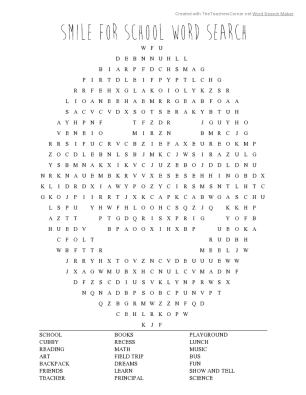
Smile for School! Word Search


Find 20 words about school in this printable Smile for School! Word Search. Here’s the Solution!

Picture Book Review

August 17 – Black Cat Appreciation Day

celebrate-picture-books-picture-book-review-splat-the-cat-and-the-late-library-book-cover

About the Holiday

Because black cats have become associated with bad luck, they are more likely to end up in animal shelters and less likely to be adopted. Today’s holiday was established to raise awareness of this fact and assure people that black cats are just as loveable, cuddly, and purr-fect as other cats. If you’re thinking of adopting a new pet, why not consider a black cat like the subject of today’s book!

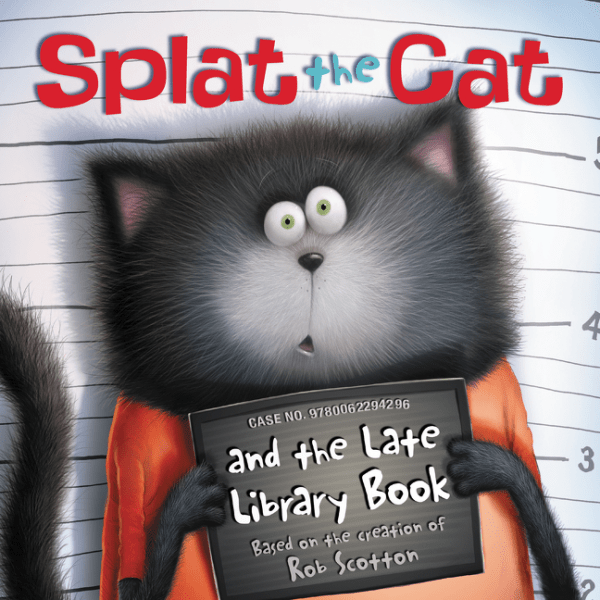
Splat the Cat and the Late Library Book

By Rob Scotton


Splat’s toy box and closet are overflowing with stuff Splat doesn’t use anymore. His mom suggests that they give some of it away to kids who need it more. While Splat likes the idea, he’s a little afraid to open his closet door, because whenever he does…SPLAT! Splat recovers from being covered, though, and separates his things into three piles: Trash, Keep, and Donate.

celebrate-picture-books-picture-book-review-splat-the-cat-and-the-late-library-book-book-discovered

Image copyright Rob Scotton, courtesy of HarperCollins

Splat has fun showing Seymour his mouse friend his old clothes and toys until he comes upon an old library book—a very old library book—a way, way overdue library book! Suddenly, Splat’s dad comes in to see how things are progressing. He thinks Splat is doing a great job and starts gathering up the clothes for the local shelter, the toys for the children’s hospital, and the books for the downtown library. “‘Not the library!’” Splat shouts. “‘Why not?’” asks his dad. “‘They’re having a book drive today to get more books. People don’t always return the ones they check out.’”

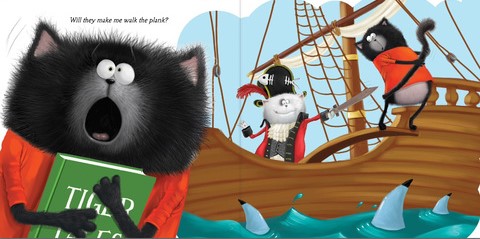
Poor Splat! His tail wiggles wildly as he imagines how ginormous the fine will be. Maybe he’ll be sent to jail. Or perhaps he’ll have to walk the plank. Splat grabs his piggy bank, hoping to find enough money for the fine, but only a thin quarter rolls from the slot. All too soon, the family is headed out to deliver their donations. At the shelter Splat tries to help carry in boxes, but maybe he’s too distracted because everything just goes SPLAT! Things go better at the hospital where the kids love getting all the new toys.

celebrate-picture-books-picture-book-review-splat-the-cat-and-the-late-library-book-in-jail

Image copyright Rob Scotton, courtesy of HarperCollins

As his parents wheel the pile of books into the library, Splat tries to run the other way but his mom catches him by the tail. Inside Mrs. Sardino, the librarian, is very impressed with their donation. She rattles on and on about how hard it is to give away books and how many she has at her own house and…Splat can’t take it anymore. “‘I did it!’” he confesses. “‘My library book is WAY overdue. I didn’t mean to. I just loved the book so much I didn’t want to return it. And I loved it so much I hid it in my closet. And then I forgot that I’d hid it.’”

He’s ready to take his punishment when Mrs. Sardino interrupts him. “‘Um, Splat,’” she says. “‘It’s only a week overdue. You owe twenty-five cents.’” Splat reaches into his pocket and pulls out his quarter. “‘That’s okay,’” Mrs. Sardino tells him. “‘This time I think we can let it go. Besides, your generous donation more than makes up for it.’”

celebrate-picture-books-picture-book-review-splat-the-cat-and-the-late-library-book-walk-the-plank

Image copyright Rob Scotton, courtesy of HarperCollins

Fans of Splat the Cat will love this new adventure that addresses common concerns of kids who not only forget to return a library book but are remiss in any other number of required actions—homework, permission slips, housework, etc. Splat the Cat and the Late Library Book reveals that often the perceived infraction and it’s “punishment” far outweigh the reality. Relief from fear and worry is only a conversation away.

New readers will find that Splat is endearing, Seymour a faithful best friend, and his parents and other adults loving and understanding. They will want to explore the whole series. Each vividly colored page provides plenty of giggles as Splat contends with his overstuffed closet, tries on way-too-small clothes, envisions his prison and pirate punishments, tries to run away, and of course goes SPLAT in the process. The fast-paced action and comical scenarios make this a perfect read for story times or bedtime. Discovering this black cat is very good luck indeed!

Ages 3 – 8

Harper Festival, Harper Collins, 2016 | ISBN 978-0062294296

Enter the world of Splat the Cat on Rob Scotton‘s website!

Black Cat Appreciation Day Activity

celebrate-picture-books-picture-book-review-playful-cat-dot-to-dot

Playful Cat Dot-to-Dot


Discover what the cat is doing in this printable Playful Cat Dot-to-Dot. Then color it!

Picture Book Review

August 16 – National Airborne Day

celebrate-picture-books-picture-book-review-brave-like-me-cover

About the Holiday

National Airborne Day was established in 1997 as a time to remember and thank the airborne members of the Armed Forces for their service and sacrifices. August 16 was chosen for this observance because it marks the first official United States Army parachute jump that took place in Georgia in 1940 by 48 volunteer members of the Parachute Test Platoon. The successful jump led the way for hundreds of thousands of paratroopers to follow in their footsteps. The day is commemorated by a ceremony at Fort Bragg in North Carolina, home to the 82nd Airborne Division. Other services are held around the country.

Brave Like Me

By Barbara Kerley


“When someone is serving their country, far from home, they have to be brave. Their families have to be brave. Even their kids have to be brave. Like me.” These lines from a child who has a parent serving their country opens this tribute to military families and the relatives, friends, and neighbors who support them. The child narrator reveals that parents about to be deployed spend a lot of time with their kids “until the day we have to say goodbye.” On that day the family shares kisses and hugs “big enough to last the whole time” parents are away.

Once parents are gone, the house seems empty and children wonder who will take care of them. They look at maps to discover where their parents are and what their day is like. The narrator describes children’s honest emotions, such as sadness and anger at the events parents miss or fear for their safety. But the kids understand that their parents are trained to stay safe.

The children are able to communicate with their parents on the phone and on the computer, where they share the details of their days. They also write letters and draw pictures that they send through the mail. Just as parents have responsibilities, the children know they have jobs to do too. They go to school, do their homework, and help around the house. The family bands together to cook meals, clean, read bedtime stories and tuck younger children into bed.

Friends and neighbors show they care by taking the kids on outings to the park, the movies, the pool, and to special events. Even though parents are far away from home, the child says, they think about their family all the time and want them to be happy playing with friends and pets and even when they are alone. The kids stay busy and enjoy their time with friends and family waiting for the day when they come home. On that day, the narrator says, “I’ll have lots of things to talk about and a million hugs and kisses to share.”

Through full-color photographic spreads and pages alternating between mothers and fathers serving in the military, Barbara Kerley presents an honest and uplifting account of what life is like for children of military families. The photographs of children playing with their parents and kissing and hugging them goodbye as well as pictures of both adults and kids doing their jobs while apart demonstrate the shared love and commitment military families have to their country and their relationships. Brave Like Me is a stirring nonfiction title for school and local libraries to help children understand the sacrifices some families make for their country. It would also be a comforting book for children facing a separation from a service member parent, other relative, or friend or for anyone who wants to better understand the life of service members.

A world map showing the location of each photograph in the book, a variety of children’s definitions of the meaning of “brave” and a discussion on the various branches of foreign service follow the text. There are also pages on how to deal with separation as well as advice and resources for caregivers.

Ages 4 – 8

National Geographic Children’s Books, 2016 | ISBN 978-1426323607

To learn more about Barbara Kerley and her wide range of books, visit her website!

National Airborne Day Activity

celebrate-picture-books-picture-book-review-military-plane-coloring-page

Military Plane Coloring Page


The Airforce uses many different types of planes in their missions. Here’s a printable Military Plane Coloring Page for you to enjoy!

August 15 – National Relaxation Day

celebrate-picture-books-picture-book-review-whoosh!-lonnie-johnson's-super-soaking-stream-of-inventions-cover

About the Holiday

Relaxation Day was founded in 1985 by then fourth-grader Sean Moeller, who already knew a thing or two about balance in life when he suggested that “cleaning and real work are not part of relaxation.” Today’s holiday gives you permission to kick back and enjoy yourself. The subject of today’s book invented a great way to take advantage of a day off—and also demonstrates that sometimes work and relaxation go hand-in-hand!

WHOOSH! Lonnie Johnson’s Super-Soaking Stream of Inventions

Written by Chris Barton | Illustrated by Don Tate


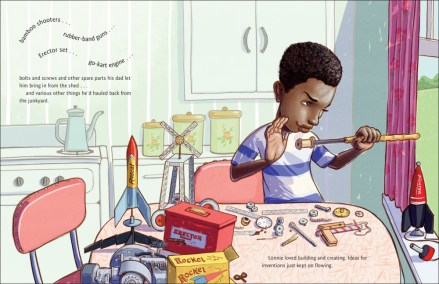
Lonnie Johnson had a way with stuff. In his hands bolts and screws, gears and springs, spools, clothespins, “spare parts his dad let him bring in from the shed, and various other things he’d hauled back from the junkyard” fueled Lonnie’s ideas for inventions and rocket ships. The kids at school loved to watch him launch the rockets he’d devised on the playground. Lonnie wanted to have a career as an engineer. Getting there took a lot of determination and courage. Once, the results of a standardized test said that he would not make a good engineer. Lonnie felt discouraged, but he knew that the person who had graded his test didn’t know him—or Linex.

celebrate-picture-books-picture-book-review-whoosh!-lonnie-johnson's-super-soaking-stream-of-inventions-young-lonnie-inventing

Image copyright Don Tate, courtesy of charlesbridge.com

Linex was the robot Lonnie had built from scrap metal. “Compressed –air cylinders and valves allowed Linex’s body to turn and its arms to move. The switches came from an old, broken jukebox. Lonnie used a tape recorder to program Linex, and as a bonus the reels looked like eyes.” Lonnie’s goal was to enter Linex in a science fair, but first he wanted to be able to program it. It took several years before he discovered how. Using his little sister’s walkie-talkie, Lonnie took Linex to the “1968 science fair at the University of Alabama—where only five years earlier, African American students hadn’t even been allowed.” Lonnie’s team won first place.

Lonnie went to college at Tuskegee Institute, where he realized his dream of becoming an engineer. His career “took him beyond Alabama—way beyond.”  He went to work for NASA. Before the orbiter Galileo could be sent to Jupiter, Lonnie developed a system that would ensure the craft would have a constant supply of power for its computer memory in case the main power was lost. Some fellow scientists doubted his idea would work, but it did. “As it photographed Jupiter and its moons, Galileo was supported by the power package that Lonnie designed.”

celebrate-picture-books-picture-book-review-whoosh!-lonnie-johnson's-super-soaking-stream-of-inventions-linex

Image copyright Don Tate, courtesy of charlesbridge.com

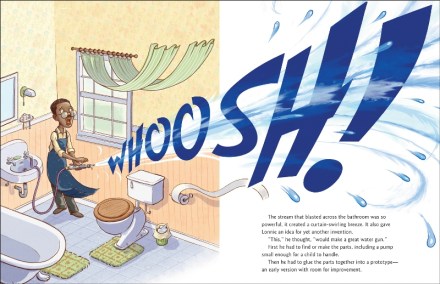
Even though Lonnie worked for NASA, he continued tinkering with his own ideas—in his own workshop. One problem he was trying to solve involved the need for the world’s refrigerators and air conditioners to have a cooling system that didn’t use the damaging chemical R-12. “He had an idea for using water and air pressure instead.” He built a prototype and experimented with it in his bathroom sink. When he turned his pump and nozzle on, a stream of water blasted across the room.

Suddenly, Lonnie saw another use for his invention—as a water gun. He created a design small enough for children’s hands, and tested it at a picnic, where it was a hit. Lonnie took his idea to a toy company…and another…and another. Finally one company agreed to make his water gun. Spurred on by this success, Lonnie found investors to help him build other original inventions: “a water-propelled toy airplane, two kinds of engines, and his cooling system” that had led to the water gun. He even quit his day job to devote his time to inventing.

But things don’t always work out. Each project fell through—even the water gun. It was a scary time as he and his family had to move out of their house and into an apartment. But Lonnie believed in himself. He took his water gun to another toy company. In 1989 he found a toy company willing to take a look. Lonnie made the trip to Philadelphia and wowed the executives with his invention.

celebrate-picture-books-picture-book-review-whoosh!-lonnie-johnson's-super-soaking-stream-of-inventions-water-powered-nozzle

Image copyright Don Tate, courtesy of charlesbridge.com

Now kids everywhere enjoy the fun of the Super Soaker. Today, Lonnie can be found in his workshop doing what he loves: “facing challenges, solving problems and building things” because “his ideas just keep on flowing.”

Chris Barton’s biography of Lonnie Johnson is a fascinating look at a man who succeeds in turning “No” into “Yes” by the power of his intelligence, ideas, and determination. Kids will love hearing about how one of their favorite toys came to be and will be inspired to chase their own dreams despite challenges and setbacks. Barton’s detailed narration provides a full picture of Lonnie Johnson and his times, specifics that attract and inform like-minded kids. Including the results of Lonnie’s exam should encourage kids who think differently. The story is enhanced by the conversational tone that makes it accessible to kids of all ages.

Don Tate illuminates Lonnie Johnson’s life story with his bold, full-bleed paintings that follow Lonnie from his being a child with big ideas to becoming a man who has seen these ideas through to success. With an eyebrow raised in concentration, young Lonnie demonstrates confidence and skill as he works on an invention, and kids will love seeing the tools of his trade laid out on the kitchen table. With his eyes narrowed in frustration and disappointment, Lonnie reads the results of his childhood exam. As Lonnie grows older and designs systems for NASA, the illustrations depict the schematics of the Galileo power package and Lonnie’s surprise at the strength of the water stream in his prototype cooling design. As all kids know, the spurt of a Super Soaker is awesome, and this fact is demonstrated in a “Wowing” fold-out page.

WHOOSH! Lonnie Johnson’s Super-Soaking Stream of Inventions is a welcome biography of the man who designs systems for the greater world but has never lost his youthful enthusiasm to invent.

Ages 5 – 10

Charlesbridge, 2016 | ISBN 978-1580892971

Check out more fiction and nonfiction books by Chris Barton on his website!

Discover more books written and illustrated by Don Tate as well as a portfolio of his work and book-related activity guides on his website!

National Relaxation Day Activity

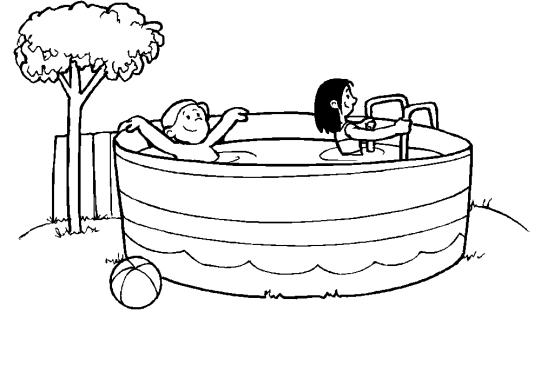
celebrate-picture-books-picture-book-review-kids-in-pool-coloring-page

Dive In! Coloring Page


The Super Soaker is a great way to cool off! Another relaxing water activity is swimming in a pool! So dive in to this printable cool pool Dive In! Coloring Page!

August 14 – It’s Family Fun Month

celebrate-picture-books-picture-book-review-rosie-the-raven-cover

About the Holiday

August is a perfect time to have fun with the family! The days are long and warm, and there are so many activities to discover. Get away from the heat at a pool, the beach, or on the cool shade of a forest path. Explore your adventurous side while camping or traveling to an unfamiliar town, or increase your knowledge by visiting a science, art, history, or other museum. Before school starts up for another year, get out there and have fun!

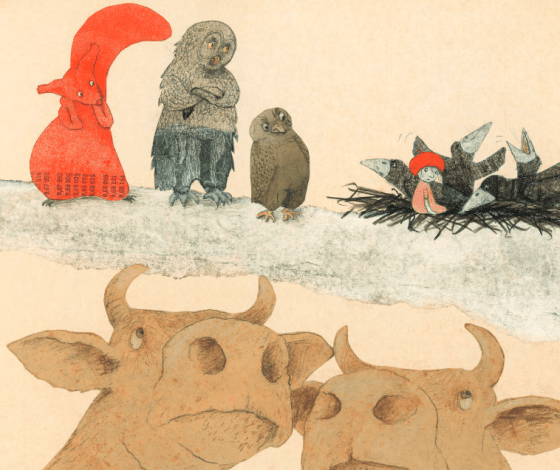
Rosie the Raven

By Helga Bansch | Translated by Shelley Tanaka


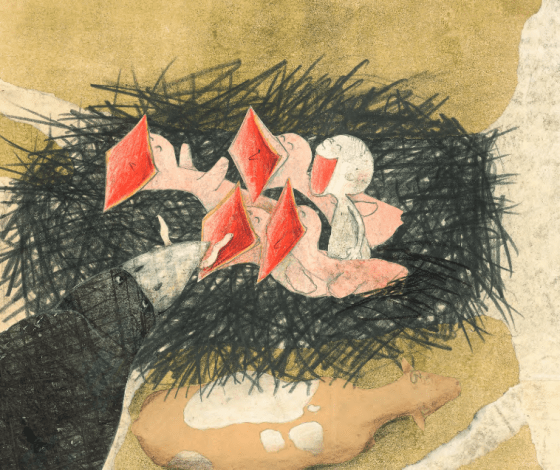
In a nest high in a tree, a little pink egg among the blue speckled ones hatches a little girl. As soon as all five babies are out of their shells, the hatchling says “Mama and Papa took us under their wings. It was nice and warm there.” The babies are hungry and the little girl, following the example of her brothers and sisters, opens her mouth wide to enjoy the “worms, flies, maggots, and snails.”

celebrate-picture-books-picture-book-review-rosie-the-raven-babies-eating

Image copyright Helga Bansch, courtesy of annickpress.com

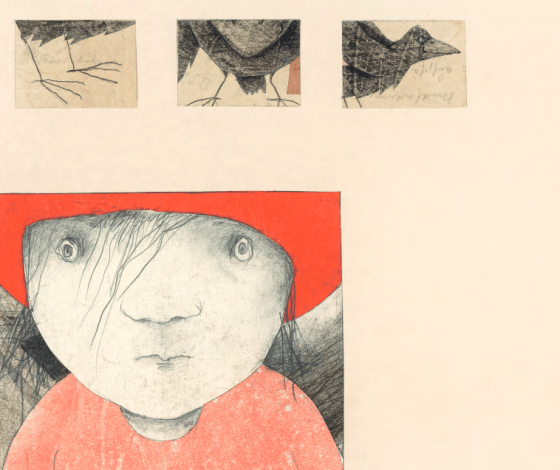
As they grow, the little ones “slept, had cawing contests and goofed around.” Because the little girl is always cold, her papa got her a red dress and hat. “‘Our little Rosie,’” Mama called me,” the girl says. Although Rosie and her nest mates are a happy family, Rosie says that “every day others would come and stare at us” as well as offer unsolicited advice: “‘It needs to exercise its wings” or, because they considered Rosie ugly without feathers, “Rub it with birch leaves. That will make its feathers grow.”

Under the critical gaze of these outsiders, Rosie looks at herself and notices for the first time that she is different than her Mama and Papa, her brothers and sisters. Her siblings are already learning how to fly, their caws are wild and resonant, and their feathers are fluffy and soft. In comparison, when Rosie flaps nothing happens, her voice sounds “pitiful,” and she has no fluff.

celebrate-picture-books-picture-book-review-rosie-the-raven-other-animals-judge

Image copyright Helga Bansch, courtesy of annickpress.com

Rosie “so wanted to be like them” that she beats her “wings over and over.” She caws until she is hoarse and rubs herself with birch leaves until her skin glows green. Soon she decides that “all this was just silly.” “‘I’m just different. And if the others talk about me, what do I care,’” she thinks. Besides, she learns that her “kind of wings are quite useful for other things.”

When Rosie’s siblings fly away from the nest after several weeks, the nest seems quiet. As the weeks progress and “the air began to smell like autumn, it was time to set out for the south.” Rosie’s parents practice flying with Rosie on their back until she can ride safely. Finally the day comes when they make the trip, and they find a new home in a tree that is perfect for Rosie to climb. Now it is her job to gather food for the family—which will soon include four new babies.

In her new home Rosie meets a frog who is going to teach her to swim. After their first meeting, the frog asks, “‘So, what are you really?’” “‘I am Rosie the Raven!’” Rosie squawks loudly. Then she goes home and climbs up to her nest in the tree, looking forward to tomorrow.

celebrate-picture-books-picture-book-review-rosie-the-raven-rosie-realizes

Image copyright Helga Bansch, courtesy of annickpress.com

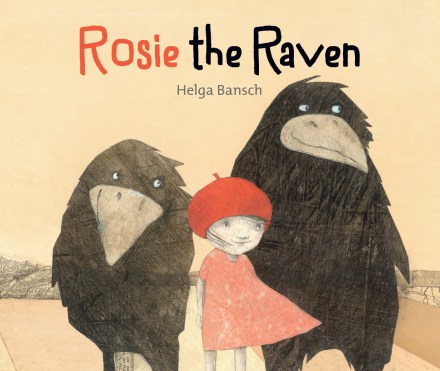
Helga Bansch’s Rosie the Raven, bathed in tones of beige and black and punctuated with the red of Rosie’s cap and dress, is a quiet, but powerful book of what it means to be different and who defines that difference. The story of the Raven family is all the more eloquent and compelling for its being told through straight narration and not as a fairy tale or fable. The moment when Rosie looks at herself through others’ eyes, but quickly rejects the notion that her identity as a Raven is based on her having wings or feathers as well as her decision to stay with Mama and Papa affirms the idea that the true self is found within.

Bansch’s little Ravens are endearing as they frolic in the nest under the watchful and loving eyes of Mama and Papa. Rosie exudes a strong sense of confidence and happiness that readers will respond to. Bansch’s pages are a mix of panels, collages, and beautiful two-page spreads that give the book a distinctive look and feel. Fields and mountains are created from maps and bits of printed material in a variety of languages that emphasizes the book’s theme. Rosie the Raven could easily become a child’s favorite for bedtime or quiet story time and would be a wonderful addition to home as well as school libraries.

Ages 4 – 8

annick press, 2016 | ISBN 978-1554518340 (Austrian edition Die Rabenrosa: 978-3702658748)

To view more books and artwork by Helga Bansch, visit her website!

Check out more books for children and young adults at annick press!

Family Fun Day Activity

celebrate-picture-books-picture-book-review-bungalow-house-coloring-page

Home is Where Your Heart Is Coloring Pages

Apartments Coloring Page

Bungalow Coloring Page

August 13 – Garage Sale Day

celebrate-picture-books-picture-book-review-yard-sale-book-cover

About the Holiday

Isn’t every nice-weather Saturday garage sale day for someone? Nevertheless, the second Saturday in August has officially been designated with this special shopping moniker. Garage sales aka yard sales are fun to explore—you never know what treasures you might find. Hosting your own can free up space in your house to start fresh or, as in today’s book, reaffirm the most important things in life.

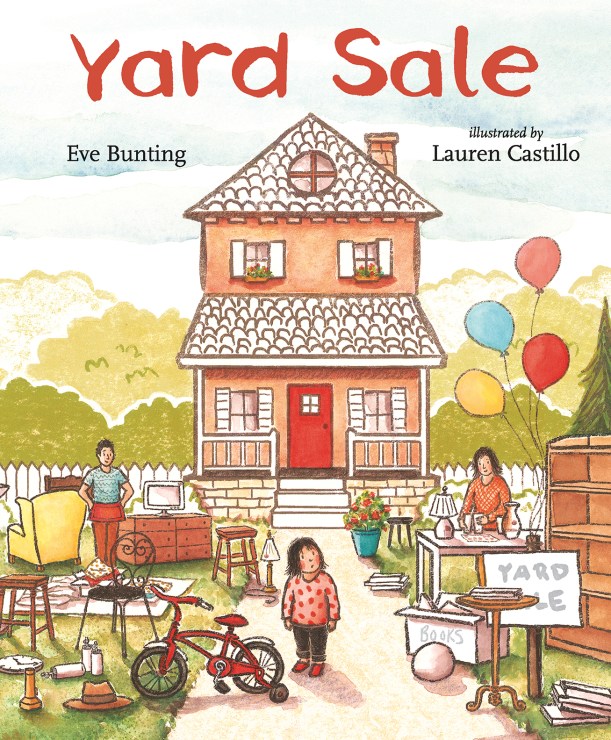
Yard Sale

Written by Eve Bunting | Illustrated by Lauren Castillo


From the first words—“Almost everything we own is spread out in our front yard”—readers realize that this is no ordinary yard sale. A little girl sits on the front porch of her tidy house gazing out sadly at the family’s furniture, toys, books, and knick-knacks that are all for sale. The family is moving to a small apartment: “‘Small but nice,’ my mom told me.” The apartment has a secret bed that opens down from the wall “right in the living room.”

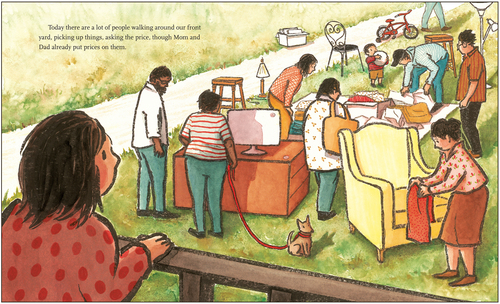
When the yard sale opens people stop by to look, “picking up things, asking the price, though Mom and Dad already put prices on them.” Even though the items are priced low, people haggle over how much they want to pay. A woman complains that ten dollars is too much for the little girl’s bed because the headboard has crayon marks on it. Watching, Callie now wishes she hadn’t made the marks to show how often she had read Goodnight Moon. Her mother settles for five dollars for the bed.

celebrate-picture-books-picture-book-review-yard-sale-bike-sold

Image copyright Lauren Castillo, courtesy of laurencastillo.com

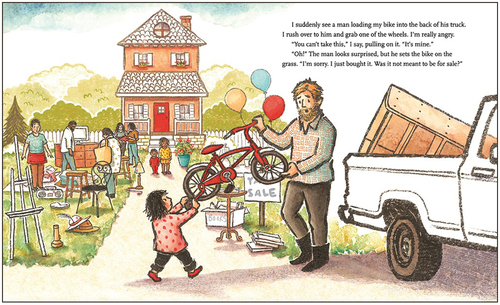
Suddenly, Callie sees a man loading her bike into a truck and runs to grab it. The man is confused, sorry for taking it, but tells her he has just bought it. Callie’s dad runs over and explains again that the apartment has no place for the bike or sidewalks nearby to ride it on. Callie looks at her dad who seems to have tears in his eyes, “but probably not,” she says. “My dad doesn’t cry.” She relinquishes the bike, but asks the man, “‘Will you give it back to me when we get our house back?’”

Callie’s best friend, Sara, is waiting for her. The two friends hug and talk about why Callie has to move. “‘I wish you didn’t have to go,’” Sara mutters. “‘Why do you, anyway?’” Callie shrugs. “‘I don’t know. It’s something to do with money.’” They don’t understand what has happened, and Sara offers, “‘I could ask my parents if you could stay with us.’” But Callie’s heart tells her where she belongs. “‘My parents would be lonely,’” she says. “‘…I’d miss my mom and dad.’”

The sale continues and people drive away with tables, chairs, and clothing. For a moment, Callie feels important when a man asks her if their large potted geranium is for sale and she directs him to her dad. By the end of the day almost everything is gone. Callie’s mom “looks droopy” and her dad is comforting her. Callie sits dejectedly watching the final things being carried away and thinking that she will give Sara her red heart necklace and invite her to visit their new apartment.

celebrate-picture-books-picture-book-review-yard-sale-callie-watching

Image copyright Lauren Castillo, courtesy of laurencastillo.com

At that moment a woman comes up to Callie and says, “‘Aren’t you just the cutest thing? Are you for sale?’” Callie has a visceral reaction: “A shiver runs through me, from my toes to my head.” She runs to her parents, crying. “‘I’m not for sale, am I? You wouldn’t sell me, would you?’” Her parents drop what they are doing to hug and reassure Callie that they would “‘not ever ever, ever’” sell her. “‘Not for a million, trillion dollars.’”

With everything gone, Callie and her parents go back inside their “almost empty house.” It’s okay, Callie thinks. None of the stuff is important, and it wouldn’t fit in their new place anyway. “But we will fit in our new place. And we are taking us.”

For so many children frequent relocations or sudden moves from a home they know is a reality. Eve Bunting’s Yard Sale treats this subject with sensitivity and honest emotion through the eyes of a little girl for whom the change is confusing but ultimately reassuring. Bunting does not stint on either the setting of the yard sale itself, where people quibble over a couple of dollars, or the toll the day takes on the family. Her dialogue always rings true, and her straightforward delivery allows for understanding and for the moments of humor to shine through.

Lauren Castillo’s ink-and-watercolor paintings anchor this emotional story in a homey, loving environment even as they realistically portray the atmosphere of the yard sale. The full range of feelings are apparent in the characters’ faces from sadness and doubt to kindness and acceptance. Children will respond to Callie with her earnest attempts to understand and feel the comfort and encouragement Callie receives as her parents bend down to talk to her, hold her hand, and give her hugs.

Yard Sale is a poignant story that offers assurance and insight both for children who are facing a move and the friends and classmates who will miss them. The book’s theme is applicable to other daunting circumstances and would be a welcome addition to classroom and local libraries as well as for individuals encountering change.

Ages 4 – 9

Candlewick Press, 2015 | ISBN 978-0763665425

To view more books and artwork by Lauren Castillo, visit her website!

Garage Sale Day Activity

celebrate-picture-books-picture-book-review-garage-sale-maze

Garage Sale Maze


A garage sale is a bit like a treasure hunt. Can you find your way through this printable Garage Sale Maze from the roadside sign to the items for sale? Here’s the Solution!