July 16 – World Snake Day

celebrate-picture-books-picture-book-review-i-don't-like-snakes-cover

About the Holiday

Snakes are beautiful and fascinating creatures, but they often get a bad rap due to their mysterious nature and their portrayals in literature and throughout history. Today’s holiday promotes awareness of dangers to the snake population through habitat destruction, climate change, disease, and other threats. The wide variety of snakes provide many benefits to their natural environments and deserve protection.

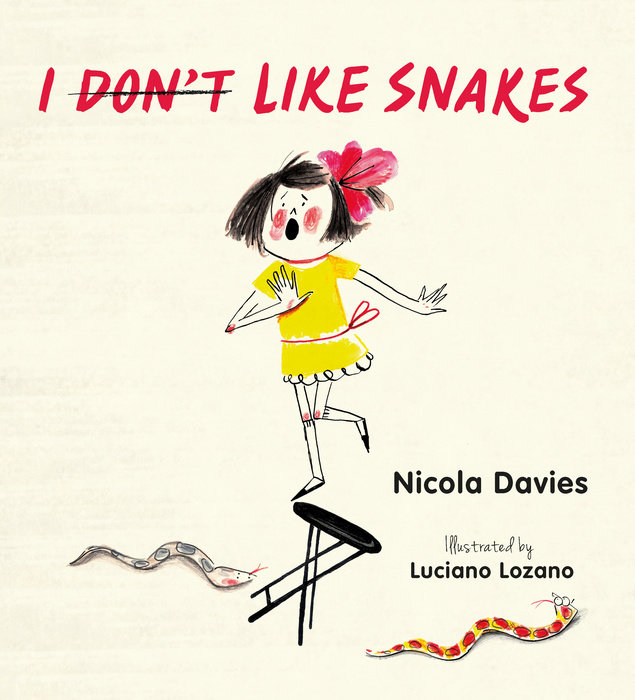
I Don’t Like Snakes

Written by Nicola Davies | Illustrated by Luciano Lozano


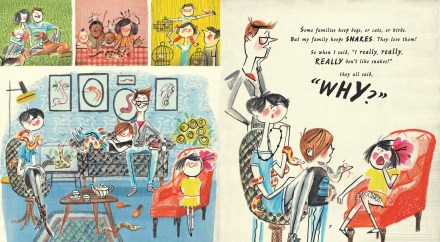
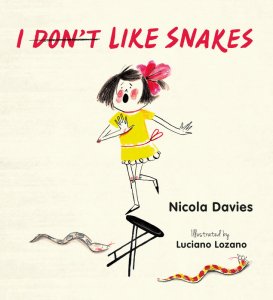
Can you imagine a family who has nothing but snakes for pets? Well, that’s the way it is for the little girl in I Don’t Like Snakes. Sitting in her red chair surrounded by her mother, father, brother and four snakes, she finally pipes up and tells her family that she “‘really, really, REALLY doesn’t like snakes!’” And they ask, “‘Why?’”

“‘Because they slither,’” she answers. Her mom has a ready answer that leads into a scientific discussion of why and how different kinds of snakes move. The mechanics of concertina and serpentine slithering as well as caterpillar crawling are clearly described in both easy-to-understand text and accompanying illustrations. Her father adds more transportation methods, including side-winding, twining, climbing, swimming, and even flying.
celebrate-picture-books-picture-book-review-i-don't-like-snakes-interior-art-why

Image copyright Luciano Lozano, courtesy of walker.co.uk

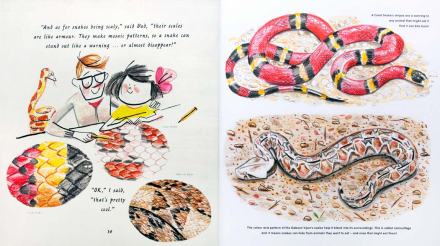
The little girl has to admit these sound pretty smart. “‘But what about their slimy, scaly skin?’” She asks. After all it’s so icky! Well, her mom reveals, snakes aren’t actually slimy, but dry. Following this readers learn why snakes look wet and how they shed their skin. Her dad goes on to explain that a snake’s scales are used for protection and as camouflage or as a warning to other creatures. Ok, the little girl agrees, “‘That’s pretty cool.’”

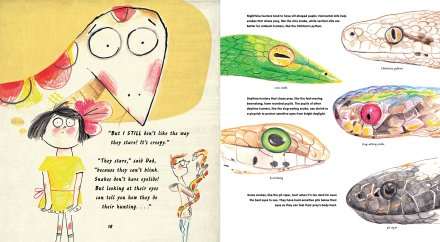
Still, the girl doesn’t like their flicking tongues. Her mom reassures her that snakes only use their tongues to smell with. Readers then see how a snake picks up the scent of a mouse or other prey and how it is transferred to the Jacobsen’s organ that helps it detect even faint odor trails. “‘That IS interesting,’” the girl tells her mom. “‘But I STILL don’t like the way they stare! It’s creepy.’”
celebrate-picture-books-picture-book-review-i-don't-like-snakes-interior-art-eyes

Image copyright Luciano Lozano, courtesy of walker.co.uk

Dad has the answer to that one. They stare because they have no other choice. Without eyelids, it’s impossible for them to blink. But if you look closely at a snake’s eyes, you can tell if they are a night or day hunter or whether they are chasers or ambushers.

All this information is starting to change the little girl’s mind about snakes. “‘Maybe now that I know something about them, I do like snakes—just a little bit!’” she tells her brother. And just like brothers everywhere, he ups the ante by revealing how snakes kill. He revels in explaining about how some snakes have hollow fangs that inject poison into their victims and how others strangle their prey until there’s no life left. And without proper teeth, snakes have to swallow their dinner whole!

The boy’s sister is braver than he thinks, and now she wants to get in the game. She says that she has discovered something about snakes herself. She knows how snakes have babies. Some give birth to live babies but most lay leathery eggs. Either way, the babies are on their own soon after hatching. The little girl has had a complete change of heart. She now thinks snakes are beautiful. “‘And do you know what?’” she says. “‘I really, really, REEEEEALLLLY LIKE THEM!’”
celebrate-picture-books-picture-book-review-i-don't-like-snakes-interior-art-skin

Image copyright Luciano Lozano, courtesy of walker.co.uk

Whether you like snakes, don’t like snakes, or are somewhere in between, Nicola Davies’ engaging tribute to this interesting and often misunderstood species will delight. Cleverly written to include commonly held opinions and provide compelling facts, I Don’t Like Snakes is part story, part nature encyclopedia seamlessly woven together to create a fascinating and funny read. Kids and adults will respond to the conversational tone, and, like the little girl in the story, be open to a change in attitude toward this intriguing reptile.

Luciano Luzano bridges the world of the fictional story and the nonfiction facts in I Don’t Like Snakes with charming sketches of the family and realistic depictions of the snakes they discuss. The little girl with her oversized hair bow and astonished expressions is a disarming guide to discovery. The family’s reptilian obsession is everywhere, from the snakes that twine around the mother, father, and brother’s arms and shoulders to the snakeskin upholstery. The factual information about snakes is accompanied by accurate drawings and representations of the traits portrayed.

I Don’t Like Snakes is a wonderful book for those who already love snakes as well as for those who want to learn more! It’s a great addition to anyone’s nonfiction collection.

Ages 5 – 10

Candlewick Press, 2015| ISBN 978-0763678319

Learn more about Nicola Davies and her books on her website!

To view more art and books by Luciano Luzano visit his website!

World Snake Day Activity
celebrate-picture-books-picture-book-review-snake-word-search

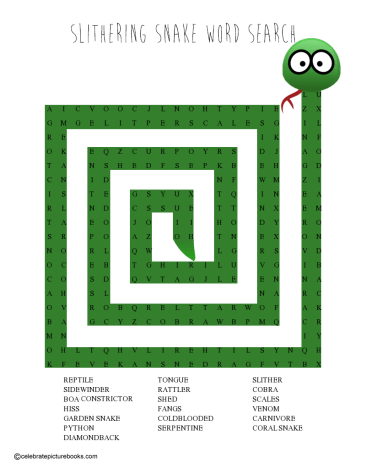
Slithering Snake Word Search


Snakes wind their way along wherever they want to go. Follow the twists and turns in this printable Slithering Snake Word Search to find the reptile-inspired words! 
celebrate-picture-books-picture-book-review-i-don't-like-snakes-cover

You can find I Don’t Like Snakes at these booksellers

Amazon | Barnes & Noble | Books-a-Million | IndieBound

Picture Book Review

July 10 – Don’t Step on a Bee Day

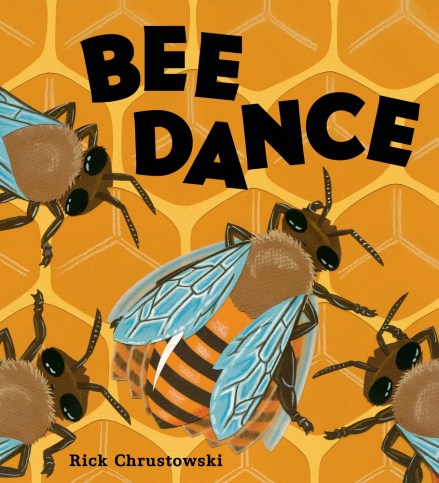
celebrate-picture-books-picture-book-review-bee-dance-cover

About the Holiday

With the bee population declining, today is a reminder to protect bees and preserve their habitats. Without bees and the pollination they provide, the world’s food supply is threatened. Pollution, pesticides, and colony collapse all endanger the health of bee colonies around the globe.

Bee Dance

By Rick Chrustowski


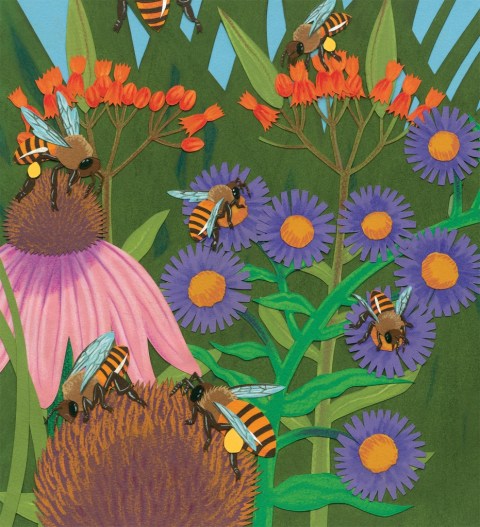
In the warm sunlight a honey bee leaves the hive in search of nectar. A sweet scent in the pleasant air entices the bee toward a prairie in bloom, where tasty wildflowers await. With its “bendy-straw tongue” the bee sips the delicious food. The bee races back to the hive and as the other bees welcome it home with a buzz of excitement, the Scout climbs the honey comb to deliver its news.

celebrate-picture-books-picture-book-review-bee-dance-interior-art-wildflowers

Image copyright Rick Chrustowski, courtesy of us.macmillian.com

The bee communicates its story through a “waggle dance.” It forms a figure 8, twirling one way, running up the middle, and then twirling around the other side. To indicate direction and distance, the Scout bee waggles faster and for a longer period of time. When the dance is completed, the other bees know exactly where to go. They swarm out of the hive and easily find the wildflower prairie.

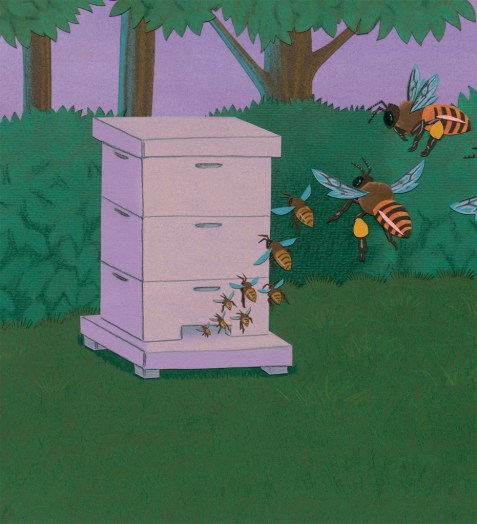
Forager bees collect nectar from the tall flowers and fill pouches on their legs with pollen. They zip from flower to flower until daylight fades. In the growing twilight the bees head for  home once more. Back in the hive they unload their cargo in the combs and rest for the night. With dawn the cycle and the dance will begin again.

celebrate-picture-books-picture-book-review-bee-dance-interior-art-coming home

Image copyright Rick Chrustowski, courtesy of us.macmillian.com

Rick Chrustowski’s Bee Dance is a lyrical introduction to the fascinating and mysterious world of bees. Focusing on the communicating dance Scout bees perform to relay information is a familiar and excellent choice for young children used to following and inventing meaningful motions. The boldly colored illustrations give children an up-close view of the flying, sipping, and pollen gathering behavior of bees. The Scout bee’s dance is depicted clearly, and kids may love to replicate it. Further details of the life and work of honeybees at the end of the book add compelling information that kids will want to explore further.

Ages 4 – 8

Henry Holt and Co., 2015 | ISBN 978-0805099195

Visit Rick Crustowski’s webste to discover more about his books and how to make a Bee Kite!

Don’t Step on a Bee Day Activity

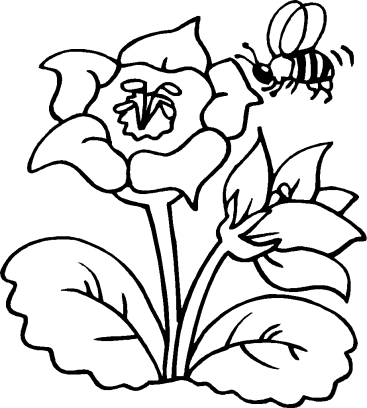
celebrate-picture-books-picture-book-review-bee-coloring-page

Honeybee Coloring Page


Honeybees and wildflowers go hand-in-hand or is it wing-in-petal? Either way they go together and make a beautiful, natural sight! Decorate this printable Honeybee Coloring Page with pencils, crayons, or markers—or make a collage using cut or torn tissue or craft paper!

May 23 – World Turtle Day

celebrate-picture-books-picture-book-review-turtle-and-me

About the Holiday

American Tortoise Rescue founded World Turtle Day in 2000 to raise awareness and respect for turtles and tortoises and to promote conservation to help them survive. Celebrations take many forms, from fun activities where participants dress as turtles to educational programs that teach about this fascinating creature and how people can help turtles in danger.

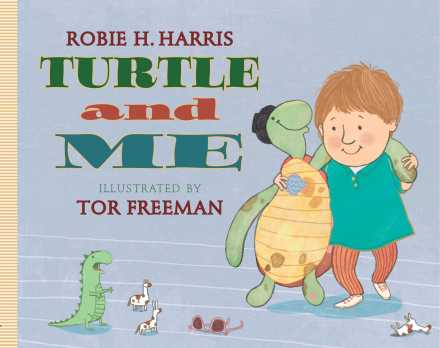
Turtle and Me

Written by Robie H. Harris | Illustrated by Tor Freeman


The little boy narrator of this story tells readers he met Turtle on the day he was born. Turtle was “way bigger” than he was. Now, the little boy is bigger than Turtle, but they are still best friends. When the boy was a baby he smiled and laughed every time he played with Turtle. As he grew he needed Turtle around to comfort him.

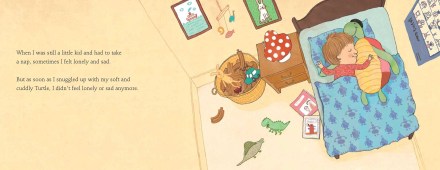
At naptime Turtle made him feel less sad and lonely and allowed him to sleep. Even now, when the boy is older, he still likes to play with Turtle even though his colors have faded, he’s ripped and raggedy, and some bad things have happened to him.

celebrate-picture-books-picture-book-review-turtle-and-me-sleeping

Image copyright Tor Freeman, 2015, text copyright Robie H. Harris, 2015. Courtesy of simonandschuster.com.

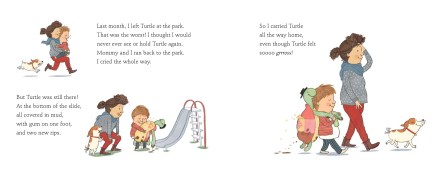
When bad things happened to Turtle the little boy felt terrible; sometimes he even cried and knew Turtle was sad too. But the boy always made sure that Turtle “gets sewn up, washed up, fixed up—and is okay again.” Once Turtle was left at the park. The little boy and his mom raced back and found Turtle covered in mud, sticky with gum, and with two new rips.  Even though Turtle felt gross the boy held him tight all the way home. At home Turtle received a very thorough wash and dry and an extra big hug. The little boy promised Turtle he would never let anything happen to him again.

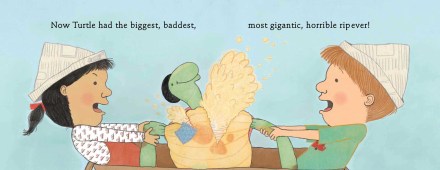
But then last Friday “the worst thing of all happened.” The boy and his friend were sailing around the world in a cardboard box. Turtle was the Captain. But the boy’s friend wanted to be Captain and steer the ship. She grabbed Turtle away, and the boy grabbed Turtle back. In the ensuing tug-of-war, Turtle suffered “the biggest, baddest, most gigantic, horrible rip ever!”

celebrate-picture-books-picture-book-review-turtle-and-me-playground

Image copyright Tor Freeman, 2015, text copyright Robie H. Harris, 2015. Courtesy of simonandschuster.com.

The boy shouted at his friend: “You ripped my Turtle!” Before leaving, the boy’s friend yelled back: “Having Turtle’s a BABY thing!” The little boy hugged Turtle tight and then looked at him. Turtle had lost almost all his stuffing. The boy quickly pushed the fluff back in and taped Turtle’s tummy back up.

But the boy had a change of heart. Suddenly Turtle looked ugly, and the little boy left him on the floor alone. At bedtime, when Daddy brought Turtle to his son, he said he didn’t want Turtle anymore, but sleep without Turtle was elusive. Finally, the boy shouted, “I can’t sleep!” and his dad asked, “Do you want Turtle?” “‘NO’”, the boy said. “‘Having Turtle’s a baby thing! And I’m BIG! And I’m getting bigger! So I don’t need Turtle ever again!’”

His dad thought about this and agreed. His son was getting bigger, but he’s not all big. Daddy picked up Turtle and played with him, making the little boy laugh. Then the boy copied his dad, making his dad laugh. The little boy realized that holding Turtle still felt good. He hugged him close and in no time was fast asleep.

celebrate-picture-books-picture-book-review-turtle-and-me-torn

Image copyright Tor Freeman, 2015, text copyright Robie H. Harris, 2015. Courtesy of simonandschuster.com.

Robie Harris’s sweet story of a little boy and his best friend Turtle reminds kids that no matter how big they get, it’s okay to find comfort in a favorite toy. The story has a deeper meaning for kids as well: things happen; sometimes bad things. But with love mistakes can be cleaned up, scrapes will heal, and scary situations will turn out all right. And when you need them, those who love you are there to help and help make you feel better.

The mishaps Turtle experiences are instantly recognizable and related in a gentile, honest way that will draw kids in. Near the end of the book, kids will root for the little boy and Turtle to patch things up and be best friends again.

Everyone wants a best friend as cool as Turtle! Tor Freeman’s vivid illustrations of the little boy and his plucky stuffed companion are adorable and full of emotion. The close family bonds are well depicted, and the images of the boy hugging Turtle will melt your heart. The looks of anguish on the little boy’s face as Turtle suffers stains and rips elicit sympathy and understanding and are followed up by comforting smiles when Turtle is fixed up.

Turtle and Me would be a terrific addition to home and classroom bookshelves for sweet story times and  when reassurance and a little extra love and comfort are needed.

Ages 3 – 8

little bee books, 2015 | ISBN 978-1499800463

World Turtle Day Activity

celebrate-picture-books-picture-book-turtle-shell-game

Follow the Turtles! Game


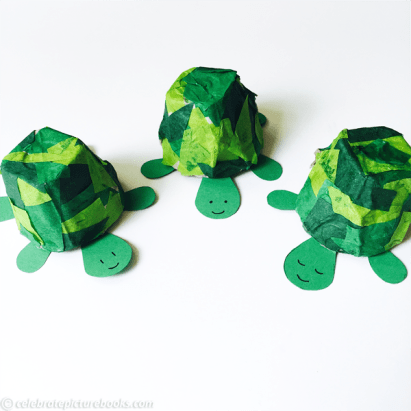
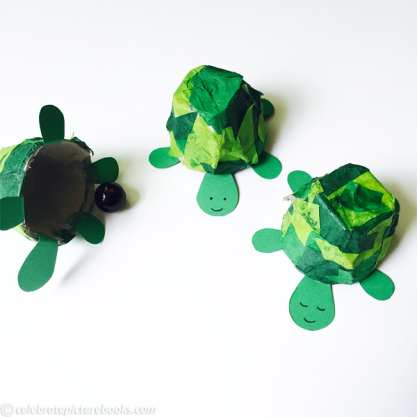
You can make this fun game from recycled materials and a little creativity! When you’re finished making the turtle shells, have fun guessing where the marble, bead or bean is hiding!

Supplies

  • Cardboard egg carton
  • Green tissue paper in different hues
  • Green construction or craft paper
  • A marble, bead, or bean
  • Glue
  • Scissors

celebrate-picture-books-picture-book-turtle-game

Directions

  1. Cut the egg carton apart into individual cups. You will need 3 cups for each game made.
  2. Cut the rims of the cups so they sit flat on a table.
  3. If the cups have open sides, fit two cups inside one another to fill the gaps
  4. Cut the tissue paper into small shapes
  5. Brush glue on a cup (I used a paper towel to apply glue)
  6. Cover the egg cup with pieces of tissue paper. Repeat with other cups.
  7. Let dry
  8. Cut a head and feet from the green craft paper
  9. Tape or glue the edges of head and feet to the inside of the cups
  10. Add a face to the head

To play the game:

  1. Line up the cups on a table
  2. Put a bead, bean, or marble under one of the cups
  3. Show the other player which cup the object is under
  4. Quickly move the cups around each other several times
  5. Ask the other player which cup they think the object is under
  6. Take turns playing

Extra Game: Make three more and play turtle tic-tac-toe! 

May 10 – Mother Ocean Day

celebrate-picture-books-picture-book-review-at-the-sea-floor-cafe

About the Holiday

The brain child of the South Florida Kayak Fishing Club and enacted in 2013, Mother Ocean Day promotes awareness of the beauty and wonder of the world’s oceans. Teeming with rare and surprising creatures and plants, the ocean remains one of Earth’s most amazing mysteries. Today, take time to enjoy all the ocean has to offer—go to the beach and walk, snorkel, swim, or fish—or if you’re more of a landlubber read a book about our Mother Ocean.

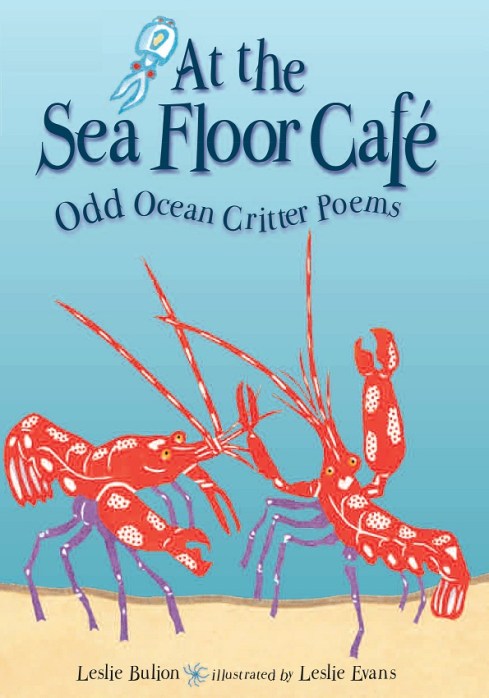
At the Sea Floor Café: Odd Ocean Critter Poems

Written by Leslie Bulion | Illustrated by Leslie Evans


With a jaunty exhortation to “Dive In!” Leslie Bulion invites readers to “…visit a habitat shallow and deep. / and boiling hot, where acids seep, / and frigid and pressured and mountainy-steep, / Come explore the sea! Seventeen species of “odd critters, enormous and tiny…hunters and foragers, hiders and peekers” are described in clever, informative verse.

The Coconut Octopus is a wily creature: “This octopus walks backwards on two arms, / And wraps the other six around its top. / It ambles free of predatory harms, / And thus avoids becoming shark-chewed slop.” The symbiotic relationship between the Leopard Sea Cucumber and the Emperor Shrimp is told in alternating lines of blue and red.

“I inch along.”

“We hitch a ride. / We tour the seafloor country side.”

“I’m ship,”

We’re crew. / We swab the decks / By eating scummy algae specks.”

I’m camouflaged / in leopard spots.

While not the swiftest / Of the yachts, / A top-notch spot to meet a mate.”

When threatened I eviscerate.

To spew my guts / Is quite a chore, / And it takes weeks / To grow some more. / But I keep predators away.

We live to crew / Another day.

The unexplained habit of the convict fish, which “eats” its young every night just to spit them out again, is described in “Fish Food,” and readers can dig their teeth into another meal-related relationship between the reef shark and the cleaner wrasse in “Healthy Eating.” In “Dental Health” readers learn that narwhal’s tusks are much more than defense mechanisms. Instead, each tooth “contains ten million nerves to sense / environmental evidence.” And what’s more—“…when we see them crossing spars / and jousting underneath the stars, / one’s tusk above and one’s beneath, / it’s not a fight; their brushing teeth.”

“Crabby Camouflage” has never been so elaborate or decorative as that concocted by the jeweled anemone crab, and “Dolphin Fashion” reveals an ingenious way to protect a tender snout: “A bottlenose counseled her daughter: / Put this sponge on your beak underwater. / You can scare out more fish, / Poke sharp stones as you wish, / And your skin’ll stay smooth like it oughter.”

Snapping shrimp, epaulette sharks, the violet snail, sea spiders, krill, the broody squid, sipohonophores, erenna, larvaceans, osedax, and the remotely operated vehicles that give us a view of the ocean floor are also celebrated in this fun poetry collection.

Each poem is followed by scientific information about the subject of the verse.

Leslie Bulion piques readers’ interest in these fascinating ocean creatures with her smart, witty rhymes that reveal little-known facts.

Leslie Evans, with her printmaker’s eye, illustrates the deep blue pages with stylized depictions of the fish and animals that populate the sea, allowing readers to visualize the quirks and adaptations written about.

Ages 6 and up

Peachtree Publishers, 2011 | ISBN 978-1561455652

Gardening for Wildlife Month Activity

celebrate-picture-books-picture-book-review-flower-vase

Spoon Flowers

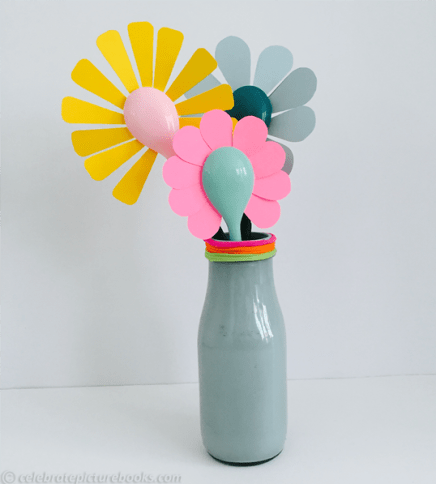
The rounded scoop and long “stem” of plastic ice-cream spoons make a perfect base for pretty wildflowers. You can use the printable petal template or make petals of your own design to fill your vase with color

Supplies

  • Printable Petal Template
  • 3 – 4 plastic ice-cream spoons, these are available in different colors at party supply stores or you can paint them the color you’d like
  • Multi-purpose paint in colors of your choice, if you are painting the spoons
  • Heavy craft paper in your favorite flower colors
  • Green ribbon
  • Ribbon, hairbands, weaving loom bands, or colored wire
  • Glue gun or strong glue
  • Paintbrush 
  • Scissors
  • Beans, sand, pebbles, or glass or plastic beads to fill the vase

Directions

  1. Print or trace the petals onto colored paper. The number of petals you need for each flower will depend on the size of the spoon
  2. Cut out the petals
  3. With the glue gun or strong glue, attach the petals to the spoon, gluing the end of the petals around the inside edge of the spoon, Let dry
  4. Wrap the handle of the spoon with the green ribbon and glue in place
  5. Fill the vase ¾ full with beans, sand, pebbles, or beads
  6. Decorate the rim of the bottle with the ribbon, bands, or wire
  7. Push the flower stems into the vase and arrange

May 1 – Mother Goose Day / Children’s Book Week

celebrate-picture-books-picture-book-review-mother-bruce-cover

About the Holiday

Incredibly, the term “Mother Goose” goes back to the 1650s to describe rhymes such as Baa Baa Black Sheep, Here We Go Round the Mulberry Bush, Jack and Jill Went up a Hill, and The Old Woman Who Lived in a Shoe. Fairy tales such as Cinderella and Little Red Riding Hood also came under Mother Goose’s wing. While all of the rhymes are not as familiar to today’s children, many are still popular and their influence can be seen in current books, movies, and TV shows. Mother Goose Day was established in 1987 to highlight these stories and keep them alive for today’s kids. To celebrate, read some Mother Goose tales—either as originally written or in fractured form.

This first week of May also celebrates Children’s Book Week, which was established in 1919 to promote literacy awareness and the joy of reading. As the longest-running national literacy movement in the country, Children’s Book Week holds, sponsors, and encourages events in schools, libraries, bookstores, homes, and wherever young readers and books connect!

Mother Bruce

By Ryan T. Higgins


It’s a good thing Bruce lives by himself. He’s a grumpy grizzly who likes nothing. If it’s sunny he’s grumpy. If it’s raining he’s grumpy. And don’t even get started on how he feels about cute fuzzy animals. There is one thing he likes, though, and that’s eggs! Yummy eggs prepared many ways from recipes Bruce finds on the Internet.

celebrate-picture-books-picture-book-review-mother-bruce-goslings

Copyright Ryan T. Higgins, 2015, courtesy of Disney-Hyperion.

One day a most mouth-watering recipe pops up on the screen—hard-boiled goose eggs drizzled with honey-salmon sauce. Bruce heads out with his own personal shopping cart to collect the ingredients. He ingeniously catches some salmon and raids a local beehive (this carnivore’s a locavore, you see). Next he pays a visit to Mrs. Goose. He takes her eggs after determining that they are free-range organic.

At home Bruce puts the eggs in his special pot and starts a fire in the stove. But the fire fizzles, forcing Bruce to make a visit to the wood shed. When he comes back, his lovely breakfast has hatched! And what’s worse, the little goslings think Bruce is their mother! Bruce stares into those sweet eyes gazing back at him and decides…to have buttered goslings on toast. But those little peepers just won’t cooperate, and for some reason Bruce has lost his appetite.

He gathers up the goslings in his shopping cart and wheels them back to their nest only to find that their mother has already flown south for the winter. Bruce leaves them in the nest anyway and heads for home. But it’s too late—the baby geese have already imprinted on Bruce, and they tag along happily after him. Bruce is stern with them. He roars. He tries to hide out in a tree. But it’s no use; he’s stuck with them.

celebrate-picture-books-picture-book-review-mother-bruce-painting

Copyright Ryan T. Higgins, 2015, courtesy of Disney-Hyperion.

Bruce rises to the challenge, though. He gives up his space in the pool, teaches them how to paint, feeds them, and transports them in a specially-made baby carrier. As spring turns to summer and then fall, Bruce watches his geese grow from “annoying baby geese” to “stubborn teenage geese” to “boring adult geese.”

Finally, one day Bruce spies other goose families flying south and knows his time has come! He can get rid of those geese and take a long, well-deserved nap. Bruce explains migration to his geese, but they don’t quite get it, coming to him dressed in winter coats and hats. Hmmm…some creativity is needed. Bruce tries slinging them northward and sending them flying in remote-controlled planes, but the geese just hug him tighter.

Resigned to his fate, Bruce packs his bag and four smaller ones for his charges and boards a bus for Miami. “Now every winter Bruce and his geese head south together.” They wear floral shirts, and as his “kids” play in the sand, Bruce “dreams of new recipes—recipes that don’t hatch.”

celebrate-picture-books-picture-book-review-mother-bruce-slingshot

Copyright Ryan T. Higgins, 2015, courtesy of Disney-Hyperion.

Ryan T. Higgins’ Mother Bruce is an endearing story of dislike at first sight. Of course no one—not even a grumpy, loner bear like Bruce—can resist the sweet, loving faces of youngsters forever. Fortunately for readers, Bruce holds out longer than most, his transition providing giggle-inducing scenarios on every page.

Higgins’ illustrations are loaded with visual jokes, cultural references kids will love, and four of the cutest clueless geese around. Depictions of Bruce masterfully mix his gruff, bothered exterior with the big softie that lies underneath. Bruce’s solutions to his plight are clever and funny. There may be no better Mother Goose than Bruce!

Ages 4 – 8

Disney-Hyperion, 2015 | ISBN 978-1484730881

Mother Goose Day Activity

Screen Shot 2020-05-01 at 2.28.23 PM

Mother Goose Coloring Page


Mother Goose Rhymes are fun to learn and share! Here’s a picture of Mother Goose and her goose for you to color!

Mother Goose Coloring Page

Picture Book Review


April 24 – It’s National Garden Month

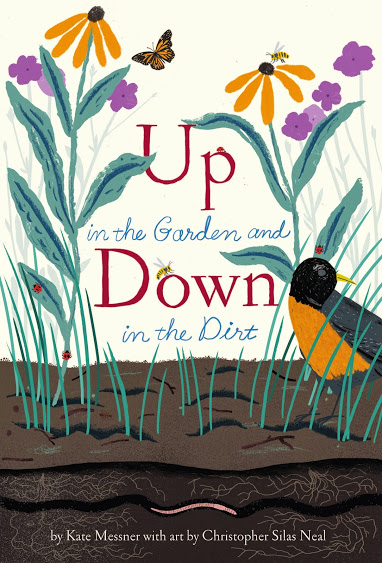
picture-book-review-up-in-the-garden-and-down-in-the-dirt

About the Holiday

April is the month when the earth comes alive again after a long winter! Flowers bloom in brilliant colors, trees bud and blossom with pale, green leaves, and the birds and animals prepare for new life to come. Today enjoy the warmer weather, plan a garden or flower bed, or visit a nursery or park and take in the sights and smells of spring!

Up in the Garden and Down in the Dirt

Written by Kate Messner | Illustrated by Christopher Silas Neal


Snow still blankets the ground as a little girl and her Nana survey their garden plot. The girl’s head is full of dreams of the bounty to come. As the days warm and the wind whistles, the girl and her Nana dig in the mud. “’It’s not quite time,’” says Nana. “’Down in the dirt, things need to dry out and warm up.’” Her granddaughter is curious about what’s below.

Down in the dirt, Nana tells her, a whole world of insects are already working. Up above, the two gardeners are working too—gathering scattered twigs, removing weeds, and spreading compost.

Down in the dirt, pill bugs chew dead leaves, rolling into tight balls when poked. Up in the garden planting is taking place, the seeds carefully snuggled into beds and watered. As peas and other early plants sprout, bees pollinate and wasps hover.

Down in the dirt earthworms tunnel, enjoying the cool soil. Up in the garden the girl and her Nana rest in the shade then play in a sprinkled shower. Down in the dirt the water soaks deep, feeding the squash plants’ roots.

The summer is progressing and up in the garden tomatoes and beans are ripe for eating. Down in the dirt a robin finds a meal too. Up in the garden there’s so much to harvest. Nana and her granddaughter work until dark, sharing the garden with bats and June bugs. With nightfall a skunk finds grubs and cutworms down in the dirt.

The air is turning cooler up in the garden. Pumpkins turn orange under towering sunflowers while down in the dirt a spider weaves her sticky web. As Autumn wanes it’s time for the final garden harvest. Down in the dirt the insects know it too; they scurry to gather food.

Up in the garden and down in the dirt everything is prepared for winter. As snow once again blankets the garden plot, the girl and her Nana, the earthworms and pill bugs, the bees, and the skunk are all waiting for spring to come again.

Kate Messner’s lyrical paean to gardening is a wonderful way to introduce children to the changing seasons and how nature works together. Comparing and contrasting what gardeners do up above as they plant, tend, and harvest their crops to the work insects and animals perform down below emphasizes the interconnectedness contained in even a small plot of land. Messner’s language is beautifully evocative—the snow is sleepy, brittle stalks snap and are rustly when gathered, chickens squabble and scratch, newly planted seeds snuggle in the dark, pumpkins blush orange, and sunflowers bow to September.

Christopher Silas Neal illustrates the changing garden with striking up-close, ground view images of the plants and creatures that call the garden home. Vibrant green grasshoppers, brilliant yellow sunflowers, deliciously red tomatoes, soft pink worms, scruffy backyard animals, and more join a sprightly Nana and her curious granddaughter in soil so dark and fertile that any gardener would be envious.

The final pages include more information on the creatures found in the book, a list for further reading, and an author’s note. Up in the Garden and Down in the Dirt would be a welcome and special addition to any budding gardener’s or outdoor lover’s library.

Ages 5 – 9

Chronicle Books, 2015 | ISBN 978-1452119366

National Garden Month Activity

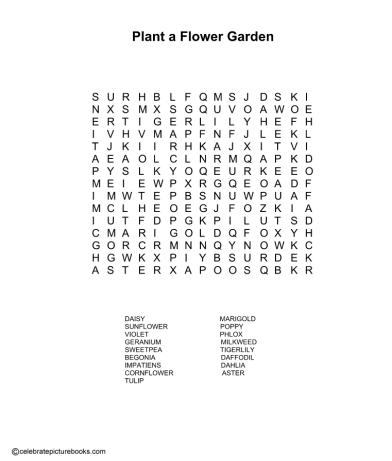
celebrate-picture-books-picture-book-reviews-garden-word-search


Plant a Flower Garden! Word Search


Whether you like to plant your flower bed in horizontal or vertical rows or just scatter the seeds for a wild burst of color, you’ll love this word search planted with favorite spring and summer blooms. Print your Plant a Flower Garden! word search and the Solution here!

April 10 – National Sibling Day

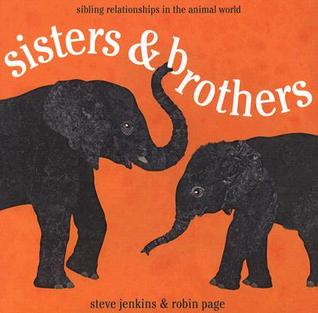
sisters & brothers by Steve Jenkins and Robin Page picture book review

About the Holiday

Brothers and sisters, huh? Sometimes you can’t live with them—but you’d never really want to live without them! Sure the bad part is that they know all your secrets and your quirks and you vie for that last cookie, but the good part is that they know all your secrets and your quirks and you didn’t really want that last cookie anyway.

Today do something fun with your sibling or siblings or tell them you love them—or both!

Sisters & Brothers: Sibling Relationships in the Animal World

By Steve Jenkins and Robin Page


You know that most animals are born in a litter or with one or two other siblings, but do you really consider that they are brothers and sisters just like human siblings? You might wonder if they have the same kind of relationship with each other that people do. How do they get along? How do they communicate? Do they stay together or go their separate ways? Sisters & Brothers: Sibling Relationships in the Animal World reveals the answers to these questions and more about 21 animals from around the world.

Would you like to be a clone of your brother or sister? Maybe not so much. If you were a nine-banded armadillo, though, you’d have no choice. These armadillos are always born four at a time—all females or all males—and are identical in every way! They stay with their mother until they are four months old and then set off on their own adventures.

If there are a lot of women and girls in your family, you may feel as if you’ve been born into a community of whiptail lizards. In the world of whiptails, there are no males! While their unusual reproduction method may avoid some battles, the identical traits of these creatures leaves them vulnerable to disease or changes in their environment.

Are you the youngest in your family? If you were a naked mole rat, you’d have to lie on the floor of your narrow tunnel and let your older siblings walk over you to pass. Mole rats aren’t the only ones who have worked out a hierarchical system. Brother bears fight fierce battles until the weaker one leaves to find his own territory, and black widow spiders even eat their weaker brothers and sisters!

Many animal siblings get along, however, and even help each other grow strong and develop important traits. Two of the fastest animals on earth—cheetahs and peregrine falcons—practice hunting techniques on each other, acquiring speed and accuracy along the way. There are even wildlife families that include adopted members, such as the cichlid fish and myna birds.

These are just a few of the intriguing animals readers will discover in this unique look at the world’s wild kingdom. Each animal is beautifully rendered through large cut or torn paper collages that enhance the short text, perfect for a child’s attention span. The final pages offer more information on each creature, and a list for further reading is also included.

Ages 4 – 8

Houghton Mifflin Harcourt, 2008 | ISBN 978-0547727387

National Sibling Day Activity

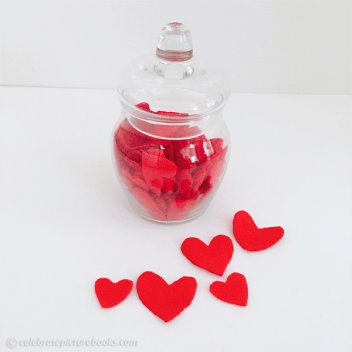
CPB - Heart Jar

I Heart You! Jar


Sometimes it’s hard to say “I love you” (or even “I like you”) to siblings. But sisters and brothers like to know they’re important to each other. Here’s a gift you can make to give them that will tell them what is in your heart.

Supplies

  • A clear jar with a lid—you can use a recyclable jar or buy a mason jar or other decorative jar at a craft store
  • Red felt
  • Scissors

Directions

1. Cut red hearts from the felt

2. Add hearts to the jar—you can add as many as you like and continue to fill the jar after you’ve given it to your sibling. Here are some ideas:

  • Add one heart for each year you have known your sibling
  • Add one heart for each thing you love about your sibling (write those traits on the hearts)
  • Give a new heart whenever your sibling does something nice for you

3. Give your I Heart You! jar to your sister(s) and/or brother(s)