March 21 – World Poetry Day

Nasty Bugs by Lee Bennett Hopkins and Will Terry Picture Book Review

About the Holiday

World Poetry Day, an initiative of the United Nations Educational, Scientific, and Cultural Organization, recognizes the important role poetry plays in people’s lives across the world and over time. The day promotes small publishers of poetry as well as oral poetry traditions and works to strengthen the connection between poetry and other forms of expression. Another objective is to “support linguistic diversity thorough poetic expression and to offer endangered languages the opportunity to be heard within their communities.”

Celebrations on this day include poetry readings, school lessons focused on poetry and poets, poetry writing sessions, and poetry readings by professional and amateur poets in schools and other venues.

Nasty Bugs

Poems Selected by Lee Bennett Hopkins | Illustrated by Will Terry


Who in the world can resist bugs? They’re in every country, every city, every town, even every house! And they have so much going for them—lots of legs, pincher mouths, transparent wings, amazing survival skills, and so much general creepy-crawliness! Bugs may be a little (or a lot) icky, but you can’t deny that they’re fascinating.

Nasty Bugs brings together 16 poets to turn the traits of all kinds of insects, from stink bugs to chiggers to water bugs and more, into creative odes that tickle the funny bone as well as teach. Readers learn from Cynthia S. Cotton’s “Stink Bug” that “Some spread their wings in flight, / Some look scary, / some taste bad, / some use camouflage / to blend in just right.”

Rebecca Kai Dotlich exposes the boll weevil: “I am an evil weevil, / a cotton-craving beetle / whose reputation’s rotton / ‘cause I gobble crops of cotton, / yes I do.” And the Colorado Potato Beetle? Among other quirks, X. J. Kennedy reveals its name is a bit of a misnomer: “His other name’s Potato Bug. / This munching desperado / infests our gardens coast to coast. / Not just in Colorado.”

April Halprin Wayland gives voice to the fire ants’ tribal cry “All for one and one for all!” as they jump into action when “Flood waters rise! / Quick, form a ball—/ our larvae, pupae, eggs, and Mother Queen inside! / We roll this writhing globe, / take turns on top / so all breathe air, so all survive.”

“Spoiled Rotton” by J. Patrick Lewis may make grammarians squirm with this pointed description: “I’m a comma / in a drama / of disgusting devastation.” while readers will be itchin’ to know more in Rebecca Andrew Loescher’s “Ode to Chigger” with lines such as “You hatch with six small legs for running, / then grow two more—for leaps most stunning,” Poems about flies (Ann Whitford Paul), wasps (Michele Krueger), fleas (Marilyn Singer), lice (Amy Ludwig VanDerwater), ticks (Kami Kinard), termites (Alice Schertle), cockroaches (Fran Haraway), and bedbugs (Kristine O’Connell George) also contribute to the buzzzzz of this anthology.

But if bugs, well…bug you, you may find these lines in Lee Bennett Hopkins’ “Ode to a Dead Mosquito” most satisfying: “You of little brain / didn’t you know / I felt your sting / the instant you / began to drain? / So— / I whacked you. / SMACK! / You dropped.”

Will Terry lends his distinctive talent to making this book as colorful, bold, and eye-popping as nature itself. Each insect, depicted in its favorite milieu, nearly flies, creeps, or chomps it’s way off the page. Brilliant greens, reds, yellow, oranges, and blues give life to these most prolific pests, and their prominent features – whether pinchers, stingers, gnawing mandibles, or even stinky odor – are inspiringly drawn.

More facts about each bug are given in the back of the book, and are a must read. Whether insects make you squirm with discomfort or squeal with delight, Nasty Bugs is fun.

Ages 5 – 9

Paperback: Puffin, Penguin Group, 2016 | ISBN 978-0147519146

Hardcover: Dial Books for Young Readers, Penguin Group, 2012 | ISBN 978-0803737167

World Poetry Day Activity

CPB - Nasty Bugs magnet II (2)

Rockin’ Bug Magnet or Paperweight


On World Poetry Day it’s fun to write a poem of your own. Whether your creation is long or short, you can proudly display it using one of these Rockin’ Bug Magnets.

Supplies

Rocks, small and flat work best for magnets. Larger rocks are great for paperweights. You can find rocks in your yard, at the beach or park, or buy them from craft stores or nurseries.

  • Paint in your favorite colors
  • Paint brush
  • Small to medium round magnets, available at craft and hardware stores
  • Googly eyes
  • Strong glue

CPB - Nasty Bugs magnet (2)

Directions

  1. Wash rocks and let them dry
  2. Create your own creepy, crawly bug on the front of the rock
  3. Paint your bug
  4. Let the paint dry
  5. If you want to give your insect buggy eyes, glue googly eyes to the rock.
  6. Glue a magnet to the back of the rock
  7. Hang it on the refrigerator or any metal surface


If you love books, you must have caught the reading bug! Check out another great book and craft on March 2—Read Across America Day and make an “I’ve Got the Reading Bug” Bookplate for your favorite books!

CPB - Reading Bug Book Plate (2)


March 3 -World Wildlife Day

Actual Size by Steve Jenkins Picture Book Review

About the Holiday  

Sponsored by the United Nations, World Wildlife Day celebrates the many varieties of wild animals and plants that make up our earth. It is also a day to raise awareness of the ways in which conservation of natural resources and sustainable development benefits people and all the world’s species. The theme this year is “The future of wildlife is in our hands.” African and Asian elephants are the main focus of the 2016 global campaigns.

Secretary-General Ban Ki-moon says: “On this World Wildlife Day, I call on all citizens, businesses and governments to play their part in protecting the world’s wild animals and plants.  The actions taken by each of us will determine the fate of the world’s wildlife.  The future of wildlife is in our hands!”

For more information on World Wildlife Day 2016 and to see what events are taking place in cities around the world visit wildlifeday.org

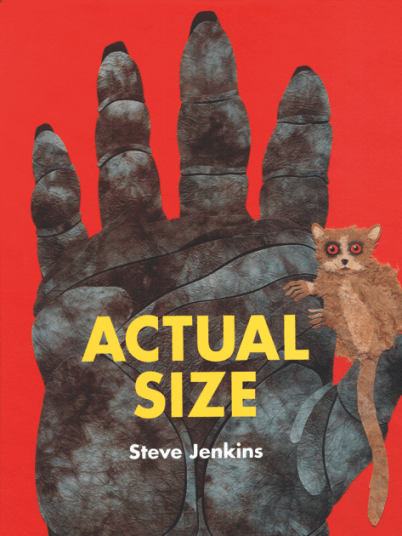
Actual Size

By Steve Jenkins


We know wildlife is all around us, but apart from our pets and the occasional mosquito we swat or bumble bee we avoid, we tend to see it from a distance. We watch birds flutter at feeders through a window, we see exotic animals at the zoo, aquarium, or wildlife parks, and point out cows and horses while driving. If asked how big the chickadee or elephant is, we’d say small and huge! But how small? How huge?

What makes Steve Jenkins’ book Actual Size so fascinating is that he shows readers on the page exactly how big or how tiny with scale drawings of each creature. The Atlas Moth on page 1 is so large part of one wing dips into page 2, where you hardly notice the dwarf goby—at a minuscule 1/3 inch long—in the bottom corner. As you turn the page you almost catch your breath to find the enormous 12-inch-wide eye of a giant squid staring back at you.

An ostrich with its egg and the whip-like tongue of the giant anteater are also here. And if you’re at all squeamish about spiders, you might want to avoid pages 12 and 13! The snout of the saltwater crocodile and the Goliath frog are both so long that they require a fold-out page! Kids will love putting their tiny hand against the gorilla’s and their foot on the African elephant’s.

Actual Size features 18 of the world’s well-known and unusual creatures, each described in more detail, including weight, habitat, diet, behavior, defenses, and more, at the end of the book.

Steve Jenkins’ striking collages, created from cut and torn paper, beckon readers to look closer at these awesome creatures.

Ages 4 – 9

Houghton Mifflin Books, 2004 | ISBN 978-0547512914

World Wildlife Day Activity

CPB - Wildlife Day Elephant Print (2)

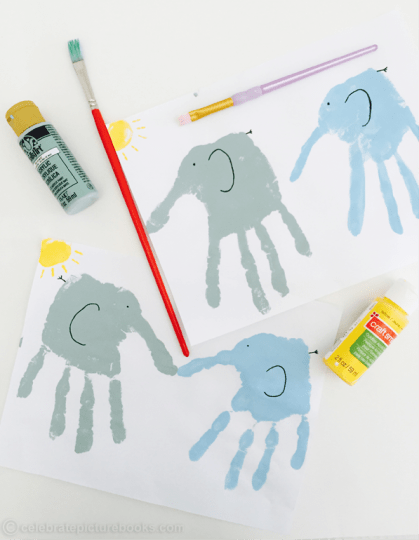
Hands Down Best Elephant Print


A way to make the cutest elephant print ever is right in your hands! With a little paint and paper, you can create a wildlife print that’s as unique as you are. This is a fun activity to do with a child and parent or two siblings. Working with different size hands can make your print more interesting.

Supplies

  • Paper, any color
  • Paint, any color you would like your elephants to be
  • Paint brush
  • Black marker

Directions

In this print your palm creates the body of the elephant, your four fingers create the legs, and your thumb becomes the trunk.

1. Make the right-facing elephant:

  • Paint your left hand. Make sure to fill in all the creases on your palm and fingers.
  • Press your hand onto the left side of the piece of paper

 2. Make the left-facing elephant:

  • Paint your right hand. Make sure to fill in all the creases on your palm and fingers.
  • Place your hand on the right side of the paper so that your thumb touches the end of the thumb on the left hand print. Press your hand onto the right side of the piece of paper

3. You can fill in any thin or open spaces with the paintbrush if you like

4. Let the handprints dry

5. Turn the page so that the four fingers that create the legs of the elephant are facing down.

6. Draw a dot for an eye at the base of the thumb, an ear in the palm, and a tail at the back of the hand.

7.  To make the sun, dip your thumb in yellow paint and press it into the corner of the paper. Make little rays with the edge of the paintbrush.

8. Hang your print with or without a frame.

February 19 – Bird Feeding Day

National Geographic Kids Bird Guide of North America picture book review

About the Holiday

Today we take time to remember our feathered friends who may have a difficult time finding food during the winter months. Hanging a bird feeder in your yard can bring many hours of entertainment and enjoyment as you get to know the birds in your area and see many of the same birds come back again and again—often with their little ones during the spring!

National Geographic Kids Bird Guide of North America

By Jonathan Alderfer


If you’re looking for a book to learn about the birds in your own backyard or across the country, it’s hard to beat the National Geographic Kids Bird Guide! The prominent birds from 10 habitats in North America are discussed in detail, with amazing close-up action photographs from some of the top nature photographers in the country. Major profiles of the most common birds in a region include information on basic facts, a map and the environment in which they’re found, the sounds they make, food they eat, body parts and what they are used for, nesting behavior, and fun trivia. Mini profiles highlight other birds seen in each area.

The Guide also includes instructions on many how-tos, such as making a bird feeder, making a bird bath, bird watching, building a nest, drawing birds, protecting birds and their environment, and more. There is also a glossary and a list of print and website resources for budding birders.

Ages 7 – 10

National Geographic Kids Books, 2013 | ISBN 978-1426310942

Bird Feeding Day Activity

CPB - Bird Feeder I (2)

Pinecone Birdfeeder


Making a pinecone bird feeder is a quick, fun way to nourish your backyard friends! Here are some simple directions for making your own!

Supplies

  • Large pinecone
  • Vegetable shortening
  • Birdseed
  • String
  • Knife or popsicle stick
  • Spoon
  • 2 Bowls

Directions

  1. Tie a length of string around one of the top layers of pinecone leaves and knot it to make a loop for hanging.
  2. Spoon about 1/3 cup of vegetable shorting into a bowl
  3. With the knife spread the shortening over the leaves of the pinecone, covering it completely.
  4. Pour birdseed into a bowl
  5. Roll the pinecone in the bowl of birdseed, patting seed into the crevices and around the sides.
  6. Hang your pinecone birdfeeder on a branch or pole and watch the birds enjoy it!

February 18 – National Battery Day

Using Batteries Picture Book review

About the Holiday

While not an official holiday, National Battery Day is a great time to think about how these small, ubiquitous power cells have changed and improved our lives, allowing us to take our gadgets and our necessities wherever we go. Batteries themselves may be relatively new, but the idea may have been around for 2,000 years. In 1936 archaeologist Wilhelm Konig unearthed a clay jar from a Parthian tomb that held an iron rod encased in copper that may have been used to electroplate gold onto silver.

It was Benjamin Franklin (of course it was!) who coined the term “battery” in 1748 to describe an array of charged glass plates. The word “volt” or a battery’s electric potential comes from Alessandro Volta, who in 1800 generated electrical current by layering silver, a material soaked in salt or acid, and zinc. William Cruickshank, an English chemist, advanced this method, and in 1802 created a battery for mass production. The first commercially available battery was introduced in 1896 by the company now known as Eveready, and we were off and charging!

It’s Electric Series: Using Batteries

By Chris Oxlade

Batteries—those things that make our our cars run, our TV remotes change channels, our little book lights glow, and so much more—are part of our lives from the very beginning, when they’re required (but not included) for our favorite toys. But how many of us really know how they work? This little book explains to children in simple and easily understood language how batteries store and use electricity to fuel many of the world’s machines and gadgets.

Large photographs accompany the text and clearly demonstrate the concepts. Children will learn about using batteries, how batteries work in circuits, the different battery shapes and sizes, battery materials, rechargeable batteries, battery safety, portable power, and more!

For kids interested in electricity – and batteries in particular – theIt’s Electric series of books is a great place to start learning!

Battery Day Activity

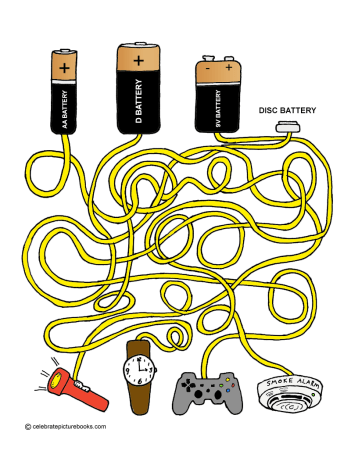
Connect the Battery Puzzle

CPB - Battery Day maze

Hmmm…The flashlight, watch, video game controller, and smoke detector are all broken! Can you find which battery goes into which object to make them work again? Print out the Connect the Battery puzzle here.

February 16 – Innovation Day

CPB - Girls Think of Everything Innovation Day

About the Holiday

Today we celebrate all those people who look at a problem and design a solution, or who just ask, “What if…?” and search for answers. So put on your thinking cap, look around you, and do something new, novel, and completely unexpected. Who knows…you may be the next great inventor!

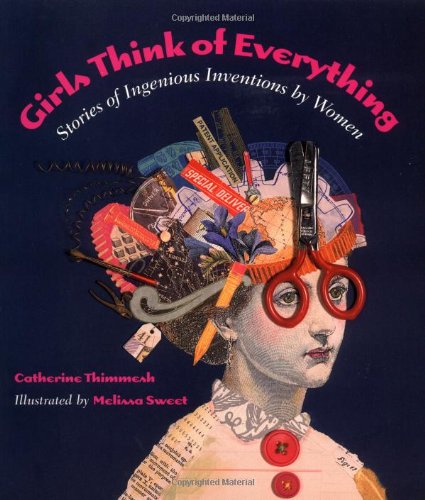
Girls Think of Everything: Stories of Ingenious Inventions by Women

Written by Catherine Thimmesh | Illustrated by Melissa Sweet


Throughout history women have invented new and clever ways of doing things—necessity is the Mother of invention, after all. In her fascinating picture book, Catherine Thimmesh highlights ten women and two girls whose creativity has changed the world.

Here, you’ll learn the intriguing stories behind each invention, the struggles for recognition, and the ultimate victory of innovation. Did you know that the original recipe for chocolate chip cookies was just a time-saver? Or that people once thought windshield wipers weren’t necessary? You’ll also discover how liquid paper, flat-bottomed paper bags, and the Glo-sheet came to be. Women in science have contributed Kevlar, Scotchgard, the COBOL computer language, and the space shields that protect the International Space Station, satellites, and more.

Catherine Thimmesh is an excellent storyteller, drawing you into the actions and minds of these women innovators and the situations or environments that fostered their talents. Melissa Sweet accompanies each profile with portraits of the inventor and colorful collage illustrations that build on the text and tell stories of their own.

Ages 7 – 12

Houghton Mifflin Company, Boston, 2000 | ISBN 978-0618195633

Innovation Day Activity

CPB - Invention Word Scramble

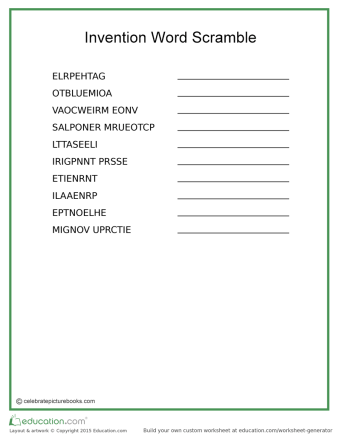
Invention Word Scramble


Every invention started out as a jumble of ideas in someone’s head. In this Invention Word Scramble you can unscramble the letters of some of the world’s greatest creations. Solutionincluded. Odog cklu!


February 5 – Western Monarch Day

CPB - Hurry and the Monarch - Monarch Day


About the Holiday

Western Monarch Day celebrates the migration of these beautiful butterflies from the Rocky Mountain area to California, where they spend the winter. Other monarchs make different journeys, as you will see in today’s reviewed picture book. Today the monarch population is in peril, but there is something you can do! In honor of today’s holiday, consider planting milkweed in your yard. Not only will you attract these fascinating creatures to your home, but you will be helping to feed them and increase the population.

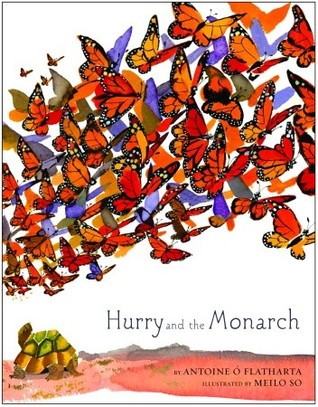
Hurry and the Monarch

Written by Antoine Ó Flatharta | Illustrated by Meilo So


A swift, graceful monarch butterfly and a slow, lumbering tortoise couldn’t be more different, but the friendship between these two creatures in Ó Flatharta’s Hurry and the Monarch, illuminates the majesty of life for all.

On an October day in Texas a monarch butterfly lands on Hurry the tortoise’s back and asks where she is. “Wichita Falls,” answers Hurry, and the monarch knows her trip from Canada is not over yet. Before she continues her flight, however, the monarch and Hurry talk about their differences. While the monarch is well traveled, Hurry feels he has been in Wichita Falls “forever.” The monarch suggests that Hurry may one day break out of his shell and fly away like she did, but Hurry doubts it. And when it comes to dealing with cold weather, the monarch seeks out a warmer climate, while Hurry sleeps the winter away.

The monarch flies away and joins other monarchs on their journey to Mexico. It is now November, and the monarch has found the green forest where she will spend the winter with millions of others. With the spring thaw, the monarch begins her return journey, stopping once again to visit Hurry. Here she lays eggs on a milkweed plant and flies away. Hurry watches as the eggs transform into caterpillars and finally into butterflies.

Before hurrying away to discover life, one newborn monarch asks Hurry what he thinks the world is like. “I imagine,” Hurry says, “that it is like my garden. A place full of astonishing things.”

Meilo So’s watercolor illustrations are full of color and motion that beautifully depict both the gentile friendship between Hurry and the monarch and the astounding migration of the millions of butterflies that occurs each year. The natural world these characters inhabit is rendered in bold, joyous colors, and children will love to linger over the details of each page.

The Author’s afterword is a must-read, as it contains many fascinating facts about the lives of monarch butterflies and tortoises.

Ages 4 – 8

Dragonfly Books, 2009 | ISBN 978-0385737197

Western Monarch Day Activity

CPB - Monarch Maze

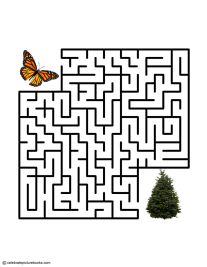
Monarch Migration Maze

The monarch needs help finding her way to the green forest. Print out the Monarch Migration Maze and show her the way!