September 3 – International Vulture Awareness Day

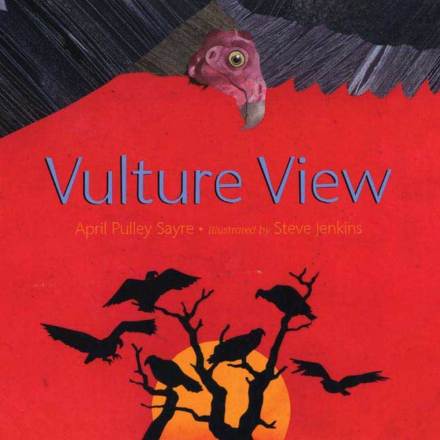
celebrate-picture-books-picture-book-review-vulture-view-cover

About the Holiday

With their bald pink heads and dusty brown feathers vultures and turkey vultures may not be the peacocks of the bird kingdom, but they play a crucial role in the environmental cycle. These scavengers live on carrion, clearing away and “recycling” the carcasses of dead animals. Because of the vulture’s appearance and stereotypical depictions, their plight as an endangered species goes largely unnoticed. Environmental groups in South Africa and England established today’s holiday (also known as International Turkey Vulture Day) to promote awareness f the declining number of vultures, a cause that has been picked up by zoos and other conservation groups around the world.

Vulture View

Written by April Pulley Sayre | Illustrated by Steve Jenkins


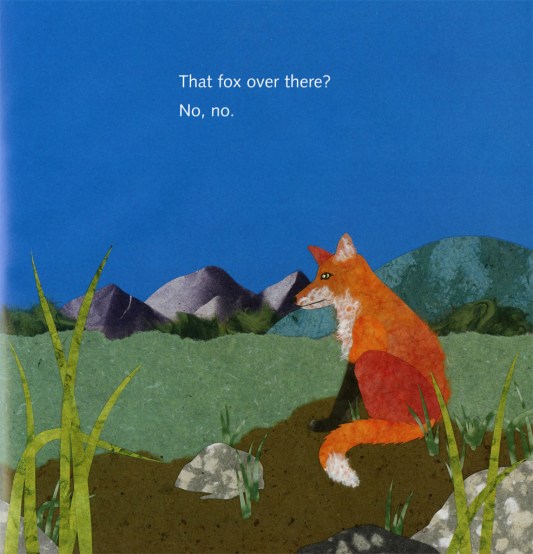
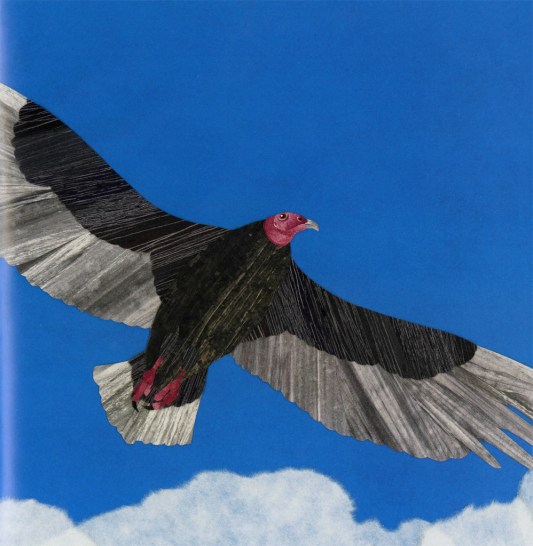
In the clear blue morning sky the vultures soar. “Wings stretch wide / to catch a ride / on warming air / Going where?” One turkey vulture scans the ground, dipping and tilting as it searches for its breakfast. A snake rattles and hisses in the rocks. The vulture passes it by. A golden fox gazes silently into the distance, but the vulture flies away. A bear half-way up a tree would be easy prey, but the vulture lets him continue his climb.

celebrate-picture-books-picture-book-review-vulture-view-fox

Image copyright Steve Jenkins, courtesy of us.macmillan.com

The turkey vultures are searching for a particular meal. They “smell the air. / They sniff, search, seek / for foods that… / REEK! The aromas of the landscape rise to the vultures. Are they attracted by the “fragrant flowers? / No, no.” “That spicy smoke? No, no.” Maybe “that stinky dead deer? Yes, yes!”

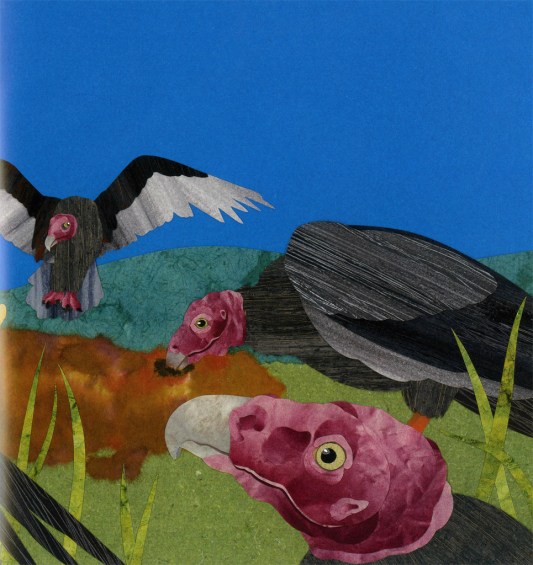
The vultures descend to dine on their “rotten” meal. Afterward they clean themselves in the nearby water and preen their feathers. Still hungry, “they hop, flap, soar / to look for more.” As the sun sets the vultures’ “wings glide, wings ride / through cooling air.” They come from all over to vulture trees—beautiful, bare silhouettes on the sky—to “settle and sleep, like families.”

celebrate-picture-books-picture-book-review-vulture-view-vultures-eating

Image copyright Steve Jenkins, courtesy of us.macmillan.com

With the rising sun and the warmer air, the vultures take to the sky again in search of their singular meal.

Intriguing facts about how vultures fly, the seven species of vultures, why and how vultures feed on carrion, nesting behaviors, and vulture festivals around the United States follow the text.

In this Theodor Seuss Geisel Honor Book, April Pulley Sayre brings a poet’s sensibility to the misunderstood vulture. In her lyrical lines the sights and smells of the vulture’s terrain and the vulture’s flight patterns are elevated to educate young readers of the actual beauty of this distinctive species. The benefits vultures provide to the environment as well as their familial attachments make these birds some of the most fascinating animals in the wild kingdom. Who among us doesn’t look up at the circling majesty of birds of prey? Sayre’s text gives readers the bird’s eye Vulture View.

celebrate-picture-books-picture-book-review-vulture-view-soaring-vulture

Image copyright Steve Jenkins, courtesy of us.macmillan.com

With his signature cut-paper collage illustrations, Steve Jenkins gives shape to the vulture’s world. The mottled dark body and the wings and tail fringed with white meet layers of pink that form the vulture’s wrinkled head. The rattlesnake is a smooth combination of greens and browns while the fox is brilliantly orange and soft. Hills and mountains jut from the bottom of pages, and a bony carcass lays amid tall grass, decaying and attracting a vulture. As the birds streak through wispy fiber clouds to descend upon the vulture tree in the shadowy evening, readers will come to appreciate the life and role of the vulture.

Ages 4 – 8

Henry Holt and Company, 2007 | ISBN 978-0805075571

Wow! You will find a wealth of information on April Pulley Sayre‘s website which includes her many books, educators’ resources, and much more information on natural history topics.

Even just hovering over the icon links on Steve Jenkins‘ website is fun—and there’s so much more to discover once you click on them!

International Vulture Awareness Day Activity

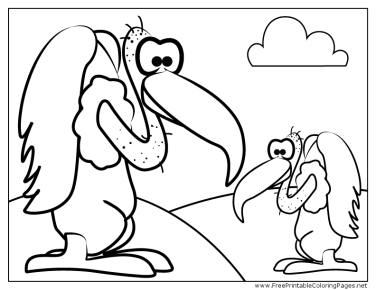
celebrate-picture-books-picture-book-review-vultures-coloring-page

Valuable Vultures Coloring Page


Vultures are a valuable part of our ecosystem. Here’s a printable Valuable Vultures Coloring Page for you to enjoy. Why not try your hand at using cut or torn paper like Steve Jenkins does in Vulture View to fill in the design?

Picture Book Review

September 2 – It’s Children’s Good Manners Month

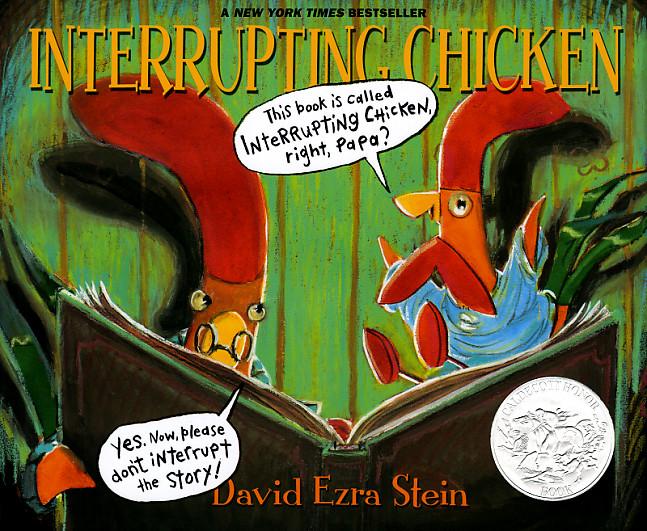
celebrate-picture-books-picture-book-review-interrupting-chicken-cover

About the Holiday

As kids go back to school and interact with other students, teachers, coaches, group leaders, and others, this month is dedicated to the kinds of manners that promote good relationships and cohesive gatherings. Thinking about others and how your actions will affect them is part of being a great friend, teammate, or participant in any activity. Family life with parents and siblings is also better when everyone treats each other with good manners. So this month (and afterward) remember to say “please, thank you, you’re welcome, may I” and all the rest of the polite words!

Interrupting Chicken

By David Ezra Stein


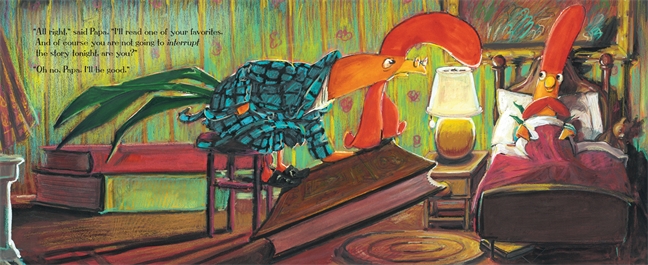
It’s time for a certain little red chicken to go to sleep, and Papa is about to plunk his chick into bed when the subject of a bedtime story comes up. Papa agrees to read one of his daughter’s favorites—after being reassured that she won’t interrupt the story tonight. “‘Oh no, Papa. I’ll be good,’” she says.

So Papa opens Hansel and Gretel and begins to read. He’s related that Hansel and Gretel were very hungry and that while out in the woods they found a house made of candy. “Nibble, nibble, nibble; they began to eat the house, until the old woman who lived there came out” and invited the children in. “They were just about to follow her when—”… the little chicken can’t help herself: “Out jumped a little red chicken, and she said, ‘DON’T GO IN! SHE’S A WITCH!’ So Hansel and Gretel didn’t. THE END!”

celebrate-picture-books-picture-book-review-interrupting-chicken-going-to-bed

Image copyright David Ezra Stein, courtesy of Candlewick Press

Papa peers over the top of his story book and he and his daughter give each other a long look. “‘Chicken.’” “‘Yes, Papa?’” “‘You interrupted the story. Try not to get so involved.’” “‘I’m sorry, Papa. But she really was a witch.’” Papa understands, but he also tells little chicken that she should relax and try to fall asleep. His daughter agrees to be good if he reads another story.

Papa turns the page to Little Red Riding Hood. He reads about how Little Red Riding Hood’s mother gave her a basket of goodies to take to Grandma and warns her about the dangers in the woods. “By and by she met a wolf who wished her ‘Good Morning.’ She was about to answer when—”…the little avid reader can’t help herself again! “Out jumped a little red chicken, and she said, ‘DON’T TALK TO STRANGERS!’ So little Red Riding Hood didn’t. THE END!”

Papa puts the story book down and gazes into his daughter’s wide-awake eyes. She apologizes for interrupting a second time and suggests “one more little story” and promises to behave. Papa picks a most appropriate story for the third go-around: Chicken Little. He starts off with the unfortunate event when Chicken Little is hit on the head by an acorn and mistakenly thinks that the sky is falling. “She was about to run off and warn Goosey Loosey, Ducky Lucky, Henny Penny, and everyone on the farm the sky was falling when—”…the little chicken loses control yet again. “Out jumped the little red chicken, and SHE said, ‘DON’T PANIC! IT WAS ONLY AN ACORN.’ So Chicken Little didn’t. THE END!”

celebrate-picture-books-picture-book-review-interrupting-chicken-one-more-story

Image copyright David Ezra Stein, courtesy of Candlewick Press

Papa is now flat out tired and—even though his little chick hugs him and vows that with only one more story she’ll fall asleep—out of stories. Little chicken exclaims, “‘Oh no, Papa. I can’t go to sleep without a story!’” Yawning, Papa suggests that his daughter tell him a story. She grabs her notebook and crayons and begins. “Bedtime for Papa by CHiKn Once there was a little red chicken who put her Papa to bed. She read him a hundred stories. She even gave him warm milk, but nothing worked: he stayed wide awake all—”

Suddenly, the sounds of snoring interrupt her storytelling. She looks up from her page to find her father fast asleep in her bed. She pats him on the head “‘Good night, Papa.’” she whispers before finally falling asleep herself.

David Ezra Stein’s Caldecott Honor book is a hilarious retelling of the nightly bedtime story scene in so many households. One story just isn’t enough, and familiar stories just beg to be finished by excited little voices. The father/daughter relationship in Interrupting Chicken is sweet and endearing, as the day-weary dad reads story after story and his daughter chimes in. Any parent or caregiver has gazed at their little charge in just the way Papa does, and they have all received the same knowingly innocent eyes back.

Stein’s glowing blue, green, and red illustrations of the adorable little chicken with her very tall comb tucked into bed and her father’s equally as long comb and waddles, cozy bathrobe and slippers will make kids fall in love with this duo. The stories Hansel and Gretel, Little Red Riding Hood, and Chicken Little are cleverly depicted in vintage black, brown, and white hues that are brilliantly interrupted by the little chicken and her well-timed warnings. In each even the original stories’ characters react to being so “rudely interrupted” and are left with dubious expressions as our little heroine saves the day.

Animated readings (there’s no way you’ll get away with just one!) will make Interrupting Chicken one of the favorite books on your child’s bookshelf.

Ages 4 – 8

Candlewick Press, 2010 | ISBN 978-0763641689

Don’t’ interrupt this funny book trailer!

Children’s Good Manners Month Activity

celebrate-picture-books-picture-book-review-good-manners-matter-word-search

Good Manners Matter! Word Search


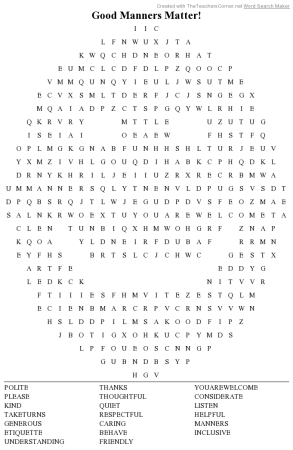
Using good manners makes you and those around you smile! Find the 20 manners-related word in this Printable Good Manners Matter! smiley-faced-shaped puzzle! Here’s the Solution!

Picture Book Review
September 1 – World Letter Writing Day

celebrate-picture-books-picture-book-review-dear-dragon-cover

About the Holiday

Remember the thrill of receiving a letter—a real letter full of exciting news, lovey-dovey stuff, photos, or a highly anticipated answer to some inquiry or application? The footsteps of the postal carrier on the stoop, the creak and small bang of the mailbox lid opening and closing, and the view of a long envelope sticking out the top could all set the heart racing. Or perhaps you were the letter writer, pouring your experiences, heart, and hopes onto a piece of paper that might have been colored or even scented. World Letter Writing Day celebrates those missives that allow for the development of higher vocabulary and story-telling skills and provided physical souvenirs of a life well lived.

Dear Dragon

Written by Josh Funk | Illustrated by Rodolfo Montalvo


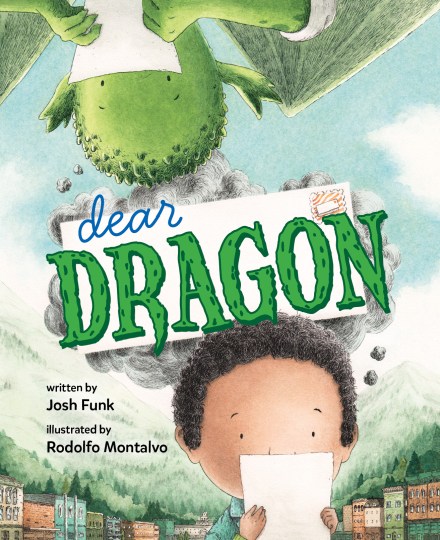
In a bit of cross-curriculum creativity, the teachers in two distinct school districts have combined the annual poetry units and pen pal projects. Not only do the kids get to make new friends, they must write their letters in rhyme. George Slair has been matched up with Blaise Dragomir. What George doesn’t know—but readers do—is that Blaise is a dragon; and what Blaise doesn’t know—but readers do—is that George is a boy.

In his first missive, George begins boldly and honestly: “Dear Blaise Dragomir, / We haven’t met each other, and I don’t know what to say. / I really don’t like writing, but I’ll do it anyway. / Yesterday my dad and I designed a giant fort. / I like playing catch and soccer. What’s your favorite sport? / Sincerely, George Slair”

As Blaise reads the letter he interprets George’s cardboard box, blanket, and umbrella fort as a medieval stone fortress with an iron gate and whittled-to-a-point log fencing. Blaise writes back: “Dear George Slair, / I also don’t like writing, but I’ll try it, I suppose. / A fort is like a castle, right? I love attacking those. / My favorite sport is skydiving. I jump near Falcor Peak. / Tomorrow is my birthday, but my party is next week. / Sincerely, Blaise Dragomir”

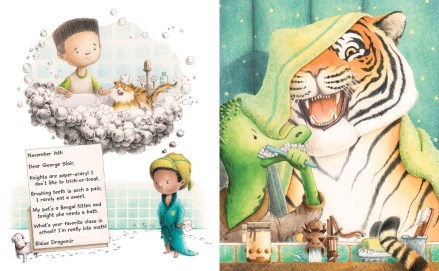
In his next letter, dated October 31, more earth-bound George tells Blaise that parachuting is awesome, that his dog destroyed his fort, and that he is trick-or-treating as a knight—a revelation to which Blaise has a visceral response. But what is scary to one pal is tame to the other. On November 14th Blaise relates: “Knights are super scary! I don’t like trick-or-treat. / Brushing teeth is such a pain, I rarely eat a sweet. / My pet’s a Bengal Kitten and tonight she needs a bath. / What’s your favorite class in school? I’m really into math!”

celebrate-picture-books-picture-book-review-dear-dragon-bengal-kitten

Image copyright Rodolfo Montalvo, courtesy, Viking Books for Young Readers

Reading December’s letter Blaise learns that George likes art and imagines George’s table-top volcano science project as a roaring, lava-spewing mountain while in January George is impressed to learn that Blaise’s father is a fire-breather. He conjures up images of a dad in a fancy, caped costume creating fire out of nothing while the truth is a lot more explosive. February brings word that there is a pen pal picnic planned for June, and in March Blaise tells George about a special outing with his dad: “Soon he’s gonna take me flying, once it’s really spring. / It’s such a rush to ride the air that flows from wing to wing.”

Springtime also sees the two becoming better friends. The formal “Sincerely, George” or “Sincerely, Blaise” sign-off of the first letters has evolved into “Your friend”  as George expresses his wonder at Blaise’s parents: “Hi, Blaise! / Skydiving and flying? Wow, your parents rock! / I’m lucky if my father lets me bike around the block.” Then it appears that this project has been a success in all areas as George asks, “Once the school year’s over and this project is complete, / should we continue writing? ‘Cause it could be kind of neat….”

Blaise is all in. In his May letter, he writes, “Hey, George! / I’m psyched about the picnic and I can’t wait to attend. / Who’d have thought this pen pal thing would make me a new friend? / Writing more sounds awesome. I was gonna ask you, too! / I’ve never liked to write as much as when I write to you.”

celebrate-picture-books-picture-book-review-dear-dragon-volcano

Image copyright Rodolfo Montalvo, courtesy of Viking Books for Young Readers

With a growing sense of anticipation, readers know that with a turn of the page June will come, and that June brings the long-awaited picnic. How will George and Blaise react when they see each other? As the kids approach the Pen Pal Picnic spot, their mouths hang open and their eyes grow wide. One even has his hands to his face. And as the dragons peek out from behind the trees, their mouths hang open and their eyes grow wide. One even has her hand to her face.

“‘Blaise?’” George ventures, as a slice of tomato drops from his hamburger. “‘George?’” Blaise presumes, although he wrings his tail. “‘My pen pal is a dragon?’”… “‘My pen pal is a human?’”

These two-page spreads say it all—or do they? Well, not quite…

Huge grins burst out as George and Blaise exchange high fives (and fours). The other kid- and-dragon pals are having a blast too! And the teachers? “‘Our plan was a success, my friend, or so it would appear!’ / ‘The Poetry and Pen Pal Project! Once again next year?’”

With his usual aplomb, Josh Funk charms with rhyme and reason in this clever tribute to friendship, diversity, and writing (on paper!). The letters between the two pen pals are endearingly kid-like, full of the subjects that are important in a child’s life, including pets, school, hobbies, and parents, and that can be brilliantly open to interpretation—or misinterpretation. Blaise Dagomir and George Slair’s names are similarly inspired, and may introduce kids to the ancient legends of Saint George and the Dragon and the poem by Alfred Noyes, St George and the Dragon. Kids will enjoy seeing how George and Blaise’s friendship grows over the school year, evidenced in the openings and closings of their letters. The letters are a joy to read aloud as the rhymes swoop and flow as easily as Blaise soars through the air.

Following the alternating sequence of the letters, Rodolfo Montalvo depicts each pen pal’s perception of the message along with the reality in his illustrations that are—as George exclaims—“as awesome as it gets.” Both characters are sweet and earnest, and while surprised by what they think the other’s life is like, happily supportive. The full-bleed pages and vibrant colors dazzle with excitement and humor and ingenious details. Kids will love the juxtaposition of George’s idea of Blaise’s Bengal “kitten” and the reality of a nearly full-grown tiger. The two views of fire-breathing will also bring a laugh, and readers will enjoy picking out features of the two homes. The final spreads build suspense as to how George and Blaise will react to each other, and the resolution is a delight.

One striking aspect of both the text and the illustrations is the similarity between the two pen pals. While their activities and experiences may be on different scales, they are comparable and understandable to each child. Likewise, everywhere in the paintings, Montalvo uses complementary colors to unite George and Blaise. This cohesiveness beautifully represents the theme of inclusiveness.

Dear Dragon is released September 6 and is certain to be a book children treasure. The fun dual meaning rhymes and endearing illustrations make Dear Dragon a must for kids’ (and dragon’s) bookshelves.

Ages 4 – 9

Viking Books for Young Readers, 2016 | ISBN 978-0451472304

From more books to activities for kids, there’s so much to see and do on Josh Funk’s website!

Discover the world of Rodolfo Montalvo’s books and artwork on his website!

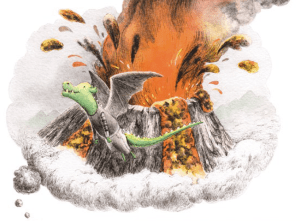
Dear Reader, check out this blazing hot book trailer!

World Letter Writing Day Activity

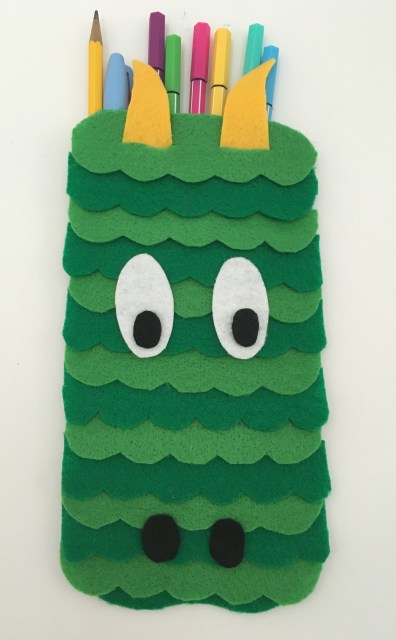
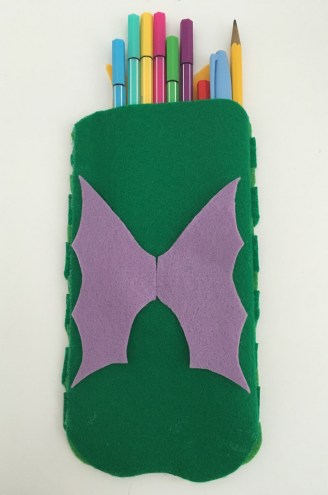
celebrate-picture-books-picture-book-review-dragon-pencil-case-front-eyes-down

Dependable Dragon Pencil Case


U-knight-ing all your pens, pencils, and other supplies in this Dependable Dragon Pencil Case will fire up your imagination! Have a blast making this fun craft!

Supplies      

  • Printable Dragon Pencil Case Template – Wings | Face
  • Sheets of felt, 8 ½-inch by 11-inch
  • 2 Dark green
  • 1 Light green
  • 1 white
  • 1 black
  • 1 yellow
  • 1 purple
  • Fabric Glue
  • Glitter glue or Fabric paint (optional)
  • Scissors
  • Velcro
  • Green Thread (optional if you would like to sew instead of glue your case)
  • Needle (optional, needed if sewing)

Directions

  1. Print the Dragon Templates
  2. Cut out alternating rows of scales from the dark and light green felt (7 each). For one row, cut a rounded top (instead of straight across) to make the top of the head (see picture). (One row of scales is longer so you can tile them. You will trim them later: see the double row of scales on the template for how the scales should look)
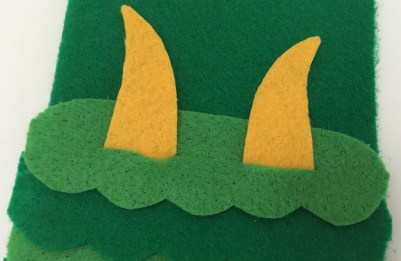
  3. Cut the eyes from the white felt, pupils and nostrils from the black felt, horns from the yellow felt, and wings from the purple felt. Set aside.

celebrate-picture-books-picture-book-review-dragon-pencil-case-top-of-head

To make the head

  1. Fold one dark piece of felt in half lengthwise
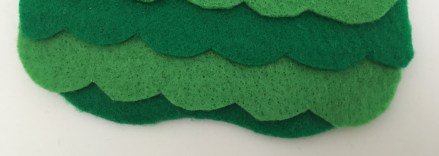
  2. Cut a wavy line along the bottom of the felt to make lips (see picture)
  3. Glue a ½-inch-wide strip along open side and along bottom (or you can sew it)

celebrate-picture-books-picture-book-review-dragon-pencil-case-bottom-snout

To add the scales

  1. Starting at the bottom, lay on row of scales a little above the wavy bottom. Glue the top to the base.
  2. Overlap an alternating green row of scales on the first row, glue the top
  3. Continue alternating dark and light green scales until you reach 9 inches
  4. Use the rounded row of scales for the top of the head (see how to insert horns before attaching top of head)

To insert the horns

  1. On the rounded row of scales, mark where you want the horns to be
  2. Cut two small slices in the felt where the horns will go
  3. Insert the bottoms of the horns into the slits

To finish the head

  1. Glue the top of the head to the base
  2. Trim any longer rows of scales to meet the edges of the base
  3. Add the eyes and nostrils to the face

To make the closure for the case

  1. Cut the base following the line of the rounded row of scales
  2. Glue or sew strips of Velcro along the inside edges

To attach the wings

  1. Turn the dragon case to the back
  2. Glue or sew the wings to the center of the back, attaching them at the center edge
  3. Outline the wings in glitter glue (optional)

celebrate-picture-books-picture-book-review-dragon-pencil-case-back

Picture Book Review
August 31 – It’s Happiness Happens Month

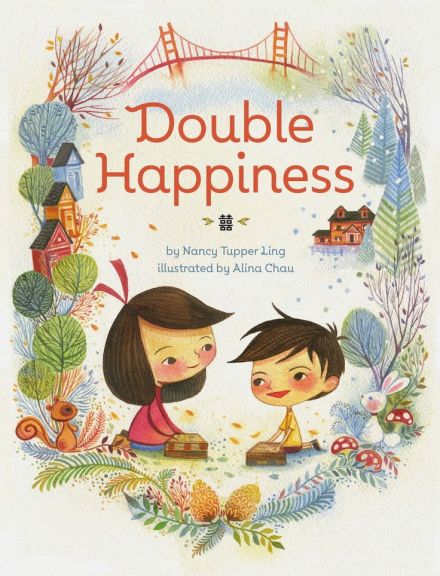
celebrate-picture-books-picture-book-review-Double Happiness by Nancy Tupper Ling Picture Book Review
About the Holiday

Summer is coming to a close and school is starting again. It’s a great time to reflect on the fun you’ve had in the warmer weather and all the memories that are about to be made as another year of activities, education, new friendships, and excitement unfolds. Happiness really does happen if you let it!

Double Happiness

Written by Nancy Tupper Ling | Illustrated by Alina Chau


This quiet, thoughtful picture book tells the story of a family’s move from China to America in a series of unrhymed verses that reveal the experience honestly from alternating viewpoints of a brother, Jake, and his sister, Gracie. Each page is dedicated to one sibling or the other with the Jake’s poems written in blue and Gracie’s in purple. In several poems the children interact with each other, the blue and purple lines acting as dialog tags.

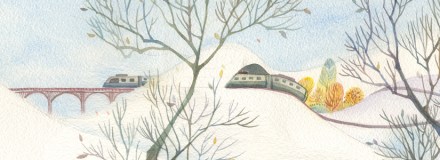
In the first poem, The Move, Gracie stands on her doorstep surrounded by boxes and suitcases and thinks, “I won’t go! / I won’t move / away / from our city house / by the trolley tracks….” But Jake is more adventurous and in the second poem, Train, is already imagining his new room. After considering different décor, he decides what he really wants is something familiar, something outside—“just one long train / that rocks and wobbles / my bed each night. / I can’t fall asleep until the train passes by.”

celebrate-picture-books-picture-book-review-double-happiness-train

Image copyright Alina Chau, 2015, courtesy of Chronicle Books

In Grandmother, the siblings are each given a happiness box by their Nai Nai, who wisely challenges her grandchildren to “Find four treasures each, / leading from this home / to your new.” Gracie takes this to heart, and readers see in Panda that even before leaving Nai Nai’s Gracie has added a favorite keepsake to her box: “Nai Nai’s panda sits / by the window / like always. / “I’ll miss you,” I say. / Nai Nai leans over me. / She places Panda / inside my box. / “He has a new home / now.”

Too soon moving day comes, and in Goodbye Gracie and Jake give hugs and kisses to beloved relatives. The search for items to fill Nai Nai’s boxes is taken up in the next three poems. In Treasure, Jake becomes a dragon keeping his “dragon eyes / wide open for stuff / along the way.” He is rewarded in Lucky, in which he discovers an old penny on the bus ride to the airport. In Leaf Gracie receives a surprising gift for her happiness box: “One stray leaf / flutters down / onto my box— / Eucalyptus! / If I had a koala I’d feed / her this minty meal all / day long— / the perfect treasure / to remind me of home.” 

In keeping with the long hours of travel from China to the United States, the next six poems chronicle the brother and sister’s experiences in the airport, waiting for their plane, and during the flight. Airport sees the children running, hopping, waiting, and navigating their way through the crowds of people to their gate. Dad is already tuckered out in Quiet, but Jake is wrangling to look for treasure: “’Huff puff. Puff huff.’” / Dragon blows fire. / Dragon stomps his feet. / “’Ssshhh, you’ll wake Daddy. / I giggle. / Gracie giggles. / “’Daddy can sleep / anywhere.’” Jake finally discovers gum in his backpack and creates a treasure. “I stretch it / and roll it / and ooze it / into one slinky snake / Sssssee, his penny pillow. / Sssssee, he’s kai xin— / so happy—in his brown box. / I’m tied with Gracie now— / two treasures each.”

celebrate-picture-books-picture-book-review-double-happiness-discovering-the-woods

Image copyright Alina Chau, 2015, courtesy of Chronicle Books

Adventures at the airport continue in Cat and Wings, and as the plane takes off Gracie draws pictures of the day’s events in Picture. In Here the children wake up to see their new city far below them and wonder, “can I find our house / from the sky?” Marble and Sadness juxtapose Jake’s happiness at finding another treasure for his box with the apprehension of Gracie as the plane lands and the family makes its way into their new country.

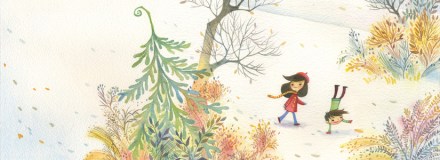
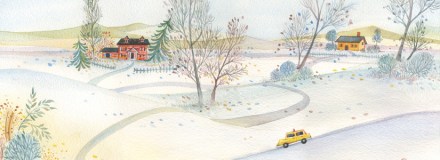
At last in Home the family reaches their new house by taxi. Gracie seems only to see the “piles of snow,” but Jake likes the “windy roads, lots of trees, and the curvy driveway.” In Explore Gracie and Jake walk around the countryside, and while Gracie still determines that she won’t like it, Jake hears a train and is happy. My Room and Dinner see the kids settling in, with a photograph of the family they’ve left behind accompanying them on the table while they eat. In A Surprise, Gracie finds that her grandmother is still with her through a special scarf, and in Paints Jake and Gracie accept the move as they paint their happiness boxes: Jake decorates his with a dragon and a train, while Gracie depicts herself and her brother walking in the snow and “they look very, / very / happy.”

celebrate-picture-books-picture-book-review-double-happiness-coming-to-new-house

Image copyright Alina Chau, 2015, courtesy of Chronicle Books

While Double Happiness tells the story of a family’s distant move, Nancy Tupper Ling’s gentle verses are appropriate for any situation involving change or uncertainty. She reminds children that happiness can be found wherever they are and all around them if they look for it. The poems flow as freely as thoughts, fears, and unguarded moments. As Gracie and Jake resolve their feeling, readers or listeners will also see that feelings of apprehension are common, and that happiness is waiting for them.

Alina Chau’s soft, lovely watercolor illustrations are beautiful representations of Gracie and Jake’s move from the familiar surroundings of their home in China to a new home in a snowy countryside.  The children’s emotions resonate as they alternate between sadness and happiness and between the concrete places of Nai Nai’s house, the airport, and their new city and their own imaginations of dragons, drawings, and dreams.

Ages 5 – 8

Chronicle Books, 2015 | ISBN 978-1452129181

Discover more books for children and adults by Nancy Tupper Ling on her website!

View a gallery of artwork by Alina Chau and more on her website!

Happiness Happens Activity

CPB - Happiness typography

Happiness Is…Game


Happiness is all around you! Grab one or more friends to play a game that reveals what things make you happy. Here are two ways to play:

  1. Like the “Geography” game: the first player names something that makes them happy, the next player must think of something that starts with the last letter of the word the previous player said. The game continues with each player continuing the pattern. Players drop out as they cannot think of a word. The last player left is the winner.
  2. Using a time limit (depending on age): players must think of something that makes them happy. Players drop out if they cannot think of a word within the time limit. The last player left is the winner.

Picture Book Review
August 30 – Frankenstein Day

celebrate-picture-books-picture-book-review-quit-calling-me-a-monster-cover

About the Holiday

Today we celebrate the birthday of Mary Shelley who was born on August 30, 1797. Shelley is well-known as the author of Frankenstein or The Modern Prometheus, one of the most read and most influential novels of all time. And she published it at the age of 22! The novel depicts the story of Victor Frankenstein, who creates a human-like creature from cadavers, only to be repulsed by it and reject it once he has brought it to life. The “monster” is much more than the sum of its parts, however, and begins a quest for education and understanding. While the “Creature” had a dual personality, its greatest wish was to be looked on not as a monster, but as a thinking, feeling person. The novel leads many to ask, “who is the real monster, anyway?”

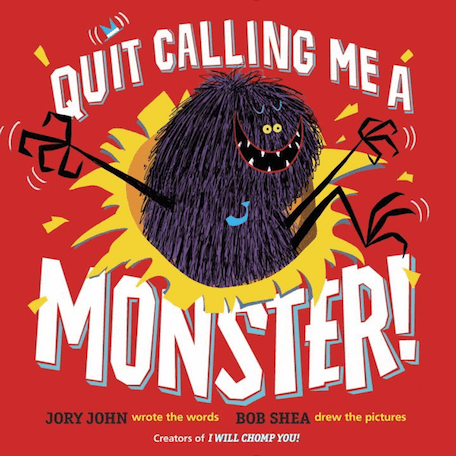
Quit Calling Me a Monster!

Written by Jory John | Illustrated by Bob Shea


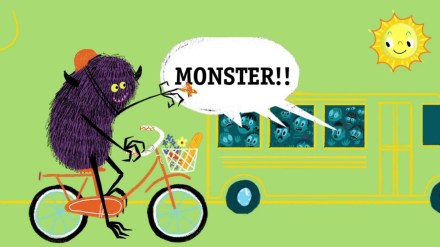
A purple, hairy guy with long stick legs and arms and long bent toes and fingers rides his bike along the street, catching a butterfly on his finger and carefully transporting a basketful of flowers. But all the kids on the school bus see as he passes is the purple, the legs, the arms, the fingers and the toes. And all the guy sees is the wide eyes and fearful expressions of the kids in the windows.

So he stands his ground, craggy hands on hips and says, “Quit calling me a monster! Just…stop it, right this minute!” He’s serious! In fact he throws a bit of a fit, rolling on the ground and spouting, “It really hurts my feelings. I’m no monster!” Just because he may have a few monster-ish qualities like horns and fangs and wild eyes and crazy hair. And yes, he knows he has “a huge toothy smile that glows in the dark.” And, yeah, ok, so he’s not exactly a wallflower and can “roar, holler, scream, whoop, and cackle,” and likes to hide where his discovery will frighten someone most…he still says, “It really bothers me when you call me a monster without even thinking about it.”

celebrate-picture-books-picture-book-review-quit-calling-me-a-monster-interior-art-bus

image copyright Bob Shea, courtesy of Random House Books for Young Readers

Kids are always yelling, “‘Mommy, save me from that monster!” when he’s just trying to shop or complaining that there’s a monster under the bed when he’s just trying to sleep. Can he help it that his claws reach upward or that he growls when he dreams? Does he ever call kids names? Does he ever taunt someone as a “meat snack?” No! And that’s because he’s “a monster with excellent manners!”

Umm…Well, I mean…he doesn’t “mean monster, exactly….” Oh, all right, if you’re going to get persnickety about it, he does have all those monster-ish traits and his parents are monsters, but he really doesn’t “like being called a monster one little bit.” If you want to call him, you can use his name, which is a very respectable Floyd Peterson. Now that that is settled, our purple friend is going to bed…in your closet. So if you hear him snoring in the middle of the night, you can rest assured that there is no monster in your closet, it’s just Floyd Peterson.

Jory John gives hilarious voice to the frustrations of being labeled as someone or something you’re not while also affirming that it’s okay to be who you really are. Snap judgements based on preconceived notions or stereotypes limits a person’s world view and the friends they can make. And what’s wrong with being a “monster” or “Floyd Peterson” or (insert word here) anyway? Kids and adults will laugh as Floyd lists page after page of his monster-ish qualities while also denying that he is, indeed, a monster. The ending is sweet and kid-like and puts to bed fear of the unknown.

Bob Shea’s monster, aka Floyd Peterson, is a frighteningly endearing character that kids will whole-heartedly embrace. Floyd’s coarse purple hair, scrawny legs and arms, and big grin along with his range of personas, from alarming to loveable, will make kids giggle. The bright solid backgrounds put the focus on Floyd and all of his roaring, flailing, and leaping—just as Floyd (and all little monsters) sometimes want and need.

Ages 3 – 7

Random House Books for Young Readers, 2016 | ISBN 978-0385389907

Jory John has a whole gallery of books for you to discover on his website!

Discover Bob Shea‘s “Books for Really Smart Kids” on  his website!

Quit what you’re doing and watch this book trailer!

Frankenstein Day Activity

celebrate-picture-books-picture-book-review-merry-monsters-coloring-page

Merry Monsters Coloring Page 


These two cute monsters want to play, but first they need a little color! Get out your crayons, markers, or pencils and fix them up! Here’s your printable Merry Monsters Coloring Page! Now, it’s your turn – if you were a monster, what would you look like? Draw yourself as a Magnificent Monster!

Picture Book Review

August 29 – Get Ready for Kindergarten Month

celebrate-picture-books-picture-book-review-be-quiet-marina-cover

About the Holiday

Children of kindergarten age are looking forward to starting school like “the big kids,” and teachers all over the country are preparing to welcome their new students on the first day. All the desks or tables have the same supplies laid out, the same chairs pushed in, and the same promise of learning. Are all the kids the same? Yes…and no. Yes: They are all about the same age, wonder what the future holds, and want to make friends. No: they all come with different personalities, different histories, and different talents and abilities. And it is these differences that give each child their unique perspective on the world and will determine their unique contribution to it. Today celebrate each child’s distinct skills and gifts.

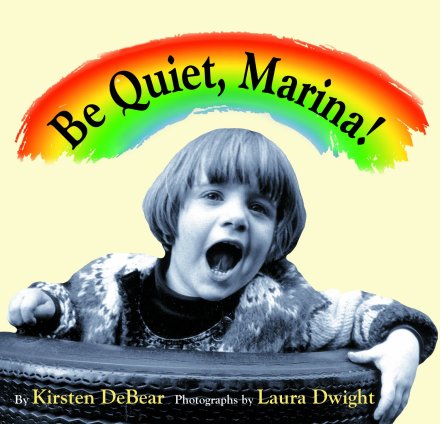
Be Quiet, Marina!

Written by Kirsten DeBear | Illustrated by Laura Dwight


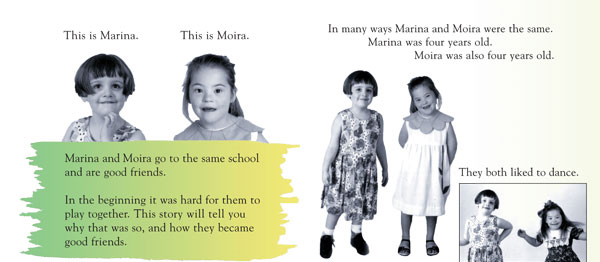
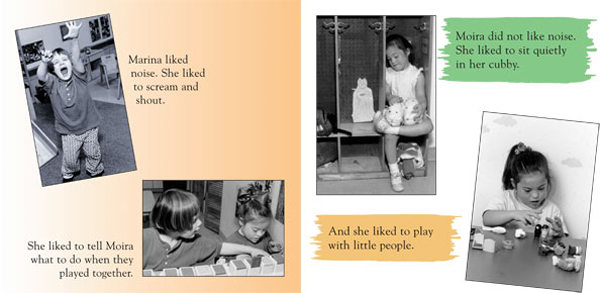
Marina and Moira are four years old and in the same class at school. Marina was born with cerebral palsy; Moira has Down’s Syndrome. They like many of the same things. Both girls like to dance, play ball, dress up, and play with dolls. But when it comes to noises or rushing around, Marina and Moira are different. Marina likes loud noises. She often screams and shouts, and when she and Moira play together, Marina likes to tell Moira what to do.

celebrate-picture-books-picture-book-review-be-quiet-marina-girl's-similarities

Photography by Laura Dwight, courtesy of starbrightbooks.org

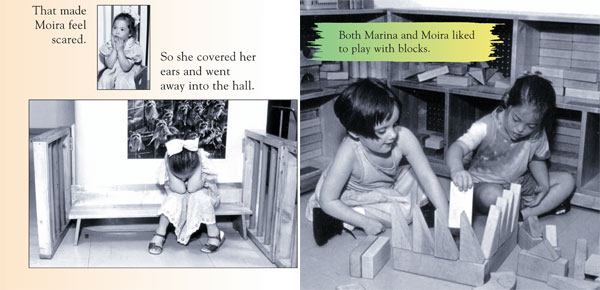
Moira, on the other hand, likes to sit quietly, and she can often be found taking a break in her cubby. She also likes to play alone with the little people figures. While both girls like to take walks outside, Moira stays with the teachers and the other students while Marina runs ahead. One of Moira and Marina’s favorite activities is when the teachers swing the kids in a big blanket. Then each student has to wait their turn. Moira can wait patiently, but for Marina waiting is hard; she gets angry and screams or cries. When Moira hears Marina scream, she feels scared. She covers her ears and leaves the room.

While Moira and Marina like to build towers and castles with blocks together, they have different feelings about cleaning up afterward. Marina doesn’t want to help and shows it by yelling. Moira runs from the room with her hands over her ears. “One day on the playground Moira was on the see-saw. Marina wanted to get on too, but she couldn’t…So she started to scream. She screamed so loudly that Moira covered her ears and walked away. Now Marina could get on the see-saw, but it was no fun alone.”

celebrate-picture-books-picture-book-review-be-quiet-marina-playing-with-blocks

Photography by Laura Dwight, courtesy of starbrightbooks.org

Another day Marina started to get upset while the girls were playing with the telephone. This time Moira didn’t run away. Instead she looked at Marina and said, “Please don’t scream!” Marina listened. She became quiet and the two continued to play together. Later in the week when Marina asked Moira to play, Moira told her she would, but only if Marina didn’t scream. Marina said, “Okay, I won’t.”

The two girls came to an understanding. Instead of being afraid of Marina, Moira now knows she is trying to be friends, and Marina realizes that if she wants Moira to play with her, she can’t scream. And they both know that if they need help they can ask their teachers. Now Marina and Moira are best friends, which means they can have fun playing dolls and building with blocks, dancing and dressing up and even going up and down on the see-saw. And when Marina screams, “‘It’s fun!’” Moira makes a little noise herself and shouts “Be Quiet, Marina!”

celebrate-picture-books-picture-book-review-be-quiet-marina-girl's-differences

Photography by Laura Dwight, courtesy of starbrightbooks.org

With simple, straightforward language, Kirsten DeBear reveals the story of how two little girls with what might be considered opposing personalities overcame their differences to become friends. While drawn to each other, these differently abled girls had trouble playing together. Through perseverance and communication, however, they came to understand each other. DeBear brings honesty and humor to this true story that applies to all children who need to accommodate other’s preferences while staying true to themselves when playing or working in a group. The happy resolution shows that there is room for all in our friendships and our hearts.

Laura Dwight’s black and white photos take a storyteller’s approach to chronicling the evolving friendship between Marina and Moira as they participated in schoolroom activities. The smiling girls are shown dancing, dressing in fancy hats, playing with dolls and a ball, building with blocks, and doing other fun things together. The photographs also depict moments of friction between the girls when Maura becomes upset and screams and Moira covers her ears and runs away. At the end of the book Dwight’s lens captures the experiences that led to better understanding between the two girls and their strengthening friendship.

Readers may recognize themselves as a “Maura” who likes loud noise and exploring on her own ahead of the group, or a “Moira” who prefers quiet and staying close to the group. Through the story of these two very smart little girls, all kids may learn to understand and appreciate themselves and alternate viewpoints.

Ages 4 – 7

Star Bright Books, 2014 | ISBN 978-1595726650

Visit Star Bright Books for a vast array of inclusive titles for children that embrace diverse ethnicities and abilities, promote literacy, and are widely available in 24 languages.

View a gallery of photography work by Laura Dwight on her website!

Get Ready for Kindergarten Month Activity

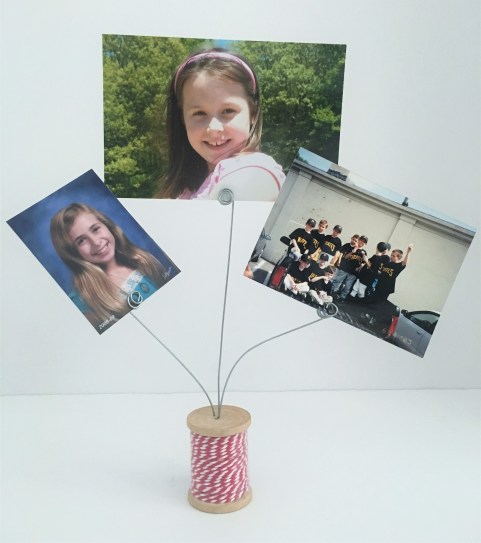
celebrate-picture-books-picture-book-review-threads-of-friendship-photo-holder

Threads of Friendship Photograph Holder


In the same way that thread holds clothes, blankets, and other material goods together, friendship holds people together. Make this easy Threads of Friendship Photograph Holder to keep pictures of your friends close by!

Supplies

  • Wooden Spool of twine, available at craft stores and some discount retailers
  • Thin-gauge wire, no heavier than 18 gauge
  • Small gauge nail
  • Hammer
  • Needle-nose pliers
  • Pencil
  • Photographs

Directions

To make the photograph holders:

  1. Holding one end of a wire with the needle-nose pliers, wrap it around the pencil four or five times
  2. Remove the wire from the pencil
  3. Squeeze the coils of wire together with the needle-nose pliers
  4. Cut the wires to different lengths so the pictures stand at various heights

To make the stand:

  1. Make two or three holes in the center of the wooden spool of twine with the nail and hammer, holes should be about ½-inch deep to steady wire.
  2. Place the coiled wires in the holes
  3. Put photos in the coils

Note:

Even young children can help hammer the nail, place the wire in the holes, and choose photographs. Adults should coil the wire, cut the wire, and help with hammering.

Picture Book Review

August 28 – Pony Express Day

celebrate-picture-books-picture-book-review-you-wouldn't-want'to-be-a-pony-express-rider-cover

About the Holiday

Today’s holiday commemorates the intrepid souls who risked life and limb to bring our ancestors important letters in a timely manner. Towns across America hold special, fun events to remember the riders who took to heart the postal carrier’s motto: “Neither snow, nor rain, nor heat nor gloom of night, stays these couriers from the swift completion of their appointed rounds.” Find a local festival or maybe reenactment and have a little Old West fun!

You Wouldn’t Want to be a Pony Express Rider! A Dusty, Thankless Job You’d Rather Not Do

Written by Tom Ratliff | Illustrated by Mark Bergin


So, you’re 16 years old and lookin’ for a job. There’s not much out there, and the pay stinks. Then you see a broadside advertising jobs with a newfangled technology. The description seems pretty good, exciting even—just up your alley. “WANTED: Young, skinny, wiry fellows not over eighteen. Must be expert riders, willing to risk death daily. Orphans preferred.” And here’s the kicker—you make $25 per week! Heck most people only make $25 a month!

You decide to apply for this Pony Express position, and your life takes off in a whole new direction—to California, to be exact! William Russell, Alexander Majors, and William Waddell own the company. It’s real name is the Central Overland California and Pike’s Peak Express Company, but that’s quite a mouthful, so the enterprise is fondly known as The Pony Express. It’s a rapid mail-delivery system that promises letters and packages will go from St. Joseph, Missouri to Sacramento, California (2,000 miles/3,200 km) in only 10 days. Can you imagine?!

Planning begins in January of 1860 and is completed in less than four months. Hundreds of horses are bought and about just as many riders are trained (they have to learn how to change horses in two minutes or less). Along the route 157 relay stations are also constructed. All this is to supply communication for the many pioneers who are steering their Conestoga Wagons out West, battling floods, snow, disease, and those pesky obstacles called the Rocky Mountains to find a better life for themselves and their families. 

You’re young, enthusiastic, and want to be part of this new landscape. You strap on your company-given “two revolvers, rifle, and Bowie knife,” have your horse shod, and take the Rider’s Oath: “While in the employ of A. Majors, I agree not to use profane language, get drunk, gamble, treat animals cruelly, or do anything else that is incompatible with the conduct of a gentleman.” Well, Dang! (Oops!)

The route West is fraught with danger, so forts and trading posts pop up along the way to protect and supply Pony Express riders. The pioneers also keep an eye out for you, so it’s handy to get to know them. While you ride you can be assured that you have the latest in mail-carrying gear. A special saddle modeled on those used by Spanish vaqueros (cowboys) is more comfortable for the long miles, and a mochila (a leather pouch that fits over the saddle) is stuffed full of the mail.

celebrate-picture-books-picture-book-review-you-wouldn't-want'to-be-a-pony-express-rider-interior-art

Image copyright Mark Bergin, courtesy Scholastic

You were right about the job being exciting! Every day brings a new experience: dehydration, heat exhaustion, blizzards, frostbite, floods, 6-to-10-hour hard rides, plus you’re a target for outlaws and bandits. It’s worth it all, though, to bring a smile to someone’s face when they open a letter from their far-away sweetheart—and all for only $5.00 a letter (that’ll be about $120 in 2016). Just be thankful it’s not a business letter—that’ll set ya back $30, which is…uh…umm…well, a heck of a lot (oops!).

In 1844 some upstart named Samuel F. B. Morse invented the telegraph that uses a code of electrical signals to deliver messages. It only takes 5 years for all the major cities to be connected, and as more people move west, so do the poles and electrical wires.”In June 1860, congress authorizes construction of a telegraph line to California. If the telegraph ever reaches the West Coast, you will most likely be out of a job.” One thing about this Morse Code, though. Because “messages sent long distances have to be copied and recopied several times, mistakes are common.” Betcha in the future, though, there will be some kinda automatic correction system, and errors will be left back here in the past.

It’s 1860—a presidential election year—and the campaign has been ugly and hard fought. The country is divided, and fast delivery of the election results is crucial to keeping the United States together. You are part of saving the country, as the news of Abraham Lincoln’s victory reaches California from Washington in only 7 days and 17 hours—a cross-country delivery record! Within a year, the U.S. is at war and danger looms for the Pony Express riders. To protect the riders and the mail, the Overland Stage Company (soon to be known as Wells Fargo) and their enclosed stagecoaches take over.

And the Pony Express? Well, as you probably know, it’s losing money and limping along, what with the competition and the war and all. In October 1861 the transcontinental telegraph is completed and the Pony Express stables its horses. And you? You’ll be fine. With all the experience you’ve gained, you can easily find a job as a scout to guide folks over the trails to their new Western homes.

These “You Wouldn’t Want to Be…” series of books brings history to life by revealing the seamy side of events—and aren’t those really the most fascinating? Tom Ratliff corrals a heap o’ info on the Pony Express and the pivotal changes the United States experienced during the 1860s. While the text trots out fun sidebars, the short chapters are loaded with concrete facts about the development of the American West as it grappled with the need for faster and better communication.

Mark Bergin depicts the concepts presented with bold, vivid cartoon-inspired illustrations of the pioneers, riders, inventors, and townspeople who made up the Pony Express system. The people’s faces register well-earned skepticism, fright, and weariness, but also pride and excitement to be on the cutting edge of technology. Maps portray the 2,000-mile route from America’s middle to its western sea.

The Pony Express may be long gone, but as this book affirms, the more things change the more they stay the same. Teachers, researchers, and anyone interested in history will want to hoof it to add You Wouldn’t Want to Be a Pony Express Rider! to their collection.

Ages 7 – 10

Scholastic, Inc., 2012 | ISBN 978-0531209479

Pony Express Day Activity

celebrate-picture-books-picture-book-review-pony-express-coloring-page

Pony Express Mail Carrier Coloring Page


Can you color this printable Pony Express Mail Carrier Coloring Page as quickly as a rider could deliver the post? You’ve got 10 days—so don’t rush!

Picture Book Review