June 12 – National Rivers Month

celebrate-picture-books-picture-book-review-otters-love-to-play

About the Holiday

Rivers are beautiful, provide recreation, and are crucial to our water supply. Did you know that in the United States 65% of our drinking water comes from rivers and streams? This month environmentalists and others promote awareness of the importance of keeping the nation’s rivers pollution free to protect the fish and animals that call them home and increase enjoyment for all. To help the cause, join a volunteer river clean-up crew, help monitor water quality, or learn more about your local river system. Whether you like to fish, swim, boat, or just laze on the bank, June is the perfect month to get out on a river! You might even see some otters—the subject of today’s book!

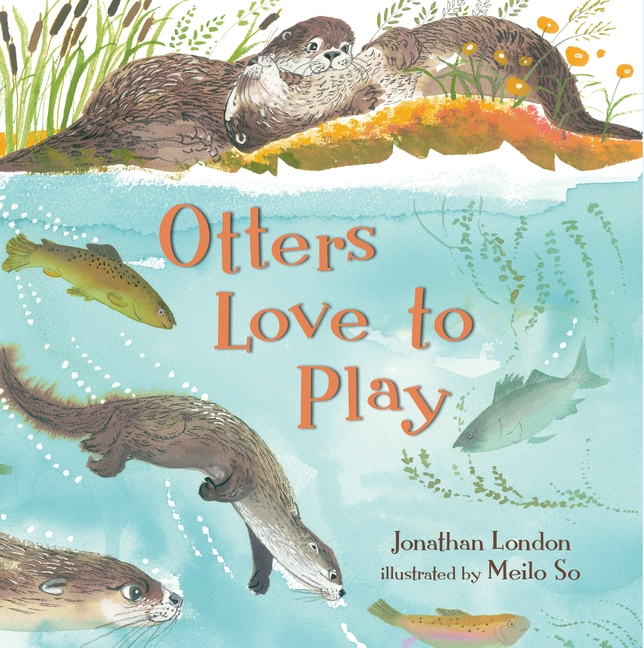
Otters Love to Play

Written by Jonathan London | Illustrated by Meilo So


It’s spring and two otters have moved into an abandoned beaver lodge to start a family. In a soft nest of moss, leaves, and grass the mother otter gives birth to three pups. The pups first open their eyes to the world when they are five weeks old. At two months old they’re ready to come out of the den to play. Playtime is fun, but for the baby otters it’s also work. Running, twisting, wrestling, and matches of tug-of-war teach valuable hunting skills and solidify family bonds.

As spring turns to summer, the pups’ thick waterproof coats grow in, and it’s time for swimming lessons to begin. There are no floaties here! The mother otter simply grabs her charges by the scruff of the neck and drops them into the river. Their mother shows them how to dive and glide and come to the surface as they follow her single file. “Within days, the otter pups gracefully spin and flip and swish like underwater acrobats.” Again and again “they scramble up a mud slide and SLIIIIIIIIIIIDE back down to the water—Ka-Spash!”
celebrate-picture-books-picture-book-review-otters-love-to-play-in-autumn

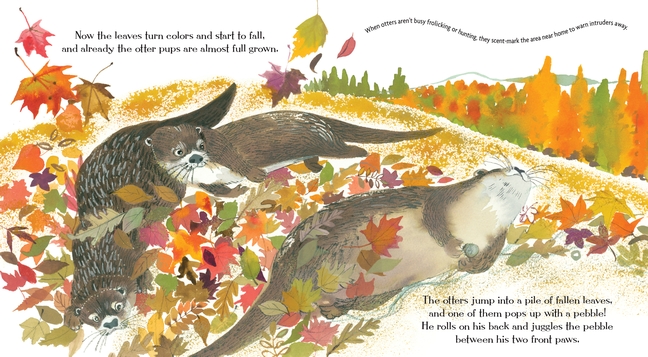
By the end of the summer the pups know how to catch small fish and how to nudge out frogs, crayfish, turtles, and snakes from their hiding places among the rocks. Autumn brings more opportunities for fun as the nearly full-grown pups tumble in the fallen leaves. Even winter’s blasts don’t deter the otters. With their thick fur they roll in the snow and catch fish in the icy river water.

But an ominous shadow appears on the fresh snow as the pups belly-slide down a snowbank. Something is waiting and watching…. So too is mother otter. Screaming and hunching she “slides across the snow and with a terrible GRRRROWL…scares the fox away!” Throughout the winter the otters snuggle in their den, and when the rainy spring makes muddy river banks, the otters come out and speed down the slippery slide “because otters love to play!”

You can’t help but love otters. Watching them dive, swim, and frolic just puts a smile on your face. And what’s more these sleek river creatures are fascinating animals! Jonathon London has written a story that captures the spirit and exuberance of one otter family while incorporating intriguing facts about their dens, birth statistics, purposeful play, hunting techniques, protective fur, predators, and defenses—did you know that otters can slide on snow at speeds up to 18 miles (29 kilometers) per hour?! London’s lyrical journey through the first year of an otter’s life makes captivating reading for young children just navigating the world themselves.

Meilo So’s enchanting otter family will delight readers. Images of the pups somersaulting, sliding, splashing, and swimming charmingly depict the sleek, supple movements of these frisky animals. Their smooth coats, rendered in soft browns with white and black accented texture, and their mischievous, ever-present smiles are realistically portrayed, inviting kids to reach out and pet them. So’s river scenes are beautiful—the pale blue water reflects deep gold and green trees, pink and yellow wildflowers and delicate green grasses flutter along the river bank, and the depths of the underwater world swirl with muted sage greens and blues as the otter pups frolic among gray- and olive-hued fish. Autumn comes with fiery orange and purple leaves, and winter falls shivery white as the russet fox is chased away.

Otters Love to Play would be a lovely gift for any child and a welcome addition to any classroom or school library.

Ages 4 – 8

Candlewick Press, 2016 | ISBN 978-0763669133

Visit Jonathan London’s website for more books by this prolific author.

View more books and art by Meilo So.

National Rivers Month Activity
celebrate-picture-books-picture-book-review-otter-coloring-page

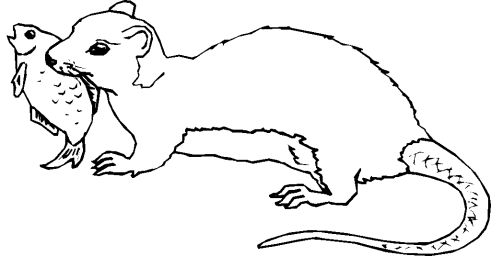
Otter Coloring Page


You “otter” love this coloring page, with its cute river creature who has just caught dinner! You can color it with pencils, crayons, or markers or consider making a collage with bits of paper, cloth, or leaves and sticks. Give the otter a den to snuggle in and a river for frolicking! Here’s your Otter Coloring Page!

May 28 – It’s Get Caught Reading Month

celebrate-picture-books-picture-book-review-baby-wren-and-the-great-gift

About the Holiday

You can never read too many books! This idea is definitely supported by the Get Caught Reading campaign that makes people aware of all the benefits of sitting down with a fantastic book—whether it’s fiction, non-fiction, drama, or poetry. To celebrate this holiday, get involved with a literacy program, a book drive, or thank a teacher or librarian for always supplying you with great reads!

Baby Wren and the Great Gift

Written by Sally Lloyd-Jones | Illustrated by Jen Corace


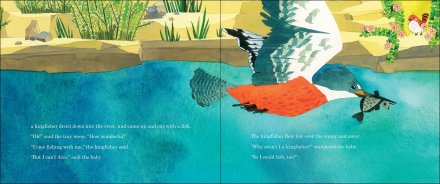
From a narrow crevice a little brown wren peeks out of her nest. Her vantage point gives her a view of all the wonderfulness around her. Monarchs flutter in the Milkweed, breezes whisper in the switch grass, and the glittering river flows along. Emboldened, the baby wren hops onto the canon ledge just as a kingfisher dives down to the river and captures a fish.

celebrate-picture-books-picture-book-review-baby-wren-and-the-great-gift-in-the-nest

Image copyright Jen Corace, text copyright Sally Lloyd Jones. Courtesy of Zonderkidz

“Oh! How wonderful!” the little wren exclaims. The kingfisher invites her to come along, but the wren tells the bigger bird that she can’t dive. As the kingfisher flies away, the wren wonders why she can’t fish too.

Next, two frisky ring-tailed cats cartwheel by. “Oh, how wonderful!” little wren says. The ring-tails want her to play with them, but the wren says that she doesn’t have a ring tail, so the cats cartwheel away leaving the baby wren wondering why she isn’t a ring-tail cat who can cartwheel.

celebrate-picture-books-picture-book-review-baby-wren-and-the-great-gift-kingfisher

Image copyright Jen Corace, text copyright Sally Lloyd Jones. Courtesy of Zonderkidz

Just then some sunfish splash in the water nearby. The little wren also declines their invitation to play, saying that she can’t swim. As the sunfish hurry down the river, the wren wonders why she isn’t a sunfish who can swim. Overhead two eagles glide on the winds of a gusty storm. “Oh, how wonderful,” the wren says. “Come and see the thunderclouds,” the eagles tell her. But the baby is afraid of the big storm, and the eagles soar higher and higher and away. Watching them, the wren regrets that she isn’t brave and wonders what she can do that is wonderful.

celebrate-picture-books-picture-book-review-baby-wren-and-the-great-gift-sunset

Image copyright Jen Corace, text copyright Sally Lloyd Jones. Courtesy of Zonderkidz

Suddenly, the sun paints the canyon pink. The baby wren looks and looks and looks. The beauty of the sky and the canyon “bumped into her heart, it dazzled in her eyes, it pushed on her throat until the tiny trembling bird with all her tiny might sang by herself a song.”  Her glorious carol echoes through the canyon, and the eagles soaring overhead call to her: “‘You are only little, but your song fills the whole canyon.’” And as the kingfisher, the ring-tailed cats, the sunfish, and the eagles listen, the little wren fills the air with singing.

Sally Lloyd-Jones’ inspirational story is perfect for this time of year when baby birds are just leaving the nest and children are moving on to new grades or new experiences. Jones’ lyrical and gentle tale offers comfort to those wondering just where they fit into the world. As baby wren discovered, everyone has innate talents that shine when the time is right.

Jen Corace’s vibrant illustrations of the baby wren’s canyon home employ bright yellows and vivid contrasting greens and blues to evoke the “wonderfulness” that so captivates the little wren. In each spread the baby bird is depicted as the tiny creature it is surrounded by vast mountains and other, larger animals, but as her song flows out of her in a soaring collage of all the colors and silhouettes of her new-found friends her stature grows. She is happy with her place in the world.

Ages 4 – 8

Zonderkidz, 2016 | ISBN 978-0310733898

Discover more about Sally Lloyd-Jones and her books on her website!

View a portfolio of illustration work by Jen Corace on her website!

View the Baby Wren and the Great Gift book trailer!


Get Caught Reading Month Activity

celebrate-picture-books-picture-book-bird-in-nest-coloring-page

Baby Bird Coloring Page


Baby birds love the cozy safety of their nests as much as you like snuggling under the blankets with a good book. Print the Baby Bird Coloring Page and have fun with it—instead of just coloring it, how about making a collage? You can attach different colors of torn paper to decorate the bird and use grasses or twigs for the nest! Use your unique creative talents to make a one-of-a-kind picture!

Picture Book Review

May 13 – Fintastic Friday: Giving Sharks, Skates, and Rays a Voice

celebrate-picture-books-picture-book-review-discovering-sharks

About the Holiday

Fintastic Friday was established by Whale Times to bring awareness to and promote advocacy about conservation efforts to save some of the ocean’s most magnificent creatures. Whale Times, Inc. was created in 1995 to provide kids with easy access to marine science information. Their mission is to create a connections between the ocean, ocean research, researchers, and students through formal and informal educational programs. Respected by educators, marine scientists, and other scientific organizations, Whale Times inspires students to consider careers in marine science and work toward solutions for protecting our ocean environments. Whale Times invites kids all over the world to get involved to save sharks through three activities:

  • Zone It! Help make the entire ocean a shark conservation zone by making others aware of the dangers to shark populations and printing out the special poster found at whaletimes.org.
  • Thank Them in a Big Way! Through letters or personal conversations, thank the scientists and conservationists working to protect sharks
  • Sharks in the Park Rally! Consider holding a shark rally or party to make others aware of shark and ocean related conservation issues

Discovering Sharks

Written by Donna Parham | Illustrated by Julius T Csotonyi


When you pick up Discovering Sharks, you’ll immediately know you’re reading a unique book. The cover, with the texture and heft of shark skin, features a great white, teeth bared, eye glinting, bearing down on you, the reader! But don’t be afraid—open this book to pages filled with incredible illustrations and information on one of the most fascinating species to swim the seas. Here are just a few:

Carcharocles Megalodon: living during the Miocene and Pliocene Periods, this mammoth shark grew to 50 feet in length and had serrated teeth, some of which were 7 inches tall! These sharks dwarfed the whales, sea turtles, other sea creatures that made up its meals. Even land animals that were unfortunate enough to swim into it’s path were gobbled up.

Cladoselache: This smaller shark grew to a length of 4 to 6 feet and lived during the Devonian Period. It’s a good thing dentists weren’t around back then because this shark would have been their worst nightmare! With a mouth at the tip of its snout and ragged, jagged teeth, this shark was great at grabbing food, but not so good at chewing it.

Whorl-Tooth Shark: With a tooth shaped like the blade of a circular saw growing vertically from the shark’s lower jaw, the Whorl-tooth is perhaps one of the oddest sea creatures to ever live. No amount of orthodontia could ever fix those teeth!

A section on Fearsome Sharks comes next. While you may think that all sharks look scary, very few actually pose danger to people. If you see any of these, however, you better get out of the way!

Tiger Shark: Sporting dark vertical stripes along its back and sides, this 20-foot long monster doesn’t talk trash—he eats it! Scarfing up ocean waste such as “plastic bags, barrels, cans, and pieces of coal,” they are not adverse to snacking on “chickens, pigs, donkeys, and monkeys that fall off boats or go for a swim.” It actually seems there is nothing these sharks won’t eat!

The Great Hammerhead: With its distinctive hammer-shaped snout, this shark hunts prey in a most unusual fashion. Along its wide head are tiny sensors that pick up the small electrical pulses emitted by every kind of creature—even you! Once the shark senses the electrical field, it’s probably too late!

Blacktip Shark: If this whole shark gig doesn’t work out, this unusual giant may find a place in a ballet troupe. While feeding, this quick swimmer “sometimes…leaps free of the water and spins in the air—once, twice, or three times—before falling back into the sea.” Quite a performance!

A chapter on Endangered Sharks are up next. Nearly one-third of shark species are considered endangered or threatened due to environmental and human causes. Sharks are captured for food, for their tough skin, and for the oils and vitamins in their liver. In some places shark fin soup is a delicacy, served for special occasions. Huge trawlers also catch sharks in their fishing nets and on lines. This “bycatching” is a major reason behind the decline of shark populations. Here are two of the species on that list:

Daggernose Shark: With its flat, razor-sharp nose this sleek, 5-foot-long beauty cuts through the shallow waters off the Northern South African coast. It is currently on the Critically Endangered list, which means it will likely become extinct in your lifetime.

Whitespotted Izak: Tiny by the standards of fiercer sharks, this Izak is only 12 inches long. Its name comes from the white spots on its body whose only purpose seem to be breaking up its brown spots. Now on the Endangered list, this striking species has nearly vanished.

Deepwater Sharks may be some of the most unusual sharks of all. Sporting eye-popping adaptations to their forbidding environments, these sharks are like nothing you’ve ever seen before! Here are a couple:

Bahamas Sawshark: Carrying its own double-edged saw in front of it, this shark found in the waters near Cuba, Florida, and the Bahamas strikes with stunning force.

Viper Dogfish: You might wonder where this shark’s fins went! The stubby body on this shark makes it look more like a torpedo than a shark. Only recently discovered in 1990, the Dogfish swims the depths off the coasts of Japan and Hawaii

The last section is reserved for “Superlatives”—sharks that demonstrate unique qualities: most warm-blooded, biggest, most likely to get stepped on, most unusual feeding method, most mysterious, and more.

This is just a small sampling of the absorbing facts and species found in Discovering Sharks. Donna Parham offers statistics, scientific data, and trivia about each shark in a conversational, riveting way that will keep kids glued to this book and wanting to return again and again.

The incredible work of natural history illustrator Julius T Csotonyi will take your breath away anew with each page. The vivid colors and textures of the sharks reefs, sea plants, and other fish are so intricately mastered that you will feel as if you’re snorkeling in the depths as well. Lit with the sun, the clear ocean waters show off the beautiful markings of each species, and the murky sea bottom holds unfathomable mystery.

Shark lovers, dinosaur aficionados, monster mavens, and more creature enthusiasts will want Discovering Sharks in their library.

Ages 5 and up

Cider Mill Press, 2016 | ISBN 978-1604336047

Gardening for Wildlife Activity

celebrate-picture-books-picture-book-review-find-differences-puzzle

Guess the Garden Differences


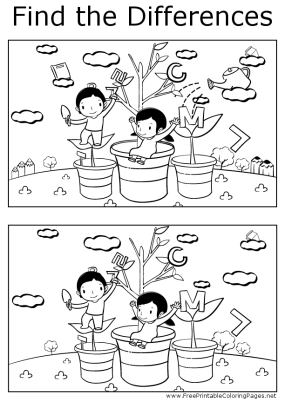
No two gardens are exactly alike. Can you find the differences in the two pictures of kids having fun in their gardens? Print out the Guess the Garden Differences puzzle and have fun!

May 9 – It’s Get Caught Reading Month

celebrate-picture-books-picture-book-review-the-whisper

About the Holiday

Supported by the Association of American Publishers (AAP), Get Caught Reading Month promotes literacy and reminds people of all ages how much fun reading is. Begun in 1999 by former Congresswoman Pat Schroeder, President and CEO of AAP, the initiative brings together publishing industry executives, authors, illustrators, teachers, librarians, politicians, celebrities, and readers to spread the word about the joys of books. To join the celebration, take a picture of yourself or a friend reading, hold a book drive, challenge yourself to a reading goal, and/or read to someone else.

The Whisper

By Pamela Zagarenski


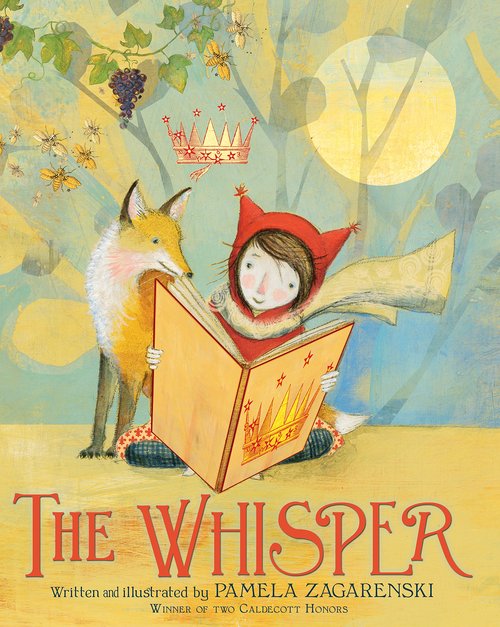
A little girl loves stories and the magical realms they can take her to. One day while waiting for school to be dismissed, she spies a book on a shelf. Her teacher allows her to take it home with her, and the little girl happily runs off with it when the clock strikes 3:00. On the way home, she doesn’t notice that all the letters are escaping from the book or that a wily fox is catching them in a net.

At home she secludes herself in her room, excited to read the mysterious book. She turns the pages, awed by the beautiful pictures. But by the time she has finished, she has tears in her eyes. “Where were the words? Where were the stories?” The girl flips through the book again, but this time she hears a small whisper: “Dear little girl, don’t be disappointed. You can imagine the words. You can imagine the stories.”

The whisper seems so knowing that the girl does at it suggests. She turns to the first page where a blue bear followed by a beekeeper walks under a honeycomb sun toward a brown bear. The girl stares at the picture and thinks of a title: Blue Bear’s Visit. Her story begins: “Blue Bear arrived on the first day of spring. He promised…”

Warming to the idea of creating stories, the girl examines the second picture. She notices the same white rabbit that was in the first picture. In the foreground a “magnificent ox” is listening to a man whispering into its large, soft ear. The Secret, the little girl titles this story, which starts: “Mr. Ox, you must please promise not to tell anyone, but we need your help. Last week…”

With the third picture the words tumble out more easily, forming sentences that give life to the massive white elephant, regal lion, and that rabbit again who are traveling the sea in a long, open boat. The Quest, she calls it. In Tigers Prayer, preparations are being made: tea is brewing, a clown with a pointed hat plays his accordion, a windhorse jumps through hoops, and the rabbit rides a golden ring as a lion hears what Tiger has to say. A Birthday Party comes next, and it seems Pan has planned a very secret party. An owl perches in the crook of a tree asking for the password with a “Hoo, Who?” which is answered quickly because the vanilla cake with raspberry filling and vanilla cream frosting holding 6 candles must be delivered.

The Magical Cloak sees the little girl’s imagination truly take flight as she decides the man in the “elaborate coat” is a wizard or magician whose bubbles come to life once released from the blower. Enormous whales now fill the harbor. They are beautiful, but something must be done….Next, hurry to meet the owl! He is picking up passengers at midnight. But what does the golden key in his beak open? Only the story The Golden Key locked in the little girl’s mind will tell.

Hours go by as the little girl creates tales for each picture in the book. As the night grows late, she sleeps, carried into slumber on dreams woven from the pictures and stories she imagined. When she wakes up, the girl wishes to spend more time with her new friends, but it’s time for school so she gathers up the book and hurries away.

On the path to school she meets a fox who is carrying a bag. “Excuse me, little girl,” says the fox. “I believe I have the words to your book.” The fox then explains how he caught the words as they spilled from the pages the day before. The fox gives her his parcel, but asks for a favor. The girl is happy to oblige and lets the fox stand on her shoulders to reach a bunch of grapes dangling from a nearby vine.

The girl rushes into school and apologizes for being late. She relates the story of the fox and the words and the magical night she has spent making up tales for the pictures in the book. “I have so many stories to tell you,” says the girl to her teacher. “‘I can’t want to hear,’” the teacher replies with a smile.”

Opening a book by Pamela Zagarenski is to fall into an alternate realm of such beauty and imagination that you forget the real world exists.  Her paintings are composed of rich, regal hues swirling with images and designs that overlap and float to create the kind of experience only the deepest, most complex dreams allow. The characters and details follow page to page uniting the pictures and, subtly, the stories the little girl discovers in them: The teapot, once introduced, waits under a tree on the next page and rides the waves of the whale-filled sea in the next. The bees and the rabbit are constant companions on each spread, and the animals will fill the reader with awe.

The little girl’s imagined stories are tantalizing with just the right mix of the mysterious and the tangible to entice readers to add more. The frame of the Aesop Fable The Fox and the Grapes is inspired and could lead to a conversation about how “life is what you make it.”

The Whisper is a book readers will want to linger over and dip into again and again, and would be especially fun on those days when there’s “nothing” to do. It makes a beautiful gift for any occasion.

Ages 4 – 9 (this book would also appeal to adults)

Houghton Mifflin Harcourt, 2015 | ISBN 978-0544416864

Gardening for Wildlife Month Activity

In addition to Get Caught Reading Month, May is Gardening for Wildlife Month. It’s the perfect time to celebrate the joys and colors of spring and enjoy the many plants, flowers, and wildlife nature provides. Whether your garden is small or large, just being planted or already blooming, you can be mindful to make yours wildlife friendly to help and protect the environment.

This week’s crafts and activities will revolve around gardens and plants of all types. I hope you enjoy them!

celebrate-picture-books-picture-book-review-vase

Painted Bottle Vase

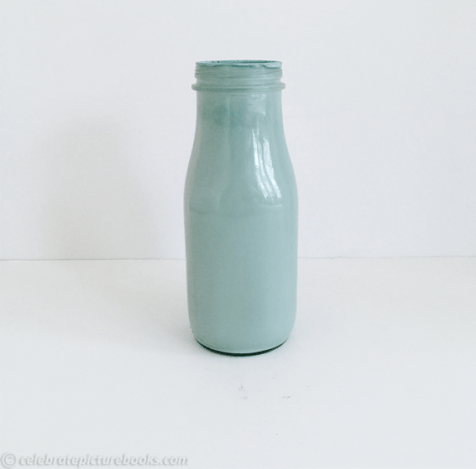
Do you often pick up a smoothie or other drink at the grocery store and then just throw away the glass or plastic bottle? Those containers, with their elegant shapes, make beautiful vases with just a little paint!

Supplies

  • Plastic or glass bottle
  • Multi-surface craft paint in your favorite color
  • Paint brush
  • Wax paper

celebrate-picture-books-picture-book-review-vase-top

Directions

  1. Wash and thoroughly dry your bottle.
  2. Pour 3 to 5 tablespoons of craft paint into the bottle
  3. Invert the bottle on the wax paper
  4. Let the paint drip down the sides of the bottle, this may take several hours to overnight
  5. When the paint reaches half-way down the sides of the bottle, you can “help it along” with the paintbrush, filling in any empty spaces
  6. Let the bottle sit, inverted, until the paint dries. This can take one to several days, depending on the atmosphere.
  7. When the paint is dry, use the vase for artificial flowers.

Join me tomorrow to see how to make flowers to go in your vase!

Picture Book Review

May 1 – Mother Goose Day / Children’s Book Week

celebrate-picture-books-picture-book-review-mother-bruce-cover

About the Holiday

Incredibly, the term “Mother Goose” goes back to the 1650s to describe rhymes such as Baa Baa Black Sheep, Here We Go Round the Mulberry Bush, Jack and Jill Went up a Hill, and The Old Woman Who Lived in a Shoe. Fairy tales such as Cinderella and Little Red Riding Hood also came under Mother Goose’s wing. While all of the rhymes are not as familiar to today’s children, many are still popular and their influence can be seen in current books, movies, and TV shows. Mother Goose Day was established in 1987 to highlight these stories and keep them alive for today’s kids. To celebrate, read some Mother Goose tales—either as originally written or in fractured form.

This first week of May also celebrates Children’s Book Week, which was established in 1919 to promote literacy awareness and the joy of reading. As the longest-running national literacy movement in the country, Children’s Book Week holds, sponsors, and encourages events in schools, libraries, bookstores, homes, and wherever young readers and books connect!

Mother Bruce

By Ryan T. Higgins


It’s a good thing Bruce lives by himself. He’s a grumpy grizzly who likes nothing. If it’s sunny he’s grumpy. If it’s raining he’s grumpy. And don’t even get started on how he feels about cute fuzzy animals. There is one thing he likes, though, and that’s eggs! Yummy eggs prepared many ways from recipes Bruce finds on the Internet.

celebrate-picture-books-picture-book-review-mother-bruce-goslings

Copyright Ryan T. Higgins, 2015, courtesy of Disney-Hyperion.

One day a most mouth-watering recipe pops up on the screen—hard-boiled goose eggs drizzled with honey-salmon sauce. Bruce heads out with his own personal shopping cart to collect the ingredients. He ingeniously catches some salmon and raids a local beehive (this carnivore’s a locavore, you see). Next he pays a visit to Mrs. Goose. He takes her eggs after determining that they are free-range organic.

At home Bruce puts the eggs in his special pot and starts a fire in the stove. But the fire fizzles, forcing Bruce to make a visit to the wood shed. When he comes back, his lovely breakfast has hatched! And what’s worse, the little goslings think Bruce is their mother! Bruce stares into those sweet eyes gazing back at him and decides…to have buttered goslings on toast. But those little peepers just won’t cooperate, and for some reason Bruce has lost his appetite.

He gathers up the goslings in his shopping cart and wheels them back to their nest only to find that their mother has already flown south for the winter. Bruce leaves them in the nest anyway and heads for home. But it’s too late—the baby geese have already imprinted on Bruce, and they tag along happily after him. Bruce is stern with them. He roars. He tries to hide out in a tree. But it’s no use; he’s stuck with them.

celebrate-picture-books-picture-book-review-mother-bruce-painting

Copyright Ryan T. Higgins, 2015, courtesy of Disney-Hyperion.

Bruce rises to the challenge, though. He gives up his space in the pool, teaches them how to paint, feeds them, and transports them in a specially-made baby carrier. As spring turns to summer and then fall, Bruce watches his geese grow from “annoying baby geese” to “stubborn teenage geese” to “boring adult geese.”

Finally, one day Bruce spies other goose families flying south and knows his time has come! He can get rid of those geese and take a long, well-deserved nap. Bruce explains migration to his geese, but they don’t quite get it, coming to him dressed in winter coats and hats. Hmmm…some creativity is needed. Bruce tries slinging them northward and sending them flying in remote-controlled planes, but the geese just hug him tighter.

Resigned to his fate, Bruce packs his bag and four smaller ones for his charges and boards a bus for Miami. “Now every winter Bruce and his geese head south together.” They wear floral shirts, and as his “kids” play in the sand, Bruce “dreams of new recipes—recipes that don’t hatch.”

celebrate-picture-books-picture-book-review-mother-bruce-slingshot

Copyright Ryan T. Higgins, 2015, courtesy of Disney-Hyperion.

Ryan T. Higgins’ Mother Bruce is an endearing story of dislike at first sight. Of course no one—not even a grumpy, loner bear like Bruce—can resist the sweet, loving faces of youngsters forever. Fortunately for readers, Bruce holds out longer than most, his transition providing giggle-inducing scenarios on every page.

Higgins’ illustrations are loaded with visual jokes, cultural references kids will love, and four of the cutest clueless geese around. Depictions of Bruce masterfully mix his gruff, bothered exterior with the big softie that lies underneath. Bruce’s solutions to his plight are clever and funny. There may be no better Mother Goose than Bruce!

Ages 4 – 8

Disney-Hyperion, 2015 | ISBN 978-1484730881

Mother Goose Day Activity

Screen Shot 2020-05-01 at 2.28.23 PM

Mother Goose Coloring Page


Mother Goose Rhymes are fun to learn and share! Here’s a picture of Mother Goose and her goose for you to color!

Mother Goose Coloring Page

Picture Book Review


April 24 – It’s National Garden Month

picture-book-review-up-in-the-garden-and-down-in-the-dirt

About the Holiday

April is the month when the earth comes alive again after a long winter! Flowers bloom in brilliant colors, trees bud and blossom with pale, green leaves, and the birds and animals prepare for new life to come. Today enjoy the warmer weather, plan a garden or flower bed, or visit a nursery or park and take in the sights and smells of spring!

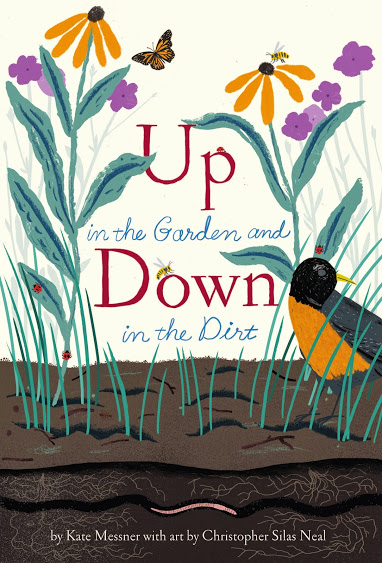
Up in the Garden and Down in the Dirt

Written by Kate Messner | Illustrated by Christopher Silas Neal


Snow still blankets the ground as a little girl and her Nana survey their garden plot. The girl’s head is full of dreams of the bounty to come. As the days warm and the wind whistles, the girl and her Nana dig in the mud. “’It’s not quite time,’” says Nana. “’Down in the dirt, things need to dry out and warm up.’” Her granddaughter is curious about what’s below.

Down in the dirt, Nana tells her, a whole world of insects are already working. Up above, the two gardeners are working too—gathering scattered twigs, removing weeds, and spreading compost.

Down in the dirt, pill bugs chew dead leaves, rolling into tight balls when poked. Up in the garden planting is taking place, the seeds carefully snuggled into beds and watered. As peas and other early plants sprout, bees pollinate and wasps hover.

Down in the dirt earthworms tunnel, enjoying the cool soil. Up in the garden the girl and her Nana rest in the shade then play in a sprinkled shower. Down in the dirt the water soaks deep, feeding the squash plants’ roots.

The summer is progressing and up in the garden tomatoes and beans are ripe for eating. Down in the dirt a robin finds a meal too. Up in the garden there’s so much to harvest. Nana and her granddaughter work until dark, sharing the garden with bats and June bugs. With nightfall a skunk finds grubs and cutworms down in the dirt.

The air is turning cooler up in the garden. Pumpkins turn orange under towering sunflowers while down in the dirt a spider weaves her sticky web. As Autumn wanes it’s time for the final garden harvest. Down in the dirt the insects know it too; they scurry to gather food.

Up in the garden and down in the dirt everything is prepared for winter. As snow once again blankets the garden plot, the girl and her Nana, the earthworms and pill bugs, the bees, and the skunk are all waiting for spring to come again.

Kate Messner’s lyrical paean to gardening is a wonderful way to introduce children to the changing seasons and how nature works together. Comparing and contrasting what gardeners do up above as they plant, tend, and harvest their crops to the work insects and animals perform down below emphasizes the interconnectedness contained in even a small plot of land. Messner’s language is beautifully evocative—the snow is sleepy, brittle stalks snap and are rustly when gathered, chickens squabble and scratch, newly planted seeds snuggle in the dark, pumpkins blush orange, and sunflowers bow to September.

Christopher Silas Neal illustrates the changing garden with striking up-close, ground view images of the plants and creatures that call the garden home. Vibrant green grasshoppers, brilliant yellow sunflowers, deliciously red tomatoes, soft pink worms, scruffy backyard animals, and more join a sprightly Nana and her curious granddaughter in soil so dark and fertile that any gardener would be envious.

The final pages include more information on the creatures found in the book, a list for further reading, and an author’s note. Up in the Garden and Down in the Dirt would be a welcome and special addition to any budding gardener’s or outdoor lover’s library.

Ages 5 – 9

Chronicle Books, 2015 | ISBN 978-1452119366

National Garden Month Activity

celebrate-picture-books-picture-book-reviews-garden-word-search


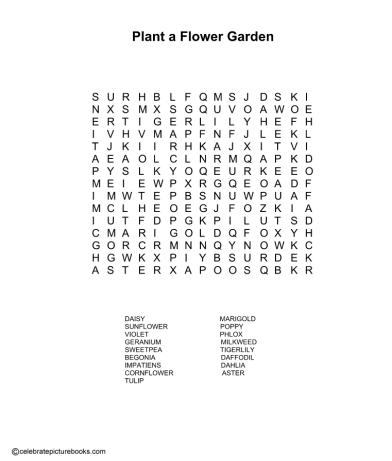
Plant a Flower Garden! Word Search


Whether you like to plant your flower bed in horizontal or vertical rows or just scatter the seeds for a wild burst of color, you’ll love this word search planted with favorite spring and summer blooms. Print your Plant a Flower Garden! word search and the Solution here!

April 22 – Earth Day

picture-book-review-green-city-allan-drummond

About the Holiday

In 1970 the first Earth Day was celebrated to bring awareness to environmental issues and begin a dialogue about how governments, corporations, communities, and individuals could create change that would benefit the Earth and all her inhabitants. Forty-six years later, we are working toward solutions to problems like pollution, climate change, renewable energy, and more. Today look around your home, office, school, or community and see how you can better support our Mother Earth.

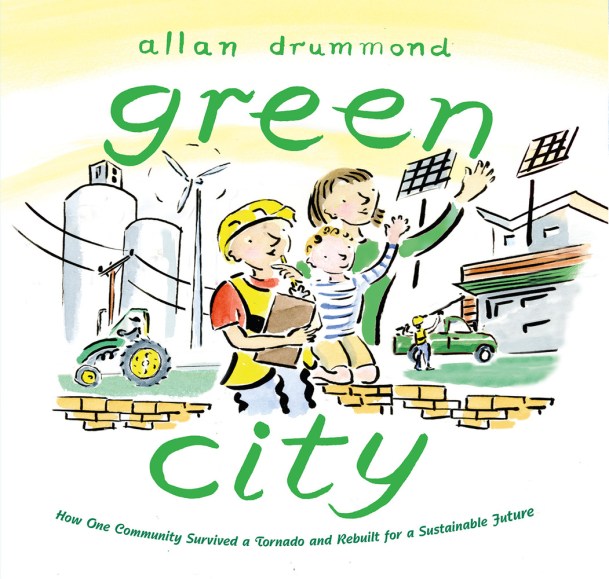
Green City: How One Community Survived a Tornado and Rebuilt for a Sustainable Future

By Allan Drummond


On May 4, 2007 a devastating tornado hits Greensburg, Kansas, destroying the town in 9 minutes. When the residents of the town climb from their shelters, they emerge into a world completely changed. There are no more homes, no school, no hospital, no grocery store or other shops. No banks, theater, churches, or water tower. Even the trees have been shredded. Only three buildings remain.

The citizens are urged to move away. Rebuilding will be impossible, some say, and what’s the point anyway when the wind could destroy it all again? But others see opportunity to construct a different kind of town. With the help of volunteers and donations from around the world, Greensburg begins the Herculean task of designing and building a new town.

After clearing away 388,000 tons of debris and moving into a community of trailer homes, the people begin to envision a unique, green town. Individuals design sustainable houses of different shapes and materials to work with the environment. Businesses, too, incorporate sustainability into their offices, retail centers, and hotels as do the hospital and the water tower. A wind farm large enough to provide energy for the entire town is built on the edge of this innovative city.

A new school is central to the town’s survival, and for three years the teachers hold class in small trailers. Along with their regular studies, the kids become experts in environmental science. After several years Greenburg is now thriving—a testament to conservation and sustainability that is an example for global communities now and in the future.

Allan Drummond tells this fascinating story of a community that would not give up in an honest and sensitive way that highlights the courage and pride of a town amid devastating loss. Told from a child’s point of view, the story has extra impact for readers who are growing up amid an era of environmental awareness and activism. The sustainable construction of homes and other buildings is effectively explained and clearly depicted in Drummond’s colorful illustrations.

The images also demonstrate the process of negotiation and cooperation among townspeople that went into designing and building a new Greensburg. The final two-page spread of the town’s layout will interest kids as well as adults who have followed this story in the news.

Ages 5 – 9

Farrar, Straus and Giroux, 2016 | ISBN 978-0374379995

Earth Day Activity

celebrate-picture-book-review-caterpillar-planter-craft

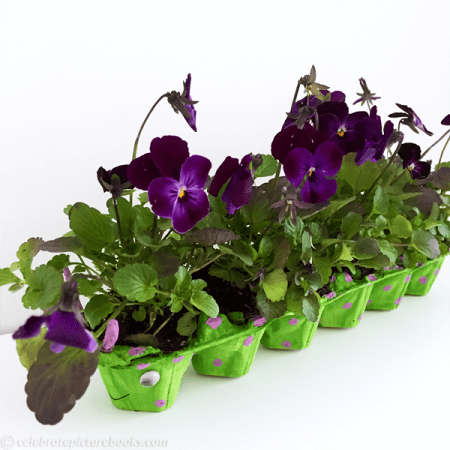
Hatch a Caterpillar Planter


As spring days grow warmer, it’s fun to start growing your own garden. Propagating plants from seed on a windowsill or sun room gives you an up-close view as the seeds develop roots, sprout, and flourish!

Supplies

  • Egg carton made from recycled paper
  • Seeds for your favorite veggies or flowers
  • Potting soil
  • Spoon or small shovel
  • Craft paint or markers in the colors you’d like for your caterpillar
  • Pipe cleaners or wire
  • Googly eyes
  • Marker

Directions

  1. Carefully cut the egg carton into two rows lengthwise, you may need to trim the cardboard between cups
  2. If the cups have low openings on one side, place the second row of cups inside the first facing the opposite way.
  3. Paint or color the carton, let dry
  4. Push pipe cleaners or wire through the edge of the egg carton on one end to form antennae (I used wrapped wire and painted it)
  5. Attach googly eyes and draw a smile on the front of the carton
  6. Fill cups with soil
  7. Plant seeds according to package directions
  8. Place caterpillar planter in a sunny spot

Picture Book Review