April 30 – Save the Frogs Day

celebrate-picture-books-picture-book-review-i-dont-want-to-be-a-frog

About the Holiday

Frogs and other amphibians are some of the most threatened species on our planet. Pollution, loss of habitat, climate change, and invasive species are just some of the causes of amphibian extinctions. Save the Frogs Day aims to educated the public and raise awareness of the declining frog and amphibian populations and to promote conservation of their environments to ensure their survival.

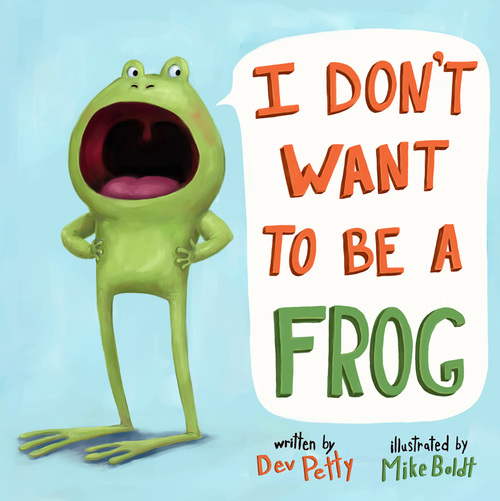
I Don’t Want to be a Frog

Written by Dev Petty | Illustrated by Mike Boldt


“I want to be a cat,” a little frog announces to his father. “You can’t be a cat,” his dad answers, which elicits the inevitable “Why not?” from his son. His dad isn’t quite ready for this conversation and gives him the standard “because you’re a frog” response.

Well, it turns out the little frog would rather be almost anything other than what he is. As he rattles off a list of alternatives that he considers much better, his dad warms to the game and counters each of his son’s suggestions with the realities of life (at least their life).

When little frog opines that he’d like to be a rabbit, his dad points out that he doesn’t have long ears. Being a pig seems like an attractive option, but little frog’s dad tells him he doesn’t have a curly tail or eat garbage. His son thinks garbage for dinner sounds okay, but his dad disagrees.

While both son and father believe being an owl would be “the greatest thing ever,” three things are standing in the way: Frogs don’t have wings, they don’t look wise, and they can’t spin their heads around.

So what’s so bad about being a frog? It’s “too wet,” “too slimy,” and there’s “too much bug eating,” little frog complains. Just then a wolf sneaks up on the father-son duo and wants to know why the little guy is so glum. Without turning around to see who he’s talking to, the frog reveals his plight.

Well, says the wolf, I’ll tell you a secret. With glee he explains that he revels in eating cats, rabbits, pigs, and owls. In fact, just talking about it makes him hungry. But “guess the one thing I never eat,” the wolf urges. “Badgers?” guesses the little frog. But no, the answer is “frogs.” And why? Because they are “too wet and slimy and full of bugs.”

Wiser for this fresh perspective, the young frog sends the wolf off with a hearty, “I guess you can’t fight nature. We are what we are. You are a fierce hunter.” 

As the wolf walks away all’s well that ends well—except not so much for the creature who next happens upon the scene!

Dev Petty’s sassy-in-a-good-way young frog’s identity crisis is pure fun! The notion of self-acceptance and that each person is built, has talents, and embodies skills just right for who they are is playfully presented by Petty’s sweet father-and-son team. The humorous, escalating dialogue will keep kids laughing, and the surprise ending is a perfect twist.

Mike Boldt’s olive green frogs are a delight as they trade off assurance and skepticism in their life-lesson conversation. The dad, initially mystified by his son’s pronouncements, discusses the issue with patience and genuine curiosity, his eyes registering cunning and understanding behind oversized glasses. His son, wide-eyed and vocal, displays the honesty of children with questions. Boldt’s illustrations of the rabbit, pig, and owl that so captivate the young frog juxtaposed with the father’s objections are comical joy, as are the frogs’ looong legs and expressive faces. And the final scenes with the enlightening wolf, whose head spans two pages, offer more laughs as the father and son resolve their differences.

Adult readers should be prepared—and will be happy—to read I Don’t Want to be a Frog again and again!

Ages 3 – 7

Doubleday Books for Young Readers, 2015 | ISBN 978-0385378666

Save the Frogs Day Activity

celebrate-picture-books-picture-book-review-frog-matching

Hop Along Matching Game


Hop along now and help these frogs! Each of these fantastic frogs has a twin, but they’ve gotten separated. Can you spot the identical pairs? Print out the Hop Along Matching Game and draw a line between the pairs.

picture book review

April 16 – Record Store Day

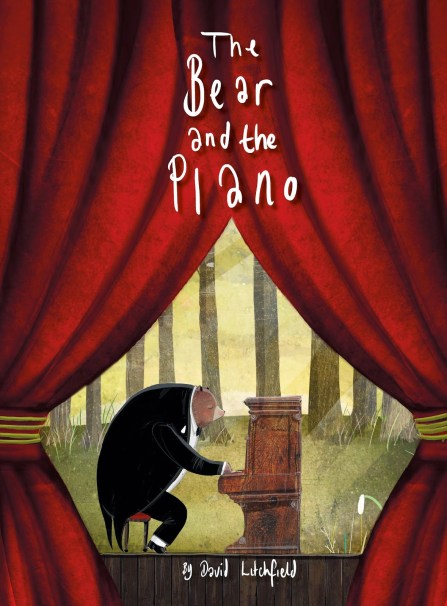
The Bear and the Piano by David Litchfield picture book review

About the Holiday

Vinyl has made a resurgence—and why not?! Records have so much to offer music lovers, from the awesome album art to extras like posters, lyrics, photos and more. Those special packages are all about the relationship between the artists and their fans. All over the world Record Store Day celebrates this art form and the shops—both large and small—where you can find albums by your favorite musicians. Entering a record store is an adventure in itself. Flipping through the bins you might discover a new artist, an old album you don’t have, or an intriguing concept you just have to experience for yourself. Today, visit a record store near you and see how what once seemed old is new again!

The Bear and the Piano

By David Litchfield


One day a bear cub happens upon a piano in a clearing in the middle of the forest. Wondering what it could be, he approaches and lays his paw on the keys. The strange thing goes PLONK!—such an awful sound. The bear cub leaves, but is drawn back again and again for days, months, and years. Over time the bear grows up and learns to play the piano. The music is beautiful and transports him to strange and wonderful places.

Other bears soon gather in the clearing to hear the “magical melodies” the bear plays. The bear is happy entertaining his friends. One night a girl and her father hiking in the forest come to the clearing. They listen and then tell the bear what his strange instrument is. They invite him to move to the city with them, where he will be able to play grand pianos for hundreds of people. The music he will play and hear “will make your fur stand on end,” they tell him.

The bear is conflicted. One on paw he knows that leaving the forest will make the other bears sad; on the other he longs to explore the world, to play the piano better, and master more intricate music. He decides to go with the girl and her father.

In the city the bear is a sensation! He quickly becomes a celebrity with his name on marquees and playing to sold-out crowds. The bear records albums that go platinum, he appears on the covers of magazines, and wins awards. His experience is everything he could ever wish for. But deep in his heart there is another longing. He misses the forest and his friends there.

He decides to leave the city and rows a boat across the expanse of water to his old home. Excitedly he runs to the clearing, but when he arrives everything has changed. His piano is gone and there are no friends to greet him. The bear worries that everyone is angry at him for leaving, or worse—that they have forgotten him.

Suddenly an old friend peeks around the trunk of a tree. The bear hails him with a hearty “Hello!”, but the other bear remains silent then turns and runs into the trees. The bear follows plunging deeper and deeper into the forest. Suddenly he stops. In front of him is a sight that makes his fur stand on end.

There, protected in the shade of a tree and surrounded by the albums, magazines, t-shirts, and other mementos of the bear’s success sits the old piano. The bear’s friends have not forgotten him and they are not angry. They are proud and welcoming. The bear tells them all about his adventures, and then he sits down to play again—for the most important audience of all.

David Litchfield’s very original and moving story is such a wonderfully conceived microcosm of the changes life brings. Stumbling upon a talent, cause, or inspiration; opening up to other influences; and acting on hard decisions are all part of growing up. These concepts are honestly and sensitively presented, and the reassuring ending brings comfort as well as a tear to the eye.

Litchfield’s touching illustrations—rendered in gorgeous hues of browns, greens, yellows, and blues—brim with yearning and mystery. The piano sits in a misty glow, silent and draped with vines, when the cub discovers it. While the bear grows and learns to play, the air clears and the colors become brighter. As the bear moves to the city, the pages glint and swirl with his enormous achievements. But as the bear sits on a rooftop one night looking out toward his old home, the lights around him are the elements of normal life—lamps, stars, the moon glimmering on the water. His nostalgia to be home will resonate with both kids and adults. The Bear and the Piano makes a wonderful gift for any age—especially as a graduation or new-job gift—and is a must-have for anyone’s personal library.

Clarion Books, Houghton Mifflin Harcourt, 2016 | ISBN 978-0544674547

Record Store Day Activity

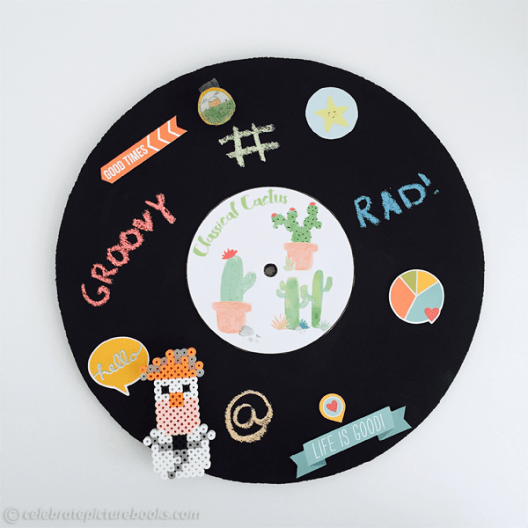
CPB - Record Bulletin Board

Make a Record Chalkboard Bulletin Board


Would you love to make a record some day? Why wait? In this fun craft you can create your own record bulletin board—and even create your own label art! While this record may not spin on turntables around the world, it will drop in a more important place—your very own room!

Supplies

  • Printable Record Label for you to design
  • Foam board, or a corkboard at least 12-inches x 12-inches square
  • Adhesive cork
  • A 12-inch round plate, record, or other round object to trace OR a compass
  • Chalkboard paint, black
  • X-acto knife
  • Paint brush or foam paint brush
  • Mounting squares

Directions

  1. Cut a section from the adhesive cork a little larger than 12 inches by 12 inches
  2. Affix the cork to the foam board
  3. Trace the 12-inch round object onto the cork/foam board OR use the compass to make a 12-inch circle
  4. With the x-acto knife, carefully cut out the circle (adult help needed for children)
  5. Cut out a ¼ -inch circle in the center of the record bulletin board
  6. Paint the cork, sides and inside the spindle hole with the black chalkboard paint. Let dry
  7. Print the label template and design your own record label
  8. When the paint is dry, glue your label to the center of the bulletin board
  9. Hang your bulletin board with the mounting squares
  10. Decorate!

April 14 – Look up at the Sky Day

celebrate-picture-books-picture-book-review-the-knowing-book-cover

About the Holiday

Some holidays require rushing around, shopping, and lots of preparation. Today’s celebration is just the opposite! Today is dedicated to slowing down, looking up, and appreciating the beauty above you. Whether the day is sunny, cloudy, rainy, or downright stormy, the sky is always intriguing. Today take some time to scan the skies; make shapes of the clouds, appreciate how tall some trees really are, watch birds flit overhead, or just take in the depth of color. Be inspired – and Relax!

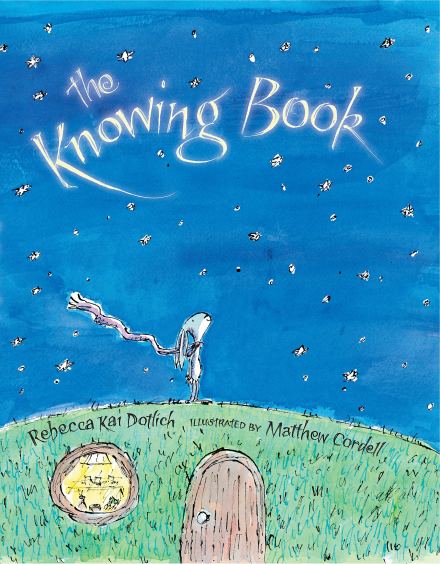
The Knowing Book

Written by Rebecca Kai Dotlich | Illustrated by Matthew Cordell


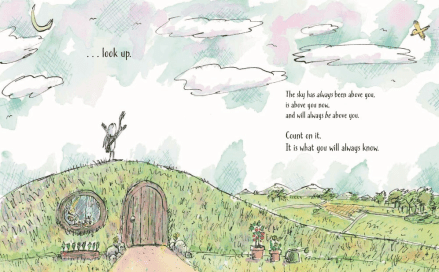
A little bunny opens the door to a wide world. But before starting on life’s adventure, the bunny receives some gentile advice and reassurance: As you start on your journey, it’s good to begin with something you know. If you wonder what that is, look up at the sky. You know it has always been above you and will remain that way forever. Taking your first steps, carry that assurance with you as you choose which door, path, or trail you will take. You may get lost, but embrace the hum or cry that comes from inside because they will help.

celebrate-picture-books-picture-book-review-the-knowing-book-look-up

Image copyright Matthew Cordell, 2016, text copyright Rebecca Kai Dotlich. Courtesy of Boyds Mills Press.

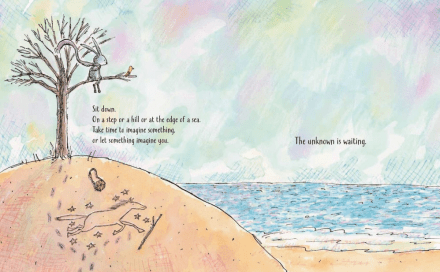
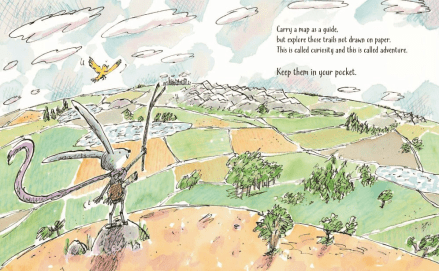
You can be sure that magic is all around you. But you must look because sometimes it’s found in the most unexpected places. Take quiet time to imagine what’s out there and for others to get to know you then step into the unknown. Carry a map, curiosity, and adventure and trust yourself. You will know when to run toward something and when to run away.

celebrate-picture-books-picture-book-review-the-knowing-book-beach

Image copyright Matthew Cordell, 2016, text copyright Rebecca Kai Dotlich. Courtesy of Boyds Mills Press.

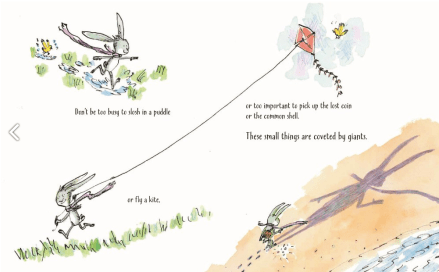
Pretending leads to knowledge, so play at who you are and who you aren’t; what you want and what you don’t want, and let your imagination fly. Don’t lose sight of the small things, the fun things, the childhood things because these are invaluable. Always listen to yourself, for you know the song in your heart.

celebrate-picture-books-picture-book-review-the-knowing-book-fields

Image copyright Matthew Cordell, 2016, text copyright Rebecca Kai Dotlich. Courtesy of Boyds Mills Press.

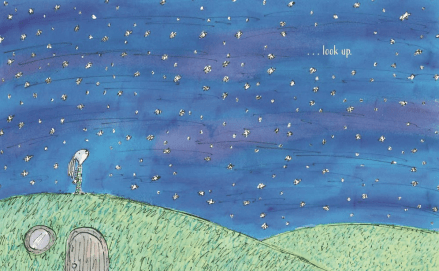
As the sky darkens, look again. “It holds a wing, a hoot, a chill. Allow the breeze of each to slip through the cracks of your window and into your sleep.” And when you look up into the night sky never forget that the stars have always been above you and always will be, and that “all the paths you take will join to lead you home.”

celebrate-picture-books-picture-book-review-the-knowing-book-kite

Image copyright Matthew Cordell, 2016, text copyright Rebecca Kai Dotlich. Courtesy of Boyds Mills Press.

Rebecca Kai Dotlich’s The Knowing Book is a lyrical tribute to the inner voice that guides each person on their life’s journey. The assurance that every action, song, imagining, and path combine to create the person you are meant to be resonates, whether the reader is a child just starting off to kindergarten, a young person graduating from college, or an adult navigating life’s changes. The value of play, reflection, and experimentation as well as the importance of understanding who you are and who you are not is beautifully expressed in this charming and wise picture book.

celebrate-picture-books-picture-book-review-the-knowing-book-stars

Image copyright Matthew Cordell, 2016, text copyright Rebecca Kai Dotlich. Courtesy of Boyds Mills Press.

Venturing out into the world Matthew Cordell’s sweet rabbit embraces the sky with the kind of beaming smile seen on excited children. The rabbit picks up a friend and together they explore the world. Cordell’s softly illuminated images in blues, yellows, pinks, and greens are appropriately uncluttered, leaving the particular experiences open to each individual reader. The buuny and bird travel to the vast seaside, over undeveloped fields, and through dreamy landscapes of imagination. They look up into the endless blue sky of day and the deep mystery of night. It’s only when the rabbit returns home that details are sketched in.

The Knowing Book is a beautiful reminder of the whims of life and a gentile reassurance of one’s ability to flourish. As it invites multiple readings for so many occasions, The Knowing Book would make a wonderful addition to anyone’s bookshelf.

Ages 5 and up

Boyds Mills Press, 2016 | ISBN 978-1590789261

Look Up In the Sky Day Activity

CPB - Cloud craft

Fluffy Clouds Craft


It’s fun looking up at the clouds and imagining what shapes you see. Bring those fluffy, white clouds into your room with this craft!

Supplies

  • White girls’ dress bobby socks in various sizes
  • Fiber fill, 20-ounce bag
  • Fishing line, different lengths
  • Needle
  • Clear adhesive mountable hooks or clips

Directions

  1. Stuff the socks with fiber fill, pushing it far into the sock and adding more here and there to make various lumps and give it a rounded, cloud-like shape
  2. When the sock is full, tuck the end of the sock in to close it
  3. Cut lengths of fishing line. The lengths will depend on how and where you will hang the clouds
  4. With the needle or by hand, feed one end of the fishing line into the top of the sock and out to attach the line for hanging.
  5. Knot the fishing line
  6. Attach the mountable hooks or clips to the ceiling
  7. Hang your clouds!

March 20 – International Day of Happiness

Double Happiness by Nancy Tupper Ling Picture Book Review

About the Holiday

In 2011, the UN General Assembly adopted a resolution stating that happiness is a “fundamental human goal” and called for a more inclusive, equitable and balanced approach to economic growth that promotes the happiness and well-being on all peoples.” March 20 was chosen by all 193 United Nations member states as the day to remember and honor this goal. The holiday was first celebrated in 2013.

Today you get a free pass to spend the day doing what makes you and others happy—so enjoy! If you’d like to learn more about the holiday visit the International Day of Happiness organization.

Double Happiness

Written by Nancy Tupper Ling | Illustrated by Alina Chau


This quiet, thoughtful picture book tells the story of a family’s move from China to America in a series of unrhymed verses that reveal the experience honestly from alternating viewpoints of a brother, Jake, and his sister, Gracie. Each page is dedicated to one or the other sibling with the boy’s poems written in blue and the girl’s in purple. In several poems the children interact with each other, the blue and purple lines acting as dialog tags.

In the first poem, The Move, Gracie stand on her doorstep surrounded by boxes and suitcases and thinks, “I won’t go! / I won’t move / away / from our city house / by the trolley tracks….” Jake is already imagining his new room in the second poem,Train. After considering different décor, he decides what he really wants is something familiar, something outside—“just one long train / that rocks and wobbles / my bed each night. /I can’t fall asleep until the train passes by.”

The siblings are each given a happiness box by their Nai Nai inGrandmother, who wisely challenges her grandchildren to “Find four treasures each, / leading from this home / to your new.” The search is taken up in the next poems—Treasure, Lucky, and Leaf—in which the kids find objects for their happiness boxes. The train and treasures for the happiness boxes are threads that unite many of the poems and the children’s experiences.

In keeping with the long hours of travel from China to the United States, the next 6 poems chronicle the brother and sister’s experience in the airport, waiting for their plane, and during the flight.

In Here the children wake up to see their new city far below them and wonder, “can I found our house / from the sky?” Marble andSadness juxtapose Jake’s happiness at finding a treasure for his box with the apprehension of Gracie.

At last the family reaches their new home by taxi. Gracie seems only to see the “piles of snow,” but Jake likes the “windy roads, lots of trees, and the curvy driveway.” In Explore Gracie and Jake walk around the countryside, and while Gracie still determines that she won’t like it, Jake hears a train and is happy. My Roomand Dinner see the kids settling in, with a photograph of the family they’ve left behind accompanying them on the table while they eat. In A Surprise, Gracie finds that her grandmother is still with her through a special scarf, and Paints resolves the move as Jake and Gracie paint their happiness boxes: Jake decorates his with a dragon and a train, while Gracie depicts her and her brother walking in the snow and “they look very, / very / happy.”

While Double Happiness tells the story of a family’s distant move, Nancy Tupper Ling’s gentle verses are appropriate for any situation involving change or uncertainty. She reminds children that happiness can be found wherever they are and all around them if they look for it. The unrhymed poems flow as freely as thoughts, fears, and unguarded moments. As Gracie and Jake resolve their feeling, readers or listeners will also see that feelings of apprehension are common, and that happiness is waiting for them.

Alina Chau’s soft, lovely watercolor illustrations are beautiful representations of Gracie and Jake’s move from the familiar surroundings of their home in China to a new home in a snowy countryside. The children’s emotions resonate as they alternate between sadness and happiness and between concrete places and their own imagination.

Ages 5 – 8

Chronicle Books, 2015 | ISBN 978-1452129181

International Day of Happiness Activity

CPB - Happiness typography

Happiness Is…Game


Happiness is all around you! Grab one or more friends to play a game that reveals what things make you happy. Here are two ways to play:

  1. Like the “Geography” game: the first player names something that makes them happy, the next player must think of something that starts with the last letter of the word the previous player said. The game continues with each player continuing the pattern. Players drop out as they cannot think of a word. The last player left is the winner.
  2. Within a certain time limit (depending on age), players must think of something that makes them happy. Players drop out if they cannot think of a word within the time limit. The last player left is the winner.