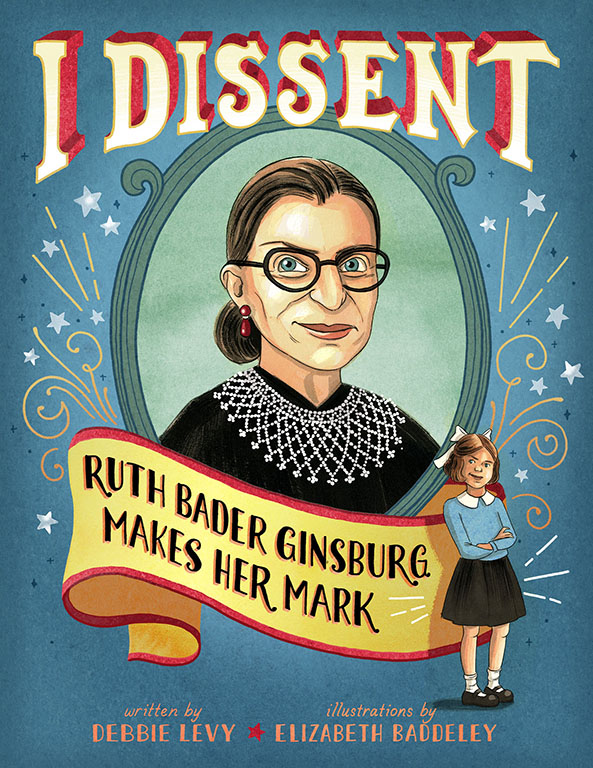
March 24 – It’s Women’s History Month

celebrate-picture-books-picture-book-review-i-dissent-cover

About the Holiday

During the month of March we celebrate the roles and contributions of women throughout history. The theme for 2017 is “Honoring Trailblazing Women in Labor and Business.” From earliest times, women have participated in and influenced events, often without receiving recognition. This month encourages all women to stand up to discrimination and stand up for what they believe in. 

I Dissent: Ruth Bader Ginsburg Makes Her Mark

Written by Debbie Levy | Illustrated by Elizabeth Baddeley


Ruth Bader grew up during the 1940s in Brooklyn, New York’s multicultural neighborhood. It was a time when boys were educated for jobs and bright futures while girls were expected to marry and raise children. Ruth’s mother, Celia Amster Bader, however, “thought girls should also have the chance to make their mark on the world.” She introduced Ruth to books in which she discovered women who used their strength, courage, and intelligence to do big things.
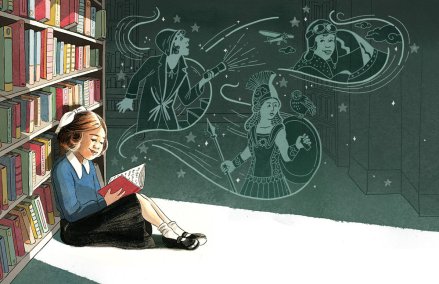
celebrate-picture-books-picture-book-review-i-dissent-in-the-library

Image copyright Elizabeth Baddeley, text copyright Debbie Levy. Courtesy of simonandschuster.com.

Ruth also saw and felt the sting of prejudice while growing up. Her family was Jewish, and at the time “hotels, restaurants, even entire neighborhoods” denied access to Jews, African Americans, Mexicans, and others. Ruth disagreed and never forgot. She was even discriminated against for being left-handed. In school she was instructed to write with her right hand, but her awkward penmanship earned a D. First, she cried; then she protested by only writing with her left hand—“it turned out she had quite nice handwriting!”
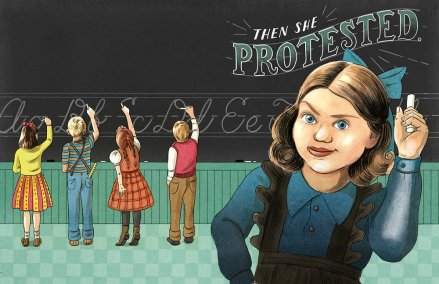
celebrate-picture-books-picture-book-review-i-dissent-in-the-left-handed

Image copyright Elizabeth Baddeley, text copyright Debbie Levy. Courtesy of simonandschuster.com.

During elementary school, Ruth was outstanding in some classes, such as history and English, and did not do so well in others, such as sewing and cooking. Music, especially opera, was another favorite subject—even though she did not have the voice to match her dreams. She excelled in high school and was even chosen as a graduation speaker. But Ruth had been hiding the fact that her mother was very ill. The day before graduation, her mother died. Ruth did not go to her graduation, but she did fulfill her mother’s wish and entered college.

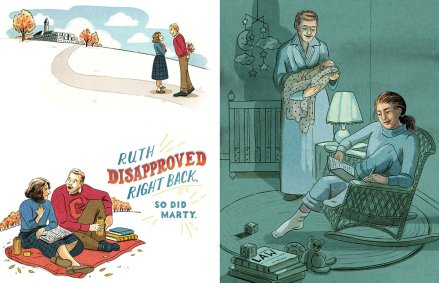
In college Ruth met Marty Ginsberg, and the two fell in love. They both decided to become lawyers to fight prejudice and unfairness in court. People thought this was a great idea for Marty, but disapproved of it for Ruth. “Ruth disapproved right back. So did Marty.” After college they got married, went to law school, and had a baby girl.
celebrate-picture-books-picture-book-review-i-dissent-college

Image copyright Elizabeth Baddeley, text copyright Debbie Levy. Courtesy of simonandschuster.com.

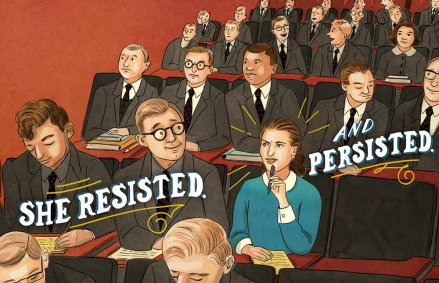
In law school Ruth was one of nine women in a class of 500. She worked hard and tied with another student as first in the class, but after graduation she couldn’t find a job. Employers objected because she was a woman, a mother, and Jewish. Finally, she found work with a judge. Her excellent work for him translated into jobs at one law school after another, and she became “one of the few female law professors in the whole country.”

All around her Ruth saw other women who were denied jobs or paid less than men. Women also had very little voice in courtrooms or in government. Rulings by the Supreme Court, the highest court in America, had helped maintain this inequality. The Court had stated that women were unfit for many jobs because of their “natural and proper timidity and delicacy.” Besides, the Supreme Court also said, “Woman has always been dependent upon man.”
celebrate-picture-books-picture-book-review-i-dissent-in-the-law-school

Image copyright Elizabeth Baddeley, text copyright Debbie Levy. Courtesy of simonandschuster.com.

“Ruth really, really disagreed with this!” So she began fighting in court for equal rights for women. But equal rights for women also meant equal rights for men: Ruth believed men should be able to stay home with children if they wanted to while women worked. “These were fresh ideas in the 1970s. Ruth did not win every case, but she won enough. With each victory, women and men and girls and boys enjoyed a little more equality.”

At home, Ruth’s own family agreed with her. Marty was a successful lawyer and also an accomplished chef who cooked the family’s meals. Ruth went on to become a well-known and well-respected lawyer. President Jimmy Carter asked her to be a judge in Washington DC. Then President Bill Clinton chose her to fill a vacancy on the Supreme Court. “Ruth agreed.

celebrate-picture-books-picture-book-review-i-dissent-family-life

Image copyright Elizabeth Baddeley, text copyright Debbie Levy. Courtesy of simonandschuster.com.

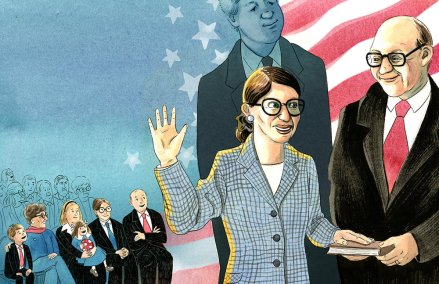
In 1993, Justice Ruth Bader Ginsburg became the first Jewish woman on the nation’s highest court.” When the nine justices decide a case, they listen to both sides and then vote. The winning side then writes an opinion explaining their ruling. When Justice Ginsburg votes with the winning side, she wears a special lace collar over her robe. When she does not agree with the ruling, she says, “I dissent” and writes an opinion explaining why. She has a special collar for dissenting too.

Some of her dissensions were influenced by her early experiences. She dissented when “the court wouldn’t help women or African Americans or immigrants who had been treated unfairly at work.” She dissented when the court did not protect voting rights for all citizens. She dissented when the court disagreed with schools that offered African Americans a better chance to go to college.” And once when she dissented, Congress and the president agreed with her and overturned the Supreme Court’s ruling.
celebrate-picture-books-picture-book-review-i-dissent-supreme-court

Image copyright Elizabeth Baddeley, text copyright Debbie Levy. Courtesy of simonandschuster.com.

Justice Ruth Bader Ginsburg is now the oldest member of the Supreme Court. Some people think she should retire, but she disagrees. She still has work to do. Over the years, she has “cleared a path for people to follow in her footsteps—girls in college, women in law school, and everyone who wants to be treated without prejudice….Step by step, she has made a difference…one disagreement after another.”

An extensive Author’s Note about Ruth Bader Ginsburg’s life, notes on Supreme Court Cases, and a selected bibliography follow the text.

Debbie Levy’s outstanding biography allows readers to journey with Ruth Bader Ginsburg as her experiences and beliefs lay the foundation for her life’s work. Well-chosen anecdotes from Ginsburg’s childhood make her accessible to kids and may even inspire them to look toward their own futures. Ginsburg’s trajectory from college student to lawyer to judge and finally to the Supreme Court is balanced and uplifting, emphasizing the positive impact of persistence and self-confidence.

Elizabeth Baddeley’s illustrations go hand-in-hand with Levy’s text to fully illuminate the life of Ruth Bader Ginsburg for children. Ginsburg’s intelligence, sense of humor, courage, and principles are evident as she matures from school girl to Supreme Court Justice. Dynamic typography highlights the theme of dissent and disagreement as a force for positive change. The color, expression, and spirit imbued in each page make I Dissent: Ruth Bader Ginsburg Makes Her Mark an exciting and eye-catching read for all children.

I Dissent: Ruth Bader Ginsburg Makes Her Mark is a superb and recommended book for girls and boys. The book’s focus on a woman who continues to make a difference will inspire children and even adult readers to speak up and act on their convictions.

Ages 5 – 9

Simon & Schuster Books for Young Readers, 2016

To learn more about Debbie Levy and her books for children and young adults, visit her website!

Discover a gallery of illustration by Elizabeth Baddeley on her website!

Women’s History Month Activity

celebrate-picture-books-picture-book-review-rosie-the-riveter-coloring-page

Rosie the Riveter Coloring Page


Rosie the Riveter became a symbol of strong women during World War II and continues to be an iconic figure today. Print and color this Rosie the Riveter Page then display it to always remember that women can do anything!

Picture Book Review

January 16 – Martin Luther King Jr. Day

celebrate-picture-books-picture-book-review-i-am-martin-luther-king-jr-cover.png

About the Holiday

Martin Luther King Jr. Day celebrates the life and legacy of the man who dedicated his life and work to teaching—as Coretta Scott King stated—“the values of courage, truth, justice, compassion, dignity, humility and service” and led a non-violent Civil Rights movement to enact racial equality and justice throughout state and federal law. President Ronald Reagan signed the holiday into law in 1983, setting it on the third Monday of January to coincide with Martin Luther King, Jr.’s birthday on January 15. The holiday was officially observed in all 50 states in 2000. Today, learn more about the life and work of Martin Luther King and how you can help promote justice and equality for all. Consider volunteering in your community where help is needed.

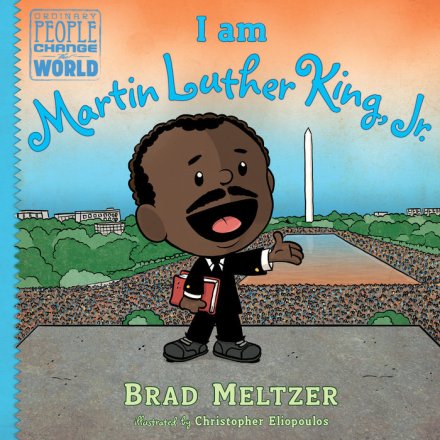
I am Martin Luther King, Jr.

Written by Brad Meltzer | Illustrated by Christopher Eliopoulos


Standing inside a church, Martin Luther King, Jr. introduces himself with two anecdotes from his childhood that demonstrate his world outlook. “When I was little,” he says, “I used to get into a lot of accidents.” He was hit in the head by a baseball bat, knocked down by cars and once even “tumbled over our banister, then bounced through an open door into the basement.” While these incidents could have made him cautious, Martin instead was determined to keep “getting back up.” His second influence were the books in which he could find “big words.” Even as a child Martin recognized that “there is power in words.”

celebrate-picture-books-picture-book-review-i-am-martin-luther-king-jr-as-a-child

Image copyright Christopher Eliopoulos, text copyright Brad Meltzer. Courtesty of Dial Books for Young Readers

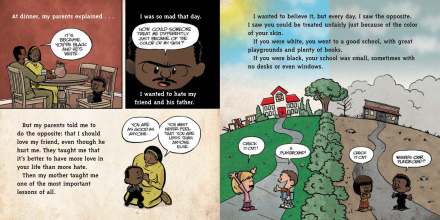
Before he went to school, Martin relates, his best friend was a white boy whose father owned a nearby store. They did everything together until school started. Then Martin went to a school with only black students while his friend went to a white-students-only school. Soon, Martin’s friend told him his father didn’t want them to play together anymore. Martin was confused. When his parents told him the reason was that they had different colored skin, Martin felt angry. He wanted to hate his friend and his father, but Martin’s parents taught him to love his friend, and his mother told him, “you must never feel that you are less than anyone else.”

It was a difficult lesson when all around him he saw inequality. White schools had better equipment, there were different elevators, bathrooms, water fountains, and other facilities for black people and white people, on buses black riders had to give up their seats to white riders. Everywhere black people and white people were segregated.

celebrate-picture-books-picture-book-review-i-am-martin-luther-king-jr-ice-cream

Image copyright Christopher Eliopoulos, text copyright Brad Meltzer. Courtesty of Dial Books for Young Readers

When Martin was only 15 he was admitted to college. At 19 he entered the seminary where he learned about civil disobedience and nonviolent resistance—ways to use “love and peaceful methods to change unfair things in society.” These were lessons Martin wanted to share with others. His chance to put his thoughts into action came when Rosa Parks was arrested for refusing to relinquish her seat to a white man. Martin advocated a peaceful protest—a boycott of public buses. He reasoned that without the money from black riders, the bus companies would change their policies.

As the boycott began working, Martin gave a speech in Montgomery, Alabama, motivating people to continue their peaceful protest. Martin was put in jail and his house was bombed, but the boycott continued for more than a year. Eventually, the bus companies changed their rules. Other peaceful protests began to take place in restaurants and other public places.

One protest took place in Birmingham, Alabama.  Martin was again put in prison, where he wrote one of his most famous speeches. Children also took part in the Birmingham protest. The Children’s Crusade attracted more than 1,000 kids. On the first day 900 of them were arrested, but that only inspired the children more. On the second day 2,500 children showed up. They stood firm while they were sprayed with water hoses and attacked by police dogs. People—both black and white—watching the news reports were aghast. Three months later the rules began to change.

celebrate-picture-books-picture-book-review-i-am-martin-luther-king-jr-i-have-a-dream-speech

Image copyright Christopher Eliopoulos, text copyright Brad Meltzer. Courtesty of Dial Books for Young Readers

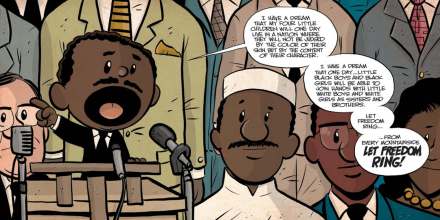
“By the summer of 1963, an estimated one million Americans held their own protests in cities across the country.” Then A. Philip Randolph suggested a single huge march to convince “Congress and the president to pass laws so that no one in America can treat people differently based on skin color.” On August 28, 1963 the March on Washington for Jobs and Freedom took place. Martin gave what may now be considered his most famous speech in which he talked about his dreams for the country, for the people, and for their children.

Although Congress began passing new laws, the ability and right to vote in elections still eluded black people. To change the voting rules another march was organized to walk 54 miles from Selma to Montgomery Alabama. The 600 walkers were met by police who stopped them. Two days later 2,500 activists tried again but could not get through. On the third try 8,000 marchers showed up. This time, with the world watching on television, the activists made it to Montgomery, protected by troops sent by President Johnson.

celebrate-picture-books-picture-book-review-i-am-martin-luther-king-jr-montgomery-march

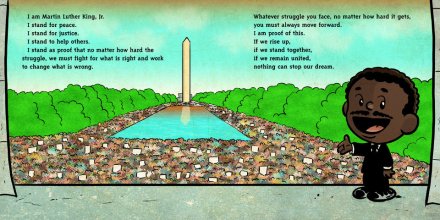
Martin continued to speak out, relating his philosophy and dreams for the nation. “To reach our goals, we must walk the path of peace,” he said. “We must lock arms with our brothers and sisters. We must march together. When we do…Our voices will be heard, and freedom will ring.” The lessons Martin Luther King taught still resonate today. He stands “as proof that no matter how hard the struggle, we must fight for what is right and work to change what is wrong.…if we stand together, if we remain united, nothing can stop our dream.”

celebrate-picture-books-picture-book-review-i-am-martin-luther-king-jr

Brad Meltzer’s Ordinary People Change the World: I am… series of biographies are well-known for showing young readers that they can achieve their dreams and make a difference no matter what those hopes may be. In his biography of Martin Luther King, Jr., Meltzer depicts several incidents from King’s childhood and early adulthood that influenced his future work. These help readers understand not only the types of prejudice King and other African Americans experienced, but also the people who inspired his philosophy of peace.

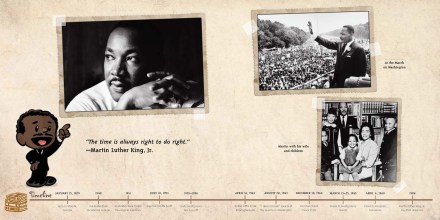
Meltzer’s inclusion of King’s imprisonments and the violence that met the peaceful protesters deepens the understanding of the dangers King and other protesters faced, and provides an opportunity to open a discussion between adults and children about those times and what they now see in the news. Meltzer’s description of the Children’s Crusade will inspire readers, making them proud of children in the past and stirring them to actions of their own. Sections from King’s Letter from Birmingham Jail and his most famous speeches are presented in speech bubbles. The text is followed by photographs of Martin Luther King, Jr. with his family and at the March on Washington as well as a timeline of his life. Sources and resources for further reading are also included.

celebrate-picture-books-picture-book-review-i-am-martin-luther-king-jr-timeline

In keeping with the style of all of Meltzer’s and Christopher Eliopoulos’s Ordinary People Change the World: I am… biographies, the illustrations are vibrant and cartoon-inspired. Martin Luther King, Jr. is depicted with the size of a child but the features of an adult, reinforcing the idea contained in the text of the dual nature of the future adult residing in the child and the ideals of the child remaining in the adult that appeals to ambitious young readers. Speech bubbles highlight text that carry emotional dialogue. Settings, including churches, Birmingham jail, Washington DC, the Edmund Pettus Bridge in Alabama, and the Martin Luther King, Jr. monument give children a look at the cities and places described in the text.

For young readers, I am Martin Luther King, Jr. offers a comprehensive biography of the man who was a national and world leader in the fight for equal rights for all people and makes an excellent starting place for classroom lessons and personal discussions.

Ages 5 – 8

Dial Books for Young Readers, 2016 | ISBN 978-0525428527

Discover more about Brad Meltzer and his books for adults and children as well as other goodies on his website!

Learn more about Christopher Eliopoulos, his books, and his comics on his website!

Martin Luther King Jr. Day Activity

celebrate-picture-books-picture-book-review-martin-luther-king-jr-coloring-page

Martin Luther King, Jr. Portrait


Color this printable Martin Luther King, Jr. Portrait and then hang it in your room or locker to inspire you!

Picture Book Review