May 3 – Paranormal Day

celebrate-picture-books-picture-book-review-rules-of-the-house

About the Holiday

We all know the truth is out there—we just don’t know where “there” actually is. As today is dedicated to all things strange, eerie, and unexplained, it might be the perfect time to go in search of that mysterious realm—or answer the mystery in your heart.

The Rules of the House

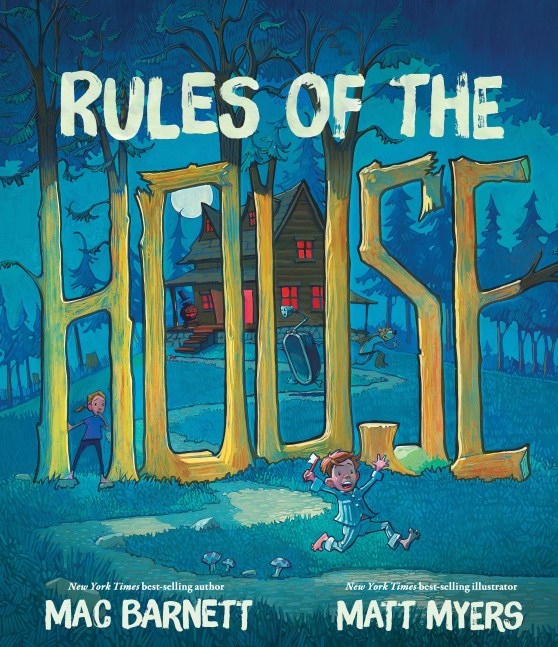
Written by Mac Barnett | Illustrated by Matt Myers


Ian and his older sister Jenny don’t see life the same way. Ian follows all the rules; Jenny doesn’t see the point of them. Their family is going on vacation, and Ian is carefully following the dictates of travel—especially the rule “Always Pack a Toothbrush.” Jenny’s also following her favorite rule to break: “Don’t Pinch,” which makes the car ride to the vacation house in the woods a painful one for Ian.

The vacation house is cozy and warm, thanks to a potbellied stove in the living room, a bearskin rug on the den floor, and a claw foot tub in the bathroom. Ian loves it! The house even comes with its own rules:

  1. Remove muddy shoes before entering
  2. Don’t leave a ring around the bathtub drain
  3. Replace any firewood you burn
  4. Never, ever open the red door

“Everybody got that?” says Ian.

“Yes, toady,” says Jenny.

During the day, Ian, Jenny, and their dad explore the forest, go swimming, and climb trees. Pretty soon Jenny starts breaking the rules. She tracks in mud, leaves hair around the drain, and doesn’t refill the stove after toasting marshmallows. Ian reminds her of the rules. “I wish you would disappear,” says Jenny. When Ian presses the point, Jenny breaks the final rule and flings open the red door.

Later that night the bearskin rug—restored to life—knocks on their bedroom door and demands to know who matted and muddied his fur. “We did,” Jenny answers, but Ian corrects her. “I will have the rule breaker for dinner,” the specter rug announces. But as he advances, the claw foot tub and then the potbellied stove want in on the action. The trio stalks closer and closer…

Ian grabs his toothbrush and runs, leaving Jenny to what he considers her well-deserved fate. But then he stops. He knows “Always Save Your Sister from Being Eaten by Monsters,” isn’t a real rule, but maybe it should be, he thinks. He goes back to the house. Through the kitchen window he sees the rug, stove, and tub preparing Rulebreaker Soup.

He rushes in to stop them. Surely they wouldn’t eat a rule keeper like him. But no; it seems there are no rules about who monsters will eat, and they’re ready to have Ian as an appetizer. Drooling, they step closer and closer. Ian brandishes his toothbrush. The unusual implement captures the creatures’ attention. It’s a toothbrush, Ian explains. “You’re supposed to always pack a toothbrush. That’s a rule.”

Suddenly the monsters are contrite and worried. “What will happen to us?” they ask. Ian remembers his father’s admonition: “Never Tell Lies,” and then forgets it. If you break the toothbrush rule “a huge monster comes for you,” Ian says. He describes this fiend as having long hair, green eyes, and sharp pink nails as Jenny sneaks up from behind and gives each monster a big, hard pinch. Horrified and frightened, they flee down the hall and back through the red door. Jenny and Ian slam it shut behind them.

Having worked together to defeat the monsters, Jenny and Ian come to a better appreciation of each other and what it means to be siblings.

Mac Barnett has written a wild, curveball, vacation adventure that will appeal to kids’ love of mystery, quick thinking, trickery, and fair play, with the challenges of sibling rivalry thrown in. The threatening monsters are every kid’s funniest nightmare come to life—especially in a spooky cabin—and outsmarting them is a dream come true. The dialogue and conflicts between the siblings ring true, and their reconciliation offers a satisfying ending.

Matt Myers illustrates the rules of the house with a retro charm that enhances the spookiness of the vacation home haunted with domestic monsters. Foreshadowing abounds in the early depictions of the bearskin rug, potbellied stove, and claw foot bathtub for alert readers to find. The monstrous alter egos, especially the rug, are cleverly drawn as they menace the children, and their expressions as they learn that they’ve broken an unknown rule and are pinched provides poetic justice of the most comical kind.

Ages 7 – 12

Disney-Hyperion, 2016 | ISBN 978-1423185161

Paranormal Day Activity

Create a Soft Book, Page 3—Ghost


This little ghost may think he’s frightening, but his “Boo” is more cute than scary! Add Page 3 to your soft book with this template, supplies, and directions.

Supplies

  • Printable Ghost Template
  • White fleece or felt
  • Black fleece or felt
  • Adhesive felt or foam letters
  • Fabric glue

Directions

  1. Cut the ghost, eyes, and smile from the fleece or felt
  2. Glue the words “Ghost” and “Boo” to the third page. Make sure the letters stick firmly to the page. If not, use fabric glue.
  3. Glue the ghost to the page with fabric glue

Looking forward to seeing you tomorrow!

Picture Book Review


May 1 – Mother Goose Day / Children’s Book Week

celebrate-picture-books-picture-book-review-mother-bruce-cover

About the Holiday

Incredibly, the term “Mother Goose” goes back to the 1650s to describe rhymes such as Baa Baa Black Sheep, Here We Go Round the Mulberry Bush, Jack and Jill Went up a Hill, and The Old Woman Who Lived in a Shoe. Fairy tales such as Cinderella and Little Red Riding Hood also came under Mother Goose’s wing. While all of the rhymes are not as familiar to today’s children, many are still popular and their influence can be seen in current books, movies, and TV shows. Mother Goose Day was established in 1987 to highlight these stories and keep them alive for today’s kids. To celebrate, read some Mother Goose tales—either as originally written or in fractured form.

This first week of May also celebrates Children’s Book Week, which was established in 1919 to promote literacy awareness and the joy of reading. As the longest-running national literacy movement in the country, Children’s Book Week holds, sponsors, and encourages events in schools, libraries, bookstores, homes, and wherever young readers and books connect!

Mother Bruce

By Ryan T. Higgins


It’s a good thing Bruce lives by himself. He’s a grumpy grizzly who likes nothing. If it’s sunny he’s grumpy. If it’s raining he’s grumpy. And don’t even get started on how he feels about cute fuzzy animals. There is one thing he likes, though, and that’s eggs! Yummy eggs prepared many ways from recipes Bruce finds on the Internet.

celebrate-picture-books-picture-book-review-mother-bruce-goslings

Copyright Ryan T. Higgins, 2015, courtesy of Disney-Hyperion.

One day a most mouth-watering recipe pops up on the screen—hard-boiled goose eggs drizzled with honey-salmon sauce. Bruce heads out with his own personal shopping cart to collect the ingredients. He ingeniously catches some salmon and raids a local beehive (this carnivore’s a locavore, you see). Next he pays a visit to Mrs. Goose. He takes her eggs after determining that they are free-range organic.

At home Bruce puts the eggs in his special pot and starts a fire in the stove. But the fire fizzles, forcing Bruce to make a visit to the wood shed. When he comes back, his lovely breakfast has hatched! And what’s worse, the little goslings think Bruce is their mother! Bruce stares into those sweet eyes gazing back at him and decides…to have buttered goslings on toast. But those little peepers just won’t cooperate, and for some reason Bruce has lost his appetite.

He gathers up the goslings in his shopping cart and wheels them back to their nest only to find that their mother has already flown south for the winter. Bruce leaves them in the nest anyway and heads for home. But it’s too late—the baby geese have already imprinted on Bruce, and they tag along happily after him. Bruce is stern with them. He roars. He tries to hide out in a tree. But it’s no use; he’s stuck with them.

celebrate-picture-books-picture-book-review-mother-bruce-painting

Copyright Ryan T. Higgins, 2015, courtesy of Disney-Hyperion.

Bruce rises to the challenge, though. He gives up his space in the pool, teaches them how to paint, feeds them, and transports them in a specially-made baby carrier. As spring turns to summer and then fall, Bruce watches his geese grow from “annoying baby geese” to “stubborn teenage geese” to “boring adult geese.”

Finally, one day Bruce spies other goose families flying south and knows his time has come! He can get rid of those geese and take a long, well-deserved nap. Bruce explains migration to his geese, but they don’t quite get it, coming to him dressed in winter coats and hats. Hmmm…some creativity is needed. Bruce tries slinging them northward and sending them flying in remote-controlled planes, but the geese just hug him tighter.

Resigned to his fate, Bruce packs his bag and four smaller ones for his charges and boards a bus for Miami. “Now every winter Bruce and his geese head south together.” They wear floral shirts, and as his “kids” play in the sand, Bruce “dreams of new recipes—recipes that don’t hatch.”

celebrate-picture-books-picture-book-review-mother-bruce-slingshot

Copyright Ryan T. Higgins, 2015, courtesy of Disney-Hyperion.

Ryan T. Higgins’ Mother Bruce is an endearing story of dislike at first sight. Of course no one—not even a grumpy, loner bear like Bruce—can resist the sweet, loving faces of youngsters forever. Fortunately for readers, Bruce holds out longer than most, his transition providing giggle-inducing scenarios on every page.

Higgins’ illustrations are loaded with visual jokes, cultural references kids will love, and four of the cutest clueless geese around. Depictions of Bruce masterfully mix his gruff, bothered exterior with the big softie that lies underneath. Bruce’s solutions to his plight are clever and funny. There may be no better Mother Goose than Bruce!

Ages 4 – 8

Disney-Hyperion, 2015 | ISBN 978-1484730881

Mother Goose Day Activity

Screen Shot 2020-05-01 at 2.28.23 PM

Mother Goose Coloring Page


Mother Goose Rhymes are fun to learn and share! Here’s a picture of Mother Goose and her goose for you to color!

Mother Goose Coloring Page

Picture Book Review



April 29 – It’s National Humor Month

celebrate-picture-books-picture-book-review-meet-the-dullards

About the Holiday

The whole month can’t go by without celebrating one of the most fantastic things about life—humor! Whether you’re laughing at a funny joke, your favorite comedian or comic strip, a silly mistake, or even yourself, a chuckle is good for you! Today, take time to relax and enjoy the absurd—and give a few hearty “Ha! Ha! Ha’s!” along the way.

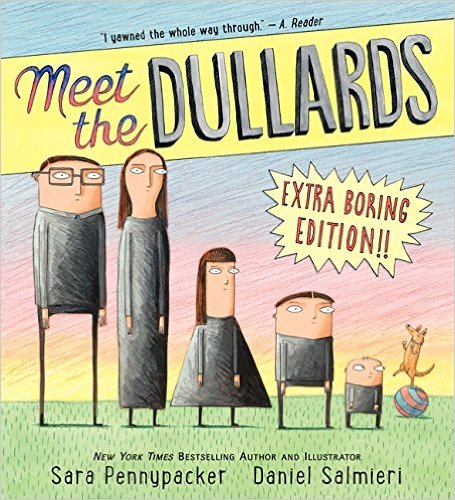
Meet the Dullards

Written by Sara Pennypacker | Illustrated by Daniel Salmieri


Gray—that’s what the Dullards are. Gray and happily extra boring. Their life is going on in its monotonous way until one day when Mr. and Mrs. Dullard happen upon a most disturbing sight. Their three children are reading—and not only that, they are reading books about befriending lions, juggling, and walking a tightrope. The elder Dullards do what any self-respecting dullard would do. They retrieve the books and hand their children blank pieces of paper to read instead.

The children are definitely becoming a problem. They want to go to school and have been playing outside. It’s not our fault bemoan the parents; it must be the town where last fall some leaves actually turned color and there’s that unruly snail in the driveway. In fact the whole atmosphere is like a circus! There’s only one thing to do. The Dullards pack up their house and Blanda, Borely, and Little Dud and move away.

Immediately upon moving into their new home, they are bombarded by the neighbor lady bringing exclamation marks and chunky applesauce cake into their perfectly dull new home. The kids are sent to watch the (unplugged) TV, but instead their eyes are drawn to the window. While unpacking Mr. and Mrs. Dullard discover a sight so shocking that Mrs. Dullard faints into the arms of her distressed husband. It’s yellow flowered wallpaper. (An exclamation mark would be appropriate here, but you know…)

On the way to the paint store the family stops to get ice-cream cones, and with 90,000 flavors to choose from they pick vanilla. Plain cone or sugar cone? No cone, of course. At the paint store Mr. Dullard suggests medium gray, but Mrs. Dullard deems it too risky. Its similarity to highways could make the kids think of travel. Beige? Mrs. Dullard counters. Too much like clay, says Mr. Dullard which can be used to create stuff. They come to a compromise and go home to—you’ve got it—watch the paint dry.

While their parents are mesmerized the kids sneak away and out the window that so enthralled them before. The sight of Blanda, Borely, and Little Dud juggling, teaching a dog tricks, and somersaulting on the clothesline, ushers in another move—back to where they came from just in time for the kids to join the circus.

With dry wit and laugh-out-loud dialogue Sara Pennypacker delivers a spot-on family story. While seen through the eyes of Mr. and Mrs. Dullard, this funny tale is all about the kids. What kids don’t think their parents are dull and conventional? And can parents really understand what’s going on in those little minds? Both children and adults will love the Dullards, and after reading you may be inspired to go out for vanilla chocolate ice-cream (ok, you can still hold the cone!)

Daniel Salmieri’s Dullards are comic genius! With their oval bodies and gray attire they blend with their oatmeal-hued walls to perfect effect. Identical square houses give way to identical triangular houses as the Dullards move to avoid catastrophic enthusiasm. The kids’ facial expressions as they adhere to boooring rules are priceless as are the parents’ reactions to the slightest excitement. Details such as a yellow snail in the driveway, the elder Dullards’ looks of horror when discovering the bright wallpaper, the signs on the ice-cream kiosk, and the name of the moving van make provide humorous jokes on each page.

Ages 4 – 8

Balzar + Bray, Harper Collins, 2015 | ISBN 978-0062198563

National Humor Month Activity

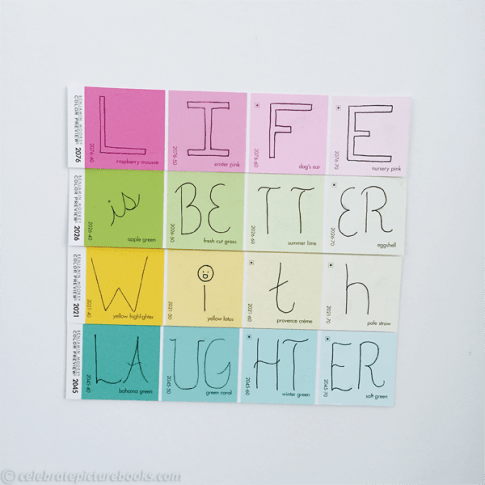
celebrate-picture-books-picture-book-review-paint-strip-craft

Paint Strip Inspiration


Do you like to laugh? Do you like to watch paint dry? It is kind of cool how it changes color a bit as it dries….Oh, sorry! Where was I? Oh yeah—this craft. Paint sample strips make brilliant backdrops to your thoughts about love, life, laughter—anything! You can mix and match your favorite colors and arrange them any way you like to decorate your wall. Frame them for a more put-together look!

Supplies

  • 4 -5 paint strips from a hardware store OR You could also make your own color stips with poster board and craft paint
  • Poster board
  • Craft paint
  • Paint brush
  • Markers or adhesive letters
  • Scissors
  • Mounting squares
  • Frame (optional)

Directions

  1. If you are making your own paint strip, cut poster board into strips 9 inches long by 2 inches wide, or to desired size
  2. Paint squares of color to fill the strip, leaving a 1/8-inch-wide stripe between colors
  3. Think of a phrase that expresses your thoughts on life and laughter OR use a favorite quote
  4. Print the words on the squares of color OR use adhesive letters. You can print one letter per square or multiple letters or even whole words. Mix styles of print to give it your own unique look.
  5. Mount or frame your paint strip phrase

April 26 – Hug an Australian Day

celebrate-picture-books-picture-book-review-alfies-lost-sharkie

About the Holiday

Hug an Australian Day was initiated by Ruth and Thomas Roy of Wellcat.com. It’s a perfect time to celebrate all things from the land Down Under—like the people’s sunny personalities and the awesome (or should I say aussieome?) wildlife. Today, listen to your fav Australian music, watch an Australian movie, and if you have friends or relatives who are Australian, send them good wishes.

Alfie’s Lost Sharkie

By Anna Walker


It’s Alfie’s bedtime, but Alfie is lodged headfirst in his toy basket searching for Sharkie. He’s quite distinctive, Alfie tells his dad. with “white fins, sharp teeth, and scary eyes.” Oh, yeah, and “he’s blue.” Could he be outside? Alfie’s dad relents and lets him look while he runs water in the tub.

Outside in a tall tree Alfie hangs from a branch and asks a bug, a bird, and a cat if they’ve seen Sharkie. Come down now, his dad calls, it’s bath time. Alfie dives to the depths of the bathtub to look for Sharkie, but all he finds is a jellyfish. Pajama time, says his dad.

Like quicksand the pajama drawer sucks Alfie in. “I’m okay,” he says, struggling to the top only to see his cat wearing his pajama bottoms. Alfie looks under the chair and in his jack-in-the-box. A tear rolls down Alfie’s nose as he stares longingly out the window. It’s story time, says his dad.

While his dad reads, Alfie stands on his head contemplating the whereabouts of Sharkie. Why is his dad making him brush his teeth and pick out a toy to sleep with when he’s obviously so not tired? Reluctantly Alfie chooses a toy—in fact all his toys—and marches toward bed.  And who should he find? The armful of toys goes flying as Alfie leaps onto the covers. He’s so happy to see Sharkie!

Dad tucks Alfie and all the toys under the blankets, and Alfie closes his eyes hugging Sharkie tight. But a new thought strikes Alfie—“Where’s Bunny?”

In Alfie’s Lost Sharkie, Melbourne-based Anna Walker has created a picture book that will have kids and adults laughing at the familiar bedtime scenario. The story’s spare text echoes the rhythms of the nighttime routine with a child trying to wring just a few more minutes out of the day.

The sweetly drawn illustrations are equal parts humorous and cute as Alfie wrangles time under the curious gaze of his toys and mischievous cat. The final picture of Alfie tossing Sharkie aside will make adults nod their heads in recognition while kids will probably think, “Yeah! That’s a good point!” Funny visual details and the loving relationship between Alfie and his patient dad will make Alfie’s Lost Sharkie a book kids will want to read again and again.

Ages 3 – 7

Clarion Books, 2016 | ISBN 978-0544586567

Hug an Australian Day Activity

celebrate-picture-books-picture-book-review-australian-puzzle

Awesome Aussie Word Scramble


A cute koala invites you to unscramble the names of Animals found in Australia and discover the secret phrase!  Print your Awesome Aussie Animals Word Scramble here!

April 23 – Talk Like Shakespeare Day

picture-book-review-will's-words

About the Holiday

To read or not to read—is that even a question?! Of course “to read!” And who produced literature containing some of the most excitement ever? William Shakespeare! Not only did Shakespeare write astounding plays and poems, he coined words and phrases that are still part of our everyday speech 400 years after his death in 1616. In recognition, the Chicago Shakespeare Theater initiated Talk Like Shakespeare Day in 2009. To honor Shakespeare’s legacy today, read or reread one of his famous plays, attend a performance, or watch a film adaptation of his work, and for goodness sake – use some of the terms he so cleverly invented.

*Italicized words were invented by William Shakespeare

Will’s Words: How William Shakespeare Changed the Way You Talk

Written by Jane Sutcliffe | Illustrated by John Shelley


“In 1606 London was a bustling, jostling, clanging, singing, stinking, head-chopping, pickpocketing wonder of a city.” With that phenomenal sentence Jane Sutcliffe begins this fascinating and ingenious look at the Globe Theatre and the experience of attending a play in William Shakespeare’s time.

In addition to all the qualities of London mentioned above, the town was also a “play-going city.” Every day of the week except Sunday, a play—or maybe even two or three—was performed, and as many as 18,000 (!) people attended plays every week! They just couldn’t get too much of a good thing!” And everyone loved the plays written by William Shakespeare!

How did a day at the theater begin? Well, at 1:00 a banner was raised from the roof of the playhouse, and men, women, and children streamed through the streets toward the Globe. It cost a penny to get in, but if you paid more you got a chair, and if you paid a little more than that you were seated in the Lord’s Rooms. The Lord’s Rooms were actually for fashionable people who wanted to be seen but didn’t really care what they were seeing.

All the actors were…well…actors. There were no actresses in those days. Men played women’s parts as well as men’s. And if you think phones and talking are problematic in today’s theaters, you would have been aghast at the audiences back then! They were not well behaved at all!

There were plays to please all tastes—comedies, tragedies, histories, and romances—all full of complicated plots and plenty of twists and turns. While the stories may have been intricate, the sets were not. But the bare-bones sets were made up for in gorgeous costumes and even some special effects accomplished with trap doors and ceiling holes. Sounds full of amazement, right? Good thing too because these plays could go on for hours, and most people stood through the whole thing, rain or shine!

William Shakespeare’s plays didn’t end when the last line was spoken. In fact theatre-goers repeated the lines they’d heard long after they left the Globe. They used Will’s words so much that his new phrases became part of the common language, and we still use them today!

Jane Sutcliffe inserts a tongue-in-cheek apology before the main text, explaining how she wanted to tell the world about the Globe Theatre in her own words, but that William Shakespeare’s words kept getting in the way. Yes, using another writer’s words is a no-no—but if they’re Shakespeare’s words? Words we use every day? Hmmm…Sutcliff’s lively history of the Globe Theatre and Old London’s theater culture is conversational, humorous, and highly informative.

The left-hand page tells the story of the Globe with phrases and words coined by William Shakespeare sprinkled throughout and set in bold type. On the right-hand page readers learn the meaning of those words and phrases (some have changed a bit since Will’s time) and which play they come from. A final note from Sutcliffe at the end of the book reveals a bit more about the playwright. A timeline of Shakespeare’s life and a bibliography are also included.

John Shelley’s incredible illustrations of London and the Globe Theatre will take your breath away. The streets teem with vendors, knights, shoppers, kids, Ladies, and Lords. If you look closely at the intricate paintings you’ll also spy the seamier side of Old London—a pickpocket, a criminal in the stocks, a tavern brawl, a cat snatching a free meal, a woman about to empty a chamber pot on her unsuspecting downstairs neighbor’s head, and…could that be a dead rat?— and that’s only on the first page!!

Subsequent pages show the waterfront with its sailing vessels, a peek into Shakespeare’s study and a look at the printing press, an aerial view of London, the Globe Theatre with its thatched awning, the actors donning wigs and costumes, and the audiences enjoying the plays and the fun of a day out. Each illustration is alive with color and movement, texture and design, expressive faces, and all the sights, sounds, and aspects of Old London. Kids will love lingering over each page picking out the funny events going on in the lanes, in the theatre seats, and on stage.

So hurry to get your own copy of Will’s Words and enjoy it to your heart’s content! You will definitely get your money’s worth!

Ages 6 – 10 and up (Anglophiles and Shakespeare lovers will enjoy this book)

Charlesbridge, 2016 | ISBN 978-1580896382

Talk Like Shakespeare Day Activity

picture-book-reviews-quill-pen-craft

Fashion a Quill Pen


William Shakespeare didn’t have a laptop to compose his great plays; he didn’t even have a desktop or a typewriter or a ballpoint pen! Shakespeare wrote all of those intrigues, characters, settings, sonnets and words with a feather!! (Plus a little ink!) Try your hand at making a quill pen—you may not be able to write with it, but it sure will look cool on your desk!

Supplies

  • Medium to large size feather with quill, available at craft stores
  • Clay, oven-bake or air-dry, in various colors if desired
  • Wire, beads, paint, and/or markers for decorating     
  • Scissors
  • Baking pan for oven-bake clay

Directions

  1. Roll clay 2 ½ inches to 4 inches long 
  2. Push the quill end of the feather into the clay
  3. Add bits of clay or roll sections of the clay between your fingers to give the clay shape
  4. To make the twisted shape pen, twist the length of clay around itself before adding the feather
  5. Shape the end or cut it with scissors to make the pointed writing nib
  6. If using air-dry clay: Add beads and/or wire and let clay dry around feather
  7. If using oven-bake clay: Add beads and other layers of clay before baking then carefully remove feather. Bake clay according to package directions
  8. Add wire and other decorations after clay has baked and cooled
  9. Reinsert feather into clay

April 21 – Poem in Your Pocket Day

Wet Cement: A Mix of Concrete Poems by Bob Raczka picture book review

About the Holiday

Poem in Your Pocket Day has become one of the favorite events of National Poetry Month. Requiring nothing but a pocket and a treasured poem, the day is a perfect way for poets, non-poets, and poetry lovers of all types to interact with this beloved art form. Originally enacted in 2002 by the Office of the Mayor in conjunction with the New York City Departments of Cultural Affairs and Education, the holiday was embraced as a national observance by the Academy of American Poets in 2008.

Here are some suggestions from the Academy of American Poets on how to spend the day. So clean the lint, coupons, old receipts, tissues, and loose change out of your pockets and replace them with a poem! Those crumpled bits may even inspire your own poem—try it!

  • Post pocket-sized verses in public places
  • Create and distribute bookmarks with your favorite lines of poetry
  • Start a “poems for pockets” giveaway at school or work
  • Add a poem to your email footer
  • Post lines from your favorite poem on your Twitter, Tumblr, Instagram, Facebook, or Snapchat
  • Send a poem to a friend

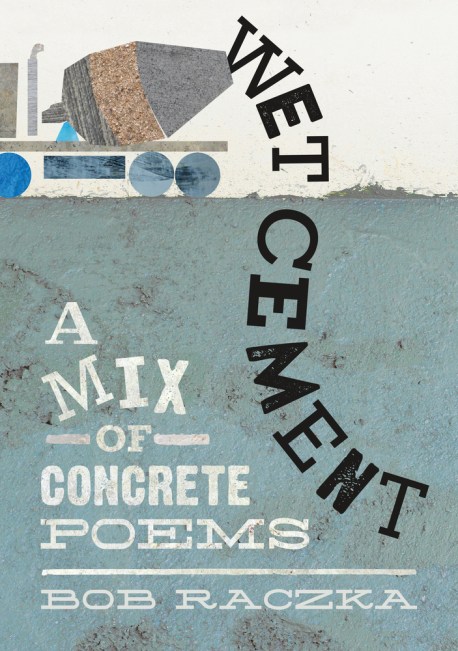
Wet Cement: A Mix of Concrete Poems

By Bob Raczka


When you envision a poem in your head, what do you see? A block of lines? A square or a rectangle? Well, sweep that image from your mind because in Bob Raczka’s Wet Cement: A Mix of Concrete Poems, verses become actions, objects, puzzles, and natural phenomena. Not only are the poems shaped to illustrate their theme, the titles use clever imagery as well.

As you encounter the poem hanger you’ll see that “han” has broken away and is dangling from the hook of g in “ger.” The words of the poem itself are shaped like a hanger and contain a giggle-invoking twist: “I hang out in blue jeans and comfy old shirts. I hang out in blouses and long frilly skirts. I hang out in sport coats and sweaters and shawls. I even hang out with no clothes on at all!”

You might want to get your baseball mitt out before you read homer, in which the first line zooms straight as a pitch and the second—written backwards and at an upward angle—soars like a homerun hit: “The pitcher hurls his hummer toward the slugger squeezing lumber CRA / CK! The slugger slams the hummer toward the bleachers for a homer.”

But don’t put that mitt away just yet! You may need to catch the o, which has escaped from the title p p-up. And if you’ve ever played t-ball, baseball, softball, or even wiffleball, you’ll cringe in recognition of this short but pointed poem.

The sky darkened by night in Dipper and by clouds in Lightning holds two poems expressing very different thoughts. In the title Dipper, the second p has floated to the top of the page where it hangs like a miniature reflection of the dipper-shaped poem, which reads: “Way down there on earth you hold firefly jars, filled up to their lids with light. Up here in the sky, I’m a vessel of stars, my brim overflowing with night.” In the title LIGHTNING, the L strikes the I to create the familiar jagged crack echoed in the shape of the verse: “from a bad mood sky, / tears, / then a jag- / ged slash- / ing flash of anger, / ear- / splitting, / obnoxious, / a cloud tantrum”

Any writer will love poeTRY which is such a clever take on the word as well as the revision and editing process:

“poetry is about taking away the words you don’t need

poetry is taking away words you don’t need

poetry is words you need

poetry is words

try”

Put simply, Bob Raczka’s concrete poems will make you smile. Even more than that, you’ll find yourself wanting to carry this book around, saying “Look at this!” to everyone you meet. Raczka calls these poems “word paintings”—because a poet “uses words like colors to paint pictures inside your head.” If creativity is the talent to present the world in new and surprising ways, making connections that enhance life, then Wet Cement is artistry at its best!

Ages 5 – 9 and up (adults will enjoy these poems as much as kids)

Roaring Brook Press, 2016 | ISBN 978-1626722361

Poem in Your Pocket Day Activity

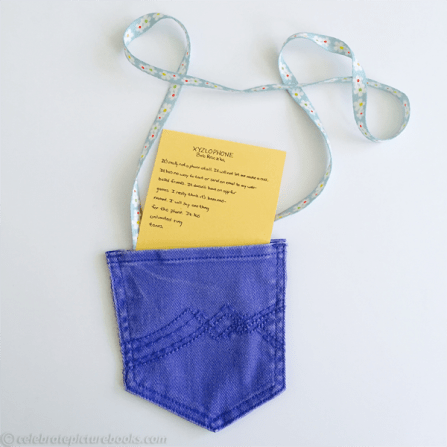
CPB - Pocket Poem Craft

Pocket Poem Carrier


Sometimes you just need a little more inspiration in your day. Here’s a cute way to carry your favorite poem—today and every day!

Supplies

  • An old pair of pants or shorts with back pockets
  • A decorative shoelace
  • Thread or fabric glue
  • Needle
  • Paper
  • Your favorite poem or a poem you write yourself
  • Pen

Directions

  1. Cut one back pocket off an old pair of pants or shorts
  2. Use the shoelace at its full length or cut to desired length
  3. Inside each edge of the pocket sew or glue the ends of the shoelace to make a strap
  4. Print your favorite poem on the paper
  5. Insert the poem into the pocket poem carrier
  6. Take your poem with you and share it with your friends!

April 20 – It’s Jazz Appreciation Month

How Jelly Roll Morton Invented Jazz by Jonah Winter and Keith Mallett picture book review

About the Holiday

Jazz Appreciation Month, nicknamed JAM, was initiated by the Smithsonian National Museum of American History in 2002 to celebrate the heritage and history of jazz and to inspire people to embrace this musical form by attending concerts, listening to recordings, reading about jazz, and playing your own jazz music. The theme for JAM 2016 is an exploration of how jazz is a form of democracy in itself. Jazz works as a method of communication, brings people together, and can be enjoyed individually or in a group. This year’s events also remember the legacy of bandleader Benny Carter.

How Jelly Roll Morton Invented Jazz

Written by Jonah Winter | Illustrated by Keith Mallett


So “here’s what could’ve happened” if you were the baby born to grow up and become one of the best, most innovative talents—maybe even the inventor—of jazz music: Living in New Orleans in the 1890s you might have been put under the spell of music by your godmother, who was a voodoo queen. This same godmother might have taken you with her to a saloon, and later that night you may have accompanied her to jail when trouble broke out at the bar. In jail you may have cried and cried until the other people in your cell “commenced to singing—‘cause music was the only thing that calmed you down.”

When you were still a little child, it might have happened that you sat down at a piano and without training “commenced to play.” With that kind of talent you might have snuck out at night to play for adults who loved to hear your music and paid you well. But one morning your great-grandmother who was raising you may have seen you sneaking back home. She’d ask where you’ve been and how you got such a fancy suit.

When you tell her, she says “she wouldn’t have no LOWLIFE MUSICIAN livin’ under her respectable roof.” But music is who you are, and so still a child, you have nowhere to live and must make your way in the world. This is how and why in 1902 “a thing called JAZZ got invented by a man named Jelly Roll Morton.” At least that’s how the story goes.

Jelly Roll Morton knew the only way to escape his life and show people who’s the best is by playing the music inside him “one piano note at a time.” He had a recipe for jazz as spicy as a pot of Creole gumbo combining the rhythms of New Orleans, the beat of Africa, a dash of Spanish melodies and a pinch of Calypso syncopation. Stir in the Blues and add a bit of “messin’ around” and the tones of laughter. Throw in a teaspoon of symphony, with its flavorful instruments, and you’ve got a ragtime band that produces “high-steppin’, low-down, horn-blowin’ spectacularamicus!”

Jelly Roll Morton took his unique style to Mobile, Alabama and Chicago, Illinois and to every place in between, showing people how music should be played. And while Jelly Roll Morton might not have invented jazz all by himself, he “sure did spread it around the towns,” waving that magic spell everywhere he went.

The final pages give more information about the life of Ferdinand Joseph La Menthe, nicknamed Jelly Roll, as well as further reading and listening resources.

Immersing yourself in Jonah Winter’s biography of Jelly Roll Morton is akin to sitting at the knee of the most captivating storyteller. With mesmerizing rhythms Winter weaves the events of Morton’s life into a tale as enthralling as jazz music itself. Passages of the text are infused with the flavor of New Orleans: “I thought I heard Mister Jelly Roll too / Sayin’ ‘I invented jazz in 1902, / It was me who invented jazz—‘cause it sure wasn’t you.’”

Complimenting Winter’s story, Mallett paints Jelly Roll Morton’s environment in dark washes of night illuminated by the glow of music. The bayou of New Orleans, the dance halls, and city streets glimmer in golden hues from lamp light, the dawning sun, and the radiance of Jelly Roll’s piano keyboard. Notes fly away from Morton’s piano, becoming birds as they soar over the wakening city, and the recipe for “Jazz Gumbo” is stunningly illustrated.

How Jelly Roll Morton Invented Jazz is a unique, fascinating true-life tale that will entice music lovers and all readers.

Ages 5 – 9

Roaring Brook Press, 2015 | ISBN 978-1596439634

Jazz Appreciation Day Activity

CPB - Trumpet maze

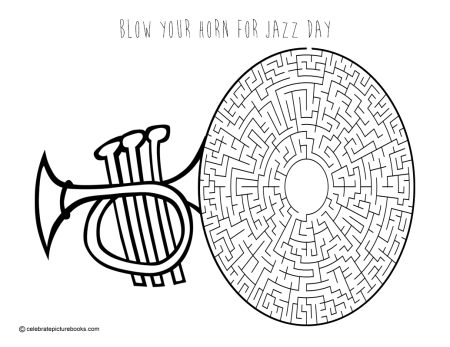
Blow Your Horn for Jazz Day! Maze


Jazz music is amazing in so many ways! Enjoy this riff on the usual maze and trumpet your success to your friends! Print the Blow Your Horn for Jazz Day! maze here. And here’s the Solution.