May 31 – Web Designer Day

celebrate-picture-books-picture-book-review-coding-games-in-scratch

About the Holiday

Today we laud all the brilliant web designers who bring us our favorite sites and make it so easy for us to shop, do business, watch videos, and play games. We can’t even imagine life without them anymore. If you know a web designer, thank them for their hard work!

Coding Games in Scratch: A Step-by-Step Visual Guide to Building Your Own Computer Games

By Jon Woodcock


Video games are so fun to play! You know you’re good at them; don’t you sometimes wish you could make one of your own? With Coding Games in Scratch, you can! In just 11 chapters you’ll discover all the basics of creating different kinds of games plus how to add special effects, cool characters, exciting backgrounds, music and sounds, and more.

Chapter 1 reveals what makes a game fun to play. Things like characters, objects, obstacles, the mechanics of the game, story, sound, speed, atmosphere, rules, goals, and difficulty levels all contribute to the playability and enjoyment of the games you create. Discussions of the various types of games and a bit about coding round out Chapter 1.

Chapter 2 introduces the programming language Scratch developed by the Lifelong Kindergarten Group at MIT. Here you’ll learn about objects, scripts, and running a program. It shows you where to get Scratch and provides a tour.

Chapter 3 welcomes you to building your first game—Star Hunter, which is a fast-paced underwater treasure hunt. Some of the things you’ll learn include setting the scene, building the script, adding sound, how to introduce an enemy, collisions, and collecting stars. Plus you’ll learn some hacks and tweaks for making your game the best it can be.

Love maze games? Chapter 4 shows you how to build Cheese Chase and help Mimi the mouse find her cheese while avoiding beetles and ghosts. Here you also learn about keyboard control, using the paint editor, making things spooky, creating intricate mazes, and how to move characters along the passages.

Chapter 5 covers Circle Wars—a quick-paced search and chase game full of clones and bouncing friendly and unfriendly circles. In Chapter 6 you’ll discover the gravity of the situation. Literally. Jumpy Monkey may love to leap, but he has to come to earth sometime!

Building Doom on the Broom from Chapter 7 introduces scene, casting spells, enemy attacks, explosions, adding harder enemies, and how to give players extra lives. Phew! Platform games are the subject of Chapter 8. You’ll find the ins, outs, ups, and downs, of jumping from platform to platform, falling, portals, progressing through levels, and more.

Racing games are covered in Chapter 9 with Glacier Race, where cars compete with the clock to avoid obstacles and gather the most gems. You’ll discover how to use game loops to keep the action happening just right, how to make a scrolling road, all about collisions and spins, and adding a penguin race official to start things off and end the race.

Music more your thing? Enjoy a brain teaser? Welcome to Chapter 10 and Tropical Tunes where you listen to drums play and then repeat the sounds you hear in an ever-growing song.

Now that you’ve learned to create video games, what’s next? Chapter 11 tells you about remixing and how to create your very own games. If you really love making games, there’s a section on the kinds of jobs there are in video gaming.

In Coding in Scratch Jon Woodcock clearly explains with text and illustrations how kids can create fun games with a good bit of complexity. Screen shots and digital imagery show kids exactly what they will encounter as they progress through the different kinds of games. Colorful pages and Woodcock’s easy-to-understand directions makes this a go-to guide for budding programmers.

So grab the book, your computer, and your creativity and start Coding Games in Scratch!

Ages 8 – 13

DK, Penguin Random House, 2015 | ISBN 978-1465439352

Web Designer Day Activity

celebrate-picture-books-picture-book-review-computer-kids-puzzle

Computer Kids Find the Differences Puzzle


Whenever a designer builds a website there are bugs to work out. Can you discover the “bugs” in these pictures? Take a close look at this printable Computer Kids Puzzle and find the differences!


May 29 – Learn about Composting Day

celebrate-picture-books-picture-book-review-compost-stew

About the Holiday

Composting is a wonderful way to use organic waste to help the environment. Whether you keep a small composting container in your kitchen, set aside a pile in the corner of your yard, or invest in a compost tumbler, letting non-meat or dairy kitchen scraps, outdoor vegetation cuttings, and even hair or dryer lint decompose into nourishing soil additives will make your garden grow bigger and better!

Compost Stew: An A to Z Recipe for the Earth

Written by Mary McKenna Siddals | Illustrated by Ashley Wolff


“Environmental chefs, / here’s a recipe for you / to fix from scratch / to mix a batch / of Compost Stew.” This clever alphabet book reveals the ABCs of gathering the perfect ingredients for a compost pile, which creates a nutritious meal for gardens, flower beds, and the environment:

“Apple cores / Bananas, bruised / Coffee grounds with filters, used / Dirt clods, crumbled / Eggshells, crushed / Fruit pulp left behind, all mushed / Grass clippings / Hair snippings / and an Insect or two / Just add to the pot / and let it all rot / into Compost Stew.”

The catchy rhymes and easy-to-follow directions will make kids excited about saving left-overs, raking up fallen leaves, and shredding paper to add to the pile. Readers may also be surprised by some of the other items that will decompose to make rich soil, such as seaweed, laundry lint, and teabags. Three simple steps for cooking up compost stew follow the alphabet, and create a refrain that kids will love to repeat.

Mary McKenna Siddals brings the science of composting and recycling to kids in a fun, interactive way. Children may even like to think of their own ingredients for each letter of the alphabet. The author’s note at the end of the book reveals substitute ingredients as well as items that are not appropriate or safe for composting.

Ashley Wolff’s brilliant, textured collage artwork depicts four multicultural kids (along with their helpful Dalmatian and goose) gathering the ingredients for their compost bag wherever they are—in the yard, in the kitchen, at the hair salon, at the beach, and more.

Kids interested in gardening and environmental issues will love to have Compost Stew on their bookshelf.

Ages 3 – 8

Dragonfly Books, Random House, 2014 | ISBN 978-0385755382

Learn about Composting Day Activity

celebrate-picture-books-picture-book-review-composting-word-search

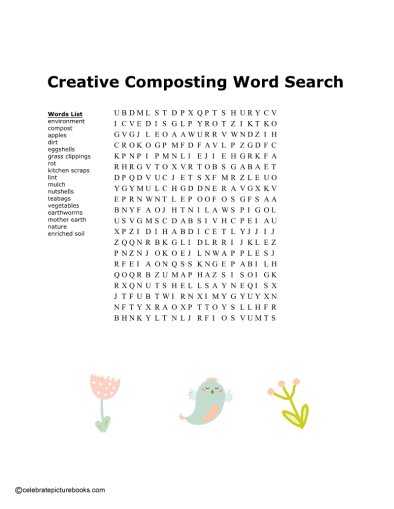
Creative Composting Word Search


Composting takes individual ingredients and combines them to create nourishing soil. Can you find the words that relate to this environmental science in this printable Creative Composting Word Search? Here’s the Solution.

Picture Book Review

May 27 – It’s National Family Month

celebrate-picture-books-picture-book-review-brothers-at-bat

About the Holiday

National Family Month was established by KidsPeace and is observed in the weeks between Mother’s Day and Father’s Day to encourage families to spend time together. Now that the school year is coming to a close, it’s the perfect time to plan some fun activities!

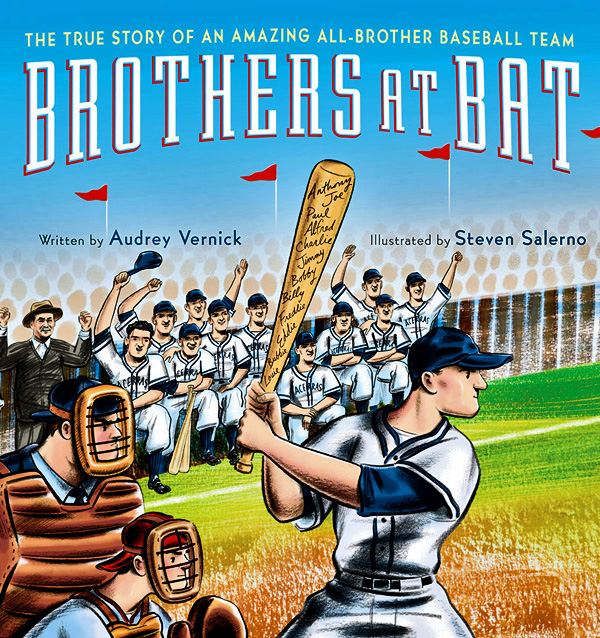
Brothers at Bat: The True Story of an Amazing All-Brother Baseball Team

Written by Audrey Vernick | Illustrated by Steven Salerno


When the weather warms and kids’ thoughts turn to sports, the afternoon air rings with the sounds of slamming doors as players race from home to the baseball diamond. Back in the 1920s and ‘30s, the same door slammed not once or twice, not three or four times, not even eight or nine! The door shut behind 12 brothers! Anthony, Joe, Paul, Alfred, Charlie, Jimmy, Bobby, Billy, Freddie, Eddie, Bubbie, and Louie Acerra. These 12 boys also had 4 sisters—but this is a story about baseball, and back then girls didn’t play ball.

It could be said that “baseball set the rhythm of their lives.” Neighbors couldn’t remember a time when Acerra boys weren’t throwing or hitting a ball or running the bases at the local park. And there was an Acerra on the high school baseball team for 22 years in a row!

In 1938 the nine oldest brothers formed a semi-pro team and competed against other New Jersey teams and teams from New York and Connecticut. Their dad was their coach. The brothers all had different skills—Anthony could hit homeruns, and even hit a couple into the Atlantic Ocean from a seaside park; Charlie was a slow runner; and Jimmy had a knuckleball that was unhittable and uncatchable.

But playing had its dangers too. In one game Alfred was going to bunt, but the ball bounced badly off the bat and hit him in the face. He was rushed to the hospital, but the accident caused him to lose an eye. Everyone thought he would never play again. But after he healed, his brothers helped him recover his skills and his courage.

During World War II six of the brothers joined the war effort and spent years apart. Far from home they dreamed of the days when they played together on warm afternoons. When the war ended all the Acerra boys came home to their very happy mother. The brothers got back to what they loved doing best. Now Anthony was their coach, and from 1946 to 1952 they won the Long Branch City Twilight Baseball League championship four times—much to the pleasure of the crowds that came out to watch the Acerras play.

As time went on the Acerras got jobs, married, and had families of their own. In 1952 the brothers played their last game as a team, having made history as the longest-playing, all-brother baseball team ever. Even though the Acerras played many, years ago, people have not forgotten them. In 1997 they were honored by the Baseball Hall of Fame. The surviving seven brothers made the trip along with one sister and more than a hundred relatives. Now Jimmy Acerra’s uniform and glove are on display alongside exhibits about Babe Ruth, Ty Cobb, and Willie Mays. If you visit the Baseball Hall of Fame, you can see them too!

Interesting and personal author’s and artist’s notes follow the text.

Baseball fans will love Audrey Vernick’s exciting, true story of this most unusual team. Her focus on the close relationship of the Acerra brothers elevates the tale from merely a sports story to one that reveals deep affection and support during difficult times. The different personalities of the brothers shine through in Vernick’s easy, conversational tone, and the inclusion of the Acerra brothers’ induction into the Baseball Hall of Fame shows that this story lives on for all generations.

Steven Salerno’s evocative illustrations will transport readers into a past where neighborhood leagues enjoyed the same level of loyalty as the majors. Capturing the brushed style, colors, and portraiture of pictures of the period, Salerno shows kids not only what it meant to be a baseball player in the 1930s and 40s, but what it meant to be a family.

Ages 4 – 9

Clarion Books, 2012 | ISBN 978-0547385570

National Family Month Activity

celebrate-picture-books-picture-book-review-we-are-all-family-word-search

We Are All Family English – Spanish Word Search


This month is all about family! Find the words for special relatives in this English – Spanish dual language word search! Print the We Are All Family word search puzzle here! And here’s the Solution!

May 22 – National Maritime Day

celebrate-picture-books-picture-book-review-toy-boat

About the Holiday

National Maritime Day commemorates the day in 1819 that the steamship Savannah sailed from the United States to England. This event marked the first successful crossing of the Atlantic Ocean by steam propulsion. The US Congress proclaimed May 22 National Maritime Day in 1933. The day gives us an opportunity to honor the ships and seafarers who have served our country in peacetime and during war and to remember the benefits the maritime industry.

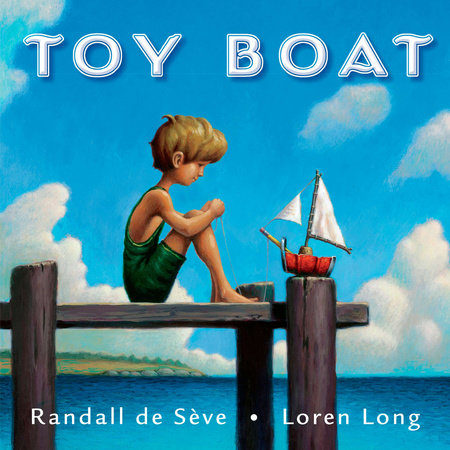
Toy Boat

Written by Randall de Sève | Illustrated by Loren Long


A little boy makes a toy boat from a can, a cork, a pencil and some white cloth. He loves his boat and carries it with him everywhere. Every day the boy takes his boat to the lake and sails it all afternoon. The boy always keeps his toy boat on a string so he won’t lose it. The boat feels secure, but sometimes it gazes out at the big sailboats gliding across the lake and wonders “what it would feel like to sail free.”

One afternoon a squall blows up on the lake, and the boy’s mother pulls him quickly from the edge of the thrashing water. Startled, the boy drops the string and his toy boat floats away. The boat is buffeted by the wind and rain and is carried into deep water where it rides the crests of the wind-whipped waves. As the storm subsides a tug chugs along, pushing the little boat further aside.

The tiny craft rights itself just in time to avoid being sunk by a ferry that blows its horn, warning, “Move Along!” But the tug and the ferry aren’t the only dangers on the water. A fierce speedboat roars past, its engine screaming, “Move Along!”, and its draft sending the little boat reeling. The toy boat feels small and scared as it drifts into the middle of a fleet of sailboats racing to port. For a moment the toy boat and a large sloop “cut through the choppy waves side by side. And the little toy boat felt big. Then the white boat tilted high on its side, spraying the little toy boat with water, warning, “Move along!”

Half drowned and its sail soaked, the little toy boat misses the boy. It bobs all night on the open water, “alone and scared.” As the sun rises an old fishing boat, dented and with peeling paint, put-puts by. It spies the little boat and, knowing how it feels to be pushed around, begins to circle the tiny craft. In the fishing boat’s wake, the toy boat turns and catches the wind in its sail. Soon it is sailing alongside the fishing boat.

“The little toy boat felt strong! ‘I am moving along,’ it shouted to the wind.” The little boat feels so good that it doesn’t realize it is now sailing alone or that it is nearing the shore, where the little boy is watching out for it. When the boy shouts, “Boat! Boat!” the now brave craft waves its sail excitedly and sees the boy wave back.

That night the little boat sails bathtub seas and sleeps on a soft mattress. The next day the boy takes the boat back to the lake, and while he still holds the boat by a string, every so often he lets go, and the little toy boat always comes back. “It knew just where it wanted to be.”

Randall de Sève’s tale of independence sought and found by both the little boat and the boy will resonate with both children and adults. The safety of the “string” set against the perceived freedom of older or bigger others is a universal and on-going rite of passage for every child and their parents and is treated by de Sève with gentleness and understanding. The various dangers and even personalities children meet with are introduced here allowing kids to see that while they may be buffeted by change or adversity, they will not sink.

Loren Long lends his well-known artwork to this story in beautiful two-page spreads that depict the security of first the small bathtub and then the calm lake as well as the storm-tossed waves that take the toy boat into unknown territory. The smallness of the toy boat compared with the size of the tug, ferry, speedboat, and racing sloops well reflects the experiences of children in the wider world. When the friendly face of the fishing trawler comes on the scene, kids will identify with the toy boat and realize help and support are out there and that they are always welcomed home with love.

Ages 3 and up

Philomel Books, Penguin Young Readers, 2014 (board book edition) | ISBN 978-0399167973

National Maritime Day Activity

celebrate-picture-books-picture-book-review-maritime-flag-puzzle


Show Your Colors! Word Puzzle


While ships can’t talk to each other, they can communicate using a system of flags. These colorful flags carrying different designs are recognized internationally as representing letters and symbols. Individual flags have specific meanings related to safety, emergency, or warning issues or they can be combined to form a code that only certain ships can understand.

Use the provided maritime flags code to decipher a special message! Print the Show Your Colors! word puzzle and get decoding! Here’s the Solution!

May 13 – Fintastic Friday: Giving Sharks, Skates, and Rays a Voice

celebrate-picture-books-picture-book-review-discovering-sharks

About the Holiday

Fintastic Friday was established by Whale Times to bring awareness to and promote advocacy about conservation efforts to save some of the ocean’s most magnificent creatures. Whale Times, Inc. was created in 1995 to provide kids with easy access to marine science information. Their mission is to create a connections between the ocean, ocean research, researchers, and students through formal and informal educational programs. Respected by educators, marine scientists, and other scientific organizations, Whale Times inspires students to consider careers in marine science and work toward solutions for protecting our ocean environments. Whale Times invites kids all over the world to get involved to save sharks through three activities:

  • Zone It! Help make the entire ocean a shark conservation zone by making others aware of the dangers to shark populations and printing out the special poster found at whaletimes.org.
  • Thank Them in a Big Way! Through letters or personal conversations, thank the scientists and conservationists working to protect sharks
  • Sharks in the Park Rally! Consider holding a shark rally or party to make others aware of shark and ocean related conservation issues

Discovering Sharks

Written by Donna Parham | Illustrated by Julius T Csotonyi


When you pick up Discovering Sharks, you’ll immediately know you’re reading a unique book. The cover, with the texture and heft of shark skin, features a great white, teeth bared, eye glinting, bearing down on you, the reader! But don’t be afraid—open this book to pages filled with incredible illustrations and information on one of the most fascinating species to swim the seas. Here are just a few:

Carcharocles Megalodon: living during the Miocene and Pliocene Periods, this mammoth shark grew to 50 feet in length and had serrated teeth, some of which were 7 inches tall! These sharks dwarfed the whales, sea turtles, other sea creatures that made up its meals. Even land animals that were unfortunate enough to swim into it’s path were gobbled up.

Cladoselache: This smaller shark grew to a length of 4 to 6 feet and lived during the Devonian Period. It’s a good thing dentists weren’t around back then because this shark would have been their worst nightmare! With a mouth at the tip of its snout and ragged, jagged teeth, this shark was great at grabbing food, but not so good at chewing it.

Whorl-Tooth Shark: With a tooth shaped like the blade of a circular saw growing vertically from the shark’s lower jaw, the Whorl-tooth is perhaps one of the oddest sea creatures to ever live. No amount of orthodontia could ever fix those teeth!

A section on Fearsome Sharks comes next. While you may think that all sharks look scary, very few actually pose danger to people. If you see any of these, however, you better get out of the way!

Tiger Shark: Sporting dark vertical stripes along its back and sides, this 20-foot long monster doesn’t talk trash—he eats it! Scarfing up ocean waste such as “plastic bags, barrels, cans, and pieces of coal,” they are not adverse to snacking on “chickens, pigs, donkeys, and monkeys that fall off boats or go for a swim.” It actually seems there is nothing these sharks won’t eat!

The Great Hammerhead: With its distinctive hammer-shaped snout, this shark hunts prey in a most unusual fashion. Along its wide head are tiny sensors that pick up the small electrical pulses emitted by every kind of creature—even you! Once the shark senses the electrical field, it’s probably too late!

Blacktip Shark: If this whole shark gig doesn’t work out, this unusual giant may find a place in a ballet troupe. While feeding, this quick swimmer “sometimes…leaps free of the water and spins in the air—once, twice, or three times—before falling back into the sea.” Quite a performance!

A chapter on Endangered Sharks are up next. Nearly one-third of shark species are considered endangered or threatened due to environmental and human causes. Sharks are captured for food, for their tough skin, and for the oils and vitamins in their liver. In some places shark fin soup is a delicacy, served for special occasions. Huge trawlers also catch sharks in their fishing nets and on lines. This “bycatching” is a major reason behind the decline of shark populations. Here are two of the species on that list:

Daggernose Shark: With its flat, razor-sharp nose this sleek, 5-foot-long beauty cuts through the shallow waters off the Northern South African coast. It is currently on the Critically Endangered list, which means it will likely become extinct in your lifetime.

Whitespotted Izak: Tiny by the standards of fiercer sharks, this Izak is only 12 inches long. Its name comes from the white spots on its body whose only purpose seem to be breaking up its brown spots. Now on the Endangered list, this striking species has nearly vanished.

Deepwater Sharks may be some of the most unusual sharks of all. Sporting eye-popping adaptations to their forbidding environments, these sharks are like nothing you’ve ever seen before! Here are a couple:

Bahamas Sawshark: Carrying its own double-edged saw in front of it, this shark found in the waters near Cuba, Florida, and the Bahamas strikes with stunning force.

Viper Dogfish: You might wonder where this shark’s fins went! The stubby body on this shark makes it look more like a torpedo than a shark. Only recently discovered in 1990, the Dogfish swims the depths off the coasts of Japan and Hawaii

The last section is reserved for “Superlatives”—sharks that demonstrate unique qualities: most warm-blooded, biggest, most likely to get stepped on, most unusual feeding method, most mysterious, and more.

This is just a small sampling of the absorbing facts and species found in Discovering Sharks. Donna Parham offers statistics, scientific data, and trivia about each shark in a conversational, riveting way that will keep kids glued to this book and wanting to return again and again.

The incredible work of natural history illustrator Julius T Csotonyi will take your breath away anew with each page. The vivid colors and textures of the sharks reefs, sea plants, and other fish are so intricately mastered that you will feel as if you’re snorkeling in the depths as well. Lit with the sun, the clear ocean waters show off the beautiful markings of each species, and the murky sea bottom holds unfathomable mystery.

Shark lovers, dinosaur aficionados, monster mavens, and more creature enthusiasts will want Discovering Sharks in their library.

Ages 5 and up

Cider Mill Press, 2016 | ISBN 978-1604336047

Gardening for Wildlife Activity

celebrate-picture-books-picture-book-review-find-differences-puzzle

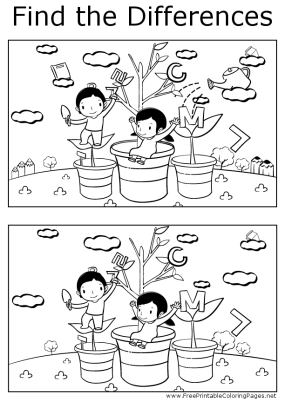
Guess the Garden Differences


No two gardens are exactly alike. Can you find the differences in the two pictures of kids having fun in their gardens? Print out the Guess the Garden Differences puzzle and have fun!

May 12 – National Odometer Day

celebrate-picture-books-picture-book-review-are-we-there-yet

About the Holiday

In 1847 William Clayton invented a little add-on to the automobile that provides perspective, history, and interesting information on our beloved cars—the odometer! Whether you like to keep track of how many miles you travel on a trip, how economical your gas mileage is, when your next tune-up is due, or just marvel at how long your car has lasted, the numbers on the odometer tell the story. Today, take your car out for a spin—perhaps to the car wash or out to the open road!

Are We There Yet?

By Dan Santat


When you’re invited to a very special birthday party and it’s far away, what do you do? Pack up the car, of course, and head out on an adventure! Going to Grandma’s house is always exciting—at least for the first hour, but after that each minute seems to take for- ev-er. You might even think “Are we there yet?” or “This is taking forever.” Wait! Did you say that out loud? The look on your parents’ faces tell you you did!

You can only stare out the window at the landscape for so long. “But what happens when your brain becomes too bored? That’s when your whole world can turn upside down. Minutes feel like hours. Hours turn to days. Days seem like months and then years. Pretty soon that “quick trip” feels like a million years.

As you ride in the car, tucked in the back seat, feeling a little sick, needing to use the bathroom, your butt growing numb—and bored, bored, bored—could time actually be going backward? While you’re zipping down the highway suddenly a steam train is chugging past, trying to outrun a team of bandits. Now pirates have captured your car and sent it down the plank toward the briny deep! I hope you’re good with a lance because somehow your family’s the main attraction at the royal jousting tournament. And there’s no stopping for the bathroom in Ancient Egypt, or you’ll be put to work building a pyramid.

You think you’ve reached the end of your patience? You’ve actually reached the beginning of time. You may love dinosaurs, but you don’t belong in the Cretaceous Period. So play fetch with T-Rex one time and then climb aboard his back for a wild ride back.

But as quickly as you turned back time you can find yourself in the future—a future you don’t even recognize, where everything you love is gone. So take time now—yes, while you’re bored, bored, bored—to really look around you and see what’s going on. After all, you don’t want to miss this party—it’s the one you’ve been invited to.

Dan Santat’s Are We There Yet? is a rambunctious reminder to enjoy the moment you’re in, because Time is a wily beast that creeps up on you when you’re not paying attention. The art in this book is the star, with its full, two-page vibrant spreads and topsy-turvy format. An old steam train is chased by bandits in the western heat. A rag-tag crew of scallywag pirates menace the family at sword point. Crowds roar at a medieval jousting tournament. Ancient Egyptians toil in the golden sun overshadowed by the Sphynx and pyramids. And it’s love at first sight when the boy comes eye to eye with T-rex in the lush jungles of early Earth.

The scenes of the future, complete with flying cars, neon colors, and helpful robots make clever use of QR codes, and kids will relate to the funny twist ending.

Ages 4 – 8

Little Brown and Company, 2016 | ISBN 978-0316199995

Gardening for Wildlife Activity

celebrate-picture-books-picture-book-review-flower-dot-to-dot

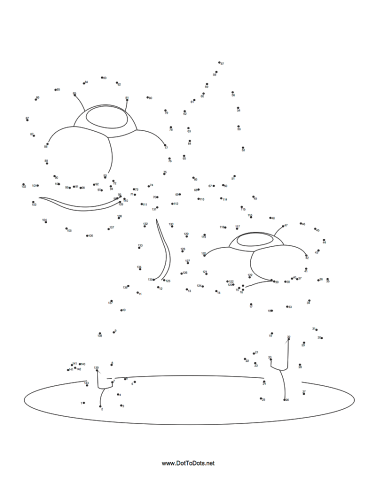
Who’s in the Garden Dot-to-Dots


Completing a dot-to-dot puzzle can be a little like taking a trip—you go from stop to stop, not knowing exactly what you’ll find at the end. In these dot-to-dots, you’ll discover who’s hiding in the garden.

Printable dot-to-dot, page 1

Printable  dot-to-dot, page 2

May 7 – National Train Day

celebrate-picture-books-picture-book-review-locomotive

About the Holiday

Falling at the end of National Tourism Week, National Train Day honors the history of train travel and its importance to the opening of new frontiers as well as its continued  use for pleasure and business transportation. Train museums and train enthusiasts across the country celebrate with special events, rides, and educational opportunities for all ages. Some celebrations occur today, while others are held on May 14.

Locomotive

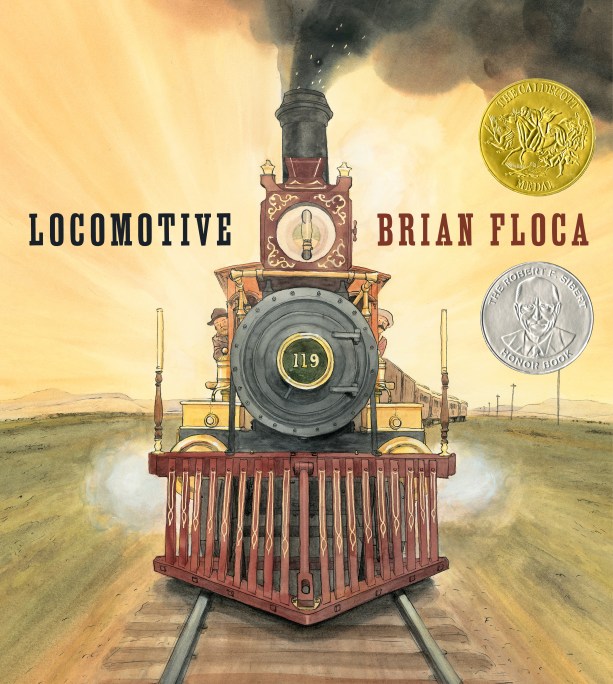
By Brian Floca


“Here is a road made for crossing the country, a new road of rails made for people to ride.” So begins Brian Floca’s sprawling paeon to the locomotive and its influence on America and the Old West. Amid the Clank Clank Clank of hammers on iron spikes, men from all over toiled from coast to coast to build the rail lines that carried the trains across the country: “Three strokes to the spike, ten spikes to the rail!”

Families who have sold all their possessions to pay for tickets for the week-long trip west stand on the platform in Omaha, Nebraska watching for the approaching train. Suddenly, they hear the clang of the bell and “see a puff from her stack—a puff of smoke, a smudge in the sky.” The awesome train pulls up at the station huffing “like a beast.”

Her crew—the brakeman, fireman, engineer, and conductor—make the train ready. They gather the passengers, stoke the firebox, push forward the Johnson bar, and get the train underway. The passengers sit back, ready for the long journey. The engineer “is the master of his machine, he knows her moods and tempers, where to set her bars and levers….Westward, westward runs the train, through the prairies, to the Great Plains, on to the frontier.”

In the cars the travelers read, play games, meet their neighbors. In winter they are warmed by a coal stove in one corner, while in the other corner a “modern” convenience is provided. Eventually, the train must stop to refuel. The passengers scramble to the railroad restaurant at the station. They have 20 minutes to eat what the menu offers: buffalo steak, antelope chops, or chicken stew (which tastes suspiciously like prairie dog).

As night falls a new engine is carefully attached to the cars by the switchman, who has learned to be quick to avoid the rolling, jumping cars that can take a finger. “Through the night the engine runs. Those up late hear her whistle, her wild and lonesome cry. It echoes on far hills and homes, it sounds in distant dreams.”

By morning the train has reached the mountains. The going is steep and slow. A second engine must be attached to give the train power enough to climb. On the other side of the mountains the terrain is rugged, and the train must traverse long, rickety wooden bridges. Days pass as the train travels through beautiful, mysterious country, skirting land formations such as Castle Rock, The Witches, Devil’s Slide, and the 1000 Mile Tree.

In Utah at Promontory Summit, the train comes to the meeting place of the tracks built from the East and the tracks built from the West. The passengers disembark and change trains, changing train companies also, from the Union Pacific that brought them here to the Central Pacific who will take them the rest of the way. Now the train passes through desolate, dry country, home to the Paiute and the Shoshone.

The mighty Sierra Nevada rises up ahead. A second engine is again required. If the tracks are slick, the “engineers can pull a handle to drop some sand down a tube, onto the tracks. The wheels hit the grit, the traction does the trick!” Closer and closer the train comes to its final destination, puffing through long wooden sheds that keep the tracks clear in winter and into dark tunnels blasted through the mountain rock.

Down, down the train progresses to the end of the line. The weary but excited travelers jump from the train to meet their friends or family or to start a new life in San Francisco!

If you love trains, American history, or the Old West, or if you are simply enamored of travel, you will want to read Brian Floca’s Caldecott Medal Winning and Silbert Honor book, Locomotive. Floca’s lyrical language makes poetry of the steam train’s inception, from the laying of the rails to the inner workings of the engine to the long journey westward. Fascinating facts of the train crews’ work, conditions for the passengers, and the territory crossed make this a page turner that any age will enjoy.

Readers can almost hear the sounds of the clanging bell and huffing engine, as these sounds are represented in a variety of typefaces and sizes, growing larger and larger as the train approaches the station. Every page is a joy. As the train chugs across the country, the paintings are swept in rushing brush strokes and the train whooshes into view from the edges, filling the page. The vast empty plains nearly dwarf the locomotive, and the mountainous regions pose chilling challenges for the iron horse. The nighttime scenes are beautifully lit by starlight and the single headlight of the train, reflecting the dreams of a new nation.

Although Locomotive is a longer picture book, its rhythms, depth of description, and gorgeous language will appeal to even very young children. Make some tea and hot chocolate and settle in for a cozy read of wonderful book!

Ages 4 – 12 and up (adults will also enjoy this book)

Atheneum Books for Young Readers, 2013 | ISBN 978-1416994152

National Train Day Activity

celebrate-picture-books-picture-book-review-all-aboard-maze

All Aboard Maze!


Trains travel over intricate terrain, over mountains, across vast plains, and through exciting cities. It’s a little like finding your way through a maze! Have fun completing this printable All Aboard Maze! Here’s the Solution. Choo choo!