May 10 – Mother Ocean Day

celebrate-picture-books-picture-book-review-at-the-sea-floor-cafe

About the Holiday

The brain child of the South Florida Kayak Fishing Club and enacted in 2013, Mother Ocean Day promotes awareness of the beauty and wonder of the world’s oceans. Teeming with rare and surprising creatures and plants, the ocean remains one of Earth’s most amazing mysteries. Today, take time to enjoy all the ocean has to offer—go to the beach and walk, snorkel, swim, or fish—or if you’re more of a landlubber read a book about our Mother Ocean.

At the Sea Floor Café: Odd Ocean Critter Poems

Written by Leslie Bulion | Illustrated by Leslie Evans


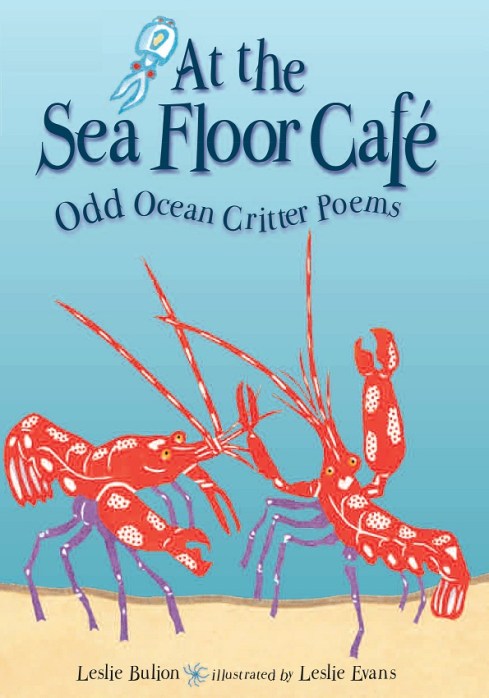
With a jaunty exhortation to “Dive In!” Leslie Bulion invites readers to “…visit a habitat shallow and deep. / and boiling hot, where acids seep, / and frigid and pressured and mountainy-steep, / Come explore the sea! Seventeen species of “odd critters, enormous and tiny…hunters and foragers, hiders and peekers” are described in clever, informative verse.

The Coconut Octopus is a wily creature: “This octopus walks backwards on two arms, / And wraps the other six around its top. / It ambles free of predatory harms, / And thus avoids becoming shark-chewed slop.” The symbiotic relationship between the Leopard Sea Cucumber and the Emperor Shrimp is told in alternating lines of blue and red.

“I inch along.”

“We hitch a ride. / We tour the seafloor country side.”

“I’m ship,”

We’re crew. / We swab the decks / By eating scummy algae specks.”

I’m camouflaged / in leopard spots.

While not the swiftest / Of the yachts, / A top-notch spot to meet a mate.”

When threatened I eviscerate.

To spew my guts / Is quite a chore, / And it takes weeks / To grow some more. / But I keep predators away.

We live to crew / Another day.

The unexplained habit of the convict fish, which “eats” its young every night just to spit them out again, is described in “Fish Food,” and readers can dig their teeth into another meal-related relationship between the reef shark and the cleaner wrasse in “Healthy Eating.” In “Dental Health” readers learn that narwhal’s tusks are much more than defense mechanisms. Instead, each tooth “contains ten million nerves to sense / environmental evidence.” And what’s more—“…when we see them crossing spars / and jousting underneath the stars, / one’s tusk above and one’s beneath, / it’s not a fight; their brushing teeth.”

“Crabby Camouflage” has never been so elaborate or decorative as that concocted by the jeweled anemone crab, and “Dolphin Fashion” reveals an ingenious way to protect a tender snout: “A bottlenose counseled her daughter: / Put this sponge on your beak underwater. / You can scare out more fish, / Poke sharp stones as you wish, / And your skin’ll stay smooth like it oughter.”

Snapping shrimp, epaulette sharks, the violet snail, sea spiders, krill, the broody squid, sipohonophores, erenna, larvaceans, osedax, and the remotely operated vehicles that give us a view of the ocean floor are also celebrated in this fun poetry collection.

Each poem is followed by scientific information about the subject of the verse.

Leslie Bulion piques readers’ interest in these fascinating ocean creatures with her smart, witty rhymes that reveal little-known facts.

Leslie Evans, with her printmaker’s eye, illustrates the deep blue pages with stylized depictions of the fish and animals that populate the sea, allowing readers to visualize the quirks and adaptations written about.

Ages 6 and up

Peachtree Publishers, 2011 | ISBN 978-1561455652

Gardening for Wildlife Month Activity
celebrate-picture-books-picture-book-review-flower-vase

Spoon Flowers

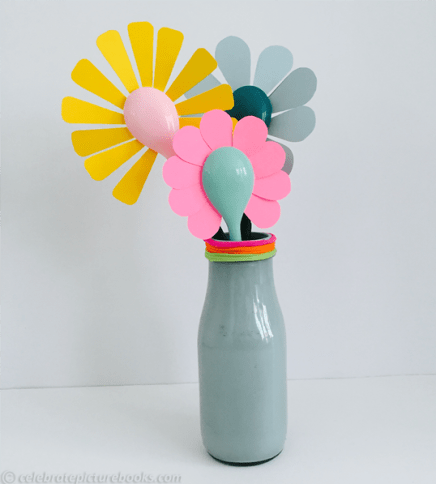
The rounded scoop and long “stem” of plastic ice-cream spoons make a perfect base for pretty wildflowers. You can use the printable petal template or make petals of your own design to fill your vase with color

Supplies

  • Printable Petal Template
  • 3 – 4 plastic ice-cream spoons, these are available in different colors at party supply stores or you can paint them the color you’d like
  • Multi-purpose paint in colors of your choice, if you are painting the spoons
  • Heavy craft paper in your favorite flower colors
  • Green ribbon
  • Ribbon, hairbands, weaving loom bands, or colored wire
  • Glue gun or strong glue
  • Paintbrush 
  • Scissors
  • Beans, sand, pebbles, or glass or plastic beads to fill the vase

Directions

  1. Print or trace the petals onto colored paper. The number of petals you need for each flower will depend on the size of the spoon
  2. Cut out the petals
  3. With the glue gun or strong glue, attach the petals to the spoon, gluing the end of the petals around the inside edge of the spoon, Let dry
  4. Wrap the handle of the spoon with the green ribbon and glue in place
  5. Fill the vase ¾ full with beans, sand, pebbles, or beads
  6. Decorate the rim of the bottle with the ribbon, bands, or wire
  7. Push the flower stems into the vase and arrange

May 9 – It’s Get Caught Reading Month

celebrate-picture-books-picture-book-review-the-whisper

About the Holiday

Supported by the Association of American Publishers (AAP), Get Caught Reading Month promotes literacy and reminds people of all ages how much fun reading is. Begun in 1999 by former Congresswoman Pat Schroeder, President and CEO of AAP, the initiative brings together publishing industry executives, authors, illustrators, teachers, librarians, politicians, celebrities, and readers to spread the word about the joys of books. To join the celebration, take a picture of yourself or a friend reading, hold a book drive, challenge yourself to a reading goal, and/or read to someone else.

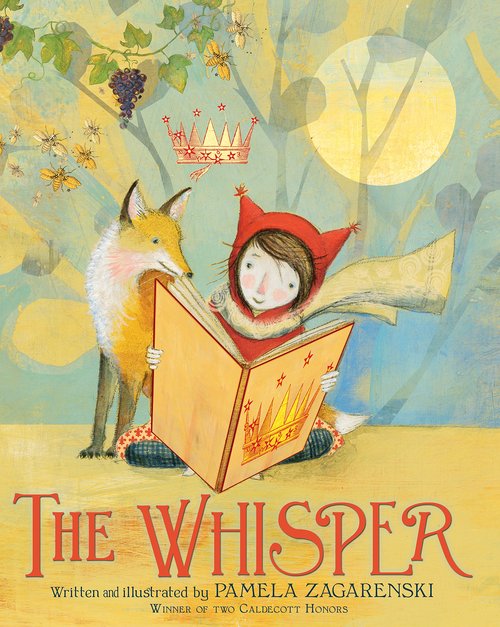
The Whisper

By Pamela Zagarenski


A little girl loves stories and the magical realms they can take her to. One day while waiting for school to be dismissed, she spies a book on a shelf. Her teacher allows her to take it home with her, and the little girl happily runs off with it when the clock strikes 3:00. On the way home, she doesn’t notice that all the letters are escaping from the book or that a wily fox is catching them in a net.

At home she secludes herself in her room, excited to read the mysterious book. She turns the pages, awed by the beautiful pictures. But by the time she has finished, she has tears in her eyes. “Where were the words? Where were the stories?” The girl flips through the book again, but this time she hears a small whisper: “Dear little girl, don’t be disappointed. You can imagine the words. You can imagine the stories.”

The whisper seems so knowing that the girl does at it suggests. She turns to the first page where a blue bear followed by a beekeeper walks under a honeycomb sun toward a brown bear. The girl stares at the picture and thinks of a title: Blue Bear’s Visit. Her story begins: “Blue Bear arrived on the first day of spring. He promised…”

Warming to the idea of creating stories, the girl examines the second picture. She notices the same white rabbit that was in the first picture. In the foreground a “magnificent ox” is listening to a man whispering into its large, soft ear. The Secret, the little girl titles this story, which starts: “Mr. Ox, you must please promise not to tell anyone, but we need your help. Last week…”

With the third picture the words tumble out more easily, forming sentences that give life to the massive white elephant, regal lion, and that rabbit again who are traveling the sea in a long, open boat. The Quest, she calls it. In Tigers Prayer, preparations are being made: tea is brewing, a clown with a pointed hat plays his accordion, a windhorse jumps through hoops, and the rabbit rides a golden ring as a lion hears what Tiger has to say. A Birthday Party comes next, and it seems Pan has planned a very secret party. An owl perches in the crook of a tree asking for the password with a “Hoo, Who?” which is answered quickly because the vanilla cake with raspberry filling and vanilla cream frosting holding 6 candles must be delivered.

The Magical Cloak sees the little girl’s imagination truly take flight as she decides the man in the “elaborate coat” is a wizard or magician whose bubbles come to life once released from the blower. Enormous whales now fill the harbor. They are beautiful, but something must be done….Next, hurry to meet the owl! He is picking up passengers at midnight. But what does the golden key in his beak open? Only the story The Golden Key locked in the little girl’s mind will tell.

Hours go by as the little girl creates tales for each picture in the book. As the night grows late, she sleeps, carried into slumber on dreams woven from the pictures and stories she imagined. When she wakes up, the girl wishes to spend more time with her new friends, but it’s time for school so she gathers up the book and hurries away.

On the path to school she meets a fox who is carrying a bag. “Excuse me, little girl,” says the fox. “I believe I have the words to your book.” The fox then explains how he caught the words as they spilled from the pages the day before. The fox gives her his parcel, but asks for a favor. The girl is happy to oblige and lets the fox stand on her shoulders to reach a bunch of grapes dangling from a nearby vine.

The girl rushes into school and apologizes for being late. She relates the story of the fox and the words and the magical night she has spent making up tales for the pictures in the book. “I have so many stories to tell you,” says the girl to her teacher. “‘I can’t want to hear,’” the teacher replies with a smile.”

Opening a book by Pamela Zagarenski is to fall into an alternate realm of such beauty and imagination that you forget the real world exists.  Her paintings are composed of rich, regal hues swirling with images and designs that overlap and float to create the kind of experience only the deepest, most complex dreams allow. The characters and details follow page to page uniting the pictures and, subtly, the stories the little girl discovers in them: The teapot, once introduced, waits under a tree on the next page and rides the waves of the whale-filled sea in the next. The bees and the rabbit are constant companions on each spread, and the animals will fill the reader with awe.

The little girl’s imagined stories are tantalizing with just the right mix of the mysterious and the tangible to entice readers to add more. The frame of the Aesop Fable The Fox and the Grapes is inspired and could lead to a conversation about how “life is what you make it.”

The Whisper is a book readers will want to linger over and dip into again and again, and would be especially fun on those days when there’s “nothing” to do. It makes a beautiful gift for any occasion.

Ages 4 – 9 (this book would also appeal to adults)

Houghton Mifflin Harcourt, 2015 | ISBN 978-0544416864

Gardening for Wildlife Month Activity

In addition to Get Caught Reading Month, May is Gardening for Wildlife Month. It’s the perfect time to celebrate the joys and colors of spring and enjoy the many plants, flowers, and wildlife nature provides. Whether your garden is small or large, just being planted or already blooming, you can be mindful to make yours wildlife friendly to help and protect the environment.

This week’s crafts and activities will revolve around gardens and plants of all types. I hope you enjoy them!

celebrate-picture-books-picture-book-review-vase

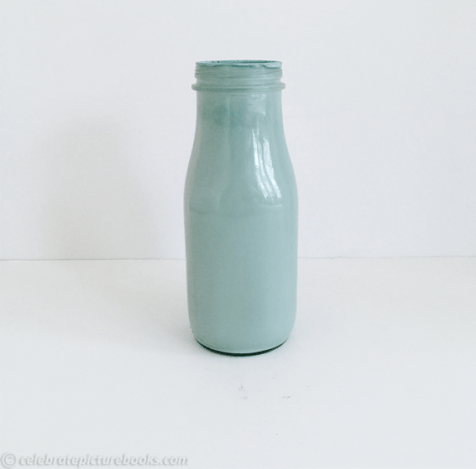
Painted Bottle Vase

Do you often pick up a smoothie or other drink at the grocery store and then just throw away the glass or plastic bottle? Those containers, with their elegant shapes, make beautiful vases with just a little paint!

Supplies

  • Plastic or glass bottle
  • Multi-surface craft paint in your favorite color
  • Paint brush
  • Wax paper

celebrate-picture-books-picture-book-review-vase-top

Directions

  1. Wash and thoroughly dry your bottle.
  2. Pour 3 to 5 tablespoons of craft paint into the bottle
  3. Invert the bottle on the wax paper
  4. Let the paint drip down the sides of the bottle, this may take several hours to overnight
  5. When the paint reaches half-way down the sides of the bottle, you can “help it along” with the paintbrush, filling in any empty spaces
  6. Let the bottle sit, inverted, until the paint dries. This can take one to several days, depending on the atmosphere.
  7. When the paint is dry, use the vase for artificial flowers.

Join me tomorrow to see how to make flowers to go in your vase!

Picture Book Review

May 8 – Mother’s Day

celebrate-picture-books-picture-book-review-cuddles-for-mommy

About the Holiday

Celebrating mothers dates back to the ancient Greeks and their annual spring festival honoring maternal goddesses. In the 1600s a Mothering Sunday was enacted in England, and employers encouraged their servants, apprentices, and any other employees who lived away from their families to visit their mother and bring her gifts. This tradition died out by the 19th century, but gained popularity again after World War II when it merged with the American holiday.

The first modern notion of Mother’s Day came in 1872 and belongs to Juliet Ward Howe. It wasn’t until 1912, however, after Anna Jarvis promoted the holiday through a letter-writing campaign to politicians and newspapers across the country that Mother’s Day was celebrated in every state. President Woodrow Wilson made it a national holiday in 1914. Now Mother’s Day is celebrated around the world. Today, let your mom know how much she means to you!

Cuddles for Mommy

Written by Ruby Brown | Illustrated by Tina Macnaughton


While Little Owl sits on the tree branch reading her book and watching her Mommy knit, she feels like giving her a cuddle. But what kind of cuddle should it be? There is the kind of cuddle that’s just right to say good morning. But it’s afternoon and Little Owl and Mommy have already had their good-morning cuddle.

celebrate-picture-books-picture-book-review-cuddles-for-mommy-book

Image copyright Tina Macnaughton, 2016, text copyright Ruby Brown, 2016. Courtesy of Little Bee Books.

Perhaps a goodbye cuddle then. Those always feel good when Mommy drops Little Owl off at school in the morning. But Little Owl isn’t going anywhere. Little Owl thinks and thinks. “What about the cuddle I give you when I’m sorry?” asks Little Owl. But Mommy reminds her that she hasn’t done anything wrong.

Then Little Owl has another idea: there’s a special cuddle Mommy gives when Little Owl is scared. That might work—except that Little Owl isn’t afraid now. After a while Little Owl says, “’I always give you a cuddle to say thank you. Like when you’ve brought me a new book.’” Mommy Owl tells her to hold on to that cuddle because they are going to the bookstore later.

celebrate-picture-books-picture-book-review-cuddles-for-mommy-cooking

Image copyright Tina Macnaughton, 2016, text copyright Ruby Brown, 2016. Courtesy of Little Bee Books.

Little Owl thinks and thinks. What other reasons are there to give a cuddle? There’s the excited happy cuddle, but while Little Owl is happy, she’s not excited. And cuddles come when Mommy is proud of her, Little Owl decides, remembering her trumpet performance last week. And when Little Owl is sick; Mommy always cuddles her then, but she’s not sick today. The good-night cuddle is always a favorite, but it’s far from bedtime now.

Suddenly, Little Owl has a fantastic idea. “I know what kind of cuddle I can give you RIGHT NOW, Mommy!” exclaims Little Owl. “She wrapped her wings tight around Mommy Owl and squeezed tight. The Mommy Cuddle! Just because I love you!”

celebrate-picture-books-picture-book-review-cuddles-for-mommy-goodbye

Image copyright Tina Macnaughton, 2016, text copyright Ruby Brown, 2016. Courtesy of Little Bee Books.

Ruby Brown’s sweet dilemma makes for cuddle-perfect reading. The gentile and loving dialogue between Little Owl and her Mommy is a reminder for children that their mom is always there to make any day or event better with a hug and endless love. Kids will recognize and respond to all the different hugs and the nuances behind those squeezes.

Tina Macnaughton’s soft paintings of the adorable Little Owl and her Mommy are lit with glowing golds, greens, pinks and violets that reflect the love between them. Little Owl’s memories of all the different life events that elicit the cuddles she gives Mommy and gets in return are depicted with homey details that reinforce the closeness between mother and child. The special relationship between mother and child is evident on every page, where cuddles and hugs abound.

Little Owl is endearing in her earnest quest to find just the right hug for the feelings inside her, making Cuddles for Mommy an excellent book for bedtime or naptime—or for any time that a hug would feel just right. Cuddles for Mommy is a nice addition to a child’s bookshelf.

Ages 3 – 8

Little Bee Books, 2016 | ISBN 978-1499802030

Mother’s Day Activity

celebrate-picture-books-picture-book-review-paper-plate-owl

Make a Mother’s Day Hug Card


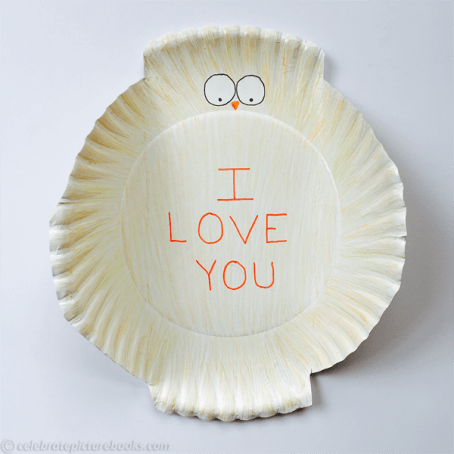
Moms love hugs on Mother’s Day—and any day! Make this Mother’s Day card that says “Owl always love you!”

Supplies

  • Paper plate
  • Brown, yellow, and orange colored pencils or crayons
  • Black, orange, and red markers

celebrate-picture-books-picture-book-review-paper-plate-owl-open

Directions

  1. Fold the sides of the plate in toward the center, overlapping one on the other a little
  2. Trim the top and bottom of each folded half-circle to make room for a head and tail
  3. Draw eyes and a beak just above the round center of the plate
  4. Outline the eyes in back marker and add pupils
  5. Draw and color a beak with the orange marker
  6. Color the back and front of the plate with brown, yellow, and orange colored pencils or crayons
  7. Write “I Love You” or whatever you would like to say to your mom in the center of the plate
  8. Fold the wings closed

Give  your mom your card along with a hug!

Picture Book Review

May 7 – National Train Day

celebrate-picture-books-picture-book-review-locomotive

About the Holiday

Falling at the end of National Tourism Week, National Train Day honors the history of train travel and its importance to the opening of new frontiers as well as its continued  use for pleasure and business transportation. Train museums and train enthusiasts across the country celebrate with special events, rides, and educational opportunities for all ages. Some celebrations occur today, while others are held on May 14.

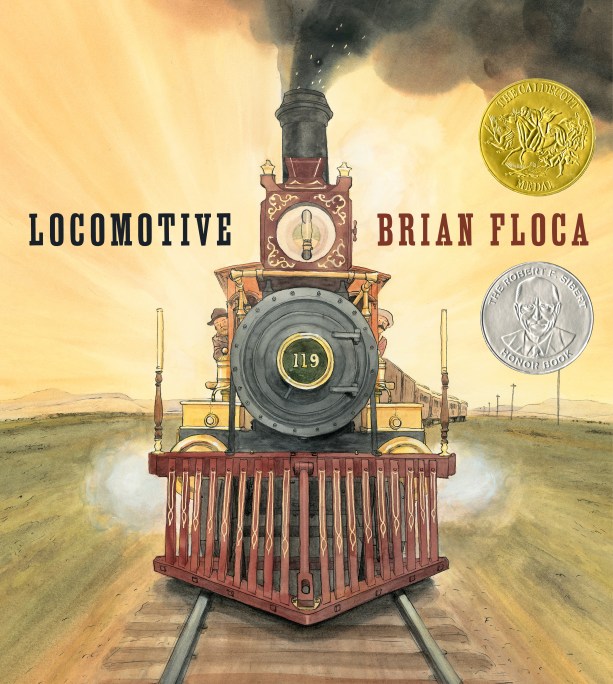
Locomotive

By Brian Floca


“Here is a road made for crossing the country, a new road of rails made for people to ride.” So begins Brian Floca’s sprawling paeon to the locomotive and its influence on America and the Old West. Amid the Clank Clank Clank of hammers on iron spikes, men from all over toiled from coast to coast to build the rail lines that carried the trains across the country: “Three strokes to the spike, ten spikes to the rail!”

Families who have sold all their possessions to pay for tickets for the week-long trip west stand on the platform in Omaha, Nebraska watching for the approaching train. Suddenly, they hear the clang of the bell and “see a puff from her stack—a puff of smoke, a smudge in the sky.” The awesome train pulls up at the station huffing “like a beast.”

Her crew—the brakeman, fireman, engineer, and conductor—make the train ready. They gather the passengers, stoke the firebox, push forward the Johnson bar, and get the train underway. The passengers sit back, ready for the long journey. The engineer “is the master of his machine, he knows her moods and tempers, where to set her bars and levers….Westward, westward runs the train, through the prairies, to the Great Plains, on to the frontier.”

In the cars the travelers read, play games, meet their neighbors. In winter they are warmed by a coal stove in one corner, while in the other corner a “modern” convenience is provided. Eventually, the train must stop to refuel. The passengers scramble to the railroad restaurant at the station. They have 20 minutes to eat what the menu offers: buffalo steak, antelope chops, or chicken stew (which tastes suspiciously like prairie dog).

As night falls a new engine is carefully attached to the cars by the switchman, who has learned to be quick to avoid the rolling, jumping cars that can take a finger. “Through the night the engine runs. Those up late hear her whistle, her wild and lonesome cry. It echoes on far hills and homes, it sounds in distant dreams.”

By morning the train has reached the mountains. The going is steep and slow. A second engine must be attached to give the train power enough to climb. On the other side of the mountains the terrain is rugged, and the train must traverse long, rickety wooden bridges. Days pass as the train travels through beautiful, mysterious country, skirting land formations such as Castle Rock, The Witches, Devil’s Slide, and the 1000 Mile Tree.

In Utah at Promontory Summit, the train comes to the meeting place of the tracks built from the East and the tracks built from the West. The passengers disembark and change trains, changing train companies also, from the Union Pacific that brought them here to the Central Pacific who will take them the rest of the way. Now the train passes through desolate, dry country, home to the Paiute and the Shoshone.

The mighty Sierra Nevada rises up ahead. A second engine is again required. If the tracks are slick, the “engineers can pull a handle to drop some sand down a tube, onto the tracks. The wheels hit the grit, the traction does the trick!” Closer and closer the train comes to its final destination, puffing through long wooden sheds that keep the tracks clear in winter and into dark tunnels blasted through the mountain rock.

Down, down the train progresses to the end of the line. The weary but excited travelers jump from the train to meet their friends or family or to start a new life in San Francisco!

If you love trains, American history, or the Old West, or if you are simply enamored of travel, you will want to read Brian Floca’s Caldecott Medal Winning and Silbert Honor book, Locomotive. Floca’s lyrical language makes poetry of the steam train’s inception, from the laying of the rails to the inner workings of the engine to the long journey westward. Fascinating facts of the train crews’ work, conditions for the passengers, and the territory crossed make this a page turner that any age will enjoy.

Readers can almost hear the sounds of the clanging bell and huffing engine, as these sounds are represented in a variety of typefaces and sizes, growing larger and larger as the train approaches the station. Every page is a joy. As the train chugs across the country, the paintings are swept in rushing brush strokes and the train whooshes into view from the edges, filling the page. The vast empty plains nearly dwarf the locomotive, and the mountainous regions pose chilling challenges for the iron horse. The nighttime scenes are beautifully lit by starlight and the single headlight of the train, reflecting the dreams of a new nation.

Although Locomotive is a longer picture book, its rhythms, depth of description, and gorgeous language will appeal to even very young children. Make some tea and hot chocolate and settle in for a cozy read of wonderful book!

Ages 4 – 12 and up (adults will also enjoy this book)

Atheneum Books for Young Readers, 2013 | ISBN 978-1416994152

National Train Day Activity

celebrate-picture-books-picture-book-review-all-aboard-maze

All Aboard Maze!


Trains travel over intricate terrain, over mountains, across vast plains, and through exciting cities. It’s a little like finding your way through a maze! Have fun completing this printable All Aboard Maze! Here’s the Solution. Choo choo!

May 6 – International Space Day

celebrate-picture-books-picture-book-review-otter-in-space

About the Holiday

Each year International Space Day is observed on the first Friday in May to commemorate the extraordinary achievements, benefits, and opportunities of space exploration. The goal of International Space Day is to promote math, science, technology and engineering education to inspire students to pursue a career in science and especially a career in space-related fields.

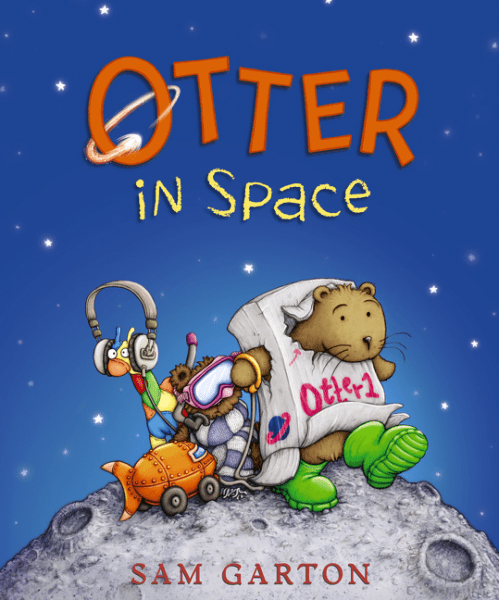
Otter in Space

By Sam Garton


On Sunday Otter goes to the museum with Otter Keeper and Teddy to see the Space Exhibition. They see a Triceratops skeleton and meet a stuffed bear that must be Teddy’s cousin. On the walls are old paintings made before the invention of crayons, and ancient, interesting things are everywhere.

Otter likes all these exhibits, but her favorite is the room dedicated to outer space—there are buttons to push just like a real astronaut, videos to watch, and a rock that came all the way from the moon. At last Otter gets to go to the gift shop. She loads up her arms with toys, but Otter Keeper says, “One thing only.” The spaceship travels home with them, but Otter and Teddy really want a moon rock too.

The next day while Otter Keeper is at work, Otter and Teddy play with their new spaceship, but it’s just not as fun without a moon rock. Teddy suggests going back to the museum, but no one can drive them. Otter thinks and thinks and suddenly has “the best idea ever!” She and Teddy will blast to the moon and retrieve a moon rock.

Otter makes a very important list of very important things to do. After lunch she builds two space suits and starts training. Although Teddy has some trouble keeping his space suit on and with problem solving, his performance in anti-gravity training is impressive so they move on to constructing the spaceship. With ingenuity and a bunch of household items, Otter builds a rocket and takes it to the Launchpad.

With Giraffe at “mishun control” lift-off is easy, but the moon landing is a little bumpy. Otter’s suit gets torn, but she perseveres and discovers the perfect moon rock nearby. It’s huge! With a little trouble Otter and Teddy transport it back to Earth, where it makes a perfect companion, playing board games and pirates—until Otter Keeper comes home and says it has to go back where it belongs.

The discussion is carried over to dinnertime, and Otter Keeper relents when he sees how serious Otter is in her space suit. If Otter cleans the moon rock she can keep it, says Otter Keeper. But one more restriction has been added to the Otter DO NOT list: dig up moon rocks! That’s okay, though. There are other things to dig up on the moon—like a dinosaur!

Sam Garton’s Otter in Space is a cute, spot-on portrayal of the fantastic ideas kids get when exposed to new concepts or places. Told from Otter’s point of view, the text hits on the serious-yet-humorous observations of kids: the gift shop as the favorite museum “exhibit,” a lingering regret for the toy left behind, and “the best ideas ever!” to correct situations.

Garton’s colorful illustrations of wily Otter and her faithful Teddy as they visit the museum, plan their space trip with the help of Giraffe and other toys, and blast off wearing a cereal box space suit are endearing. Kids will giggle at Teddy’s anti-gravity training in the washing machine. They and their parents will also appreciate Otter’s crafty discovery of the moon rock in the garden and recognize with a laugh his adoption of it as a member of the family.

Otter in Space is a book kids will want to explore again and again!

Ages 4 – 8

Balzar + Bray, Harper Collins, 2015 | ISBN 978-0062247766

International Space Day Activity

celebrate-picture-books-picture-book-review-rocket

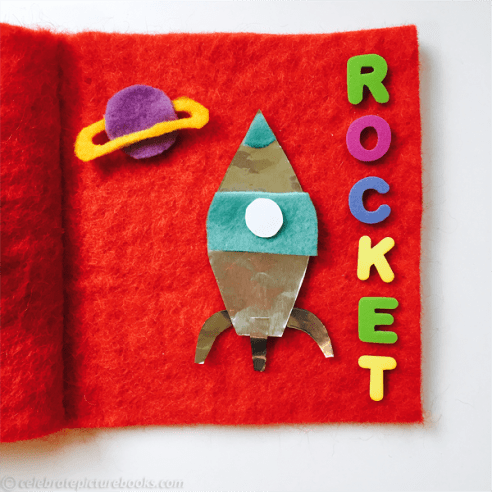
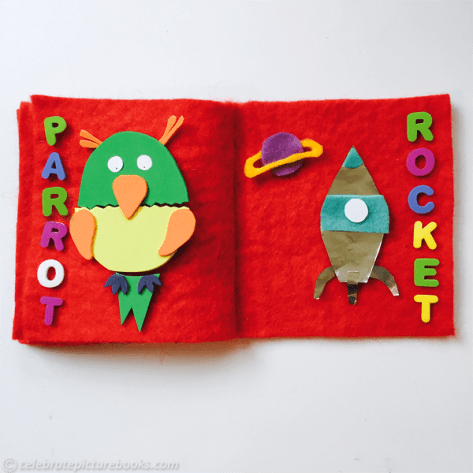
Create a Soft Book, Page 6—Rocket


Blast off with fun on Page 6 of your soft book with this shiny rocket on its way to an undiscovered planet! See previous posts from May 1 through 5 for each page of the book.

Supplies

  • Printable Rocket Template
  • Adhesive felt or foam letters
  • Tin foil
  • Felt, fleece, or foam in various colors of your choice (I used aqua, white, yellow, and purple)
  • Scissors
  • Strong glue or fabric glue

celebrate-picture-books-picture-book-review-rocket-and-parrot

Directions

  1. Cut out the rocket and feet from tin foil
  2. Cut out the nose cone and body stripe from felt, fleece or foam
  3. Cut out the round window from white felt, fleece, or foam
  4. Cut out the planet from your choice color of felt, fleece, or foam
  5. Cut out planet’s ring from your choice color of felt, fleece, or foam
  6. Glue rocket and feet to page
  7. Fit ring around planet and glue to page
  8. Attach adhesive letters to page, making sure they are stuck firmly. If they aren’t use fabric glue

I hope you enjoy your book!

Picture book review

May 5 – Cinco de Mayo

celebrate-picture-books-picture-book-review-mango-abuela-and-me

About the Holiday

Cinco de Mayo has its origins in a victorious battle for Mexico during the Franco-Mexican War in 1862. In the United States this day is a celebration of the rich culture and heritage of Mexico that includes parades, mariachi music performances, Mexican food, and street festivals. If you can, attend a cultural event, listen to Mexican music, or prepare a special Mexican dinner.

Mango, Abuela, and Me

Written by Meg Medina | Illustrated by Angel Dominguez


During the winter Mia’s Abuela moves from her house far away to live with her  family. Mia feels shy around her unfamiliar grandmother, but quickly adapts, sharing her room and her drawer space. The one thing they cannot share is language. Abuela “can’t unlock the English words” in Mia’s book, and Mia knows only a little Spanish.

On the first night Abuela shows Mia two things she has carefully brought with her—a feather from a wild parrot that roosted in her mango trees and a photograph of her late husband. “Tu Abuelo,” she explains to Mia.

For the rest of the winter, Mia spends time with her grandmother, but regrets that she can never tell her important things about her life. Abuela does’t know that Mia’s good at art or can beat the boys in a race. Likewise, Abuela can’t tell Mia about her life or answer Mia’s many questions. 

When Mia confides in her mother, her mom reminds her of how she helped her best friend, Kim, learn English when she was new at school. One day while Mia and her grandma bake meat pies, Mia pretends to be her teacher, naming each ingredient in English. Abuela reciprocates with the Spanish word. Mia suddenly has an idea. Shetags everything in the house with its English name and the pair practices.

The next day on a trip to the pet shop to buy hamster food, Mia sees something in the window that gives her another exciting idea. Right in the middle of the display sits a colorful parrot. “Let’s buy him,” Mia exclaims. “For Abuela.” The parrot can keep Abuela company while she is in school, Mia thinks.

Abuela is thrilled with the gift, and they name the parrot Mango because he is the color of the tropical fruit. Abuela teaches him to say Buenos tardes. Good afternoon, Mia teaches him. “Buenos tardes, good afternoon,” Mango repeats. Abuela, Mia, and Mango spend the days practicing new English and Spanish words, learning the days of the week, the months, and the names of coins. Encouraged by her success, Abuela asks to learn more and harder words so she can meet people in the neighborhood.

Best of all, Mia and Abuela can now talk about everything. Their “mouths are full of things to say,” and they tell each other about their day and their lives. From his perch Mango watches and listens. Night falls and as the light is turned off, Mia says “Hasta mañana, Abuela.” “Good night, Mia,” Abuela whispers.

Meg Medina beautifully represents the relationship between a little girl and her grandmother who are unfamiliar with each other but bound by familial love. The little girl’s acceptance of her grandmother and desire to communicate is strongly depicted in the activities they do together. Mia’s clever ideas to promote the mutual learning of each other’s language shows the kind of inclusiveness that builds friendships. 

Angela Dominguez depicts the developing friendship between Mia and her Abuela in bright paintings that mirror the reds, blues, greens, and yellows of the tropics. The pair’s closeness grows organically from page to page as Mia first shies away from the grandmother who is a stranger to her to attempts at communication to deep feelings of love as they bridge the language barrier through dedication, hard work, and the help of a unique friend.

Ages 5 – 8

Candlewick Press, 2015 | ISBN 978-0763669003                    

Cinco de Mayo Activity

celebrate-picture-books-picture-book-review-parrot

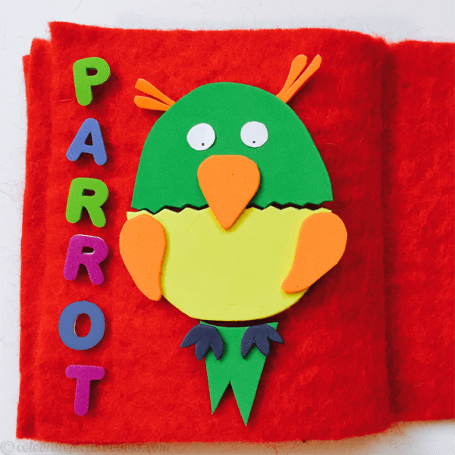
Create a Soft Book, Page 5—Parrot


Parrots are beautiful and exotic birds with a talent for language! Add this colorful tropical parrot to your soft book with the printable template provided.

Supplies

  • Printable Parrot Template
  • Yellow, green, orange, white, and black or brown felt, fleece, or foam
  • Adhesive felt or foam letters
  • Fabric glue
  • Scissors

Directions

  1. Cut out the head and tail from the green felt, fleece, or foam
  2. Cut out the body from the yellow felt, fleece, or foam
  3. Cut out the beak, wings, and feather tufts from the orange felt, fleece, or foam
  4. Cut out the feet from the brown or black felt, fleece, or foam
  5. Assemble the parrot and glue in place
  6. Attach the adhesive letters, making sure they stick firmly. If they don’t use fabric glue

See you tomorrow!

May 4 – International Firefighters Day

celebrate-picture-books-picture-book-review-this-is-the-firefighter

About the Holiday

International Firefighters’ Day was established to commemorate the dedication of firefighters to their communities and the sacrifices they make in dangerous situations to protect and rescue those they have pledged to help. It’s also a day in which current and past firefighters can be thanked for their contributions. If you know a professional or volunteer firefighter, let them know how much you appreciate their service. Today is also a good day to check your smoke detectors.

This is the Firefighter

Written by Laura Godwin | Illustrated by Julian Hector


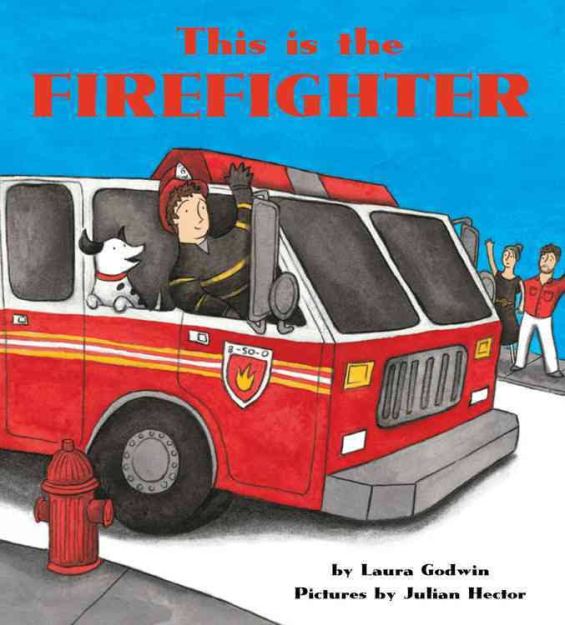
“This is the firefighter. / These are his clothes. / This is his truck / And this is its hose.” With a lilting, catchy rhyme This Is the Firefighter takes children along as firefighters answer the bell at the station and rush to the scene of a fire. When the firefighters reach the burning building, flames are shooting from the fourth and fifth floor windows, and a crowd has assembled across the street.

The firefighters hurry up the stairs, knock down an apartment door with their ax, and rescue the people inside. With the building fully engulfed in flames, a worried couple appear at a window. But they needn’t be afraid; the firefighters know just what to do: “This is the ladder, / attached to the truck, / that reaches the lady / and man who are stuck.”

But there is one more rescue to be made. As the crowd and the news media watch nervously from below, a firefighter “climbs through the heat.” In a moment: “This is the rescue. / This is the cheer / that roars through the crowd / when the signal’s ‘All clear.’”

Out of the crush of people a little girl runs to hug her kitten, which is being carefully carried in the hands of the firefighter. Now that the fire is out and everyone is safe, a new light glimmers in the sky: “This is the smoke / as it drifts far away. / This is the glow / at the end of the day.”

Newly available as a board book, Laura Godwin’s look at a busy day in the life of firefighters will delight small children who are fascinated by the work of the men and women who protect and save lives under the most dangerous conditions. Godwin’s rhyming story contains just the right mix of reality and surprise to represent these heroes well for young children.

Julian Hector’s bright, detailed illustrations will satisfy children with a thirst for knowledge about everything connected to fire fighting. The fire station is clearly depicted. As the crew maintains the fire truck, kids can see the hoses, dials, and connectors that power the rig. When the alarm rings, the crew slides down the pole and rushes to put on their safety gear as their Dalmatian runs ahead. The scenes of the city and the burning building, along with worried faces of its residents and the onlookers on the street are particularly effective. Kids will also be alert to the secondary story of the little girl and her kitten that progresses from page to page and will cheer at its conclusion.

Young children will want to linger over these pages and hear the story again and again!

Ages 2 – 5

Disney-Hyperion, 2015 | ISBN 978-1484707333

International Firefighters Day Activity


celebrate-picture-books-picture-book-review-fire-truck

Create a Soft Book, Page 4 – Fire Truck


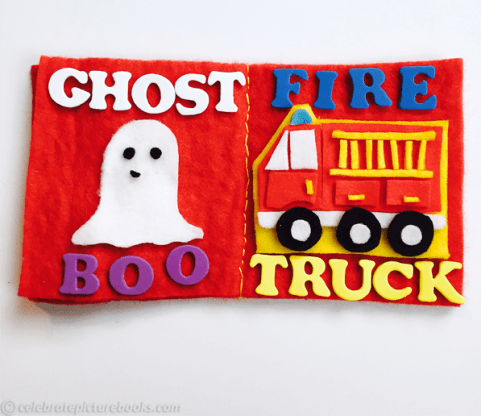
Fire trucks are always fascinating with their hoses, ladders, and loud siren. Add a red rig to your book with this printable Fire Truck Template. See Sunday’s Post for how to make the book, the cover, and Page 1. Page 2 can be found here, and here’s Page 3!

Supplies

  • Printable Fire Truck Template
  • Red, yellow, black, white, and blue felt, fleece or foam
  • Adhesive felt or foam letters
  • Fabric glue
  • Scissors

celebrate-picture-books-picture-book-review-firetruck

Directions

  1. Cut out the sections of the firetruck and doors from the red felt, fleece, or foam
  2. Cut out the windows and wheel centers from the white felt, fleece, or foam
  3. Cut out the sections of the ladder and the door handles from the yellow felt, fleece, or foam. Also cut out a background from the yellow felt, fleece, or foam, leaving a small rim around the edge
  4. Cut out the siren from the blue felt, fleece, or foam
  5. Cut out the tires from the black felt,  fleece, or foam
  6. Assemble the truck on the yellow background and glue it in place.
  7. Glue the fire truck to the page
  8. Attach the letters, making sure they are firmly stuck. If they are not, use fabric glue

Join me again tomorrow!