
About the Holiday
This month we celebrate Ideas! Ideas are amazing things, appearing in your mind seemingly out of nowhere, but really, they’re often fueled by curiosity, by something you’ve seen, or by something you think could be better or done differently. Innovations in science, technology, engineering, art, and math are like that. Ideas can even transform home life too. The spark behind this month’s holiday is to encourage adults and kids alike to write down the ideas they have and explore making them work. You never know what a good idea might lead to!
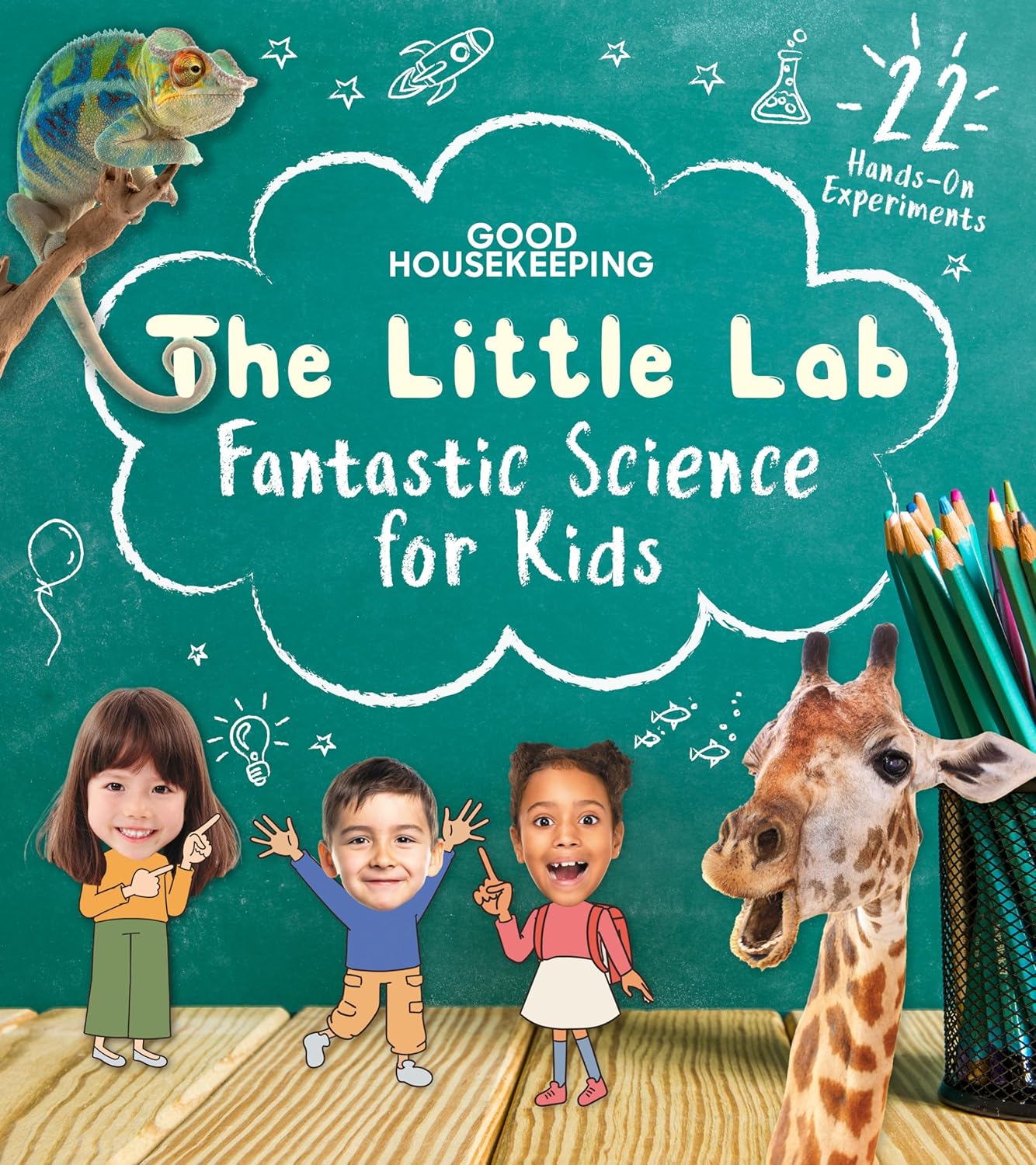
The Little Lab: Fantastic Science for Kids
Margie Markarian (Text and Editing) | Rachel Rothman (Editing) | Ashley Prine (Design)
Whether you have kids who can’t get enough of hands-on learning, are exploring science with your children or students, or looking ahead to all those summer days to fill, The Little Lab: Fantastic Science for Kids has you covered! Inside, this go-to resource, you’ll find 22 exciting experiments accompanied by
- Informative photographs
- Detailed supply lists of items you probably already have at home
- A “Make a Prediction” prompt
- Step-by-step instructions that are simple to follow
- A “What Happened?” explanation of the science behind the results

Photo courtesy of Hearst Home Kids.
Chosen and tested by nine scientists, engineers, and other experts at the Good Housekeeping Institute, these fantastically fun experiments encourage kids to think like a scientist while following the scientific method of observing, asking questions, and making predictions before doing the experiment and then evaluating what they see happen. The experiments also address core scientific concepts, such as the states of matter, energy, motion and force, and simple machines.
If your kids are anything like mine were while growing up, your kitchen is their favorite room in the house. Why not transform this gathering space into a little laboratory where food chemistry and creativity really cook?! With ingredients from your fridge and cupboards, kids can make an abstract masterpiece while learning about liquids; test the pH scale of various foods; experiment with puffed up marshmallows; challenge their nose to a taste test; and explore more with a “gadgets and gizmos” matching puzzle.
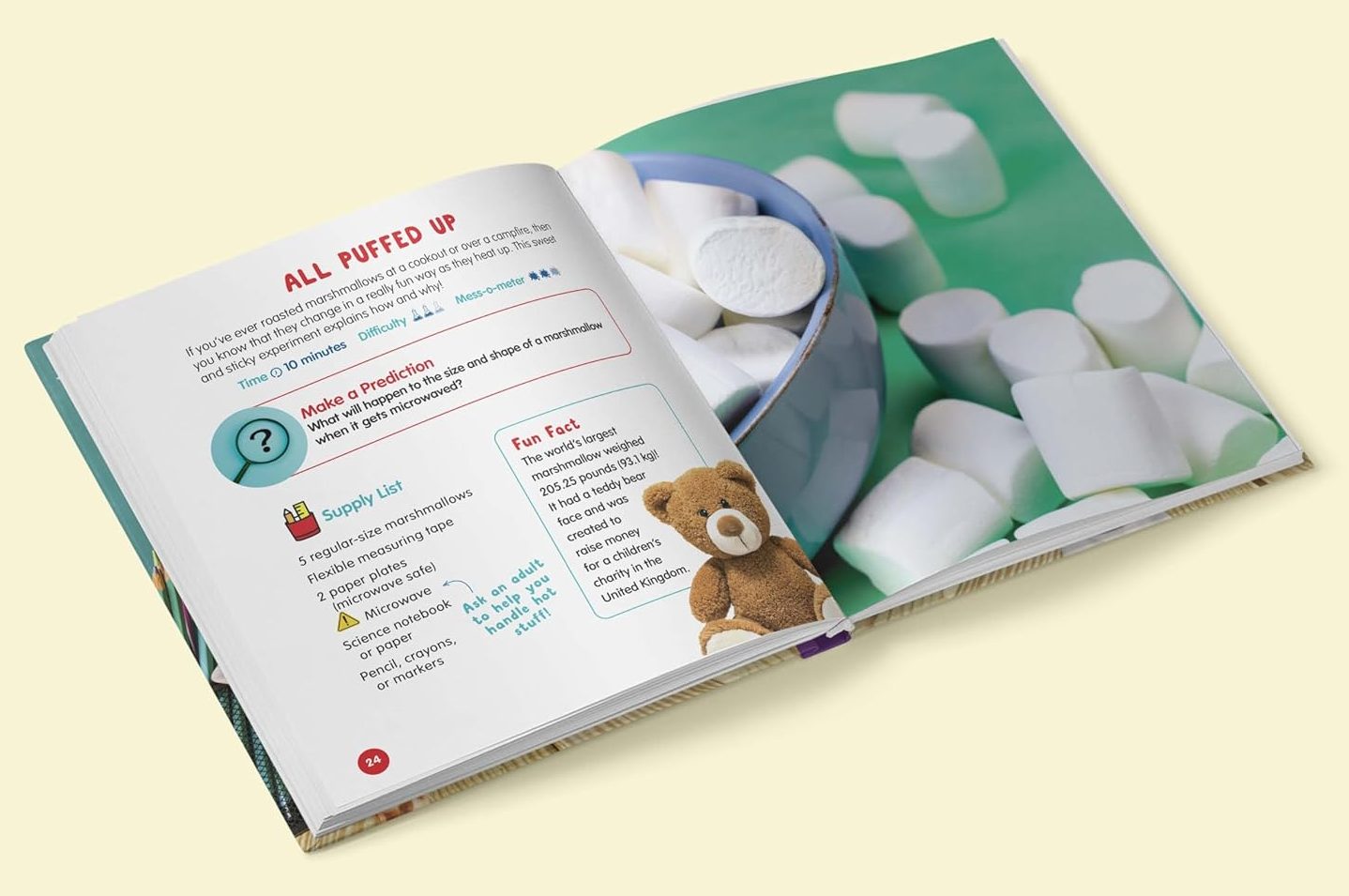
Photo © 2023 Michael Sapryhin. Courtesy of Hearst Home Kids.
Curious kids will really make a splash with the experiments in Chapter 2: Water Works as they get in the swim of discovering why certain objects float while others sink; blow rainbow-colored bubbles; test the strength and absorbency of various paper products; and—get this!—create a drawing that floats in water, without any paper or other medium.
Powerful learning comes in Chapter 3, where young scientists work with energy to make their own rainbows; bake up solar s’mores—yummy!; light a florescent bulb just by rubbing a balloon on their hair; put Newton’s three Laws of Motion to the test by launching pom poms and/or marshmallows; and play around with sound. The Explore More! exercises in this chapter spark kids’ interest in listening for high and low pitches in their environment and investigating the force of friction.
Chapter 4 sends kids outside, where they’ll try balancing like a flamingo; discover what makes balls bounce high, higher, and highest; get the dirt on what’s in dirt; give white carnations a bit of color; and— in a creative way to bring weather science down to earth—get to make “rain clouds” from shaving cream. The Explore More! section teaches kids how to read clouds—from wispy Cirrus to cotton ball-like Stratus—as well as the favorite flower colors of bats, bees, butterflies, and hummingbirds.
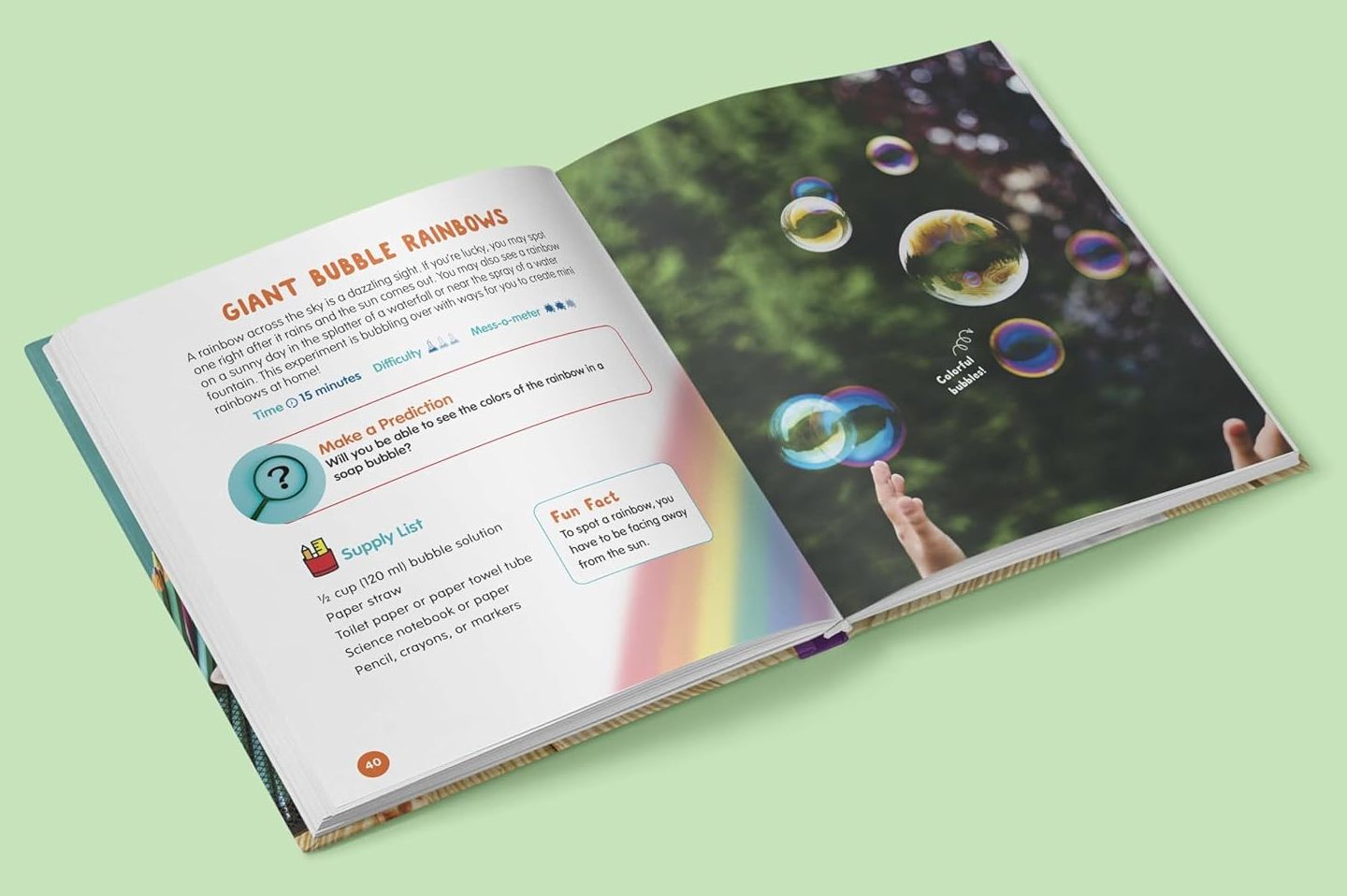
Photo © 2023 Carol Yepes. Courtesy of Hearst Home Kids.
In Chapter 5, the scientists at Good Housekeeping present experiments that are not only hands-on, but hands-all-in! Here kids get to clean old pennies to try and reclaim their original shine; discover the most reliable way to un-stink smelly sneakers; make slime; find out how long it takes to really wash away germs on your hands; and learn about the viscosity of various liquids.
Throughout the book, experiments are also accompanied by quick “Fun Fact” and “Did You Know?” information related to each section’s topic, and here and there the Good Housekeeping scientists pop up to impart interesting tidbits that will get kids thinking. There are even funny puns to get them laughing. Each experiment also includes a Time, Difficulty, and Mess-o-meter indicator.
Following the chapters are a glossary, a STEAM index that ticks off which disciplines (science, technology, engineering, art, and math) each experiment embodies, and an in-depth index.
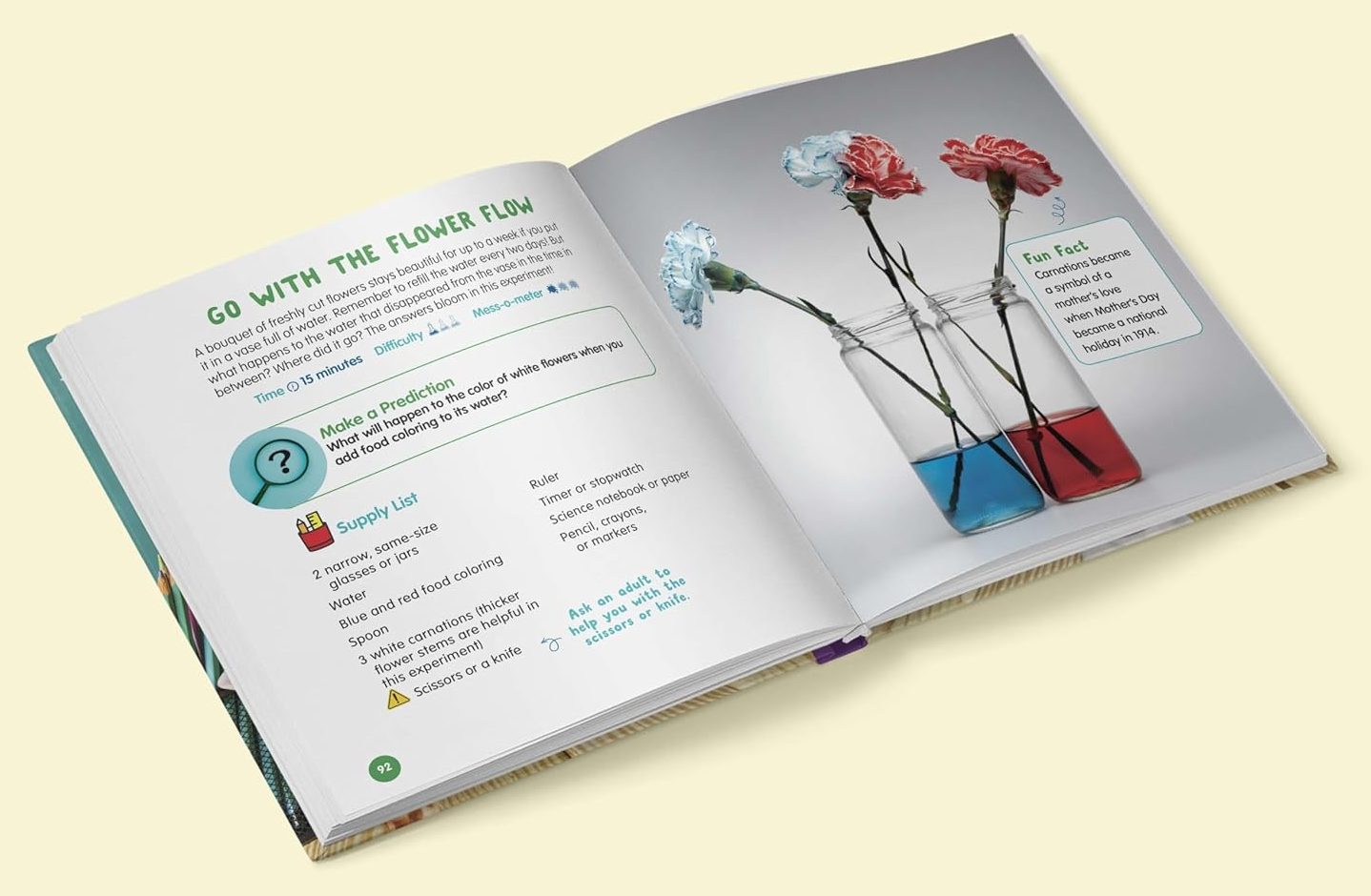
Photo © 2023 Jeffery Coolidge. Courtesy of Hearst Home Kids.
Good Housekeeping’s The Little Lab: Fantastic Science for Kids is a treasure trove of intrigue, excitement, and discovery. Offering so many opportunities for fun learning, the book would be a favorite addition to any home library for rainy days, empty weekends, science-themed parties, playdates, or any time you hear “There’s nothing to do!” Teachers, child-centered organizations, libraries, and anyone involved in elementary age science education will also find this book a valuable resource.
Ages 4 – 8
Hearst Home Kids, 2023 | ISBN 978-1950785926
International Ideas Month Activity
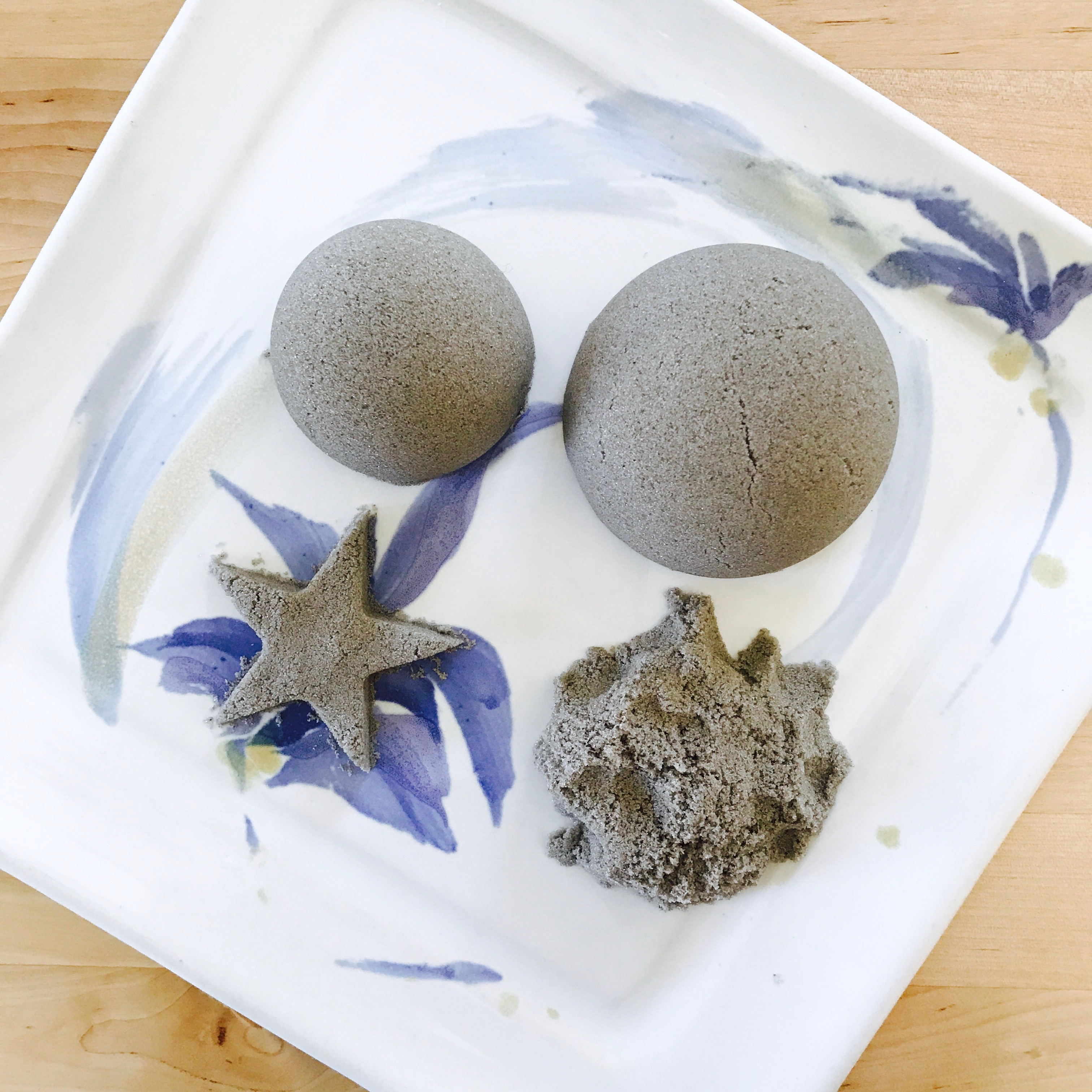
Kinetic Sand
Sand is so much fun to play with at the beach that you just wish you could bring it home. With this recipe for kinetic sand, you can use science to make dry sand just the right consistency to form and play with. Kinetic sand makes a great stress reliever too!
Supplies
- 1 cup sand
- ½ tablespoon cornstarch
- 1 teaspoon dish soap
- Water as needed – about ¾ cup
- Bin or bowl for mixing dry ingredients
- Bowl for mixing dish soap and water
Directions
- In the bin combine the sand and cornstarch and mix well
- In the bowl combine the dish soap and water until the water is bubbly
- Slowly add the water mixture to the dry ingredients, mixing and adding water little-by-little until the desired consistency is reached. The grain of the sand will determine how much water is needed.
- The sand can be formed with cookie cutters, molds, hands, etc. and is strong enough to stack. Or just let it drip and ooze through your fingers.
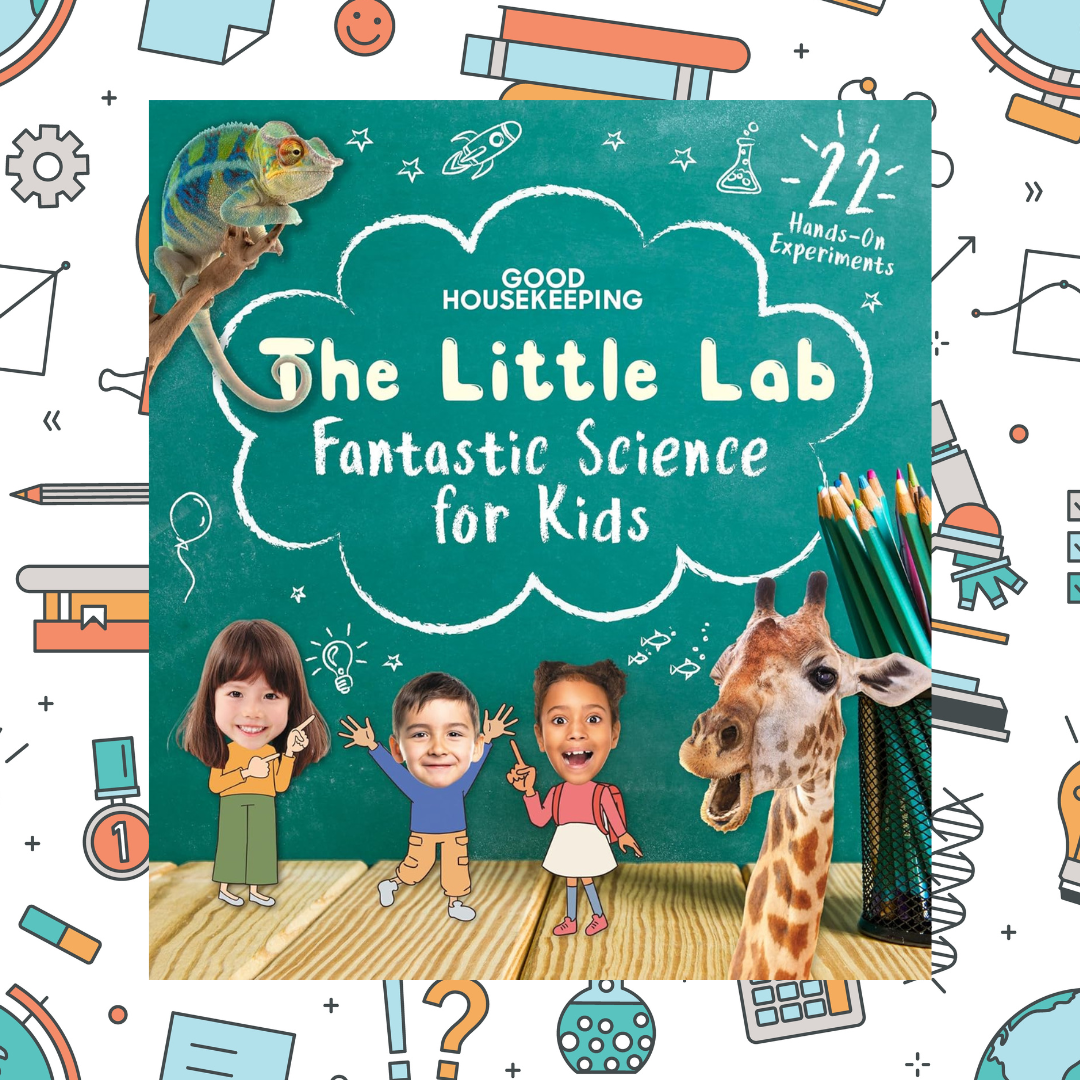
You can purchase Good Housekeeping’s The Little Lab: Fantastic Science for Kids from these booksellers
Amazon | Barnes & Noble | Bookshop (discounted books and support for your local independent bookstore)
Picture Book Review



 celebratepicturebooks.com