April 10 – National Wildlife Week

About the Holiday

National Wildlife Week, dating back to 1938, is the National Wildlife Federation’s longest-running education program. The celebration was designed to connect budding conservationists of all ages to the awesome wonders of wildlife. Each year, we pick a theme and provide fun educational materials and activities for educators and caregivers to use with kids. This year’s theme is Keep an Eye on the Wild. Conservationists and animal lovers are keeping a lookout for wildlife in the most unexpected places as we learn how we can keep their habitats safe and live in harmony with our incredible wild neighbors. Whether you keep your eyes out for the wildlife living near you with a “critter cam” or by walking around and paying attention to your backyard, neighborhood, and wider area, being aware of the creatures around you can help them survive for generations to come. To learn more about National Wildlife Week and find fun activities aimed at connecting kids with wildlife, visit the National Wildlife Week Kids Page!

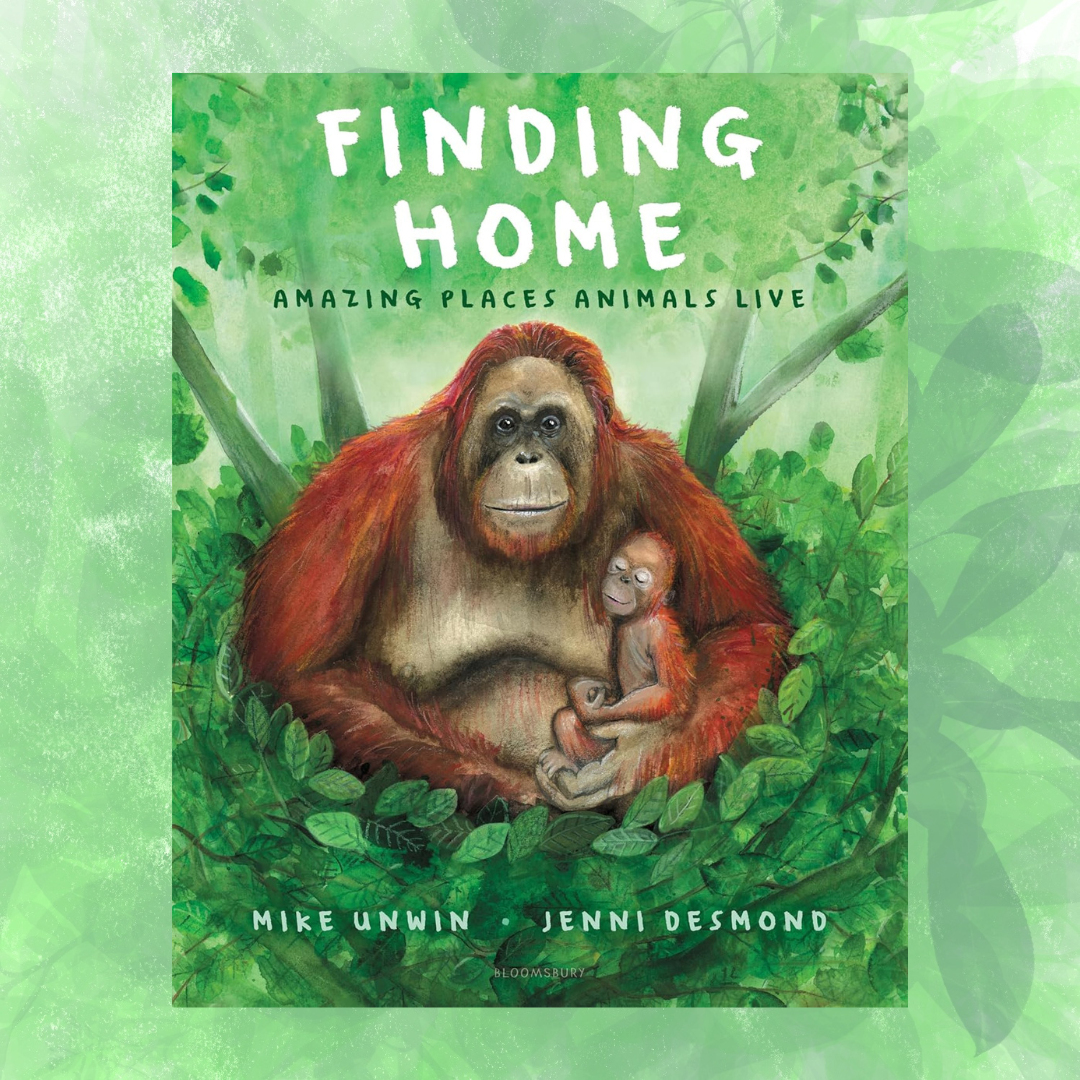
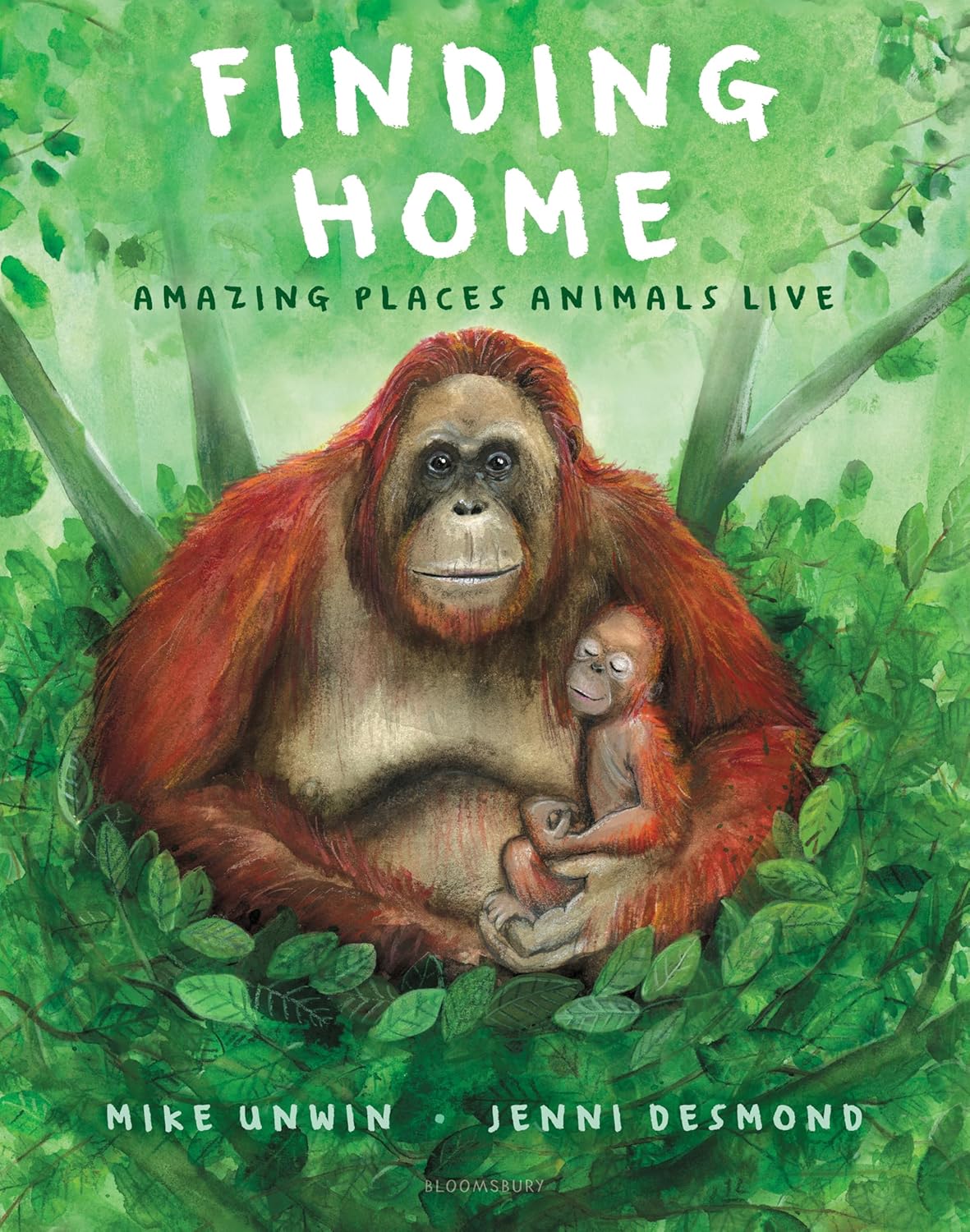
Finding Home: Amazing Places Animals Live

Written by Mike Unwin | Illustrated by Jenni Desmond


Finding Home begins: “Our planet is home to a mind-boggling number of different animals: at least 6,500 species of mammal, 10,000 species of reptile, 11,000 species of bird, and literally millions of insects. Every single one has its own home.” Just think of it! As your eye sweeps across any vista; as you walk across your yard, local playground, or favorite park, beach, or mountain trail, an untold number of creatures’ homes are within sight or underfoot. We know their names: Den. Nest. Burrow. Taxi (wait, what?). You’ll see, because in their astounding and gorgeous book, Mike Unwin and Jenni Desmond reveal that there is no such thing as a generic animal home.
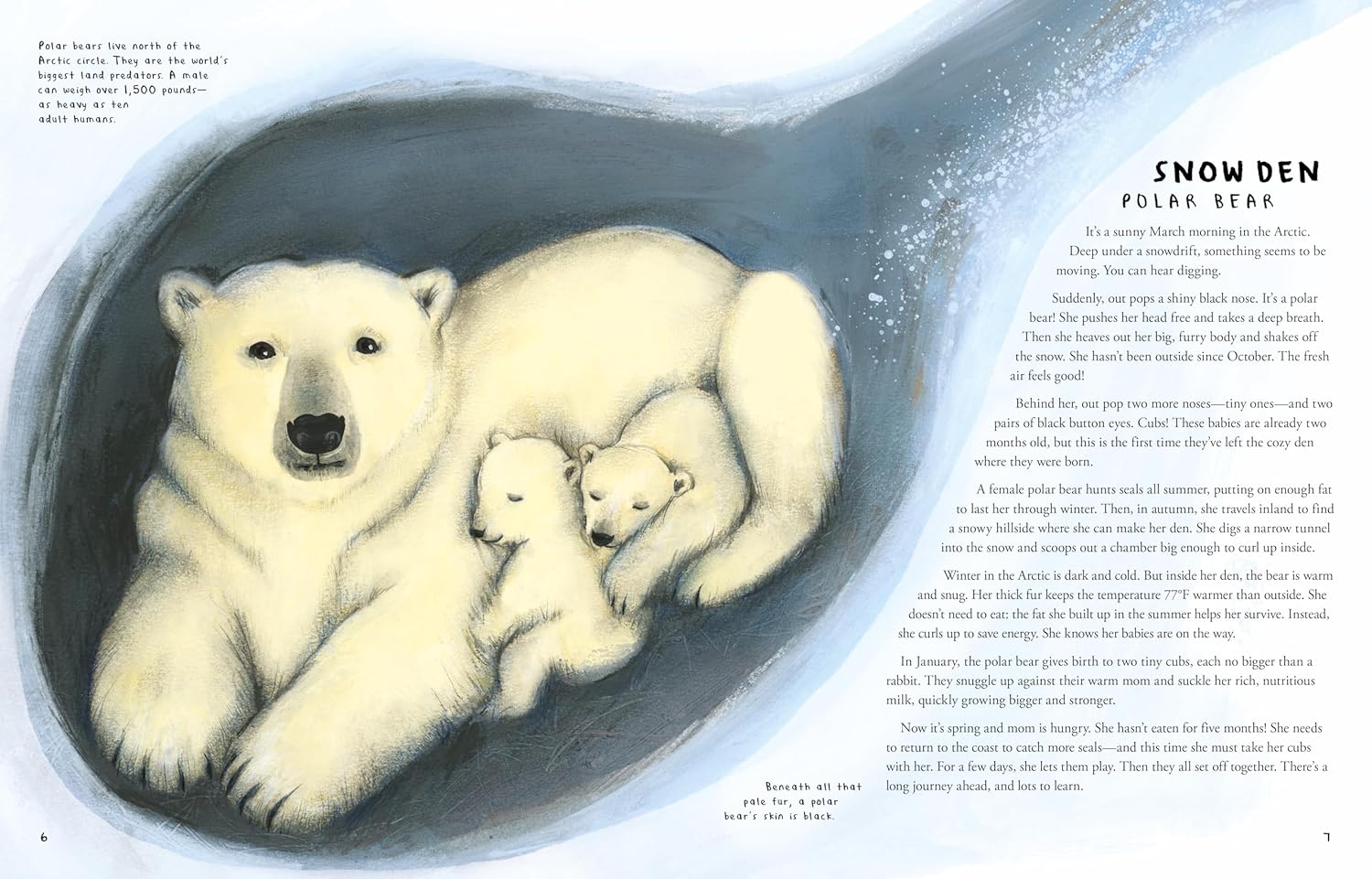
Illustration © 2025 by Jenni Desmond, text © 2025 by Mike Unwin. Courtesy of Bloomsbury Children’s Books.

Take “den,” for instance—a polar bear’s snow den. Unwin and Desmond take you right inside this winter home, where a mother polar bear and her two cubs (born here in the cold of January) welcome you. As you squeeze inside, don’t worry about being cold. The polar bear’s “thick fur keeps the temperature 77°F warmer than outside.” 

Next up is “nest.” These are bowls made from twigs, straw, and fluff and, sometimes, found objects like bits of paper or cloth, right? Well, yes—for some birds. But you won’t believe your eyes when you see what appears to be several haystacks lodged within a tree’s branches. This nest, constructed by a whole community of birds smaller than sparrows, can “grow as big as a car, weigh more than a ton, and last 100 years.” Like humans’ apartment buildings, the bird pairs that inhabit this nest look out for each other and help their neighbors. Kids will also be amazed by another type of bird that literally sews leaves together with “plant fiber and spider silk” to create their soft, deep nests.
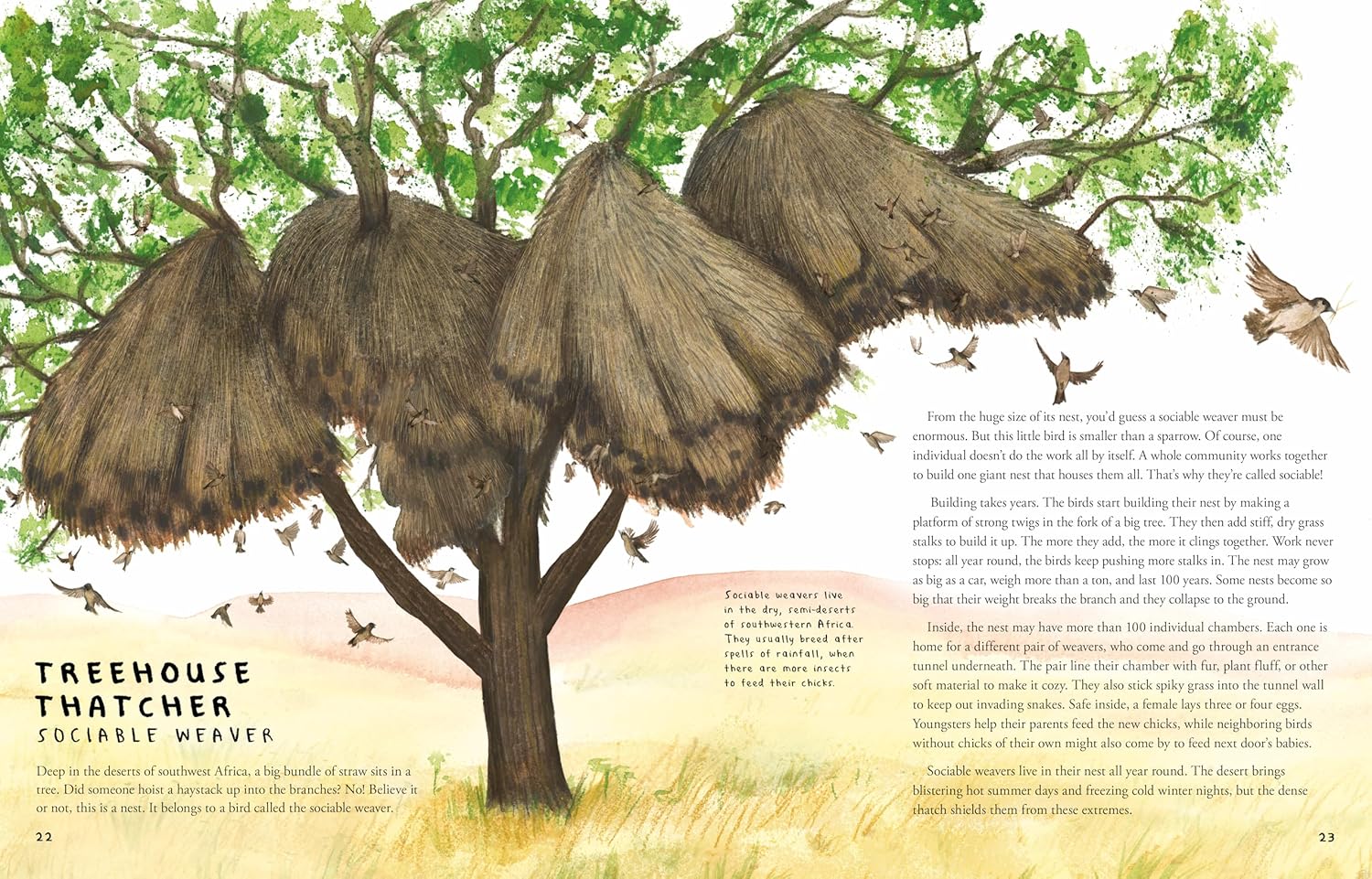
Illustration © 2025 by Jenni Desmond, text © 2025 by Mike Unwin. Courtesy of Bloomsbury Children’s Books.

And how about “burrows?” Yep, Unwin and Desmond showcase a couple of pretty spectacular burrows too. Take the aardvark’s home. You won’t see an aardvark during the day. While the sun is up, they stay below ground, sleeping and tending to their young. It’s only after sunset that these unusual, ant-eating animals (including two-week-old babies) make an appearance topside. This is when they do what they do best: sniff out anthills and termite mounds, dig them up, and have dinner. It takes a hearty meal to satisfy an aardvark: “One aardvark can eat an amazing 50,000 ants and termites in a single night!”

Now, about that “taxi.” Children will be wowed by two, very different types of animals who prefer moving from one area to another by hitching a ride on another creature, from whom they can get food and other necessities of life while helping their hosts as well. Of course, the variety of animal homes don’t stop at these four. Every page transports readers to a different part of the globe to witness creatures of the air, sea, and land living in the home of their choice.

Unwin ends this fascinating travelogue with a map showing different ways some of the animals in the book tend to the environment, protecting it and keeping it growing for themselves and humans. He also includes a caution, reminding readers that “all these habitats . . . fit together like jigsaw pieces to make up planet Earth. And just like a jigsaw needs all its pieces, a healthy planet needs all its animals and their habitats.” Sadly, humans have not been good stewards of Earth’s bounty. “Today, scientists and conservationists are working hard to put things right.” But everyone is needed to make sure our environment is cared for the way we care for our own families. “Only then will planet Earth truly be home, sweet home.”
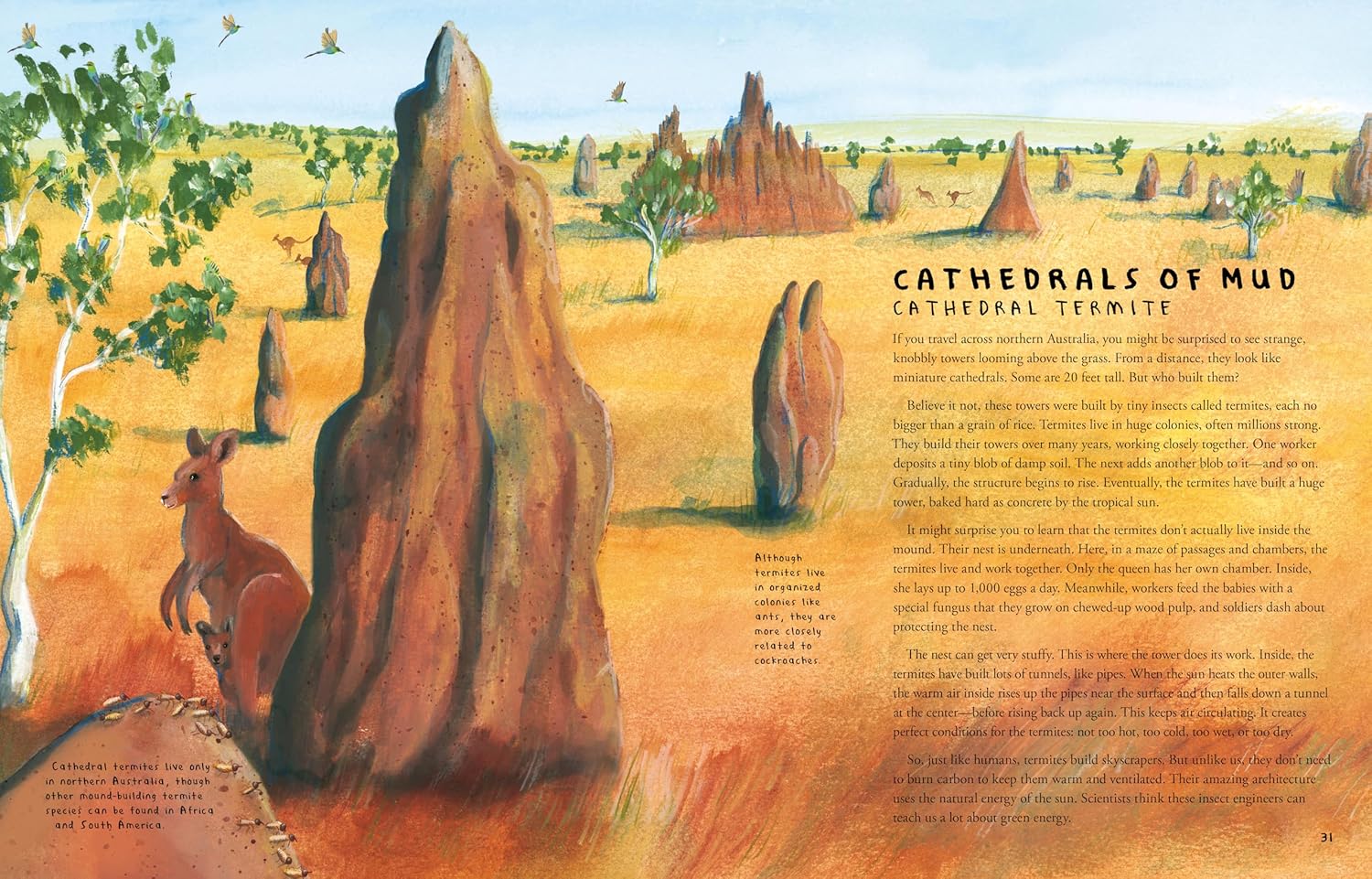
Illustration © 2025 by Jenni Desmond, text © 2025 by Mike Unwin. Courtesy of Bloomsbury Children’s Books.

Mike Unwin draws readers in with engaging storytelling that allows kids to easily understand how each animal goes about building their home and why it’s perfect for their lifestyle. Children also learn just as much about the animals as the homes they build, giving them deep and well-rounded knowledge of some of the most unusual birds, fish, mammals, and insects on our planet and how many of them benefit humankind. Unwin’s phrasing, vocabulary and conversational lilt make Finding Home a highly satisfying nonfiction read aloud for younger kids. Independent readers will eagerly dip into the book again and again to meet these intriguing creatures.

With the impact of a museum exhibit, Jenni Desmond’s rich, full-bleed illustrations will take your breath away with their stunning realism and personality. Some animals peek out at the reader, while others busily go about their work oblivious to outside interest. From grassy hillsides to treetop canopies to sunny Africa and the snowy Himalayas, Desmond takes readers on an around the world tour like no other.

Gorgeous, educational, and nature nonfiction at its best, Finding Home: Amazing Places Animals Live is a must for all classroom, school, and public libraries as well as for nature- and animal-loving kids and families.

Ages 5 – 8+

Bloomsbury Children’s Books, 2025 | ISBN 978-1547615100

About the Author

Mike Unwin has written more than 30 books for both adults and children, including the Encyclopedia of Birds and Migration. He is also a regular contributor to publications such as BBC Wildlife and RSPB Nature’s Home. In 2013 Mike was voted UK Travel Writer of the Year by the British Guild of Travel Writers. Follow Mike on Instagram @mikeunwin.wildtravel.

About the Illustrator

Jenni Desmond is the illustrator of more than 20 books, including MigrationThe Wolves of Yellowstone, and The Blue Whale. Her books have been translated into over a dozen languages. In 2016 she was made a Maurice Sendak Fellow and her book The Polar Bear became a New York Times Best Illustrated Children’s Book of the Year. When Jenni is not in her studio, you’ll find her cooking, cycling and looking for adventure. Visit her at jennidesmond.com and follow her on Instagram @jennidesmond.

National Wildlife Week Activity
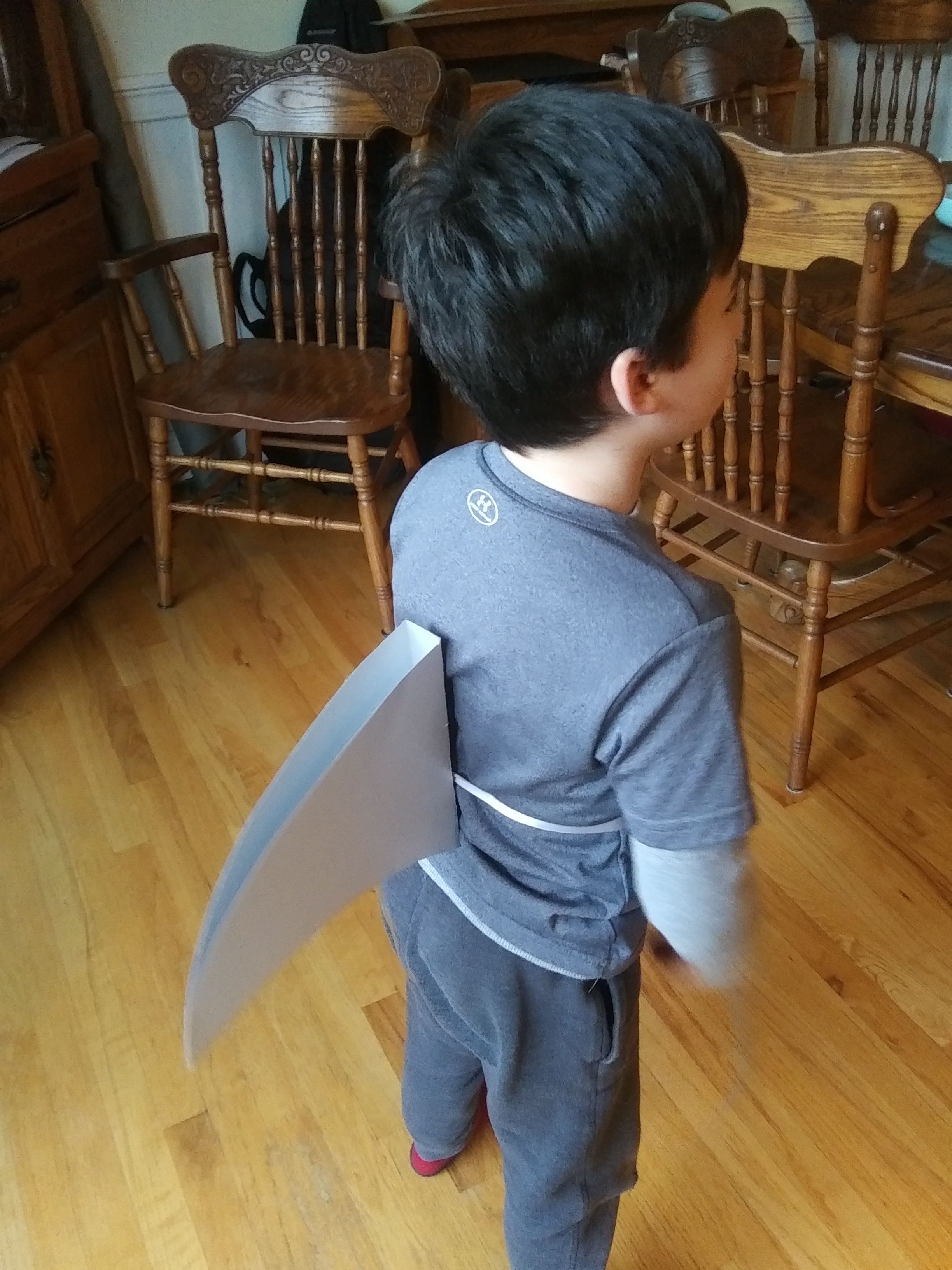
celebrate-picture-books-picture-book-review-shark-fin-craft

Fintastic Shark Fun


Sharks are awesome creatures and even feature as a home to another animal in today’s book! Follow the directions below and to make your own shark fin. 

Supplies

  • 2 pieces of 8.5 x 11 gray cardstock paper
  • Ribbon
  • Tape
  • Scissors
  • Pencil

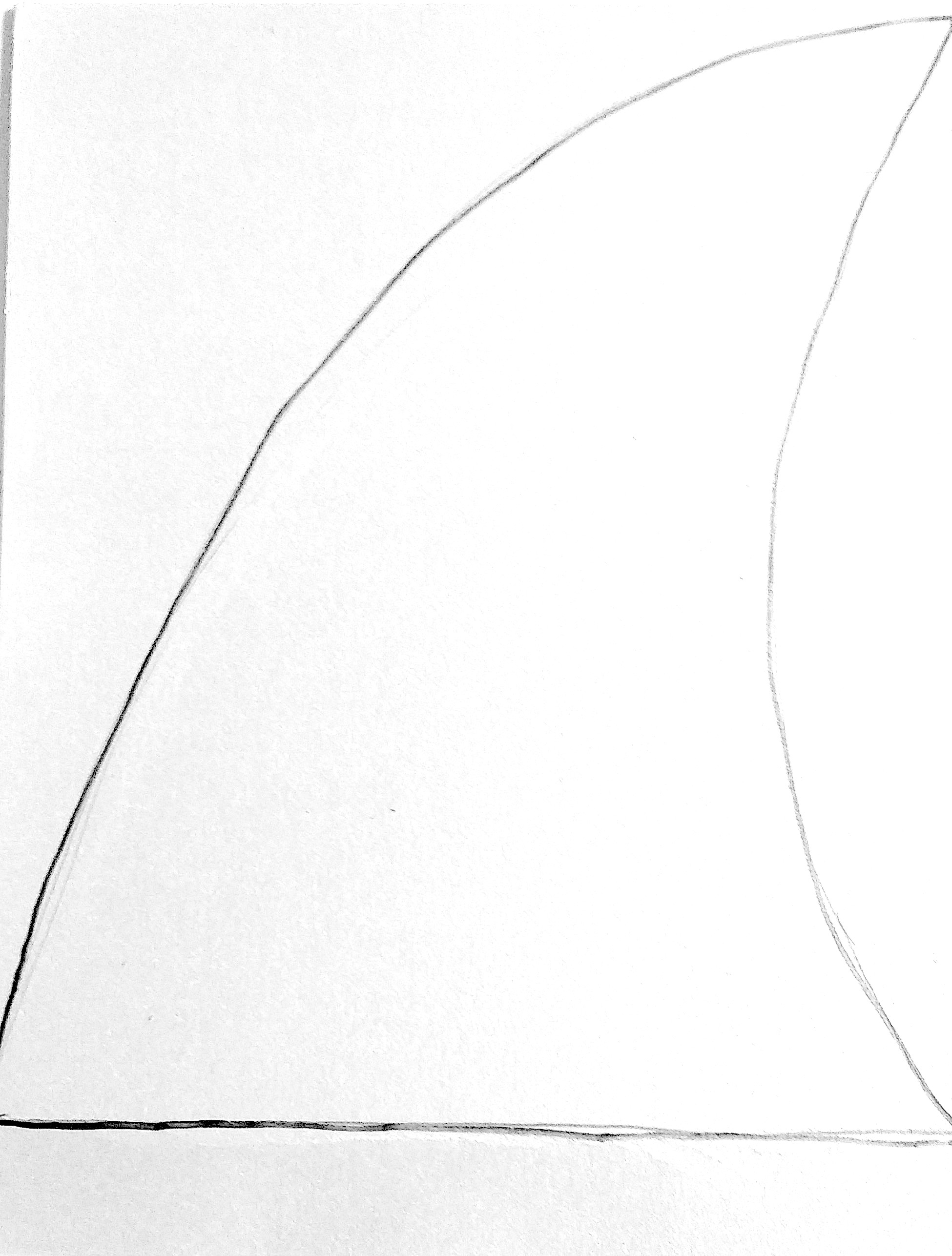
fin outline white

celebrate-picture-books-picture-book-review-shark-fin

Directions

  1. Tape the top of the two pieces of paper together
  2. Fold them back together
  3. Measure an inch up from the bottom of the papers (the un-taped side) and trace a straight line across both papers
  4. Trace a shark fin outline onto your paper. The shark outline should stop an inch above the bottom
  5. Cut out the fin on both pieces of paper. If you should cut through the tape, re-tape the tops together
  6. Fold along the lines of both papers so the folds face towards each other.
  7. Tape the folds so the fin becomes a triangle
  8. Cut two slits parallel to the folded lines
  9. Thread ribbon through slits

You can purchase Finding Home: Amazing Places Animals Live from these booksellers

Amazon | Barnes & Noble | Bookshop (discounted books and support for your local independent bookstore)

Picture Book Review

March 3 – World Wildlife Day

About the Holiday

In December of 2013 the United Nations General Assembly proclaimed March 3rd as World Wildlife Day to promote awareness of our environment and the dangers to it. Every year a different theme is chosen to spotlight an area of the world, a particular species, or a group of activists. This year’s theme is “Wildlife Conservation Finance: Investing in People and Planet” and focuses on innovative ideas for financing can contribute to halting biodiversity loss, raising the interest of private sector stakeholders to invest in wildlife conservation, and creating a sustainable future. The day also celebrates successful conservation and sustainability initiatives. To learn more about the day, special events, and how you and your kids can get involved today and throughout the year, visit the World Wildlife Day website.

Thanks to Eerdman’s Books for Young Readers for gifting us a copy of Kingdoms of Life for review.

Reviewed by Dorothy Levine

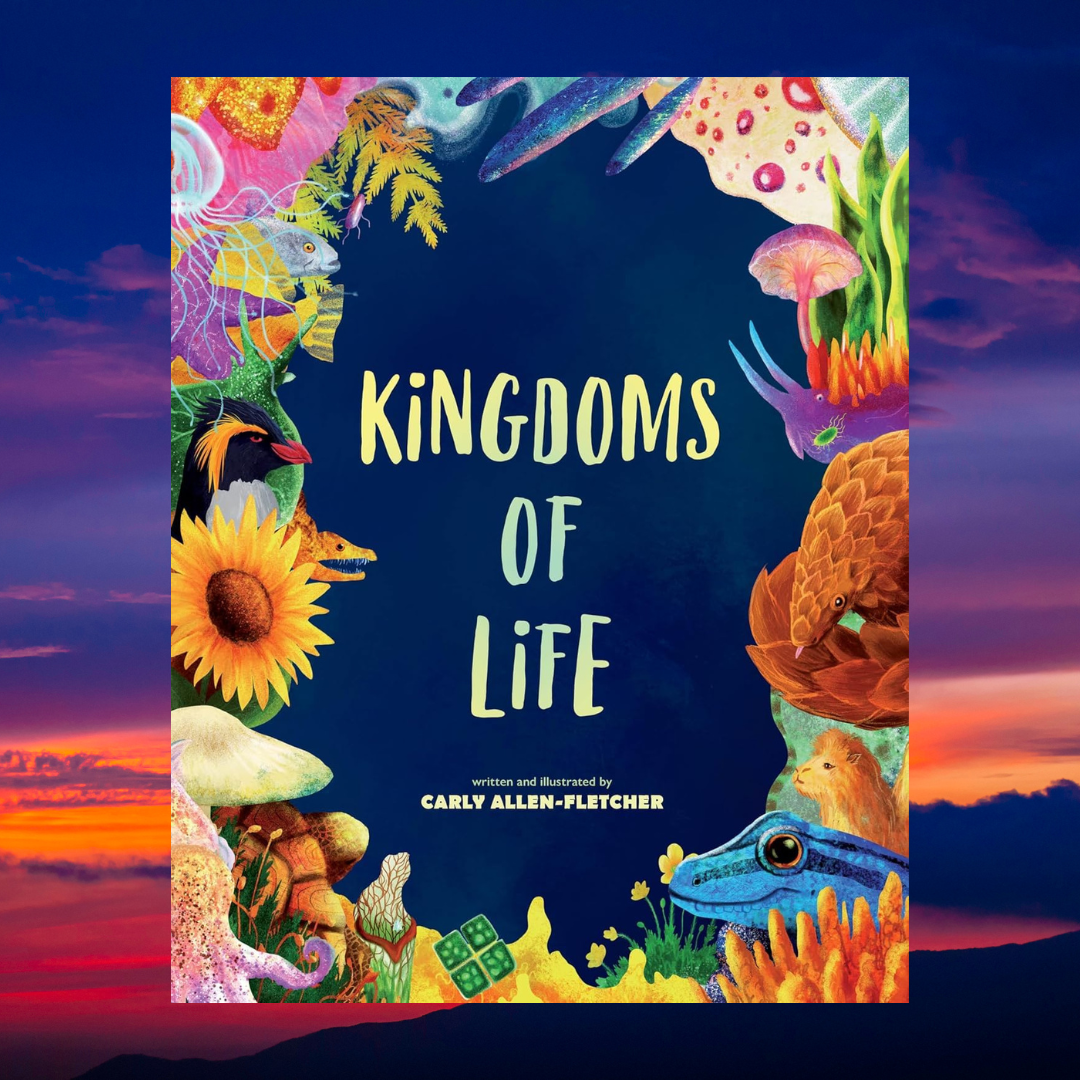
Kingdoms of Life

By Carly Allen-Fletcher


“Life is all around us…In the sky, the sea, and the soil, life exists in millions of different incredible ways.” 

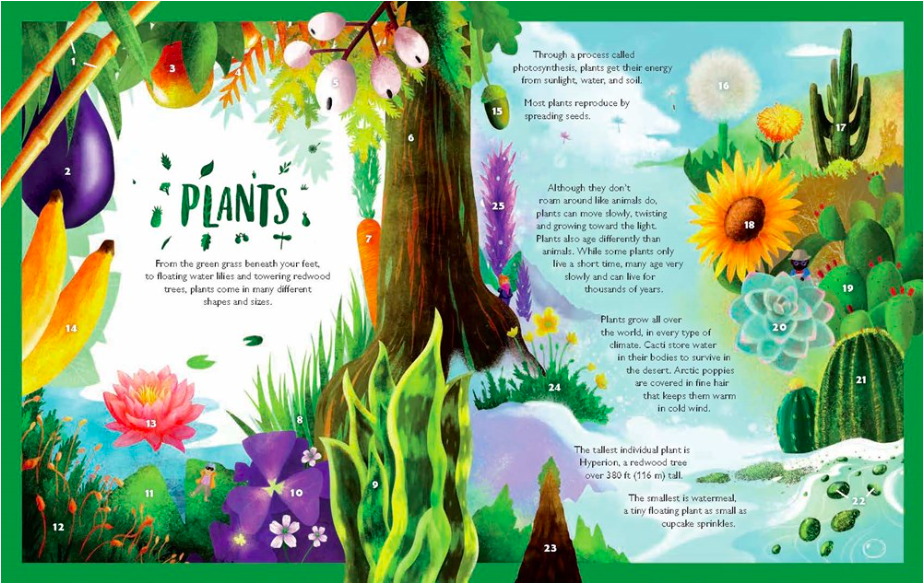
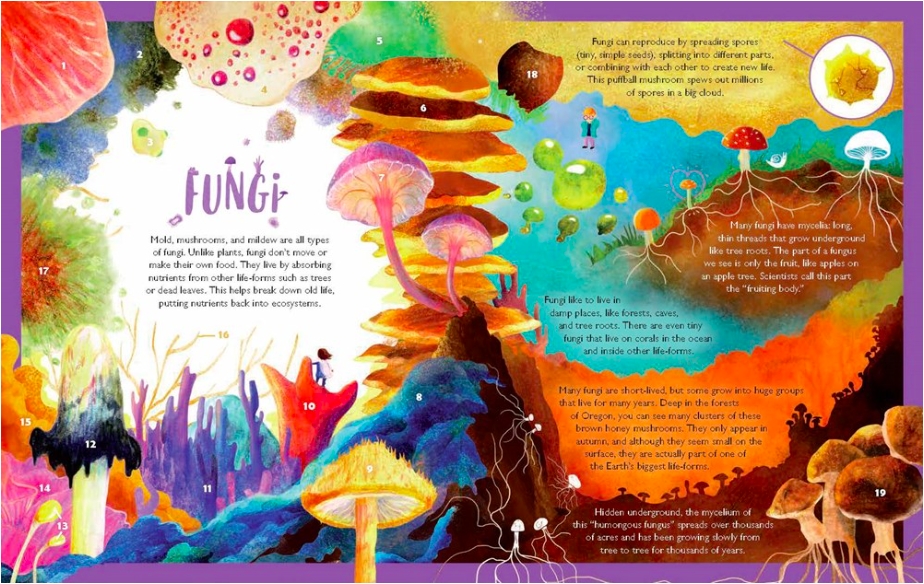
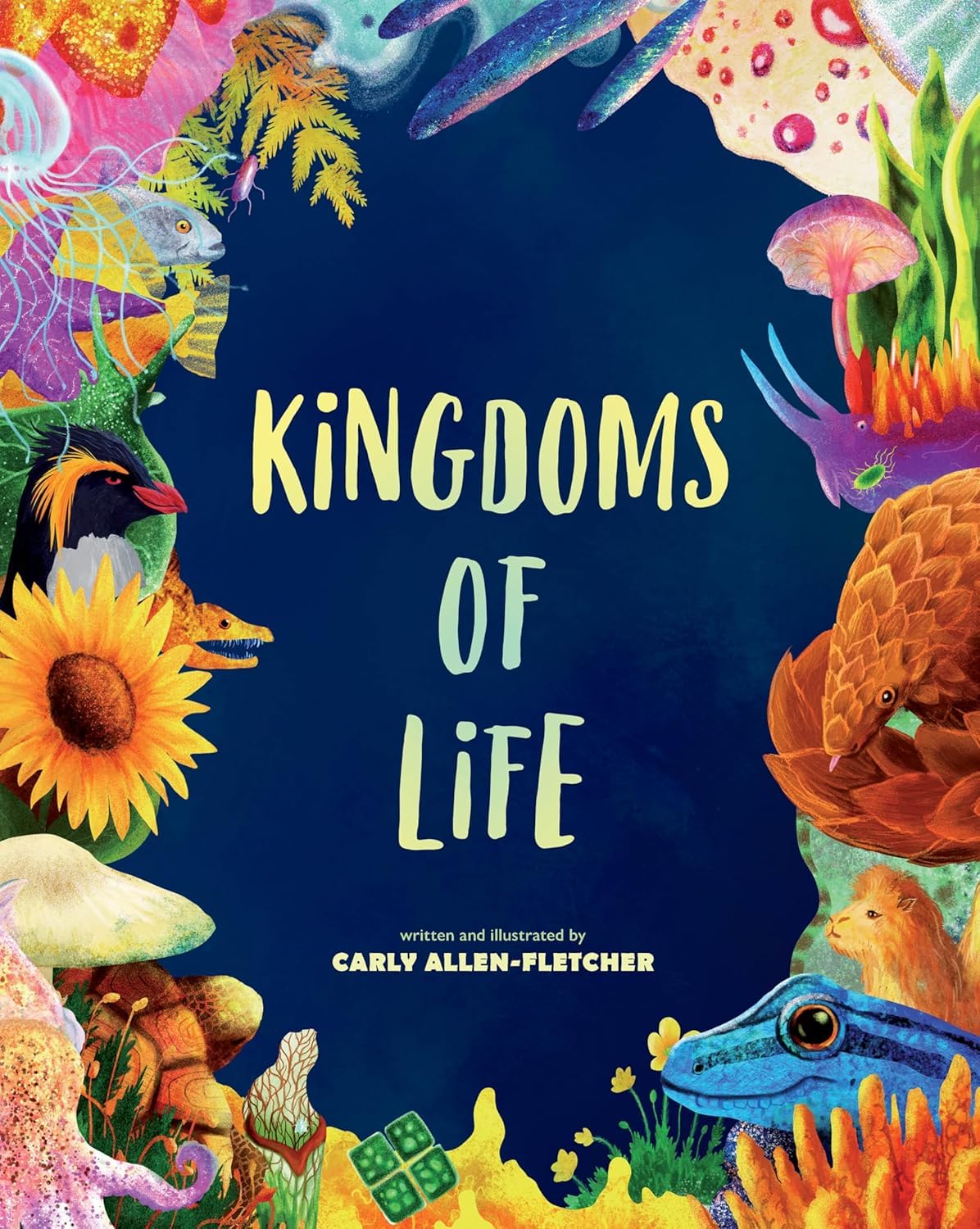
Jump into Carly Allen-Fletcher’s vibrant fact-filled guidebook for kids for a deep-dive exploration of the kingdoms of life. Each Kingdom rules over its own color-coded section, jam-packed with information on how the classified organisms feed, grow, and reproduce. Information also includes the ways in which the organisms across Kingdoms are related or work together with other lifeforms. The pages are royally packed with vibrant illustrations that appear to burst out from the very edges of the book. 

Allen-Fletcher begins with an explanation of how all life is formed—from tiny building blocks called cells. These cells can join to create complex multicellular life forms or just exist on their own as unicellular forms of life. She then zooms out to examine the six biggest categories of life. Allen-Fletcher makes sure to note that these categories are not fixed; they change as scientists learn more and arrange beings in different ways. 

Illustration and text © 2025 Carly Allen-Fletcher. Courtesy of Eerdmans Books for Young Readers.

The first category investigated in depth is the most complex of the life-form groups—animals. The animal pages are filled with a diverse range of species, each numerated to a corresponding key at the back. Allen-Fletcher shows the wide range of animals by comparing the smallest species (fairy wasps) to the largest (blue whales), while also explaining how even within one species (dogs) there can be glorious variety. Examples of animals that don’t quite fit in the animal category, such as a sea slug that can make energy from the sun, as well as animals that can survive extreme conditions or are thought to be practically immortal, are also discussed.

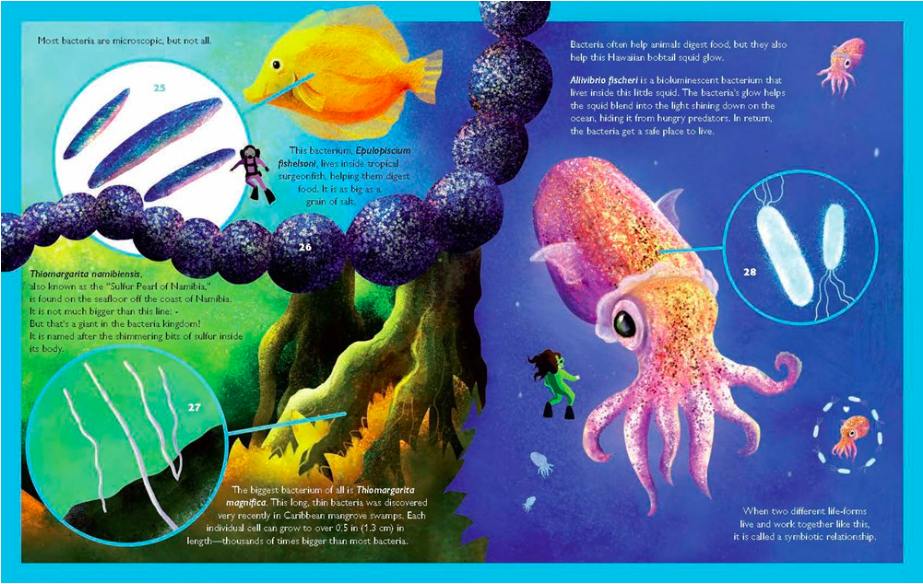
In addition to the animals, plants, fungi, protists, bacteria, and archaea are each given equal attention in their respective kingdom sections. From protists like giant kelp and slime mold to bacteria in our gut and bioluminescent bacteria found in squid, each kingdom is filled with fascinating examples of life and interesting facts on specific organisms. 

Illustration and text © 2025 Carly Allen-Fletcher. Courtesy of Eerdmans Books for Young Readers.

Kingdoms, Allen-Fletcher explains, can also be broken down further, into smaller and smaller groups such as family, genus, and species. A few taxonomists (scientists who study and sort lifeforms into categories) from around the world and throughout many different centuries are highlighted for their contributions to the field.

The book ends with a last dose of wonder: “We know more about the moon than we do about the deepest parts of our oceans. / Every year, we learn more about our home and the incredible life-forms we share it with. / What will we discover next?” The inclusion of “we” in this ending invites readers to feel welcome in this process of study and discovery. Taxonomy need not be only for adult scientists, but anyone who shares a passion for nature and careful observation. 

Back matter features each of the categories taxonomists use to sort life into groups as well as all the names of the featured life-forms throughout the book. The science is detailed while also distributed into easy-to-read bite-sized chunks.

Illustration and text © 2025 Carly Allen-Fletcher. Courtesy of Eerdmans Books for Young Readers.

Carly Allen-Fletcher illuminates a topic that is usually reserved for upper-level biology courses making it accessible and intriguing for young learners. The facts from her book will inspire a passion for all species—large or small, animal or bacteria—and help children to understand where in this big wide world we as humans stand and the symbiotic relationships that exist between creatures. Mini scientists dot the lusciously illustrated pages, comically examining life-forms in all the kingdoms up close.

Kingdoms of Life would make a valuable addition to home, school and library collections.

Ages 6 – 10

Eerdmans Books for Young Readers, 2025 | ISBN 978-0802855916

About the Author/Illustrator

Carly Allen-Fletcher is a British illustrator and author whose books include Goodnight Forest (Muddy Boots), Beastly Biomes (Creston), and Animal Antipodes (Creston). Inspired by nature and science, she creates her art by combining hand-drawn elements, painted textures, and graphic shapes. Carly loves reading about the latest biological discoveries, and if she hadn’t become a professional illustrator, she would have become a scientist instead. Follow Carly on Instagram or visit her website at carlydraws.com.

World Wildlife Day Activity

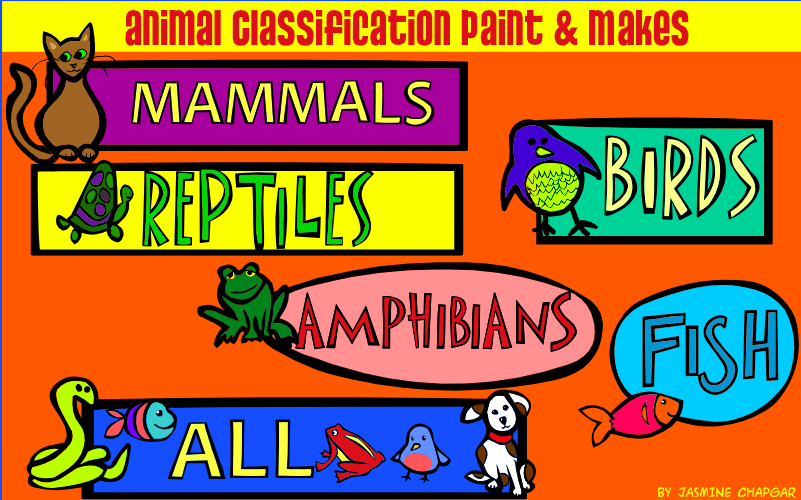
It Takes All Kinds game illustration courtesy of Science Trek.


Kingdoms of Life Fun

Watch a Kingdoms of Life Classification Video with Science Trek

  • As Allen-Fletcher notes in Kingdoms of Life, scientists are constantly evolving the categories for living organisms as they learn more. Do you notice any differences between the book and video kingdom categories? Since this video was published, scientists have started using the kingdom names bacteria and archaea instead of the previously used term, monera!

You can also explore their Online Games on kingdoms of life and animal classification, and practice sorting with Generation Genius’s Candy Classification Activity

You can purchase Kingdoms of Life at these booksellers

Amazon | Barnes & Noble | Bookshop (to support your local independent bookstore)

Picture Book Revie

December 2 – It’s Read a New Book Month

celebrate-picture-books-picture-book-review-an-animal-a-day-cover

About the Holiday

The month of December is a gift-giver’s delight, and there’s no better gift for everyone on your list than a book (or two or . . .). With so many new books hitting bookstore shelves and the long winter days stretching in front of us, this is the perfect time to add to your home bookshelves. Today’s featured book is a gift that keeps giving every day of the year. How? Read on and see! 

Thank you to Bright Matter Books, an imprint of Random House Children’s Books and Barbara Fisch of Blue Slip Media for sharing An Animal a Day with me for review consideration. All opinions on the book are my own.

An Animal a Day: 365 Amazing Animals to Take You through the Year

Written by Miranda Smith

Illustrated by Kaja Kajfež, Santiago Calle, Mateo Markov and Max Rambaldi

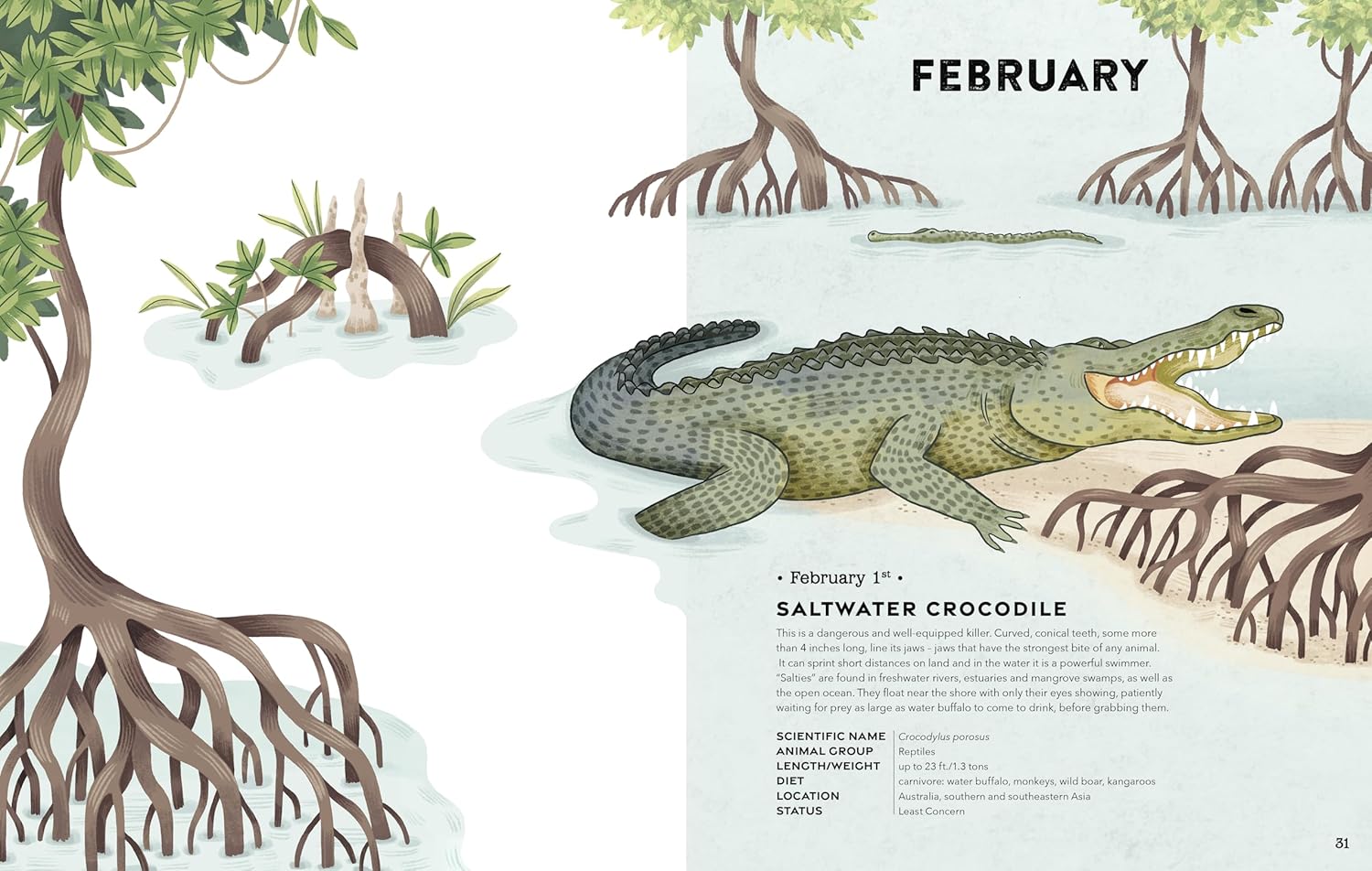
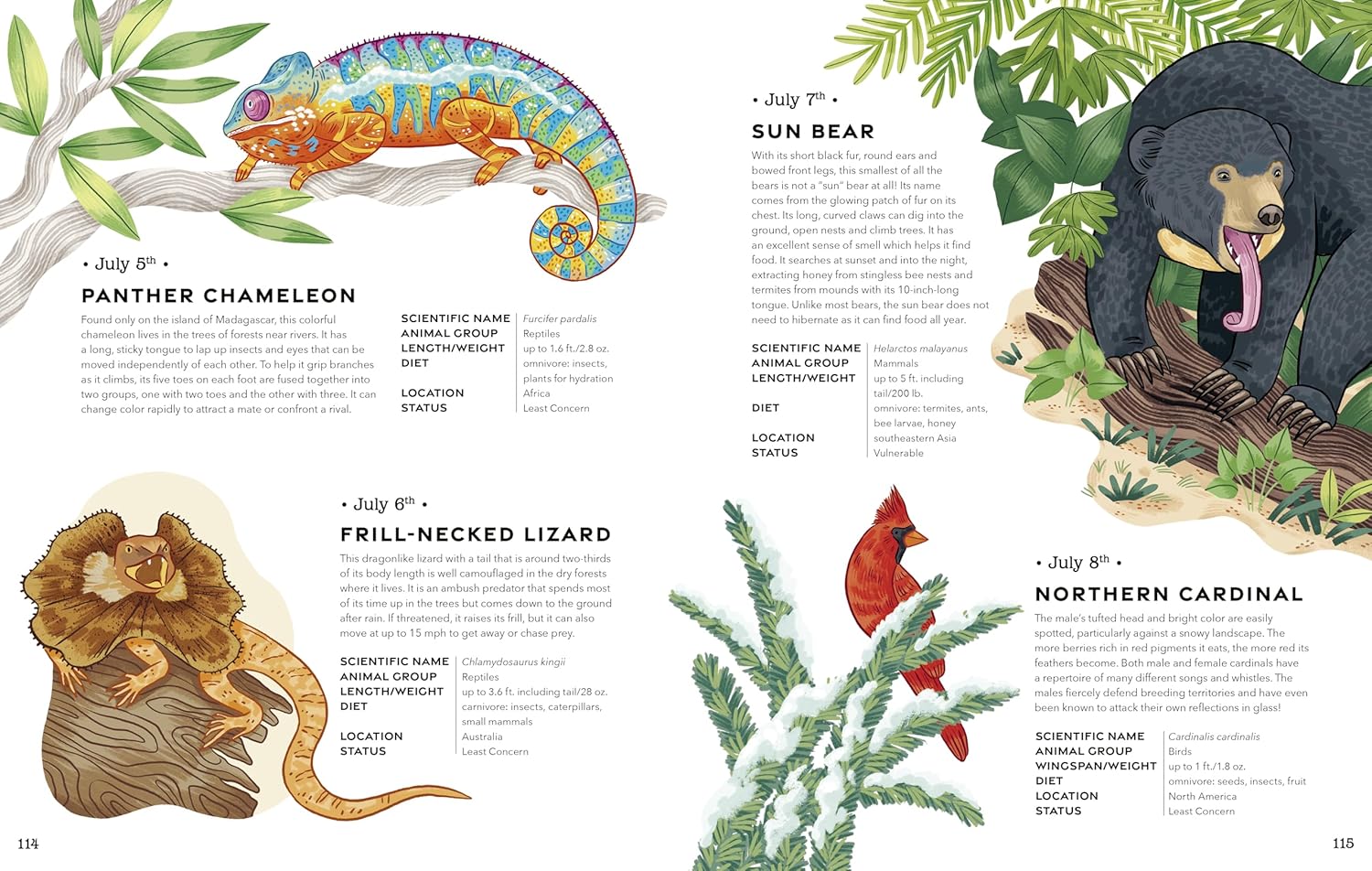
The animal kingdom truly is diverse! From the land to the sea to the sky and even the most forbidding places on Earth, there live incredible creatures perfectly suited to their environments. Children are particularly fascinated by the range, size, behaviors, and survival skills of the world’s denizens. But how to get to know them all? A fantastic place to start is with An Animal a Day, which introduces readers to 365 mammals, birds, reptiles, amphibians, fish, and invertebrates in bite-sized paragraphs, accompanied by scientific facts.

celebrate-picture-books-picture-book-review-an-animal-a-day-february

Image copyright Kaja Kajfež, Santiago Calle, Mateo Markov and Max Rambaldi, 2023. Text copyright Miranda Smith, 2023. Courtesy of Bright Matter Books.

But before you dive in, there are two paragraphs of note: One explains how “new species of animals are being discovered all the time” and gives as an example the May, 2023 announcement that “more than 5,000 new species had been found living on the seabed of the Clarion-Clipperton Zone, an unexplored area of the Pacific Ocean.” Another defines the International Union for Conservation of Nature Red List conservation rating, which is also included in each animals’ description.

And now the year begins! January 1 introduces the Polar Bear, in which a mother bear leads her cubs over the ice to the water where she will teach them “how to swim, hunt seals and survive in the cold” while raising them over three years to be self-sufficient. As the month progresses, children meet the Goliath Frog (a frog as big as a cat), a Hoopoe bird (the males engage in song duels to deter rivals), and the Indian Flying Fox (which, besides having an imposing 5-foot wingspan, looks like a combination of a bat and a fox), among 27 other critters.

celebrate-picture-books-picture-book-review-an-animal-a-day-april

Image copyright Kaja Kajfež, Santiago Calle, Mateo Markov and Max Rambaldi, 2023. Text copyright Miranda Smith, 2023. Courtesy of Bright Matter Books.

Each month also contains two, two-page spreads that present animals that, while very different, are connected by some special feature, such as being record breakers, where they live, mimicry, even harboring some stealthy strategy for survival.

Just a quick dip into the pages, led me to the Nudibranch, a blue sea slug that devours animals larger than it is, “including the highly venomous Portuguese man-o-war,” from which it “. . . stores the stinging nematocysts . . . in the tips of its extremities [and] uses these stinging ‘fingers’ to defend itself when necessary.”

celebrate-picture-books-picture-book-review-an-animal-a-day-migration

Image copyright Kaja Kajfež, Santiago Calle, Mateo Markov and Max Rambaldi, 2023. Text copyright Miranda Smith, 2023. Courtesy of Bright Matter Books.

I also met the Tiger Quoll, a creature of the rainforest that travels for miles each night in search of food, and the Peacock Mantis Shrimp, a colorful but fearsome 7-inch long crustacean that moves so fast it can “hit prey, such as a crab, with a force that smashes its shell” and which can create “bubbles in the water as hot as the sun, causing a shockwave strong enough to stun or kill.” I finally had to say auld lang syne to the year with the Asian Elephant and a view of a mother elephant and her youngster foraging for the “up to 285 pounds of vegetation” they each will eat that day. 

celebrate-picture-books-picture-book-review-an-animal-a-day-july

Image copyright Kaja Kajfež, Santiago Calle, Mateo Markov and Max Rambaldi, 2023. Text copyright Miranda Smith, 2023. Courtesy of Bright Matter Books.

But why should I have all the fun? Just imagine the wide-eyes, the “wow!”s, and the eager anticipation for the next day’s animal that your kids will experience as they meet each of these distinctive creatures through Miranda Smith’s clear, accessible, and captivating text for all ages. Each entry is punctuated with the kinds of nifty details that enthrall children and get them excited to learn more.

Accompanying each animal’s description is a lifelike drawing of the creature in its environment. Colorful and active, these illustrations allow kids to really bond with each animal and understand the whys and hows of their behaviors. In the case of the Amazon Leaf Fish, it may even take a moment before readers see the camouflaged fish among the dead leaves sunk beneath the water. The double-page spreads with their black backgrounds and highlighted animals are worthy of natural history museum displays and will entice readers to stop and stay awhile.

An Animal a Day would make a much-appreciated gift for any animal-loving child and is a must for public and school library collections as well as elementary school classrooms.

Ages 5 – 10 and up

Bright Matter Books, 2024 | ISBN 978-0593903353

Read a New Book Month Activity

ebrate-picture-books-picture-book-review-savanah-coloring-page

Animal Coloring Pages

Enjoy these coloring pages of some favorite animals!

Giraffe and Elephant on the Savanah | Hanging Snake | Tiger

celebrate-picture-books-picture-book-review-an-animal-a-day-cover

You can purchase An Animal a Day at these booksellers

Amazon | Barnes & Noble | Bookshop (to support your local independent bookstore)

Picture Book Review
May 11 – National Eat What You Want Day

celebrate-picture-books-picture-book-review-poop-for-breakfast-cover

About the Holiday

Do you feel like you’ve been on a diet forever? Have you been denying yourself a favorite treat because maybe it’s not the best thing you can eat? Or do you find yourself always making meals to suit everyone else’s taste when what you really want is just a grilled cheese sandwich? If so, today’s holiday gives you carte blanche to enjoy the foods you want without feeling guilty. It also seems like a fitting day to learn about the rather unusual (at least to us) diet of many creatures in the animal kingdom—and that’s where today’s book come in!

Poop for Breakfast: Why Some Animals Eat It 

Written by Sara Levine | Illustrated by Florence Weiser


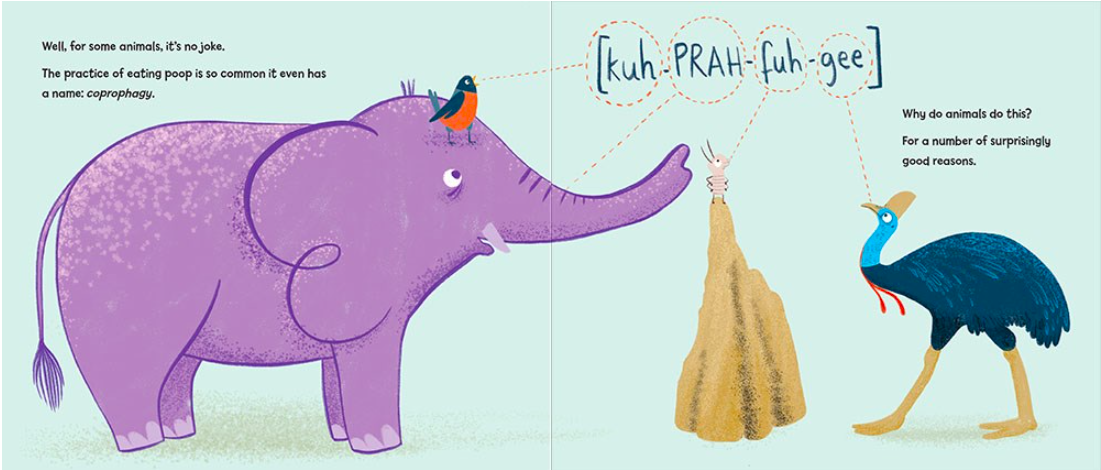
So, you wake up starving for a delicious meal. You’ve been dreaming of pancakes, maybe, or a plate of eggs and bacon. But when you get to the table, there’s a bowl of poop waiting for you?! Come on! While you might sulk (and probably hold your nose), there are plenty of creatures who’d be thinking “Bring it on!” Who are these critters? They’re animals that practice coprophagy, and they do it “for a number of surprisingly good reasons,” Sara Levine reveals.

celebrate-picture-books-picture-book-review-poop-for-breakfast-coprophagy

Image copyright Florence Weiser, 2023, text copyright Sara Levine, 2023. Courtesy of Millbrook Press.

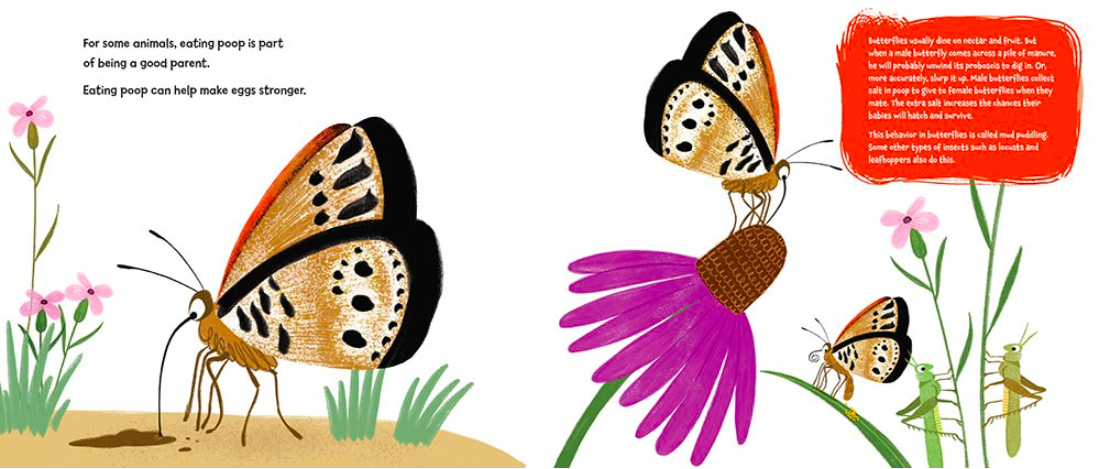
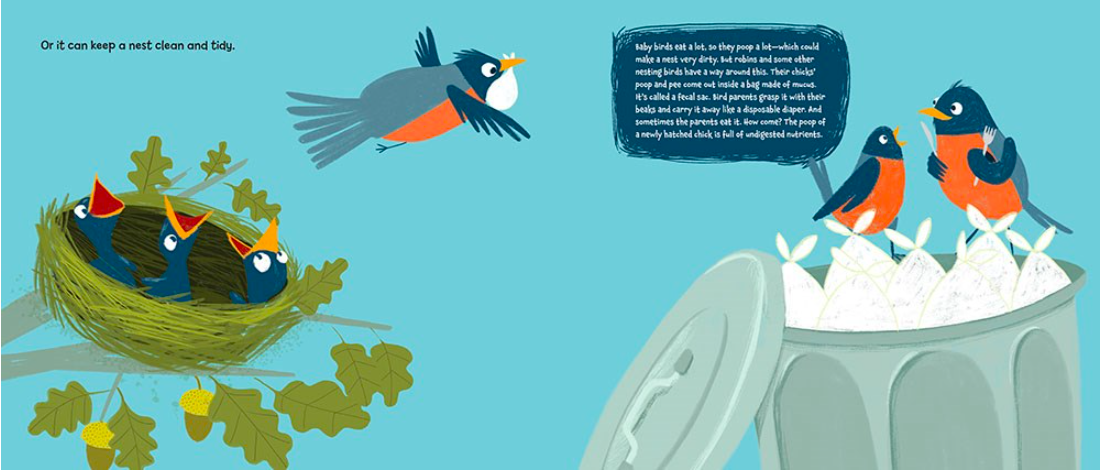
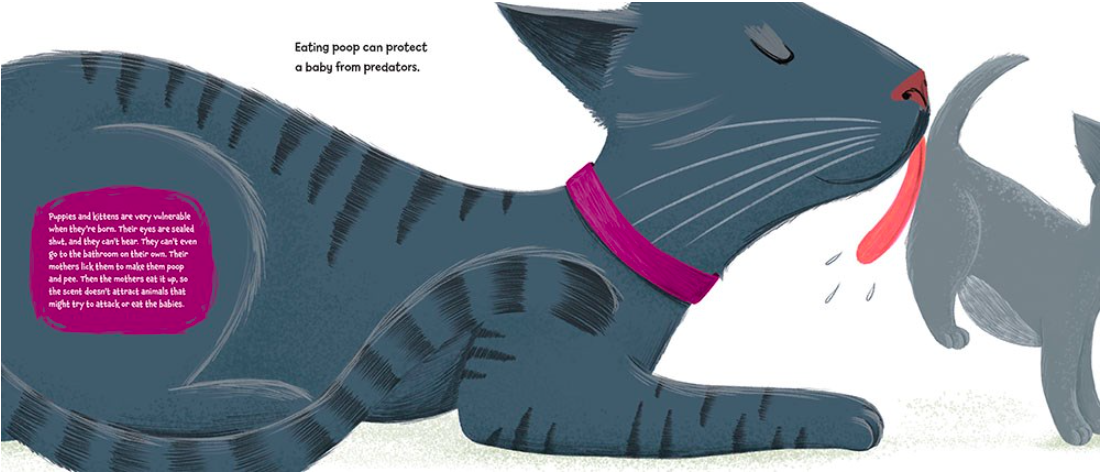
For some animals eating poop is just part of being a Number 1 (or maybe Number 2 is better in this case) parent. Butterflies, cats, and dogs as well as robins and other birds all have specific reasons for dining on doo-doo, from making eggs strong to protecting their babies from predators to keeping “a nest clean and tidy.” Birds have a particularly fascinating way to do this. Since baby birds eat a lot, they poop a lot. Keeping up with that level of cleaning could be daunting. Amazingly, though, these “chicks’ poop and pee come out inside a bag made of mucus. It’s called a fecal sac. Bird parents grasp it with their beaks and carry it away like a disposable diaper. And sometimes the parents eat it. How come? The poop of a newly hatched chick is full of undigested nutrients.”

celebrate-picture-books-picture-book-review-poop-for-breakfast-butterflies

Image copyright Florence Weiser, 2023, text copyright Sara Levine, 2023. Courtesy of Millbrook Press.

While these animals eat poop for external or aesthetic reasons, others engage in coprophagy to keep their digestive system working well. Still others, because of the length or shape of their digestive tract, require that food travels through their body twice to extract all of the nutrients. If you have a rabbit, hamster, guinea pig, or other small rodent as a pet, you know that their poop looks like little round balls or small pellets. As Levine tells readers, “this is the poop that has been through their digestive tract a second time. The first poop comes out soft, sticky, and full of nutrients. It’s called a cecotrope (SEE-ca-trope),” and these animals “gobble it up at night when it comes out. That’s why you don’t see it” in the cage.

celebrate-picture-books-picture-book-review-poop-for-breakfast-robins

Image copyright Florence Weiser, 2023, text copyright Sara Levine, 2023. Courtesy of Millbrook Press.

Since there are so many creatures who do eat poop, why don’t humans? Levine has included a whole list of reasons (and, yes, the frowny- crinkled-nose-face you’re making right now is one of them) for why we don’t—and don’t need to. She’s also provided back matter that includes “The Scoop on Poop”—an explanation of what poop and pee are, how they’re created in the body, and how they’re eliminated through the anus and the urethra as well as a paragraph about creatures that have a single cloaca instead of two openings. Kids will also have fun becoming “poop detectives” with the help of Levine’s and illustrator Florence Weiser’s guide to the sizes and shapes of poop from common pets and wildlife and playing a silly synonym game.

celebrate-picture-books-picture-book-review-poop-for-breakfast-cats

Image copyright Florence Weiser, 2023, text copyright Sara Levine, 2023. Courtesy of Millbrook Press.

Sara Levine is exceptional at presenting fascinating nature science topics in humorous and accessible ways for young audiences, and her latest book is no exception, Leaning into the “Ewww!” factor, Levine dishes up short, take-away reasons certain animals, birds, and insects practice coprophagy followed up with longer passages that explain the science and/or behavior behind them in easy-to-understand language sprinkled with humor that will keep readers riveted to this already high-interest subject.

Florence Weiser’s colorful illustrations perfectly bridge the humorous and the scientific nature of Levine’s text. Readers’ skeptical view of this “gross” habit is amusingly juxtaposed with creatures’ excited anticipation of a delicious meal through the characters’ facial expressions while the anatomical reasons for or against coprophagy are clearly depicted in images of human and various animals’ digestive systems.

Anatomy and nature science education at its best, Poop for Breakfast: Why Some Animals Eat It will keep kids enthralled as each page turn brings on a new round of giggles and avid learning. The book would enhance any home STEM collection and is a must for classroom, school, and public library bookshelves.

Ages 5 – 10

Millbrook Press, 2023 | ISBN 978-1728457963

About the Author

Sara Levine is an author, educator, and veterinarian. Her science books for children include the Animal by Animal series, Germs Up Close, and A Peek at Beaks: Tools Birds Use. Her books have received a number of awards including AAAS/Subaru SB&F Prize, Utah Beehive Book Award, Cook Prize finalist, Monarch Award master list, and Bank Street College Best Children’s Book of the Year.

About the Illustrator

Florence Weiser is a French illustrator currently based in beautiful, rainy Belgium. While growing up in Luxembourg, she always knew she wanted to draw and draw. She lives and works surrounded by nature, from which she gathers most of her inspiration.

celebrate-picture-books-picture-book-review-poop-for-breakfast-cover

You can find Poop for Breakfast: Why Some Animals Eat It at these booksellers

Amazon | Barnes & Noble | Books-a-Million

To support your local independent bookstore, order from

Bookshop

Picture Book Review


August 12 – World Elephant Day

celebrate-picture-books-picture-book-review-she-leads-cover

About the Holiday

This year World Elephant Day celebrates its 10th anniversary. The holiday was launched to raise awareness of the dangers the Asian and African elephant populations face. Poaching, habitat destruction, human-elephant conflict, and mistreatment in captivity all threaten these gentle, intelligent creatures. World Elephant Day encourages people to enjoy seeing elephants in safe, non-exploitive environments and to get involved in their protection and survival. To learn more about elephants, discover how you can be elephant ethical, and commemorate today’s holiday with virtual events led by elephant specialists, artists, zoos, and other organizations, visit the World Elephant Day website.

Thanks to Familius for sending me a copy of She Leads: The Elephant Matriarch for review consideration. All opinions on the book are my own. 

She Leads: The Elephant Matriarch

Written by June Smalls | Illustrated by Yumi Shimokawara


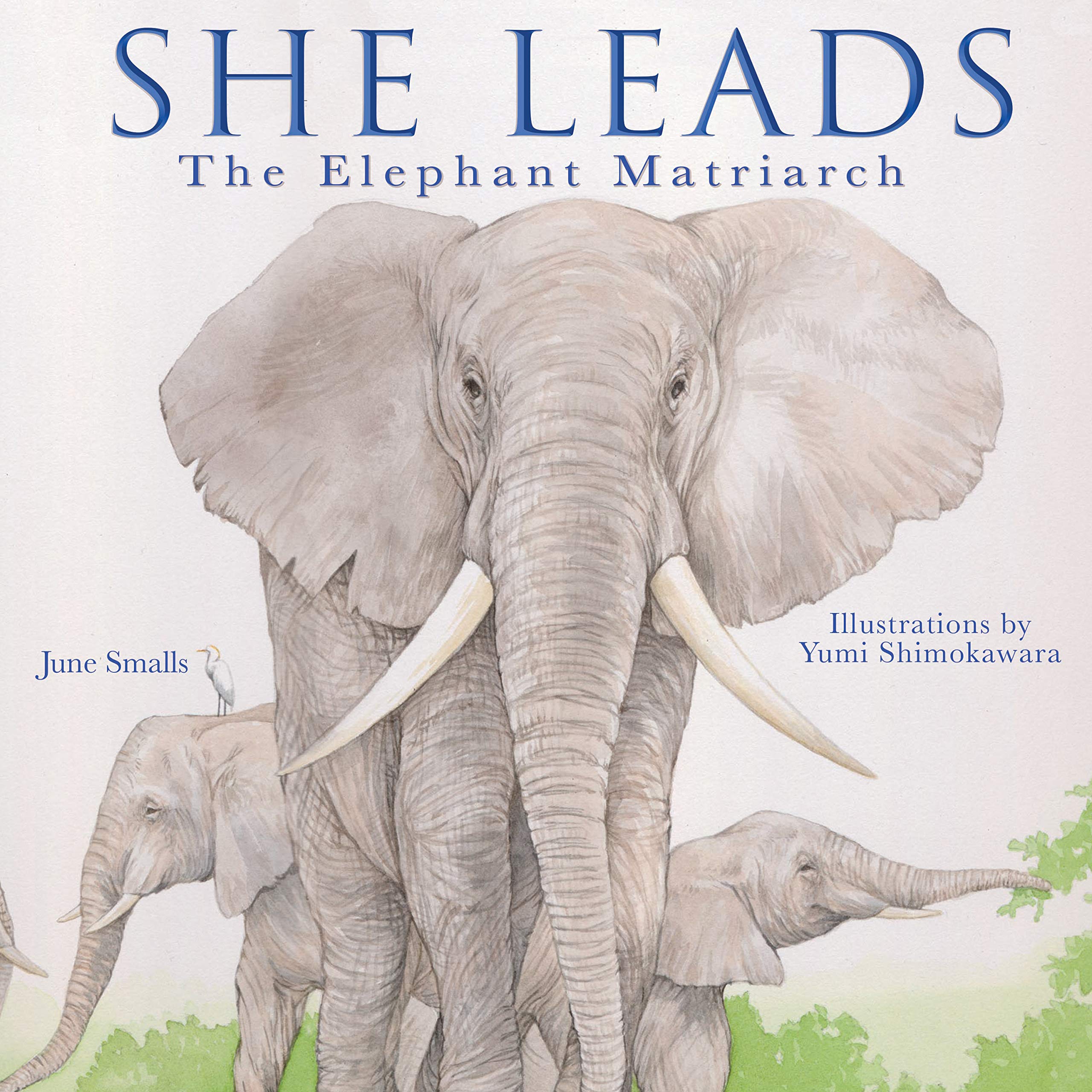
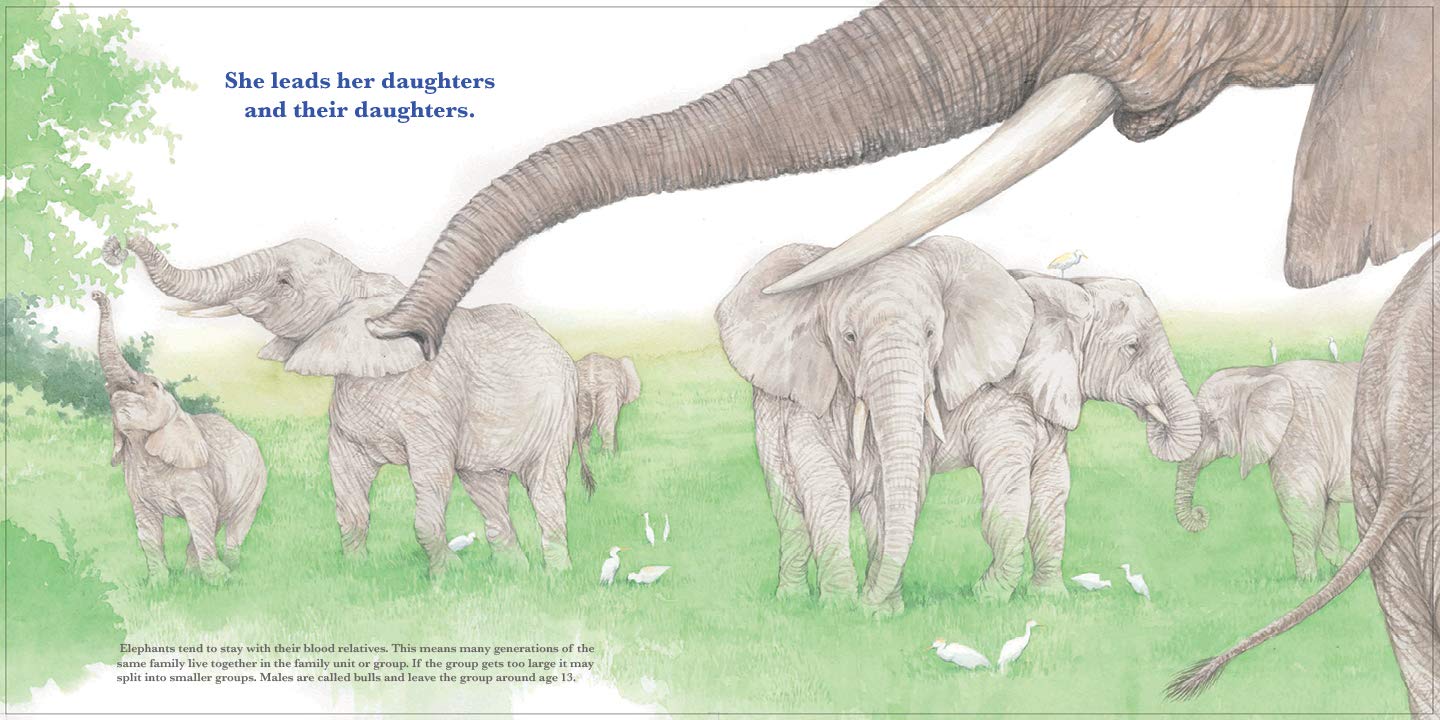
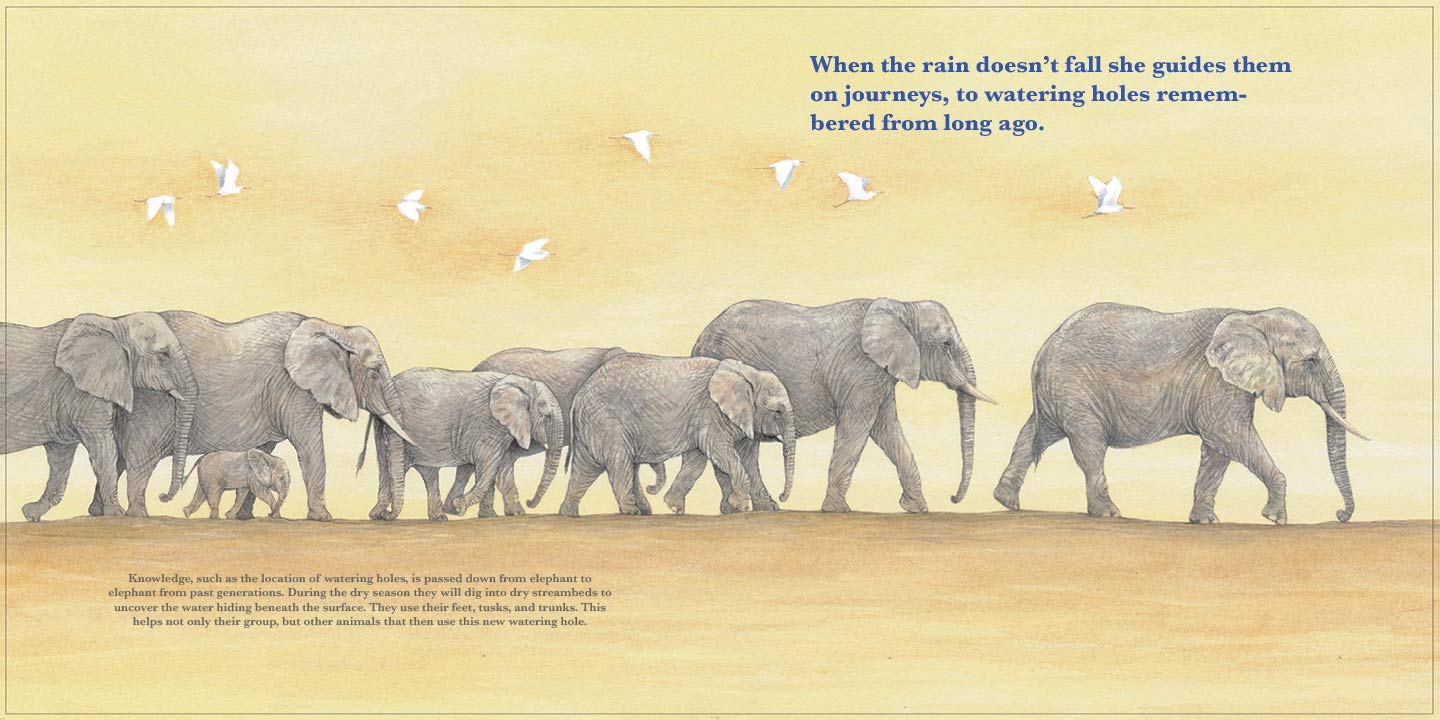
The elephant matriarch is the queen of the family group. “She is usually the oldest, but not always. It is her job to guide and teach her subjects to give them the best opportunities for survival.” Her family group consists of blood relatives—daughters and granddaughters—living together. When groups get too big, some elephants break off and form their own group. The matriarch leads the other elephants to food and water, and when water is scarce “she guides them on journeys to watering holes remembered from long ago.”

celebrate-picture-books-picture-book-review-she-leads-queen

Image copyright Yumi Shimokawara, 2020, text copyright June Smalls, 2020. Courtesy of Familius.

Like a loving grandmother, the matriarch teaches younger elephants how to take care of their little ones. Everyone in the family group helps rear the young. “The clumsy babies are sometimes caught in mud or water and the older elephants will work together to push, pull, or dig to rescue them.”

Sometimes, groups of elephants that once lived together will meet. They remember each other and spend time “foraging for food together. These meetings are like a family reunion.” When danger from another animal lurks, the elephants watch and learn how the matriarch defends them. They also huddle together and surround the smaller elephants for protection. “If nature, or predators, or poachers take her friends, she will comfort and care for the orphans.”

celebrate-picture-books-picture-book-review-she-leads-daughters

Image copyright Yumi Shimokawara, 2020, text copyright June Smalls, 2020. Courtesy of Familius.

Little ones grow and play under the watchful eye of the matriarch and, just like human children, “elephants are not born with all the skills they need.” The matriarch helps teach her children, grandchildren, and great-grandchildren how to use their trunks for heavy work like moving logs and for delicate finessing, such as having the “ability to gently pluck a leaf from a tree.”

celebrate-picture-books-picture-book-review-she-leads-water

Image copyright Yumi Shimokawara, 2020, text copyright June Smalls, 2020. Courtesy of Familius.

The matriarch also thinks about the future when she won’t be able to lead the group anymore. She passes on her knowledge and skills to the elephants in her lineage, “so that when she is gone another matriarch will lead her family.” When the matriarch does die, the elephants mourn their loss in ways similar to humans. “Elephants have been observed burying their dead with grasses and branches,” and they will return to the spot months later to “touch the bones of their lost family member.” A new matriarch emerges to lead the family group. This is “usually the oldest daughter of the matriarch,” and her call “to her daughters and their daughters” can be heard for miles and miles – sometimes up to 110 square miles – as this new queen begins her reign.

celebrate-picture-books-picture-book-review-she-leads-rain

Image copyright Yumi Shimokawara, 2020, text copyright June Smalls, 2020. Courtesy of Familius.

June Smalls’ tribute to the matriarchal society of elephants and, through her lyrical storytelling, to strong women in every family and community is both poignant and powerful. The main story reveals the role of the matriarch in leading and teaching her daughters, granddaughters, and great-granddaughters over a lifetime, which can span seventy years. Smalls’ stirring text illuminates the similarities between elephants and humans in everyday needs, behavior, memory, familial care, and even in death. In addition to the story, each page spread includes fascinating, and often touching, facts about how a family group forages for enormous amounts of food, finds crucial water supplies, protects each other, rears their young, and sustains each other in the passing of the matriarch. Smalls’ book ends with an inspirational entreaty to young girls to awaken to their future role as leaders.

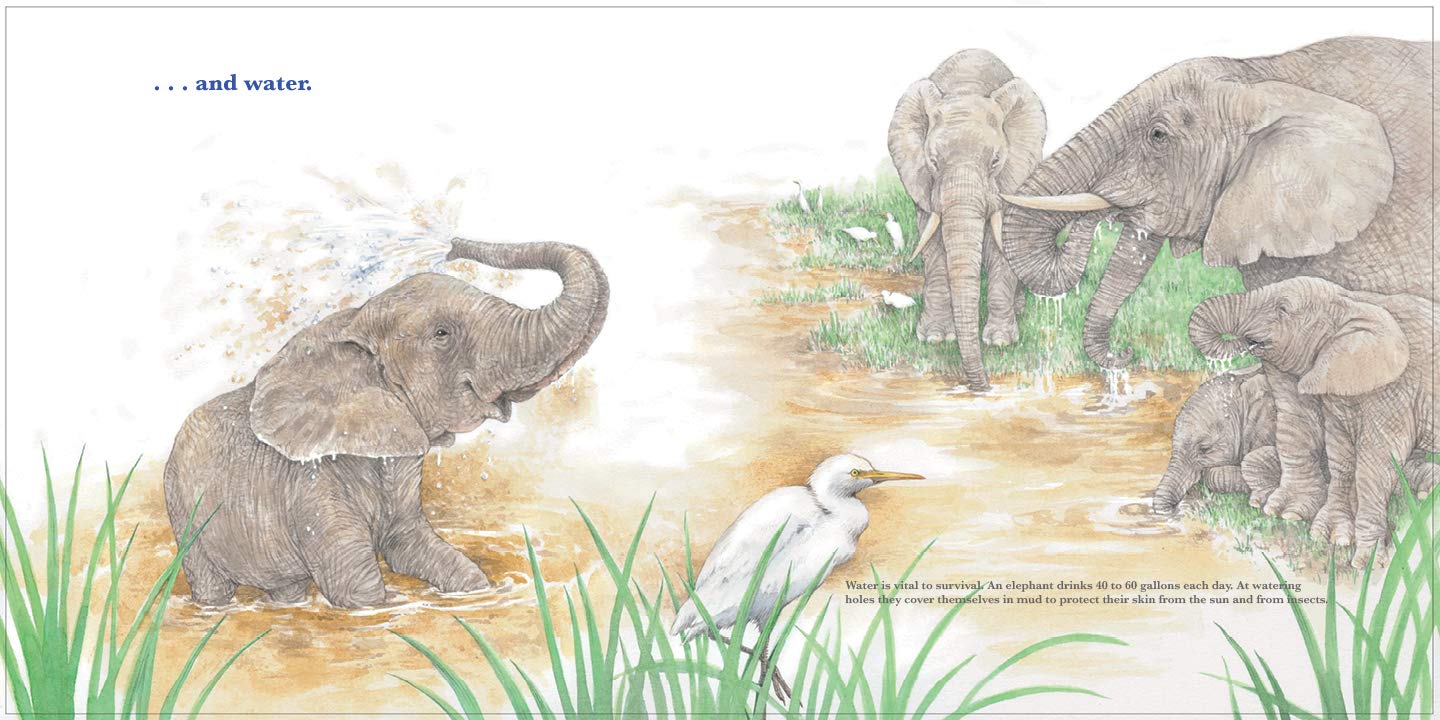
Yumi Shimokawara’s stunning realistic illustrations of an elephant matriarch leading and teaching her family group in the wild will thrill readers. On each page spread, young readers follow their elephant peer as she (or he, as male elephants stay with the family group until about age thirteen) plucks leaves from a sun-drenched tree, splashes in a watering hole, walks in the shade of two adults on a long, hot journey, is protected from predators, and plays games with sticks and other babies in the group. Shimokawara’s delicate color palette and beautifully composed images depict the intelligence and gentle manner of these animals in lively and tender moments that children will want to view again and again.

An exquisite combination of inspiration and education, She Leads: The Elephant Matriarch will captivate children as a spark for further learning about these majestic animals, the environment, and nature conservation as well as encouragement to bravely take their place in the world with grace, love, and strength. The book is a must for all home, classroom, and public library collections.

Ages 3 – 8

Familius, 2020 | ISBN 978-1641702324

Discover more about June Smalls and her books on her website.

You can find more books from Familius that joyfully reflect the habits of happy families, including reading, talking, laughing, eating, working, loving, healing, learning, and playing together as well as the Familius blog The Habit Hub here.

World Elephant Day Activity

celebrate-picture-books-picture-book-review-hand-print-elephants-craft

Elephant Handprint Craft


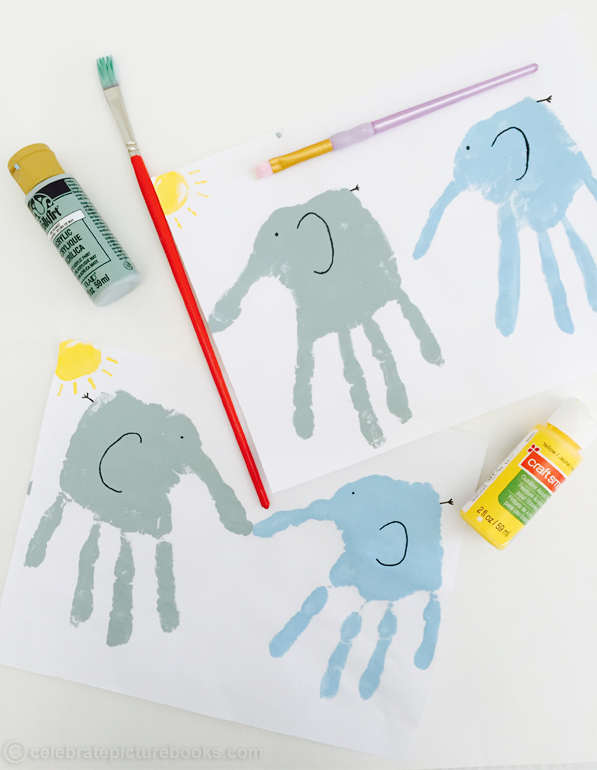
This easy craft is fun for families to do together. Using siblings’ hands or the hands of a child and an adult to make the elephants can make a meaningful and comforting picture to hang in a child’s room or gift for mom, dad, or other family members.

Supplies

  • Craft paint in two colors of the children’s choice
  • Yellow craft paint
  • Black fin-tip marker
  • Crayons, markers, or colored pencils to make a background
  • Paper
  • Paint brush

Directions

  1. Paint one child’s hand and press it on the paper. The thumb is the truck and the fingers make the legs.
  2. Paint the second child’s or adult’s hand and press it on the paper near the other “elephant.” 
  3. After the paint has dried, draw on ears and an eye.
  4. Add a sun with the yellow paint or crayon.
  5. Add grass, trees, or other background features if desired.

celebrate-picture-books-picture-book-review-she-leads-cover

You can buy She Leads: The Elephant Matriarch on the Familius website.


This post contains affiliate links. You can read my full disclosure statement here.

Picture Book Review

July 1 – It’s Wild about Wildlife Month

celebrate-picture-books-picture-book-review-50-reasons-to-love-animals-cover

About the Holiday

The theme of this month-long holiday is simply all about wildlife. Whether you like mammals, birds, fish, or insects best, July is the time to celebrate them. The month is just getting started, which give you and your kids lots of time to explore the wildlife in your area and learn about the creatures on the other side of the world and everywhere in between. Today’s book will get you started!

50 Reasons to Love Animals

Written by Catherine Barr | Illustrated by Hanako Clulow


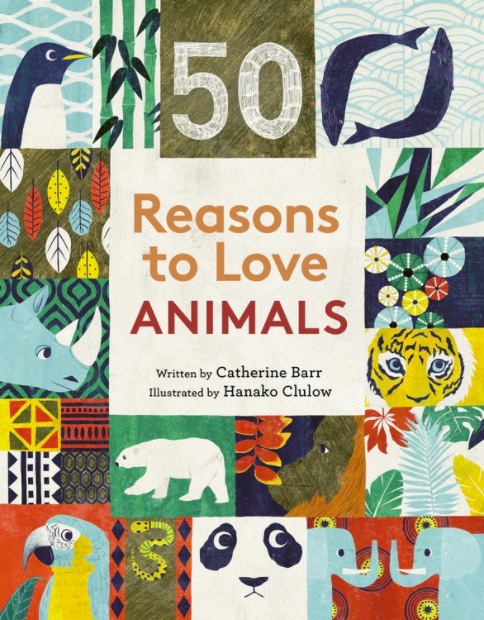
In her introduction, Catherine Barr orients readers to the focus of her book with the alarming statistic that “five times in Earth’s history over half of all animals and plants have mysteriously died out. But today,” in large part because of habitat destruction, “species are becoming extinct much faster than the natural rate.” She and Hanako Clulow then take children on around-the-world-trip to various ecosystems to discover facts about the animals that live in each and find spotlighted “how to love…” suggestions for protecting them in every chapter.

The first stop is a dry savanna, where African elephants, giraffes, zebras, and hippos gather around a watering hole. Kids will be interested to learn that baby elephants take about a year to “figure out how to eat and drink with their strange, long noses,” and that hippos have a built-in sunscreen that protects them from the sun. At night, lions, lesser bushbabies, and pangolins come out to eat. They’ll also learn about other animals on the savannah as well as about the shrinking population of elephants—victims of poaching for their ivory tusks.

celebrate-picture-books-picture-book-review-50-reasons-to-love-animals-coral-reef

Image copyright Hanako Clulow, 2020, text copyright Catherine Barr, 2020. Courtesy of Frances Lincoln Children’s Books.

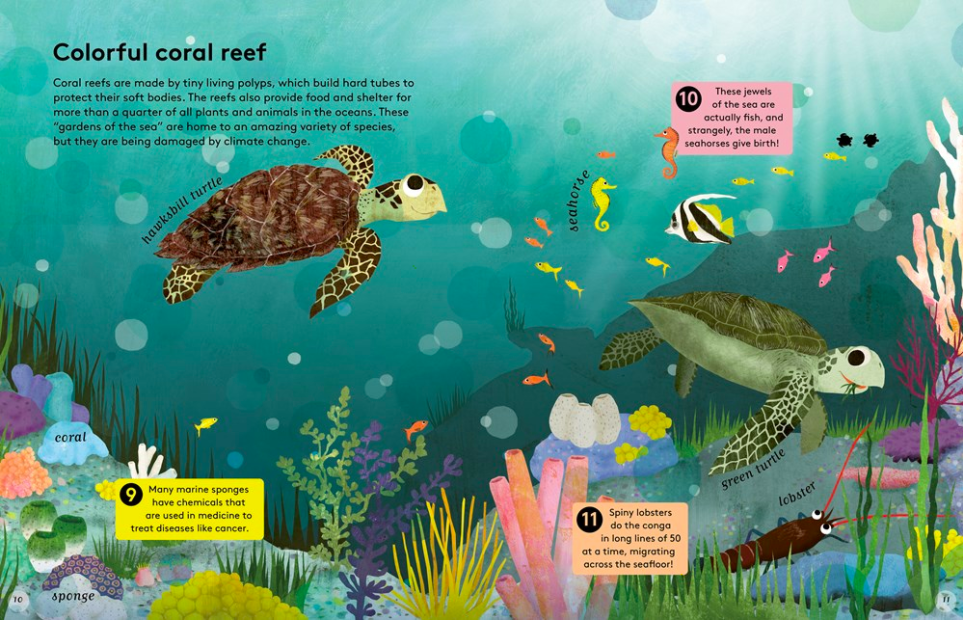
Readers next dive into the sea to explore a coral reef, which provides nutrients and a home to a wide variety of creatures—including marine sponges, which contain “chemicals that are used in medicine to treat diseases like cancer, spiny lobsters, seahorses, sharks, dolphins, and various types of sea turtles. Children learn more about these shelled favorites who have populated our oceans for 100 million years and the dangers they face, including polluted waters, fishing nets, and plastic bags, which they mistake for jellyfish and ingest. How can kids love a turtle? By learning more about climate change and how it is killing coral reefs.

Children return to land to discover the Arctic and Antarctica. The northern icy pole is home to polar bears, harp seals, puffins, whales, while the southern pole is home to seals and emperor penguins. Kids might think about these intrepid creatures—who can “survive in very low temperatures of -76 degrees Fahrenheit” the next time they put on a sweater or coat.

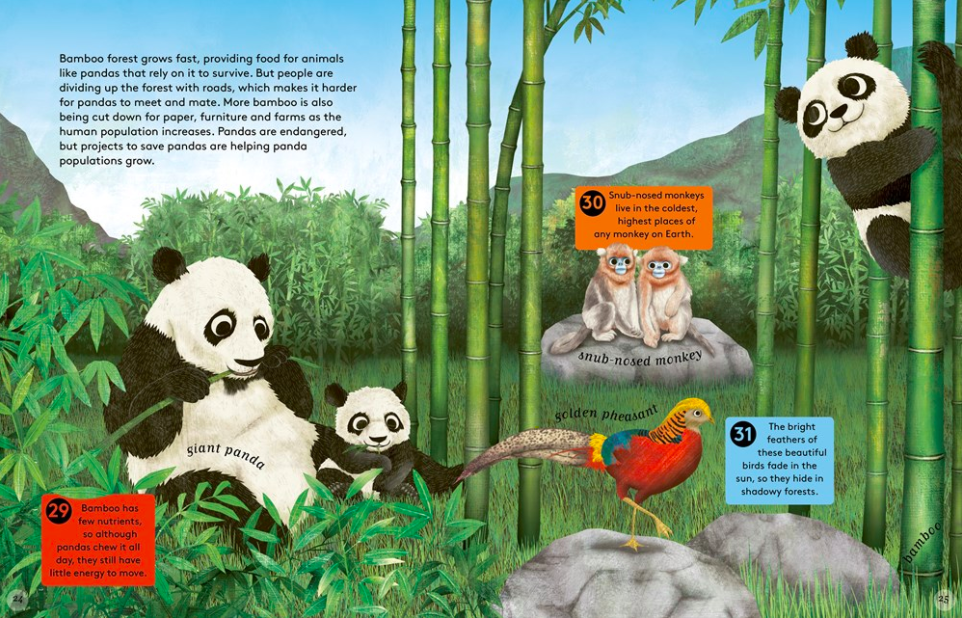
Ahhh! Kids can warm up in an evergreen forest with two cute bear cubs learning how to scratch their back against a tree trunk as a porcupine, a Steller’s jay, and a pine marten look on. There are all kinds of forests, and readers are next transported to a bamboo forest, where a giant panda and her cub chow down on lunch. Here, children learn about the threats to bamboo forests and, by extension, the panda population while meeting a few more denizens of this unique environment. An old forest growing in the shadow of snow-capped mountains gives shelter to a grizzly bear family and majestic elk. Did you know that a grizzly bear “can run as fast as a race horse?”

celebrate-picture-books-picture-book-review-50-reasons-to-love-animals-pandas

Image copyright Hanako Clulow, 2020, text copyright Catherine Barr, 2020. Courtesy of Frances Lincoln Children’s Books.

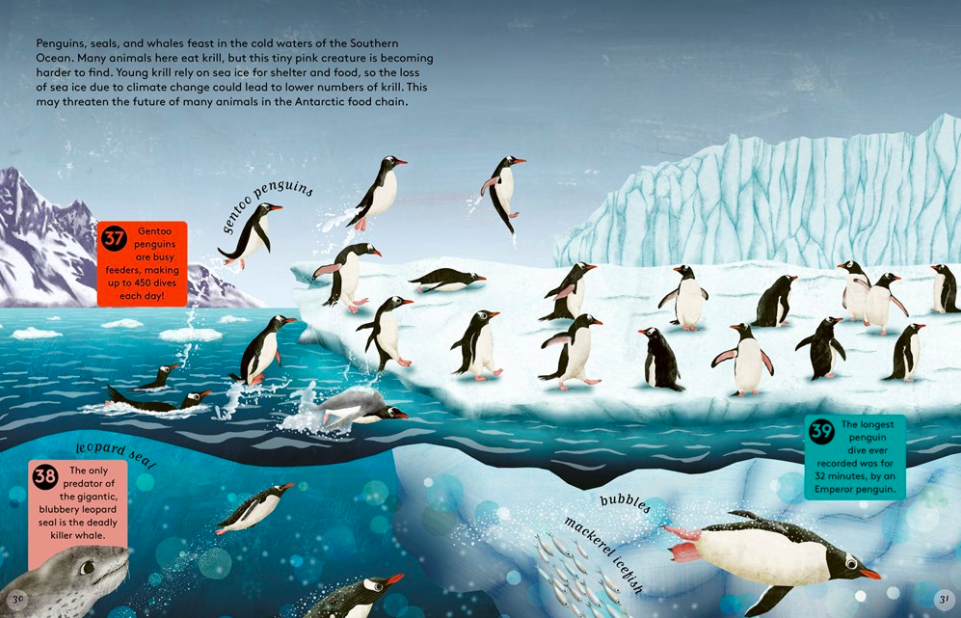
The northern and southern open oceans host whales, octopuses, penguins, seals, a multitude of fish species, and strange creatures we’re only beginning to learn about. Many animals of the cold Southern Ocean eat krill, but the loss of sea ice to climate change decreases the number of krill and threatens to endanger the animals that rely on it. How much does pollution affect our oceans? “Scientists estimate that the population of ocean animals has halved over the last 40 years.”

Finally, kids come to a tropical forest, where Asian elephants are busy scratching an itch and swatting away flies with sticks they use as tools. Bengal tigers, orangutans, sun bears, and hornbills are only a few of the creatures who make these lush forests their home. Tropical rainforests are being diminished by logging and their replacement by palm oil plantations. You can help by checking the ingredients of products you use—”from food to toothpaste” for palm oil and finding “better options such as sustainable palm oil or palm oil-free products.”

As the book closes, readers meet up with elephants once again. These African forest elephants share space with people and gorillas. While the elephants can wreak havoc on farms, “farmers are encouraging elephants away from their crops—with a hum and a sticky reward.” Can you figure out what it is?

celebrate-picture-books-picture-book-review-50-reasons-to-love-animals-gentoo-penguins

Image copyright Hanako Clulow, 2020, text copyright Catherine Barr, 2020. Courtesy of Frances Lincoln Children’s Books.

Catherine Barr’s captivating text and fifty highlighted facts offer readers a fascinating and eye-opening trip around the world to raise awareness of the dangers animals and humans face if we don’t work together to find solutions to pollution, habitat destruction, and other threats to the environment. Today’s environmentally conscious children will eagerly want to participate in the “Show you love…” tips, which provide ideas for classroom and homeschool research and activities.

Hanako Clulow combines lifelike portrayals with the appeal of kawaii to bring the various ecosystems to vibrant life for readers. Through her textured and detailed illustrations, readers will feel transported to a grassy plain, where each blade of grass is visible; dive into warm and frigid waters for a peek at what lies below; and enjoy a warm day on a flower-speckled riverbank. Clulow’s wide vistas also give children a stunning view of each environment, allowing them to see what is in danger of being lost. While clearly depicted and easy to read, the numbered fact boxes do not intrude on the illustrations, making each two-page spread a lovely learning experience. The chapter format makes the book easy to dip into for classroom or homeschool lessons.

An excellent introduction to world environments, 50 Reasons to Love Animals would be a favorite addition to home, school, and public library bookshelves.

Ages 3 – 7

Frances Lincoln Children’s Books, 2020 | ISBN 978-0711252462

Discover more about Catherine Barr and her books as well as free learning activities on her website.

You can find a portfolio of work by Hanako Clulow on her website.

Wild about Wildlife Month Activity

celebrate-picture-books-picture-book-review-hand-print-elephants-craft

Handprint Elephants


This easy craft is fun for siblings to do together and can make a nice decoration for a child’s room or a gift for mom, dad, or other family members.

Supplies

  • Craft paint in two colors of the children’s choice
  • Yellow craft paint
  • Black fin-tip marker
  • Crayons, markers, or colored pencils to make a background
  • Paper
  • Paint brush

Directions

  1. Paint one child’s hand and press it on the paper. The thumb is the truck and the fingers the legs.
  2. Paint the second child’s hand and press it on the paper near the other “elephant.” A couple of examples are: the elephants standing trunk to trunk or trunk to tail 
  3. After the paint has dried, draw on ears and an eye
  4. Add a sun with the yellow paint
  5. Add grass, trees, or other background features

celebrate-picture-books-picture-book-review-50-reasons-to-love-animals-cover

You can find 50 Reasons to Love Animals at these booksellers

Amazon | Barnes & Noble | Books-a-Million

To support your local independent bookstore, order from

Bookshop | IndieBound

Picture Book Review