June 5 – World Environment Day

About the Holiday

Sponsored by the United Nations, World Environment Day encourages worldwide awareness and action for the protection of the environment. Each year a different country hosts the day’s events. This year the Republic of Korea has been chosen as the host country, with a focus on ending plastic pollution globally. Ridding the planet of plastic pollution is an important contribution to achieving the Sustainable Development Goals adopted by the United Nations, including those on climate action, sustainable production and consumption, protection of seas and oceans and repairing ecosystems and retaining biodiversity. Everyone is needed to make a difference. You can learn more about World Environment Day, the 400 million tons of plastic produced each year (200 tons of which is single-use) and the dangers of microplastics throughout the environment, as well as the UN Decade on Ecosystem Restoration and how you can join the #GenerationRestoration movement on the UN World Environment Day website.

Thank you to Phaidon Press for sharing this book with me for review!

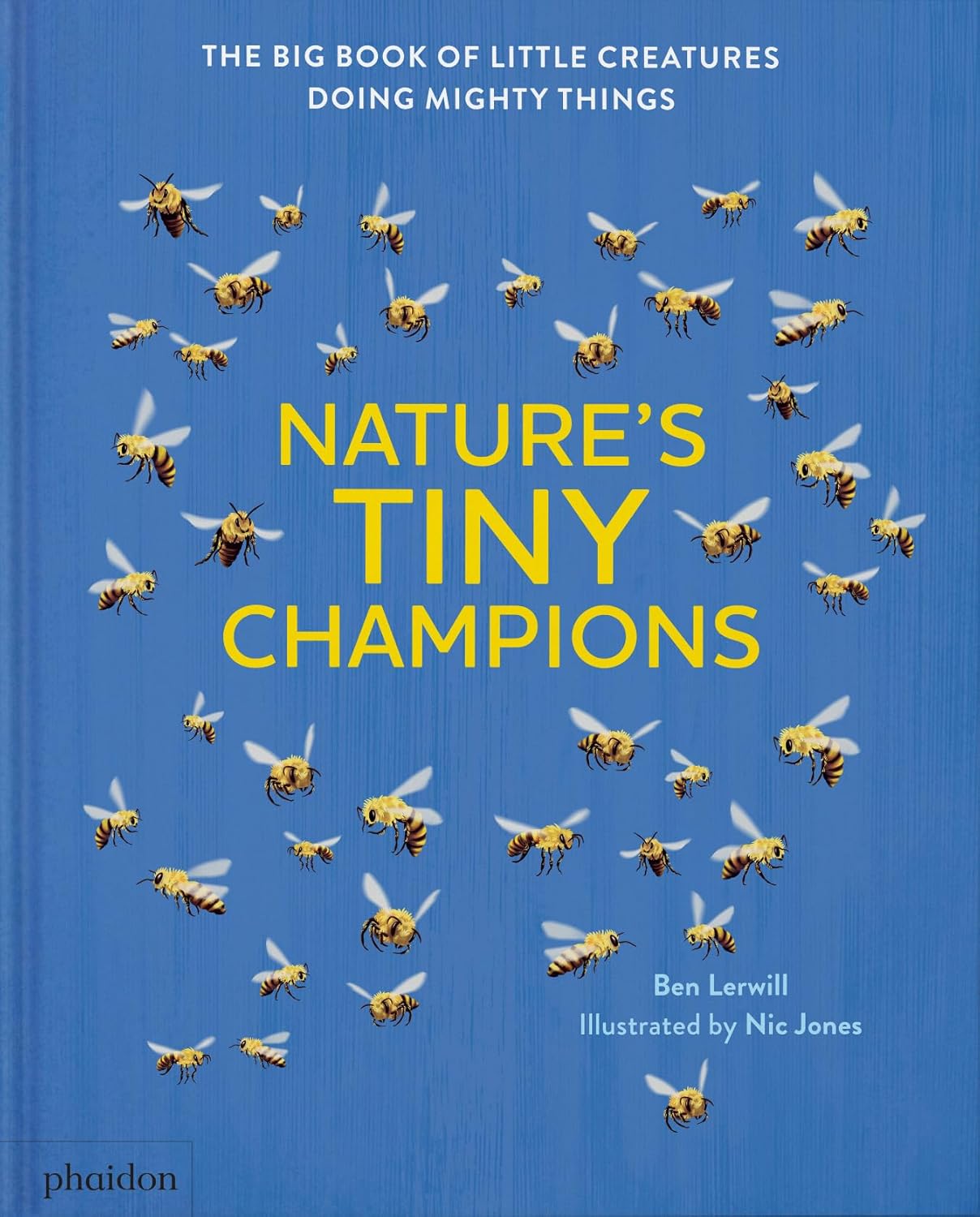
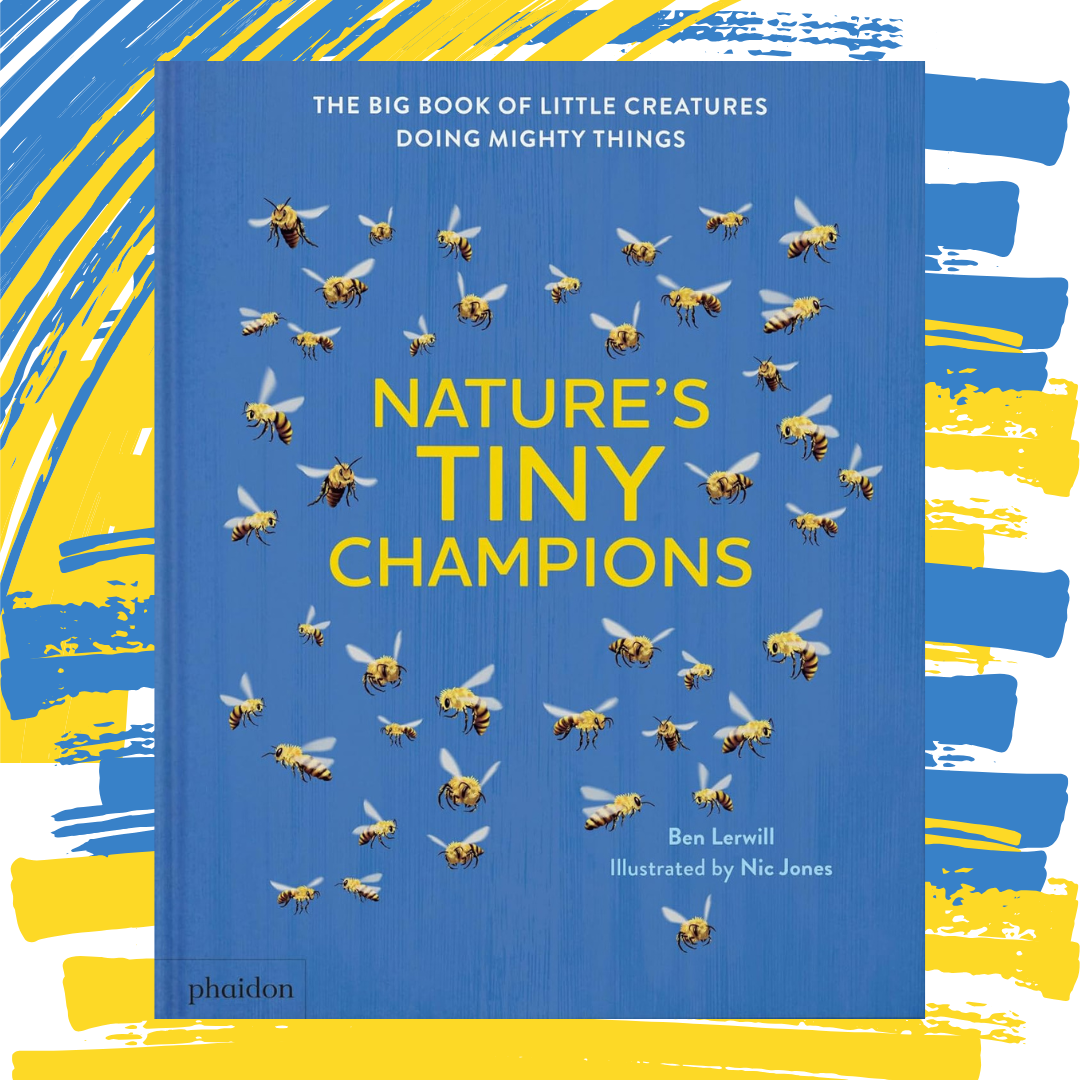
Nature’s Tiny Champions: The Big Book of Little Creatures Doing Mighty Things

Written by Ben Lerwill | Illustrated by Nic Jones


If you are awed by nature then you might know that “there are at least two million animal species on planet Earth.” But were you aware that some scientists believe the number might be more than eight million? So where are they? Well, all around—they’re just not easy to see. As Ben Lerwill reveals, “almost all of them are small enough to fit in the palm of your hand.” In fact, most could “sit on the tip of your little finger, and some are so impossibly minuscule that a whole herd of them could be hiding on the period at the end of this sentence.”
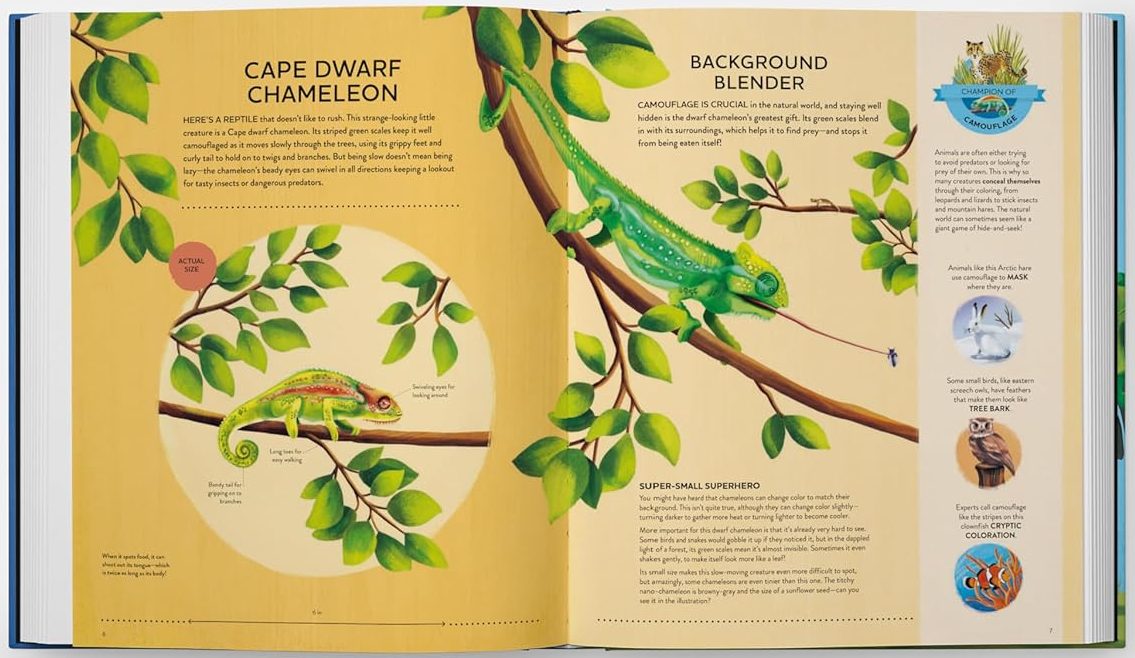
Illustration © 2025 by Nic Jones, text copyright © 2025 by Ben Lerwill.

So should we be thinking out of sight, out of mind? Absolutely not! And Nature’s Tiny Champions is here with detailed profiles of 20 phenomenal creatures to show you what an enormous impact itty-bitty animals make, plus back matter that presents short, illustrated entries on 21 more tiny champions of the air, land, and sea. Ready to dive in? Let’s go!

Each two-page spread in this cleverly designed oversized book introduces readers to an animal through Ben Lerwill’s easy-going, conversational description of the primary trait that makes it a champion, an often mind-boggling discussion of its crucial contribution to its ecosystem, and a sidebar containing even more memorable facts about natural phenomena such as camouflage, prey species, migration, metamorphosis, teamwork, survival, keystone species, indicator species, self-defense, and more.
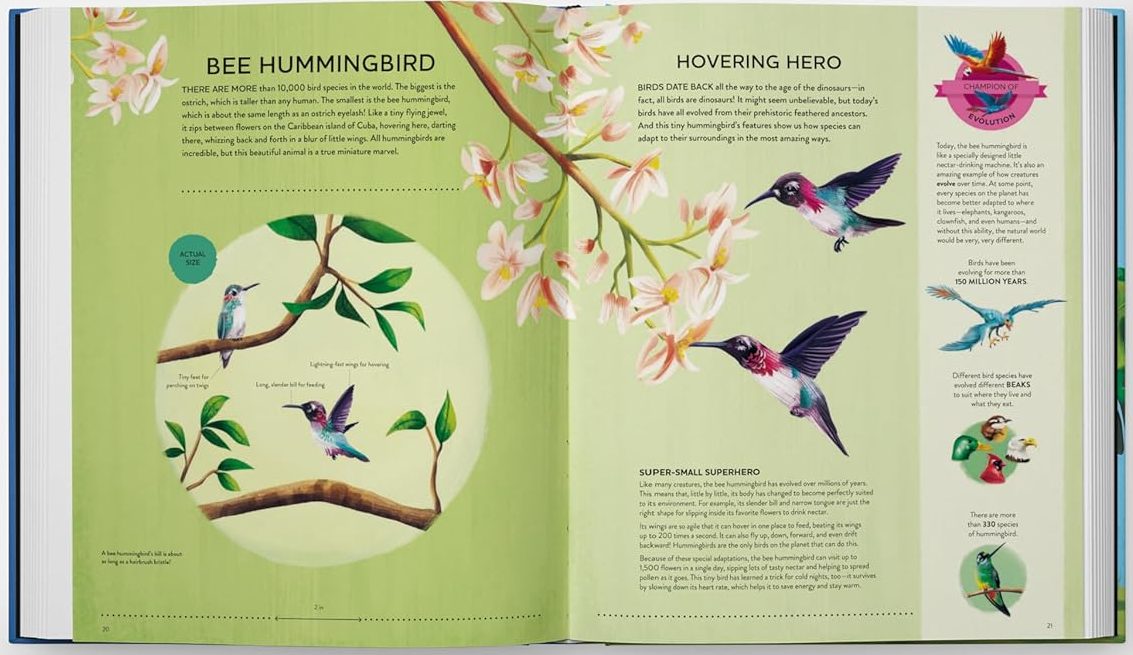
Illustration © 2025 by Nic Jones, text copyright © 2025 by Ben Lerwill.

Each page spread stuns with Nic Jones’ vivid and gorgeously realistic illustrations that set each tiny creature in its natural habitat. Actual-size renderings of each animal is a highlight and are sure to spark plenty of “oh my gosh!” and “it’s so cute!” reactions. These images also allow kids to learn about how the animal is perfectly suited to its environment. Kids will enjoy comparing each animal to the size of their hand, finger, or even—in the case of the water bear—a grain of sugar. Where the animal is too small to see and be labeled clearly in its natural size, the image is expanded and labeled with the scale of magnification. 

Ready for a few examples of what readers will learn? Get this:

  • “The tiger piston shrimp is only the size of a french fry, but when it snaps its claw, the noise is louder than a gunshot!
  • “Leafcutter ants can carry 50 times their own weight. That’s like you carrying an RV—with your teeth!
  • A water bear “can go for 30 years without food or water,” it can survive temperatures as cold as -454ºF and as hot as 302ºF, and it has “even stayed alive after being blasted into outer space.”
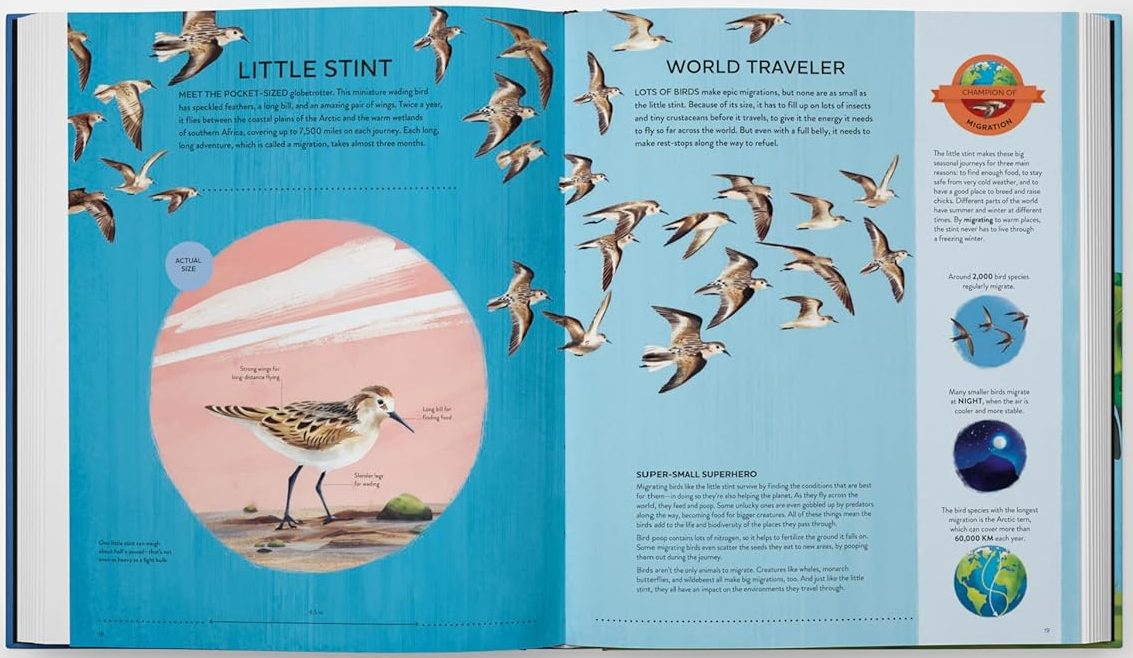
Illustration © 2025 by Nic Jones, text copyright © 2025 by Ben Lerwill.

For budding zoologists, entomologists, and nature lovers at home and in the classroom, Nature’s Tiny Champions: The Big Book of Little Creatures Doing Mighty Things is a fascinating sure winner that will keep kids enthralled, watching out for the tiny creatures in their own area, and eager to learn more. The book’s impressive  would make a much-appreciated gift. It is highly recommended for home bookshelves and is a book librarians will be thrilled to display and recommend.  

Ages 6 – 9+

Phaidon Press, 2025 | ISBN 978-1838669973

About the Author

Ben Lerwill is a multi-award-winning children’s author and freelance writer who has written for over 50 publications, including National Geographic Traveller, The Sunday Times, and BBC Travel. Previous recognition for his books includes a Wainwright Prize for Children’s Nature Writing shortlist, a National Geographic Kids’ Magazine ‘Book of the Month’ and a Junior Library Guild Gold Standard Selection. Visit him at benlerwill.com.

About the Illustrator

Nic Jones has been a professional illustrator for nearly 5 years. Previous works include Earth Clock: The History of Our Planet in 24 Hours, and Above and Below: Dusk til Dawn.

World Environment Day Activity

Environment Word Search Puzzle


Find the words about our environment and protecting it’s resources in this puzzle! 

Environment Word Search Puzzle | Environment Word Search Puzzle Answer Key
You can purchase Nature’s Tiny Champions: The Big Book of Little Creatures Doing Mighty Things from these booksellers

Amazon | Barnes & Noble | Bookshop

Picture Book Review

April 10 – National Wildlife Week

About the Holiday

National Wildlife Week, dating back to 1938, is the National Wildlife Federation’s longest-running education program. The celebration was designed to connect budding conservationists of all ages to the awesome wonders of wildlife. Each year, we pick a theme and provide fun educational materials and activities for educators and caregivers to use with kids. This year’s theme is Keep an Eye on the Wild. Conservationists and animal lovers are keeping a lookout for wildlife in the most unexpected places as we learn how we can keep their habitats safe and live in harmony with our incredible wild neighbors. Whether you keep your eyes out for the wildlife living near you with a “critter cam” or by walking around and paying attention to your backyard, neighborhood, and wider area, being aware of the creatures around you can help them survive for generations to come. To learn more about National Wildlife Week and find fun activities aimed at connecting kids with wildlife, visit the National Wildlife Week Kids Page!

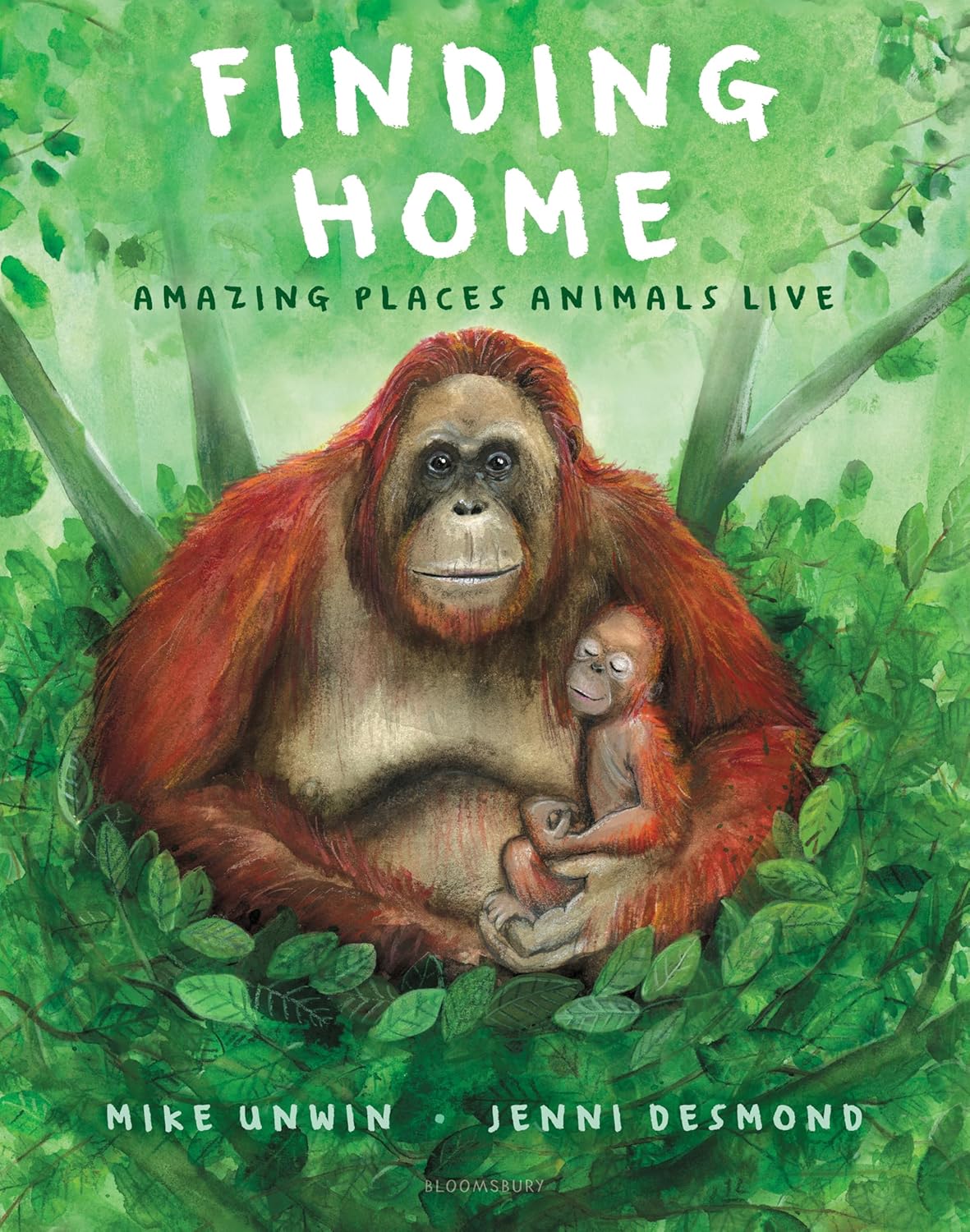
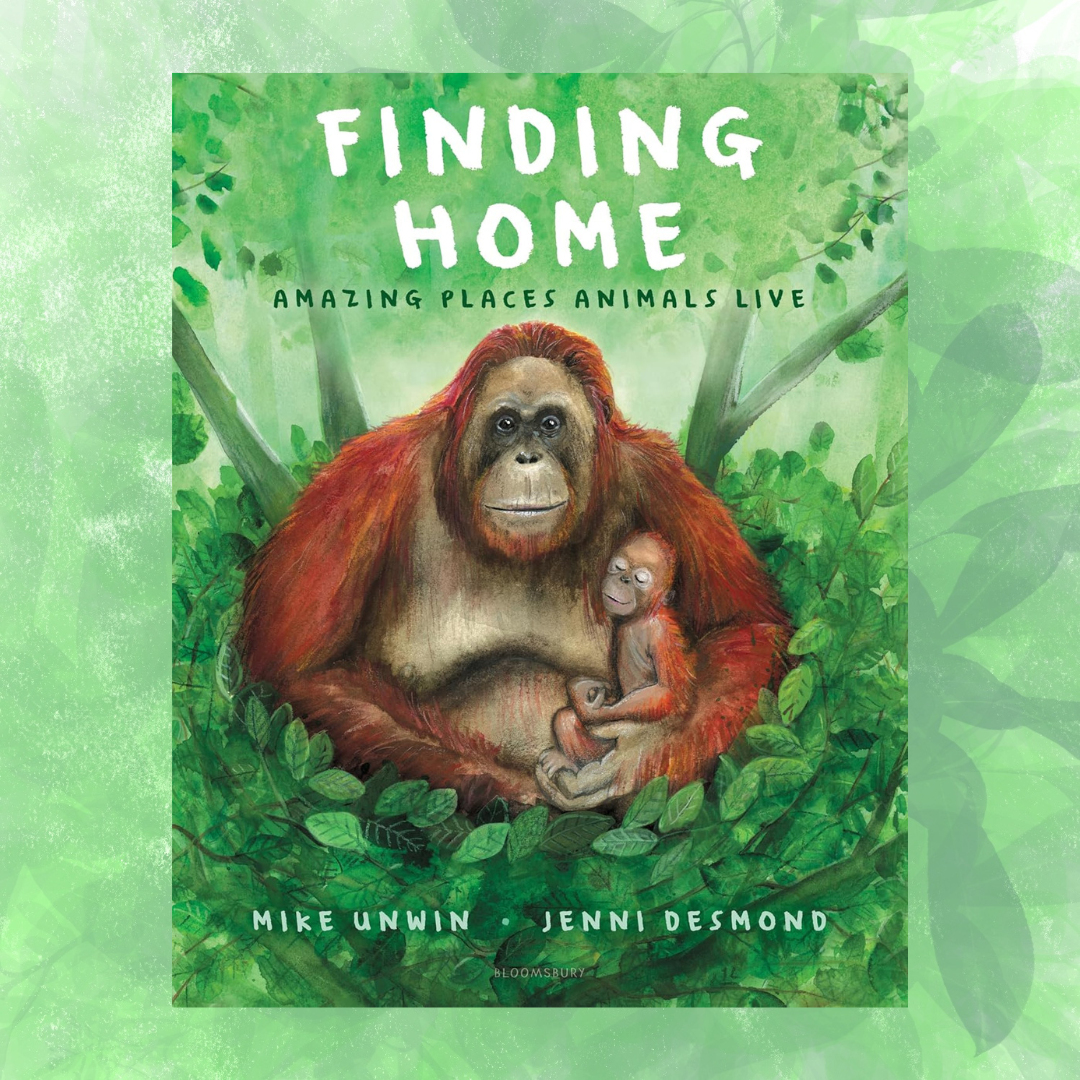
Finding Home: Amazing Places Animals Live

Written by Mike Unwin | Illustrated by Jenni Desmond


Finding Home begins: “Our planet is home to a mind-boggling number of different animals: at least 6,500 species of mammal, 10,000 species of reptile, 11,000 species of bird, and literally millions of insects. Every single one has its own home.” Just think of it! As your eye sweeps across any vista; as you walk across your yard, local playground, or favorite park, beach, or mountain trail, an untold number of creatures’ homes are within sight or underfoot. We know their names: Den. Nest. Burrow. Taxi (wait, what?). You’ll see, because in their astounding and gorgeous book, Mike Unwin and Jenni Desmond reveal that there is no such thing as a generic animal home.

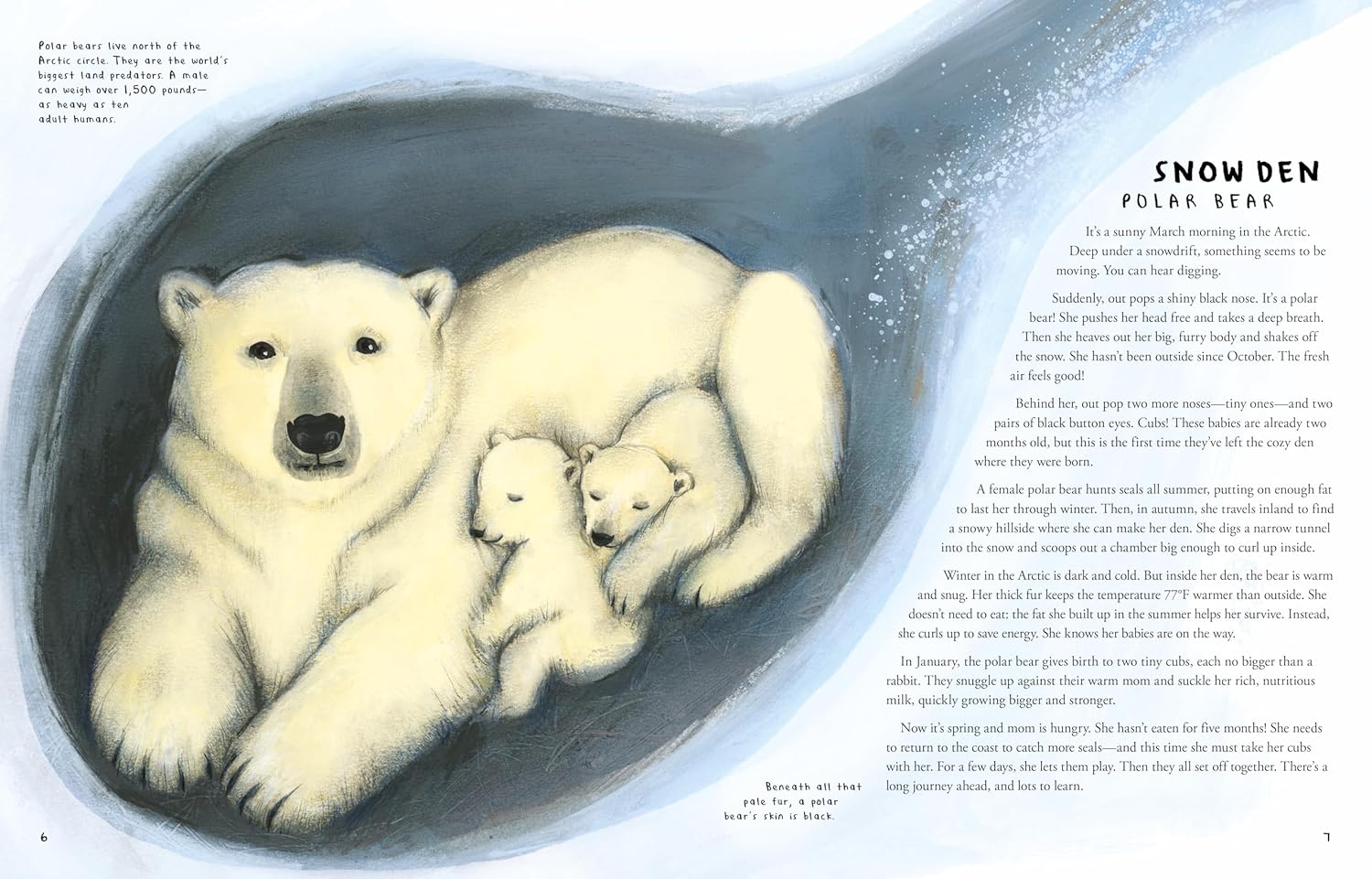
Illustration © 2025 by Jenni Desmond, text © 2025 by Mike Unwin. Courtesy of Bloomsbury Children’s Books.

Take “den,” for instance—a polar bear’s snow den. Unwin and Desmond take you right inside this winter home, where a mother polar bear and her two cubs (born here in the cold of January) welcome you. As you squeeze inside, don’t worry about being cold. The polar bear’s “thick fur keeps the temperature 77°F warmer than outside.” 

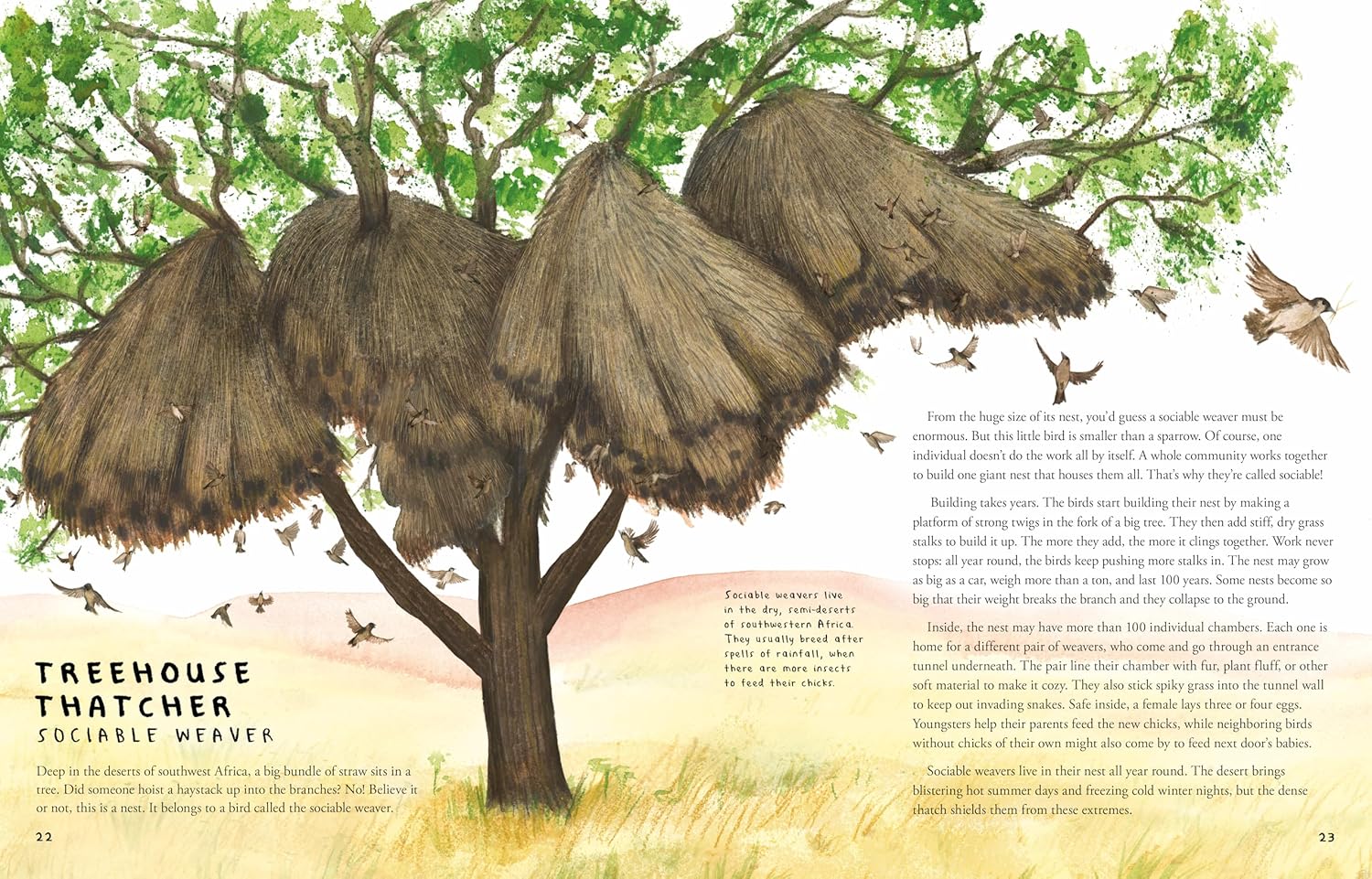
Next up is “nest.” These are bowls made from twigs, straw, and fluff and, sometimes, found objects like bits of paper or cloth, right? Well, yes—for some birds. But you won’t believe your eyes when you see what appears to be several haystacks lodged within a tree’s branches. This nest, constructed by a whole community of birds smaller than sparrows, can “grow as big as a car, weigh more than a ton, and last 100 years.” Like humans’ apartment buildings, the bird pairs that inhabit this nest look out for each other and help their neighbors. Kids will also be amazed by another type of bird that literally sews leaves together with “plant fiber and spider silk” to create their soft, deep nests.

Illustration © 2025 by Jenni Desmond, text © 2025 by Mike Unwin. Courtesy of Bloomsbury Children’s Books.

And how about “burrows?” Yep, Unwin and Desmond showcase a couple of pretty spectacular burrows too. Take the aardvark’s home. You won’t see an aardvark during the day. While the sun is up, they stay below ground, sleeping and tending to their young. It’s only after sunset that these unusual, ant-eating animals (including two-week-old babies) make an appearance topside. This is when they do what they do best: sniff out anthills and termite mounds, dig them up, and have dinner. It takes a hearty meal to satisfy an aardvark: “One aardvark can eat an amazing 50,000 ants and termites in a single night!”

Now, about that “taxi.” Children will be wowed by two, very different types of animals who prefer moving from one area to another by hitching a ride on another creature, from whom they can get food and other necessities of life while helping their hosts as well. Of course, the variety of animal homes don’t stop at these four. Every page transports readers to a different part of the globe to witness creatures of the air, sea, and land living in the home of their choice.

Unwin ends this fascinating travelogue with a map showing different ways some of the animals in the book tend to the environment, protecting it and keeping it growing for themselves and humans. He also includes a caution, reminding readers that “all these habitats . . . fit together like jigsaw pieces to make up planet Earth. And just like a jigsaw needs all its pieces, a healthy planet needs all its animals and their habitats.” Sadly, humans have not been good stewards of Earth’s bounty. “Today, scientists and conservationists are working hard to put things right.” But everyone is needed to make sure our environment is cared for the way we care for our own families. “Only then will planet Earth truly be home, sweet home.”

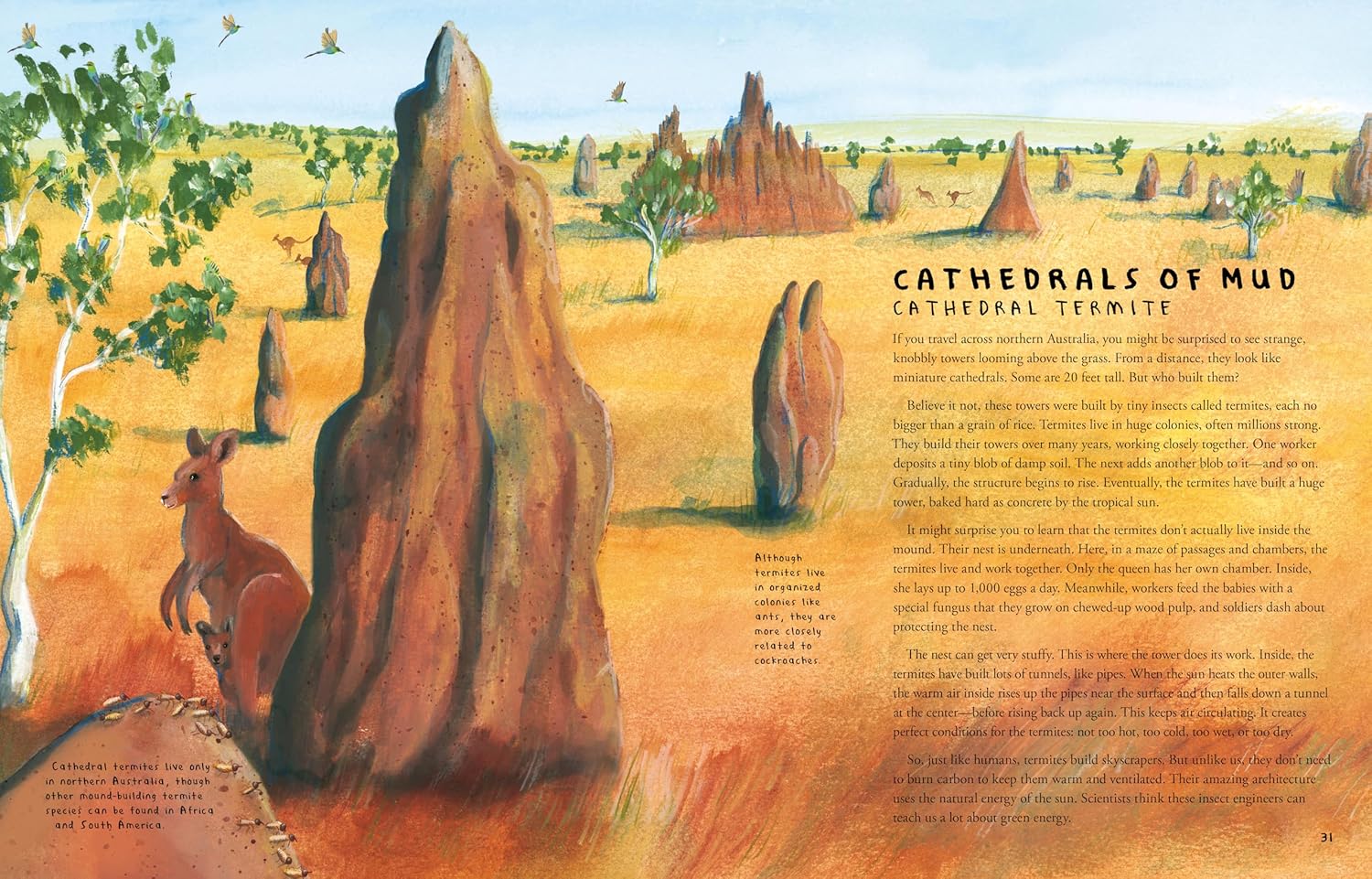
Illustration © 2025 by Jenni Desmond, text © 2025 by Mike Unwin. Courtesy of Bloomsbury Children’s Books.

Mike Unwin draws readers in with engaging storytelling that allows kids to easily understand how each animal goes about building their home and why it’s perfect for their lifestyle. Children also learn just as much about the animals as the homes they build, giving them deep and well-rounded knowledge of some of the most unusual birds, fish, mammals, and insects on our planet and how many of them benefit humankind. Unwin’s phrasing, vocabulary and conversational lilt make Finding Home a highly satisfying nonfiction read aloud for younger kids. Independent readers will eagerly dip into the book again and again to meet these intriguing creatures.

With the impact of a museum exhibit, Jenni Desmond’s rich, full-bleed illustrations will take your breath away with their stunning realism and personality. Some animals peek out at the reader, while others busily go about their work oblivious to outside interest. From grassy hillsides to treetop canopies to sunny Africa and the snowy Himalayas, Desmond takes readers on an around the world tour like no other.

Gorgeous, educational, and nature nonfiction at its best, Finding Home: Amazing Places Animals Live is a must for all classroom, school, and public libraries as well as for nature- and animal-loving kids and families.

Ages 5 – 8+

Bloomsbury Children’s Books, 2025 | ISBN 978-1547615100

About the Author

Mike Unwin has written more than 30 books for both adults and children, including the Encyclopedia of Birds and Migration. He is also a regular contributor to publications such as BBC Wildlife and RSPB Nature’s Home. In 2013 Mike was voted UK Travel Writer of the Year by the British Guild of Travel Writers. Follow Mike on Instagram @mikeunwin.wildtravel.

About the Illustrator

Jenni Desmond is the illustrator of more than 20 books, including MigrationThe Wolves of Yellowstone, and The Blue Whale. Her books have been translated into over a dozen languages. In 2016 she was made a Maurice Sendak Fellow and her book The Polar Bear became a New York Times Best Illustrated Children’s Book of the Year. When Jenni is not in her studio, you’ll find her cooking, cycling and looking for adventure. Visit her at jennidesmond.com and follow her on Instagram @jennidesmond.

National Wildlife Week Activity

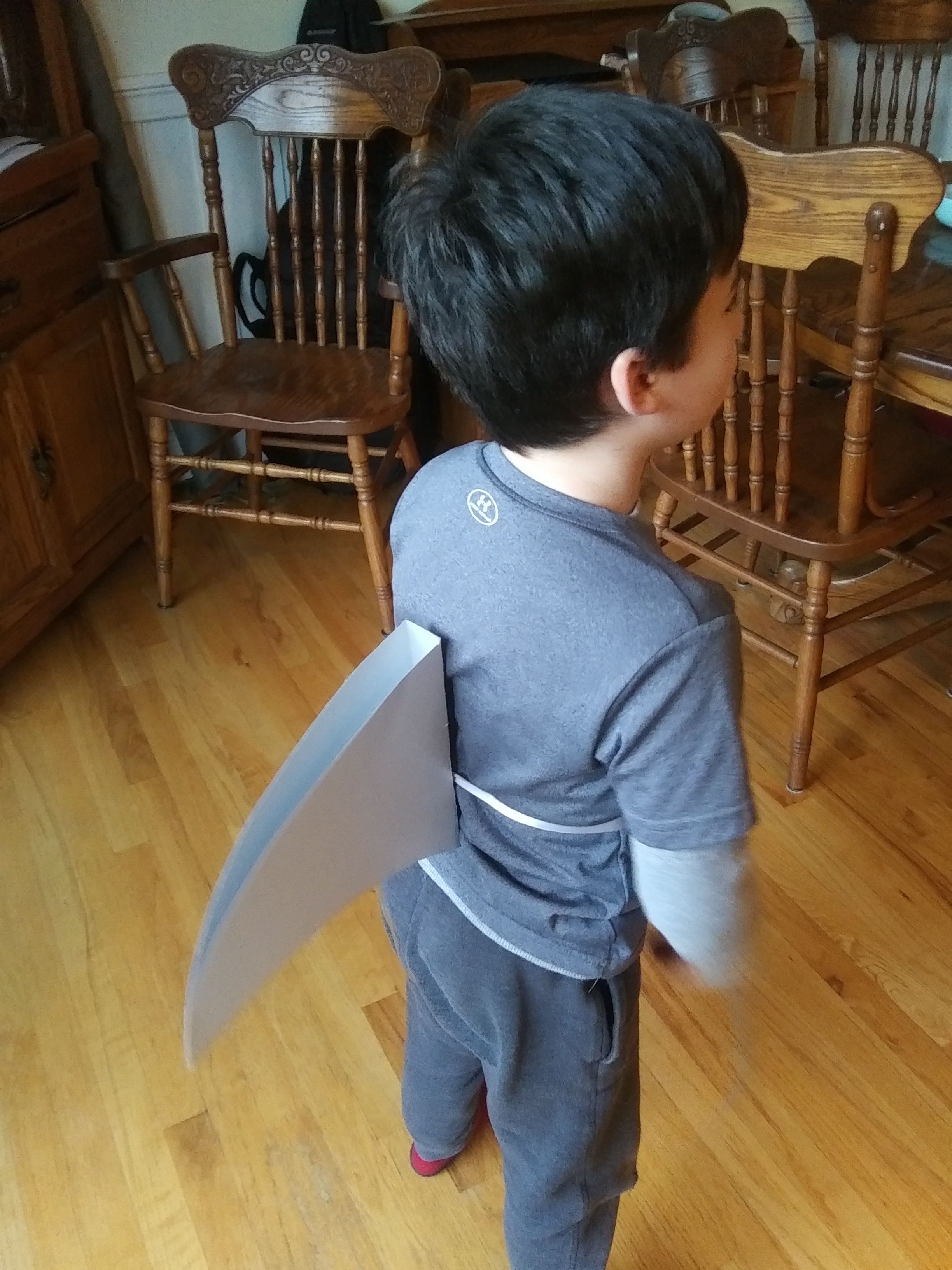
celebrate-picture-books-picture-book-review-shark-fin-craft

Fintastic Shark Fun


Sharks are awesome creatures and even feature as a home to another animal in today’s book! Follow the directions below and to make your own shark fin. 

Supplies

  • 2 pieces of 8.5 x 11 gray cardstock paper
  • Ribbon
  • Tape
  • Scissors
  • Pencil

fin outline white

celebrate-picture-books-picture-book-review-shark-fin

Directions

  1. Tape the top of the two pieces of paper together
  2. Fold them back together
  3. Measure an inch up from the bottom of the papers (the un-taped side) and trace a straight line across both papers
  4. Trace a shark fin outline onto your paper. The shark outline should stop an inch above the bottom
  5. Cut out the fin on both pieces of paper. If you should cut through the tape, re-tape the tops together
  6. Fold along the lines of both papers so the folds face towards each other.
  7. Tape the folds so the fin becomes a triangle
  8. Cut two slits parallel to the folded lines
  9. Thread ribbon through slits

You can purchase Finding Home: Amazing Places Animals Live from these booksellers

Amazon | Barnes & Noble | Bookshop (discounted books and support for your local independent bookstore)

Picture Book Review

December 2 – It’s Read a New Book Month

celebrate-picture-books-picture-book-review-an-animal-a-day-cover

About the Holiday

The month of December is a gift-giver’s delight, and there’s no better gift for everyone on your list than a book (or two or . . .). With so many new books hitting bookstore shelves and the long winter days stretching in front of us, this is the perfect time to add to your home bookshelves. Today’s featured book is a gift that keeps giving every day of the year. How? Read on and see! 

Thank you to Bright Matter Books, an imprint of Random House Children’s Books and Barbara Fisch of Blue Slip Media for sharing An Animal a Day with me for review consideration. All opinions on the book are my own.

An Animal a Day: 365 Amazing Animals to Take You through the Year

Written by Miranda Smith

Illustrated by Kaja Kajfež, Santiago Calle, Mateo Markov and Max Rambaldi

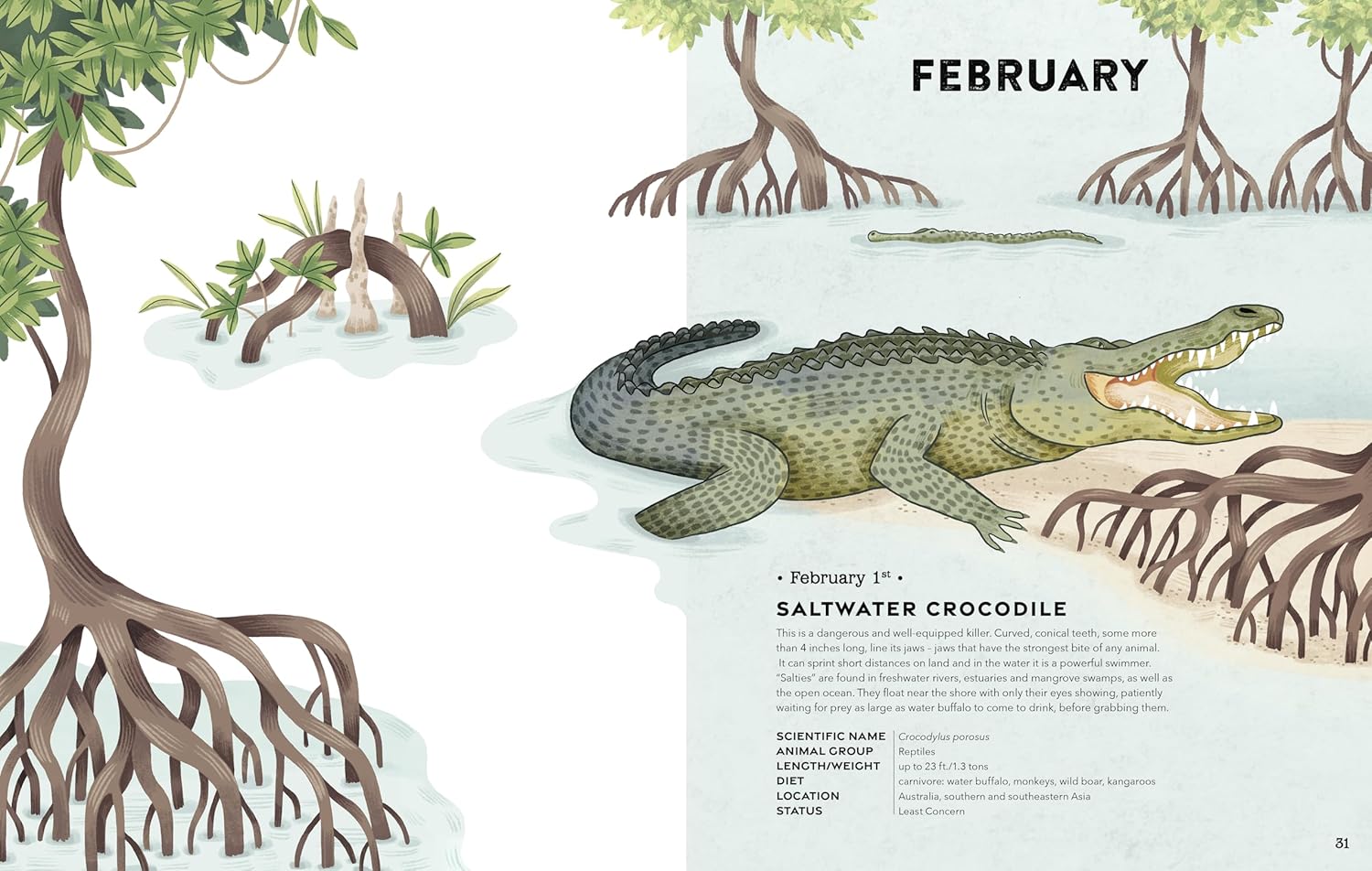
The animal kingdom truly is diverse! From the land to the sea to the sky and even the most forbidding places on Earth, there live incredible creatures perfectly suited to their environments. Children are particularly fascinated by the range, size, behaviors, and survival skills of the world’s denizens. But how to get to know them all? A fantastic place to start is with An Animal a Day, which introduces readers to 365 mammals, birds, reptiles, amphibians, fish, and invertebrates in bite-sized paragraphs, accompanied by scientific facts.

celebrate-picture-books-picture-book-review-an-animal-a-day-february

Image copyright Kaja Kajfež, Santiago Calle, Mateo Markov and Max Rambaldi, 2023. Text copyright Miranda Smith, 2023. Courtesy of Bright Matter Books.

But before you dive in, there are two paragraphs of note: One explains how “new species of animals are being discovered all the time” and gives as an example the May, 2023 announcement that “more than 5,000 new species had been found living on the seabed of the Clarion-Clipperton Zone, an unexplored area of the Pacific Ocean.” Another defines the International Union for Conservation of Nature Red List conservation rating, which is also included in each animals’ description.

And now the year begins! January 1 introduces the Polar Bear, in which a mother bear leads her cubs over the ice to the water where she will teach them “how to swim, hunt seals and survive in the cold” while raising them over three years to be self-sufficient. As the month progresses, children meet the Goliath Frog (a frog as big as a cat), a Hoopoe bird (the males engage in song duels to deter rivals), and the Indian Flying Fox (which, besides having an imposing 5-foot wingspan, looks like a combination of a bat and a fox), among 27 other critters.

celebrate-picture-books-picture-book-review-an-animal-a-day-april

Image copyright Kaja Kajfež, Santiago Calle, Mateo Markov and Max Rambaldi, 2023. Text copyright Miranda Smith, 2023. Courtesy of Bright Matter Books.

Each month also contains two, two-page spreads that present animals that, while very different, are connected by some special feature, such as being record breakers, where they live, mimicry, even harboring some stealthy strategy for survival.

Just a quick dip into the pages, led me to the Nudibranch, a blue sea slug that devours animals larger than it is, “including the highly venomous Portuguese man-o-war,” from which it “. . . stores the stinging nematocysts . . . in the tips of its extremities [and] uses these stinging ‘fingers’ to defend itself when necessary.”

celebrate-picture-books-picture-book-review-an-animal-a-day-migration

Image copyright Kaja Kajfež, Santiago Calle, Mateo Markov and Max Rambaldi, 2023. Text copyright Miranda Smith, 2023. Courtesy of Bright Matter Books.

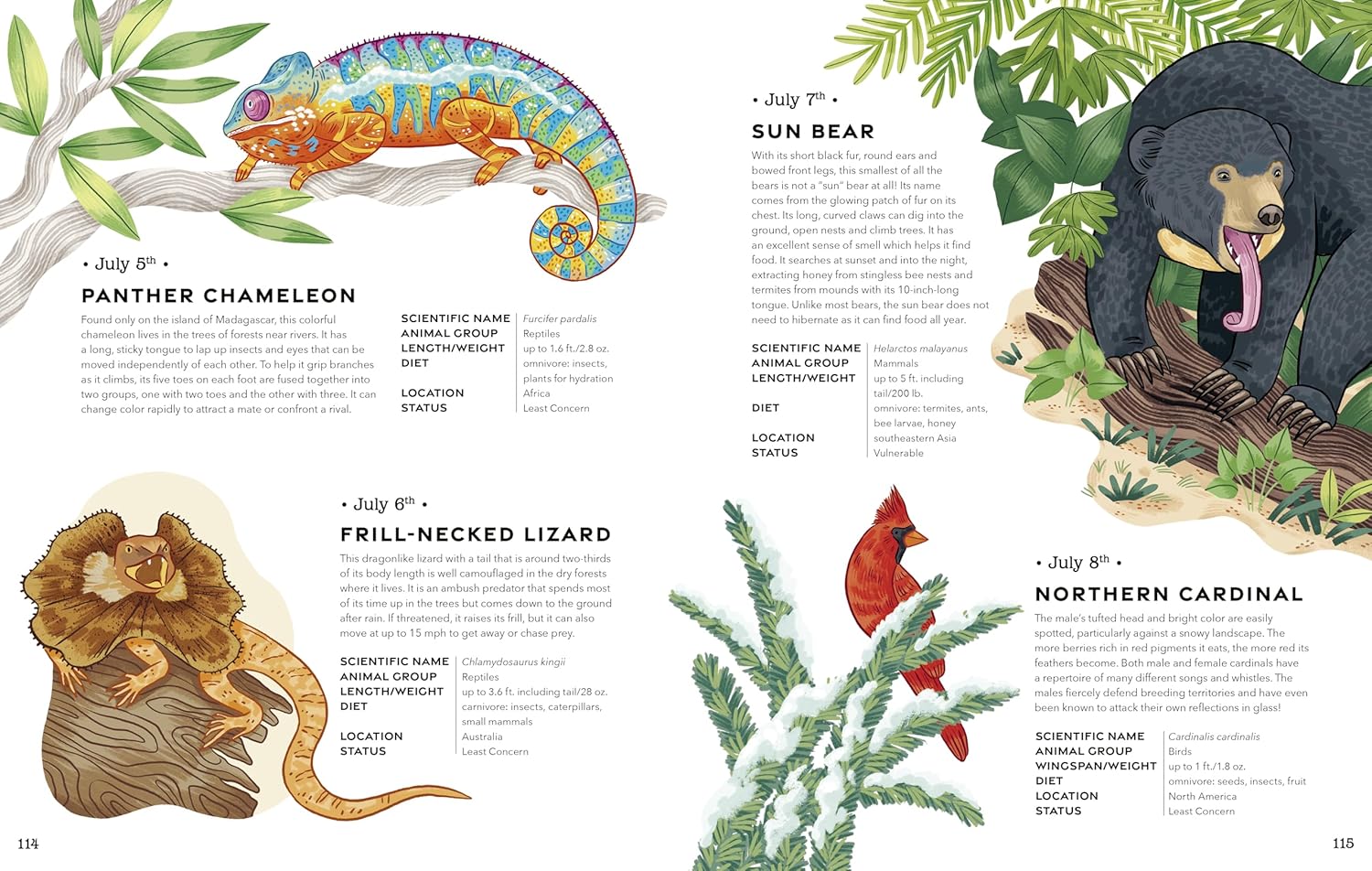
I also met the Tiger Quoll, a creature of the rainforest that travels for miles each night in search of food, and the Peacock Mantis Shrimp, a colorful but fearsome 7-inch long crustacean that moves so fast it can “hit prey, such as a crab, with a force that smashes its shell” and which can create “bubbles in the water as hot as the sun, causing a shockwave strong enough to stun or kill.” I finally had to say auld lang syne to the year with the Asian Elephant and a view of a mother elephant and her youngster foraging for the “up to 285 pounds of vegetation” they each will eat that day. 

celebrate-picture-books-picture-book-review-an-animal-a-day-july

Image copyright Kaja Kajfež, Santiago Calle, Mateo Markov and Max Rambaldi, 2023. Text copyright Miranda Smith, 2023. Courtesy of Bright Matter Books.

But why should I have all the fun? Just imagine the wide-eyes, the “wow!”s, and the eager anticipation for the next day’s animal that your kids will experience as they meet each of these distinctive creatures through Miranda Smith’s clear, accessible, and captivating text for all ages. Each entry is punctuated with the kinds of nifty details that enthrall children and get them excited to learn more.

Accompanying each animal’s description is a lifelike drawing of the creature in its environment. Colorful and active, these illustrations allow kids to really bond with each animal and understand the whys and hows of their behaviors. In the case of the Amazon Leaf Fish, it may even take a moment before readers see the camouflaged fish among the dead leaves sunk beneath the water. The double-page spreads with their black backgrounds and highlighted animals are worthy of natural history museum displays and will entice readers to stop and stay awhile.

An Animal a Day would make a much-appreciated gift for any animal-loving child and is a must for public and school library collections as well as elementary school classrooms.

Ages 5 – 10 and up

Bright Matter Books, 2024 | ISBN 978-0593903353

Read a New Book Month Activity

ebrate-picture-books-picture-book-review-savanah-coloring-page

Animal Coloring Pages

Enjoy these coloring pages of some favorite animals!

Giraffe and Elephant on the Savanah | Hanging Snake | Tiger

celebrate-picture-books-picture-book-review-an-animal-a-day-cover

You can purchase An Animal a Day at these booksellers

Amazon | Barnes & Noble | Bookshop (to support your local independent bookstore)

Picture Book Review
October 13 – It’s Positive Attitude Month

celebrate-picture-books-picture-book-review-raising-don-cover

About the Holiday

No matter how old (or young) you are there’s no getting around the fact that sometimes things are tough or don’t work out the way you planned. For kids, learning how to accept and even make the best of setbacks or disappointments is part of living a happier life. And that’s what Positive Attitude Month is all about. The holiday was established to encourage people to see the bright side of things since being upbeat can improve your health, lower chances of depression, make you more motivated, and lead to better relationships with family and friends. One way for kids to learn this skill is through reading, and today’s book—the true story about a little guy overcoming a few rocky patches of his own—is an adorable and joyful place to start. 

I’d like to thank the San Diego Zoo Wildlife Alliance Press and Blue Slip Media for sharing a copy of Raising Don with me for review consideration. All opinions on the book are my own.

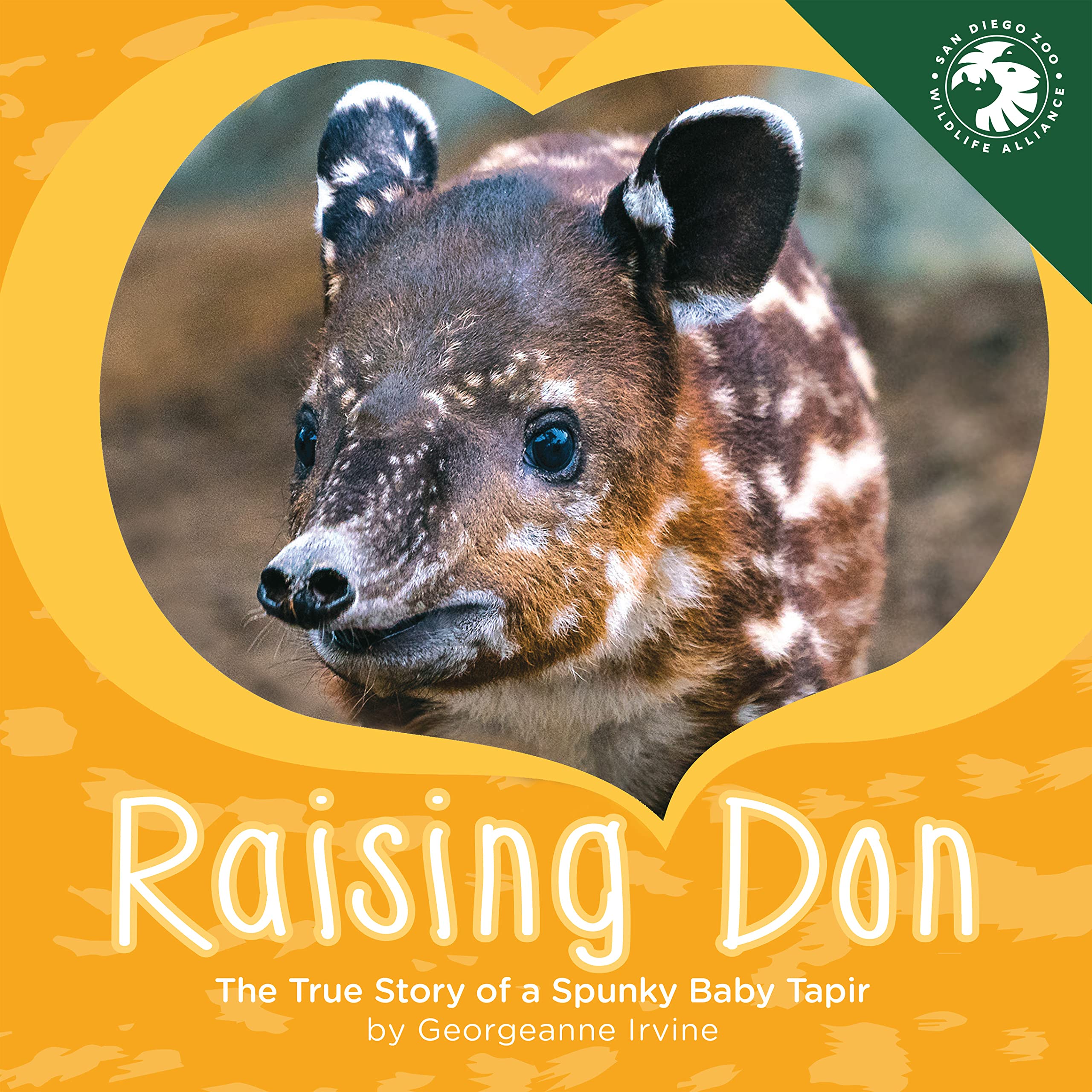
Raising Don: The True Story of a Spunky Baby Tapir

By Georgeanne Irvine


Get ready to open Raising Don and fall in love with this little Baird’s tapir, an absolute cutie with the sweetest of personalities to match. From the first pages—which show the wildlife care team at the San Diego Zoo eagerly anticipating Don’s birth, describe the moment of lucky serendipity when one member of the team witnessed this exciting event, and then reveal that Don’s mother, Luna, as a hesitant “first-time mom” rejected her calf—readers will find themselves invested in the future of “this endangered Baird’s tapir born at the zoo in more than 30 years.”

As the wildlife care team takes over bottle-feeding Don, children learn about the extraordinary steps they took to provide Don with some of Luna’s milk while ensuring that each animal was treated with affection. Discovering that Luna enjoying being scratched with a soft scrub brush while being milked and Don being fed after first having “his back scratched and his face rubbed before he would take his bottle” and getting a belly rub afterwards will make readers with pets of their own smile at this universal favorite. 

celebrate-picture-books-picture-book-review-raising-don-baby-born

Copyright Georgeanne Irvine, 2022, courtesy of San Diego Zoo Wildlife Alliance Press.

Tapirs, kids learn, have noses that are “similar to an elephant’s trunk, only shorter.” Don used his little trunk “for smelling as well as picking up things like branches and bits of lettuce.” But Don was also as playful as any toddler and after eating “often grabbed the bottle with his tiny trunk and tried to run off with it!” Next, when Don was only a week old, the specialists introduced him to a shallow pool. Tapirs are good swimmers, but they need to be taught—just like kids.

In no time, Don was “running, jumping, and belly flopping into the pool.” He even liked to blow bubbles in the water with his trunk. Children then see photographs and read about how Don was gradually introduced to a deeper pond in the habitat where he would eventually live with guanacos, capybaras, and a llama—and, of course, rewarded with “extra back scratches and belly rubs for being such a good swimmer.”

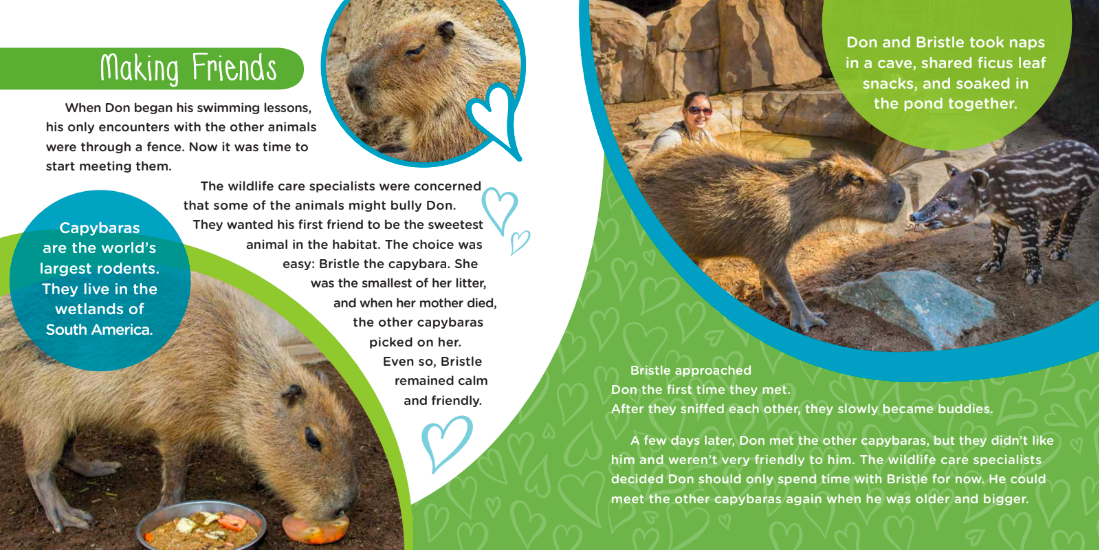
Soon Don would be old enough to be moved to his habitat, so now it was time for him to make a friend. The wildlife care specialists picked out a sweet-tempered capybara, Bristle, with whom he “took naps in a cave, shared ficus leaf snacks, and soaked in the pond together.” Don also met an elderly tapir who, over time, taught him good manners and other particulars about being a tapir. 

celebrate-picture-books-picture-book-review-raising-don-pool-party

Copyright Georgeanne Irvine, 2022, courtesy of San Diego Zoo Wildlife Alliance Press.

But Don learned some other lessons about life too. Even when Don was a baby and the guanacos and the llama saw him through a fence, they didn’t like him. And when, later, Don approached them in the habitat, they bullied him in the way llamas do—by spitting and kicking at him. Don simply took to avoiding them and sticking with his good friend Bristle. 

In these first months of life, Don discovered his favorite foods and learned to accept regular examinations from the care specialists that would keep him healthy. “Tapirs have sensitive feet and need them looked at every day to make sure there aren’t any cuts, scrapes, or bruises.” As he grew older, Don became more independent and confident. He celebrated his first birthday with his favorite foods and a swim. Soon he’d be moving to the Nashville Zoo in Tennessee. “There, he would meet a female tapir and hopefully become a father someday.”

And what about Luna? She has given birth to and is taking care of Don’s sister, named Taiyari (which “means ‘our heart’ in the language of Mexico’s Huichol people”). Now, Don and his new best friend Juju, a female tapir, live in a spacious habitat with shade trees and a pond. Don, as you might imagine, has “won the hearts of his new caregivers,” and someday soon he and Juju will “become parents of their own precious calf, helping to bring more of these endangered animals into the world.”  

Back matter includes fun facts about tapirs, a map showing where they live, the dangers to wild tapirs, and a list of ten ways readers can do to help wildlife.

celebrate-picture-books-picture-book-review-raising-don-making-friends

Copyright Georgeanne Irvine, 2022, courtesy of San Diego Zoo Wildlife Alliance Press.

Full of joy, humor, and personality, Georgeanne Irvine’s story about one plucky tapir born at the San Diego Zoo will capture readers’ hearts. The fervent love felt by Irving and the wildlife care specialists for Don and all the animals at the zoo radiates from the pages. With lively language and detailed, yet easy-to-understand descriptions, Irving reveals the day-to-day attention Don enjoys as well as the ways the specialists became his surrogate mothers.

Children also learn about the thoughtful methods zoo caregivers use to introduce animals to their particular habitats, behaviors, diet, and other animals. Children will respond to the parallels between Don’s experiences while learning skills and making friends and their own, examples that provide wonderful teachable moments and opportunities to fully appreciate the natural world as well as their place and responsibilities in it.

Endearing photographs of Don from babyhood and throughout his first year allow readers to follow his progress and see first hand his adorable, spunky personality as well as how he learns to swim, discover favorite foods, make friends, gets health examinations, and finally moves to Nashville and meets a new best friend.

Nature nonfiction at its finest, Raising Don: The True Story of a Spunky Baby Tapir is sure to be a favorite choice for all animal lovers as a read aloud or for independent reading. The book offers a wide range of learning and discussion opportunities for teachers, educators, and homeschoolers and is a must-addition to home, classroom, school, and public library collections.

Ages 7 – 10 (Younger children will also enjoy this book as a read aloud taken in parts)

San Diego Zoo Wildlife Alliance Press, 2022 | ISBN 978-1943198146

To learn more about the San Diego Zoo and the San Diego Zoo Wildlife Alliance, visit their website.

About the Author

Georgeanne “George” Irvine has devoted her career to raising awareness about animals and wildlife conservation. She is director of publishing for the San Diego Zoo Wildlife Alliance, where she has worked for more than four decades, as well as the author of over two dozen children’s books about animals, including the award-winning Hope and Inspiration collection. Photographing and learning about animals in their native habitats are passions for George. Her worldwide adventures have taken her to many of the wildest places on Earth—from the jungles of Borneo and South America to the mountains of China and the forests of India to the Outback of Australia and the savannas of Africa. 

About the San Diego Zoo Wildlife Alliance Press

San Diego Zoo Wildlife Alliance Press is the book publishing division of San Diego Zoo Wildlife Alliance, a nonprofit international conservation leader, committed to inspiring a passion for nature and working toward a world where all life thrives. Through its publishing efforts, San Diego Zoo Wildlife Alliance Press seeks to motivate and inspire multiple generations to care about wildlife, the natural world and conservation.  

Positive Attitude Month Activity

celebrate-picture-books-picture-book-review-tapir-coloring-page

Tapir Mom and Baby Coloring Page


If you love Don, you’ll love this adorable coloring page created by Honduran graphic designer Jen Chibi! Just download and print—and don’t forget to give the baby stripes and spots like Don!

Tapir Mom and Baby Coloring Page

celebrate-picture-books-picture-book-review-raising-don-cover

You can find Raising Don: The True Story of a Spunky Baby Tapir at these booksellers

Amazon | Barnes & Noble | Books-a-Million

To support your local independent bookstore, order from

Bookshop | IndieBound

Picture Book Review