April 23 – National Take a Chance Day

celebrate-picture-books-picture-book-review-what-do-you-do-with-a-chance-cover

About the Holiday

Sometimes it takes a special nudge to get us to leave our comfort zone and try something new—even if it’s something we’ve been wanting to do for a long time. Today’s holiday provides that push by encouraging people to let go of the fears and doubts that hold them back. Whether you prefer to try new things a little at a time or decide to dive right in, you’ll feel happier and more excited by life if you reach for that gold ring when it comes around.

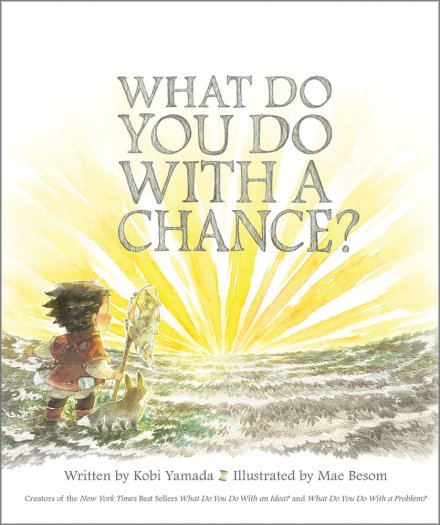
What Do You Do with a Chance?

Written by Kobi Yamada | Illustrated by Mae Besom


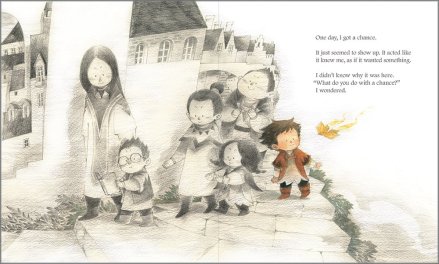
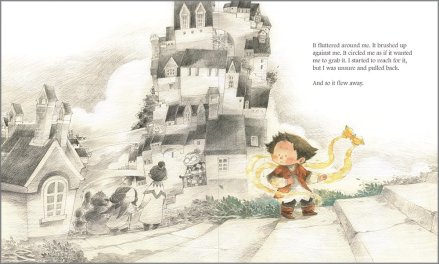
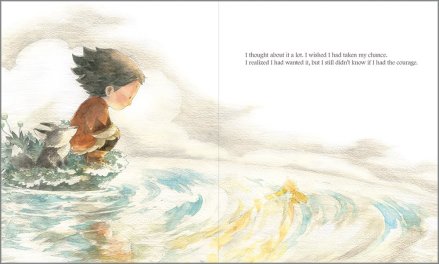
One day, a child says, they got a chance. The chance seemed to know them, but the child wasn’t sure why it was there or what to do with it. The chance was persistent, but unsure, the child “pulled back. And so it flew away.” Later the child thought about that chance and realized they “had wanted it,” but even now they didn’t know if they had the courage to take one.

celebrate-picture-books-picture-book-review-what-do-you-do-with-a-chance-first-chance

Image copyright Mae Besom, 2017, text copyright Kobi Yamada, 2017. Courtesy of Compendium.

The next time a chance came by, the child tried to grab it, but they “missed and fell.” They felt embarrassed, and “it seemed like everyone was looking at [them].” That was a feeling they never wanted again. Now whenever they saw a chance, “[they] ignored it.” They let so many pass them by that chances stopped coming. Then the child worried that they would never get another one.

celebrate-picture-books-picture-book-review-what-do-you-do-with-a-chance-pulls-away

Image copyright Mae Besom, 2017, text copyright Kobi Yamada, 2017. Courtesy of Compendium.

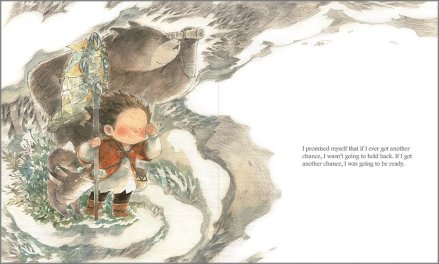
Although the child acted as if they didn’t care, they really did. They just didn’t know if they “would ever be brave enough” to take a chance. But then the child had a new idea and thought that maybe being brave “for a little while at the right time” was what it too. The child decided that the next time a chance came around, they were going to grab it. The child even went out to search for it, and then on a regular day, a glow appeared in the distance. Could this be it?

celebrate-picture-books-picture-book-review-what-do-you-do-with-a-chance-searches-for-new-chance

Image copyright Mae Besom, 2017, text copyright Kobi Yamada, 2017. Courtesy of Compendium.

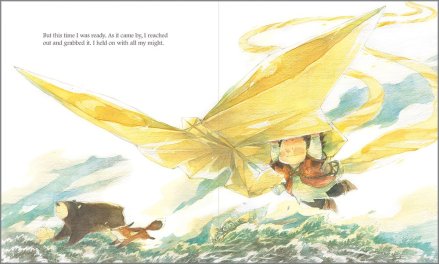
The child was ready. Racing toward the light, they didn’t feel afraid; instead, they were excited. As the child got near, they saw that it was an enormous chance. As soon as they could reach it, they climbed aboard and soared wherever it took them. Now the child understands that when they ignore chances, they miss out on all the wonderful things they wants to learn and do and be.

celebrate-picture-books-picture-book-review-what-do-you-do-with-a-chance-soars

Image copyright Mae Besom, 2017, text copyright Kobi Yamada, 2017. Courtesy of Compendium.

Whether the reader is a natural risk taker or on the more hesitant side, a child or an adult, Kobi Yamada offers encouragement and inspiration for those times when doubt or fear interferes with taking an opportunities when they come along. Kobi’s use of a first person narrator provides a level of comfort as the focus isn’t on the reader, but on feelings shared with a kindred spirit.

Quiet children or those with anxiety will see that there are others for whom leaving their comfort zone is difficult. Kobi’s concrete language echoes the inner monologue of questioning, hope, embarrassment, and regret that can hinder people from trying something new or big. He also presents gentle, solid advice and reveals that small voice of determination and courage that does lie within most hearts. When the child finally grabs onto the greatest chance, readers will also feel emboldened and will be ready to soar too.

celebrate-picture-books-picture-book-review-what-do-you-do-with-a-chance-at-reflecting-pond

Image copyright Mae Besom, 2017, text copyright Kobi Yamada, 2017. Courtesy of Compendium.

Mae Besom brilliantly depicts the child’s contrasting feelings to be free, spontaneous, and courageous on one hand and secure and protected on the other through her use of space and color. The mystical, medieval-type town the child lives in is crowded, with homes wall-to-wall and stacked one on top of the other. The friends or family the boy follows walk together tightly grouped, and these are all rendered in charcoal, white and dusty yellow. In contrast, the chances—origami butterflies with long tails—are golden yellow and fly away from the town, touching down on the child’s reflecting pool, over fields, and into the vast sky.

The child’s clothes are earthy brown, and the grass underfoot always green. As the child embraces bravery, animal companions also gain color, and as they all race toward the huge chance, they appear closer to the reader, filling the page. At last as the child soars on the wings of the chance, the town appears in the distance but is now also a place of color, light, and opportunity.

Without gender pronouns and a child with neutral clothing and hairstyle, What Do You Do with a Chance? is universal for all children.

The final book in the series, which includes What Do You Do with an Idea? and What Do You Do with a Problem?, What Do You Do with a Chance? is a must-own for home and classroom libraries to inspire discussions about overcoming fear, taking chances, and being yourself. The book will be an often-read addition to any bookshelf.

Ages 5 – 10 and up

Compendium, 2017 | ISBN 978-1943200733

National Take a Chance Day Activity

celebrate-picture-books-picture-book-review-butterfly-craft-vivid-filter-2

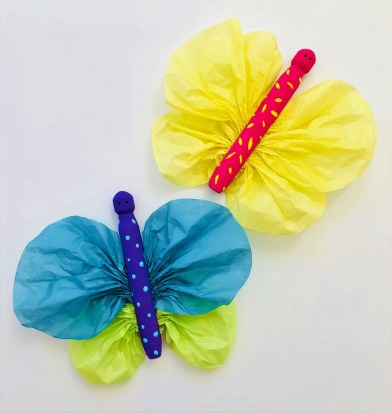
Colorful Clothespin Butterfly Craft


Butterflies are a lot like chances. They don’t start right off fully formed, but go through different stages, waiting times, and some amazing changes on their metamorphosis from caterpillar to butterfly. Chances also take time, practice, and spreading your wings to be fulfilled.

With this easy Colorful Clothespin Butterfly Craft, you can make your own butterfly that will always remind you to take a chance when it flies your way.

Supplies

  • Wooden pin clothespin
  • Tissue paper in a choice of colors
  • Craft paint in a choice of colors
  • Black craft paint
  • Paintbrush
  • Toothpick
  • Scissors
  • Fishing line, thread, or string for hanging (optional)
  • Adhesive magnet for hanging (optional)

Directions

To Make the Body

  1. Paint the clothespin, let dry
  2. When dry add accent dots or lines and eyes. I used a toothpick with the point cut off to make the dots on the purple butterfly. I used the pointy end of a toothpick to make the eyes and the lines on the pink butterfly.

To Make the Wings

  1. For the top wings, cut a 6 ½ -inch circle from tissue paper
  2. For the bottom wings, cut a 5 ¼ – inch circle from tissue paper
  3. With the head of the clothespin facing down, insert the larger circle into the split in the clothespin so that half of the circle shows on either side.
  4. Gently pull the circle down tightly into the split, pulling it as far in as possible—about half way
  5. Next insert the smaller circle into the split and repeat the above step.
  6. Gently fan out the wings if necessary

If hanging the butterfly, attach fishing line, threat, or string

If making a magnet, attach the adhesive magnet to the back of the butterfly.

Picture Book Review
January 13 – Make Your Dream Come True Day

celebrate-picture-books-picture-book-review-happy-dreamer-cover

About the Holiday

Children are asked about their hopes and dreams as soon as they enter school. In kindergarten kids draw about them, and as they grow older, they write about them and begin working to make those dreams a reality. Adults also have goals they want to achieve at work, at home, or just for themselves. Today’s holiday encourages people to define their dream, make a plan, and take the road toward fulfilling it. That spark of inspiration can burn brightly and long and guide you to the future you always wanted!

Happy Dreamer

By Peter H. Reynolds


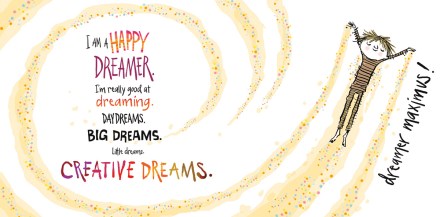
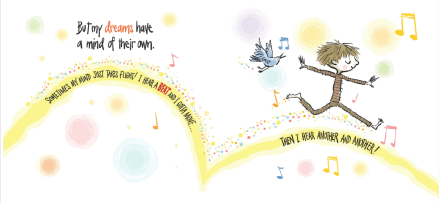
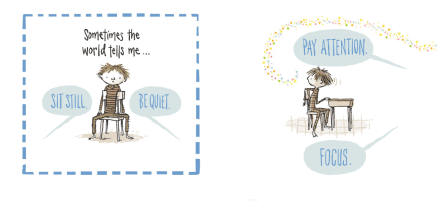
A child floats on a golden, sparkling swirl of their own creation. “I am a happy dreamer,” they say. “I’m really good at dreaming. Daydreams, big dreams, little dreams, creative dreams.” In fact, this child is a “dreamer maximus!” There are times when they’re told to ignore that voice inside…to “sit still” and pay attention. But the music inside is persistent and persuasive, inviting the child to move, to play along and let it out.

celebrate-picture-books-picture-book-review-happy-dreamer-dreamer-maximus

Copyright Peter H. Reynolds, 2017, courtesy of Orchard Books.

Sometimes dreams require quiet. Then the child says, “I make time to stay still and hear myself think—to let go and see what takes shape.” Can you see it too? There are dreams so big, the child reveals, that sometimes “I’m a shout-at-the-top-of-my-lungs dreamer (even if I’m just a loud-inside-my-head dreamer!)”

celebrate-picture-books-picture-book-review-happy-dreamer-musical-beat

Copyright Peter H. Reynolds, 2017, courtesy of Orchard Books.

There are times when dreams come in colors that paint a surprising path, and sometimes there are so many dreams firing at once that they cause “creative chaos.” When you ask make me clean up, the child says, I will, but “cleaning up hides my treasures” and “there is less of ME to show.” When that happens, the child explains, “…I feel alone. BOXED IN.” But there is always an escape, a way to recover the “happy dreams.”

celebrate-picture-books-picture-book-review-happy-dreamer-focus

Copyright Peter H. Reynolds, 2017, courtesy of Orchard Books.

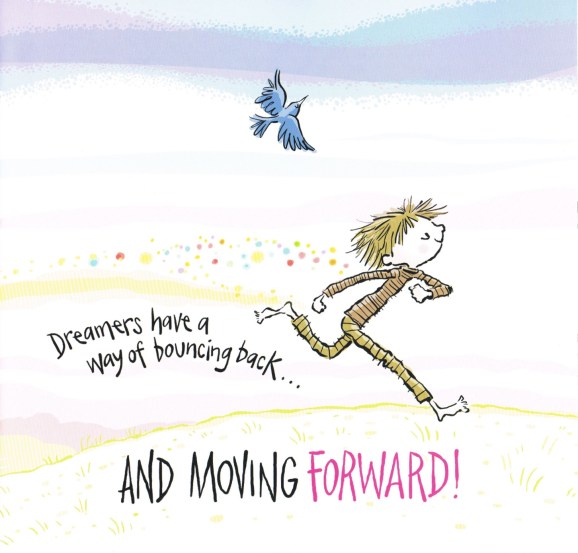
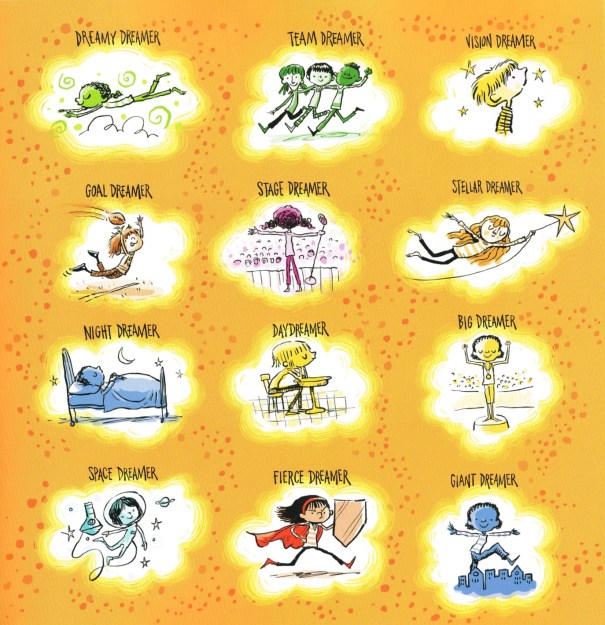
You know what? the child says, “I’m really good at being me. A dreamer—surprising, caring, funny, gentle, smart.” Falling or failing don’t hurt because dreamers always bounce back and keep going. Do you know what kind of dreamer you are? There are so many kinds! What makes you happy? Exploring, working hard, being with family or friends, being alone? Maybe laughing, acting, being wild, being strong. Are you civic-minded, peaceful, thoughtful?

What’s “the best way to be a happy dreamer? Just be YOU.”

celebrate-picture-books-picture-book-review-happy-dreamer-all-kinds-of-dreamers

Copyright Peter H. Reynolds, 2017, courtesy of Orchard Books.

Peter H. Reynolds is always inspirational, finding just the right words to include all readers while speaking directly and intimately to each reader individually. In Happy Dreamer, Reynolds taps into the ways ideas and talents come knocking, whispering, or shouting to be heard and set free. His lyrical language is engaging for even the youngest readers and meaningful for adults as well—on both a personal level and for those who are parents, caregivers, or teachers.

celebrate-picture-books-picture-book-review-happy-dreamer-bouncing-back

Copyright Peter H. Reynolds, 2017, courtesy of Orchard Books.

From the first image in which the child floats on the glowing swirl of dreams, readers will follow the child as they play music, discover shapes in the clouds, swing to lofty heights, shout to the world, paint a rainbow path, create fireworks and treasures, and break free from the restraints of the world that sometimes tamp down dreams. A double gate-fold filled with dreamers will delight readers as they search for just the type of dreamer they are. Written in the first-person and with gender neutral clothing and hairstyle, Happy Dreamer is a universal story.

Empowering, encouraging, and accepting, Happy Dreamer is a superb choice for home and classroom libraries.

Ages 4 – 8 and up

Orchard Books, an imprint of Scholastic, 2017 | ISBN 978-0545865012

Discover more about Peter Reynolds, his books, and his art on his website.

Make Your Dream Come True Day Activity

celebrate-picture-books-picture-book-review-dream-job-application-activity

Dream Job Application


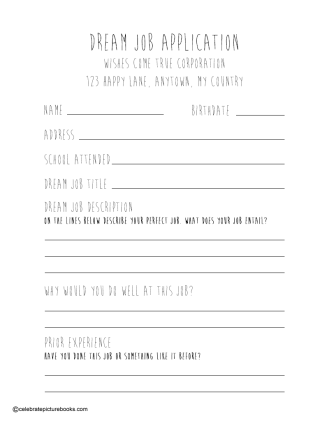
Imagine you are applying for your dream job. What would it be? Why are you the right candidate? Have fun with this printable Dream Job Application and start on the road to your happy future!

Picture Book Review