June 25 – National Catfish Day

celebrate-picture-books-picture-book-review-a-catfish-tale

About the Holiday

National Catfish Day dates back to 1987 when President Ronald Reagan proclaimed this holiday to promote the importance of the catfish farming industry and the nutritional benefits of catfish. This delicious fish is found mostly in Mississippi, Arkansas, Alabama, and Louisiana and is one of the most sustainable species of fish. Fried or blackened with spicy Cajun or other spices, catfish makes for a scrumptious meal! Try some today!

A Catfish Tale: A Bayou Story of the Fisherman and His Wife

Written by Whitney Stewart | Illustrated by Gerald Guerlais


Down in the bayou, so the story goes, there lived two young sweethearts named Jacques and Jolie. Jacques liked to “pole his skiff through cypress knees to his favorite fishing hole,” and Jolie cooked up peppery hot gumbo and sang “so true even the cicadas hushed up to listen.” One day Jacques hooked a big one, and when he pulled up his line a catfish sprang from the water. But this was no ordinary catfish. The wily fellow explained that he was a magic catfish and not at all a catch for supper. Jacques was so frightened that he freed the “jabbering critter” and took off for home.
celebrate-picture-books-picture-book-review-a-catfish-tale-crocodile

Image copyright Gerald Guerlais, courtesy of Albert Whitman & Company

When Jolie learned Jacques had given up their chance for a wish that could replace their shack with “a proper house where she could sing for a crowd,” she was steamed. Jacques thought everything was all right the way things were, but he hightailed it back to the swamp and asked that catfish for a house. The catfish was obliging and with a grin said, “‘Ah, tooloulou—if that ain’t the easiest thing to do.’”

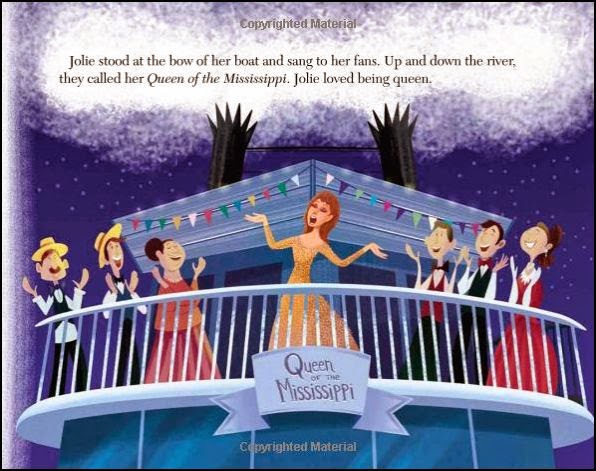
In her big, beautiful house, Jolie entertained loads of friends and decided to take her show to all the cities down the river. All she needed, she said, was a paddle wheel boat. The catfish smiled when he heard Jacques’ request and said, “‘Ah, tooloulou—if that ain’t the easiest thing to do.’” Singing from the bow of her grand paddle wheeler, Jolie’s fans called her the Queen of the Mississippi, and she ate it up.

celebrate-picture-books-picture-book-review-a-catfish-tale-catfish

Image copyright Gerald Guerlais, courtesy of Albert Whitman & Company

Jacques was miserable stuck in his stateroom with a pounding headache and no fishing pole, so he returned to the bayou to find his catfish friend. Meanwhile, Jolie took the New Orleans nightclubs by storm. With Mardi Gras approaching, Jolie had one more little favor to ask of the catfish, and with a “tooloulou” Jolie became Queen of Mardi Gras. She wore a diamond crown and a white satin gown. Even though things were a little rocky—the cheering crowds couldn’t hear her sing, and the Mardi Gras beads she tossed to her fans got tangled in her crown—she loved being queen.

Jolie wrote to Jacques and asked to become Queen of the Bayou. The catfish said his magic words and in no time Jolie was crowned Queen amid blaring musicians and applauding fans. Jolie smiled and began to sing. Suddenly, a fierce hurricane blew up, “snakes, alligators, and swamp creatures slithered up the riverbank. Ghosts, and goblins flew from the cemeteries and pirate skeletons escaped watery graves to dance in the streets.” And Jolie? She was swept up and unceremoniously dropped in a tree. From among the branches she called to a passing pelican, “‘Tell my husband to ask that catfish for one more little thing!’”
celebrate-picture-books-picture-book-review-a-catfish-tale-riverboat

Image copyright Gerald Guerlais, courtesy of Albert Whitman & Company

Jacques “paddled faster than an alligator could swish its tale” and asked that catfish for one last wish…, and what do you think he said? Well, he just slipped back beneath the water ‘cause he knew “Jolie didn’t need nothin’ more.”

A Catfish Tale includes a Bayou Glossary as well as a recipe for Seafood Gumbo by New Orleans native Hans Andersson.

Whitney Stewart’s tall tale of a magic catfish, the woman who learns enough is often enough, and the man who loves her will capture kids’ fancy. Jolie’s overreaching ambition and the catfish’s ready spell give children plenty of opportunity to join in with repeated phrases, and the well-paced suspense will keep kids engrossed in the action. The unique bayou setting and colloquial lilt sets A Catfish Tale apart as a rollicking story time romp with a bit of Cajun caution and a whole lot of magic.

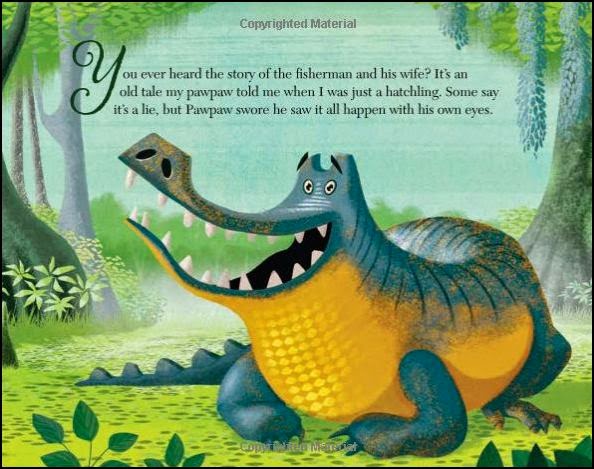
Gerald Guerlais brings the mystery and flavor of the deep south to A Catfish Tale with moss greens and shadowy blues that well depict the bayou’s natural environment. Twisty Cypress trees dip their roots in still, lily pad-filled waters, shimmering lights glow in the nighttime swamp, and spooky critters teem in the stormy sky. The magic catfish wears an ever-present, easy-going grin, and a crusty, good-ol’-boy alligator spins the tall tale just the way he’s heard it. Children will love the scenes of the paddle wheeler and the festive atmosphere of Mardi Gras.

Whitney Stewart’s  A Catfish Tale, a deft retelling of  Grimm’s A Fisherman and His Wife, is a fantastic introduction to the distinctive qualities of the southern Mississippi region, one which kids may want to explore further!

Ages 4 – 8

Albert Whitman & Company, 2014 | ISBN 978-0807510988

To learn more about Whitney Stewart and her work as well as discover activities for children and teachers, visit her website!

View a gallery of illustrations by Gerald Guerlais on his website!

National Catfish Day Activity

celebrate-picture-books-picture-book-review-bayou-coloring-page

Catfish Coloring Page


The catfish is a most unusual creature! Add your own swamp or river setting to this Printable Catfish Coloring Page!

June 3 – Repeat Day

celebrate-picture-books-picture-book-review-follow-follow

About the Holiday

Remember how your brother or sister or friend used to repeat everything you said? Everything you said? Well, that has been made into a holiday! Today gives you the perfect excuse to do your favorite things twice! Go ahead, have two lattes, watch your favorite show twice, listen to an album over again! Whatever you do, just remember to double up on it!

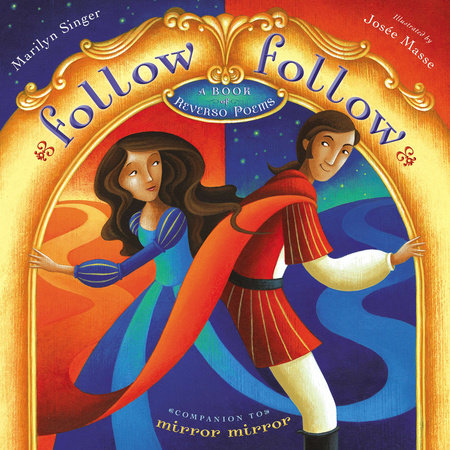
Follow Follow: A Book of Reverso Poems

Written by Marilyn Singer | Illustrated by Josée Masse


When you ask someone, “Can you repeat that?” they often use the exact same words so you understand what they want to tell you. But what if the exact same words could have completely different meanings? That’s the brilliant concept behind Follow Follow. In this ingenious book, 17 classic fairy tales are told in verse (and reverse) from two opposing points of view that will forever change the way you think about exchanges of ideas and dialogue.

In Your Wish Is My Command, Aladdin and the Jinni trade wishes and their view of what freedom means. Six lines from this clever poem read from Aladdin’s perspective: “I no longer wish to be a slave / to lords, magicians, merchants, other urchins. / Jinni of the Lamp, / I am just a poor / young knave. / Give me all I crave.”

And then from the Jinni’s perspective: “Give me all I crave, / young knave. / I am just a poor / Jinni of the Lamp. / To lords, magicians, merchants, other urchins, / I no longer wish to be a slave.”

The Emperor’s New Clothes loses none of its impact in Birthday Suit, a humorous abbreviated telling from the King’s ego-centric thoughts and the little boy’s stunning revelation.

Just as the original tale of The Golden Goose presents a princess who can’t help but laugh at the ridiculous parade going by her window, Silly Goose reveals both sides of the princess’s personality.

Ready, Steady, Go! gets into the heads of both the too-clever-for-his-own-good rabbit and his persevering competitor of The Tortoise and the Hare. The lounging hare thinks: “That ridiculous loser! / I am not / a slowpoke. / Though I may be / the smallest bit distracted, / I can’t be / beat. / I’ve got rabbit feet to / take me to the finish line.” While the tortoise urges himself: “Take me to the finish line! / I’ve got rabbit feet to / beat. / I can’t be / the smallest bit distracted. / Though I may be / a slowpoke, / I am not / that ridiculous loser.”

Will the Real Princess Please Stand Up? peeks into two bedrooms where would-be brides to the prince slumber. One exclaims, “This bed rocks! / I feel like I’m sleeping on feathery flocks,…” but the other complains, “feathery flocks? / I feel like I’m sleeping on / rocks.” Who will win the heart of the prince?

The Little Mermaid, Puss in Boots, The Pied Piper of Hameln, Thumbelina, The Three Little Pigs, The Nightingale, and The Twelve Dancing Princesses are also touched with Marilyn Singer’s magic wand of poetry. Under her spell the perfect choice and placement of words combined with a simple change of punctuation can send the verse swirling in the opposite direction with surprising results. As readers encounter each fairy tale, they’ll wonder, “How does she do it?” But there’s no time to ponder—another terrific tale follow follows!

Like being on the cusp of competing realities, Josée Masse’s vibrant illustrations deftly represent the viewpoints of the mirrored verses. On either side of a subtly split page, the opposing characters tell their side of the story amid contrasting color schemes and flowing lines that bridge the divide. In Your Wish Is My Command, Aladdin dreams in his rooftop window of riches and freedom while the Jinni floats away from his lamp over golden rooftops. On with the Dance makes clever use of the half-page design as the king ponders the condition of his daughters’ shoes while they are pictured dancing in a regal hall that doubles as the king’s crown.

Follow Follow would be a welcome addition to any fairy tale or poetry lover’s bookshelf. And since Marilyn Singer and Josée Masse really know what Repeat Day is all about, you’ll want to check out their other books: Mirror Mirror: A Book of Reverso Poems and their newest, Echo Echo: Reverso Poems about Greek Myths.

English and language arts teachers will also find these volumes to be a wonderful way to teach point of view.

Ages 5 – 11 and up (anyone who loves fairy tales will want to read this book)

Dial Books, Penguin Group, 2013 | ISBN 978-0803737693                                                         

Repeat Day Activity

celebrate-picture-books-picture-book-bookmark-craft

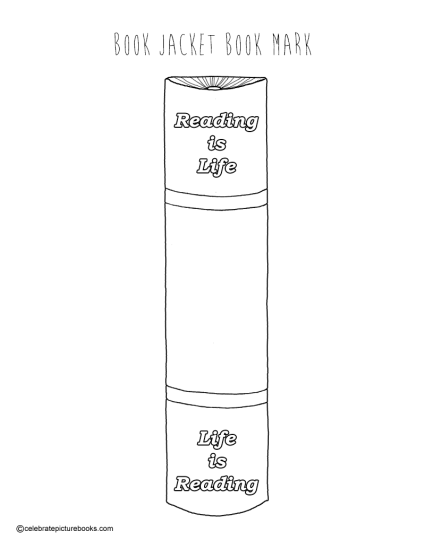
Book Jacket Bookmark


When a book is long, you can’t always finish it in one sitting. If you forget where you left off, you can often find yourself reading the same section twice. That’s okay—especially on Repeat Day!—but this bookmark will help you remember your place and get you reading again in style!

Supplies

  • Printable Book Jacket bookmark 
  • Colored pencils or markers
  • Poster board
  • Scissors
  • Glue

Directions

  1. Color your bookmark in your own unique style
  2. Cut the bookmark out
  3. Glue it to poster board if you’d like to make it more durable

March 1 – National Pig Day

The Three Ninja Pigs Picture Book Review

About the Holiday

Pigs inspire us! Whether we see them on a farm, have them as pets, or enjoy them as part of our entertainment—who can forget Wilbur or Babe or even the little piggie who went wee, wee, wee, all the way home, after all?—pigs are part of our lives almost from the time we are born. How did they reach this lofty state? By being smart! Pigs are one of the most intellectual animals, capable of high-level learning. In 1972 sisters Ellen Stanley and Mary Lynne Rave decided pigs needed more acclaim, and so National Pig Day was established. On this day pigs are celebrated with special events, parades, and parties at zoos, farms, and schools.

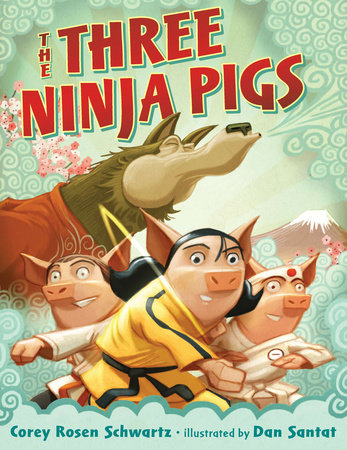
The Three Ninja Pigs

Written by Corey Rosen Schwartz | Illustrated by Dan Santat


The Big Bad Wolf has never encountered Three Little Pigs like these! When the sibling trio (two brothers and a sister) in this fractured fairy tale have had enough of the wolf’s bullying they take matters into their own trotters. Enrolling at the new Ninja school, Pig One begins to learn aikido, but with a “straw-house” attitude, he drops out before he acquires any useful skills. Pig Two has little more “stick”-to-itiveness with his Jujitsu training and quickly says “Sayonara” to his teacher. Thankfully, Pig Three has the steadfastness of a brick. She earns her black belt in Karate and is ready to rumble.

When the wolf comes huffing and puffing to the doors of Pig One and Pig Two, things go…well…you know…. The wolf chases the two brothers to their sister’s house, where this “certified weapon” stands prepared. She demonstrates her kicks and flips, which don’t scare the wolf. When he witnesses her mighty ability to split bricks with one chop, however, the wolf scrams.

How do these intrepid pigs top that? The brothers learn their lesson and—finally—their ninja moves. After graduation this fearless family makes sure that wolf will never return by opening a dojo of their own!

Corey Rosen Schwartz has created a rowdy, rambunctious triple-pig threat in this uproarious rendering of the three little pigs tale. With perfect rhythmic limericks that are a joy to read aloud, Schwartz cleverly uses puns, funny dialogue, and one feisty piglet to chop the wolf down to size. Dan Santat’s illustrations are full of angst, action, and attitude. Legs kick, hands chop, boards and bamboo fly as the three pigs and their nemesis wolf nearly leap from the page in their battle.

Ages 4 – 8

G. P. Putnam’s Sons Books for Young Readers, 2012 | ISBN978-0399255144

National Pig Day Activity

CPB - Pig Day pigs

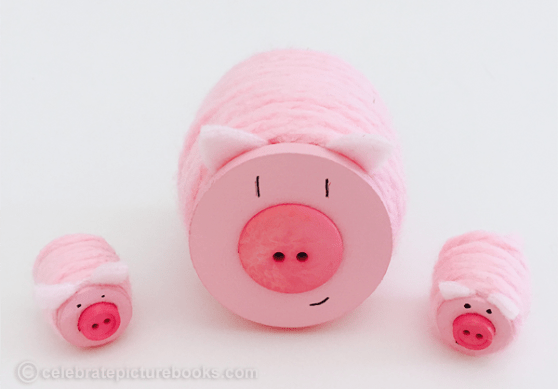
Roly-Poly Pig and Piglets


Who doesn’t love hamming it up with a piglet? But let’s face it, having your own real pig just isn’t practical for everyone. Here’s a little piggie that you can make to keep you company on your desk or near your bed or anywhere it’s fun to play!

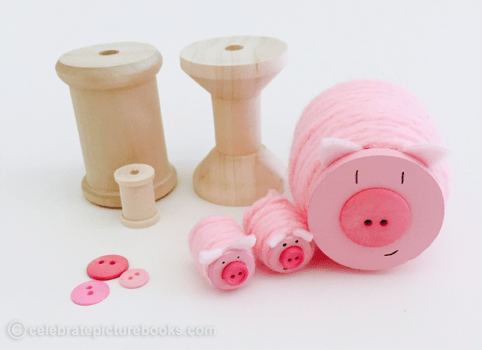
Supplies

  • Printable Pigs Ears Pattern
  • 2 ½-inch wooden spoon, available from craft stores
  • 1-inch wooden spool, available from craft stores
  • Pink yarn, I used a wide-strand yarn
  • Pink fleece or felt
  • Pink craft paint
  • Pink 5/8-inch or 1-inch flat button with two holes
  • Pink 3/8-inch flat button with two holes
  • Paint brush
  • Scissors
  • Glue
  • Black marker

CPB - Pig Day with spools (2)

Directions

  1. Print the Pigs Ears pattern
  2. Trace the ears onto the fleece or felt and cut them out.
  3. Paint the spool with the pink paint
  4. Let spool dry
  5. When the spool is dry, glue the ears to the spool, letting the ears stick up over the rim of the spool.
  6. Wrap yarn in straight layers around spool until the body of the pig is a little bigger than the end of the spool, which will be the face
  7. Cut yarn off skein and glue the end to the body
  8. To make the nose, glue the button over the hole in the middle of the spool
  9. Mark the eyes and mouth with a marker
  10. To make the tail for the large pig, cut a 4-inch long piece of yarn. Tie a triple knot in the yarn (or a knot big enough to fill the hole in the spool). Then tie a single knot below the first knot. Insert the large knot into the spool’s hole at the back of the pig. Trim the yarn in front of the second knot as needed.
  11. To make the tail for the piglets, tie a single knot in the yarn and another single know below the first. Insert one of the single knots into the hole. Trim yarn as needed.

February 26 – National Tell a Fairy Tale Day

CPB - There's a Wolf at the Door

About the Holiday

Today we celebrate the long tradition of oral and written stories that have captivated both children and adults since earliest times. While many of the fairy tales we love began as lessons in good manners or avoiding danger, they have remained popular and a part of our culture that we pass down to children through the generations. These tales stand up to traditional treatments as well as variations that turn the familiar plots on their heads.

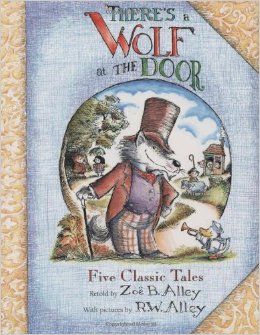
There’s a Wolf at the Door: Five Classic Tales

Retold by Zoë B. Alley | Illustrated by R.W. Alley


There are big books of fairy tales and then there’s There’s a Wolf at the Door! In this oversized graphic-novel style picture book, that big, bad wolf who is so familiar in children’s stories follows his nose and his hungry stomach through 5 classic tales.

In “The Three Little Pigs,” the wolf starts out with much confidence and bluster. He huffs and he puffs, but in the end he’s outsmarted by the third little pig. In quite a fright he follows the sign to “Greener Pastures” where he finds Barry, a shepherd boy with an unfortunate aversion to boredom. The wolf suddenly finds himself accused of eating sheep, but quickly realizes he can turn the boy’s foolish cries to his advantage. He doesn’t count on the crafty sheep, however, who thwart the wolf’s plans while their shepherd runs around in circles, screaming.

The wolf finds his escape on a path through the woods marked “To Granny’s House.” On the path he meets up with Rhonda, a fashionista who loves red clothing and appreciates her strange companion’s sense of style. While they walk toward Granny’s house together, discussing coats, hats, and flowers for Rhonda’s hair, the wolf gives Rhonda the slip and runs a frightened Granny out the back door. Rhonda scares him off with a well-aimed red shoe and a grab at Granny’s stolen nightgown. Not wanting to appear so naked, the wolf pulls the white wooly rug around his shoulders and hightails it to a peaceful meadow.

Here a family out for a picnic discovers him napping. The little girl mistakes him for a poodle, but her mother believes he is a sheep. When he tries to menace them with a display of fierceness, the unimpressed family simply calls him rude and wanders off to find another picnic spot. Who does he spy a short distance away, but Barry the shepherd and his sheep. Disguised under his rug, the wolf creeps up on the flock, who are not fooled. This time as Barry runs away, the sheep use his crook to toss the wolf around.

As the wolf catches his breath by the river, he receives a package from Rhonda, who has learned to be kind and considerate from her experience with the wolf. Inside, he discovers a new outfit, and he is once again restored to his dapper self. Hearing that the nearby house is full of unattended goslings, the wolf devises a plan to capture them and take them home for dinner. While these goslings may be rambunctious and disobedient to their brother Alphonse, when threatened they work together to foil their pesky visitor.

In the end the wolf decides that perhaps he’s better off as a vegetarian and readers leave him contemplating a shortcut through the woods to Farmer McGregor’s Garden.

Using clever inside jokes, humorous asides, sassy heroines and heroes, and a woebegone wolf out of his depth, the husband and wife team of Zoë B. Alley and R.W. Alley have transformed these well-known classics into unique, rib-tickling stories for a new generation. The comic strip style drawings fit the droll tone of the tales perfectly and are full of details kids will love to point out. While older children will enjoy reading this book on their own,There’s a Wolf at the Door also makes for an exciting read-aloud storytime.

Ages 4 – 8

Roaring Brook Press, 2008 | ISBN 978-1596432758

National Tell a Fairy Tale Day Activity

CPB - Fairy Tale box

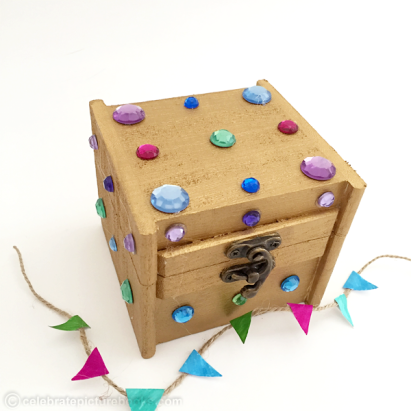
Treasure Box of Imagination

Whether it’s gold, silver, jewels, pirate loot, or just bits of nature or knick-knacks, our favorite things are our treasures and fuel our imaginations. For Fairy Tale Day make your own Treasure Box

Supplies

  • 1 small wooden box, available at craft stores
  • Gold acrylic craft paint
  • Craft gems
  • Paint brush
  • Hot glue gun or strong glue

Directions

  1. Paint your wooden box with the gold paint
  2. Let the box dry
  3. Decorate your Treasure Box of Imagination with gems