April 23 – National Take a Chance Day

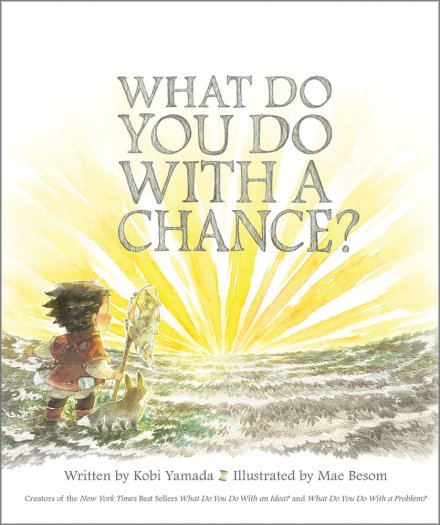
celebrate-picture-books-picture-book-review-what-do-you-do-with-a-chance-cover

About the Holiday

Sometimes it takes a special nudge to get us to leave our comfort zone and try something new—even if it’s something we’ve been wanting to do for a long time. Today’s holiday provides that push by encouraging people to let go of the fears and doubts that hold them back. Whether you prefer to try new things a little at a time or decide to dive right in, you’ll feel happier and more excited by life if you reach for that gold ring when it comes around.

What Do You Do with a Chance?

Written by Kobi Yamada | Illustrated by Mae Besom


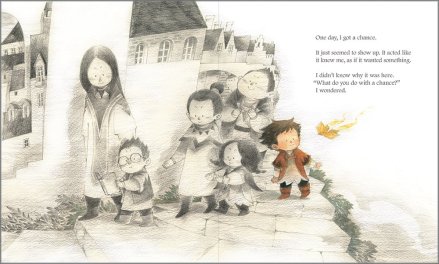
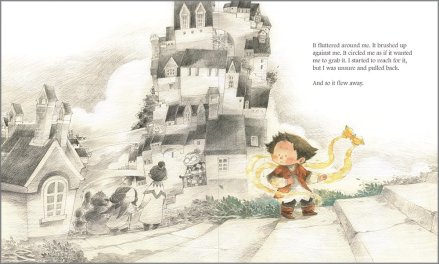
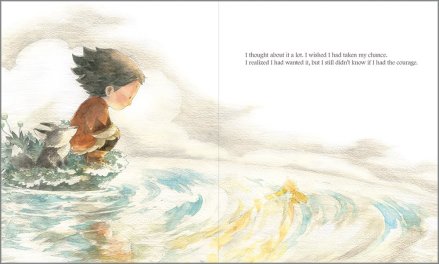
One day, a child says, they got a chance. The chance seemed to know them, but the child wasn’t sure why it was there or what to do with it. The chance was persistent, but unsure, the child “pulled back. And so it flew away.” Later the child thought about that chance and realized they “had wanted it,” but even now they didn’t know if they had the courage to take one.
celebrate-picture-books-picture-book-review-what-do-you-do-with-a-chance-first-chance

Image copyright Mae Besom, 2017, text copyright Kobi Yamada, 2017. Courtesy of Compendium.

The next time a chance came by, the child tried to grab it, but they “missed and fell.” They felt embarrassed, and “it seemed like everyone was looking at [them].” That was a feeling they never wanted again. Now whenever they saw a chance, “[they] ignored it.” They let so many pass them by that chances stopped coming. Then the child worried that they would never get another one.
celebrate-picture-books-picture-book-review-what-do-you-do-with-a-chance-pulls-away

Image copyright Mae Besom, 2017, text copyright Kobi Yamada, 2017. Courtesy of Compendium.

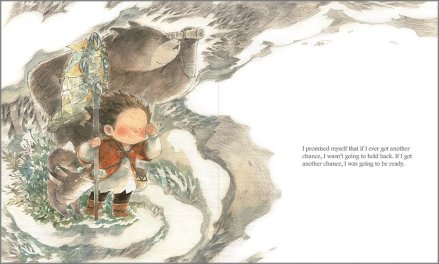
Although the child acted as if they didn’t care, they really did. They just didn’t know if they “would ever be brave enough” to take a chance. But then the child had a new idea and thought that maybe being brave “for a little while at the right time” was what it too. The child decided that the next time a chance came around, they were going to grab it. The child even went out to search for it, and then on a regular day, a glow appeared in the distance. Could this be it?
celebrate-picture-books-picture-book-review-what-do-you-do-with-a-chance-searches-for-new-chance

Image copyright Mae Besom, 2017, text copyright Kobi Yamada, 2017. Courtesy of Compendium.

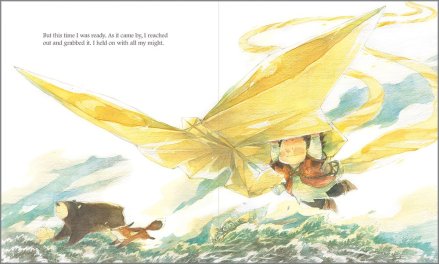
The child was ready. Racing toward the light, they didn’t feel afraid; instead, they were excited. As the child got near, they saw that it was an enormous chance. As soon as they could reach it, they climbed aboard and soared wherever it took them. Now the child understands that when they ignore chances, they miss out on all the wonderful things they wants to learn and do and be.
celebrate-picture-books-picture-book-review-what-do-you-do-with-a-chance-soars

Image copyright Mae Besom, 2017, text copyright Kobi Yamada, 2017. Courtesy of Compendium.

Whether the reader is a natural risk taker or on the more hesitant side, a child or an adult, Kobi Yamada offers encouragement and inspiration for those times when doubt or fear interferes with taking an opportunities when they come along. Kobi’s use of a first person narrator provides a level of comfort as the focus isn’t on the reader, but on feelings shared with a kindred spirit.

Quiet children or those with anxiety will see that there are others for whom leaving their comfort zone is difficult. Kobi’s concrete language echoes the inner monologue of questioning, hope, embarrassment, and regret that can hinder people from trying something new or big. He also presents gentle, solid advice and reveals that small voice of determination and courage that does lie within most hearts. When the child finally grabs onto the greatest chance, readers will also feel emboldened and will be ready to soar too.
celebrate-picture-books-picture-book-review-what-do-you-do-with-a-chance-at-reflecting-pond

Image copyright Mae Besom, 2017, text copyright Kobi Yamada, 2017. Courtesy of Compendium.

Mae Besom brilliantly depicts the child’s contrasting feelings to be free, spontaneous, and courageous on one hand and secure and protected on the other through her use of space and color. The mystical, medieval-type town the child lives in is crowded, with homes wall-to-wall and stacked one on top of the other. The friends or family the boy follows walk together tightly grouped, and these are all rendered in charcoal, white and dusty yellow. In contrast, the chances—origami butterflies with long tails—are golden yellow and fly away from the town, touching down on the child’s reflecting pool, over fields, and into the vast sky.

The child’s clothes are earthy brown, and the grass underfoot always green. As the child embraces bravery, animal companions also gain color, and as they all race toward the huge chance, they appear closer to the reader, filling the page. At last as the child soars on the wings of the chance, the town appears in the distance but is now also a place of color, light, and opportunity.

Without gender pronouns and a child with neutral clothing and hairstyle, What Do You Do with a Chance? is universal for all children.

The final book in the series, which includes What Do You Do with an Idea? and What Do You Do with a Problem?, What Do You Do with a Chance? is a must-own for home and classroom libraries to inspire discussions about overcoming fear, taking chances, and being yourself. The book will be an often-read addition to any bookshelf.

Ages 5 – 10 and up

Compendium, 2017 | ISBN 978-1943200733

National Take a Chance Day Activity
celebrate-picture-books-picture-book-review-butterfly-craft-vivid-filter-2

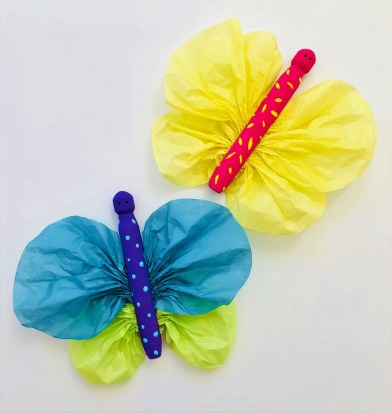
Colorful Clothespin Butterfly Craft


Butterflies are a lot like chances. They don’t start right off fully formed, but go through different stages, waiting times, and some amazing changes on their metamorphosis from caterpillar to butterfly. Chances also take time, practice, and spreading your wings to be fulfilled.

With this easy Colorful Clothespin Butterfly Craft, you can make your own butterfly that will always remind you to take a chance when it flies your way.

Supplies

  • Wooden pin clothespin
  • Tissue paper in a choice of colors
  • Craft paint in a choice of colors
  • Black craft paint
  • Paintbrush
  • Toothpick
  • Scissors
  • Fishing line, thread, or string for hanging (optional)
  • Adhesive magnet for hanging (optional)

Directions

To Make the Body

  1. Paint the clothespin, let dry
  2. When dry add accent dots or lines and eyes. I used a toothpick with the point cut off to make the dots on the purple butterfly. I used the pointy end of a toothpick to make the eyes and the lines on the pink butterfly.

To Make the Wings

  1. For the top wings, cut a 6 ½ -inch circle from tissue paper
  2. For the bottom wings, cut a 5 ¼ – inch circle from tissue paper
  3. With the head of the clothespin facing down, insert the larger circle into the split in the clothespin so that half of the circle shows on either side.
  4. Gently pull the circle down tightly into the split, pulling it as far in as possible—about half way
  5. Next insert the smaller circle into the split and repeat the above step.
  6. Gently fan out the wings if necessary

If hanging the butterfly, attach fishing line, threat, or string

If making a magnet, attach the adhesive magnet to the back of the butterfly.

Picture Book Review

February 7 – Girls and Women in Sports Day

celebrate-picture-books-picture-book-review-the-girl-who-ran-cover

About the Holiday

Celebrating its 32nd anniversary, National Girls and Women in Sports Day honors all of the girls and women involved in sports at all levels and highlights their extraordinary achievements. It also raises awareness of the positive influence sports can have on those who participate. This year’s theme is “Play Fair, Play IX,” providing a reminder of Title IX, which “ensures that all students receive educational opportunities free from discrimination based on sex.” While programs have expanded for female athletes since the inception of Title IX, many schools still do not provide equal opportunities for girls to participate in the sport of their choice. To learn more about National Girls and Women in Sports Day, find resources, and perhaps get involved yourself, visit ngwsd.org.

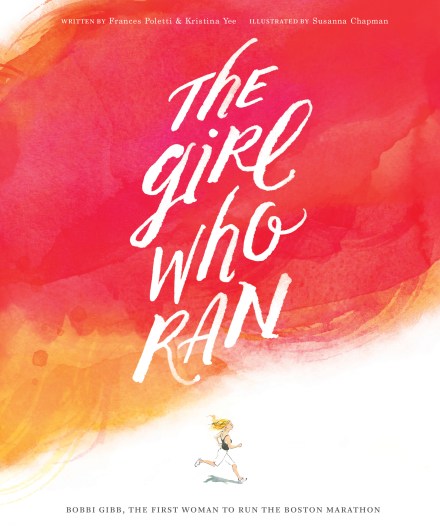
The Girl Who Ran: Bobbi Gibb, the First Woman to Run the Boston Marathon

Written by Frances Poletti and Kristina Yee | Illustrated by Susanna Chapman


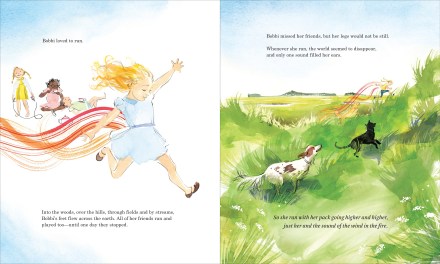
“Bobbi loved to run. Into the woods, over the hills, through fields and by streams, Bobbi’s feet flew across the earth.” When Bobbi was little, she and her friends ran and played together. But as they grew older, her friends found other pursuits while Bobbi still loved to run. She took to the fields with her dogs, “going higher and higher, / just her and the sound of the wind in the fire.”

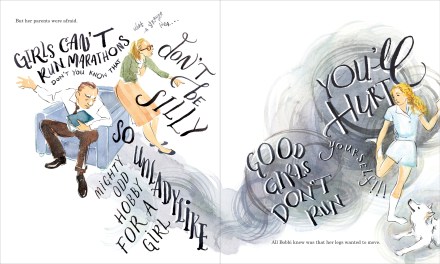
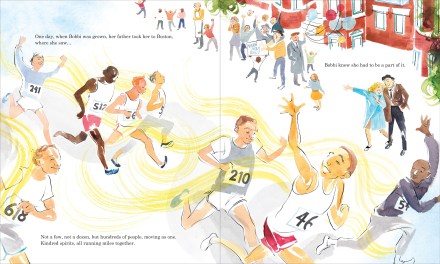
When Bobbi was grown, her father took her to watch the Boston Marathon. She loved the camaraderie of “hundreds of people moving as one. Kindred spirits, all running miles together.” Immediately, she wanted to participate too. When Bobbi told her parents that she wanted to run in the marathon, however, they thought her idea was strange. They told her she would hurt herself and that it was unladylike.

celebrate-picture-books-picture-book-review-the-girl-who-ran-young-bobbi

Image copyright Susanna Chapman, 2017, text copyright, Frances Poletti and Kristina Yee, 2017. Courtesy of Compendium.

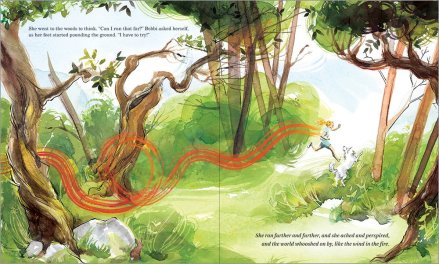
But Bobbie wanted to run. She didn’t know if she could run that far but was determined to try. She trained in the woods, running “further and further, and she ached and perspired, / and the world whooshed on by, like the wind in the fire.” Because she knew her parents disapproved, Bobbi set out on her own across country to train. Every day she ran in a new place—“lush forests in Ohio and Indiana, vast plains in Nebraska and Kansas, majestic mountains in Wyoming and Montana.” She even ran with wild horses out west and up steep Rocky Mountain trails. At night she camped, “tired and happy.”

All of her training seemed for nothing, however, when Bobbi received a letter rejecting her application for the Boston Marathon. The letter said that women were incapable of running marathons, that it was against the rules for a woman to run, and that the rules had been written to protect women from injury. Bobbi was not deterred, however. She went back home and told her parents what she wanted to do. Her father thought she was crazy to attempt it.

celebrate-picture-books-picture-book-review-the-girl-who-ran-woods

Image copyright Susanna Chapman, 2017, text copyright, Frances Poletti and Kristina Yee, 2017. Courtesy of Compendium.

Bobbi knew that the only way she could run would be “to blend in with the men.” Dressed in men’s shorts and a baggy hooded sweatshirt to hide her hair and wearing men’s running shoes (running shoes were not made for women), Bobbi was ready to go. Her father refused to drive her to the race, though. He stormed out of the house, and drove away. Bobbi thought her dream was dashed until her mom came to her room, car keys in hand, and said, “‘Let’s go.”

Hiding in the bushes at the starting line, she sprang out and joined the pack of runners with the bang of the starting pistol. “So she ran with the pack, going higher and higher, / the world whooshing by, like the wind in the fire.” As she ran, she realized that the men around her had seen through her disguise. Bobbi was worried, but the men were supportive. “‘Hey! Are you running the whole way?’ one asked.” She told him she hoped to, but in that sweatshirt, she was getting hotter and hotter. She was afraid that if she took it off, she’d be thrown out of the race.

celebrate-picture-books-picture-book-review-the-girl-who-ran-parents-afraid

Image copyright Susanna Chapman, 2017, text copyright, Frances Poletti and Kristina Yee, 2017. Courtesy of Compendium.

The men around her said they wouldn’t let that happen, so Bobbi took off the sweatshirt. “Word spread quickly throughout the course. A girl was running! They couldn’t believe it!” All along the route, the crowd cheered and encouraged her. Hearing the roar motivated Bobbi to ignore the hard ground and her stiff shoes and face the last steep hill. “Closing her eyes, she imagined she was back in Montana running up the mountains, the soft earth under her feet.”

Her feet were blistered and she was parched with thirst, but she crossed the finish line—ahead of nearly half of the men. Photographers, reporters, and radio presenters swarmed around her to hear her history-making story. From that day on “hearts and minds were forever changed.”

celebrate-picture-books-picture-book-review-the-girl-who-ran-young-Boston-marathon-all-men

Image copyright Susanna Chapman, 2017, text copyright, Frances Poletti and Kristina Yee, 2017. Courtesy of Compendium.

The story of Bobbi Gibbs is one that every girl and boy should know, and Frances Poletti and Kristina Yee’s excellent biography will have readers awe-struck by how she changed the way the world viewed women and their capabilities. A pioneer for women’s rights in every way—from her traveling the country alone to rejecting the prevailing ideas to competing on her own terms—Bobbi Gibbs is an inspiration for achievers everywhere. Poletti and Yee’s conversational storytelling is both lyrical and honest, not stinting on the obstacles Bobbi had to overcome, including race officials, her own parents, and even the fact that running shoes weren’t made for women.

As the marathon approaches, readers will be enthralled by the building suspense. They’ll feel Bobbi’s determination, her disappointment, and her fear that she will be discovered and thrown out of the race, and will cheer along with the crowd at her victory.

celebrate-picture-books-picture-book-review-the-girl-who-ran-crowds

Image copyright Susanna Chapman, 2017, text copyright, Frances Poletti and Kristina Yee, 2017. Courtesy of Compendium.

Susanna Chapman’s gorgeous illustrations are infused with Bobbi’s boundless energy and spirit as she soars over grassy dunes with her dogs at her heels, zips through shady woods, and runs alongside wild horses in the shadow of the Rockies all the while trailing a red swish, representative of the fire within her. The turmoil surrounding Bobbi’s desire to run the Boston Marathon is depicted in words of rebuke, recrimination, and rejection printed in large, emphatic typefaces that swirl around her like a tornado.

The inclusion of the image of Bobbi’s mother with the car keys in hand on the morning of the race is a welcome reminder of the many unknown women of earlier generations who  contributed to the fight for women’s equality. A beautiful double gate-fold illustration of Bobbi crossing the finish line to cheering crowds and the waiting media puts the focus fully on Bobbi and the fire that spurred her on.

An Afterword tells more about Bobbi Gibb, and a timeline of seminal events in the Boston Marathon from 1896 to today, is a fascinating must-read.

The Girl Who Ran is an inspirational biography and revealing history from the not-so-distant past that offers encouragement and triumph. It would be a wonderful addition to home, school, and public libraries.

I received a copy of The Girl Who Ran from Compendium to check out. All opinions are my own.

Ages 8 – 12

Compendium, 2017 | ISBN 978-1943200474

Discover more about Kristina Yee, her books, and her films on her website

Learn more about Susanna Chapman, her books, and her art on her website

Girls and Women in Sports Day Activity

celebrate-picture-books-picture-book-review-pioneering-women-in-sports-puzzle

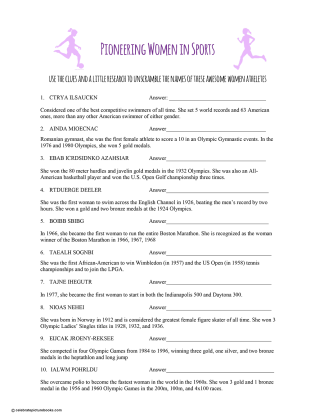
Pioneering Women in Sports Word Scramble Puzzle


In every sport there have been women who have overcome barriers, incredible odds, set records, and inspired others. Using the clues and a little research, can you unscramble the names of these twelve awesome athletes?

Pioneering Women in Sports Word ScramblePioneering Women in Sports Word Scramble Solution

Picture Book Review