March 3 – World Wildlife Day

About the Holiday

In December of 2013 the United Nations General Assembly proclaimed March 3rd as World Wildlife Day to promote awareness of our environment and the dangers to it. Every year a different theme is chosen to spotlight an area of the world, a particular species, or a group of activists. This year’s theme is “Wildlife Conservation Finance: Investing in People and Planet” and focuses on innovative ideas for financing can contribute to halting biodiversity loss, raising the interest of private sector stakeholders to invest in wildlife conservation, and creating a sustainable future. The day also celebrates successful conservation and sustainability initiatives. To learn more about the day, special events, and how you and your kids can get involved today and throughout the year, visit the World Wildlife Day website.

Thanks to Eerdman’s Books for Young Readers for gifting us a copy of Kingdoms of Life for review.

Reviewed by Dorothy Levine

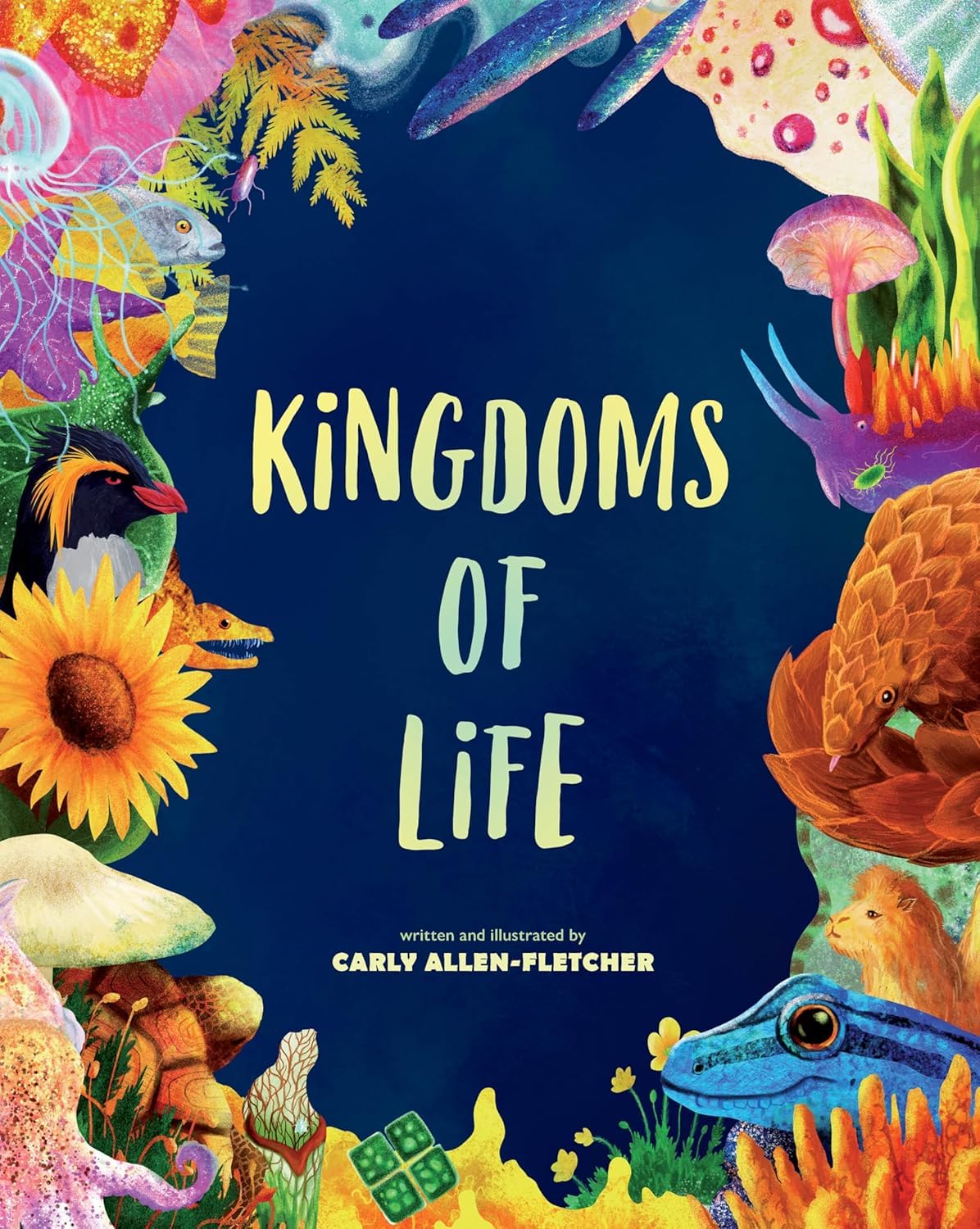
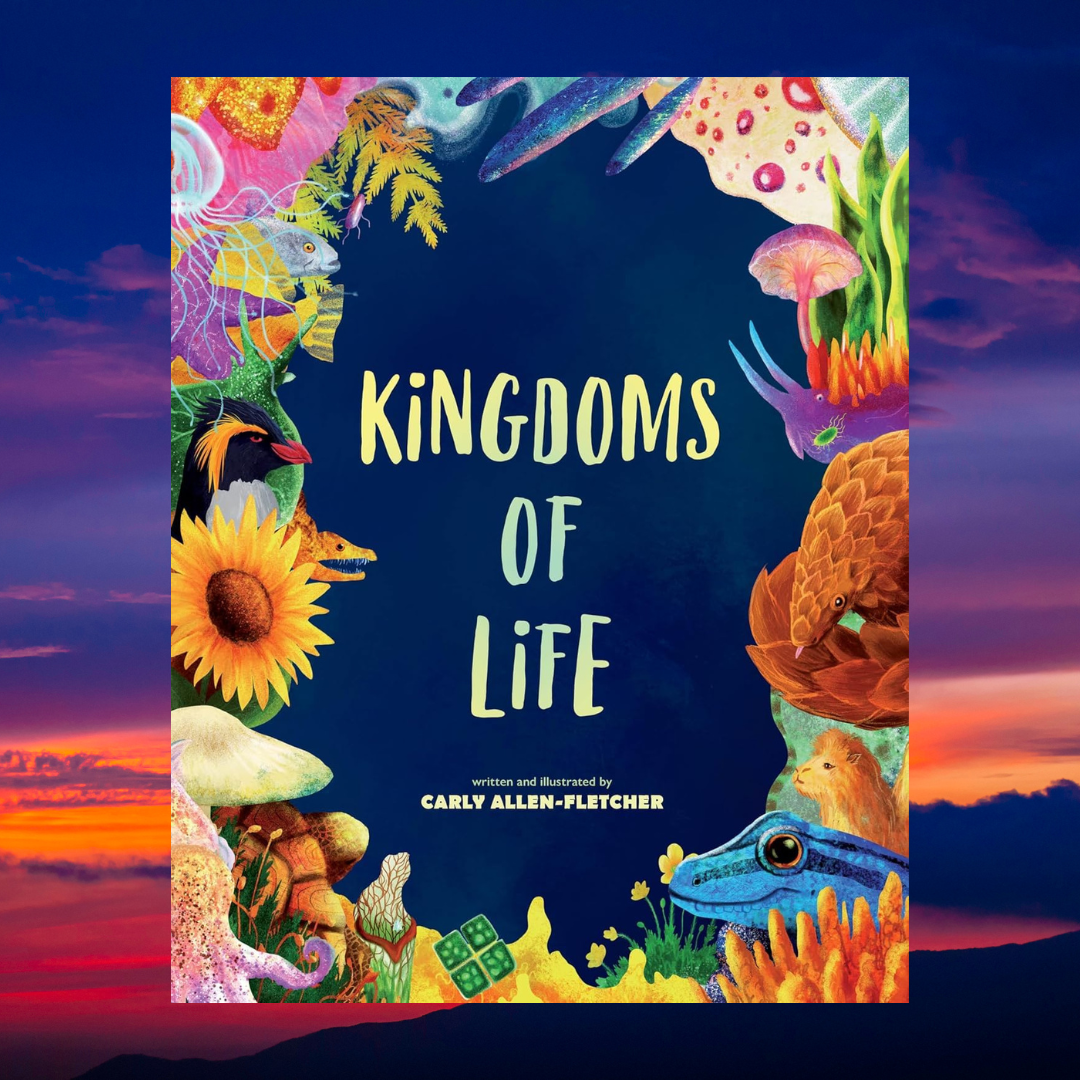
Kingdoms of Life

By Carly Allen-Fletcher


“Life is all around us…In the sky, the sea, and the soil, life exists in millions of different incredible ways.” 

Jump into Carly Allen-Fletcher’s vibrant fact-filled guidebook for kids for a deep-dive exploration of the kingdoms of life. Each Kingdom rules over its own color-coded section, jam-packed with information on how the classified organisms feed, grow, and reproduce. Information also includes the ways in which the organisms across Kingdoms are related or work together with other lifeforms. The pages are royally packed with vibrant illustrations that appear to burst out from the very edges of the book. 

Allen-Fletcher begins with an explanation of how all life is formed—from tiny building blocks called cells. These cells can join to create complex multicellular life forms or just exist on their own as unicellular forms of life. She then zooms out to examine the six biggest categories of life. Allen-Fletcher makes sure to note that these categories are not fixed; they change as scientists learn more and arrange beings in different ways. 
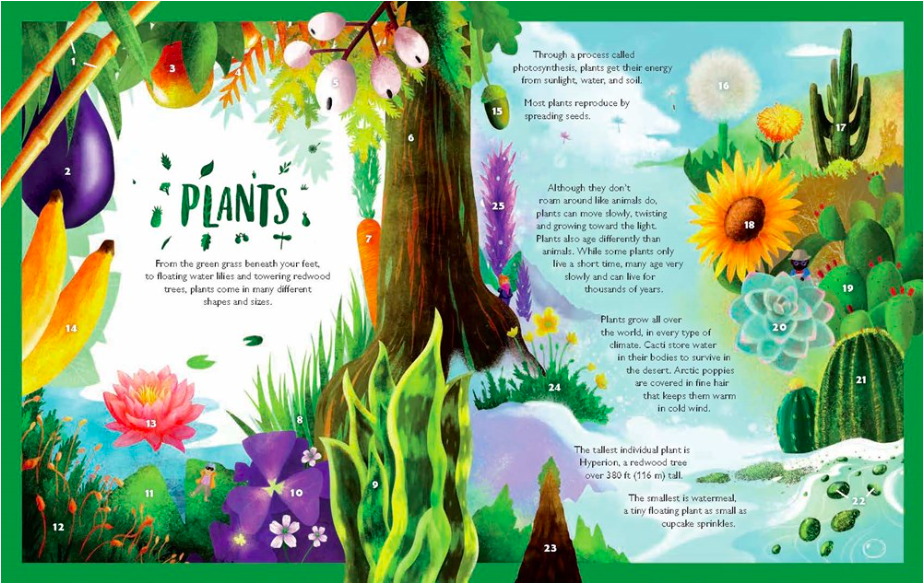
Illustration and text © 2025 Carly Allen-Fletcher. Courtesy of Eerdmans Books for Young Readers.

The first category investigated in depth is the most complex of the life-form groups—animals. The animal pages are filled with a diverse range of species, each numerated to a corresponding key at the back. Allen-Fletcher shows the wide range of animals by comparing the smallest species (fairy wasps) to the largest (blue whales), while also explaining how even within one species (dogs) there can be glorious variety. Examples of animals that don’t quite fit in the animal category, such as a sea slug that can make energy from the sun, as well as animals that can survive extreme conditions or are thought to be practically immortal, are also discussed.

In addition to the animals, plants, fungi, protists, bacteria, and archaea are each given equal attention in their respective kingdom sections. From protists like giant kelp and slime mold to bacteria in our gut and bioluminescent bacteria found in squid, each kingdom is filled with fascinating examples of life and interesting facts on specific organisms. 
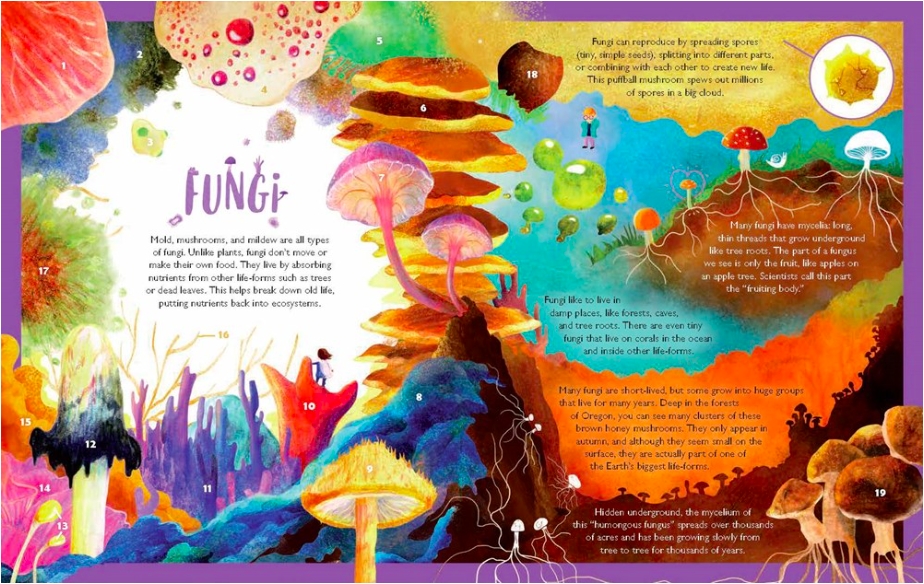
Illustration and text © 2025 Carly Allen-Fletcher. Courtesy of Eerdmans Books for Young Readers.

Kingdoms, Allen-Fletcher explains, can also be broken down further, into smaller and smaller groups such as family, genus, and species. A few taxonomists (scientists who study and sort lifeforms into categories) from around the world and throughout many different centuries are highlighted for their contributions to the field.

The book ends with a last dose of wonder: “We know more about the moon than we do about the deepest parts of our oceans. / Every year, we learn more about our home and the incredible life-forms we share it with. / What will we discover next?” The inclusion of “we” in this ending invites readers to feel welcome in this process of study and discovery. Taxonomy need not be only for adult scientists, but anyone who shares a passion for nature and careful observation. 

Back matter features each of the categories taxonomists use to sort life into groups as well as all the names of the featured life-forms throughout the book. The science is detailed while also distributed into easy-to-read bite-sized chunks.
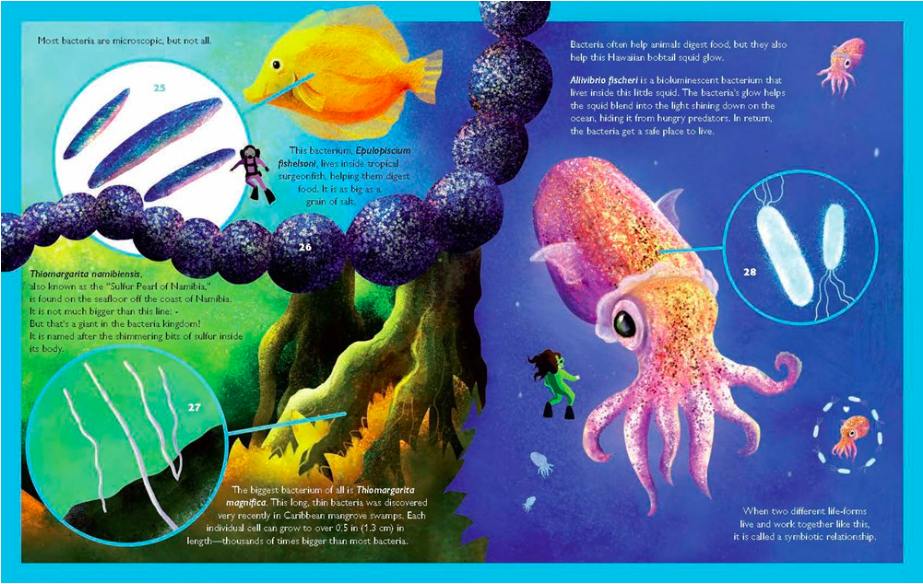
Illustration and text © 2025 Carly Allen-Fletcher. Courtesy of Eerdmans Books for Young Readers.

Carly Allen-Fletcher illuminates a topic that is usually reserved for upper-level biology courses making it accessible and intriguing for young learners. The facts from her book will inspire a passion for all species—large or small, animal or bacteria—and help children to understand where in this big wide world we as humans stand and the symbiotic relationships that exist between creatures. Mini scientists dot the lusciously illustrated pages, comically examining life-forms in all the kingdoms up close.

Kingdoms of Life would make a valuable addition to home, school and library collections.

Ages 6 – 10

Eerdmans Books for Young Readers, 2025 | ISBN 978-0802855916

About the Author/Illustrator

Carly Allen-Fletcher is a British illustrator and author whose books include Goodnight Forest (Muddy Boots), Beastly Biomes (Creston), and Animal Antipodes (Creston). Inspired by nature and science, she creates her art by combining hand-drawn elements, painted textures, and graphic shapes. Carly loves reading about the latest biological discoveries, and if she hadn’t become a professional illustrator, she would have become a scientist instead. Follow Carly on Instagram or visit her website at carlydraws.com.

World Wildlife Day Activity
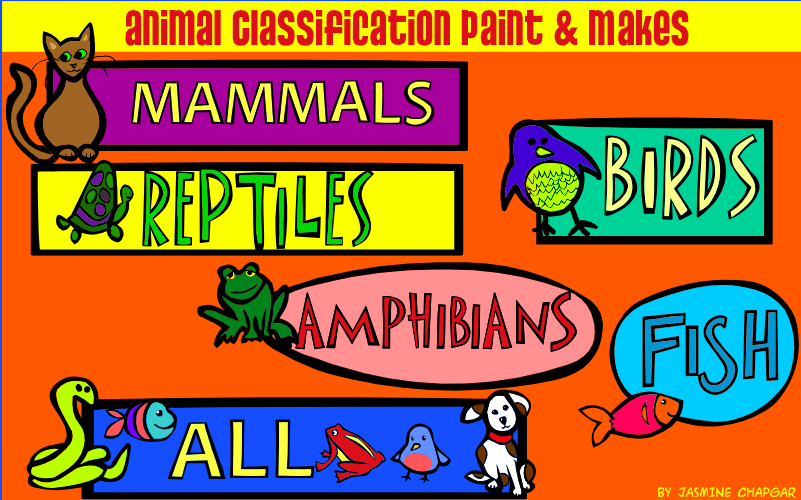
It Takes All Kinds game illustration courtesy of Science Trek.


Kingdoms of Life Fun


Watch a Kingdoms of Life Classification Video with Science Trek

  • As Allen-Fletcher notes in Kingdoms of Life, scientists are constantly evolving the categories for living organisms as they learn more. Do you notice any differences between the book and video kingdom categories? Since this video was published, scientists have started using the kingdom names bacteria and archaea instead of the previously used term, monera!

You can also explore their Online Games on kingdoms of life and animal classification, and practice sorting with Generation Genius’s Candy Classification Activity
You can purchase Kingdoms of Life at these booksellers

Amazon | Barnes & Noble | Bookshop (to support your local independent bookstore)

Picture Book Revie

April 14 – National Gardening Day

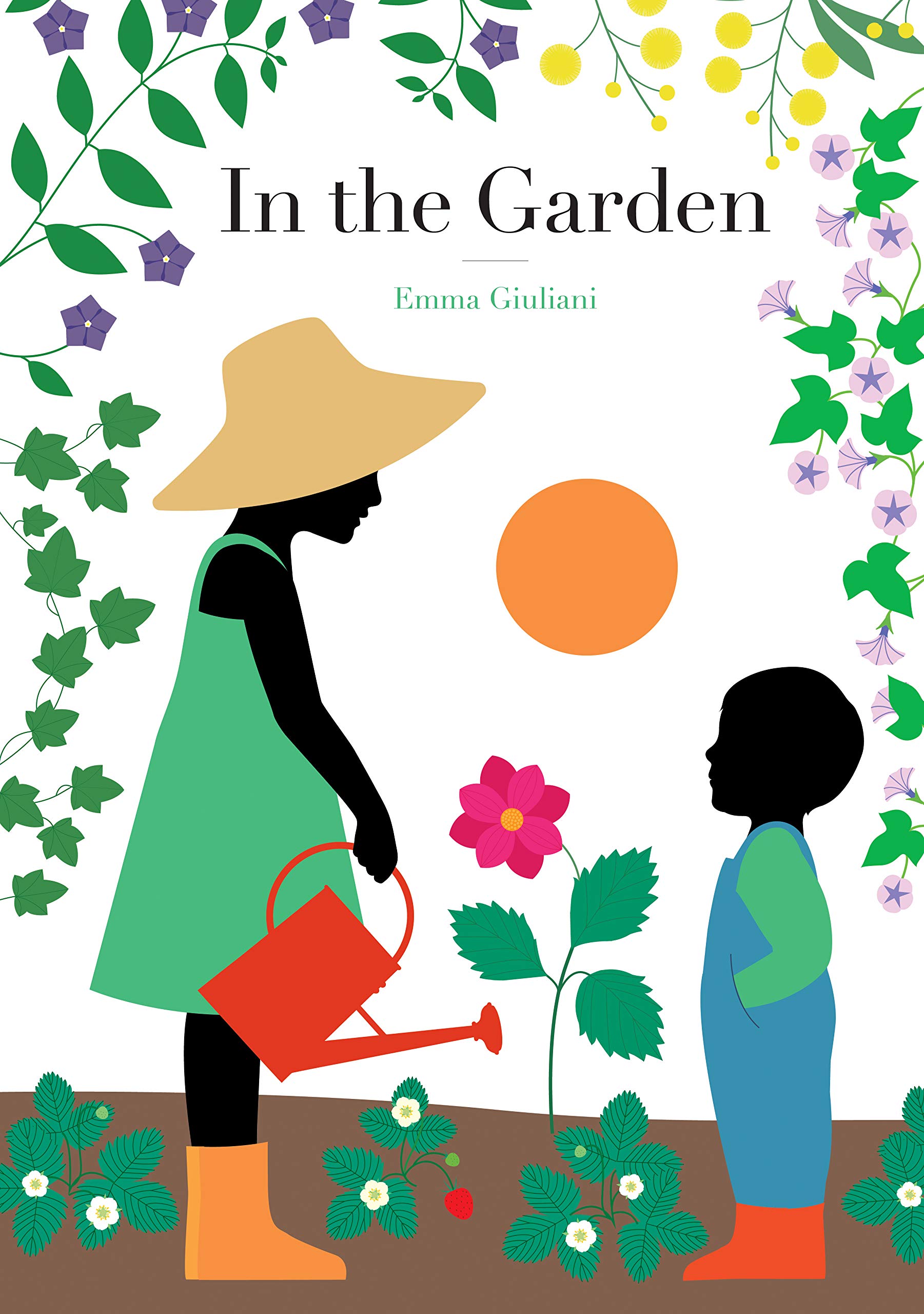
celebrate-picture-books-picture-book-review-in-the-garden-cover

About the Holiday

For many of us, spring means gardening. Today’s holiday encourages avid gardeners and those new to this rewarding activity to turn over some dirt, plant seeds, and prepare to tend the little sprouts on their way through the season. While this year may pose challenges to regular gardening routines, ordering options, creative solutions

In the Garden

By Emma Giuliani


In her stunningly illustrated interactive guide through the seasons, Emma Giuliani introduces Plum and her little brother, Robin, and invites readers to join them as they tend to their garden and all the plants, animals, and birds that call it home. Plum and Robin begin at winter’s end. “This morning it’s cold. It’s not yet spring, but, in the garden, Plum and her brother Robin see the first catkins appearing on the branches of the willows and hazels. The blossoming mimosa makes the gardeners impatient for spring to come.” As Robin counts the long, drooping catkins, Plum rakes a layer of compost over the ground. On the facing page, children get a close-up view of the fuzzy catkins, can peek inside a bud, burrow underground with earthworms just waking from hibernation, and view a few early bloomers. They also learn about what makes up the earth’s soil and get a recipe for compost.

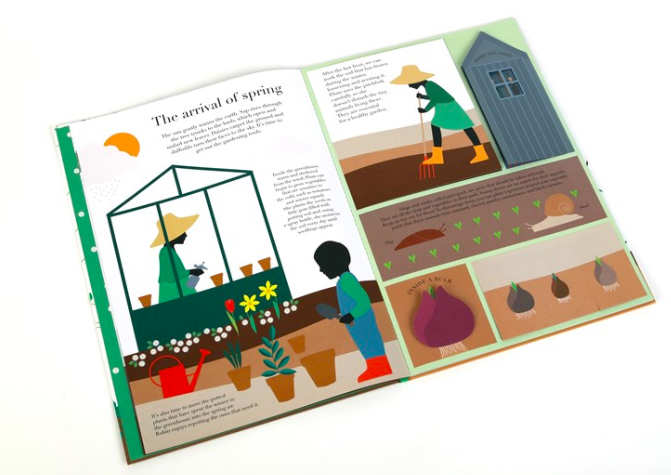
celebrate-picture-books-picture-book-review-in-the-garden-shed

Copyright Emma Giuliani, 2020, courtesy of Princeton Architectural Press.

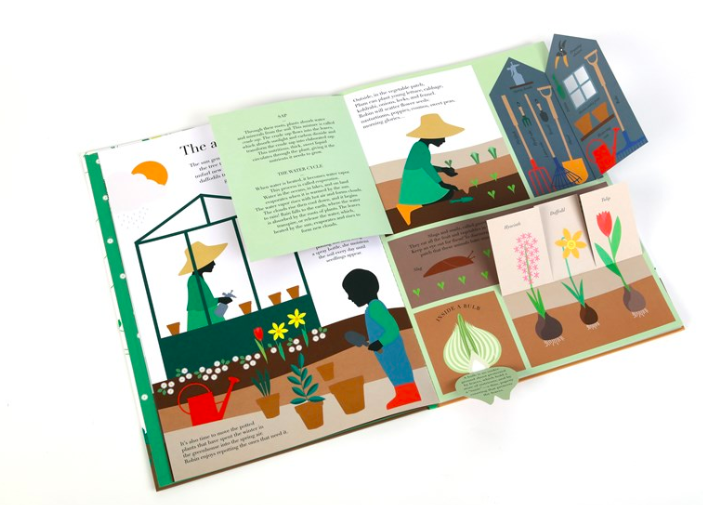
With the arrival of spring, Plum is in her little greenhouse, planting vegetable seeds and spritzing the soil with water to keep it moist while Robin repots some plants who have spent the winter in the greenhouse. Outside, Plum aerates the garden bed with a pitchfork, careful of any tiny creatures below. Children can open the door to Plum’s well-stocked shed to see all the tools tidily stored there and lift the flaps to look inside a bulb and help a hyacinth, a daffodil, and a tulip grow.

celebrate-picture-books-picture-book-review-in-the-garden-open-shed

Copyright Emma Giuliani, 2020, courtesy of Princeton Architectural Press.

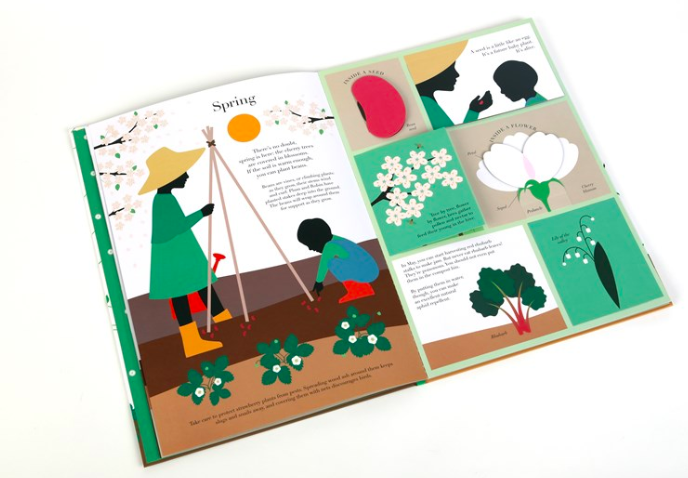
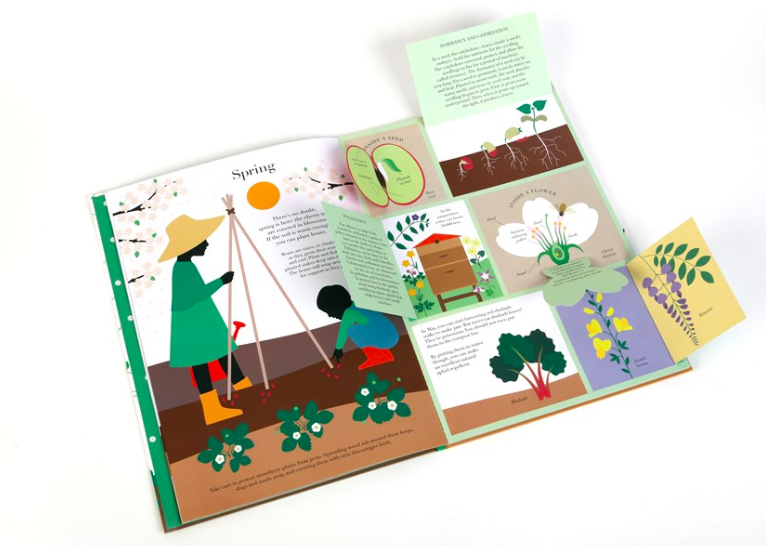
At last the warm weather of spring has arrived. The cherry trees are blossoming, and Plum and Robin are setting stakes and planting bean seeds. Next, they provide protection for the tender strawberry plants that are beginning to bloom. Young gardeners will enjoy opening a bean seed to learn what’s inside and then following its growing process. The bees are visiting the cherry blossoms, pollinating the flowers and making honey. What does a bee see as it hovers around the flower? Pull down the flap to see for yourself and learn all the parts of a flower. What other plants are flowering now? Open the flap to see!

celebrate-picture-books-picture-book-review-in-the-garden-spring

Copyright Emma Giuliani, 2020, courtesy of Princeton Architectural Press.

Summer begins and “what a joy to be in the garden in June! The gentle breeze, the smell of cut grass, and the tangy taste of strawberries and cherries make the gardeners smile.” While Plum waters the tomato plants, “Robin looks for ripe strawberries under the leaves.” Join him! Robin is also picking cherries before the birds eat them. How do those bright red, round fruits grow? Lift the flap to learn and see how they develop from flower to fruit. Plum is getting help with the aphids on the bean plants from industrious—and hungry—ladybugs. “Dragonfly larvae are transforming into graceful flying insects….Their presence is a sign of a healthy garden.”

celebrate-picture-books-picture-book-review-in-the-garden-open-spring

Copyright Emma Giuliani, 2020, courtesy of Princeton Architectural Press.

It’s high summer and the garden is glorious. Bean pods hang from the vines, and Plum contemplates whether they are ready to pick. She may leave some “husks dry out on the plant before picking them.” Dried completely indoors, they can be stored and eaten during the fall and winter. Take a look inside a pod to see the seven red beans there. Flowers greet you too: an orange marigold with petals like a pinwheel, a brilliant pink and purple fuchsia, and a perky mignon dahlia. Robin took cuttings of these plants and potted them to grow some more. Learn how you can do that with your plants too!

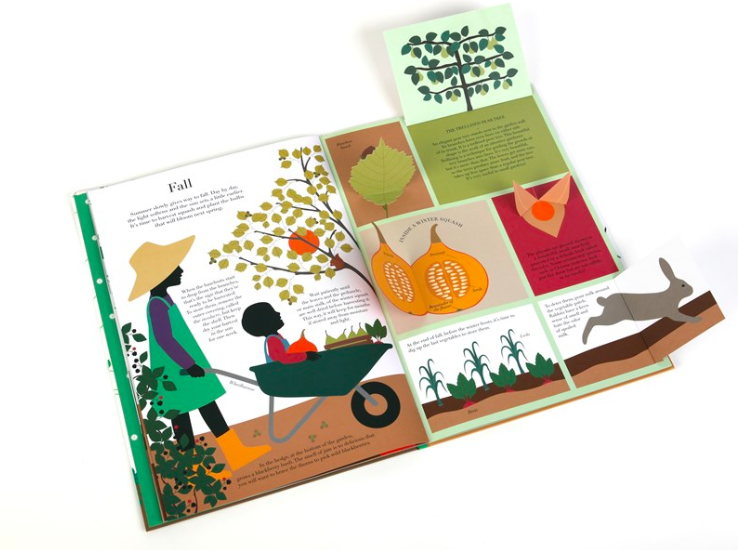
The summer heat is waning and the days are growing shorter. Fall is here. The catkins of early spring have become hazelnuts that are ready to be harvested. Even the squirrel approves! Plum and Robin teach you how to store them—and when to pick the winter squash and keep them for months as well. Can you count the number of seeds inside the winter squash? Plum’s beautiful trellised pear tree is bearing sweet fruit. Yum! But look out—a crafty rabbit is after the last leafy vegetables in the garden. No need for a fence, though. Milk will do the trick of shooing him away.

celebrate-picture-books-picture-book-review-in-the-garden-open-fall

Copyright Emma Giuliani, 2020, courtesy of Princeton Architectural Press.

The air is chilly again and winter is on the horizon. “Plum and Robin have donned their warmest clothes and gone out to collect the dead leaves. Some leaves will feed the compost, others will become mulch to protect plants over the winter. The hedgehogs can use the rest of the leaves in making their homes.” Do you see the pile of crunchy leaves? Lift them gently…shhh! A hedgehog is snoozing underneath. Robin and Plum have built an insect hotel to keep the bugs cozy during the winter and have filled the greenhouse again. For the colorful birds who stay awhile or all winter, Robin and Plum put out a bird feeder and fill it with locally produced seeds.

After putting all of their tools back in the shed, Plum and Robin head indoors to plan next year’s garden and “watch eagerly for the very first signs of spring.”

celebrate-picture-books-picture-book-review-in-the-garden-open-winter

Copyright Emma Giuliani, 2020, courtesy of Princeton Architectural Press.

If your family tends a garden or is thinking of starting one, Emma Guiliani’s superb book is a must. At 16 inches tall, In the Garden provides fascinating facts about plants, insects, and animals; helpful tips on when and how to plant a variety of fruit, vegetables, and flowers, information on natural ways to ward off pests; and how to recognize when fruit and vegetables are ready for picking and how to store them. Through copious flaps, children get inside views of flowers, seeds, buds, and vegetables to learn the names of each part and how they contribute to the growth of the plant. Along the way, young and adult gardeners discover how early gardening can begin, directions on how to create and use compost, when bushes can be planted, information on pollination; and how to winter over the garden for the coming spring.

Giuliani’s crisp, lush illustrations are marvels, combining intricate paper cuts that replicate the shapes of delicate bulbs and buds, flowers and seeds, smooth and serrated leaves, the long bean pod, and even Plum’s garden shed with a window in the door. Her extraordinarily beautiful color palette immerses readers in the garden experience; you can almost smell the rich earth, hear the bees buzzing at the blossoms, and feel the air changing season to season.

A brilliant resource and a joy to peruse, In the Garden is a book that adults and children—both gardeners or nature lovers—will share throughout the seasons and from year to year. The book is most highly recommended for home, school, and public library collections.

Ages 7 – 12

Princeton Architectural Press, 2020 | ISBN 978-1616898939

You can connect with Emma Giuliani on Instagram.

National Gardening Day Activity

celebrate-picture-books-picture-book-review-flower-garden-game

Plant a Flower Garden Game


With this fun game you and your family and friends can grow gardens inside! Roll the dice to see whose garden will fully blossom first!

Supplies

Directions

Object: The object of the game is for each player to fill their garden or garden rows with flowers. Depending on the ages of the players, the game can be adjusted to fill all of the rows, some or all rows, or just one.           

  1. Print one Game Board for each player
  2. Print one or more sets of Flower Playing Cards for each player, depending on how  (for sturdier playing items, print on card stock)
  3. Cut the flowers into their individual playing cards
  4. Print one Flower Playing Die and assemble it (for a sturdier die, print on card stock)
  5. Color the “dirt” on the Garden Plot with the crayon (optional)
  6. Choose a player to go first
  7. The player rolls the die and then “plants” the flower rolled in a row on the game board
  8. Play moves to the person on the right
  9. Players continue rolling the die and “planting” flowers until each of the number of determined rows have been filled with flowers or one row has been filled with all six flowers.
  10. The first person to “grow” all of their flowers wins!

To play a printable Vegetable Garden Board Game, click here.

celebrate-picture-books-picture-book-review-in-the-garden-cover

You can find In the Garden at these booksellers

Amazon | Barnes & Noble | Books-a-Million | IndieBound | Princeton Architectural Press

Picture Book Review