May 6 – International Space Day

celebrate-picture-books-picture-book-review-otter-in-space

About the Holiday

Each year International Space Day is observed on the first Friday in May to commemorate the extraordinary achievements, benefits, and opportunities of space exploration. The goal of International Space Day is to promote math, science, technology and engineering education to inspire students to pursue a career in science and especially a career in space-related fields.

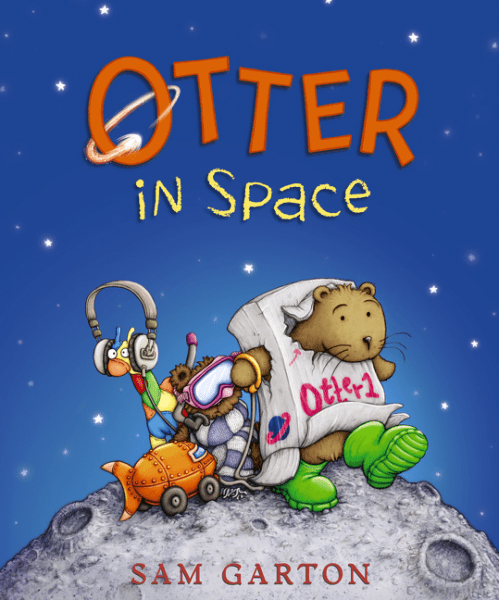
Otter in Space

By Sam Garton


On Sunday Otter goes to the museum with Otter Keeper and Teddy to see the Space Exhibition. They see a Triceratops skeleton and meet a stuffed bear that must be Teddy’s cousin. On the walls are old paintings made before the invention of crayons, and ancient, interesting things are everywhere.

Otter likes all these exhibits, but her favorite is the room dedicated to outer space—there are buttons to push just like a real astronaut, videos to watch, and a rock that came all the way from the moon. At last Otter gets to go to the gift shop. She loads up her arms with toys, but Otter Keeper says, “One thing only.” The spaceship travels home with them, but Otter and Teddy really want a moon rock too.

The next day while Otter Keeper is at work, Otter and Teddy play with their new spaceship, but it’s just not as fun without a moon rock. Teddy suggests going back to the museum, but no one can drive them. Otter thinks and thinks and suddenly has “the best idea ever!” She and Teddy will blast to the moon and retrieve a moon rock.

Otter makes a very important list of very important things to do. After lunch she builds two space suits and starts training. Although Teddy has some trouble keeping his space suit on and with problem solving, his performance in anti-gravity training is impressive so they move on to constructing the spaceship. With ingenuity and a bunch of household items, Otter builds a rocket and takes it to the Launchpad.

With Giraffe at “mishun control” lift-off is easy, but the moon landing is a little bumpy. Otter’s suit gets torn, but she perseveres and discovers the perfect moon rock nearby. It’s huge! With a little trouble Otter and Teddy transport it back to Earth, where it makes a perfect companion, playing board games and pirates—until Otter Keeper comes home and says it has to go back where it belongs.

The discussion is carried over to dinnertime, and Otter Keeper relents when he sees how serious Otter is in her space suit. If Otter cleans the moon rock she can keep it, says Otter Keeper. But one more restriction has been added to the Otter DO NOT list: dig up moon rocks! That’s okay, though. There are other things to dig up on the moon—like a dinosaur!

Sam Garton’s Otter in Space is a cute, spot-on portrayal of the fantastic ideas kids get when exposed to new concepts or places. Told from Otter’s point of view, the text hits on the serious-yet-humorous observations of kids: the gift shop as the favorite museum “exhibit,” a lingering regret for the toy left behind, and “the best ideas ever!” to correct situations.

Garton’s colorful illustrations of wily Otter and her faithful Teddy as they visit the museum, plan their space trip with the help of Giraffe and other toys, and blast off wearing a cereal box space suit are endearing. Kids will giggle at Teddy’s anti-gravity training in the washing machine. They and their parents will also appreciate Otter’s crafty discovery of the moon rock in the garden and recognize with a laugh his adoption of it as a member of the family.

Otter in Space is a book kids will want to explore again and again!

Ages 4 – 8

Balzar + Bray, Harper Collins, 2015 | ISBN 978-0062247766

International Space Day Activity
celebrate-picture-books-picture-book-review-rocket

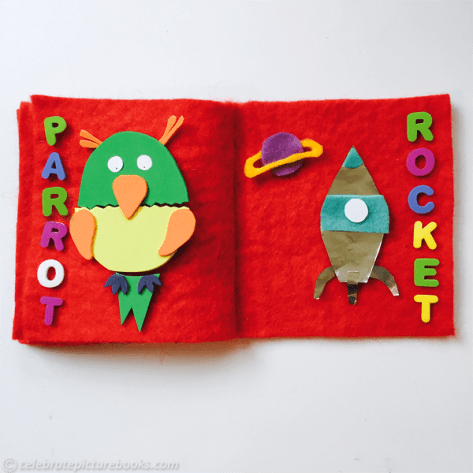
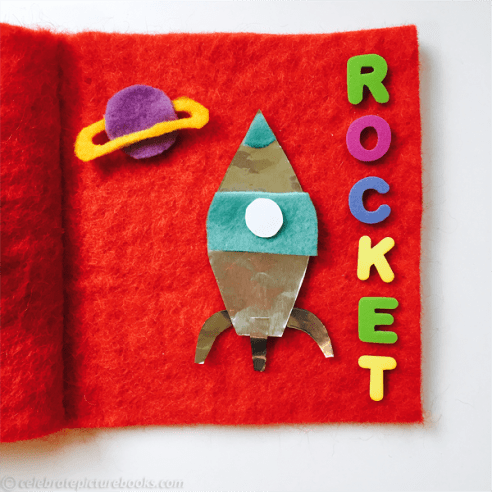
Create a Soft Book, Page 6—Rocket


Blast off with fun on Page 6 of your soft book with this shiny rocket on its way to an undiscovered planet! See previous posts from May 1 through 5 for each page of the book.

Supplies

  • Printable Rocket Template
  • Adhesive felt or foam letters
  • Tin foil
  • Felt, fleece, or foam in various colors of your choice (I used aqua, white, yellow, and purple)
  • Scissors
  • Strong glue or fabric glue

celebrate-picture-books-picture-book-review-rocket-and-parrot

Directions

  1. Cut out the rocket and feet from tin foil
  2. Cut out the nose cone and body stripe from felt, fleece or foam
  3. Cut out the round window from white felt, fleece, or foam
  4. Cut out the planet from your choice color of felt, fleece, or foam
  5. Cut out planet’s ring from your choice color of felt, fleece, or foam
  6. Glue rocket and feet to page
  7. Fit ring around planet and glue to page
  8. Attach adhesive letters to page, making sure they are stuck firmly. If they aren’t use fabric glue

I hope you enjoy your book!

Picture book review

May 5 – Cinco de Mayo

celebrate-picture-books-picture-book-review-mango-abuela-and-me

About the Holiday

Cinco de Mayo has its origins in a victorious battle for Mexico during the Franco-Mexican War in 1862. In the United States this day is a celebration of the rich culture and heritage of Mexico that includes parades, mariachi music performances, Mexican food, and street festivals. If you can, attend a cultural event, listen to Mexican music, or prepare a special Mexican dinner.

Mango, Abuela, and Me

Written by Meg Medina | Illustrated by Angel Dominguez


During the winter Mia’s Abuela moves from her house far away to live with her  family. Mia feels shy around her unfamiliar grandmother, but quickly adapts, sharing her room and her drawer space. The one thing they cannot share is language. Abuela “can’t unlock the English words” in Mia’s book, and Mia knows only a little Spanish.

On the first night Abuela shows Mia two things she has carefully brought with her—a feather from a wild parrot that roosted in her mango trees and a photograph of her late husband. “Tu Abuelo,” she explains to Mia.

For the rest of the winter, Mia spends time with her grandmother, but regrets that she can never tell her important things about her life. Abuela does’t know that Mia’s good at art or can beat the boys in a race. Likewise, Abuela can’t tell Mia about her life or answer Mia’s many questions. 

When Mia confides in her mother, her mom reminds her of how she helped her best friend, Kim, learn English when she was new at school. One day while Mia and her grandma bake meat pies, Mia pretends to be her teacher, naming each ingredient in English. Abuela reciprocates with the Spanish word. Mia suddenly has an idea. Shetags everything in the house with its English name and the pair practices.

The next day on a trip to the pet shop to buy hamster food, Mia sees something in the window that gives her another exciting idea. Right in the middle of the display sits a colorful parrot. “Let’s buy him,” Mia exclaims. “For Abuela.” The parrot can keep Abuela company while she is in school, Mia thinks.

Abuela is thrilled with the gift, and they name the parrot Mango because he is the color of the tropical fruit. Abuela teaches him to say Buenos tardes. Good afternoon, Mia teaches him. “Buenos tardes, good afternoon,” Mango repeats. Abuela, Mia, and Mango spend the days practicing new English and Spanish words, learning the days of the week, the months, and the names of coins. Encouraged by her success, Abuela asks to learn more and harder words so she can meet people in the neighborhood.

Best of all, Mia and Abuela can now talk about everything. Their “mouths are full of things to say,” and they tell each other about their day and their lives. From his perch Mango watches and listens. Night falls and as the light is turned off, Mia says “Hasta mañana, Abuela.” “Good night, Mia,” Abuela whispers.

Meg Medina beautifully represents the relationship between a little girl and her grandmother who are unfamiliar with each other but bound by familial love. The little girl’s acceptance of her grandmother and desire to communicate is strongly depicted in the activities they do together. Mia’s clever ideas to promote the mutual learning of each other’s language shows the kind of inclusiveness that builds friendships. 

Angela Dominguez depicts the developing friendship between Mia and her Abuela in bright paintings that mirror the reds, blues, greens, and yellows of the tropics. The pair’s closeness grows organically from page to page as Mia first shies away from the grandmother who is a stranger to her to attempts at communication to deep feelings of love as they bridge the language barrier through dedication, hard work, and the help of a unique friend.

Ages 5 – 8

Candlewick Press, 2015 | ISBN 978-0763669003                    

Cinco de Mayo Activity

celebrate-picture-books-picture-book-review-parrot

Create a Soft Book, Page 5—Parrot


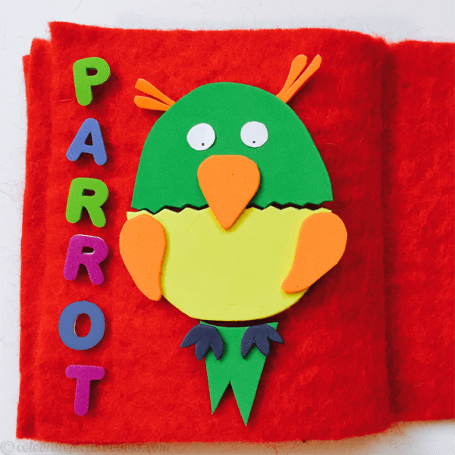
Parrots are beautiful and exotic birds with a talent for language! Add this colorful tropical parrot to your soft book with the printable template provided.

Supplies

  • Printable Parrot Template
  • Yellow, green, orange, white, and black or brown felt, fleece, or foam
  • Adhesive felt or foam letters
  • Fabric glue
  • Scissors

Directions

  1. Cut out the head and tail from the green felt, fleece, or foam
  2. Cut out the body from the yellow felt, fleece, or foam
  3. Cut out the beak, wings, and feather tufts from the orange felt, fleece, or foam
  4. Cut out the feet from the brown or black felt, fleece, or foam
  5. Assemble the parrot and glue in place
  6. Attach the adhesive letters, making sure they stick firmly. If they don’t use fabric glue

See you tomorrow!

May 4 – International Firefighters Day

celebrate-picture-books-picture-book-review-this-is-the-firefighter

About the Holiday

International Firefighters’ Day was established to commemorate the dedication of firefighters to their communities and the sacrifices they make in dangerous situations to protect and rescue those they have pledged to help. It’s also a day in which current and past firefighters can be thanked for their contributions. If you know a professional or volunteer firefighter, let them know how much you appreciate their service. Today is also a good day to check your smoke detectors.

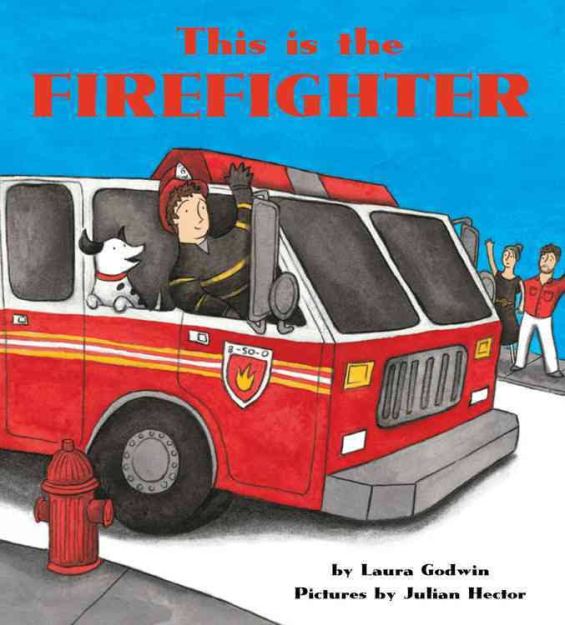
This is the Firefighter

Written by Laura Godwin | Illustrated by Julian Hector


“This is the firefighter. / These are his clothes. / This is his truck / And this is its hose.” With a lilting, catchy rhyme This Is the Firefighter takes children along as firefighters answer the bell at the station and rush to the scene of a fire. When the firefighters reach the burning building, flames are shooting from the fourth and fifth floor windows, and a crowd has assembled across the street.

The firefighters hurry up the stairs, knock down an apartment door with their ax, and rescue the people inside. With the building fully engulfed in flames, a worried couple appear at a window. But they needn’t be afraid; the firefighters know just what to do: “This is the ladder, / attached to the truck, / that reaches the lady / and man who are stuck.”

But there is one more rescue to be made. As the crowd and the news media watch nervously from below, a firefighter “climbs through the heat.” In a moment: “This is the rescue. / This is the cheer / that roars through the crowd / when the signal’s ‘All clear.’”

Out of the crush of people a little girl runs to hug her kitten, which is being carefully carried in the hands of the firefighter. Now that the fire is out and everyone is safe, a new light glimmers in the sky: “This is the smoke / as it drifts far away. / This is the glow / at the end of the day.”

Newly available as a board book, Laura Godwin’s look at a busy day in the life of firefighters will delight small children who are fascinated by the work of the men and women who protect and save lives under the most dangerous conditions. Godwin’s rhyming story contains just the right mix of reality and surprise to represent these heroes well for young children.

Julian Hector’s bright, detailed illustrations will satisfy children with a thirst for knowledge about everything connected to fire fighting. The fire station is clearly depicted. As the crew maintains the fire truck, kids can see the hoses, dials, and connectors that power the rig. When the alarm rings, the crew slides down the pole and rushes to put on their safety gear as their Dalmatian runs ahead. The scenes of the city and the burning building, along with worried faces of its residents and the onlookers on the street are particularly effective. Kids will also be alert to the secondary story of the little girl and her kitten that progresses from page to page and will cheer at its conclusion.

Young children will want to linger over these pages and hear the story again and again!

Ages 2 – 5

Disney-Hyperion, 2015 | ISBN 978-1484707333

International Firefighters Day Activity


celebrate-picture-books-picture-book-review-fire-truck

Create a Soft Book, Page 4 – Fire Truck


Fire trucks are always fascinating with their hoses, ladders, and loud siren. Add a red rig to your book with this printable Fire Truck Template. See Sunday’s Post for how to make the book, the cover, and Page 1. Page 2 can be found here, and here’s Page 3!

Supplies

  • Printable Fire Truck Template
  • Red, yellow, black, white, and blue felt, fleece or foam
  • Adhesive felt or foam letters
  • Fabric glue
  • Scissors

celebrate-picture-books-picture-book-review-firetruck

Directions

  1. Cut out the sections of the firetruck and doors from the red felt, fleece, or foam
  2. Cut out the windows and wheel centers from the white felt, fleece, or foam
  3. Cut out the sections of the ladder and the door handles from the yellow felt, fleece, or foam. Also cut out a background from the yellow felt, fleece, or foam, leaving a small rim around the edge
  4. Cut out the siren from the blue felt, fleece, or foam
  5. Cut out the tires from the black felt,  fleece, or foam
  6. Assemble the truck on the yellow background and glue it in place.
  7. Glue the fire truck to the page
  8. Attach the letters, making sure they are firmly stuck. If they are not, use fabric glue

Join me again tomorrow!

May 3 – Paranormal Day

celebrate-picture-books-picture-book-review-rules-of-the-house

About the Holiday

We all know the truth is out there—we just don’t know where “there” actually is. As today is dedicated to all things strange, eerie, and unexplained, it might be the perfect time to go in search of that mysterious realm—or answer the mystery in your heart.

The Rules of the House

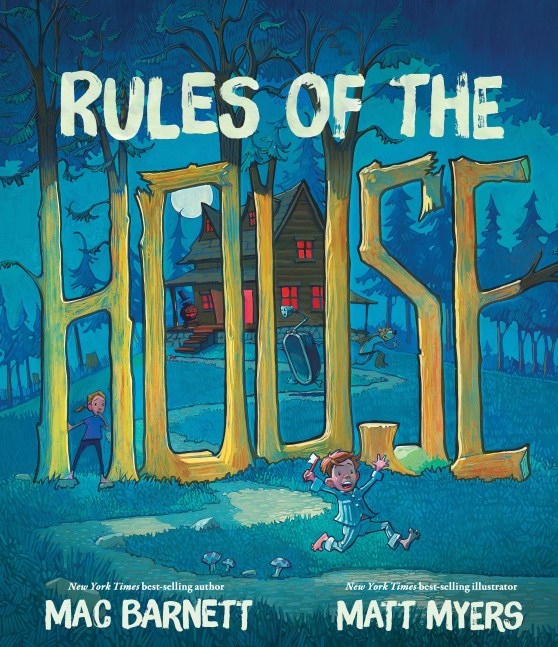
Written by Mac Barnett | Illustrated by Matt Myers


Ian and his older sister Jenny don’t see life the same way. Ian follows all the rules; Jenny doesn’t see the point of them. Their family is going on vacation, and Ian is carefully following the dictates of travel—especially the rule “Always Pack a Toothbrush.” Jenny’s also following her favorite rule to break: “Don’t Pinch,” which makes the car ride to the vacation house in the woods a painful one for Ian.

The vacation house is cozy and warm, thanks to a potbellied stove in the living room, a bearskin rug on the den floor, and a claw foot tub in the bathroom. Ian loves it! The house even comes with its own rules:

  1. Remove muddy shoes before entering
  2. Don’t leave a ring around the bathtub drain
  3. Replace any firewood you burn
  4. Never, ever open the red door

“Everybody got that?” says Ian.

“Yes, toady,” says Jenny.

During the day, Ian, Jenny, and their dad explore the forest, go swimming, and climb trees. Pretty soon Jenny starts breaking the rules. She tracks in mud, leaves hair around the drain, and doesn’t refill the stove after toasting marshmallows. Ian reminds her of the rules. “I wish you would disappear,” says Jenny. When Ian presses the point, Jenny breaks the final rule and flings open the red door.

Later that night the bearskin rug—restored to life—knocks on their bedroom door and demands to know who matted and muddied his fur. “We did,” Jenny answers, but Ian corrects her. “I will have the rule breaker for dinner,” the specter rug announces. But as he advances, the claw foot tub and then the potbellied stove want in on the action. The trio stalks closer and closer…

Ian grabs his toothbrush and runs, leaving Jenny to what he considers her well-deserved fate. But then he stops. He knows “Always Save Your Sister from Being Eaten by Monsters,” isn’t a real rule, but maybe it should be, he thinks. He goes back to the house. Through the kitchen window he sees the rug, stove, and tub preparing Rulebreaker Soup.

He rushes in to stop them. Surely they wouldn’t eat a rule keeper like him. But no; it seems there are no rules about who monsters will eat, and they’re ready to have Ian as an appetizer. Drooling, they step closer and closer. Ian brandishes his toothbrush. The unusual implement captures the creatures’ attention. It’s a toothbrush, Ian explains. “You’re supposed to always pack a toothbrush. That’s a rule.”

Suddenly the monsters are contrite and worried. “What will happen to us?” they ask. Ian remembers his father’s admonition: “Never Tell Lies,” and then forgets it. If you break the toothbrush rule “a huge monster comes for you,” Ian says. He describes this fiend as having long hair, green eyes, and sharp pink nails as Jenny sneaks up from behind and gives each monster a big, hard pinch. Horrified and frightened, they flee down the hall and back through the red door. Jenny and Ian slam it shut behind them.

Having worked together to defeat the monsters, Jenny and Ian come to a better appreciation of each other and what it means to be siblings.

Mac Barnett has written a wild, curveball, vacation adventure that will appeal to kids’ love of mystery, quick thinking, trickery, and fair play, with the challenges of sibling rivalry thrown in. The threatening monsters are every kid’s funniest nightmare come to life—especially in a spooky cabin—and outsmarting them is a dream come true. The dialogue and conflicts between the siblings ring true, and their reconciliation offers a satisfying ending.

Matt Myers illustrates the rules of the house with a retro charm that enhances the spookiness of the vacation home haunted with domestic monsters. Foreshadowing abounds in the early depictions of the bearskin rug, potbellied stove, and claw foot bathtub for alert readers to find. The monstrous alter egos, especially the rug, are cleverly drawn as they menace the children, and their expressions as they learn that they’ve broken an unknown rule and are pinched provides poetic justice of the most comical kind.

Ages 7 – 12

Disney-Hyperion, 2016 | ISBN 978-1423185161

Paranormal Day Activity

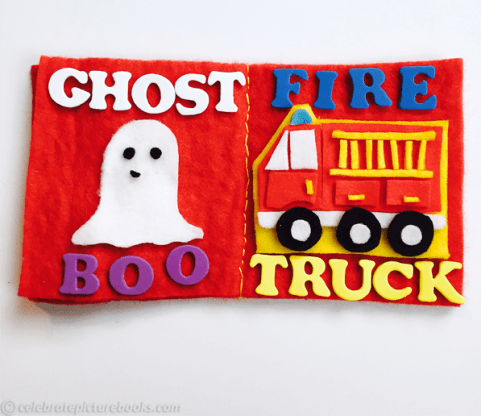
Create a Soft Book, Page 3—Ghost


This little ghost may think he’s frightening, but his “Boo” is more cute than scary! Add Page 3 to your soft book with this template, supplies, and directions.

Supplies

  • Printable Ghost Template
  • White fleece or felt
  • Black fleece or felt
  • Adhesive felt or foam letters
  • Fabric glue

Directions

  1. Cut the ghost, eyes, and smile from the fleece or felt
  2. Glue the words “Ghost” and “Boo” to the third page. Make sure the letters stick firmly to the page. If not, use fabric glue.
  3. Glue the ghost to the page with fabric glue

Looking forward to seeing you tomorrow!

Picture Book Review


May 1 – Mother Goose Day / Children’s Book Week

celebrate-picture-books-picture-book-review-mother-bruce-cover

About the Holiday

Incredibly, the term “Mother Goose” goes back to the 1650s to describe rhymes such as Baa Baa Black Sheep, Here We Go Round the Mulberry Bush, Jack and Jill Went up a Hill, and The Old Woman Who Lived in a Shoe. Fairy tales such as Cinderella and Little Red Riding Hood also came under Mother Goose’s wing. While all of the rhymes are not as familiar to today’s children, many are still popular and their influence can be seen in current books, movies, and TV shows. Mother Goose Day was established in 1987 to highlight these stories and keep them alive for today’s kids. To celebrate, read some Mother Goose tales—either as originally written or in fractured form.

This first week of May also celebrates Children’s Book Week, which was established in 1919 to promote literacy awareness and the joy of reading. As the longest-running national literacy movement in the country, Children’s Book Week holds, sponsors, and encourages events in schools, libraries, bookstores, homes, and wherever young readers and books connect!

Mother Bruce

By Ryan T. Higgins


It’s a good thing Bruce lives by himself. He’s a grumpy grizzly who likes nothing. If it’s sunny he’s grumpy. If it’s raining he’s grumpy. And don’t even get started on how he feels about cute fuzzy animals. There is one thing he likes, though, and that’s eggs! Yummy eggs prepared many ways from recipes Bruce finds on the Internet.

celebrate-picture-books-picture-book-review-mother-bruce-goslings

Copyright Ryan T. Higgins, 2015, courtesy of Disney-Hyperion.

One day a most mouth-watering recipe pops up on the screen—hard-boiled goose eggs drizzled with honey-salmon sauce. Bruce heads out with his own personal shopping cart to collect the ingredients. He ingeniously catches some salmon and raids a local beehive (this carnivore’s a locavore, you see). Next he pays a visit to Mrs. Goose. He takes her eggs after determining that they are free-range organic.

At home Bruce puts the eggs in his special pot and starts a fire in the stove. But the fire fizzles, forcing Bruce to make a visit to the wood shed. When he comes back, his lovely breakfast has hatched! And what’s worse, the little goslings think Bruce is their mother! Bruce stares into those sweet eyes gazing back at him and decides…to have buttered goslings on toast. But those little peepers just won’t cooperate, and for some reason Bruce has lost his appetite.

He gathers up the goslings in his shopping cart and wheels them back to their nest only to find that their mother has already flown south for the winter. Bruce leaves them in the nest anyway and heads for home. But it’s too late—the baby geese have already imprinted on Bruce, and they tag along happily after him. Bruce is stern with them. He roars. He tries to hide out in a tree. But it’s no use; he’s stuck with them.

celebrate-picture-books-picture-book-review-mother-bruce-painting

Copyright Ryan T. Higgins, 2015, courtesy of Disney-Hyperion.

Bruce rises to the challenge, though. He gives up his space in the pool, teaches them how to paint, feeds them, and transports them in a specially-made baby carrier. As spring turns to summer and then fall, Bruce watches his geese grow from “annoying baby geese” to “stubborn teenage geese” to “boring adult geese.”

Finally, one day Bruce spies other goose families flying south and knows his time has come! He can get rid of those geese and take a long, well-deserved nap. Bruce explains migration to his geese, but they don’t quite get it, coming to him dressed in winter coats and hats. Hmmm…some creativity is needed. Bruce tries slinging them northward and sending them flying in remote-controlled planes, but the geese just hug him tighter.

Resigned to his fate, Bruce packs his bag and four smaller ones for his charges and boards a bus for Miami. “Now every winter Bruce and his geese head south together.” They wear floral shirts, and as his “kids” play in the sand, Bruce “dreams of new recipes—recipes that don’t hatch.”

celebrate-picture-books-picture-book-review-mother-bruce-slingshot

Copyright Ryan T. Higgins, 2015, courtesy of Disney-Hyperion.

Ryan T. Higgins’ Mother Bruce is an endearing story of dislike at first sight. Of course no one—not even a grumpy, loner bear like Bruce—can resist the sweet, loving faces of youngsters forever. Fortunately for readers, Bruce holds out longer than most, his transition providing giggle-inducing scenarios on every page.

Higgins’ illustrations are loaded with visual jokes, cultural references kids will love, and four of the cutest clueless geese around. Depictions of Bruce masterfully mix his gruff, bothered exterior with the big softie that lies underneath. Bruce’s solutions to his plight are clever and funny. There may be no better Mother Goose than Bruce!

Ages 4 – 8

Disney-Hyperion, 2015 | ISBN 978-1484730881

Mother Goose Day Activity

Screen Shot 2020-05-01 at 2.28.23 PM

Mother Goose Coloring Page


Mother Goose Rhymes are fun to learn and share! Here’s a picture of Mother Goose and her goose for you to color!

Mother Goose Coloring Page

Picture Book Review


April 30 – Save the Frogs Day

celebrate-picture-books-picture-book-review-i-dont-want-to-be-a-frog

About the Holiday

Frogs and other amphibians are some of the most threatened species on our planet. Pollution, loss of habitat, climate change, and invasive species are just some of the causes of amphibian extinctions. Save the Frogs Day aims to educated the public and raise awareness of the declining frog and amphibian populations and to promote conservation of their environments to ensure their survival.

I Don’t Want to be a Frog

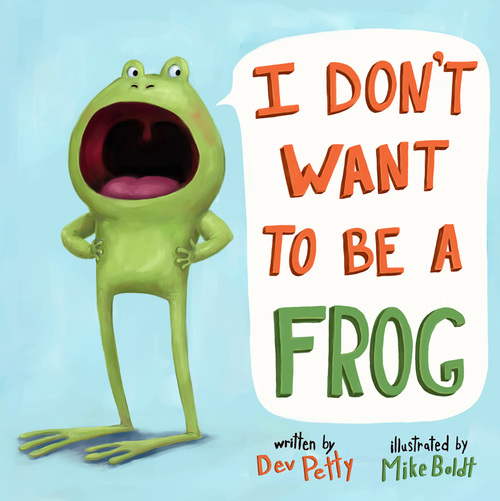
Written by Dev Petty | Illustrated by Mike Boldt


“I want to be a cat,” a little frog announces to his father. “You can’t be a cat,” his dad answers, which elicits the inevitable “Why not?” from his son. His dad isn’t quite ready for this conversation and gives him the standard “because you’re a frog” response.

Well, it turns out the little frog would rather be almost anything other than what he is. As he rattles off a list of alternatives that he considers much better, his dad warms to the game and counters each of his son’s suggestions with the realities of life (at least their life).

When little frog opines that he’d like to be a rabbit, his dad points out that he doesn’t have long ears. Being a pig seems like an attractive option, but little frog’s dad tells him he doesn’t have a curly tail or eat garbage. His son thinks garbage for dinner sounds okay, but his dad disagrees.

While both son and father believe being an owl would be “the greatest thing ever,” three things are standing in the way: Frogs don’t have wings, they don’t look wise, and they can’t spin their heads around.

So what’s so bad about being a frog? It’s “too wet,” “too slimy,” and there’s “too much bug eating,” little frog complains. Just then a wolf sneaks up on the father-son duo and wants to know why the little guy is so glum. Without turning around to see who he’s talking to, the frog reveals his plight.

Well, says the wolf, I’ll tell you a secret. With glee he explains that he revels in eating cats, rabbits, pigs, and owls. In fact, just talking about it makes him hungry. But “guess the one thing I never eat,” the wolf urges. “Badgers?” guesses the little frog. But no, the answer is “frogs.” And why? Because they are “too wet and slimy and full of bugs.”

Wiser for this fresh perspective, the young frog sends the wolf off with a hearty, “I guess you can’t fight nature. We are what we are. You are a fierce hunter.” 

As the wolf walks away all’s well that ends well—except not so much for the creature who next happens upon the scene!

Dev Petty’s sassy-in-a-good-way young frog’s identity crisis is pure fun! The notion of self-acceptance and that each person is built, has talents, and embodies skills just right for who they are is playfully presented by Petty’s sweet father-and-son team. The humorous, escalating dialogue will keep kids laughing, and the surprise ending is a perfect twist.

Mike Boldt’s olive green frogs are a delight as they trade off assurance and skepticism in their life-lesson conversation. The dad, initially mystified by his son’s pronouncements, discusses the issue with patience and genuine curiosity, his eyes registering cunning and understanding behind oversized glasses. His son, wide-eyed and vocal, displays the honesty of children with questions. Boldt’s illustrations of the rabbit, pig, and owl that so captivate the young frog juxtaposed with the father’s objections are comical joy, as are the frogs’ looong legs and expressive faces. And the final scenes with the enlightening wolf, whose head spans two pages, offer more laughs as the father and son resolve their differences.

Adult readers should be prepared—and will be happy—to read I Don’t Want to be a Frog again and again!

Ages 3 – 7

Doubleday Books for Young Readers, 2015 | ISBN 978-0385378666

Save the Frogs Day Activity

celebrate-picture-books-picture-book-review-frog-matching

Hop Along Matching Game


Hop along now and help these frogs! Each of these fantastic frogs has a twin, but they’ve gotten separated. Can you spot the identical pairs? Print out the Hop Along Matching Game and draw a line between the pairs.

picture book review

April 29 – It’s National Humor Month

celebrate-picture-books-picture-book-review-meet-the-dullards

About the Holiday

The whole month can’t go by without celebrating one of the most fantastic things about life—humor! Whether you’re laughing at a funny joke, your favorite comedian or comic strip, a silly mistake, or even yourself, a chuckle is good for you! Today, take time to relax and enjoy the absurd—and give a few hearty “Ha! Ha! Ha’s!” along the way.

Meet the Dullards

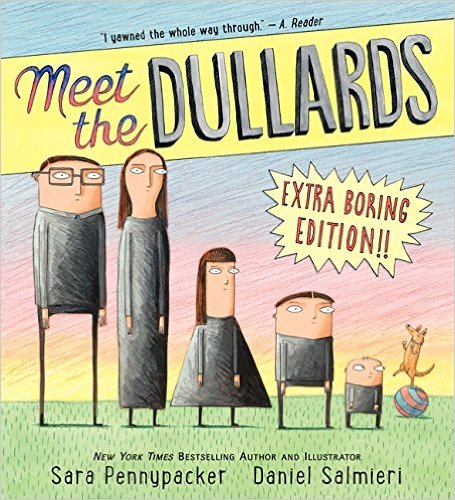
Written by Sara Pennypacker | Illustrated by Daniel Salmieri


Gray—that’s what the Dullards are. Gray and happily extra boring. Their life is going on in its monotonous way until one day when Mr. and Mrs. Dullard happen upon a most disturbing sight. Their three children are reading—and not only that, they are reading books about befriending lions, juggling, and walking a tightrope. The elder Dullards do what any self-respecting dullard would do. They retrieve the books and hand their children blank pieces of paper to read instead.

The children are definitely becoming a problem. They want to go to school and have been playing outside. It’s not our fault bemoan the parents; it must be the town where last fall some leaves actually turned color and there’s that unruly snail in the driveway. In fact the whole atmosphere is like a circus! There’s only one thing to do. The Dullards pack up their house and Blanda, Borely, and Little Dud and move away.

Immediately upon moving into their new home, they are bombarded by the neighbor lady bringing exclamation marks and chunky applesauce cake into their perfectly dull new home. The kids are sent to watch the (unplugged) TV, but instead their eyes are drawn to the window. While unpacking Mr. and Mrs. Dullard discover a sight so shocking that Mrs. Dullard faints into the arms of her distressed husband. It’s yellow flowered wallpaper. (An exclamation mark would be appropriate here, but you know…)

On the way to the paint store the family stops to get ice-cream cones, and with 90,000 flavors to choose from they pick vanilla. Plain cone or sugar cone? No cone, of course. At the paint store Mr. Dullard suggests medium gray, but Mrs. Dullard deems it too risky. Its similarity to highways could make the kids think of travel. Beige? Mrs. Dullard counters. Too much like clay, says Mr. Dullard which can be used to create stuff. They come to a compromise and go home to—you’ve got it—watch the paint dry.

While their parents are mesmerized the kids sneak away and out the window that so enthralled them before. The sight of Blanda, Borely, and Little Dud juggling, teaching a dog tricks, and somersaulting on the clothesline, ushers in another move—back to where they came from just in time for the kids to join the circus.

With dry wit and laugh-out-loud dialogue Sara Pennypacker delivers a spot-on family story. While seen through the eyes of Mr. and Mrs. Dullard, this funny tale is all about the kids. What kids don’t think their parents are dull and conventional? And can parents really understand what’s going on in those little minds? Both children and adults will love the Dullards, and after reading you may be inspired to go out for vanilla chocolate ice-cream (ok, you can still hold the cone!)

Daniel Salmieri’s Dullards are comic genius! With their oval bodies and gray attire they blend with their oatmeal-hued walls to perfect effect. Identical square houses give way to identical triangular houses as the Dullards move to avoid catastrophic enthusiasm. The kids’ facial expressions as they adhere to boooring rules are priceless as are the parents’ reactions to the slightest excitement. Details such as a yellow snail in the driveway, the elder Dullards’ looks of horror when discovering the bright wallpaper, the signs on the ice-cream kiosk, and the name of the moving van make provide humorous jokes on each page.

Ages 4 – 8

Balzar + Bray, Harper Collins, 2015 | ISBN 978-0062198563

National Humor Month Activity

celebrate-picture-books-picture-book-review-paint-strip-craft

Paint Strip Inspiration


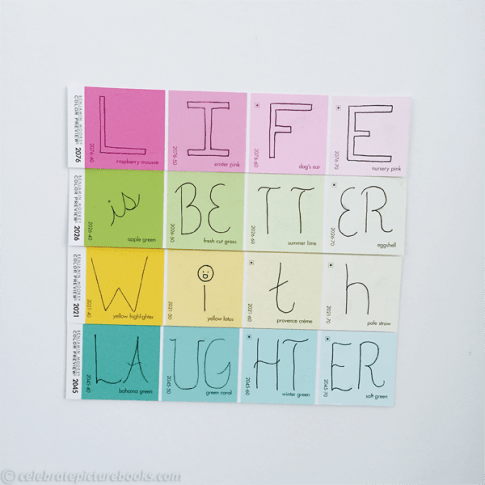
Do you like to laugh? Do you like to watch paint dry? It is kind of cool how it changes color a bit as it dries….Oh, sorry! Where was I? Oh yeah—this craft. Paint sample strips make brilliant backdrops to your thoughts about love, life, laughter—anything! You can mix and match your favorite colors and arrange them any way you like to decorate your wall. Frame them for a more put-together look!

Supplies

  • 4 -5 paint strips from a hardware store OR You could also make your own color stips with poster board and craft paint
  • Poster board
  • Craft paint
  • Paint brush
  • Markers or adhesive letters
  • Scissors
  • Mounting squares
  • Frame (optional)

Directions

  1. If you are making your own paint strip, cut poster board into strips 9 inches long by 2 inches wide, or to desired size
  2. Paint squares of color to fill the strip, leaving a 1/8-inch-wide stripe between colors
  3. Think of a phrase that expresses your thoughts on life and laughter OR use a favorite quote
  4. Print the words on the squares of color OR use adhesive letters. You can print one letter per square or multiple letters or even whole words. Mix styles of print to give it your own unique look.
  5. Mount or frame your paint strip phrase