February 10 – National Poop Day

celebrate-picture-books-picture-book-review-poop-for-breakfast-cover

About the Holiday

Who knew poop could inspire such a thoughtful and health-conscious holiday? But it has! Initiated in 2016 by the Madison Children’s Museum in Wisconsin to celebrate and educate the public on digestion and excretion, the day has become a fun, educational way to encourage people to be more aware of their digestive health and hygiene as well as that of their pets. By normalizing conversations about poop, the holiday aims to improve overall health practices and increase understanding of how our bodies work. The topic is no less fascinating in the world of wildlife, as today’s book shows.

Thank you to Sara Levine and Millbrook Press for sharing a copy of Poop for Breakfast: Why Some Animals Eat It with me!

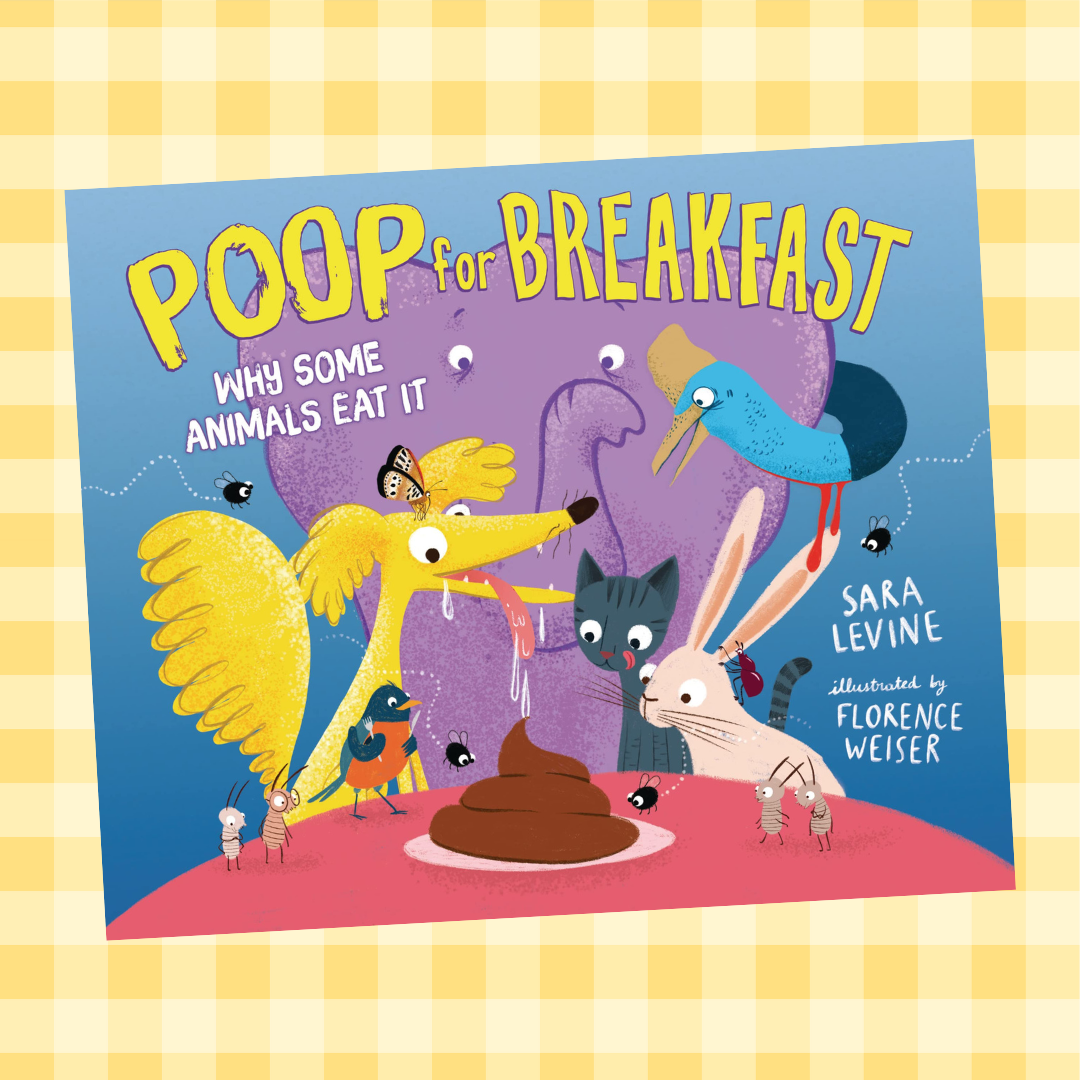
Poop for Breakfast: Why Some Animals Eat It 

Written by Sara Levine | Illustrated by Florence Weiser


So, you wake up starving for a delicious meal. You’ve been dreaming of pancakes, maybe, or a plate of eggs and bacon. But when you get to the table, there’s a bowl of poop waiting for you?! What’s going on?! While you might sulk (and probably hold your nose), there are plenty of creatures who’d be thinking “Bring it on!” Who are these critters? They’re animals that practice coprophagy, and they do it “for a number of surprisingly good reasons,” as Sara Levine reveals.
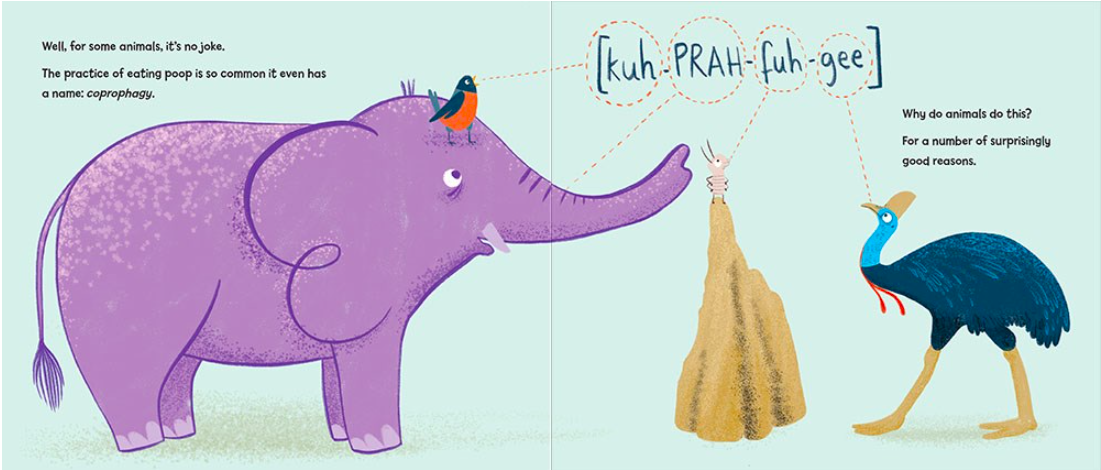
celebrate-picture-books-picture-book-review-poop-for-breakfast-coprophagy

Image copyright Florence Weiser, 2023, text copyright Sara Levine, 2023. Courtesy of Millbrook Press.

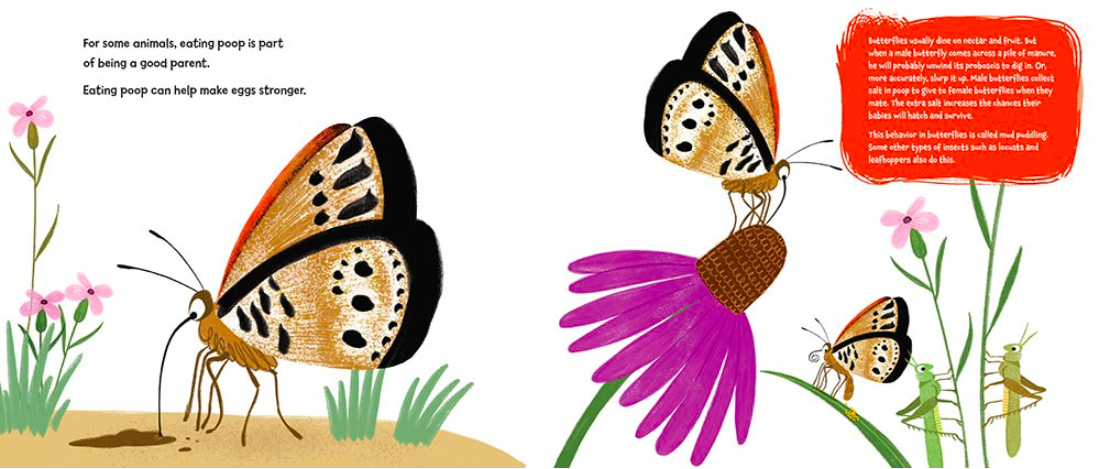
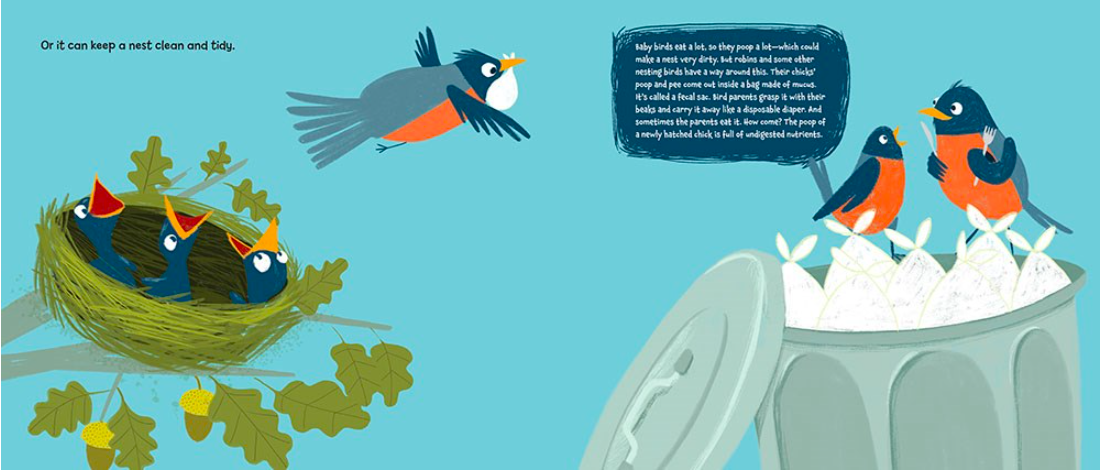
For some animals eating poop is just part of being a Number 1 (or maybe Number 2 is better in this case) parent. Butterflies, cats, and dogs as well as robins and other birds all have specific reasons for dining on doo-doo, from making eggs strong to protecting their babies from predators to keeping “a nest clean and tidy.” 

While these animals eat poop for external or aesthetic reasons, others engage in coprophagy to keep their digestive system working well. Still others, because of the length or shape of their digestive tract, require that food travels through their body twice to extract all of the nutrients. If you have a rabbit, hamster, guinea pig, or other small rodent as a pet, you know that their poop looks like little round balls or small pellets. As Levine tells readers, “this is the poop that has been through their digestive tract a second time. These animals’ first poop comes out soft, sticky, and full of nutrients. It’s called a cecotrope (SEE-ca-trope).” They then “gobble it up at night when it comes out. That’s why you don’t see it” in the cage.
celebrate-picture-books-picture-book-review-poop-for-breakfast-butterflies

Image copyright Florence Weiser, 2023, text copyright Sara Levine, 2023. Courtesy of Millbrook Press.

Since there are so many creatures who do eat poop, why don’t humans? Levine has included a whole list of reasons for why we don’t—and don’t need to. She also provides back matter that includes “The Scoop on Poop”—an explanation of what poop and pee are, how they’re created in the body, and how they’re eliminated. Kids will also have fun becoming “poop detectives” with the help of the illustrated poop identification guide for common pets and wildlife and also by playing a synonym game.
celebrate-picture-books-picture-book-review-poop-for-breakfast-robins

Image copyright Florence Weiser, 2023, text copyright Sara Levine, 2023. Courtesy of Millbrook Press.

Sara Levine is exceptional at presenting fascinating nature science topics in humorous and accessible ways for young audiences, and her latest book is no exception, Leaning into the “Ewww!” factor, Levine dishes up short, take-away reasons certain animals, birds, and insects practice coprophagy followed up with longer passages that explain the science and/or behavior behind them in easy-to-understand language sprinkled with humor that will keep readers riveted to this already high-interest subject.

Florence Weiser’s colorful illustrations perfectly bridge the humorous and the scientific nature of Levine’s text. Readers’ skeptical view of this “gross” habit is amusingly juxtaposed with creatures’ excited anticipation of a delicious meal through the characters’ facial expressions while the anatomical reasons for or against coprophagy are clearly depicted in images of human and various animals’ digestive systems.

Anatomy and nature science education at its best, Poop for Breakfast: Why Some Animals Eat It will keep kids enthralled as each page turn brings on a new round of giggles and avid learning. The book would enhance any home STEM collection and is a must for classroom, school, and public library bookshelves.

Ages 5 – 10

Millbrook Press, 2023 | ISBN 978-1728457963

About the Author

Sara Levine is an author, educator, and veterinarian. Her science books for children include the Animal by Animal series, Germs Up Close, and A Peek at Beaks: Tools Birds Use. Her books have received a number of awards including AAAS/Subaru SB&F Prize, Utah Beehive Book Award, Cook Prize finalist, Monarch Award master list, and Bank Street College Best Children’s Book of the Year. Visit her at saralevine.com and on Instagram at saralevinebooks.

About the Illustrator

Florence Weiser is a French illustrator currently based in beautiful, rainy Belgium. While growing up in Luxembourg, she always knew she wanted to draw and draw. She lives and works surrounded by nature, from which she gathers most of her inspiration. Visit her at florenceweiser.com and on Instagram at florence_weiser_illustration
You can find Poop for Breakfast: Why Some Animals Eat It at these booksellers

Amazon | Barnes & Noble | Bookshop (to support your local independent bookstore)

Picture Book Review

December 2 – It’s Read a New Book Month

celebrate-picture-books-picture-book-review-an-animal-a-day-cover

About the Holiday

The month of December is a gift-giver’s delight, and there’s no better gift for everyone on your list than a book (or two or . . .). With so many new books hitting bookstore shelves and the long winter days stretching in front of us, this is the perfect time to add to your home bookshelves. Today’s featured book is a gift that keeps giving every day of the year. How? Read on and see! 

Thank you to Bright Matter Books, an imprint of Random House Children’s Books and Barbara Fisch of Blue Slip Media for sharing An Animal a Day with me for review consideration. All opinions on the book are my own.

An Animal a Day: 365 Amazing Animals to Take You through the Year

Written by Miranda Smith

Illustrated by Kaja Kajfež, Santiago Calle, Mateo Markov and Max Rambaldi


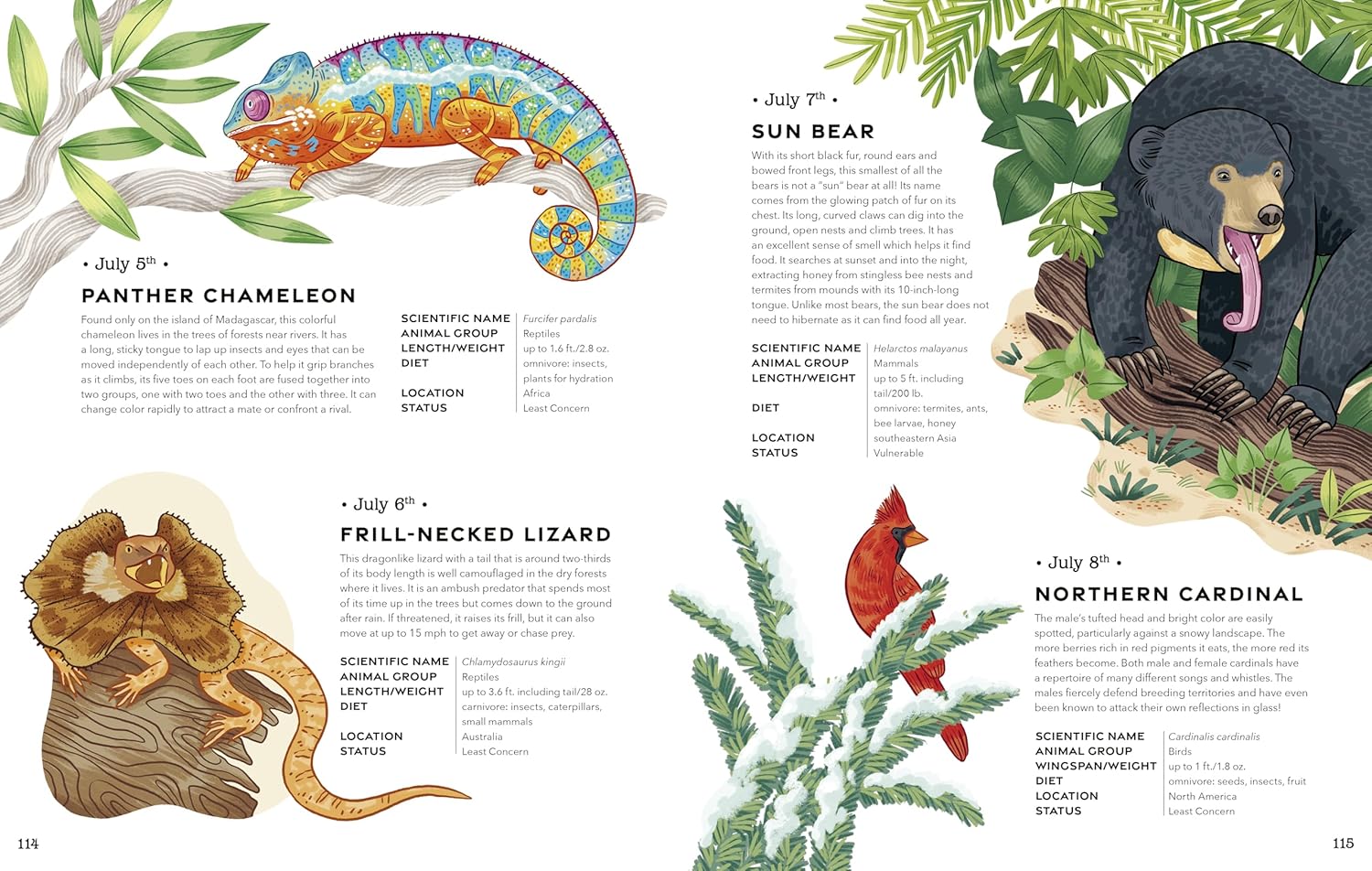
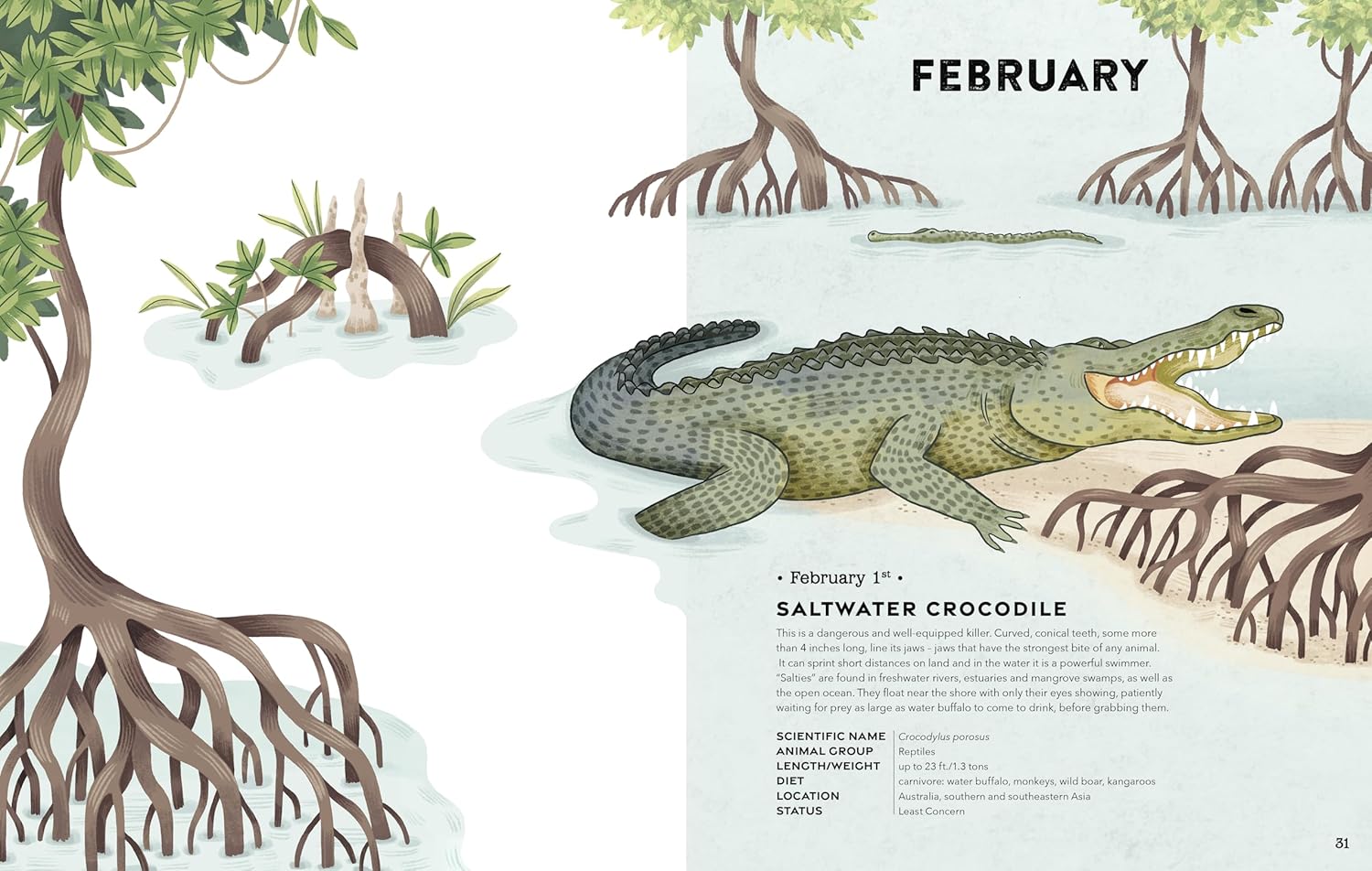
The animal kingdom truly is diverse! From the land to the sea to the sky and even the most forbidding places on Earth, there live incredible creatures perfectly suited to their environments. Children are particularly fascinated by the range, size, behaviors, and survival skills of the world’s denizens. But how to get to know them all? A fantastic place to start is with An Animal a Day, which introduces readers to 365 mammals, birds, reptiles, amphibians, fish, and invertebrates in bite-sized paragraphs, accompanied by scientific facts.

celebrate-picture-books-picture-book-review-an-animal-a-day-february

Image copyright Kaja Kajfež, Santiago Calle, Mateo Markov and Max Rambaldi, 2023. Text copyright Miranda Smith, 2023. Courtesy of Bright Matter Books.

But before you dive in, there are two paragraphs of note: One explains how “new species of animals are being discovered all the time” and gives as an example the May, 2023 announcement that “more than 5,000 new species had been found living on the seabed of the Clarion-Clipperton Zone, an unexplored area of the Pacific Ocean.” Another defines the International Union for Conservation of Nature Red List conservation rating, which is also included in each animals’ description.

And now the year begins! January 1 introduces the Polar Bear, in which a mother bear leads her cubs over the ice to the water where she will teach them “how to swim, hunt seals and survive in the cold” while raising them over three years to be self-sufficient. As the month progresses, children meet the Goliath Frog (a frog as big as a cat), a Hoopoe bird (the males engage in song duels to deter rivals), and the Indian Flying Fox (which, besides having an imposing 5-foot wingspan, looks like a combination of a bat and a fox), among 27 other critters.

celebrate-picture-books-picture-book-review-an-animal-a-day-april

Image copyright Kaja Kajfež, Santiago Calle, Mateo Markov and Max Rambaldi, 2023. Text copyright Miranda Smith, 2023. Courtesy of Bright Matter Books.

Each month also contains two, two-page spreads that present animals that, while very different, are connected by some special feature, such as being record breakers, where they live, mimicry, even harboring some stealthy strategy for survival.

Just a quick dip into the pages, led me to the Nudibranch, a blue sea slug that devours animals larger than it is, “including the highly venomous Portuguese man-o-war,” from which it “. . . stores the stinging nematocysts . . . in the tips of its extremities [and] uses these stinging ‘fingers’ to defend itself when necessary.”

celebrate-picture-books-picture-book-review-an-animal-a-day-migration

Image copyright Kaja Kajfež, Santiago Calle, Mateo Markov and Max Rambaldi, 2023. Text copyright Miranda Smith, 2023. Courtesy of Bright Matter Books.

I also met the Tiger Quoll, a creature of the rainforest that travels for miles each night in search of food, and the Peacock Mantis Shrimp, a colorful but fearsome 7-inch long crustacean that moves so fast it can “hit prey, such as a crab, with a force that smashes its shell” and which can create “bubbles in the water as hot as the sun, causing a shockwave strong enough to stun or kill.” I finally had to say auld lang syne to the year with the Asian Elephant and a view of a mother elephant and her youngster foraging for the “up to 285 pounds of vegetation” they each will eat that day. 

celebrate-picture-books-picture-book-review-an-animal-a-day-july

Image copyright Kaja Kajfež, Santiago Calle, Mateo Markov and Max Rambaldi, 2023. Text copyright Miranda Smith, 2023. Courtesy of Bright Matter Books.

But why should I have all the fun? Just imagine the wide-eyes, the “wow!”s, and the eager anticipation for the next day’s animal that your kids will experience as they meet each of these distinctive creatures through Miranda Smith’s clear, accessible, and captivating text for all ages. Each entry is punctuated with the kinds of nifty details that enthrall children and get them excited to learn more.

Accompanying each animal’s description is a lifelike drawing of the creature in its environment. Colorful and active, these illustrations allow kids to really bond with each animal and understand the whys and hows of their behaviors. In the case of the Amazon Leaf Fish, it may even take a moment before readers see the camouflaged fish among the dead leaves sunk beneath the water. The double-page spreads with their black backgrounds and highlighted animals are worthy of natural history museum displays and will entice readers to stop and stay awhile.

An Animal a Day would make a much-appreciated gift for any animal-loving child and is a must for public and school library collections as well as elementary school classrooms.

Ages 5 – 10 and up

Bright Matter Books, 2024 | ISBN 978-0593903353

Read a New Book Month Activity

ebrate-picture-books-picture-book-review-savanah-coloring-page

Animal Coloring Pages


Enjoy these coloring pages of some favorite animals!

Giraffe and Elephant on the Savanah | Hanging Snake | Tiger

celebrate-picture-books-picture-book-review-an-animal-a-day-cover

You can purchase An Animal a Day at these booksellers

Amazon | Barnes & Noble | Bookshop (to support your local independent bookstore)

Picture Book Review

November 25 – It’s Sleep Comfort Month

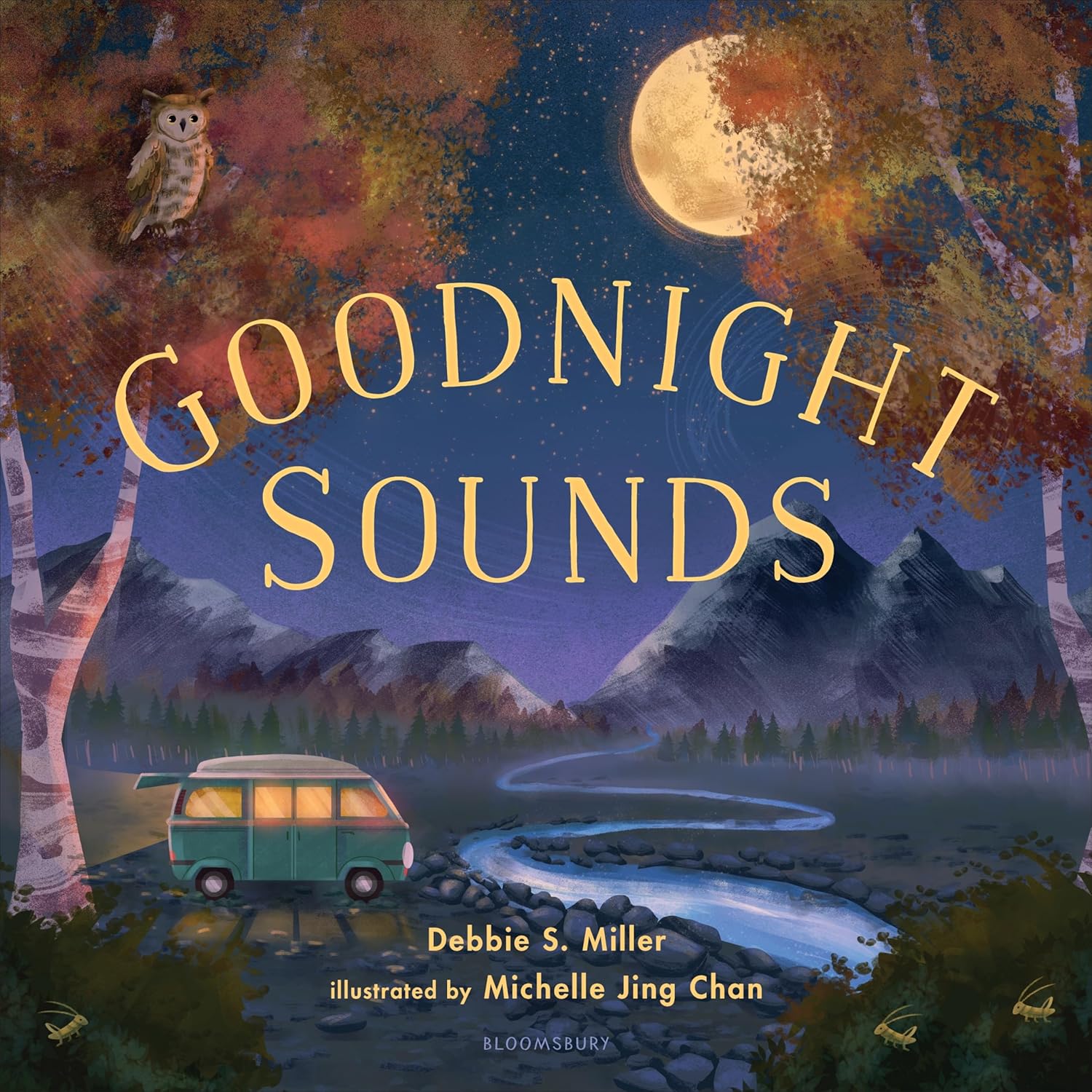
celebrate-picture-books-picture-book-review-goodnight-sounds-cover

About the Holiday

As days grow shorter and nights longer, November calls on us to get snuggly and dedicate time to rest. It is aptly time for Sleep Comfort Month, a holiday designed to raise awareness of the importance of quality rest and sleep. In times of flux and chaos, focus on rest and relaxation is more crucial than ever. This month can serve as a reminder that everyone needs and deserves peaceful rest and recuperation time in order to face the ever-changing, curious planet that is our home.

Thanks to Bloomsbury Children’s Books for sharing a copy of Goodnight Sounds with me for review consideration. All opinions on the book are my own.

Review by Dorothy Levine

 Goodnight Sounds

Written by Debbie S Miller | Illustrated by Michelle Jing Chan


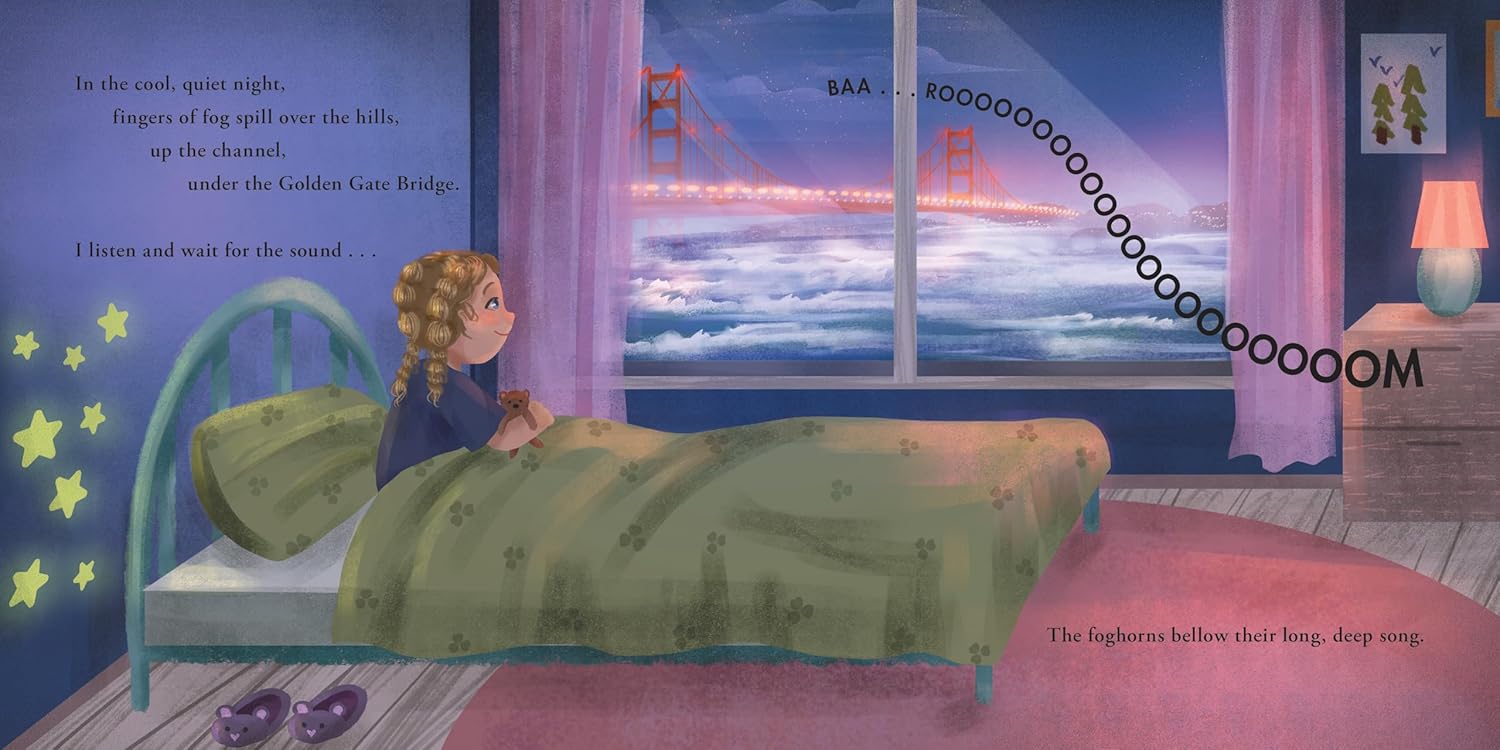
Goodnight Sounds is a lyrical bedtime story that invites readers to get cozy and listen closely. The story begins with a child whose home is tucked under the looming light of California’s Golden Gate Bridge. Illustrations depict the girl sitting up in bed, teddy bear in hand, observing the bridge and crashing waves beneath from her bedroom window.

The words of the first page set the scene: “In the cool, quiet, night / fingers of fog spill over the hills…I listen and wait for the sound…”. On the next page the “BAA…ROOOOOOM” of a foghorn stretches across the cozy bedroom, the ‘O’ sound flowing through her window like the wisps of fog to help lull her to sleep. The girl then invites readers into the story, asking “what sound helps you fall asleep?”

celebrate-picture-books-picture-book-review-goodnight-sounds-foghorn

Image copyright Michelle Jing Chan, 2024, text copyright Debbie S. Miller, 2024. Courtesy of Bloomsbury Children’s Books.

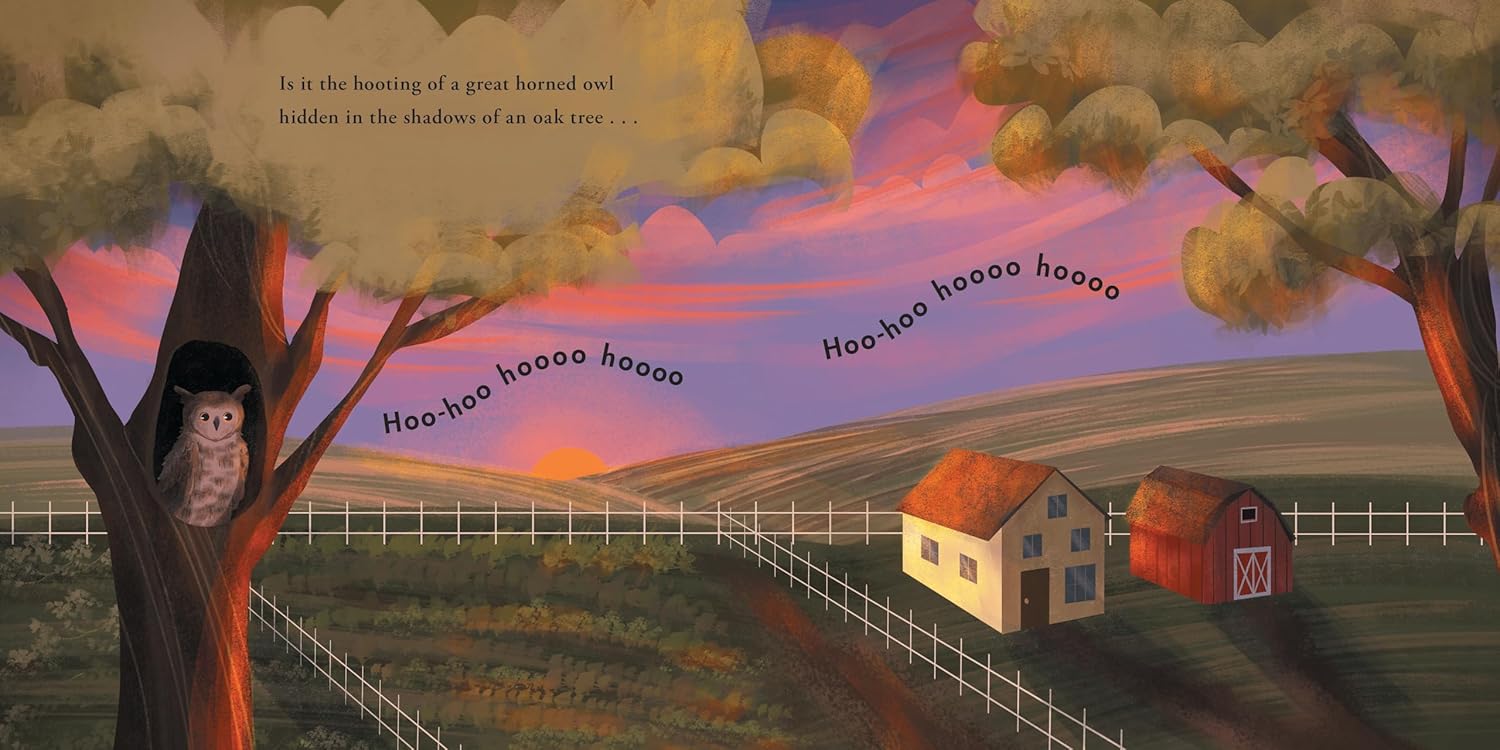
The rest of the story contains follow-up poetic questions, each paired with unique onomatopoeic interpretations of the nighttime sounds: “Is it the trilling of a thousand crickets / wings shivering in the moonlight?” In the corners of this spread, nestled by the crickets are iterations of: “Treeek-treeeek.”

The pages’ settings range from urban to suburban to wilderness, with their accompanying broad range of nighttime sounds—some as large as foghorns and others as tiny as crickets. At the end of the story, Miller returns readers to the first bedtime character, now asleep, with the words: “The sounds of the night are your lullaby.”

celebrate-picture-books-picture-book-review-goodnight-sounds-owl

Image copyright Michelle Jing Chan, 2024, text copyright Debbie S. Miller, 2024. Courtesy of Bloomsbury Children’s Books.

Illustrator Jing Chan depicts a series of serene landscapes, each containing a unique sleeping space (an apartment, a tent, and a camper van, for example). Every picturesque scene also features a unique source of light—a starry sky, a train window, a lamp, string lights, glow-in-the-dark stickers on a wall.

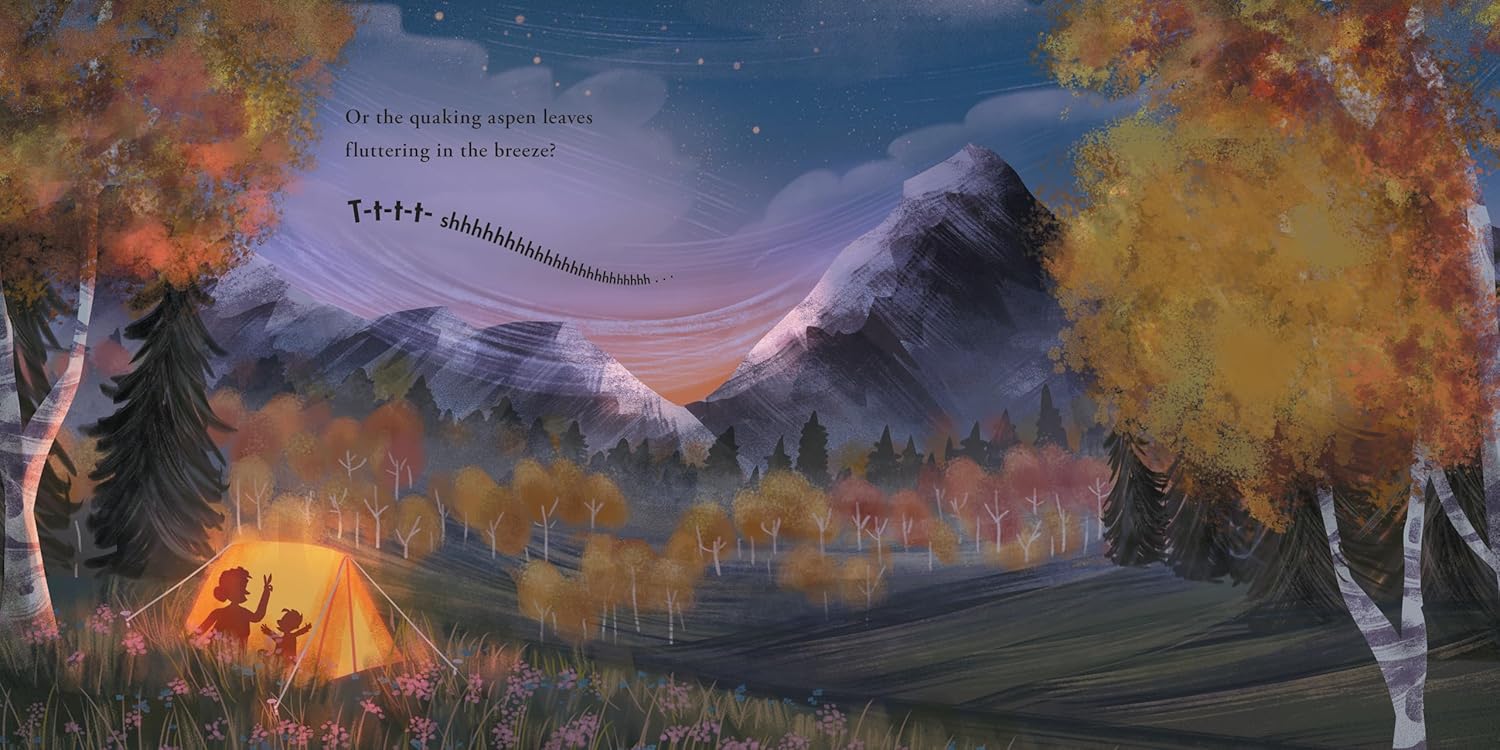
As the nighttime sounds change from outside sources to indoors, so do the illustrations, with a few of the panoramic scenes now taking readers inside a tent (where a grandmother makes a shadow puppet on the wall), a variety of bedrooms (where children fall asleep to the tick-tock of a grandfather clock, the chime of a music box, or the purr of a cat), and other cozy spaces. Along with the richly illustrated array of settings, Jing Chan also shows cultural, racial, and family-structural diversity among the page’s cast of happy sleepers. 

celebrate-picture-books-picture-book-review-goodnight-sounds-leaves

Image copyright Michelle Jing Chan, 2024, text copyright Debbie S. Miller, 2024. Courtesy of Bloomsbury Children’s Books.

Throughout Goodnight Sounds Debbie S. Miller includes onomatopoeia to her lines, offering opportunities for readers to lend their voices to the sounds and inviting them to listen closer to their own surroundings as they settle in for sleep. Her poetic language adds a peaceful rhythm to the book, almost echoing a lullaby. The illustrations and words of the story evoke a sense of both comfort and wonder for the nocturnal world around us.

A joyful addition to both home and library collections, Goodnight Sounds is sure to put young ones to sleep with new soundscapes and landscapes to dream of fondly.

Ages 2 – 5

Bloomsbury Children’s Books, 2024 | ISBN 978-168119199

About the Author

Debbie S. Miller is the author of Survival at 40 Below, an NTSA/CBC Outstanding Science Trade Book; Arctic Lights, Arctic NightsThe Great Serum Race; and Big Alaska. Visit Debbie at debbiemilleralaska.com.

About the Illustrator

Michelle Jing Chan is a queer Chinese American illustrator who grew up in Colorado and lives in the Pacific Northwest. Inspired by nature, cultural folklore, and fantasy, Michelle aspires to illustrate diverse, empowering stories her younger self would have loved. When she’s not drawing, she can be found attempting new recipes, reading, or watching spooky TV shows. Visit Michelle at michellejingchan.com.

Sleep Comfort Month Activities

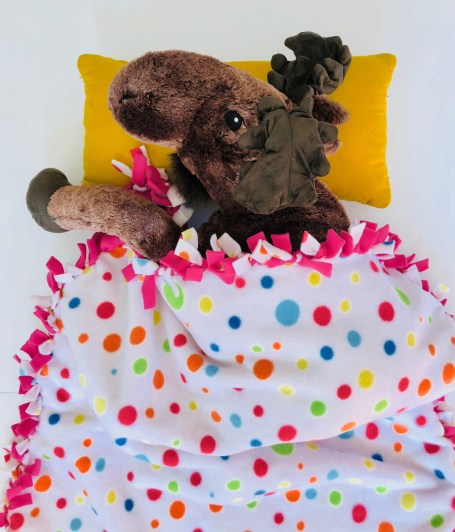
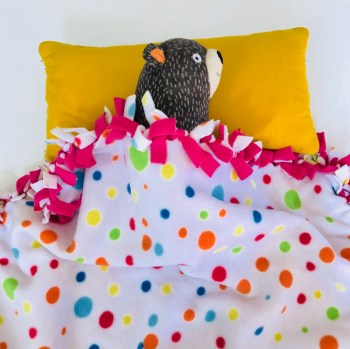
Reading Goodnight Sounds before bed is a perfect way to celebrate sleep comfort month with children. Other activity ideas include crafting a DIY blanket or pillow together or making up a bedtime song and other creative ideas with the following instructions!

celebrate-picture-books-picture-book-review-sleep-buddy-craft

No-Sew Blanket and Pillow

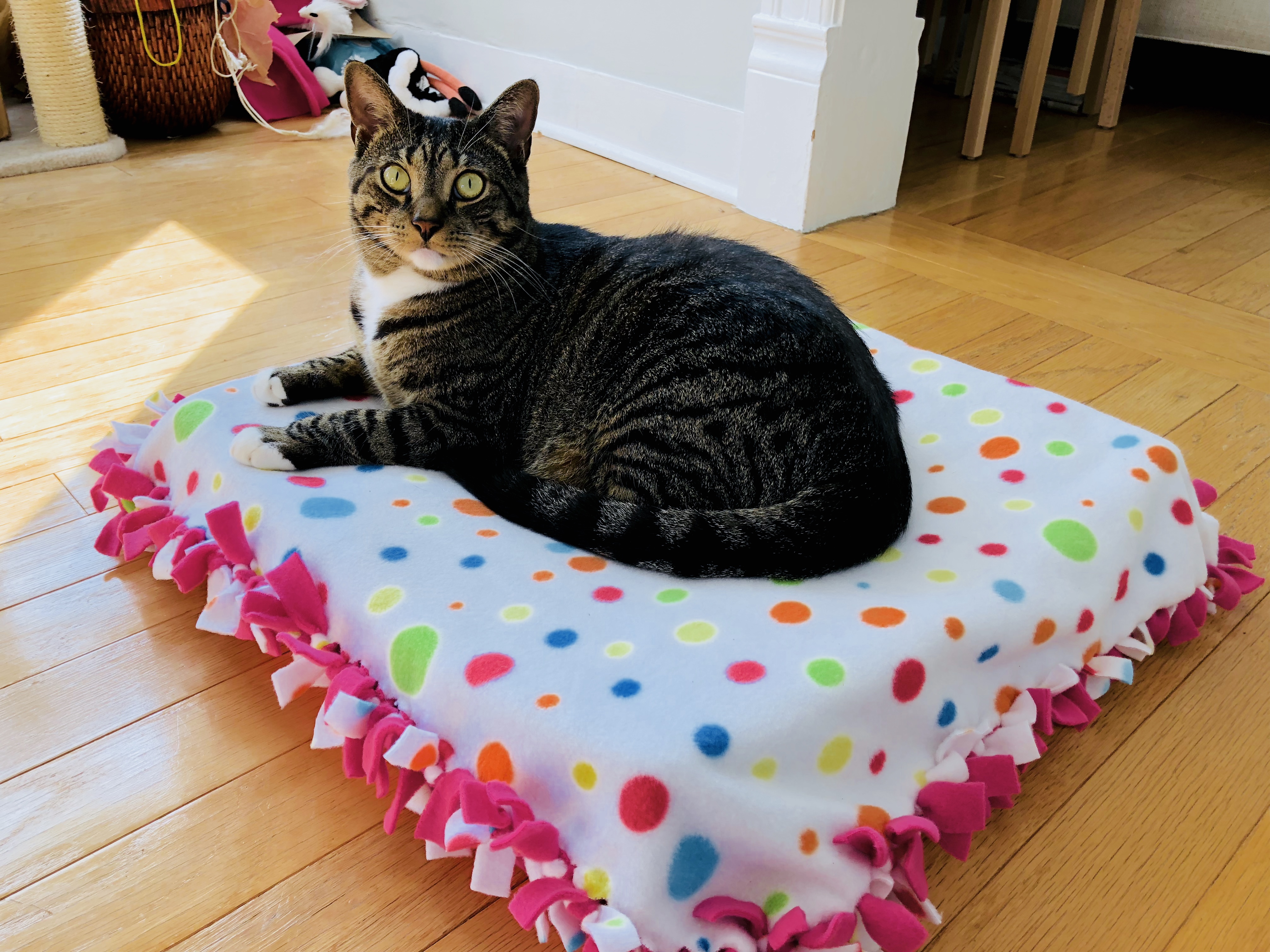
With this craft you and your child can have fun making a kid-size blanket, a cozy cover for a favorite toy or a soft bed for a pet! Children from ages 5 or 6 and up will enjoy helping to tie the tabs. For younger children, using fabric glue to attach the two pieces of fleece or cutting just one piece of fleece allows them to join in the craft fun.

Supplies

  • 2 pieces of fleece cut to size for your project: a child’s blanket or pillow, a toy’s blanket, or a pet bed
  • Scissors
  • Measuring tape
  • Poly-fil, cushion insert, or pillow (for child’s pillow or pet bed)
  • Fabric glue (optional)

celebrate-picture-books-picture-book-review-sleep-buddy-craft

Directions

  1. Lay out fleece and measure a size that will make a comfortable blanket for your child, a favorite teddy bear or other sleep buddy, or your pet  
  2. Add 3 inches to that measurement on each side for the strips to tie together
  3. Cut 2 pieces of fleece
  4. With the pieces of fleece together, cut 3-inch long by ¾ -inch wide strips all along each side. 
  5. At the corners, cut four tabs (or a 3-inch square) off each side

To Make a Blanket

  • Tie the top and bottom strips together on all sides

To Make a Pillow

  • Measure two pieces of fleece to fit a pillow or fill with poly-fil
  • Add 3 inches to that measurement on each side for the strips to tie together
  • Follow main directions above

To Make a Bed for your Pet

celebrate-picture-books-picture-book-review-cat-bed-craft

  1. Measure two pieces of fleece to fit a pillow or fill with poly-fil
  2. Add 3 inches to that measurement on each side for the strips to tie together
  3. Follow main directions above
  4. Tie strips together on three sides
  5. Insert pillow, cushion insert, or poly-fil
  6. Tie the strips together on the final side

Fun Bedtime Ideas

Screen Shot 2024-11-24 at 7.02.35 PM

For more ideas on how to make bedtime an engaging and peaceful transition, here is a list of some fun and silly switch-ups to bedtime routines from Parents with Confidence, a website dedicated to helping parents raise emotionally healthy children.

50 Bedtime Activities to Calm and Connect

celebrate-picture-books-picture-book-review-goodnight-sounds-cover

You can purchase Goodnight Sounds at these booksellers

Amazon | Barnes & Noble | Bookshop (to support your local independent bookstore)

Picture Book Review
September 4 – National Wildlife Day


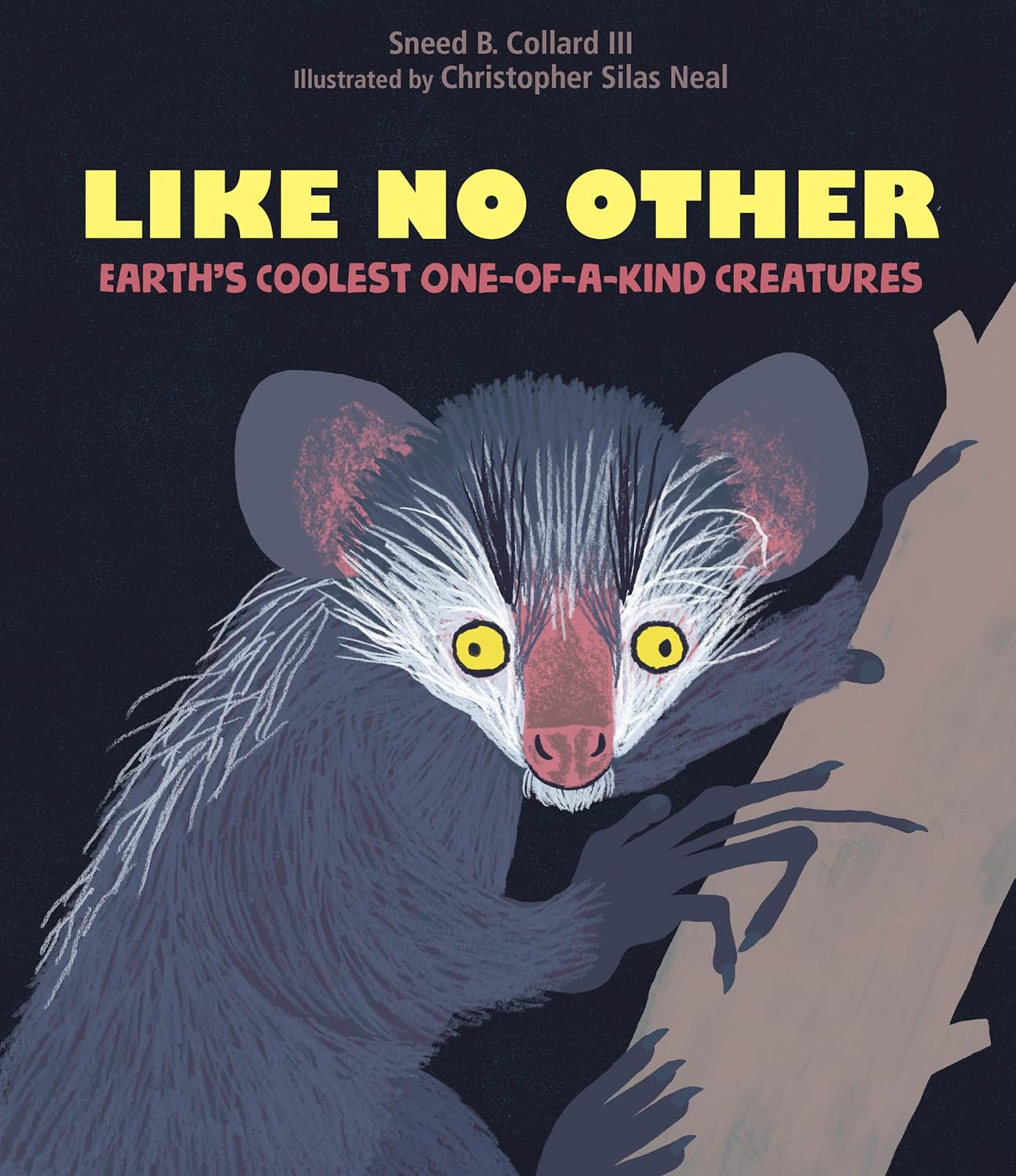
celebrate-pictrure-books-picture-book-review-like-no-other-cover

About the Holiday

National Wildlife Day was established in 2005 by author and pet lifestyle expert Colleen Paige in memory of conservationist Steve Irwin. The day promotes awareness of the importance of conservation of animals, habitats, and the environment worldwide and offers education on the number of endangered and threatened species across the globe. To honor today’s holiday, visit a local zoo, aquarium, or other nature preserve and take some time to learn about what you can do to help protect the environment. 

Thank you to Kane Press for sharing a copy of Like No Other with me for review consideration. All opinions on the book are my own.

Like No Other: Earth’s Coolest One-of-a-Kind Creatures

Written by Sneed B. Collard III | Illustrated by Christopher Silas Neal


There’s something captivating about the unique. Couple that feeling with the endless fascination of animals, and you have today’s book! Like No Other introduces readers to thirteen creatures of the air, land, and sea that have no close living relatives in the animal kingdom. Some never had close relatives, some evolved away from their kin, and others thrived while the rest of their lineage became extinct.

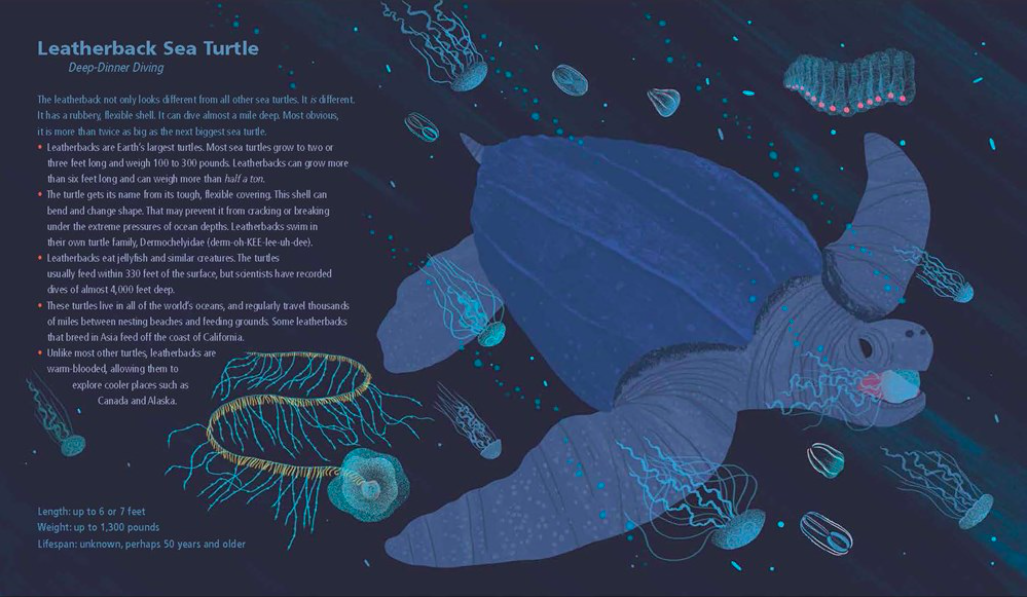
Inside Sneed B. Collard III’s and Christopher Silas Neal’s eye-catching book, readers meet, among other one-of-a-kind animals, a bird that uses echolocation and nests in caves, a sea turtle that “can grow more than six feet long and can weigh more than half a ton,” and my personal favorite—a frog that lives eleven months of each year underground.

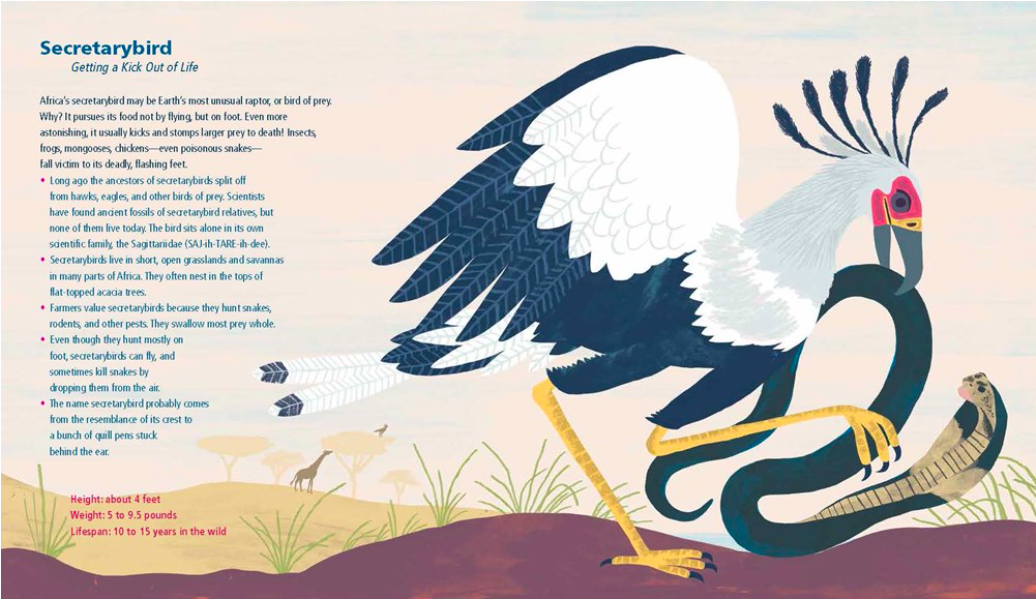
celebrate-pictrure-books-picture-book-review-like-no-other-secretarybird

Illustration copyright Christopher Silas Neal, 2024. Text copyright Sneed B. Collard III. Courtesy of Kane Press.

To orient children on animal classification and how the subjects of his book are so different, Sneed B. Collard III uses the example of a red fox to explain the terms genus, family, and order. He relates how the red fox is closely related to other species of foxes, more distantly related to dogs and wolves, and also belongs in the order Carnivora with other meat eaters. Christopher Silas Neal provides a clear visual representation to further help readers understand these terms.

Some of the animals in Like No Other, such as the walrus and the platypus, may be familiar to young readers, while others will come as a surprising discovery. Each accessible and detailed entry begins with a bite-size description of the animal that will immediately pique a child’s attention. Collard then goes on to reveal each animal’s scientific family, how they were left alone in the world, where they live, what they eat, and other extraordinary facts. Information on the height, weight, and lifespan of each creature is also included.

Christopher Silas Neal’s superb mixed-media, full-spread illustrations depict beautiful, true-to-life images of each animal interacting with its typical environment. Among the pages, readers will view an aye-aye as it taps a tree branch, listening for any tasty insects inside; dive deep with a whale shark as it sucks a school of tiny fish into its tunnel-like mouth; and watch a secretarybird wrangle with a snake. The final entry leads readers to contemplate where we humans fit into the earth’s design.

celebrate-pictrure-books-picture-book-review-like-no-other-leatherback-sea-turtle

Illustration copyright Christopher Silas Neal, 2024. Text copyright Sneed B. Collard III. Courtesy of Kane Press.

Extensive backmatter includes “Saving One-of-a-Kind Creatures,” which discusses the impact of human population growth and industry on plants and animals and how we can help reverse adverse effects; “Be an Animal Scientist”—a fun, step-by-step activity in which readers can test their skills of taxonomy by identifying and categorizing the creatures and plants depicted in a provided illustration; and “Figuring Out Relatives—an interactive explanation of taxonomy—as well as a glossary of words in the book, a list of websites for continued learning, and a short discussion on how the author researched his book. Closing out the section is a world map dotted with eleven more one-of-a-kind animals—a perfect resource for educators to spark kids’ own research.

Like No Other: Earth’s Coolest One-of-a-Kind Creatures will captivate young readers from cover to cover. Together the text and illustrations create a well-conceived package for both casual readers and those interested in doing further research as well as teachers and other educators looking for a high-interest book to introduce or add to their lessons in nature science. The book is a top pick for home and classroom bookshelves as well as school and public library collections.

Ages 5 – 8

Kane Press, 2024 | ISBN 978-1662670077

About the Author

Sneed B. Collard III is the author of more than eighty-five books for children and young people. His Beaks! title (Charlesbridge, 2002) has sold more than 200,000 copies in paperback, and continues to sell. His work has received the Eureka! Nonfiction Silver Medal, the High Plains Books Award, made the Junior Library Guild Selection list, and received many starred reviews from BooklistSchool Library Journal, and others.

About the Illustrator

Christopher Silas Neal is an award-winning author and illustrator of picture books, including the acclaimed Over and Under series with author Kate Messner, which was praised for its “stunning retro-style illustrations” (New York Times). Neal’s author debut Everyone was praised by Publishers Weekly as  “simple, honest, lyrical.” His board books Animal Colors and Animal Shapes received starred reviews from Publishers Weekly and Kirkus. He speaks about his books, the art-making process, and his career at schools, conferences, libraries, and book festivals across the country. Neal is a Mexican/European-American artist who lives with his wife and two boys in Brooklyn, NY.

National Wildlife Day Activity

celebrate-picture-books-picture-book-review-duck-billed-platypus-coloring-page

Animal Coloring Pages


Enjoy these coloring pages of two of the world’s unique animals!

Platypus | Whale Shark

celebrate-pictrure-books-picture-book-review-like-no-other-cover

You can purchase Like No Other: Earth’s Coolest One-of-a-Kind Creatures at these booksellers

Amazon | Barnes & Noble | Bookshop (to support your local independent bookstore)

Picture Book Review

April 5 – National Dandelion Day

celebrate-picture-books-picture-book-review-tiny-wonders-cover

About the Holiday

Spring is here and so are those vibrant yellow flowers that spring up on lawns, in gardens, along roadways, and anywhere there’s a bit of soil, sun, and rain. I’m talking, of course, about dandelions! With their gloriously yellow flowers and fly-away seeds, these little plants are part of spring and summer landscapes around the world. While most may consider the dandelion a weed, it is, in fact, much more. Technically, the dandelion is an herb that has many health benefits. Dandelion leaves can be used in salads, soups, and teas, and they provide aid with regulating blood sugar, wound healing, gastrointestinal problems, and even vision. Known for their healthy properties since 659 BCE, dandelions are a staple food for many global cultures. To celebrate, check in your favorite grocery store or farmers market for dandelion leaves and try a new recipe! 

Thanks to Bloomsbury Children’s Books for sharing a copy of Tiny Wonders with me for review consideration. All opinions on the book are my own.

Tiny Wonders

By Sally Soweol Han

April wished her town wasn’t so… gray. Everyone was always rush, rush, rushing here and there, plugged into their phones, their music, or their podcasts. She never heard laughing or saw anyone “look up at the sky.” She wanted to “help them all slow down” like her grandma, who was never too busy to notice all the wonders in the world. One of her grandma’s favorite wonders was flowers—especially dandelions. “‘Did you know there’s a secret language of flowers?'” she asked April. “‘Dandelions mean happiness,'” she said. That made April think that perhaps dandelions could make the world better.

celebrate-picture-books-picture-book-review-tiny-wonders-wish

Copyright Sally Soweol Han, 2022. Courtesy of Bloomsbury Children’s Books.

April went in search of dandelions and dandelion seeds, but found none. The gardener told her they were weeds, and the bus driver said they made him sneeze. The shopkeeper remembered how she used to wish on dandelions when she was little. April thought maybe dandelions were magic. She wished and wished and wished for a dandelion seed all the way home. When she got to her doorstep, she discovered, to her delight, that dandelion seeds had followed her home. She collected them then waited for the perfect time to plant them.

celebrate-picture-books-picture-book-review-tiny-wonders-growing

Copyright Sally Soweol Han, 2022. Courtesy of Bloomsbury Children’s Books.

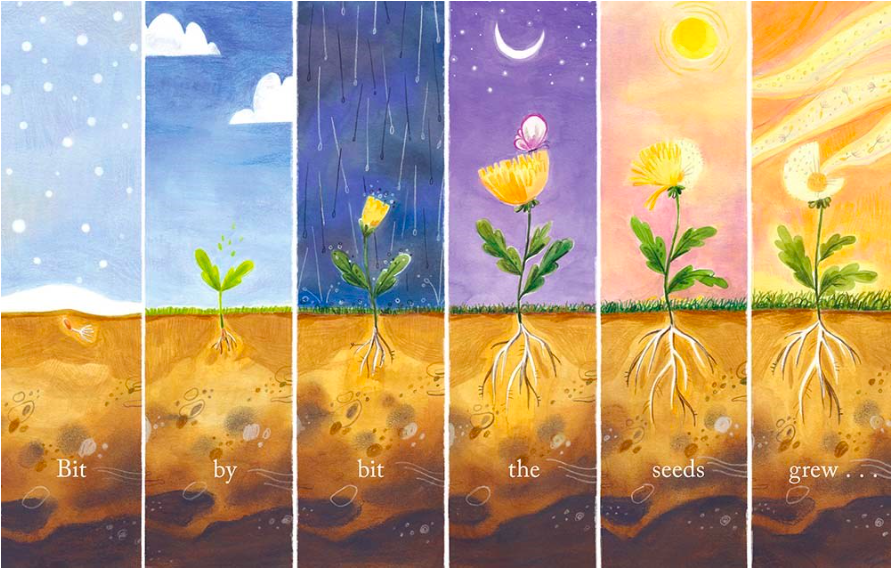
Finally, on a rainy day, April took her jar of seeds outside. Then she watched over them through fall and winter to see what happened. When spring came, the seeds sent up little green shoots. The plants grew and grew until glorious yellow flowers faced the sun, attracting butterflies and ladybugs. The petals turned fluffy and finally released more and more seeds into the world. Soon, the colors of spring were everywhere “and happiness bloomed.” Even the gardener and the bus driver embraced these little flowers, and “everyone made wishes for more tiny wonders to grow.”

A beautifully illustrated double-page spread follows the story and reveals the meanings of thirty-two types of flowers.

celebrate-picture-books-picture-book-review-tiny-wonders-colors-of-spring

Copyright Sally Soweol Han, 2022. Courtesy of Bloomsbury Children’s Books.

Sally Soweol Han’s sweet and gentle Tiny Wonders perfectly encapsulates not only young children’s capacity for finding joy in the simple aspects of life but also their ability to truly affect change through their boundless optimism and concrete actions. April’s close relationship with her grandma acts as a precious counterpoint to the daily bustle and distractions that have drained vitality from the town. 

Soweol Han’s soft, yet vibrant gouache, color pencil, and pastel illustrations are lovely accompaniments to her story. As the somber grays and dull blues of April’s crowded, busy town give way to the balloon-like bouquet of gorgeous flowers floating from Grandma’s hand, April’s idea to bring the color and wish-fulfillment of dandelions back to her community takes root and thrives. In the final spread, gigantic flowers in a riot of colors lift up April and her grandma as well as the gardener, bus driver, and shopkeeper as they tend to the garden and the creatures it attracts.

An endearing read that’s sure to inspire readers to act on their wishes, Tiny Wonders makes a wonderful addition to spring and summer reading and is highly recommended for home bookshelves as well as for school and public libraries.

Ages 4 – 8

Bloomsbury Children’s Books, 2024 | ISBN 978-1547614561

About the Author

Sally Soweol Han is an award-winning Korean Australian artist who is passionate about creating stories and illustrating heart-warming picture books for all ages. She is fascinated with traditional techniques and most of her illustrations are hand-drawn and -painted. Sally is devoted to illustrating whimsical work for picture books, in the hope of delivering warmth and joy to all readers. This is her authorial debut. Visit Sally Soweol Han at sallyhanillustration.com.

National Dandelion Day Activity

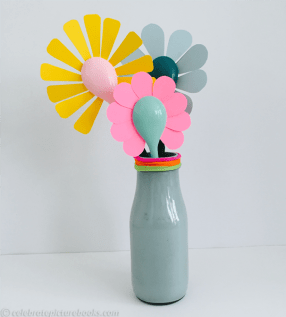
celebrate-picture-books-picture-book-spoon-flowers

With this quick and easy craft you can bring a pretty bouquet of flowers into your home with this easy and quick craft! It makes a great gift for friends too!

Supplies

  • Colorful plastic spoons
  • Heavy stock paper or construction paper in various colors, including green for leaves
  • Multi-surface glue or hot glue gun

Directions

  1. Cut petals from the heavy stock paper or construction paper
  2. Glue the petals to the bowl of the spoon
  3. Cut leaves from the green paper (optional)
  4. Glue leaves to the handle of the spoon (optional)

celebrate-picture-books-picture-book-review-tiny-wonders-cover

To support your local independent bookstore, order Tiny Wonders from

Bookshop

You can also find Tiny Wonders at these booksellers

Amazon | Barnes & Noble | Books-a-Million

Picture Book Review
May 14 – Mother’s Day

celebrate-picture-books-picture-book-review-supermoms-cover

About the Holiday

We always love our moms, but on the second Sunday of May we celebrate that special relationship and thank them for everything they do for us all year long. On May 9, 1914 President Woodrow Wilson signed a proclamation establishing Mother’s Day as “a public expression of our love and reverence for the mothers of our country.” First envisioned to honor all mothers instead of primarily your own, the day has become a more personal holiday in which families celebrate in their own unique and meaningful way. As today’s book shows, the nature of motherhood is surprisingly the same for human moms as for those in nature!

Supermoms!: Animal Heroes

Written by Heather Lang and Jamie Harper | Illustrated by Jamie Harper


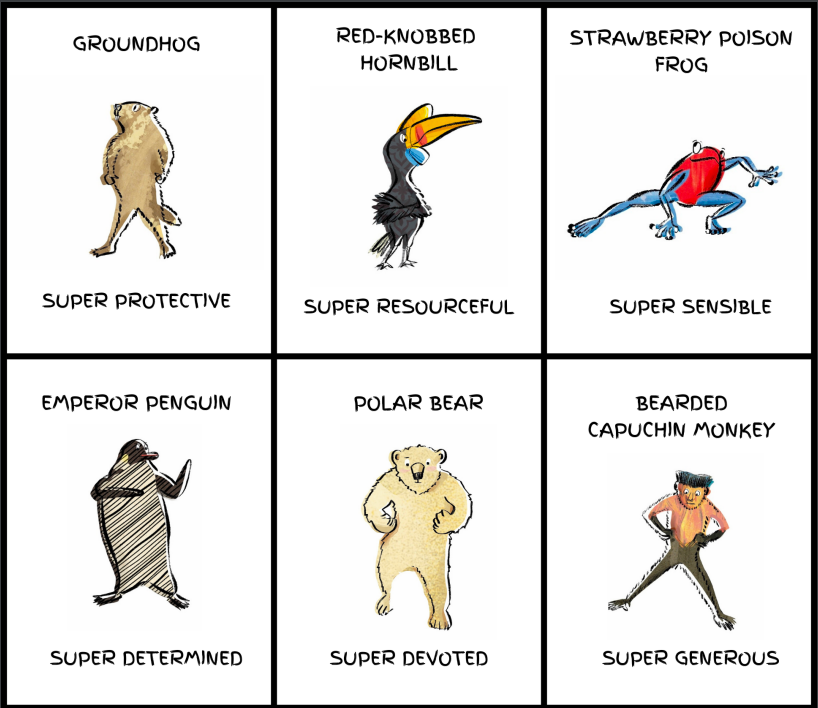
Did you know that the animal kingdom is full of supermoms? It’s true! They may not wear capes, but some do fly through the air and others can go paw to wheel with a speeding train. “With powerful instincts and extraordinary skills, these moms do whatever it takes to protect and raise their young.” With so many different animal species, each having their own talents and behaviors, there are lots of ways these moms take care of their little ones. While some creatures raise their families in close quarters, groundhog moms build vast burrows with special rooms, “including a bathroom and a nursery lined with soft grasses for her pups.” Readers also discover how a red-knobbed hornbill mom uses a rather unusual substance to help seal up her home, and how a strawberry poison frog deals with extreme sibling rivalry in an extremely clever way.

celebrate-picture-books-picture-book-review-supermoms-tucans

Image copyright Jamie Harper, 2023, text copyright Heather Lang and Jamie Harper, 2023. Courtesy of Candlewick.

We all know moms make sacrifices for their children, but kids will be amazed at how penguins, polar bears, and bearded capuchin monkeys go the extra mile to make sure their babies are well-fed and happy. Animals don’t have minivans or SUVs or even city buses to help them transport their young, but that doesn’t stop some supermoms from taking their little ones here and there. For example, “an American Alligator’s might mouth makes the perfect super stroller. Mom scoops up her hatchlings and shuttles them safely to the water.” Little brown bat and wolf spider moms know just how to carry their kids in ways that are novel and exciting too.

Of course, keeping their children safe is one of a mom’s most important jobs, and readers will see how nature’s “supermoms stop at nothing to protect their young.” Whether they live under the sea, on the savannah, or at the beach, these mothers are always alert for predators use anything they’ve got—their mouths, tentacles, hooves, bums, and even their acting ability—to make sure that their precious kids are okay.

celebrate-picture-books-picture-book-review-supermoms-polar-bear

Image copyright Jamie Harper, 2023, text copyright Heather Lang and Jamie Harper, 2023. Courtesy of Candlewick.

As all kids know, besides making a home, feeding, transporting, and providing protection, moms are great teachers. It’s the same for animals. Some baby animals need to learn how to swim, how to gather food without hurting themselves, where to find food, how to use tools, and even how to make a comfy home of their own. And who shows them how to do all of these things and more? Their moms, of course! “With powerful instincts and extraordinary skills, these moms give their youngsters everything they need to go out into the world and thrive.” Sounds familiar, right?!

Back matter includes an illustrated guide to the eighteen animals represented in the book complete with their “super ability,” information on where they live and what they eat, and a “Guess What?” fun fact about each creature. A list of online resources, books, and films where kids can learn more about some of the animals is also included.

celebrate-picture-books-picture-book-review-supermoms-alligator

Image copyright Jamie Harper, 2023, text copyright Heather Lang and Jamie Harper, 2023. Courtesy of Candlewick.

Heather Lang and Jamie Harper’s Supermoms! Animal Heroes is immediately relatable with its home-run hit of superheroes, humor, eye-widening facts, and, of course, a mom’s love. Harper and Lang use a combination of easy-to-understand, straightforward text and lots of funny, rib-tickling speech bubbles that offer the kind of comical commentary on their surroundings and circumstances that will keep kids laughing, learning, and wanting to read the book again and again. The mix of well-known and more unusual species orients kids to those animals they’ve already heard about and may have seen for themselves at the zoo or aquarium and those they’d like to learn more about.

Jamie Harper’s textured, collage-style illustrations take kids underground, to the ocean, high into trees, across frozen tundras, and through dusty, grassy plains to demonstrate how moms with one to thousands of youngsters make sure they are nurtured and protected no matter what it takes. Her cartoon animals are realistically portrayed and their spunk, facial expressions, and actions are engagingly kid-inspired. 

If your kids love nonfiction, learning about nature and animals, or simply a book that will get them laughing while they discover fascinating facts, Supermoms! Animal Heroes would be an often-asked-for addition to home bookshelves. The book’s content and extensive additional resources, both in the backmatter and on Heather Lang’s website, make Supermoms! a must for classroom, school, and public library collections.

Ages 3 – 7

Candlewick, 2023 | ISBN 978-1536217971

About Heather Lang

Heather Lang is the author of The Leaf Detective: How Margaret Lowman Uncovered Secrets in the Rainforest and Swimming with Sharks: The Daring Discoveries of Eugenie Clark, among other books. She lives in Massachusetts.

About Jamie Harper

Jamie Harper is the author-illustrator of four books about the feisty flamingo teacher Miss Mingo as well as the Baby Bundt board books and the picture books Miles to Go and Miles to the Finish. She lives outside Boston.

Mother’s Day Activity

celebrate-picture-books-picture-book-review-supermoms-mother's-day-card

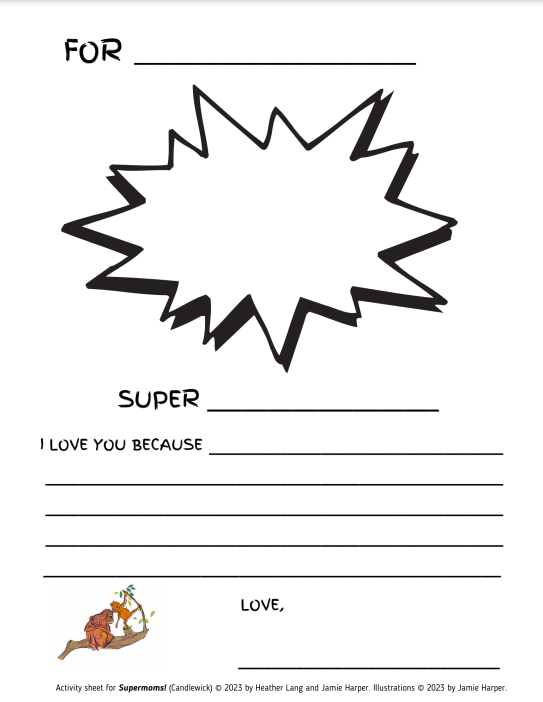
Supermom! Mother’s Day Card


Kids know their mom’s super, and with this printable Supermom! card found on Heather Lang’s website, children can tell their mom just why they think she’s so special on Mother’s Day—or any day!

Mother’s Day Card

celebrate-picture-books-picture-book-review-supermoms-matching-game

More Supermoms! Fun


Kids and adults will find even more worksheets, activities, and games as well as videos of animals in their natural habitats caring for their young and the links to six movies about animals found around the world on YouTube and other streaming services on Heather Lang’s website.

celebrate-picture-books-picture-book-review-supermoms-cover

You can find Supermoms!: Animal Heroes at these booksellers

Amazon | Barnes & Noble | Books-a-Million

To support your local independent bookstore, order from

Bookshop

Picture Book Review
May 11 – National Eat What You Want Day

celebrate-picture-books-picture-book-review-poop-for-breakfast-cover

About the Holiday

Do you feel like you’ve been on a diet forever? Have you been denying yourself a favorite treat because maybe it’s not the best thing you can eat? Or do you find yourself always making meals to suit everyone else’s taste when what you really want is just a grilled cheese sandwich? If so, today’s holiday gives you carte blanche to enjoy the foods you want without feeling guilty. It also seems like a fitting day to learn about the rather unusual (at least to us) diet of many creatures in the animal kingdom—and that’s where today’s book come in!

Poop for Breakfast: Why Some Animals Eat It 

Written by Sara Levine | Illustrated by Florence Weiser


So, you wake up starving for a delicious meal. You’ve been dreaming of pancakes, maybe, or a plate of eggs and bacon. But when you get to the table, there’s a bowl of poop waiting for you?! Come on! While you might sulk (and probably hold your nose), there are plenty of creatures who’d be thinking “Bring it on!” Who are these critters? They’re animals that practice coprophagy, and they do it “for a number of surprisingly good reasons,” Sara Levine reveals.

celebrate-picture-books-picture-book-review-poop-for-breakfast-coprophagy

Image copyright Florence Weiser, 2023, text copyright Sara Levine, 2023. Courtesy of Millbrook Press.

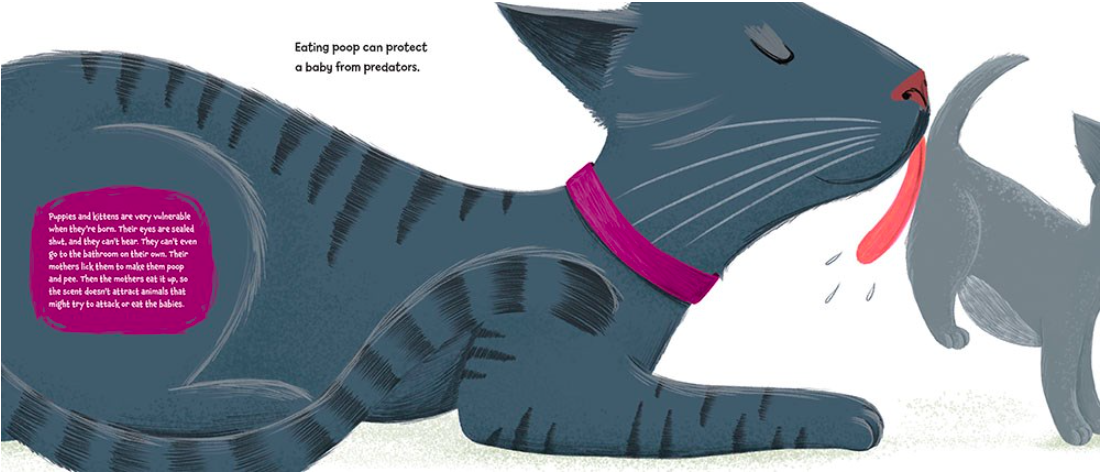
For some animals eating poop is just part of being a Number 1 (or maybe Number 2 is better in this case) parent. Butterflies, cats, and dogs as well as robins and other birds all have specific reasons for dining on doo-doo, from making eggs strong to protecting their babies from predators to keeping “a nest clean and tidy.” Birds have a particularly fascinating way to do this. Since baby birds eat a lot, they poop a lot. Keeping up with that level of cleaning could be daunting. Amazingly, though, these “chicks’ poop and pee come out inside a bag made of mucus. It’s called a fecal sac. Bird parents grasp it with their beaks and carry it away like a disposable diaper. And sometimes the parents eat it. How come? The poop of a newly hatched chick is full of undigested nutrients.”

celebrate-picture-books-picture-book-review-poop-for-breakfast-butterflies

Image copyright Florence Weiser, 2023, text copyright Sara Levine, 2023. Courtesy of Millbrook Press.

While these animals eat poop for external or aesthetic reasons, others engage in coprophagy to keep their digestive system working well. Still others, because of the length or shape of their digestive tract, require that food travels through their body twice to extract all of the nutrients. If you have a rabbit, hamster, guinea pig, or other small rodent as a pet, you know that their poop looks like little round balls or small pellets. As Levine tells readers, “this is the poop that has been through their digestive tract a second time. The first poop comes out soft, sticky, and full of nutrients. It’s called a cecotrope (SEE-ca-trope),” and these animals “gobble it up at night when it comes out. That’s why you don’t see it” in the cage.

celebrate-picture-books-picture-book-review-poop-for-breakfast-robins

Image copyright Florence Weiser, 2023, text copyright Sara Levine, 2023. Courtesy of Millbrook Press.

Since there are so many creatures who do eat poop, why don’t humans? Levine has included a whole list of reasons (and, yes, the frowny- crinkled-nose-face you’re making right now is one of them) for why we don’t—and don’t need to. She’s also provided back matter that includes “The Scoop on Poop”—an explanation of what poop and pee are, how they’re created in the body, and how they’re eliminated through the anus and the urethra as well as a paragraph about creatures that have a single cloaca instead of two openings. Kids will also have fun becoming “poop detectives” with the help of Levine’s and illustrator Florence Weiser’s guide to the sizes and shapes of poop from common pets and wildlife and playing a silly synonym game.

celebrate-picture-books-picture-book-review-poop-for-breakfast-cats

Image copyright Florence Weiser, 2023, text copyright Sara Levine, 2023. Courtesy of Millbrook Press.

Sara Levine is exceptional at presenting fascinating nature science topics in humorous and accessible ways for young audiences, and her latest book is no exception, Leaning into the “Ewww!” factor, Levine dishes up short, take-away reasons certain animals, birds, and insects practice coprophagy followed up with longer passages that explain the science and/or behavior behind them in easy-to-understand language sprinkled with humor that will keep readers riveted to this already high-interest subject.

Florence Weiser’s colorful illustrations perfectly bridge the humorous and the scientific nature of Levine’s text. Readers’ skeptical view of this “gross” habit is amusingly juxtaposed with creatures’ excited anticipation of a delicious meal through the characters’ facial expressions while the anatomical reasons for or against coprophagy are clearly depicted in images of human and various animals’ digestive systems.
Anatomy and nature science education at its best, Poop for Breakfast: Why Some Animals Eat It will keep kids enthralled as each page turn brings on a new round of giggles and avid learning. The book would enhance any home STEM collection and is a must for classroom, school, and public library bookshelves.

Ages 5 – 10

Millbrook Press, 2023 | ISBN 978-1728457963

About the Author

Sara Levine is an author, educator, and veterinarian. Her science books for children include the Animal by Animal series, Germs Up Close, and A Peek at Beaks: Tools Birds Use. Her books have received a number of awards including AAAS/Subaru SB&F Prize, Utah Beehive Book Award, Cook Prize finalist, Monarch Award master list, and Bank Street College Best Children’s Book of the Year.

About the Illustrator

Florence Weiser is a French illustrator currently based in beautiful, rainy Belgium. While growing up in Luxembourg, she always knew she wanted to draw and draw. She lives and works surrounded by nature, from which she gathers most of her inspiration.

celebrate-picture-books-picture-book-review-poop-for-breakfast-cover

You can find Poop for Breakfast: Why Some Animals Eat It at these booksellers

Amazon | Barnes & Noble | Books-a-Million

To support your local independent bookstore, order from

Bookshop

Picture Book Review