June 15 – National Electricity Day

celebrate-picture-books-picture-book-review-energy-animated-cover

About the Holiday

Today’s holiday commemorates the date in 1752 when Benjamin Franklin conducted his famous experiment in which he flew a kite outfitted with some wire, silk, and a key to prove that lightning was caused by a discharge of electricity. His successful experiment led to a better understanding of positive and negative charges as well as to the invention of the lightning rod. To read the whole story of Benjamin Franklin’s experiment visit Checkiday.com.

Energy Animated

Written by Tyler Jordan | Illustrated by Elsa Martins


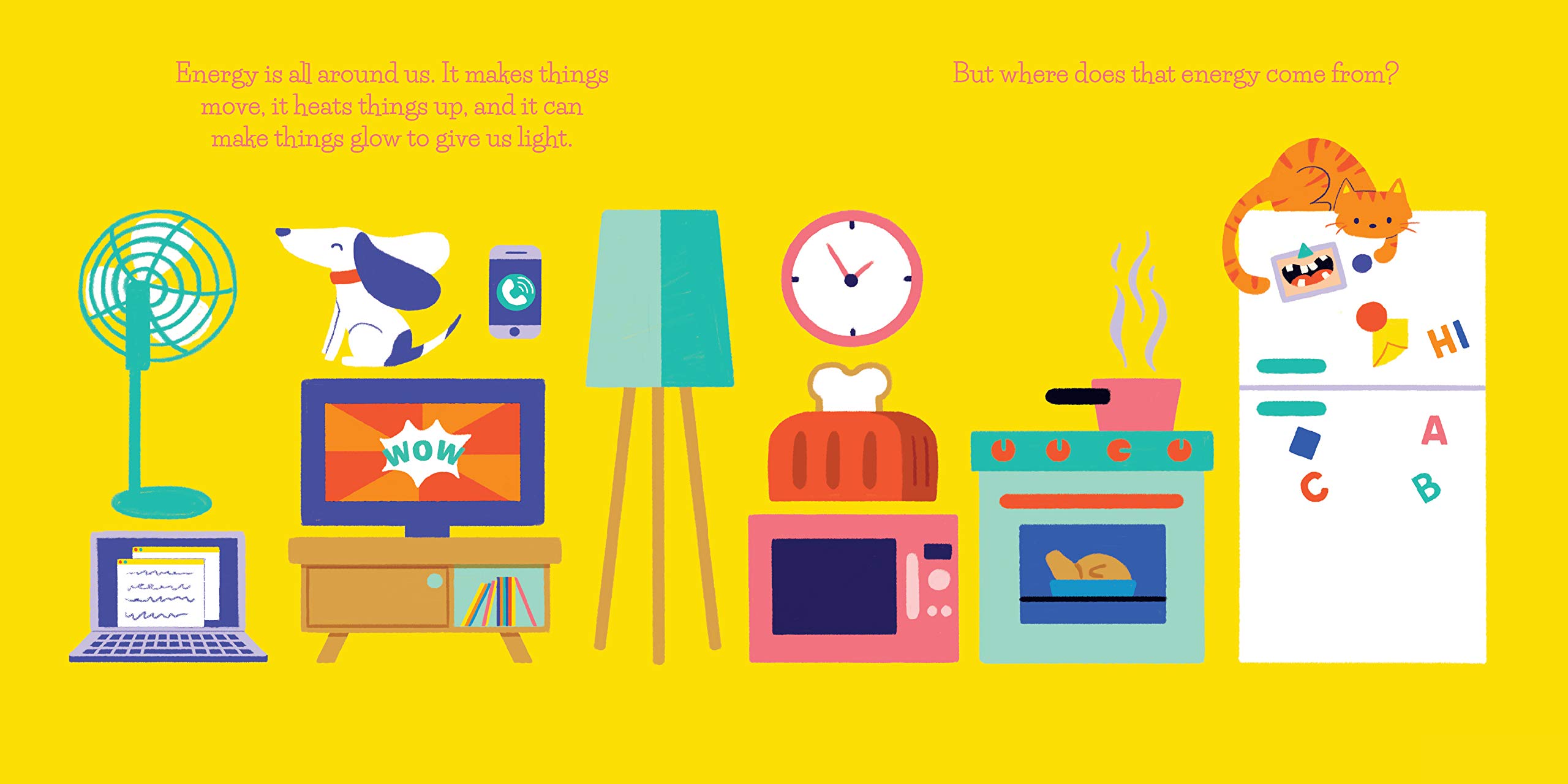
Little ones are fascinated by the magic – or what seems like magic – all around them. Flip a switch and the lights come on. Push a button and pictures appear on a screen. One box keeps food cold, another makes it hot. How do all of these things work? With the interactive Energy Animated, kids can learn the basics of where the energy comes from to create electricity.

celebrate-picture-books-picture-book-review-energy-animated-computer-tv

Image copyright Elsa Martins, 2021, text copyright Tyler Jorden, 2021. Courtesy of Familius.

Pull tabs, wheels, flaps, and toggles let kids see how different ways of collecting electricity makes everyday objects run. Little ones get to toggle an oil pump and see how oil is stored deep under the earth’s surface, past a bunny sleeping in its hole, worms aerating the soil, and ants building tunnels to where dinosaurs are buried. They learn about coal and uranium, which “can be used as fuel to heat water and created steam. The steam goes through a fan called a turbine to generate electricity.”
celebrate-picture-books-picture-book-review-energy-animated-kitchen

Image copyright Elsa Martins, 2021, text copyright Tyler Jorden, 2021. Courtesy of Familius.

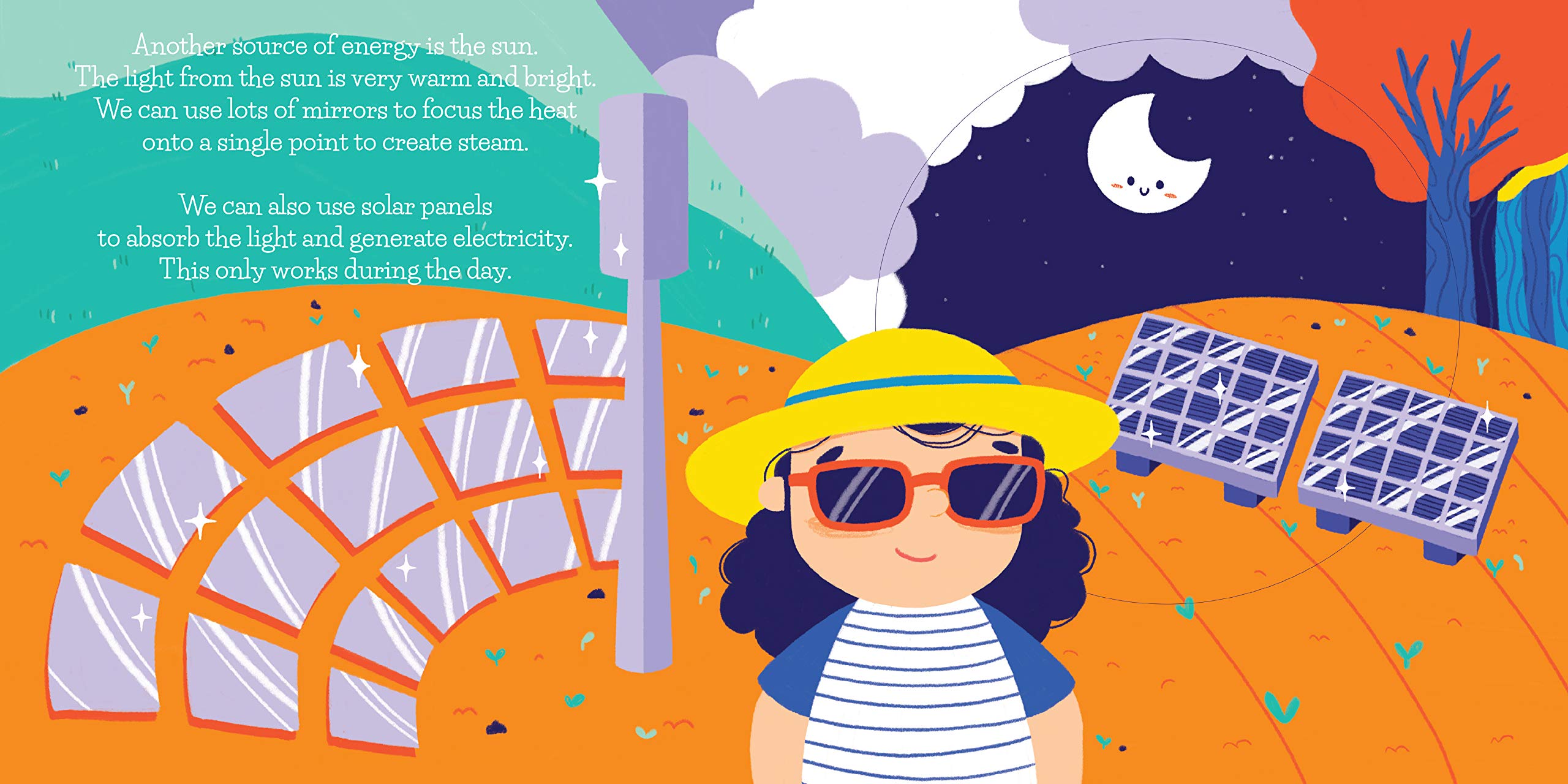
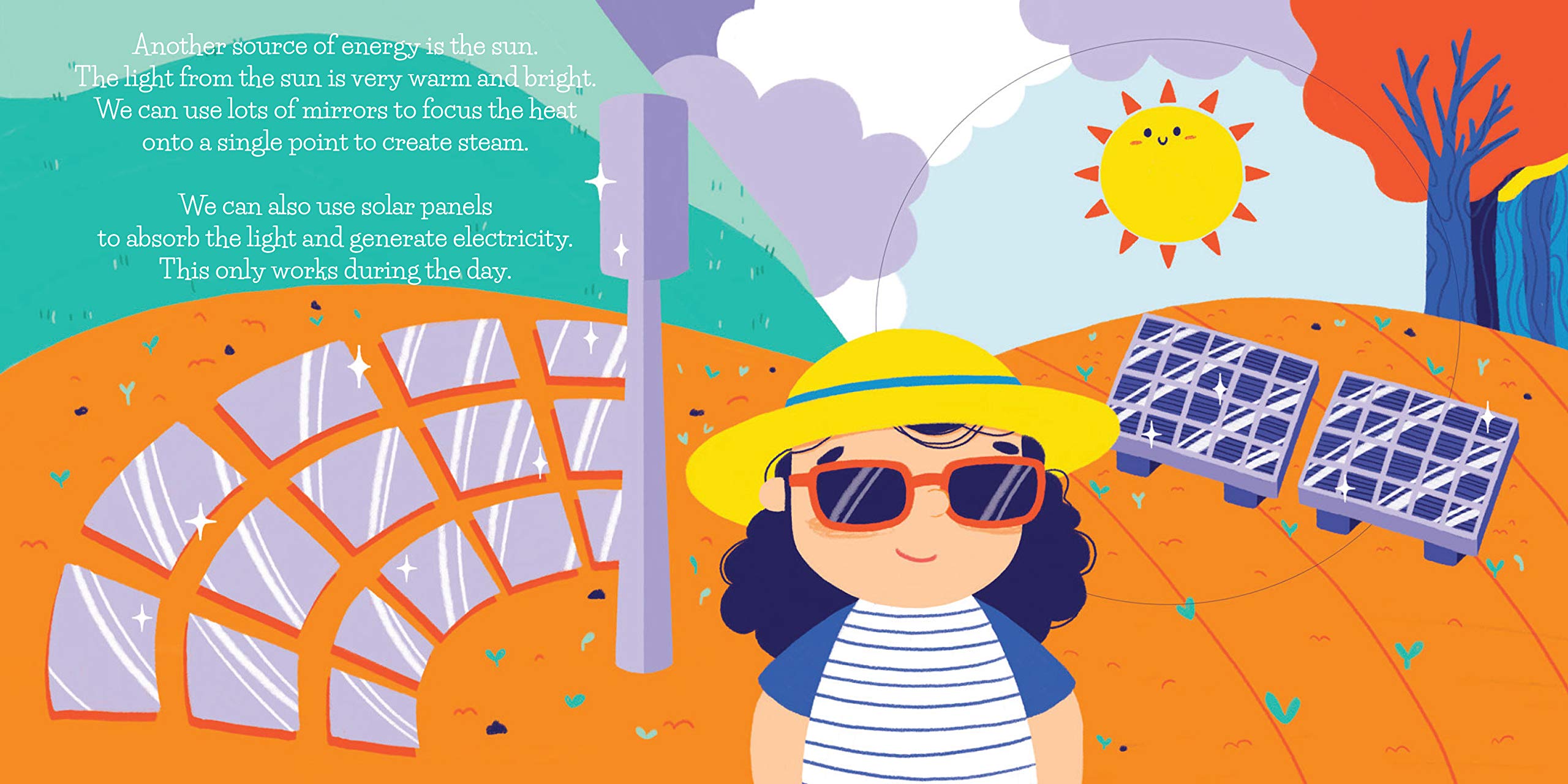
Readers may be familiar with solar panels from hearing parents and teachers talk about them or even from their own homes. Here, kids also learn how the sun is used to store energy from the sun with mirrors. As children turn the wheel, night turns to day, and they see how sunshine is absorbed by mirrors and solar panels to generate steam and electricity.
celebrate-picture-books-picture-book-review-energy-animated-solar-panels-1

Image copyright Elsa Martins, 2021, text copyright Tyler Jorden, 2021. Courtesy of Familius.

Turn the page and the same wheel turns the blades of a wind turbine. Next, they take a trip to the beach to learn that “when wind blows over the ocean, it makes waves. The waves move buoys up and down, and we can capture that energy too. Then readers can dive in and with the pull of a tab make the buoy move up and down. Surprise! A little fish is watching too! Finally, readers get to lift the gate on a dam and let the water rush through a turbine to create even more electricity.

Little ones follow up on all the electricity they’ve generated by flying a plane and steering a ship by way of sliders as they learn how electricity is collected at power stations and brought to their house through the long power lines they see above them.
celebrate-picture-books-picture-book-review-energy-animated-solar-panels-2

Image copyright Elsa Martins, 2021, text copyright Tyler Jorden, 2021. Courtesy of Familius.

Tyler Jordan’s informative text teaches young readers a wide range of vocabulary used when talking about energy, the environment, and the processes used to collect, generate, and use electricity. Her short, straightforward sentences make the science concepts digestible for children and promote discussion between them and adult readers.

Jordan’s text is paired with Elsa Martin’s bright illustrations that put the focus on the pumps, turbines, solar panels, mirrors, buoys, dam, as well as the vehicles and home appliances and electronics that use electricity and energy. Uncluttered by non-essential details, Martin’s pages make it easy for young readers to see where the materials we use to generate electricity come from and how they are used. The interactive elements will entice kids to learn more about each alternative energy source and make them more aware of the power lines, solar panels, and other energy producers in their area.

An entertaining and educational way to teach young readers about energy sources and how electricity is generated, Energy Animated is a terrific addition to home, school, and public library collections for science learning.

You’ll also want to check out Physics Animated, an interactive way for kids to learn about how things move. You can read my review of Physics Animated here.

Ages 4 – 6

Familius, 2021 | ISBN 978-1641702546

To learn more about Elsa Martins, her books, and her art on her website.

National Electricity Day Activities

celebrate-picture-books-picture-book-review-energy-word-search-puzzle

Get Energized! Word Search Puzzle


Can you find the sixteen words about energy in this printable puzzle?

Get Energized! Word Search Puzzle | Get Energized! Word Search Solution
celebrate-picture-books-picture-book-review-silly-balloons

Have Fun with Static Electricity!


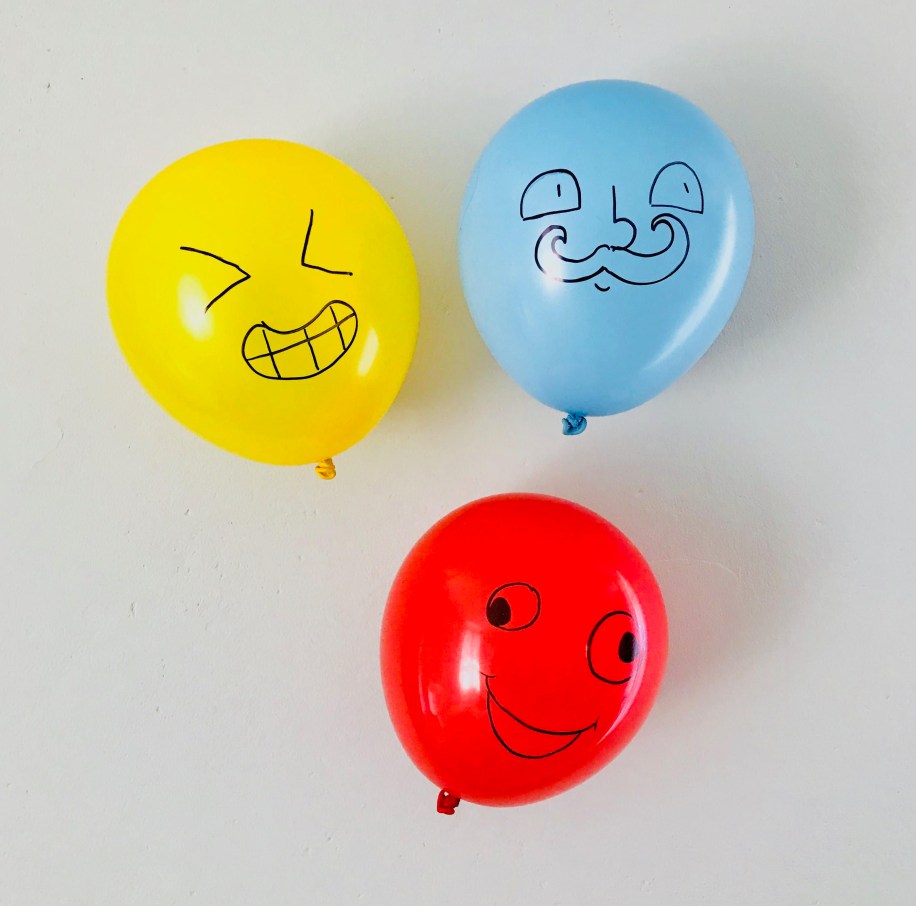
You and your kids can have lots of surprising and giggly fun with static electricity using blown-up balloons!

Babies and young children should be supervised by an adult while playing with balloons.

How does it work? Static electricity is generated when there is an excess of electrons on one object giving it an electric charge. These electrons are attracted to an object with fewer electrons and will jump to it when placed close by.

How do you produce static electricity? Just rub the blown-up balloon on your shirt, on your hair, on a blanket or other surface. Then try these experiments!

CRAZY HAIR

Generate static electricity on a blown-up balloon then hold it near your hair and watch it go a little crazy!

HANG A BALLOON

Generate static electricity on a blown-up balloon and gently place it on the wall and watch it hang all by itself.

BEND WATER

This bit of balloon magic will amaze you! Generate static electricity on a blown-up balloon. Turn on a faucet to a thin stream of water. Hold the balloon near the stream of water and watch it bend toward the balloon. 

More Experiments!

You can find some awesome and easy experiments to do with static electricity and current electricity from Frugal Fun for Boys and Girls.

celebrate-picture-books-picture-book-review-energy-animated-cover

You can find Energy Animated at these booksellers

Amazon | Barnes & Noble | Books-a-Million

To support your local independent bookstore, order from

Bookshop | IndieBound

Picture Book Review

December 12 – Celebrating Read a New Book Month with STEM

celebrate-picture-books-picture-book-review-phyics-animated-cover

About the Holiday

Today and tomorrow I will be celebrating Read a New Book Month with books that present the excitement and wonder of science through familiar activities and objects. Introducing young children to the way things work in nature and through engineering helps them make sense of what they see and experience in their everyday life. Books like these make great gifts not only for science buffs but for all kids!

Physics Animated

Written by Tyler Jorden | Illustrated by Elsa Martins


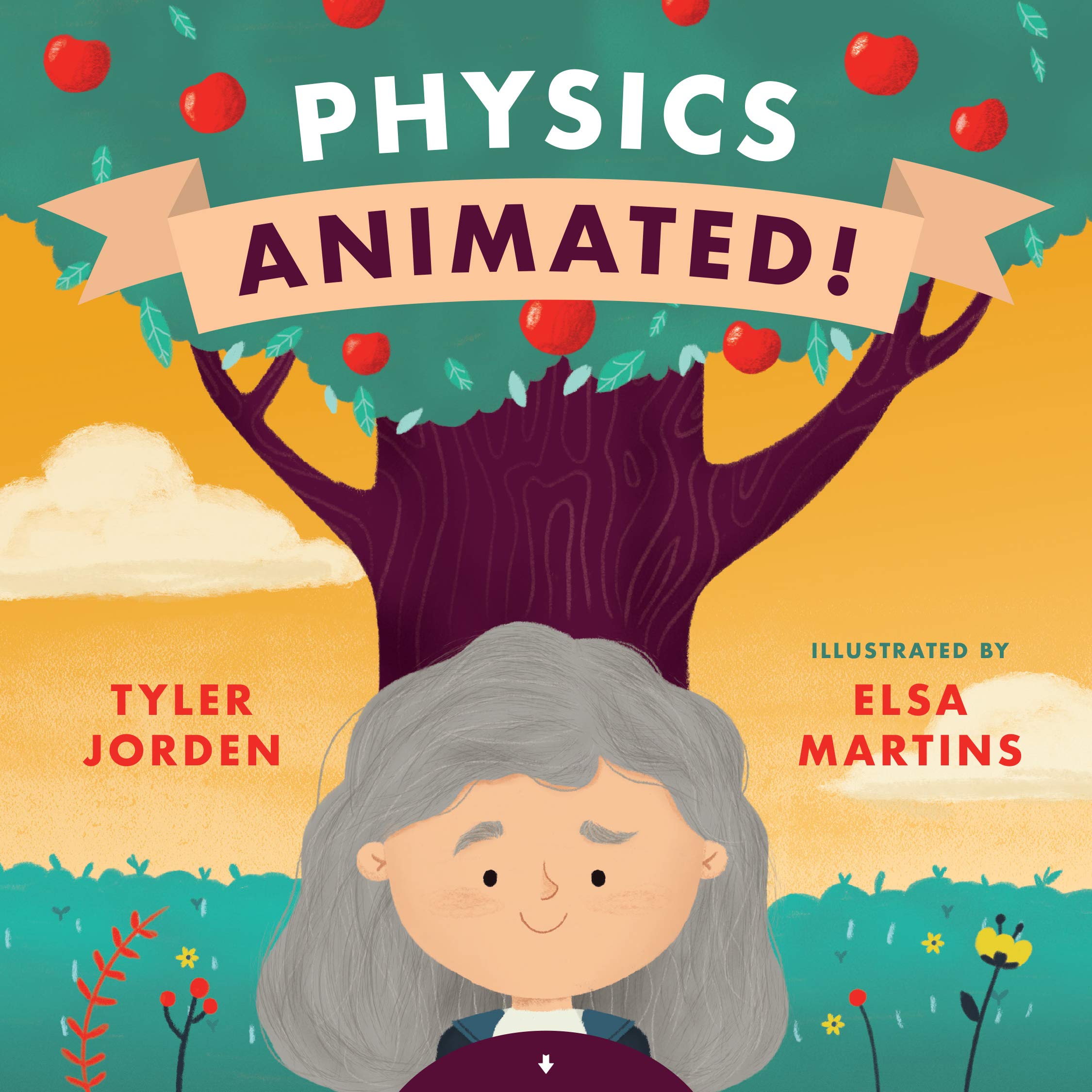
From that moment when Isaac Newton was hit on the head by a falling apple, people have been fascinated with physics. In this clever and interactive board book, young readers can learn about Newton’s three laws of physics through wheels to spin, tabs to pull, and elements to push that introduce “big words” and other vocabulary that budding scientists will be proud to learn. Examples for each law come straight from a child’s day of play or experience to make them easily understood. Children will also be able to apply the knowledge they gain within these pages to other activities they perform every day.

Readers meet Isaac Newton as “a man who liked to watch the world around him. He noticed that everything could be explained by three simple laws.” While Newton ponders, he gazes out of a window where children can move a wheel to make birds fly in the air and fish swim in a lake. Newton’s first law—inertia—is introduced with a simple sentence that “an object will stay still unless something pushes or pulls on it.” Accompanying this explanation is an image of a boy kicking a ball to his dog. A wheel allows children to move the ball from the boy to the dog.

celebrate-picture-books-picture-book-review-physics-animated-centrifugal-force

Image copyright Elsa Martins, 2019, text copyright Tyler Jorden, 2019. Courtesy of Familius.

The second part of the law of inertia, which states that an object in motion will keep moving until something stops it, is demonstrated through a tab that moves a sliding sled with two little girls aboard into a fluffy snowbank. For Newton’s second law—force = mass x acceleration—kids help out a bicycle rider, and the force of gravity is accomplished as kids pull a dropped ice-cream scoop toward the ground.

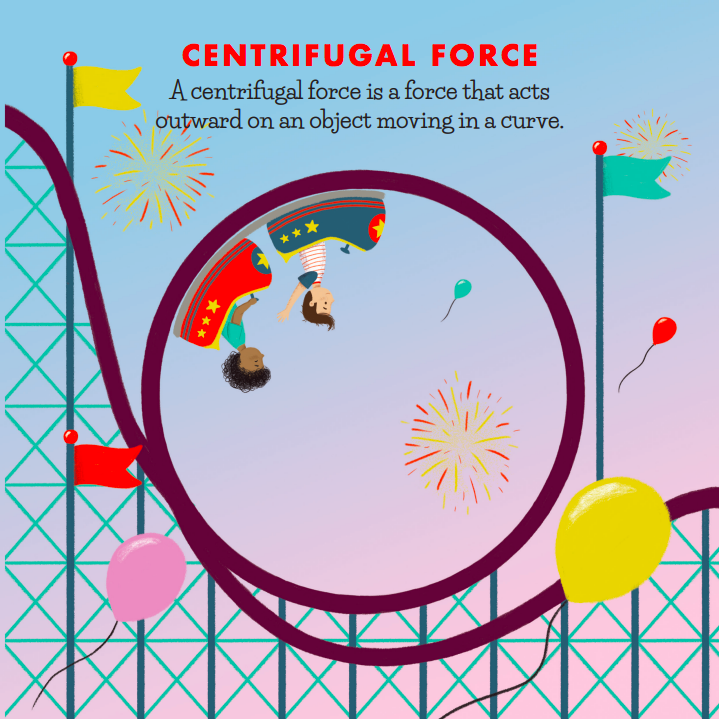
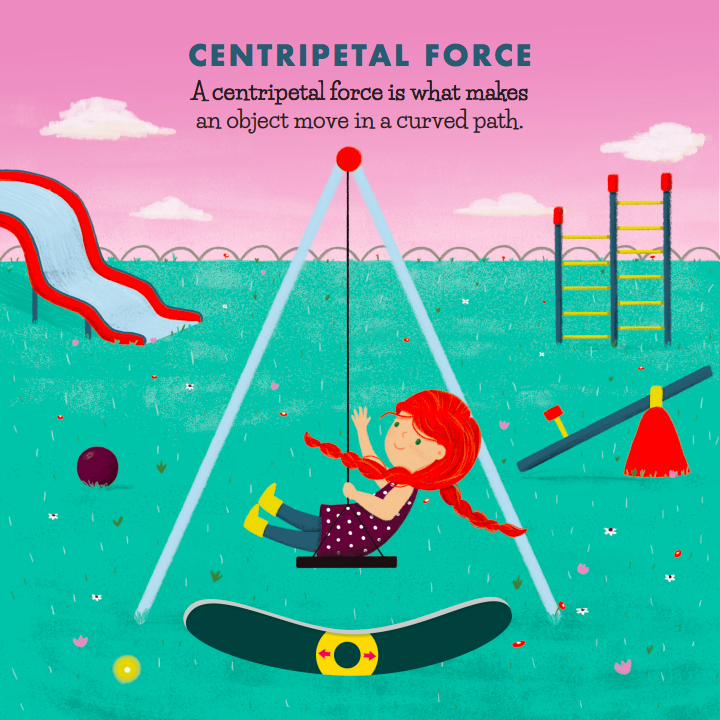
How can we stand firmly on the floor or ground? That question is answered by Newton’s third law that states “when you push on something, it pushes back just as much.” So when we stand on the floor, “our feet push on the floor, and the floor pushes back on us.” Examples of this law are buoyancy, centrifugal force (for which readers push the wheel to send two roller coaster riders around the loop-de-loop), centripetal force (demonstrated with a swing that kids can push back and forth), lift, and thrust. Thrust is depicted with a rocket ship blasting off into space. As readers pull up on the tab to launch the rocket, they’re sure to feel their own scientific understanding soar.

celebrate-picture-books-picture-book-review-physics-animated-centripetal-force

Image copyright Elsa Martins, 2019, text copyright Tyler Jorden, 2019. Courtesy of Familius.

Tyler Jorden’s easy-to-understand definitions of Newton’s laws are just right for readers learning vocabulary that will help them to recognize their own activities as they play and work around the house as well as to comprehend these scientific concepts when they get to school. When terms and ideas like these are introduced at an early age, they can become as familiar as actions, such as push, pull, drop, and slide, that they describe. Jorden’s pages give adults excellent examples to begin discussions and of these concepts that can lead to fun, hands-on learning.

Elsa Martins’ colorful interactive illustrations take kids out to the park, a snow-covered hill, a bike trail, a schoolyard, a lake, an amusement park, and into the sky where they can make the natural forces and Newton’s laws work for themselves. Martins’ choices of images allow for in-depth discussions as readers pull and push the wheels and tabs. For instance, the biker who accompanies Newton’s second law can “pedal” faster or slower depending on how quickly the tab is pulled, letting kids and adults talk about things such as the rate of pedaling, if the rider was carrying a heavy backpack, and if the biker was going up or down a hill. The adorable children on each page make for fun friends to join on this scientific exploration.

As enjoyable and entertaining as it is educational, Physics Animated will get young readers excited about learning and make them proud to know about such “grown-up” topics. (They even get to drop that apple on Isaac Newton’s head!) Sure to spark lots of experiments, the book would be a wonderful addition to home, classroom, and public library collections. 

Ages 4 – 7

Familius, 2019 | ISBN 978-1641701327

To learn more about Elsa Martins and view a portfolio of her art, visit her website.

Read a New Book Month with STEM Activity

celebrate-picture-books-picture-book-review-newton's-laws-word-search-puzzle

Get Moving with Newton’s Laws! Word Search Puzzle


Find the seventeen words associated with Isaac Newton’s Three Laws of Motion in this printable word search puzzle.

Get Moving with Newton’s Laws! Puzzle | Get Moving with Newton’s Laws! Solution

celebrate-picture-books-picture-book-review-phyics-animated-cover

You can find Physics Animated at these booksellers

Amazon | Barnes & Noble | Books-a-Million | IndieBound

Picture Book Review