May 30 – National Water a Flower Day

About the Holiday

National Water a Flower Day reminds us of the vast diversity of plants and flowers in the world and even in our own backyards, gardens, and communities. The holiday encourages us to show how much we appreciate plants for their sumptuous colors, their fragrant blossoms, their delicious fruits and seeds, and for the unique ways they survive under sometimes challenging conditions. To this end, as the name of the holiday nudges, we should take special time today to make sure all of our plants—both indoor and outdoor—are watered and cared for.

Superpowered Plants: Meet the Smartest, Strongest, Sneakiest Plants

Written by Soledad Romero Mariño | Illustrated by Sonia Pulido


From the beginning of time (perhaps even before) plants have been growing, spreading, and evolving to survive and thrive.  To do this, they’ve had to become smart, resilient, and even sneaky—ingenious. Plants and their blooms can last only a day or hundreds of years, quietly coexisting with generations of a family. Among the plants on Earth are some of nature’s craftiest mimics, chemists, thieves, and predators.

In Superpowered Plants, author Soledad Romero Mariño introduces readers to 22 astonishing plants from across the globe, including the African baobab, sacred lotus, spotted spider orchid, titan arum, and whistling thorn as well as more common varieties like dandelions and sunflowers. She identifies 17 superpowers that plants rely on to feed themselves, multiply, cope with extreme conditions, regenerate after fire or other challenges, and protect themselves. Some of these are super speed, super intelligence, super teamwork, super resilience, and super flower. 
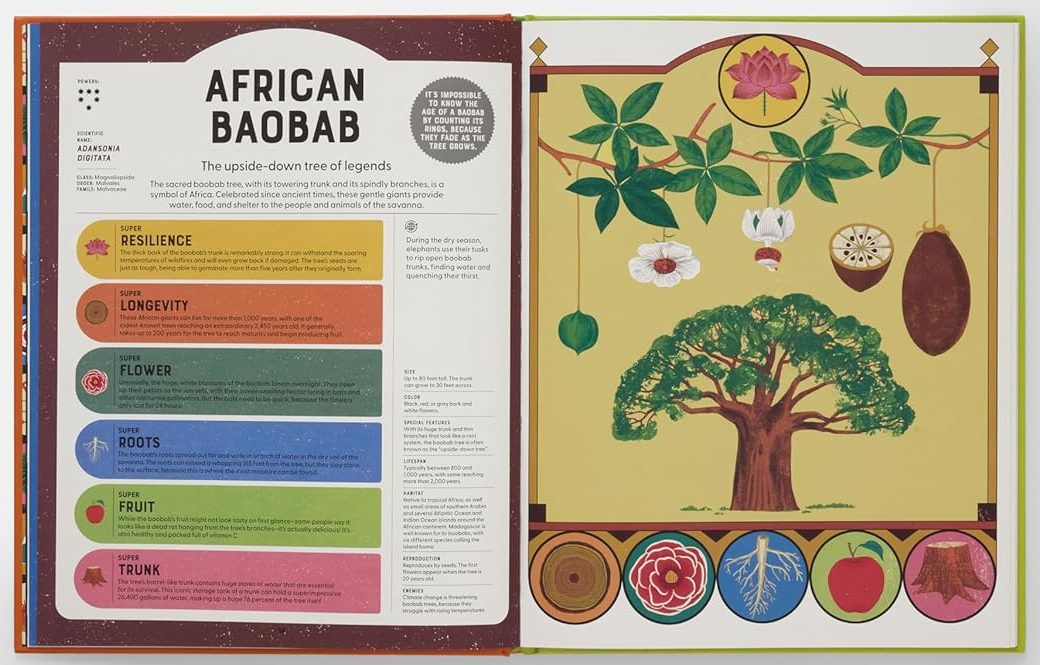
Illustration © 2025 by Sonia Pulido, text © 2025 by Soledad Romero Mariño. Courtesy of Phaidon Press.

Working in tandem with illustrator Sonia Pulido, Mariño provides a short description of each plant before outlining its superpowers in clear, easily-digested tidbits presented in color-coded sections, further marked by a recognizable icon. Other information on the left-hand page includes the plant’s scientific name, class, order, and family as well as its size, color, lifespan, habitat, reproduction method, enemies, and special features, along with a fascinating trivia fact. 

To the right—in stunning tarot card-inspired illustrations that would easily be at home in any fine art museum—Pulido captures each plant in full-page, glorious, realistic splendor while stylishly displaying its flower, seed, and fruit and bordering it with representations of its habitat, superpowers, and unique features. 
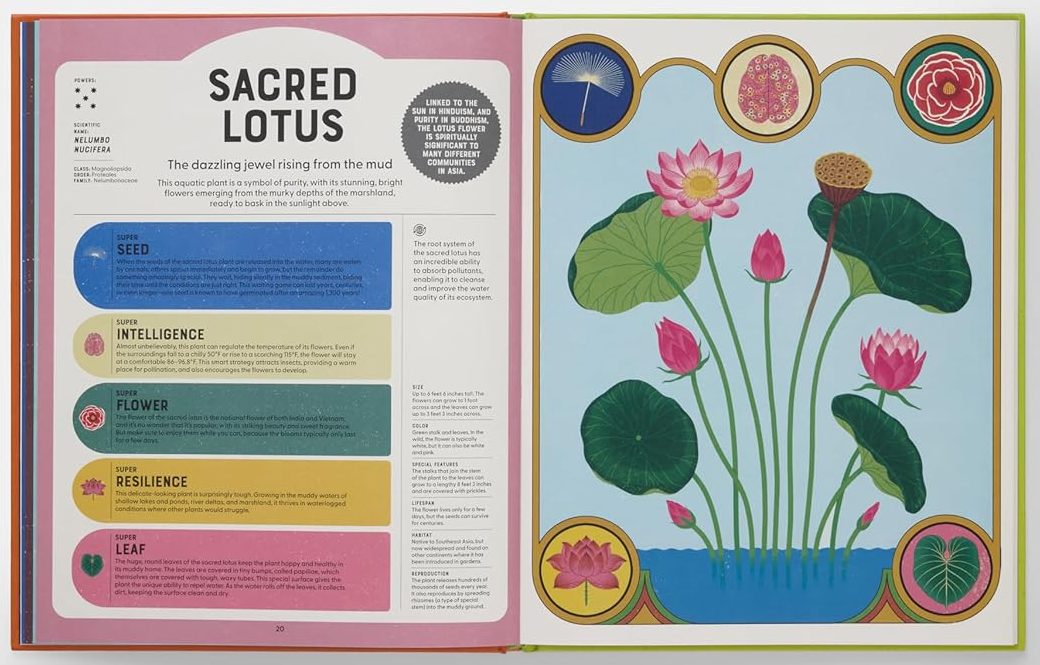
Illustration © 2025 by Sonia Pulido, text © 2025 by Soledad Romero Mariño. Courtesy of Phaidon Press.

So what are a couple of examples of these astounding plants? Well, take the Whistling Thorn, which is native to the East African savanna. This plant really has the will (and the way) to survive! Not only are its branches covered in prickly spikes, but it teams up with a particular species of ant, offering colonies a home in exchange for aggressive attacks on any herbivore that dares take a nibble. And if that isn’t enough, the whistling thorn has “developed the superspecial skill of communication.” Where many whistling thorns grow in proximity, if one tree is attacked it releases a scent into the air, “alerting other trees in the area to the threat.” These trees “immediately secrete a toxic substance into their leaves, which can be harmful to touch and eat, therefore putting off the predator and keeping the community of trees safe.”

There’s also the Sandbox, native to tropical regions such as the Amazon rain forest, who’s playful name belies its nickname—the dynamite tree. Determined to spread its seeds far and wide, the sandbox produces fruit that, when ripe, explodes with such force “that it can cause injury to anyone standing in its way.” The seeds are propelled at “speeds of 230 feet per second and can cover distances of up to 150 feet.” It’s also best not to attempt to climb the sandbox, as its trunk is covered in “supersharp spikes.” 
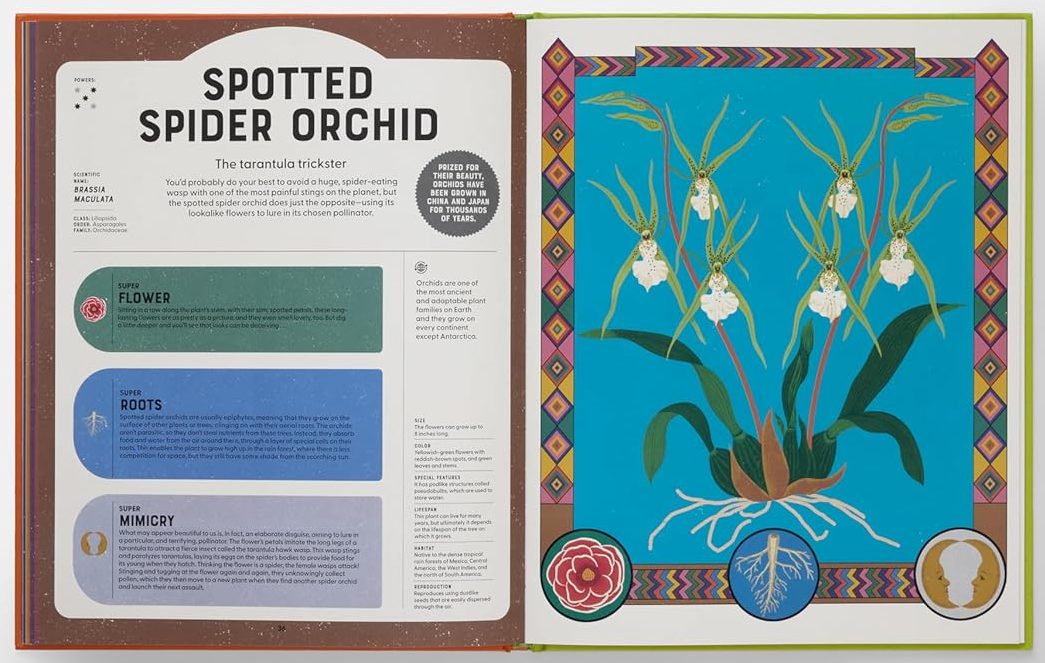
Illustration © 2025 by Sonia Pulido, text © 2025 by Soledad Romero Mariño. Courtesy of Phaidon Press.

“Fascinating” hardly begins to describe all the discovery inside Superpowered Plants: Meet the Smartest, Strongest, and Sneakiest Plants. This well-conceived compendium will enthrall readers of all ages and spur a deeper appreciation for the earth’s vegetation—both the unusual and the common, which might just be more cunning than we imagine. Superpowered Plants is a must for all library collections and is highly recommended for home bookshelves, especially for nature lovers.

Ages 7 – 12+ (adults will be equally captivated)

Phaidon Press, 2025 | ISBN 978-1838669515

About the Author

Soledad Romero Mariño is an experienced children’s non-fiction author who specializes in ‘best of’ round-up style books. Her works include Superpowered Animals: Meet The World’s Strongest, Smartest, and Swiftest Creatures (also published by Phaidon), Awesome Accidents: 19 Discoveries that Changed the World, and Famous Robberies: The World’s Most Spectacular Heists.

About the Illustrator

Sonia Pulido’s illustrations have appeared in publications globally, including The New Yorker and The New York Times. In 2020 Pulido won the Spanish National Illustration Award and she is the illustrator of Phaidon’s bestselling What a Shell Can Tell.

National Water a Flower Day Activity

celebrate-picture-books-picture-book-review-flower-garden-game

Plant a Flower Garden Game


With this fun game you and your family and friends can grow gardens inside! Roll the dice to see whose garden will fully blossom first!

Supplies

Directions

Object: The object of the game is for each player to fill their garden or garden rows with flowers. Depending on the ages of the players, the game can be adjusted to fill all of the rows, some or all rows, or just one.           

  1. Print one Game Board for each player
  2. Print one or more sets of Flower Playing Cards for each player, depending on how  (for sturdier playing items, print on card stock)
  3. Cut the flowers into their individual playing cards
  4. Print one Flower Playing Die and assemble it (for a sturdier die, print on card stock)
  5. Color the “dirt” on the Garden Plot with the crayon (optional)
  6. Choose a player to go first
  7. The player rolls the die and then “plants” the flower rolled in a row on the game board
  8. Play moves to the person on the right
  9. Players continue rolling the die and “planting” flowers until each of the number of determined rows have been filled with flowers or one row has been filled with all six flowers.
  10. The first person to “grow” all of their flowers wins!

You can purchase Superpowered Plants: Meet the Smartest, Strongest, Sneakiest Plants from these booksellers

Amazon | Barnes & Noble | Bookshop

Picture Book Review

April 14 – National Gardening Day

celebrate-picture-books-picture-book-review-in-the-garden-cover

About the Holiday

For many of us, spring means gardening. Today’s holiday encourages avid gardeners and those new to this rewarding activity to turn over some dirt, plant seeds, and prepare to tend the little sprouts on their way through the season. While this year may pose challenges to regular gardening routines, ordering options, creative solutions

In the Garden

By Emma Giuliani


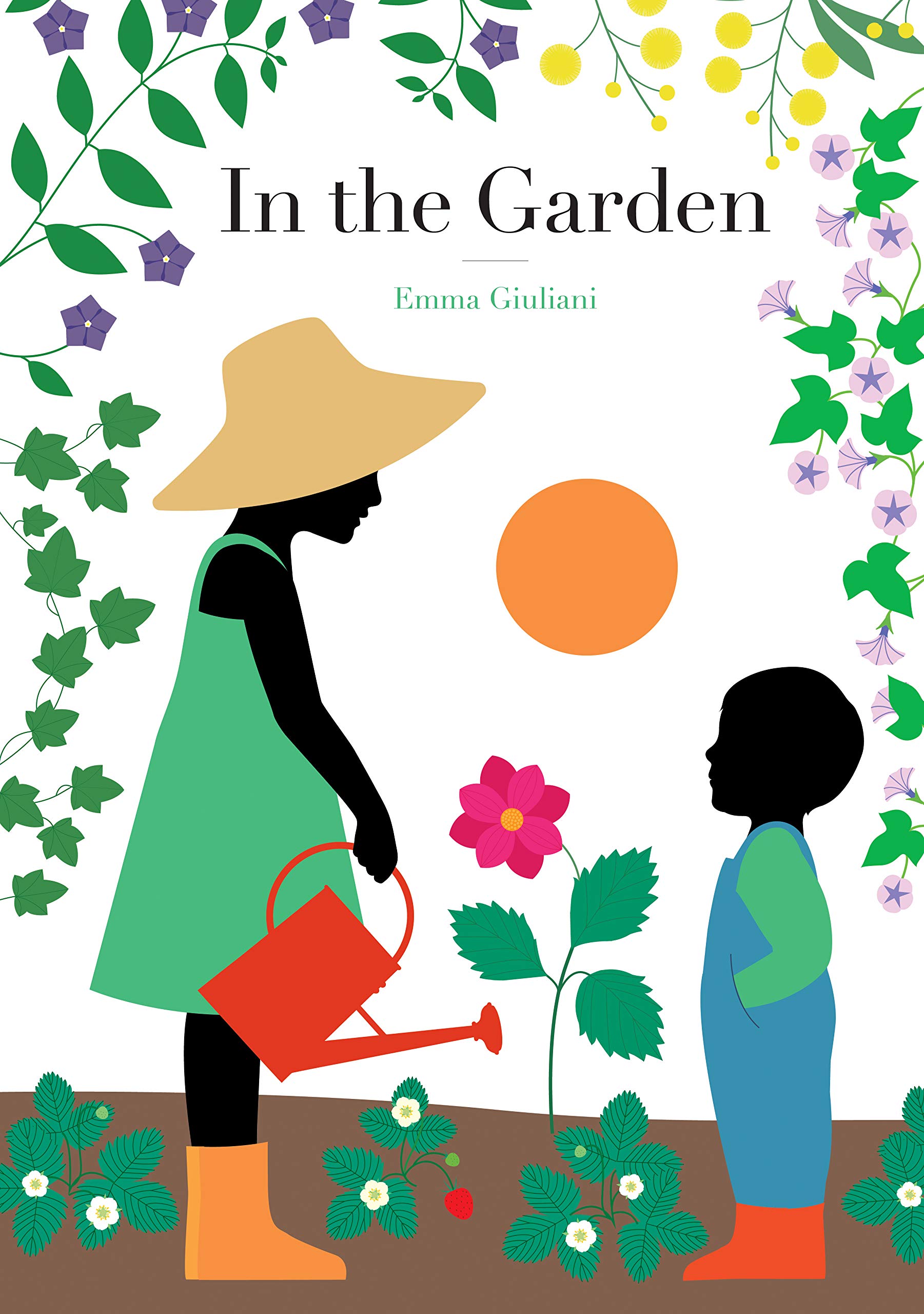
In her stunningly illustrated interactive guide through the seasons, Emma Giuliani introduces Plum and her little brother, Robin, and invites readers to join them as they tend to their garden and all the plants, animals, and birds that call it home. Plum and Robin begin at winter’s end. “This morning it’s cold. It’s not yet spring, but, in the garden, Plum and her brother Robin see the first catkins appearing on the branches of the willows and hazels. The blossoming mimosa makes the gardeners impatient for spring to come.” As Robin counts the long, drooping catkins, Plum rakes a layer of compost over the ground. On the facing page, children get a close-up view of the fuzzy catkins, can peek inside a bud, burrow underground with earthworms just waking from hibernation, and view a few early bloomers. They also learn about what makes up the earth’s soil and get a recipe for compost.

celebrate-picture-books-picture-book-review-in-the-garden-shed

Copyright Emma Giuliani, 2020, courtesy of Princeton Architectural Press.

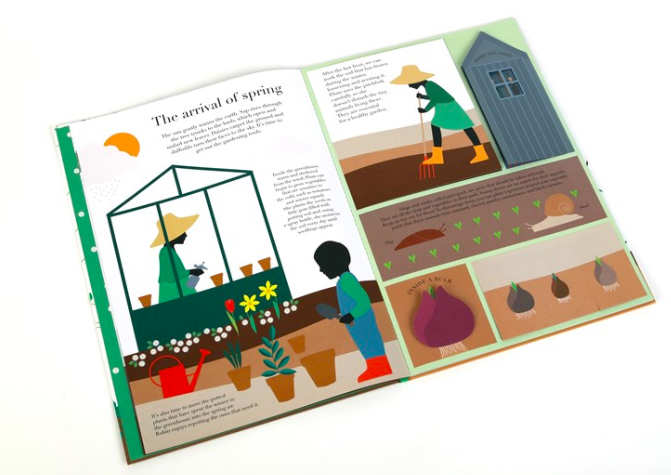
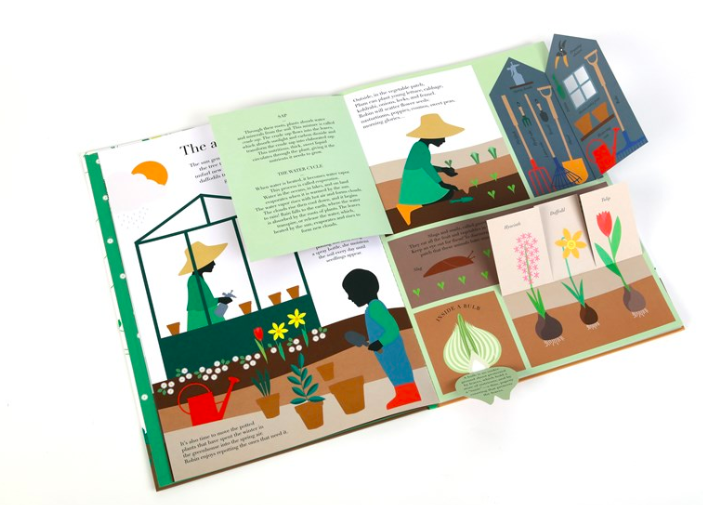
With the arrival of spring, Plum is in her little greenhouse, planting vegetable seeds and spritzing the soil with water to keep it moist while Robin repots some plants who have spent the winter in the greenhouse. Outside, Plum aerates the garden bed with a pitchfork, careful of any tiny creatures below. Children can open the door to Plum’s well-stocked shed to see all the tools tidily stored there and lift the flaps to look inside a bulb and help a hyacinth, a daffodil, and a tulip grow.

celebrate-picture-books-picture-book-review-in-the-garden-open-shed

Copyright Emma Giuliani, 2020, courtesy of Princeton Architectural Press.

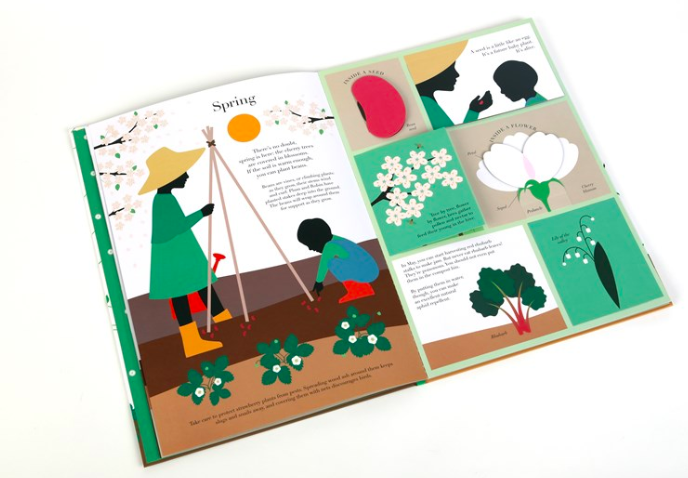
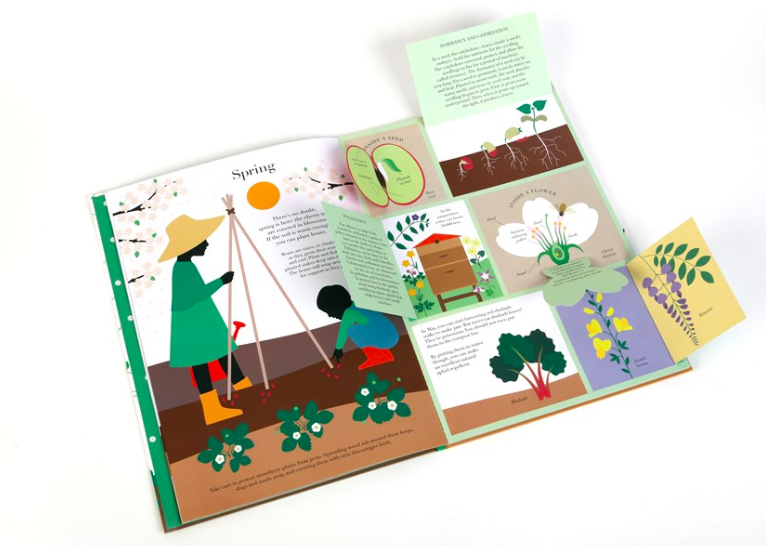
At last the warm weather of spring has arrived. The cherry trees are blossoming, and Plum and Robin are setting stakes and planting bean seeds. Next, they provide protection for the tender strawberry plants that are beginning to bloom. Young gardeners will enjoy opening a bean seed to learn what’s inside and then following its growing process. The bees are visiting the cherry blossoms, pollinating the flowers and making honey. What does a bee see as it hovers around the flower? Pull down the flap to see for yourself and learn all the parts of a flower. What other plants are flowering now? Open the flap to see!

celebrate-picture-books-picture-book-review-in-the-garden-spring

Copyright Emma Giuliani, 2020, courtesy of Princeton Architectural Press.

Summer begins and “what a joy to be in the garden in June! The gentle breeze, the smell of cut grass, and the tangy taste of strawberries and cherries make the gardeners smile.” While Plum waters the tomato plants, “Robin looks for ripe strawberries under the leaves.” Join him! Robin is also picking cherries before the birds eat them. How do those bright red, round fruits grow? Lift the flap to learn and see how they develop from flower to fruit. Plum is getting help with the aphids on the bean plants from industrious—and hungry—ladybugs. “Dragonfly larvae are transforming into graceful flying insects….Their presence is a sign of a healthy garden.”

celebrate-picture-books-picture-book-review-in-the-garden-open-spring

Copyright Emma Giuliani, 2020, courtesy of Princeton Architectural Press.

It’s high summer and the garden is glorious. Bean pods hang from the vines, and Plum contemplates whether they are ready to pick. She may leave some “husks dry out on the plant before picking them.” Dried completely indoors, they can be stored and eaten during the fall and winter. Take a look inside a pod to see the seven red beans there. Flowers greet you too: an orange marigold with petals like a pinwheel, a brilliant pink and purple fuchsia, and a perky mignon dahlia. Robin took cuttings of these plants and potted them to grow some more. Learn how you can do that with your plants too!

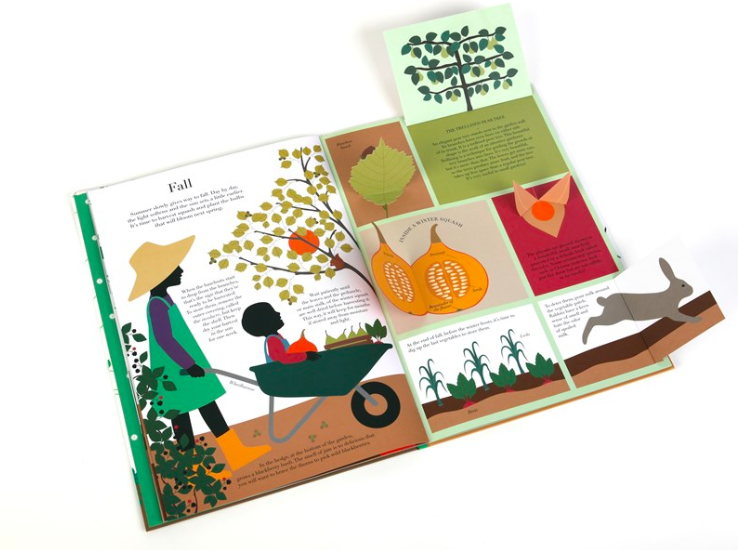
The summer heat is waning and the days are growing shorter. Fall is here. The catkins of early spring have become hazelnuts that are ready to be harvested. Even the squirrel approves! Plum and Robin teach you how to store them—and when to pick the winter squash and keep them for months as well. Can you count the number of seeds inside the winter squash? Plum’s beautiful trellised pear tree is bearing sweet fruit. Yum! But look out—a crafty rabbit is after the last leafy vegetables in the garden. No need for a fence, though. Milk will do the trick of shooing him away.

celebrate-picture-books-picture-book-review-in-the-garden-open-fall

Copyright Emma Giuliani, 2020, courtesy of Princeton Architectural Press.

The air is chilly again and winter is on the horizon. “Plum and Robin have donned their warmest clothes and gone out to collect the dead leaves. Some leaves will feed the compost, others will become mulch to protect plants over the winter. The hedgehogs can use the rest of the leaves in making their homes.” Do you see the pile of crunchy leaves? Lift them gently…shhh! A hedgehog is snoozing underneath. Robin and Plum have built an insect hotel to keep the bugs cozy during the winter and have filled the greenhouse again. For the colorful birds who stay awhile or all winter, Robin and Plum put out a bird feeder and fill it with locally produced seeds.

After putting all of their tools back in the shed, Plum and Robin head indoors to plan next year’s garden and “watch eagerly for the very first signs of spring.”

celebrate-picture-books-picture-book-review-in-the-garden-open-winter

Copyright Emma Giuliani, 2020, courtesy of Princeton Architectural Press.

If your family tends a garden or is thinking of starting one, Emma Guiliani’s superb book is a must. At 16 inches tall, In the Garden provides fascinating facts about plants, insects, and animals; helpful tips on when and how to plant a variety of fruit, vegetables, and flowers, information on natural ways to ward off pests; and how to recognize when fruit and vegetables are ready for picking and how to store them. Through copious flaps, children get inside views of flowers, seeds, buds, and vegetables to learn the names of each part and how they contribute to the growth of the plant. Along the way, young and adult gardeners discover how early gardening can begin, directions on how to create and use compost, when bushes can be planted, information on pollination; and how to winter over the garden for the coming spring.

Giuliani’s crisp, lush illustrations are marvels, combining intricate paper cuts that replicate the shapes of delicate bulbs and buds, flowers and seeds, smooth and serrated leaves, the long bean pod, and even Plum’s garden shed with a window in the door. Her extraordinarily beautiful color palette immerses readers in the garden experience; you can almost smell the rich earth, hear the bees buzzing at the blossoms, and feel the air changing season to season.

A brilliant resource and a joy to peruse, In the Garden is a book that adults and children—both gardeners or nature lovers—will share throughout the seasons and from year to year. The book is most highly recommended for home, school, and public library collections.

Ages 7 – 12

Princeton Architectural Press, 2020 | ISBN 978-1616898939

You can connect with Emma Giuliani on Instagram.

National Gardening Day Activity

celebrate-picture-books-picture-book-review-flower-garden-game

Plant a Flower Garden Game


With this fun game you and your family and friends can grow gardens inside! Roll the dice to see whose garden will fully blossom first!

Supplies

Directions

Object: The object of the game is for each player to fill their garden or garden rows with flowers. Depending on the ages of the players, the game can be adjusted to fill all of the rows, some or all rows, or just one.           

  1. Print one Game Board for each player
  2. Print one or more sets of Flower Playing Cards for each player, depending on how  (for sturdier playing items, print on card stock)
  3. Cut the flowers into their individual playing cards
  4. Print one Flower Playing Die and assemble it (for a sturdier die, print on card stock)
  5. Color the “dirt” on the Garden Plot with the crayon (optional)
  6. Choose a player to go first
  7. The player rolls the die and then “plants” the flower rolled in a row on the game board
  8. Play moves to the person on the right
  9. Players continue rolling the die and “planting” flowers until each of the number of determined rows have been filled with flowers or one row has been filled with all six flowers.
  10. The first person to “grow” all of their flowers wins!

To play a printable Vegetable Garden Board Game, click here.

celebrate-picture-books-picture-book-review-in-the-garden-cover

You can find In the Garden at these booksellers

Amazon | Barnes & Noble | Books-a-Million | IndieBound | Princeton Architectural Press

Picture Book Review