
About the Holiday
Dyslexia Awareness Month was first held in the UK in 2002 as a small movement of events organized through schools and businesses. In the ensuing years, it has grown to be recognized internationally, with programs, learning events, and public campaigns to bring messages and updates on improved inclusion and accessibility to communities around the world.
Developed in 1877 by German physician Adolph Kussmaul as “word-blindness,” the condition was first identified by German physician Oswald Berkhan in 1881 while studying the case of a young boy with severe issues in learning to read and write despite his high intellectual abilities. The condition was officially named “dyslexia” by ophthalmologist Rudolph Berlin in 1887.
Today, dyslexia affects from 5% to 10% of the world’s population. The theme for Dyslexia Awareness Month 2024 is “Until Everyone Can Read, and puts the focus on the latest research and resources for those with dyslexia and other learning differences as well as special activities for students, families, and communities.
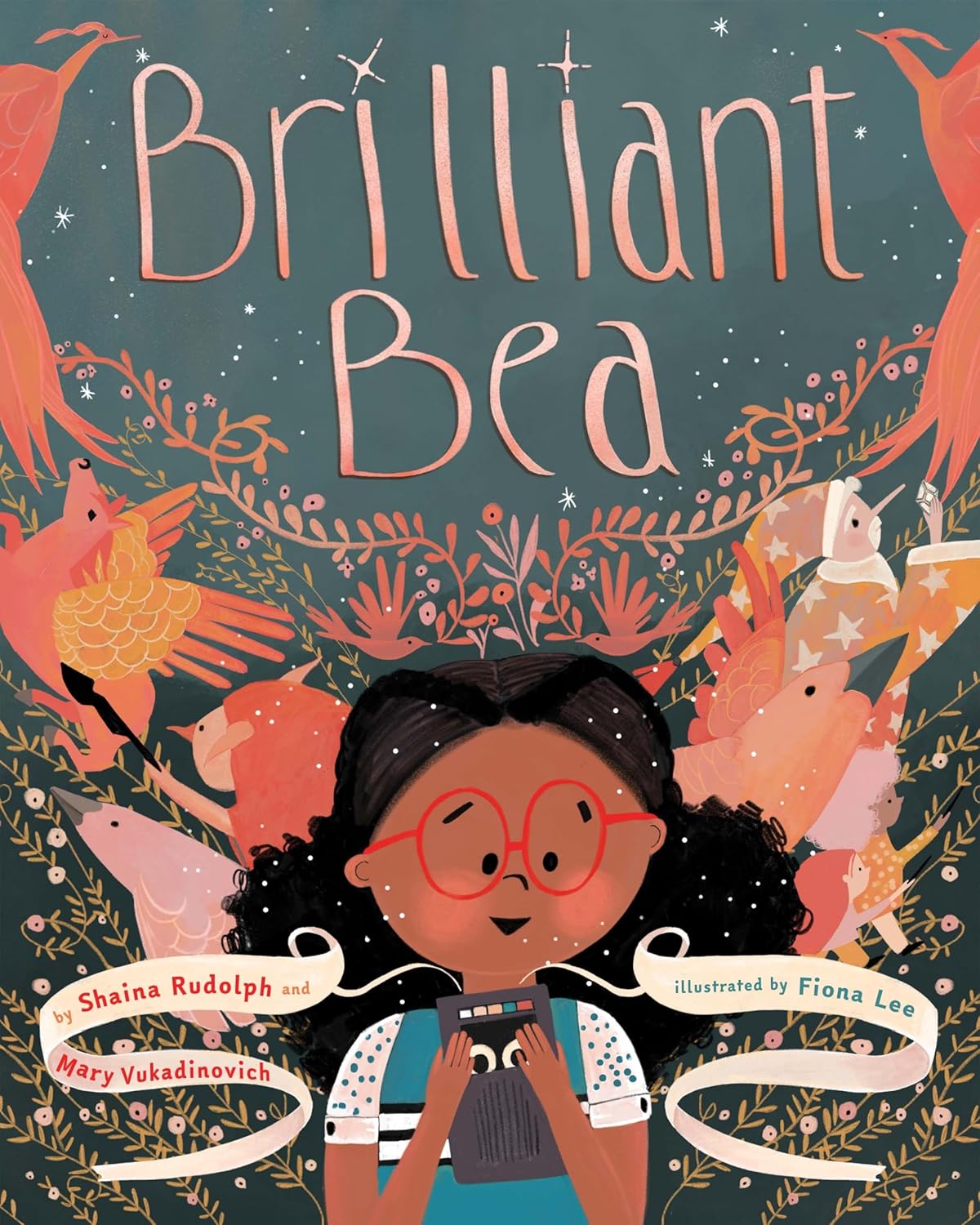
Brilliant Bea: A Story for Kids with Dyslexia and Learning Differences
Written by Shaina Rudolph and Mary Vukadinovich | Illustrated by Fiona Lee
Bea had a big imagination. Her mom said she had “a way with words,” her dad said she was a “real word slinger,” and her brother thought she was “the greatest storyteller on Earth.” But reading and writing were “extra hard” for Bea. As she would describe it “words jump around the page and my eyes try to shoot laser beams to catch them.” Her parents told her it was dyslexia. Another thing Bea knew was that because she couldn’t finish her school work on time, she was stuck in the classroom at recess time—”stucker than stuck. Stuck in Stucksville, population: 1.”
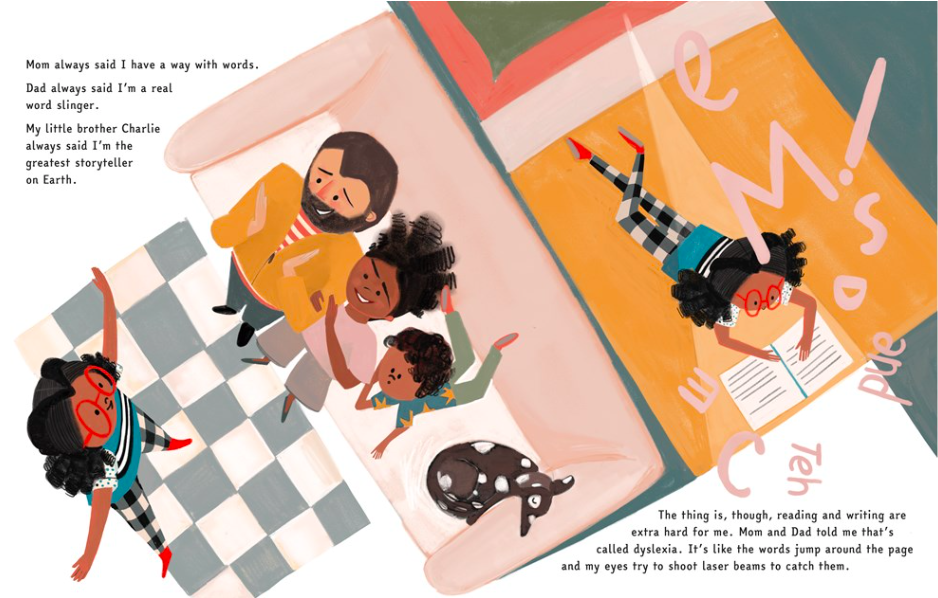
Image copyright Fiona Lee, 2021; text copyright Shaina Rudolph and Mary Vukadinovich, 2021. Courtesy of Magination Press.
Reading out loud made Bea want to melt into the floor, and when trying to write, she couldn’t get down the words she was thinking. One day her teacher, Ms. Bloom asked if she could read what she had written so far. “I woent let dullying bring me doun,” Ms. Bloom read then asked what “dullying” was. “Bullying,” Bea corrected her. Ms. Bloom smiled and kindly said, “I think you’ve figured it out with your brilliant brain, Beatrice. Bullying is dull.” Bea knew “brilliant” meant “super smart,” and, Ms. Bloom added, “it means bright and radiant.” Walking home that afternoon, Bea’s imagination and self-esteem soared.
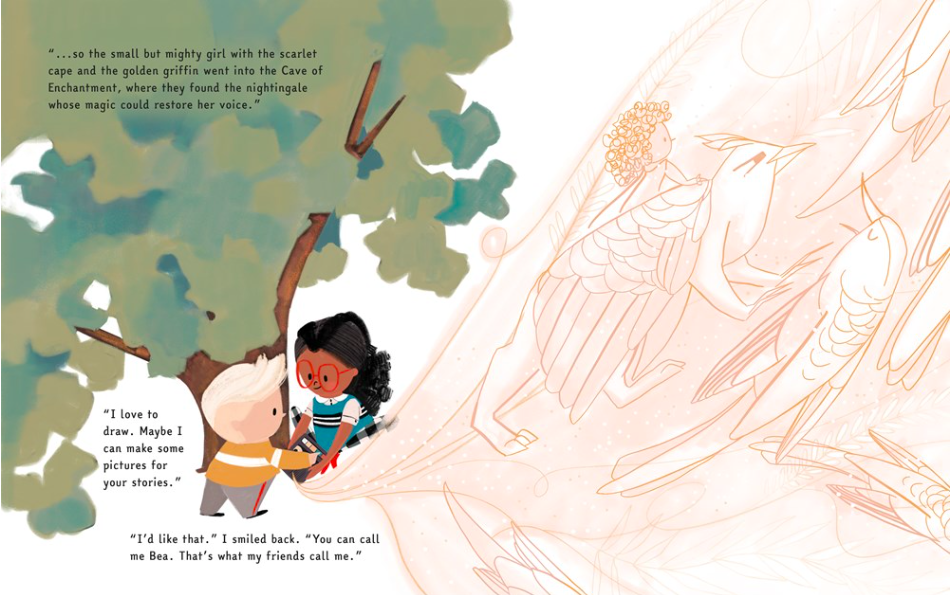
Image copyright Fiona Lee, 2021; text copyright Shaina Rudolph and Mary Vukadinovich, 2021. Courtesy of Magination Press.
The next day, Ms. Bloom gave Bea a tape recorder. At recess Bea told one of her stories into the recorder. Her words flowed and attracted Rudy, who asked what she was doing. Normally, Bea “would shrivel up and just wish him away,” but today she played her story for him. Rudy offered to draw pictures for her story, and that afternoon, he helped her become “unstuck.”
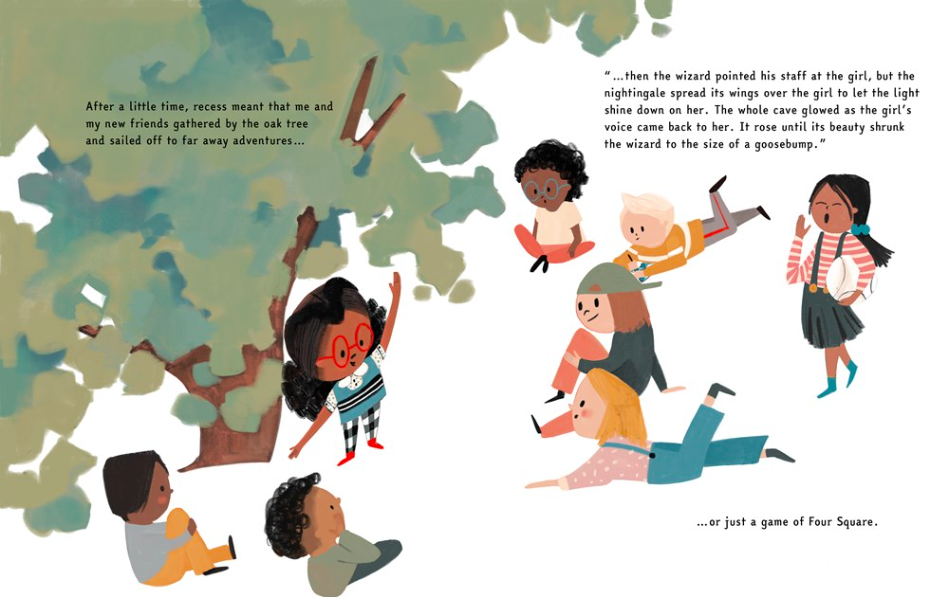
Image copyright Fiona Lee, 2021; text copyright Shaina Rudolph and Mary Vukadinovich, 2021. Courtesy of Magination Press.
In the coming days and weeks, Bea attracted more friends. Sometimes they sat under the trees at recess to listen as she told her stories and sometimes they played on the playground. Now she wasn’t afraid of learning differently, and she and her best friend even created a comic book that Ms. Bloom copied and gave to all her classmates. And when Bea grew older? She became an author and even returned to Ms. Bloom’s classroom to read her book.
A superb and detailed Reader’s Note by Ellen B. Braatan, PhD, executive director of the Learning and Emotional Assessment Program at Massachusetts General Hospital and associate professor of psychology at Harvard Medical School, follows the story. In it Dr. Braatan outlines the insights into dyslexia that Brilliant Bea highlights, ways in which adults can engage children in conversations about dyslexia, what dyslexia is, and the symptoms of dyslexia, as well as methods of evaluation and treatment, including remediation and accommodation.
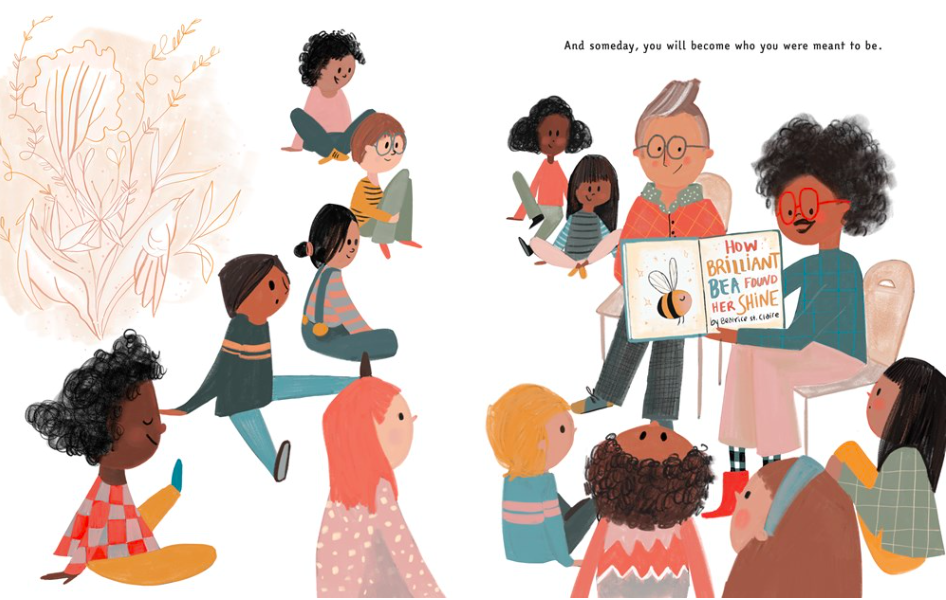
Image copyright Fiona Lee, 2021; text copyright Shaina Rudolph and Mary Vukadinovich, 2021. Courtesy of Magination Press.
This engaging story about one girl’s experience with dyslexia is charming and insightful. Shaina Rudolph and Mary Vukadinovich highlight the difficulties children with dyslexia face with reading and expressing their thoughts in conventional ways as well as the impact their learning difference has on making friends and having the same advantages as their peers during a school day.
Through Bea’s talent for storytelling, Rudolph and Vukadinovich emphasize how dyslexic children (and adults) can excel in a wide range of disciplines, from writing to science to art to music to any field of endeavor because they see things differently. Bea’s teacher, Ms. Bloom, demonstrates how early recognition of dyslexia and other learning differences coupled with understanding, remediation, and accommodation can make school and any environment inclusive and successful for all.
Fiona Lee’s bright and uplifting illustrations use a variety of perspectives to help readers see how those with dyslexia see the world differently. Bea’s imagination and storytelling talent are reflected in the soft sketches that soar from her mind or off her notebook. Her frustration is clear, but so is her resilience and determination to succeed. When her teacher gives her the tape recorder, readers can see how life-changing such a simple and thoughtful act can be.
Young readers will embrace Bea and this story of a sweet, creative, and giving child who also happens to be dyslexic. The story and the back matter provide parents, educators, and other adults a helpful and meaningful way to allow dyslexic children to see themselves in a book as well as to explain this learning difference to classmates, friends, and others.
Brilliant Bea: A Story for Kids with Dyslexia and Learning Differences is a must addition to public and school libraries, pediatricians’ offices, and teachers’ programs. The book is highly recommended for home bookshelves as well.
Ages 4 – 8+
Magination Press, 2021 | ISBN 978-1433837418
About the Authors
Shaina Rudolph is an author of books for children, including All My Stripes and Brilliant Bea. Shaina is also a member of The Society of Children’s Authors and Illustrators. Additionally, she has been an educator for 15 years. Visit Shaina at shainarudolph.com.
Mary Vukadinovich has been working with students with language based learning differences and diverse learning need for the last 17 years. As a reading specialist in Los Angeles, Mary values her opportunities to teach students with unique learning profiles, including dyslexia. Above all, she enjoys watching a child’s confidence grow while learning to love to read. When Mary isn’t teaching or writing, she is reading and telling stories to her own two children.
About the Illustrator
Fiona Lee is inspired by color, strong-willed kids, and the unintentional humor of animals. Working both traditionally and digitally, she captures detail, texture, and life’s small moments. Trained as a Science Illustrator, her clients include Woods Hole Oceanographic Institution, UC Santa Cruz, and more. She lives in Vermont in a tiny house in the middle of a big hayfield.
National Dyslexia Awareness Month Activity
Watch these Informative Videos
- Watch See Dyslexia Differently for a child-focused animated short that gives an overview of how dyslexia affects reading, writing, learning, and everyday activities as well as what strengths kids with dyslexia have, and highlights famous artists, inventors, singers, writers, scientists and more used the way they think differently to change the world.
- Listen to a group of young people describe their dyslexia in this video from Learning Ally.
- Hear Reading Horizons Dyslexia Specialist, Shantell Berrett describe various ways that dyslexics see words on a page and some remediation and accommodation aids.
You can purchase Brilliant Bea: A Story for Kids with Dyslexia and Learning Differences at these booksellers
Amazon | Barnes & Noble | Bookshop (to support your local independent bookstore)
Picture Book Review

 celebratepicturebooks.com